
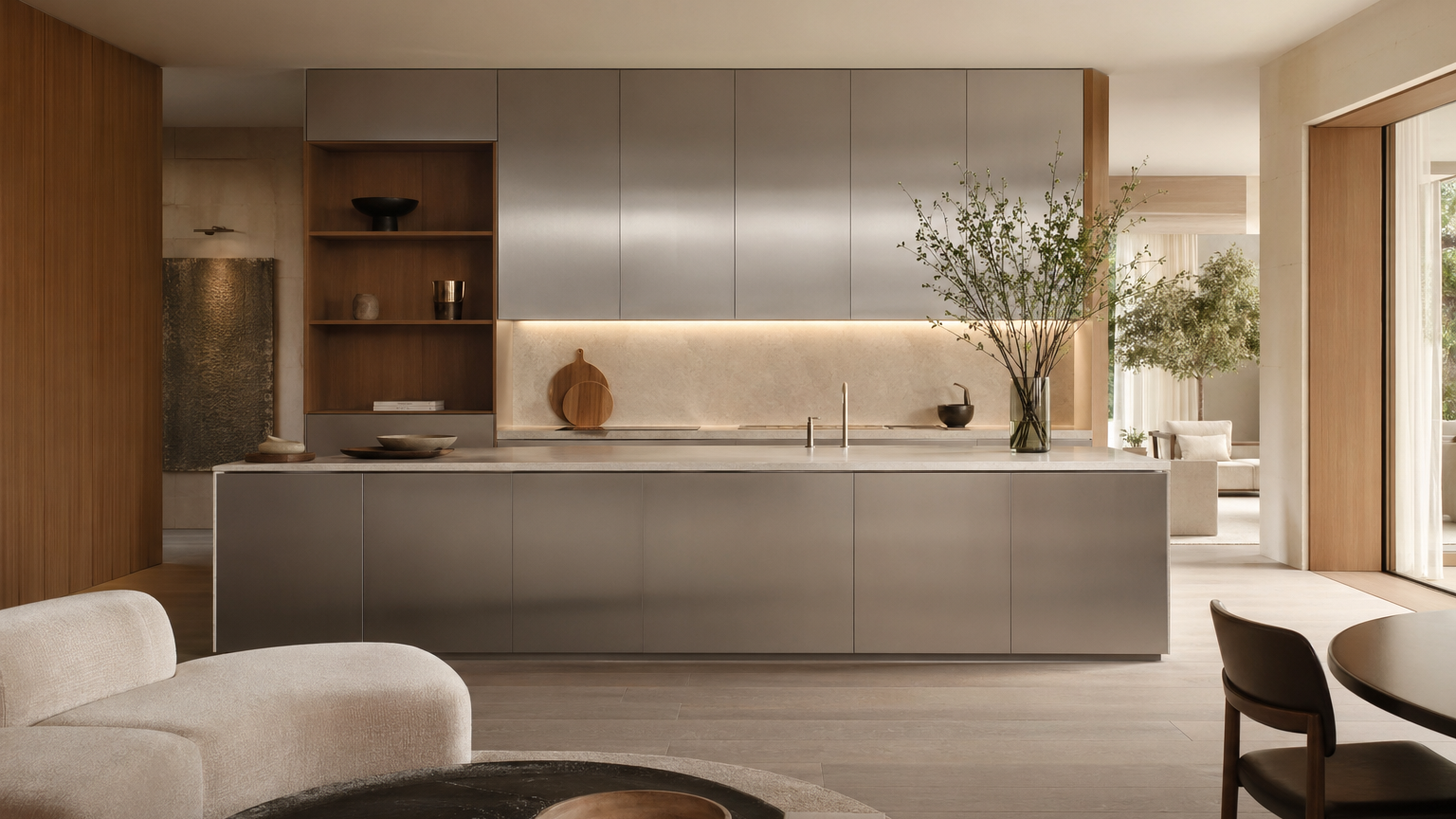
EuroCucina 2026 Kitchen Trends That Actually Matter
A practical EuroCucina 2026 trend summary with Fadior's interpretation for durable stainless steel kitchen specification.
Direct answer
The Direct Answer
EuroCucina is Milan's biennial kitchen fair and the fastest way to see which ideas are becoming real specifications. The 2026 edition points to three practical shifts: kitchens are opening further into the rest of the home, technology is becoming quieter and more embedded, and materials are warming up through tactile finishes rather than cold showroom minimalism. For Fadior readers, the useful lesson is not to copy Milan literally, but to translate those signals into durable 304 stainless steel systems, warmer finish pairings, and visually calm appliance integration.
What is EuroCucina, and why do specifiers still care?
EuroCucina is not just another fair stop on the Milan calendar. According to the official Salone del Mobile about page, it is the kitchen biennial inside the larger Milan furniture fair and returns in even-numbered years alongside the International Bathroom Exhibition. The official EuroCucina page confirms the 2026 edition ran from 21 to 26 April, which means the market gets one concentrated public read on kitchen direction every 2 years, not every season.
That cadence matters. A fair that only appears every other year has to do more than deliver styling noise. It has to show which ideas have matured enough for brands to build, price, and defend. That is why EuroCucina keeps attracting architects, appliance companies, cabinetry brands, and material suppliers that want to test whether a look is temporary or whether it is now part of the specification language for premium kitchens.
In practice, EuroCucina matters because it compresses three normally separate conversations into one place: spatial planning, appliance integration, and surface language. When those three move together, the signal is stronger than a single product launch or mood-board trend report.
- EuroCucina
- EuroCucina is the kitchen-focused biennial exhibition within Salone del Mobile.Milano, used by the global market to read which kitchen ideas are becoming buildable systems rather than one-off styling gestures.
Why did EuroCucina 2026 feel more consequential than a normal trend roundup?
The official Salone del Mobile 2026 biennials overview says EuroCucina and FTK returned with 106 exhibitors from 17 countries, with 38.60% coming from abroad and 35 brands either new or returning. Those numbers are not interesting on their own because they are large. They matter because they show a broad enough cross-section of the market to reveal what multiple brands are converging toward at the same time.
The same official article describes the 2026 kitchen direction as being driven by technology, sustainability, AI integration, biophilic design, and a more user-controlled environment. Just as important, it says materials are becoming tactile and environmentally aware, color is returning in softer tones, and minimalism is shifting away from a cold and rational expression toward something more emotional and natural.
That combination is why the event matters this year. EuroCucina 2026 is not announcing the death of minimalism. It is showing the next version of it: less sterile, more sensory, and much more willing to blend technology into architecture instead of putting gadgets on display.
Which three signals were hardest to ignore in Milan?
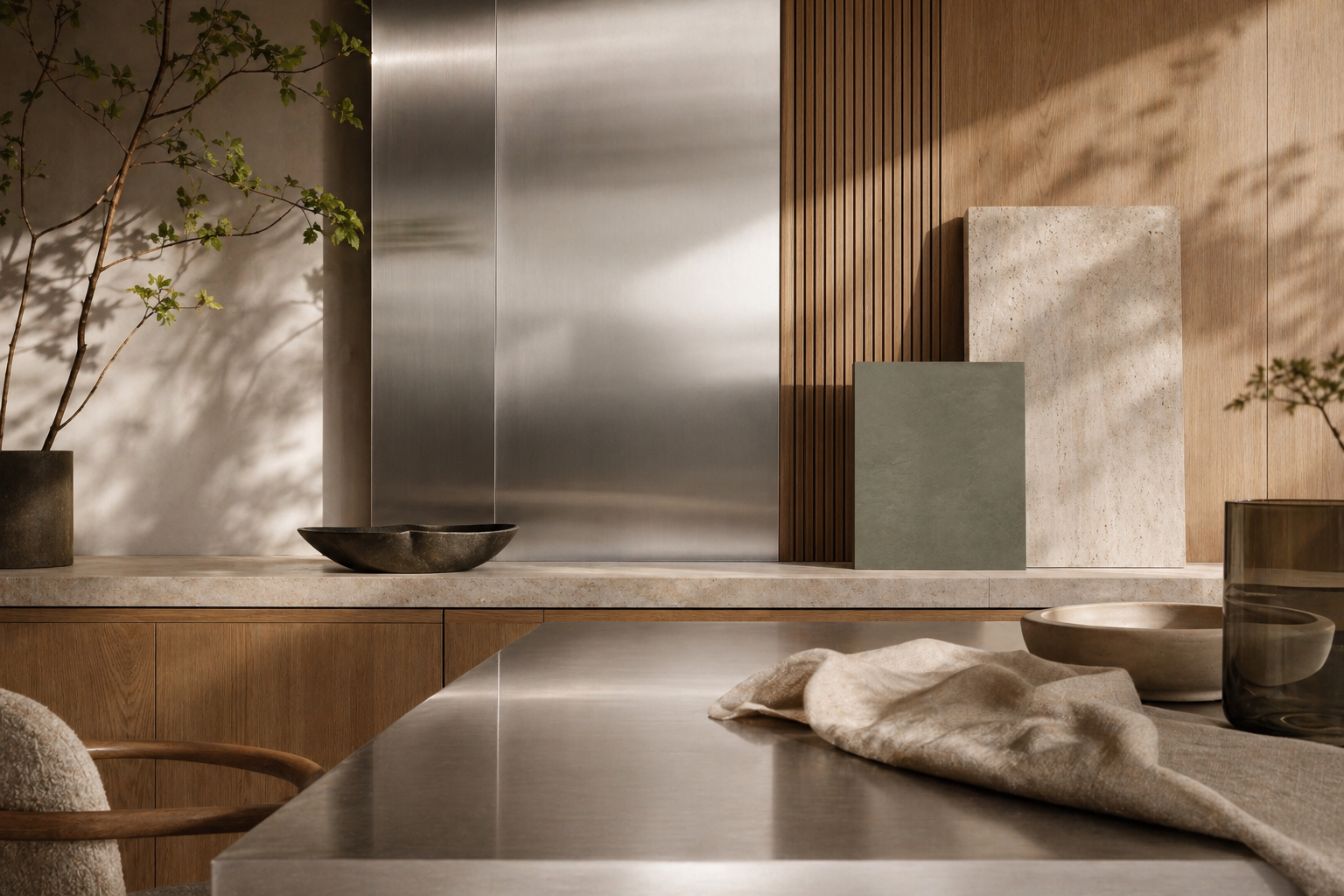
The first signal was spatial. In the official EuroCucina 2026 novelties report, the kitchen is described as an expanded space that now talks directly to living rooms, terraces, and adjacent domestic zones. This is no longer the isolated technical room. It is a permeable part of the home.
The second signal was technological invisibility. The same article points to a kitchen where AI assistance, extraction, lighting, and connected appliances are expected to work discreetly. The technology is still there, but the goal is to reduce visual clutter. Hidden hoods, integrated systems, and responsive appliances are framed as part of the architecture instead of a separate category of shiny gadgets.
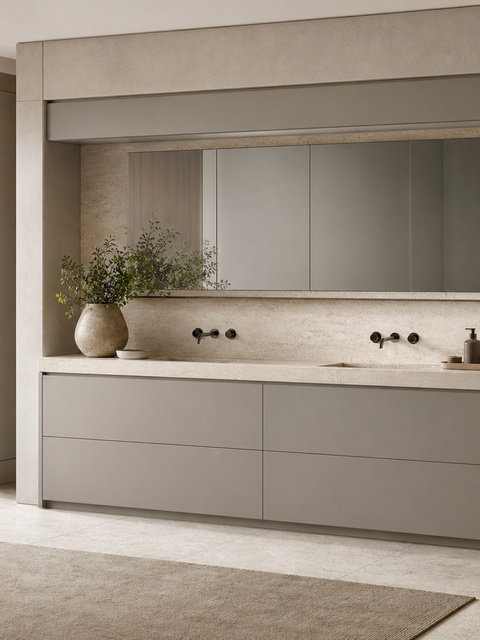
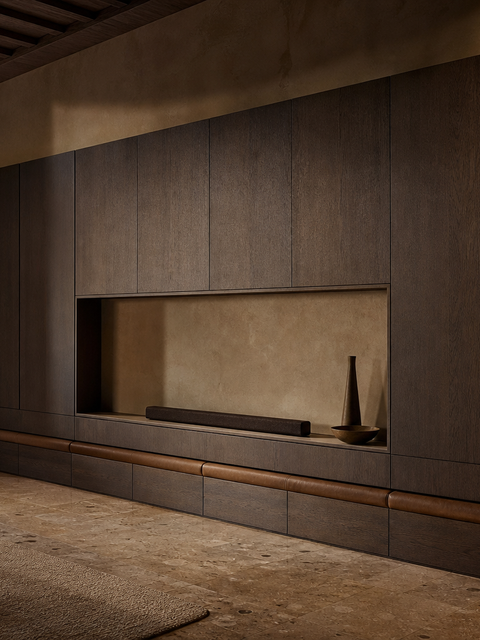
The third signal was material warmth. EuroCucina did not abandon precision or restraint, but it clearly moved toward more tactile surfaces, deeper textures, and softer, more atmospheric finishes. Milan is no longer asking luxury kitchens to choose between refinement and comfort. It is asking them to combine both.
The three EuroCucina signals worth translating
- Treat the kitchen as part of a larger living system, not a sealed workroom.
- Hide technology inside the architecture wherever the user experience becomes simpler.
- Pair precise lines with warmer surfaces, softer hues, and materials that invite touch instead of distance.
- FTK – Technology For the Kitchen
- FTK is EuroCucina's collateral technology event, where built-in appliances and kitchen systems show how technical performance is being absorbed into the overall kitchen project rather than sold as a separate layer.
How is European minimalism changing instead of disappearing?
The clearest answer comes from the official interview with Edi Snaidero. He describes EuroCucina as a global benchmark that may not be the biggest event by numbers but is the most meaningful in terms of quality. More importantly, he says the market is moving away from the post-Covid dominance of white and pure minimalism toward tactile finishes, ceramic surfaces, and warm tones suited to open-plan kitchens.
That is a useful correction for anyone still reading European design through the old lens of cold perfection. The new European signal is not ornament for ornament's sake. It is disciplined form with a stronger emotional register. Slab fronts, frameless clarity, and integrated appliances still matter, but they are being softened by richer materials, better lighting, and surfaces that feel lived-in rather than clinical.
In other words, European minimalism is surviving by becoming more humane. It is less about removing every trace of personality and more about editing the room so that materials, light, and proportion do the expressive work.
Why does North American demand still pull toward warmth and visible comfort?
This is where Milan has to be translated rather than copied. The NKBA 2026 Kitchen Trends Report press release says 60% of surveyed professionals expect contemporary or modern minimalism to stay popular over the next 3 years, but it also says 59% see wood grain gaining popularity and 51% rank white oak as the most popular wood type. The same release says 94% of respondents still see wood flooring as popular.
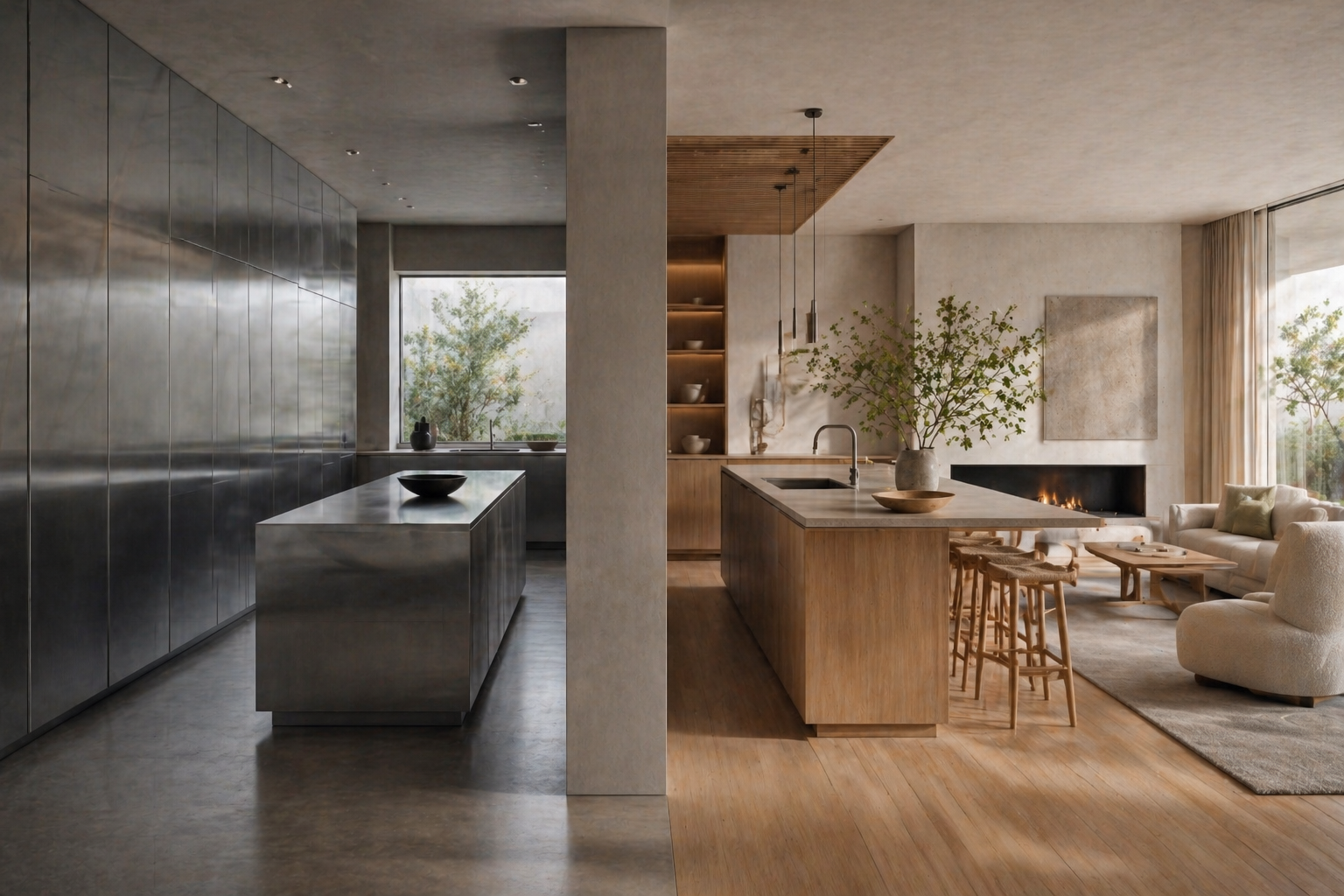
Houzz points in the same direction from the homeowner side. In its 2026 kitchen trends digest, wood cabinetry becomes the top cabinet color in renovated kitchens at 29%, slightly ahead of white at 28%, with medium-tone wood leading within the wood category. That is not a rejection of clean planning. It is a demand for kitchens that feel comfortable, layered, and emotionally legible.
This is the real tension behind today's premium market. Buyers still like precise planning, panel-faced appliances, and quieter detailing, but they do not want rooms that feel sterile. They want a kitchen that can hold hospitality, family life, and visual warmth without falling back into clutter.
| EuroCucina signal | What Milan is showing | What buyers still need | Practical Fadior translation |
|---|---|---|---|
| Open-plan kitchen continuity | Kitchen, living, and even exterior-adjacent zones are treated as one visual field. | Storage, prep, and entertaining still need hierarchy and containment. | Use a whole-home material language with 304 stainless steel structure, then soften it with stone, timber accents, and linked cabinetry routes. |
| Invisible technology | Hoods, induction, lighting, and AI assistance are absorbed into the project rather than celebrated as gadgets. | Technology should reduce friction, not add visible complexity. | Plan appliance integration, service zones, and ventilation so the room reads calm first and technical second. |
| Warmer tactile materials | Ceramic, textured surfaces, and soft hues are making minimal kitchens feel more human. | Homeowners want warmth without losing durability or hygiene. | Pair brushed or powder-coated 304 stainless steel with warmer counters, oak notes, and restrained color instead of pretending steel must look cold. |
| Emotional minimalism | Minimal form survives, but it is no longer purely white, flat, and detached. | Rooms still need comfort, longevity, and visual confidence over time. | Keep clean lines and tight integration, but let finish, light, and proportion carry the emotion instead of adding decorative noise. |
Which moves should brands copy, and which should they refuse?
Brands should copy the structural lessons, not the trade-fair theater. Copy the integration logic. Copy the quieter handling of technology. Copy the idea that the kitchen has to hold social life and daily life at the same time. Copy the move toward warmer and more tactile material expression.
What brands should refuse is the temptation to imitate every Milan image literally. A fair stand can afford to be a short-lived visual argument. A real kitchen has to survive cooking, cleaning, storage pressure, and years of use. The specification has to be able to explain itself after the lighting crew and the photographer are gone.
That distinction matters even more for Fadior. The brand is strongest when it translates a direction into something buildable: glue-free 304 stainless steel structure, precise fabrication, waterproof performance, and finish variety that lets metal participate in a warmer domestic language. It is weaker when it chases mood without explaining the system beneath it.
Where does 304 stainless steel fit in this new trend picture?
It fits best as the hidden backbone that lets warmer design language become durable instead of decorative. Fadior's company intelligence is unusually useful here. The brand stays 304 stainless steel only, carries more than 25 years of stainless steel processing expertise through its parent group, and now operates from a 600 million RMB smart factory with 20,000-plus units of monthly capacity and more than 80 powder-coat color options. Those are not styling facts. They are what makes trend translation believable.
The point is not that every premium kitchen should look metallic. The point is that a precise 304 stainless steel cabinet body gives the project a stable, waterproof, low-emission core, while surface treatment and material pairing do the emotional work. That is why Fadior can take the warmer, more tactile, more integrated direction visible at EuroCucina and translate it into something that still reads as premium architecture rather than fragile fashion.
This is also where stainless steel becomes strategically different from the European wood-first narrative. Wood can carry warmth naturally, but it does not carry the same waterproof certainty or glue-free structural logic. Fadior's opportunity is to keep the calm, integrated elegance that Milan is rewarding while solving for longevity at the cabinet-body level.
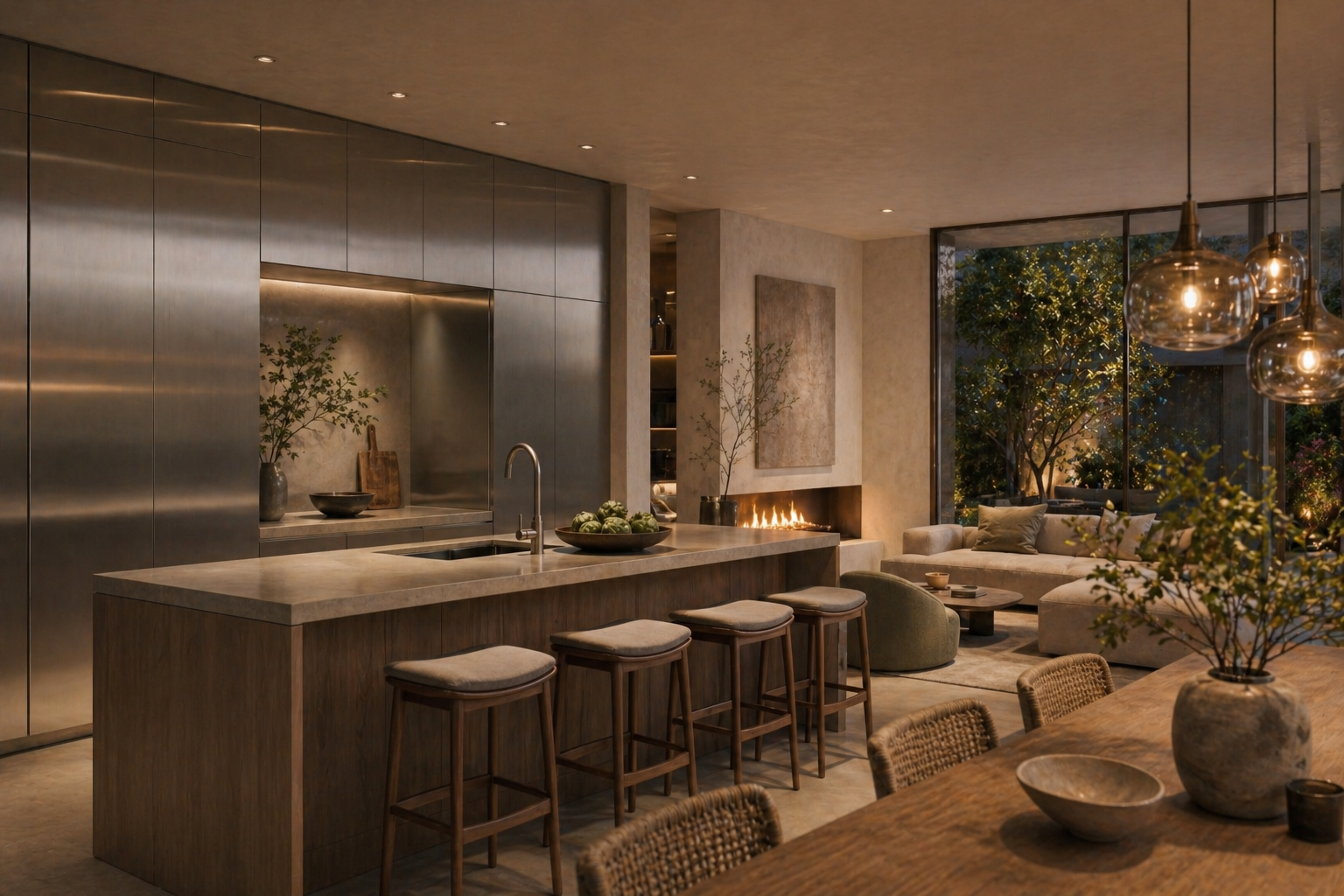
- Emotional minimalism
- Emotional minimalism keeps the clean lines and integrated planning of classic European minimalism, but adds warmer materials, softer color, and a stronger sense of comfort so the room feels inhabited rather than clinical.
What should an architect or buyer do with EuroCucina 2026 in practice?
Start by separating the signal from the scenery. The signal is that premium kitchens are becoming more integrated, more responsive, and warmer in feel. The scenery is the temporary choreography of the fair. For a real project, that means asking better questions about cabinet-body material, appliance planning, storage hierarchy, and how the kitchen relates to the adjacent living zones.
For readers already in a specification phase, the best next step is to connect this trend reading to concrete references: Fadior's luxury kitchen trend analysis, the 304 stainless steel versus wood durability comparison, the minimalist apartment steel system study, and the surface language guide for PVD versus powder coating. From there, commercial decisions should move through Fadior product collections, whole-home kitchen systems, manufacturing proof, quality standards, materials guidance, built project references, and a project consultation review.
The practical lesson from EuroCucina 2026 is simple: the winning luxury kitchen is no longer cold minimalism or nostalgic warmth on its own. It is a calmer, warmer, technically quieter room whose underlying system is strong enough to justify the beauty.
Which EuroCucina questions do serious buyers ask most?
They ask whether the fair is still worth watching if they are not buying from an Italian brand. The answer is yes, because EuroCucina works as an early warning system for what will soon appear in global specification language.
They ask whether minimalism is over. It is not. It is becoming warmer, more tactile, and less visually severe.
They ask whether technology should now be obvious in the room. The strongest EuroCucina signal says the opposite: the better the system, the less it needs to announce itself.
And they ask where durable material systems fit when the mood is getting softer. That is exactly where Fadior's 304 stainless steel platform becomes relevant: it allows the room to look warmer without giving up the certainty of a stronger cabinet body.
Direct answer
The Direct Answer
EuroCucina 2026 matters when the trend can become a durable kitchen specification. The useful signals are warmer metal finishes, quieter integrated technology, softer open-plan storage, more tactile surfaces, and cabinet systems that hide function without weakening structure. For Fadior, the interpretation is not trend copying: translate the signals into 304 stainless steel cabinet bodies, durable finishes, precise modules, and calmer whole-home planning.
Frequently Asked Questions
Questions this guide answers
- Is EuroCucina only useful if you plan to buy an Italian kitchen?
- No. EuroCucina matters because it shows which kitchen ideas have gained enough industry support to become real specification language. Even if a project is built in North America, the event is still a strong early indicator of how layout, technology, and materials are moving together in premium kitchens.
- Did EuroCucina 2026 prove that minimalism is finished?
- No. The stronger reading is that minimalism is changing shape. EuroCucina 2026 favored calmer integration and cleaner planning, but with warmer materials, softer tones, and more tactile surfaces. The room is still edited, just less clinical than the all-white minimalism that dominated a few years ago.
- What was the clearest technology lesson from EuroCucina 2026?
- Technology is becoming quieter. The fair emphasized integrated extraction, smarter appliances, lighting control, and AI-assisted use, but the strongest projects treated those features as part of the architecture. The message was not to display more gadgets. It was to make technical performance less visually disruptive.
- Why are warm materials gaining ground if clean modern kitchens still sell?
- Because buyers still want order and precision, but they no longer want kitchens to feel emotionally distant. North American trend data shows wood, warm tones, and tactile finishes staying strong, so the market reward now goes to projects that combine integrated planning with a more human material atmosphere.
- How can stainless steel fit a warmer luxury kitchen direction?
- By working as the structural system rather than the only visual message. A 304 stainless steel cabinet body can provide waterproof, durable, low-emission performance, while powder-coated finishes, brushed surfaces, stone counters, timber notes, and better lighting create the warmth. The system stays strong even when the mood softens.
- What should a buyer or architect avoid when translating Milan trends into a real project?
- Avoid copying the fair image without copying the underlying logic. If a trend does not translate into a stronger cabinet body, better appliance integration, calmer storage planning, or a more durable finish strategy, it is still just presentation. Real kitchens need a system that can defend the look over years of daily use.
Related reading
Continue exploring the journal.
More guides, whitepapers, and insights from the Fadior journal.
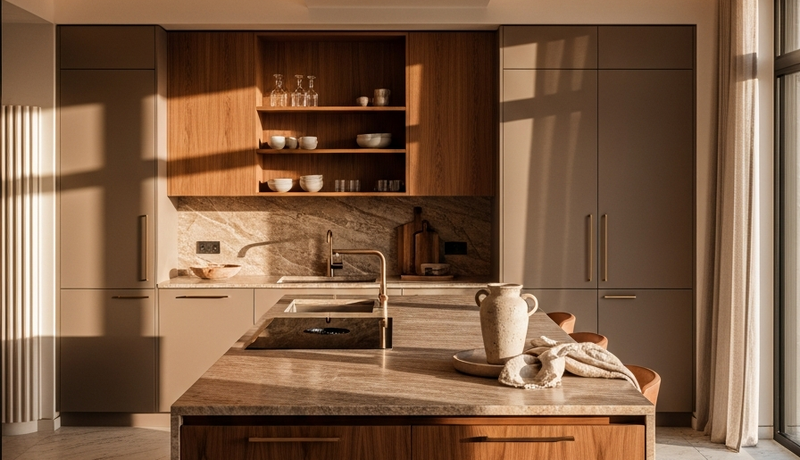
Buyer's Guide
Luxury Kitchen Design Trends 2026: The Shift to Permanent Materials
As luxury kitchen design trends 2026 pivot toward permanence, high-end interiors are abandoning organic composites for monolithic, food-grade stainless steel. Discover how zero-formaldehyde construction and seamless engineering redefine modern lux...
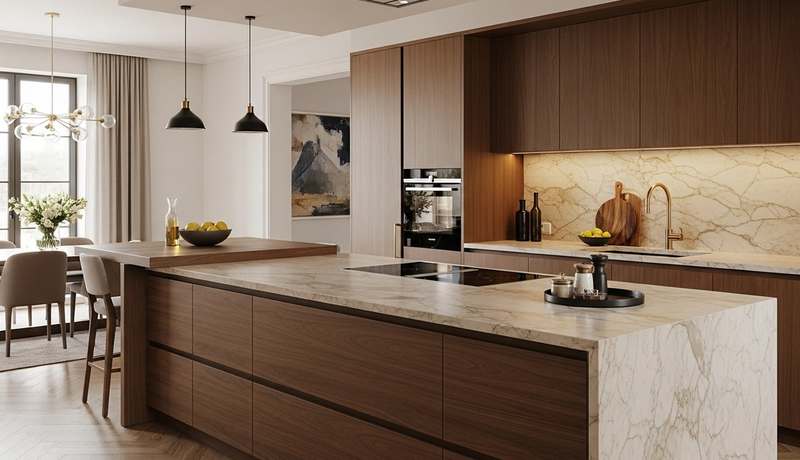
Material Comparison
304 Stainless Steel vs Wood Cabinets: Defining Real Durability in Residential Architecture
304 stainless steel vs wood cabinets: we examine how seamless one-piece construction and zero formaldehyde emissions redefine durability beyond surface aesthetics.
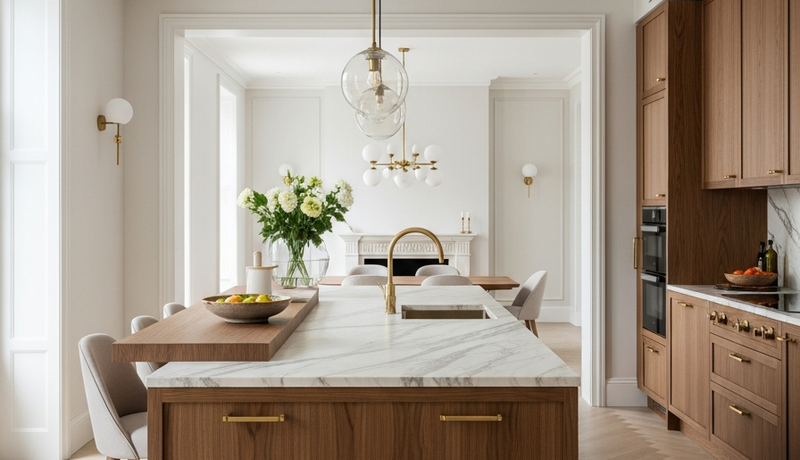
Field Notes
Minimalist Apartment Stainless Steel Kitchen: The Quiet Luxury of Seamless Steel
A minimalist apartment stainless steel kitchen achieves true quiet luxury not through subtraction, but through manufacturing precision that eliminates visual noise entirely.
Related products
Specific products worth reviewing next.
References
Authoritative sources cited in this article
- EuroCucina official schedule
Official dates and participation scope for the 2026 edition.
EuroCucina
- Salone del Mobile about page
Official explanation that EuroCucina is the even-year biennial within Salone del Mobile.Milano.
Salone del Mobile.Milano
- Salone del Mobile 2026 biennials overview
Official EuroCucina 2026 exhibitor count, country mix, and trend framing around AI integration and tactile materials.
Salone del Mobile 2026
- EuroCucina 2026 novelties
Official description of the 2026 kitchen as expanded space, quiet technology, and material warmth.
- Edi Snaidero interview
Official interview describing EuroCucina as a global benchmark and pointing to tactile materials and warm tones beyond white minimalism.
- NKBA 2026 Kitchen Trends Report
North American professional trend data on minimalism, wood grain, and white oak in 2026 kitchens.
NKBA
- Houzz 2026 kitchen trends digest
Homeowner-facing 2026 digest showing wood cabinetry overtaking white in renovated kitchens.
Houzz Research
Editorial transparency
Marco Rinaldi is a composite editorial persona maintained by Fadior Home's editorial team. Articles attributed to this byline are produced through an AI-assisted editorial workflow with human review, and represent the consolidated voice of multiple researchers and contributors.
Ready to specify?