

Kitchen Decision Automation
Kitchen decision automation turns recipes, inventory, appliance timing, and cleanup into a room-first plan before connected tools are selected.
Direct answer
The Direct Answer
Kitchen decision automation is the practice of mapping repeat choices around recipes, inventory, appliance timing, and cleanup before choosing connected tools. It helps a household reduce small daily decisions, but it only works when the permanent kitchen plan already has clear storage, prep, service, and cleaning zones.
What is kitchen decision automation?
Kitchen decision automation is a room-first method for turning repeat cooking choices into durable kitchen planning decisions. It is not a promise that a device will run the home. It is a planning discipline: list the decisions a household repeats every week, then decide which parts belong in the room and which parts can be supported by software. Recipes, inventory, appliance timing, and cleanup are useful examples because they happen often and create real friction when storage is vague.
The current patterns brief recorded artificial intelligence 115 times across 9 publications in a 30-day resonance scan. That broad signal matters only after it becomes a buyer question: which kitchen decisions are worth automating, and which decisions should remain visible, tactile, and manual? A premium home does not need more alerts. It needs fewer avoidable decisions and a calmer room.
- Kitchen decision automation
- Kitchen decision automation is a room-first planning method that turns repeat cooking, inventory, appliance, and cleanup choices into clear zones before connected tools are selected.
Which decisions should be automated first?
Start with decisions that happen at least 3 times per week and cause a visible delay. A grocery reminder is useful when the pantry has stable categories. A recipe assistant is useful when the landing zone, prep surface, sink, and cooking zone already work together. Appliance timing is useful when power, ventilation, heat clearance, and manual controls are planned before the appliance arrives.
This sequence keeps the project from becoming a gadget list. The homeowner can write a simple decision map: weekday breakfast, weekly restock, dinner prep, dishwasher timing, and after-dinner reset. Each routine gets one physical zone, one storage rule, and one optional automation layer. The connected feature is allowed to help, but it is not allowed to define the architecture.
How do recipes and inventory change the room plan?
Recipe and inventory planning change the room by making storage logic more important. If daily staples, backup goods, occasional ingredients, cookware, and cleaning items move randomly, every reminder becomes a new task. If the pantry wall has clear categories and the prep zone has a stable landing surface, reminders can reduce effort. The room does the heavy work; automation only remembers the pattern.
For a renovation, this means the pantry should be planned as daily reach, weekly reach, and reserve storage. The recipe path should move from pantry to prep to cooking to cleanup without crossing the main circulation path. Appliance and electronics guidance across the home sector makes the same practical point: appliance decisions are operational, not only decorative. The best connected kitchen is still easy to use when every automation is turned off.

| Weekly decision | Useful automation support | Permanent room decision |
|---|---|---|
| Recipe planning | Suggest meals, prep timing, and repeat shopping needs | Landing zone, prep surface, sink adjacency, and cooking path |
| Inventory memory | Remind the household about staples and restock timing | Pantry categories, daily reach, reserve storage, and closed cabinet capacity |
| Appliance timing | Coordinate oven, dishwasher, lighting, and ventilation around repeat use | Power planning, service access, clearances, and manual controls |
| Cleanup reset | Schedule lower-priority cycles after dinner or hosting | Waterproof cabinet bodies, wipeable fronts, sink zone, and waste path |
| Hosting rhythm | Save repeat scenes for weekend dinners and prep windows | Island size, circulation, pantry staging, and quiet storage volume |
Why does 304 stainless steel still matter?
304 stainless steel matters because decision automation increases the value of a stable physical base. More connected appliances can mean more heat, more cleaning, more opening cycles, more charging points, and more surfaces touched during the day. Fadior uses 304 stainless steel cabinet bodies because kitchens combine water, food residue, steam, repeated access, and long service life. The material choice is not a technology claim; it is the durable layer that lets the technology stay secondary.
Fadior proof belongs in the middle of the plan. The company builds kitchen cabinets, wardrobes, vanities, doors, wall panels, and storage systems around 304 stainless steel. Its company intelligence records glue-free steel-frame manufacturing, powder coating baked at 220°C, 3D wood-grain transfer, linen texture, anti-fingerprint treatment, PVD finish options, 213 cumulative patents, and a 60,000+ sqm smart factory operational since Spring 2025. Those facts help a buyer specify the room before selecting the connected layer.
- 304 stainless steel
- 304 stainless steel is a common austenitic stainless grade used for corrosion-resistant sheet applications, including kitchen environments where water, cleaning, and daily contact matter.
- AI risk management
- AI risk management is the practice of identifying, measuring, and controlling reliability, safety, privacy, and usability risks before an AI-enabled feature becomes part of a workflow.
When should AI stay out of the kitchen plan?
AI should stay out of the plan when the decision is rare, emotional, aesthetic, or better handled by a person in the room. Cabinet finish, island proportion, cooking style, guest flow, and family rituals should remain design choices. Automation can remember a grocery pattern or start a non-urgent cycle, but it should not force the home into a constant command structure.
A risk-managed planning approach treats AI as a tool that should be measured and controlled rather than accepted as a magic layer. In a kitchen, that translates into simple boundaries: keep manual controls, avoid automation that hides safety decisions, preserve clear service access, and make every connected feature optional. A room that fails without an app is not resilient.
How should appliance timing be planned?

Appliance timing should be planned as a service and workflow question. Which cycles can run later? Which appliances need supervision? Which tasks create heat, moisture, sound, or traffic? The answer shapes power, ventilation, counter landing, sink adjacency, and acoustic separation. It also shapes the manual fallback plan, because a connected oven, dishwasher, or ventilation scene should never be the only usable path.
The Matter smart home standard is a helpful interoperability reference because it points toward device cooperation across appliance categories and home systems. Even so, interoperability does not replace room planning. The buyer still needs a durable appliance wall, reachable service panels, clean cable paths, safe clearances, and a counter sequence that makes sense when the household is tired. Automation should reduce coordination, not add another layer of maintenance.
- Map 5 weekly decisions: breakfast, restock, dinner prep, cleanup, and hosting reset.
- Define 3 storage bands: daily reach, weekly reach, and reserve storage.
- Keep 1 manual fallback for every connected appliance scene.
- Place 2 landing zones near the pantry-to-prep and cooking-to-cleanup paths.
- Specify durable cabinet bodies before selecting apps, sensors, or appliance ecosystems.
Which layout mistakes make automation noisy?
Automation becomes noisy when the kitchen lacks a stable physical order. If the pantry wall is shallow, the island is only decorative, the waste path crosses the prep path, or the appliance tower is isolated, reminders will expose friction rather than remove it. The same problem appears when every visible surface is filled with devices. A premium kitchen should not look like a control room.
The better test is quiet repetition. Can groceries land without blocking dinner prep? Can breakfast happen while the dishwasher finishes? Can a guest find glasses without opening 6 doors? Can the room reset after dinner in 15 minutes? If those answers are strong, automation has a useful role. If those answers are weak, the room needs planning before it needs intelligence.
Does kitchen decision automation improve resale confidence?
It can improve confidence when the automation layer is optional and the room remains durable, legible, and easy to service. Buyers may like recipe support, inventory memory, and appliance timing, but they inherit the cabinets, surfaces, storage, and circulation first. A kitchen with clear zones and resilient materials gives a future owner choices. A kitchen designed around one app gives a future owner a problem.
For Fadior, the correct message is practical: build the kitchen as a long-life room, then allow connected tools to support repeat decisions. 304 stainless steel cabinet bodies, glue-free construction, waterproof performance, and stable storage logic do not become less important in an AI moment. They become the reason the AI layer can stay quiet.
How should a homeowner brief Fadior?
A useful Fadior brief should describe routines before products. The homeowner can start with a weekly calendar, a grocery rhythm, a hosting rhythm, and a list of appliance cycles that create noise, heat, or timing pressure. Then the design conversation can translate those routines into cabinet bodies, pantry zones, worktop runs, appliance bays, lighting scenes, and material choices.
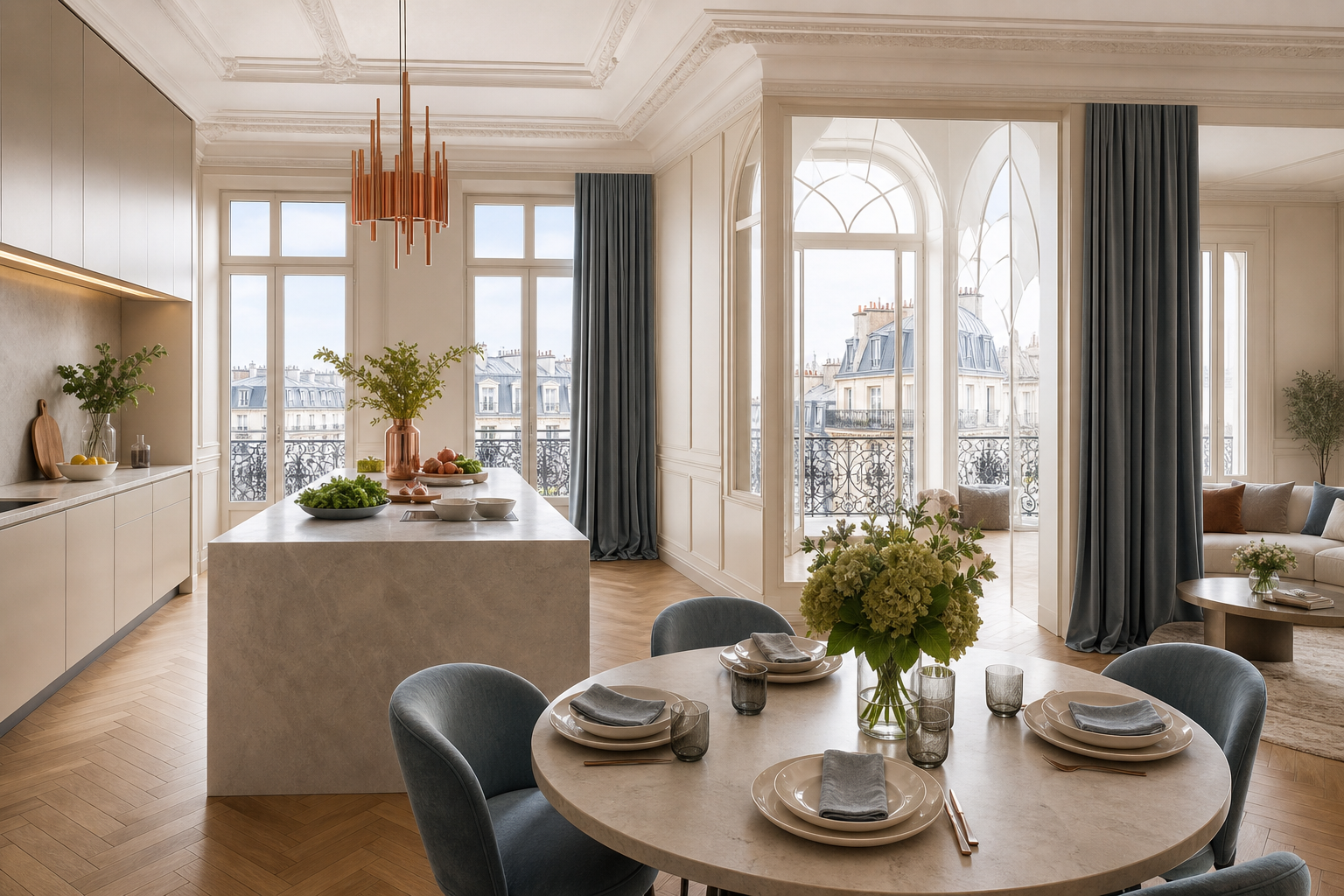
The result is a kitchen that feels calm before it feels smart. Recipes, inventory, and appliance timing can be supported by connected tools, but the visible room remains residential: closed storage, durable surfaces, balanced light, and a layout that makes sense to any person standing in it. That is the useful 2026 reality check for kitchen AI.
Is kitchen decision automation the same as a smart kitchen?
No. A smart kitchen usually starts with connected devices, while kitchen decision automation starts with repeat household choices. The method maps recipes, inventory, appliance timing, and cleanup first, then decides which connected tools are useful. This keeps the room practical even if software changes.
What should be planned before buying AI kitchen appliances?
Plan pantry categories, prep zones, appliance landing space, sink adjacency, power access, ventilation, and manual controls first. These durable choices decide whether reminders and appliance timing are helpful. Without a stable room plan, connected features can create more attention instead of less.
Why does Fadior connect this topic to 304 stainless steel?
Kitchen decision automation increases daily use of storage, appliances, and cleanup zones. Fadior uses 304 stainless steel cabinet bodies because the kitchen must resist moisture, cleaning, heat adjacency, and frequent opening. The material base keeps the room durable while connected features remain replaceable.
Can AI manage kitchen inventory reliably?
AI can help with reminders and repeat shopping patterns, but only when storage has clear categories. Daily staples, weekly goods, reserve items, cookware, and cleaning supplies need consistent locations. A reminder is useful after the room makes the inventory visible and organized.
What is the safest way to add automation to a premium kitchen?
Keep every connected feature optional. A homeowner should preserve manual controls, service access, clear appliance zones, and a simple room flow. Automation should support repeat routines such as timing, reminders, and cleanup, not take over safety decisions or make the kitchen unusable without an app.
Related products
Specific products worth reviewing next.



References
Authoritative sources cited in this article
- Matter smart home standard
Interoperability reference for connected-home device planning.
Connectivity Standards Alliance Matter
- connected appliance interoperability
Connected appliance interoperability and experience reference.
Home Connectivity Alliance
- ASTM A240 stainless sheet standard
Stainless sheet and plate standard referenced for material specification.
ASTM A240/A240M
- ASHRAE energy standard
Building energy standard reference for thinking about appliance and energy planning.
ASHRAE Standard 90.1
- consumer technology standards
Consumer technology standards reference for connected-home planning.
Consumer Technology Association Standards
Editorial transparency
Jonas Weber is a composite editorial persona maintained by Fadior Home's editorial team. Articles attributed to this byline are produced through an AI-assisted editorial workflow with human review, and represent the consolidated voice of multiple researchers and contributors.
Ready to specify?