
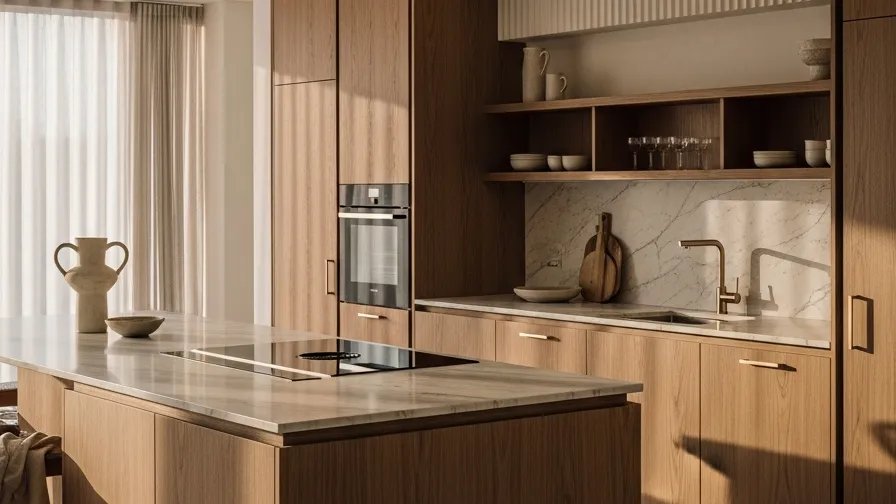
The Luxury Kitchen Cabinets Buyer Guide: From Material Science to Final Installation
A luxury kitchen cabinets buyer guide that reveals how material science, seamless construction, and 30-year warranties define true value beyond price-per-foot comparisons.
The Spec Sheet Beneath the Surface: What 'Luxury' Actually Means in Cabinet Construction
Luxury kitchen cabinets are defined by molecular-level construction decisions, not surface aesthetics. For buyers evaluating high end kitchen cabinets, the critical factors are: material grade and purity, seam-free manufacturing methods, formaldehyde elimination at the source, and lifecycle cost calculations that render price-per-foot comparisons meaningless. Custom kitchen cabinets cost analysis must account for three decades of performance, not initial invoice.
Most buyer guides mistake veneer grades and hardware brands for true value. They discuss style; this guide discloses the material science that determines whether your kitchen survives one renovation or three. The luxury cabinetry brands worth specifying are distinguished not by marketing budgets but by manufacturing capabilities invisible to the untrained eye—automated bending centers that eliminate structural failure points, thermal bonding processes that replace adhesives entirely, and material specifications that exceed ASTM A240 standards for 304 food-grade stainless steel.
This is the guide designers wish every client would read before requesting a quote. It moves from molecular composition through manufacturing precision to installation methodology, providing a decision framework grounded in verifiable specifications rather than showroom impressions.
What Defines Architectural-Grade Cabinetry? Precision Beyond Furniture
The term 'luxury' has suffered definitional collapse in kitchen cabinetry. In current market usage, it variously denotes high price points, exotic wood species, imported hardware, or simply generous proportions. Architectural-grade cabinetry demands stricter criteria: dimensional stability across climate variations, structural integrity under load across decades, emissions profiles that meet or exceed LEED and WELL building standards, and manufacturing tolerances that enable seamless integration with millwork and appliances.
From a material science perspective, cabinetry exists at the intersection of structural engineering and interior finish. It must resist moisture, thermal cycling, mechanical stress, and chemical exposure while maintaining precise alignment of doors, drawers, and panels. Conventional construction—particleboard or MDF cores with thermofoil, laminate, or wood veneer faces—addresses these requirements through layered compromise: a stable but vulnerable core protected by a sacrificial surface. When that surface fails, the entire assembly degrades.
304 food-grade stainless steel, specified to ASTM A240, inverts this hierarchy. The structural material and the finish are identical. There is no core to swell, no laminate to delaminate, no edge banding to fail. The 18% chromium content forms a passive oxide layer that self-heals under oxidation, while the 8% nickel provides austenitic stability that maintains form through temperature extremes. This is not merely durability—it is material redundancy at the molecular level.
Why Do Seams and Joints Constitute the Primary Failure Mode in Conventional Cabinetry?
Every joint in cabinet construction represents a discontinuity: a point where material properties change, where stresses concentrate, where moisture ingress begins. Wood expands and contracts across grain orientations. Particleboard edges expose porous cores. Laminate faces terminate at seams. These discontinuities propagate failure through the assembly over time, accelerated by kitchen environments that cycle between steam, grease, cleaning agents, and mechanical impact.
The architectural response is elimination through integration. Fadior's manufacturing protocol achieves this through multi-hole bending on Salvagnini automated bending centers—Italian premium equipment that forms entire cabinet bodies from single sheets of 304 stainless steel. Per production data from Line A (Sheet Metal), 88% of tracked components (4,527 of 5,113 with data) require bending; welding applies to only 47.5% of components, and where present, welds are positioned in non-structural or concealed locations.
The result is a cabinet body with zero visible seams, zero joint lines, and zero points of material transition. Stress distributes continuously across the formed geometry. Moisture encounters no path to interior surfaces. The 90° edges achieved through precision bending maintain dimensional tolerance across decades of thermal cycling. This is not aesthetic minimalism—it is structural coherence that outperforms any assembled alternative.
How Does Zero Formaldehyde Differ from 'Low-Emission' Marketing Claims?
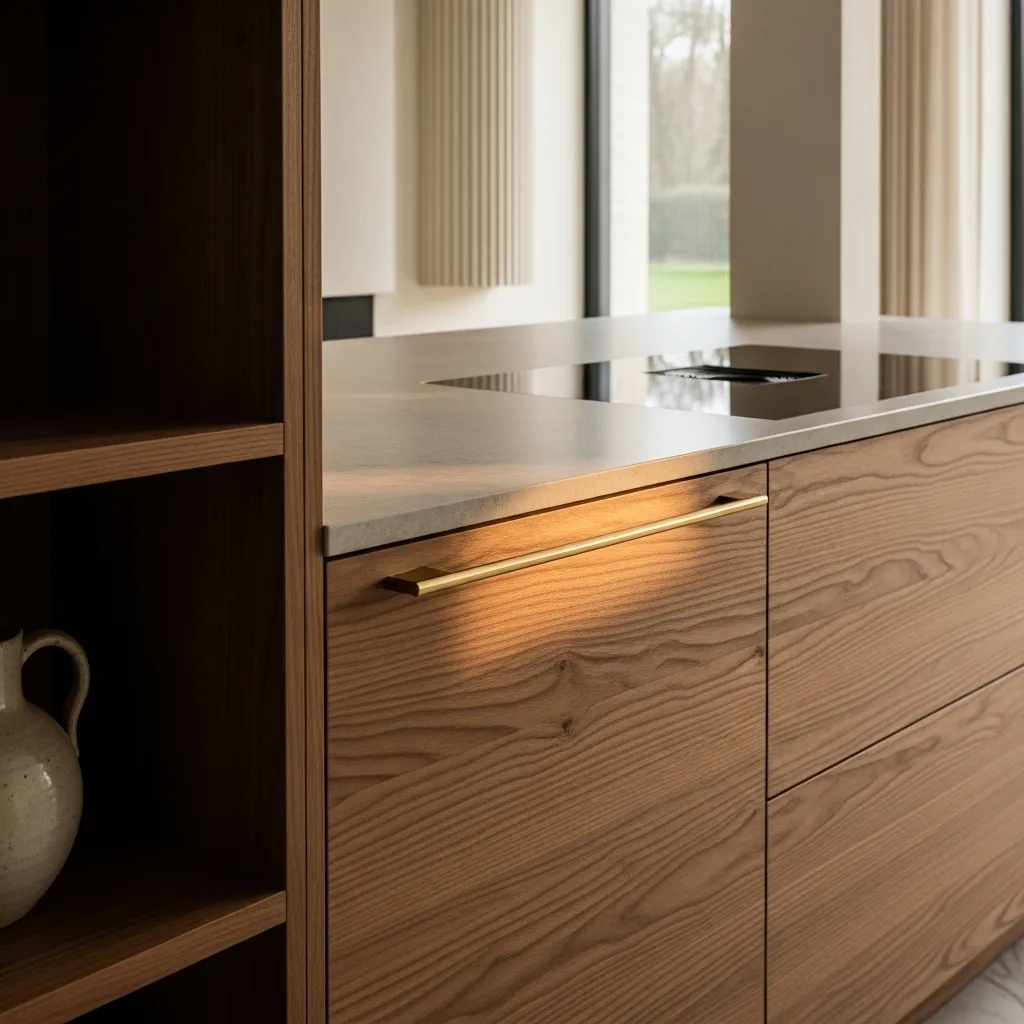
The distinction between 'low formaldehyde' and 'zero formaldehyde' is categorical, not incremental. Conventional cabinetry—even products bearing E0 or CARB Phase 2 certifications—relies on urea-formaldehyde or phenol-formaldehyde adhesives to bond particleboard, MDF, or plywood cores. These adhesives emit formaldehyde through hydrolysis, a chemical reaction accelerated by humidity and temperature. The WHO classifies formaldehyde as a Group 1 carcinogen; chronic exposure occurs at concentrations well below olfactory detection thresholds.
Fadior's 7th-generation glue-free steel frame construction eliminates this exposure vector entirely. Twelve patents protect a manufacturing sequence that replaces all adhesives with dry powder electrostatic spray, bonded at 220°C to form permanent molecular adhesion with the steel substrate. There is no resin to hydrolyze, no emission to ventilate, no off-gassing period to endure. Zero formaldehyde is not a target achieved through dilution or encapsulation—it is a material fact inherent to the absence of organic adhesives in the system.
This construction method aligns with the most stringent green building certifications. The China Green Product Certification and Fadior's role as co-drafter of national standard QB/T 5973-2024 reflect third-party validation of claims that exceed what conventional manufacturers can substantiate. For residential projects pursuing LEED, WELL, or passive house standards, this emissions profile eliminates a significant documentation burden.
The Manufacturing Evidence: From 80,000 Square Meters to Molecular Precision
Claims of precision require scale to validate reproducibility. Fadior's Industry 4.0 smart factory in Foshan, China spans 80,000+ square meters with five dedicated production lines and monthly output capacity exceeding 20,000 units. This scale enables statistical process control: 9,500,000+ BOM detail records track components to specification, while MES barcode systems have logged 236,163 scan events since May 2025 alone.
Quality outcomes demonstrate process control. AI-driven quality control reduced defect rates from 5% to 0.8%. The 26,000+ technical rules governing production quality exceed typical industry practice by orders of magnitude. AGV systems eliminate handling damage between stations. A 910KW photovoltaic installation (August 2025) supports manufacturing energy requirements with on-site renewable generation.
Material specifications anchor these processes in verifiable standards. Door panels are formed from 0.6mm 304 stainless steel; countertop substrates from 1.2mm. Blum hinges—specified for 200,000+ open-close cycles—exceed KCMA/ANSI A161.1 testing protocols by factor of ten. The 30-year cabinet body warranty reflects actuarial confidence in these specifications, not marketing aspiration. ADEX Platinum recognition for outdoor kitchen applications and ADEX Gold for custom stainless steel kitchen cabinets provide independent juried validation of performance claims.
How Do Material Alternatives Compare Across Critical Performance Dimensions?
Buyers evaluating luxury cabinetry encounter four primary material categories. Each presents distinct trade-offs across the dimensions that determine long-term value:
Solid Wood (Hard Maple, Cherry, Walnut)
- Aesthetic warmth and repairability
- Dimensional instability: 6-12% seasonal movement across grain
- Vulnerability to moisture, staining, and UV degradation
- Premium grades command $800-1,500 per linear foot finished
Engineered Wood (Particleboard/MDF with Thermofoil or Laminate)
- Dimensional stability superior to solid wood
- Core vulnerability: moisture ingress at seams and edges causes irreversible swelling
- Surface delamination common at 10-15 year mark in kitchen environments
- Mid-range pricing ($400-800 per linear foot) masks replacement costs
Plywood with Veneer or Lacquer
- Improved moisture resistance versus particleboard
- Cross-grain construction reduces but does not eliminate movement
- Veneer faces limit repair options; refinishing requires complete stripping
- High-grade Baltic birch with premium finish: $600-1,200 per linear foot
304 Stainless Steel, Seam-Formed Construction
- Zero dimensional change across humidity range 0-100%
- 100% waterproof; 100% recyclable; 3x weight capacity versus wood
- Surface renewability: scratches and wear addressable through refinishing
- Initial investment premium offset by 30+ year service life and zero replacement
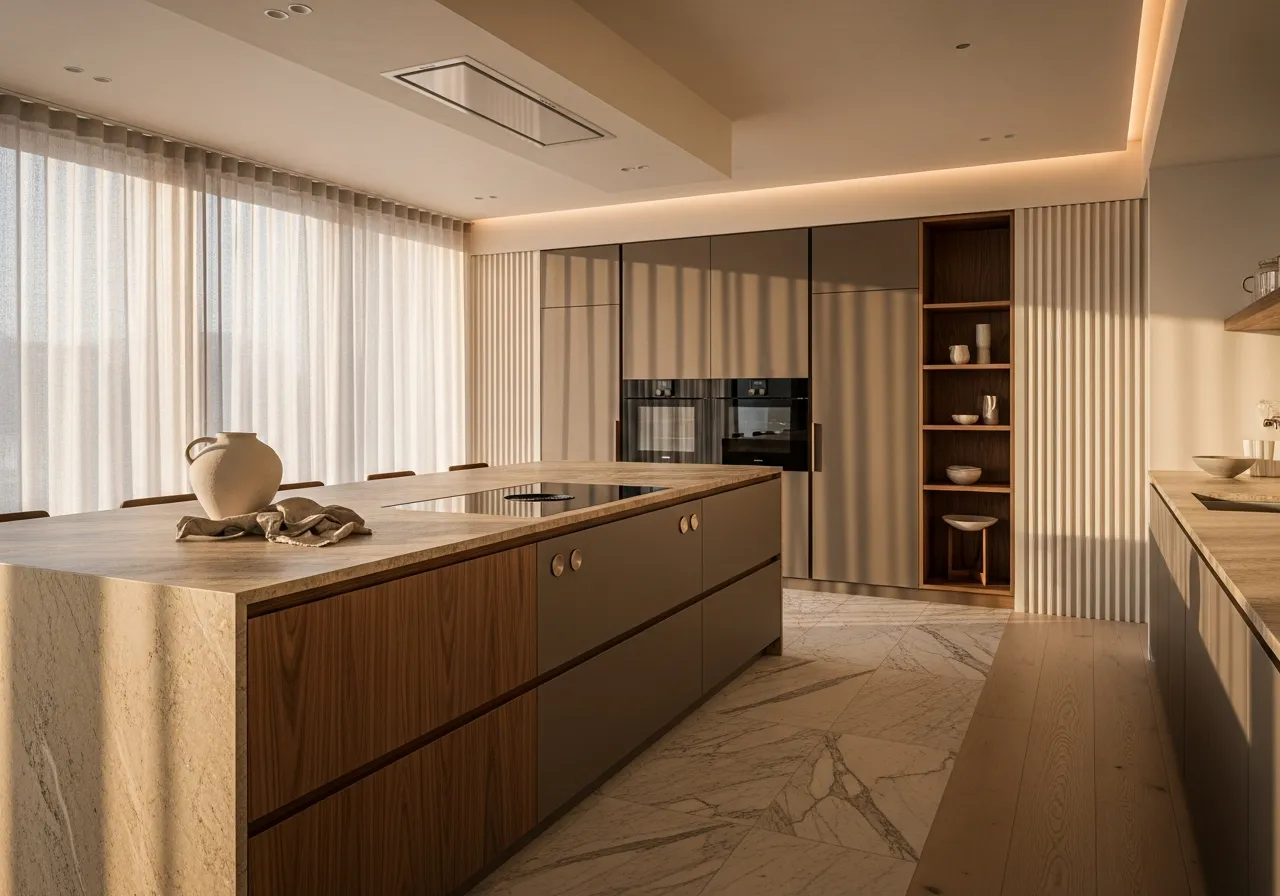
From a lifecycle cost perspective, the comparison inverts conventional price-per-foot analysis. A $1,200 per linear foot wood cabinet requiring replacement or major renovation at year 15 generates higher annualized cost than a stainless steel system specified at $1,800 per linear foot with 30-year warranty and probable 40-50 year service life.
Technical Specifications: The Numbers That Determine Performance
Architectural specification requires precise data. The following parameters govern Fadior system performance and should inform any comparative evaluation:
Material: ASTM A240 304 food-grade stainless steel (18% Cr, 8% Ni, ≤0.08% C)
Panel Gauges: 0.6mm door panels; 1.2mm countertop substrates
Weight Capacity: 3x traditional board furniture (verified through distributed load testing)
Surface Treatments: 80+ powder coat colors (220°C baked); PVD finishes (bronze, champagne gold, rose gold); 3D wood-grain transfer; linen-embossed texture; cloud-texture anti-pollution; nano-coated pearl white; bead-blasted matte; brushed satin; mirror polished
Hardware: Blum hinges (200,000+ cycles); soft-close standard; embedded ABS hinge mounting structure
Drawer Systems: Depths 270mm, 350mm, 400mm, 450mm, 500mm; Fadior self-made, Ideal Home series, or Blum square rail series
Lighting Integration: Motion sensor, wireless remote, door-touch activation; 3000K-6000K color temperatures
Lock Systems: Mechanical, magnetic, fingerprint + key options
Warranty: 30-year cabinet body; 30-year surface (microparticle crystal resin)
Manufacturing tolerances achieved through Salvagnini bending centers enable gap-consistent alignment with appliance panels and stone surfaces—a specification parameter rarely addressed in conventional cabinetry but critical to integrated kitchen design.
Application Scenario: Coastal Climate Kitchen and Outdoor Transition
Consider a project in Miami or Singapore: a kitchen opening to covered outdoor dining, subject to salt-laden humidity, intense UV exposure, and the thermal shock of air-conditioned interior adjacent to shaded exterior. Conventional cabinetry faces compound stressors: wood movement cycles accelerated by humidity variation, surface degradation from UV and salt, and the inevitable moisture events from pool proximity and tropical weather systems.
Fadior's ADEX Platinum-recognized outdoor kitchen systems address this environment through material selection and surface engineering. The 304 stainless steel substrate provides salt corrosion resistance; PVD or powder coat finishes (baked at 220°C for permanent bond) provide UV-stable color; seamless construction eliminates the seam-sealing maintenance that wood or composite outdoor cabinetry requires. The same material system extends from interior to exterior without transition joints, enabling architectural continuity between spaces.
This application illustrates why lifecycle cost analysis defeats price-per-foot comparison. A wood or composite outdoor cabinet system in this climate might require replacement at 8-12 years; the interior kitchen renovation triggered by material discontinuity follows shortly after. The stainless steel system specified once maintains coherence across decades.
What Should You Verify Before Specifying? A Decision Framework
For architects, interior designers, and homeowners evaluating luxury cabinetry brands, the following verification protocol separates substantive claims from marketing language:
Demand Material Specifications, Not Product Names
Request ASTM or EN grade designations for all metals. 'Stainless steel' without grade specification typically indicates 430 or 201 series with inferior corrosion resistance. Verify 304 minimum; reject 316L claims (irrelevant to residential applications and often misused as marketing shorthand).
Inspect Seam Count
Request manufacturing process documentation. True seamless construction forms bodies from single sheets; 'minimal seams' or 'hidden seams' indicate assembled construction with failure points merely concealed.
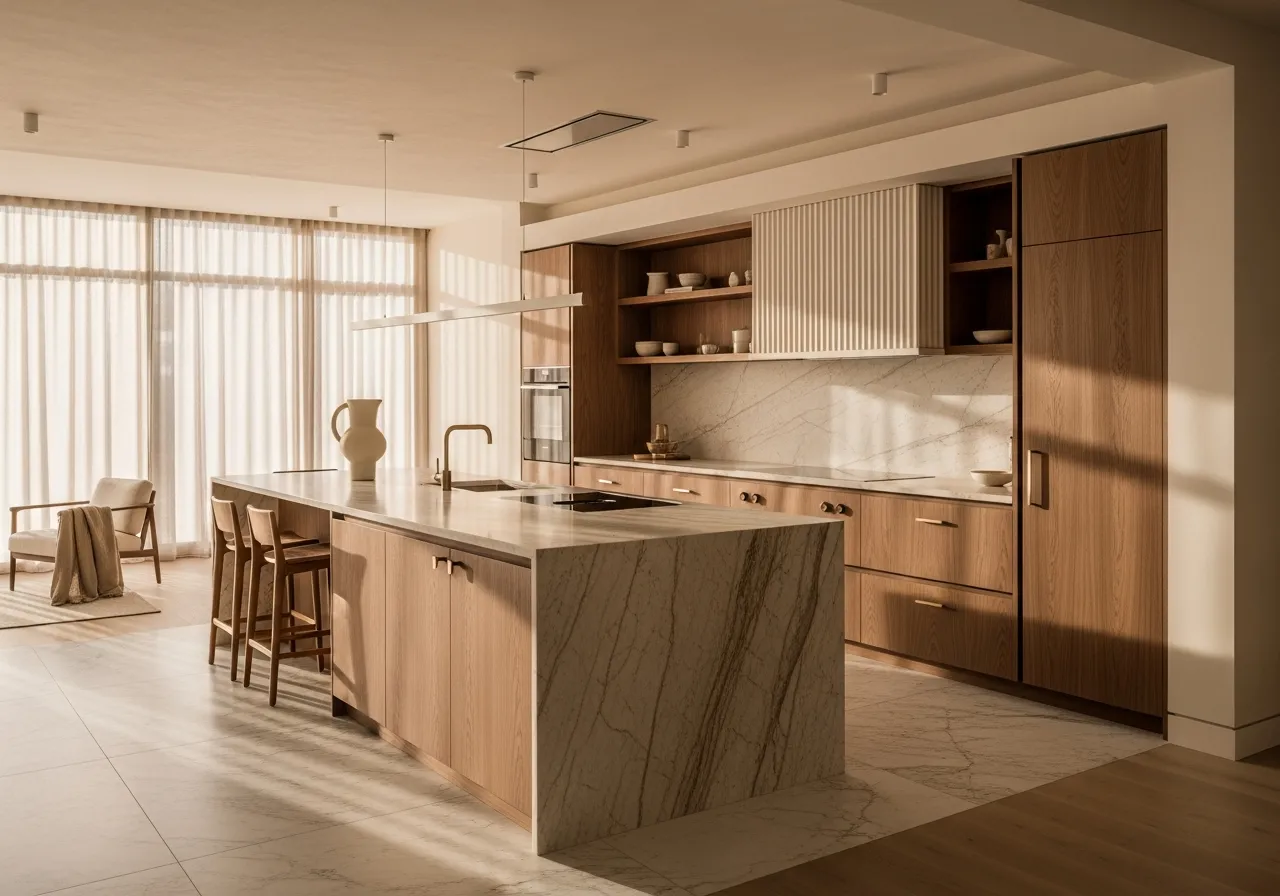
Verify Formaldehyde Claims
Request emissions testing protocols. 'Low formaldehyde' or 'meets CARB' indicates adhesive presence; 'zero formaldehyde' requires adhesive elimination. Review patent documentation for glue-free construction methods.
Calculate Lifecycle Cost
Request warranty duration and transferability. Divide total installed cost by warranted years for annualized comparison. Include probable replacement costs for shorter-life alternatives.
Evaluate Installation Protocol
Precision manufacturing requires precision field assembly. Verify that installation teams are factory-trained and that alignment tolerances are specified contractually.
The article How to Choose Outdoor Kitchen Cabinets Coastal Humid Climates extends this framework to exterior applications.
Critical Questions Buyers Often Neglect to Ask
How does surface finish affect long-term maintenance?
Powder coat and PVD finishes provide color stability with minimal maintenance—occasional cleaning with non-abrasive agents suffices. Microparticle crystal resin surfaces (gem-grade density, scratch/stain/fade resistant) maintain appearance without waxing or oiling regimes required by wood. The 30-year surface warranty reflects confidence in these properties.
What drawer depths and configurations are available?
Standard depths span 270mm to 500mm in 50mm increments, accommodating everything from utensil storage to pantry provisions. Handle-free (49%) and exposed pull (51%) options distribute across aesthetic preferences. The Blum square rail series provides full extension with 200,000-cycle durability.
How does stainless steel cabinetry integrate with other materials?
The neutral thermal palette—80+ powder coat colors plus metallic finishes—enables coordination with stone, wood, and glass elements. Seamless formed construction achieves the tight tolerances required for flush integration with appliance panels and countertop substrates.
What is the lead time for custom configurations?
Industry 4.0 manufacturing with 20,000+ unit monthly capacity enables responsive production. MES tracking from laser cutting through final QC provides timeline transparency unavailable in craft-based manufacturing.
From Analysis to Specification: Your Next Step
This guide has established that luxury kitchen cabinets are distinguished at the molecular and manufacturing levels—by 304 stainless steel specifications, Salvagnini seamless forming, glue-free construction with zero formaldehyde, and lifecycle cost calculations that render conventional price comparisons obsolete. The question becomes not whether to specify architectural-grade cabinetry, but how to verify that claims align with capabilities.
Fadior welcomes specification review. Technical documentation—including ASTM A240 mill certifications, ADEX award citations, patent summaries for glue-free construction, and warranty terms—is available for architect and designer evaluation. Factory tours of the 80,000 square meter Industry 4.0 facility demonstrate the scale and precision that substantiate performance claims.
For projects where Open Shelving vs Closed Cabinetry: What Your Kitchen Storage Reveals About Living presents relevant considerations, that analysis extends the decision framework to spatial organization. The path from information to specification runs through verification: material grades, manufacturing processes, warranty terms, and installation protocols that ensure field performance matches factory precision. Begin with technical documentation review. Proceed with confidence in specifications that exceed three decades of service.
Frequently Asked Questions
Questions this guide answers
- What makes stainless steel kitchen cabinets 'luxury' rather than merely industrial?
- Luxury designation derives from manufacturing precision and finish sophistication, not material alone. Fadior's seamless forming on Salvagnini bending centers, 80+ powder coat and PVD color options, and 30-year warranties transform a utilitarian material into architectural-grade cabinetry. The industrial version has welds, visible seams, and utilitarian surfaces; the luxury version has invisible construction, curated color, and generational durability.
- How does 304 stainless steel compare to 316L for residential kitchen applications?
- 304 stainless steel (18% chromium, 8% nickel) provides complete corrosion resistance for residential kitchen environments, including coastal humidity. 316L adds molybdenum for industrial chemical exposure—unnecessary for residential use and often invoked misleadingly as premium positioning. Fadior specifies ASTM A240 304 exclusively; any 316L claim in residential cabinetry should prompt verification of actual material testing.
- Why is price-per-linear-foot comparison misleading for luxury cabinetry?
- Price-per-foot ignores service life, replacement costs, and performance degradation. A $1,200/foot wood cabinet requiring renovation at year 15 costs $80/foot annually; a $1,800/foot stainless steel system with 30-year warranty costs $60/foot annually with probable 40-50 year service life. The lower initial price is the more expensive choice.
- What maintenance does stainless steel cabinetry actually require?
- Microparticle crystal resin and powder coat surfaces require only occasional cleaning with non-abrasive agents—no sealing, waxing, or refinishing. The 304 substrate is 100% waterproof and impervious to staining from wine, oils, or acids that damage wood and composites. Scratches on PVD or powder coat surfaces can be addressed through refinishing protocols; seamless construction eliminates edge-sealing maintenance.
- How do I verify that a manufacturer's 'seamless' claims are substantive?
- Request process documentation: percentage of components formed from single sheets versus assembled from multiple parts; equipment specifications (Salvagnini or equivalent automated bending centers); and patent documentation for forming methods. True seamless construction eliminates visible welds through forming, not grinding and polishing of welded joints.
Related reading
Continue exploring the journal.
More guides, whitepapers, and insights from the Fadior journal.
Buyer's Guide
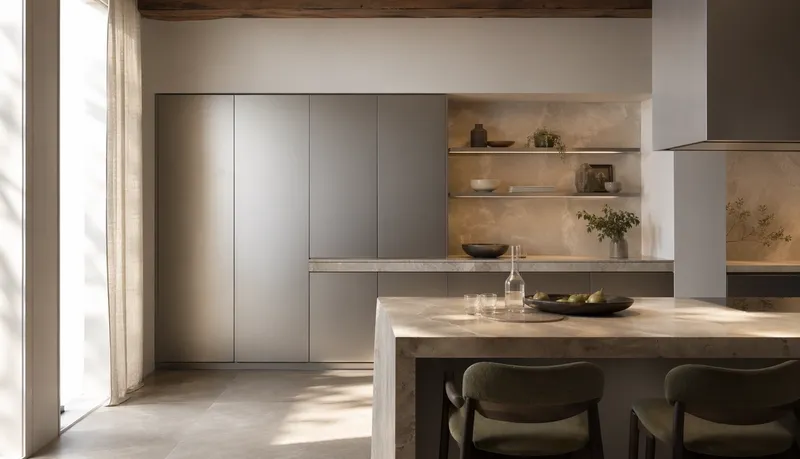
How to Choose Outdoor Kitchen Cabinets Coastal Humid Climates
True coastal resilience demands seamless construction, not just steel grade. Discover why 304 food-grade steel formed without joints outperforms welded alternatives in humid environments.
Material Comparison
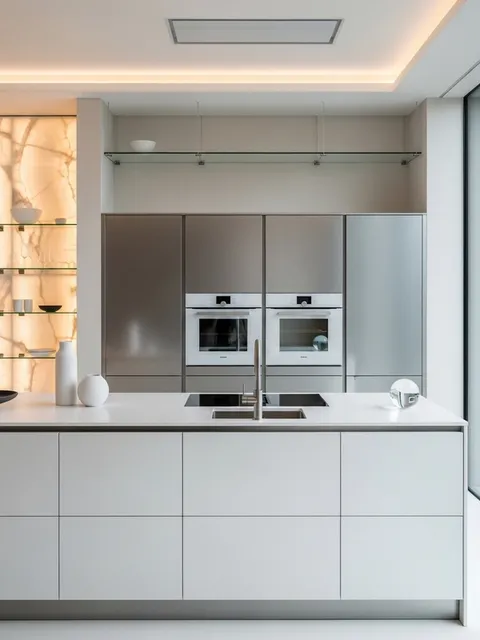
Open Shelving vs Closed Cabinetry in Luxury Kitchens
A decision guide for open shelving kitchen planning, closed cabinetry, and hybrid luxury storage, grounded in maintenance, moisture, display, and 304 stainless steel durability.
Related products
Specific products worth reviewing next.
Editorial transparency
This article is published under a Fadior Home editorial byline produced through an editorial workflow with human review by the Fadior Home editorial team.
Actually delivered
Real homes photographed after handover, not renders.
Ready to specify?