
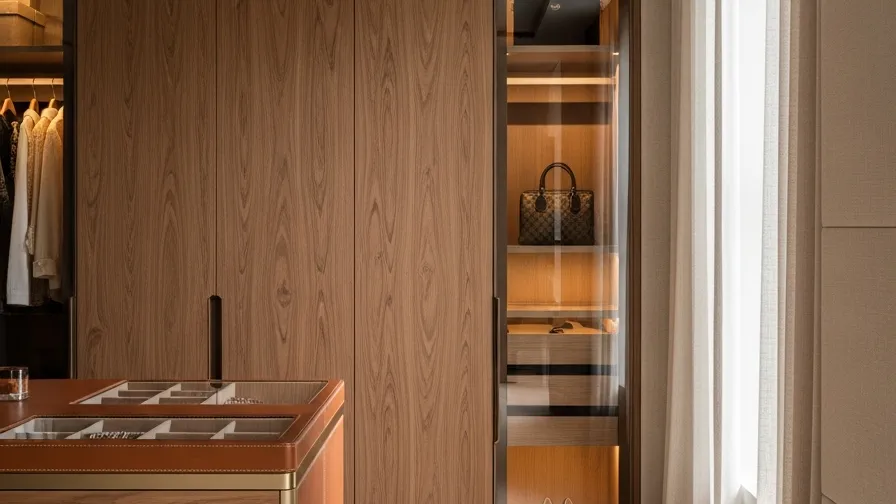
Manhattan Penthouse Stainless Steel Kitchen: A Unified Material Language from Kitchen to Wardrobe
Manhattan penthouse stainless steel kitchen design demands material discipline. Fadior's seamless 304 steel system unifies kitchen, bath, and wardrobe without the fragmentation that defeats high-rise spatial logic.
The Vertical Constraint: Why Penthouses Demand Material Discipline
Manhattan penthouse stainless steel kitchen design succeeds when material coherence overrides decorative accumulation. In vertical luxury living, where every square foot carries exponential value and sightlines stretch across open plans, fragmented material palettes create visual noise that compresses perceived space. The solution is not more variety but deeper commitment to a single architectural material executed with precision.
This article examines how 304 food-grade stainless steel, specified as a whole-home system, resolves the tension between functional durability and aesthetic unity. Drawing on Fadior's manufacturing architecture—specifically the Salvagnini automated bending centers that form entire cabinet bodies from single steel sheets—we trace the path from raw material to integrated interior across four domestic zones: kitchen, bath, wardrobe, and service core.
The analysis addresses a specification challenge unique to New York luxury kitchen projects: how to move monolithic steel modules through high-rise logistics while maintaining the seamless, weld-free surfaces that define premium architectural metalwork.
From Sheet to System: How Does Salvagnini Bending Eliminate Visual Fragmentation?
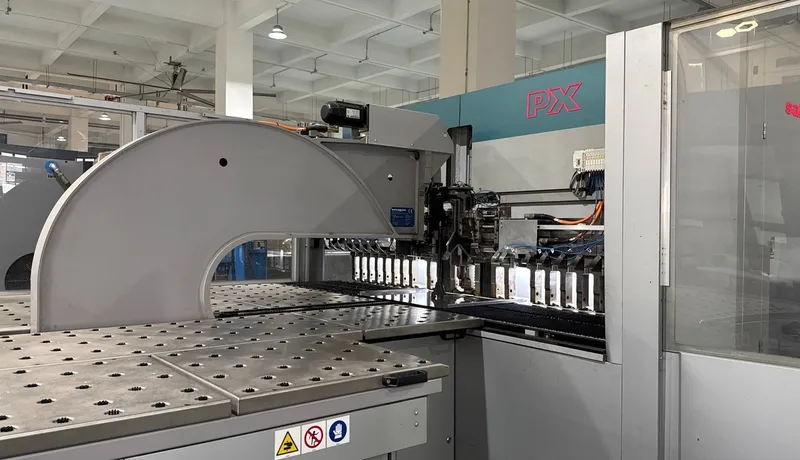
The architectural integrity of Fadior's penthouse cabinetry design originates in a manufacturing process that predetermines finish quality. On Salvagnini automated bending centers—Italian equipment positioned at the apex of precision metal forming—flat 304 stainless steel sheets undergo laser cutting to dimensional tolerances measured in fractions of a millimeter, then receive successive bends to create perfect 90° edges.
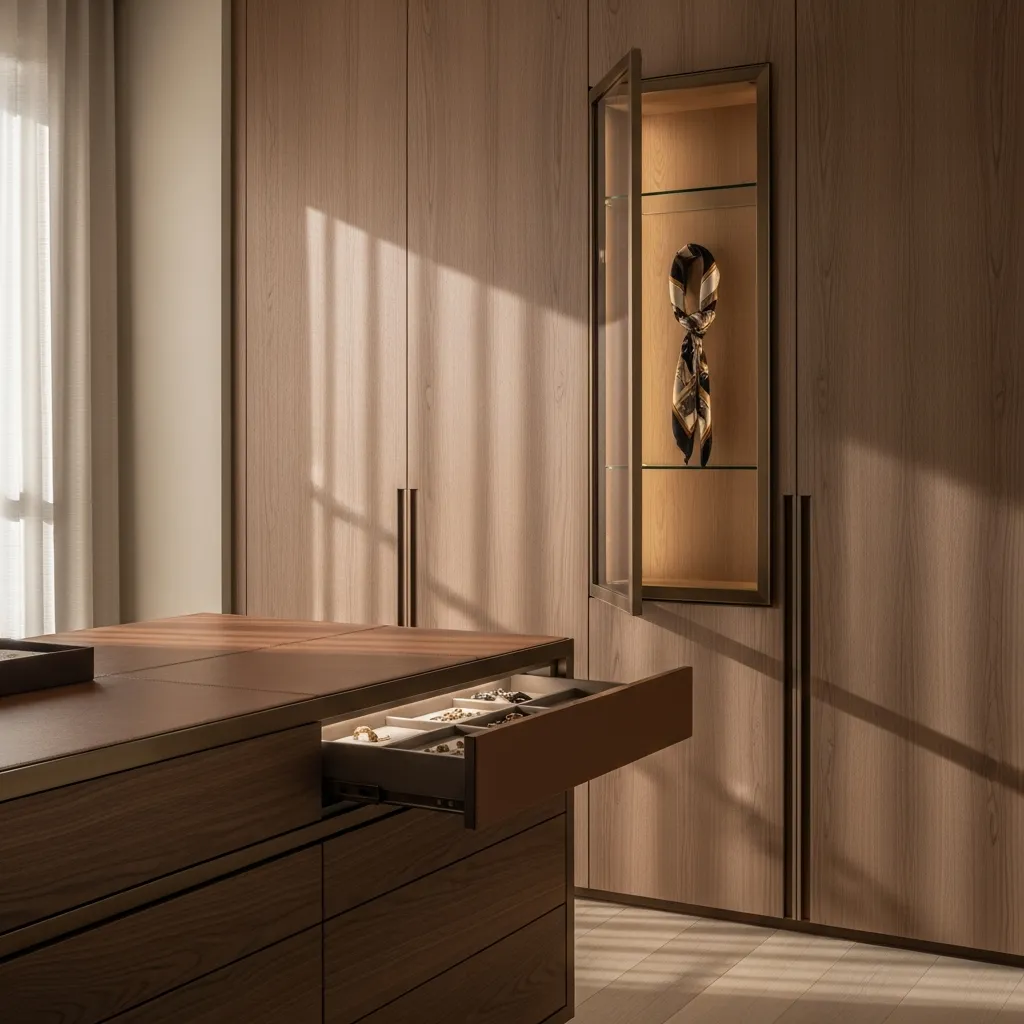
The result is a cabinet body formed without seams, joints, or visible welds. Research data indicates 88% of tracked components (4,527 of 5,113 with manufacturing records) utilize this bending process rather than welded assembly. For the Manhattan context, this translates to surfaces that read as continuous architectural planes, not assembled furniture. The absence of seams eliminates the shadow lines and material transitions that fragment visual perception in compact urban dwellings.
From a material science perspective, this forming method preserves the structural homogeneity of 304 stainless steel—18% chromium, 8% nickel—maintaining the grade's inherent corrosion resistance across every surface. Unlike wood-based cabinetry, which requires edge banding to conceal porous substrates, or welded steel systems that introduce heat-affected zones and oxidation risk, the bent-sheet architecture delivers consistent performance from face to corner.
Zero Formaldehyde at Altitude: What Replaces Adhesive Construction?
Interior air quality in sealed high-rise environments has become a specification priority following WHO classification of formaldehyde as a Group 1 carcinogen and increasingly stringent NYC building codes. Fadior's response is not incremental emission reduction but absolute elimination: a glue-free steel frame construction protected by 12 patents covering zero-adhesive manufacturing methods.
The substitution is precise. Where conventional cabinetry relies on urea-formaldehyde resins and hot-melt adhesives for panel bonding and edge application, Fadior employs imported PET film combined with dry powder electrostatic spray, bonded at 220°C. This thermal fusion creates molecular-level adhesion without volatile organic compound introduction. The distinction matters for penthouse applications: "low formaldehyde" claims still permit measurable emissions; zero-formaldehyde construction removes the emission source entirely.
Third-party validation includes China Green Product Certification and co-authorship of QB/T 5973-2024, the national green factory standard for cabinetry manufacturing. For architects specifying whole home steel systems, this compliance architecture supports LEED and WELL certification pathways without the documentation burden of emission testing for every substrate.
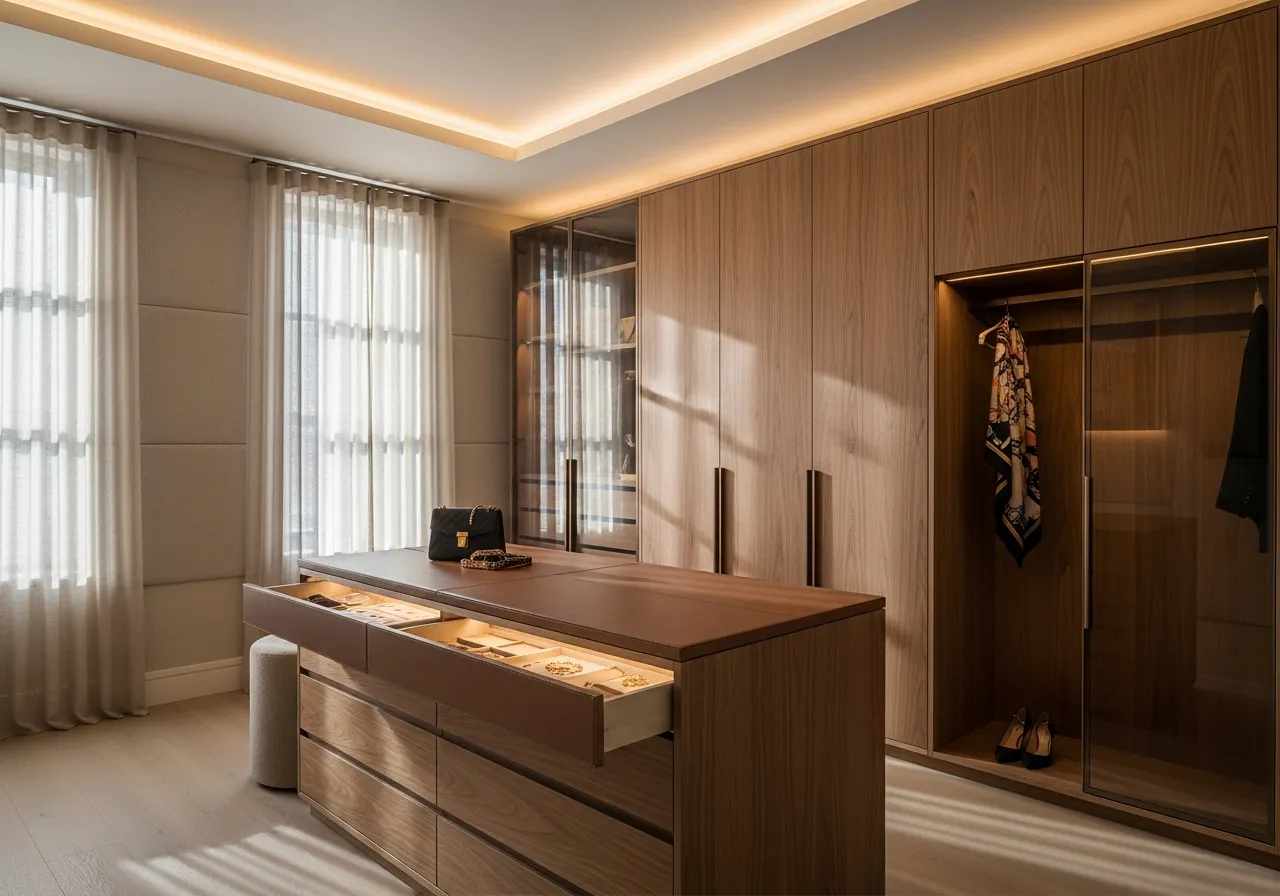
Four Rooms, One Language: How Does Steel Adapt Across Domestic Programs?
The test of a unified material system is its performance across divergent functional demands. Kitchen environments require heat resistance and grease impermeability; bathrooms demand complete moisture immunity; wardrobes need dimensional stability for precise alignment; service cores must endure mechanical stress. Wood-based solutions address these through material variation—different substrates, finishes, and edge treatments for each zone—inevitably sacrificing visual coherence.
304 food-grade stainless steel meets all four programs through inherent material properties rather than applied compensations. The 100% waterproof specification eliminates the swelling, delamination, and mold susceptibility that degrade wood cabinetry in humid bathroom conditions. Weight capacity testing demonstrates 3x structural performance versus traditional board furniture, critical for wardrobe systems supporting extensive clothing collections. The microparticle crystal resin surface—engineered through solvent-free manufacturing with high-infrared fixed-curing spray—provides gem-grade density that resists scratching, staining, and fading across all applications.
Finish versatility extends this material unity into aesthetic range. Powder coat options span 80+ colors baked at 220°C for permanent bond; PVD finishes in bronze, champagne gold, and rose gold deposit metallic films at atomic depth; 3D wood-grain transfer achieves warm tonalities on steel substrates. The result is program-appropriate expression without material discontinuity—what architectural specification practice recognizes as "variations on a theme" rather than collage.
Engineering the Ascent: How Do Monolithic Modules Conquer High-Rise Logistics?
A persistent objection to custom stainless steel kitchen cabinets in Manhattan addresses not design but delivery: how to transport and install monolithic cabinetry through freight elevators, narrow corridors, and occupied residential buildings. Fadior's manufacturing architecture anticipates this constraint through modular engineering rather than modular appearance.
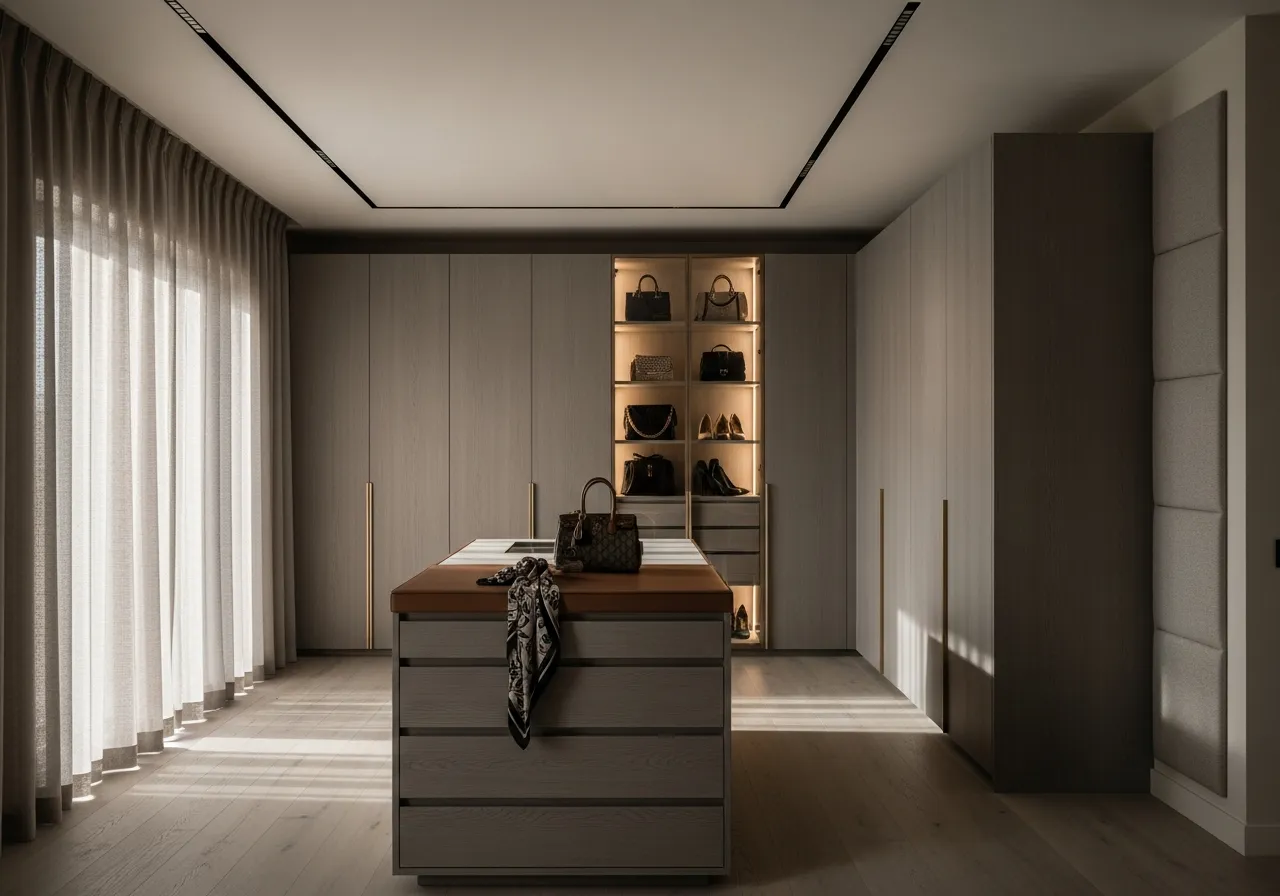
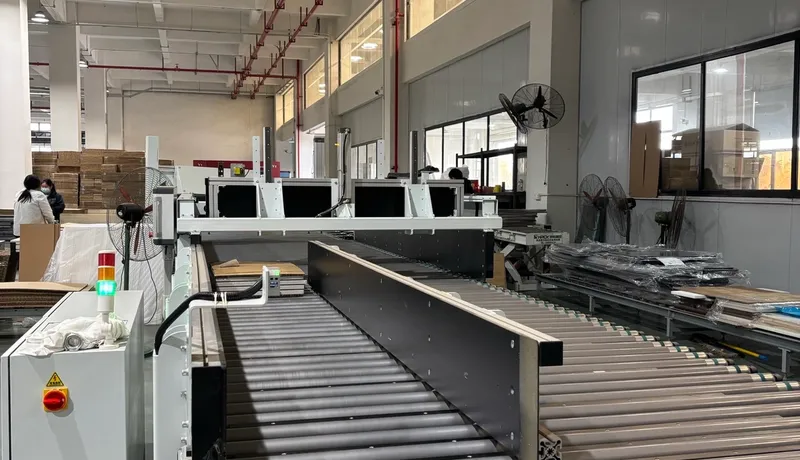
The Line B (Profile) production system—dedicated to whole-house cabinet body manufacturing with 20,000+ unit monthly capacity—produces components dimensioned for standard high-rise freight dimensions while maintaining seamless assembly on site. Critical specifications include: 0.6mm door panels and 1.2mm countertop substrates for optimized weight-to-strength ratio; Blum hinge systems rated for 200,000+ open-close cycles with soft-close mechanisms standard; and embedded ABS hinge mounting structures that eliminate hardware visibility.
Installation protocols leverage the precision of factory-formed components. Where site-built or heavily welded systems require extensive adjustment and finishing, the Salvagnini-bent bodies achieve alignment through geometric accuracy. The 30-year cabinet body warranty—structural coverage that exceeds typical Manhattan condominium ownership duration—reflects manufacturing confidence in this dimensional stability. For developers and owners, this specification translates to reduced punch-list liability and enhanced resale positioning in a market where material quality increasingly influences valuation.
The 30-Year Warranty in a Resale Market: Specifying for Enduring Value
Luxury real estate in Manhattan operates as both residential utility and financial instrument. The specification decisions made during initial construction or renovation compound across decades, affecting maintenance burden, aesthetic longevity, and transfer value. In this context, the 30-year structural warranty on Fadior cabinet bodies functions as a material promise with quantifiable economic implications.
Consider the alternative lifecycle: wood-based cabinetry in high-humidity environments typically requires replacement or substantial refacing within 10-15 years. Each intervention disrupts occupancy, generates construction waste, and diminishes finish coherence. Stainless steel whole house customization, by contrast, maintains material integrity across ownership transitions. The 100% recyclability of 304 steel—recoverable at end-of-life without downcycling—aligns with emerging buyer priorities around embodied carbon and circular construction.
For architects and interior designers currently developing penthouse cabinetry design proposals, the specification pathway begins with spatial analysis: identifying sightlines, program adjacencies, and service core locations where material continuity delivers maximum perceptual impact. Fadior's technical consultation process translates these spatial requirements into manufacturing specifications, with Salvagnini-formed components produced to dimensional tolerances that accommodate high-rise installation constraints. The result is not merely a kitchen, but a material system that scales from single room to complete interior without compromise.
Frequently Asked Questions
Questions this guide answers
- How does a Manhattan penthouse stainless steel kitchen integrate with bathroom and wardrobe cabinetry?
- Fadior's whole home steel system utilizes identical 304 food-grade stainless steel substrates and Salvagnini bending processes across all four zones, ensuring material continuity. The 80+ powder coat colors and PVD finishes (bronze, champagne gold, rose gold) allow program-specific expression—water-resistant surfaces for baths, soft-close wardrobe interiors—while maintaining unified architectural language. This eliminates the visual fragmentation that occurs when mixing wood, laminate, and stone across adjacent spaces.
- What makes Fadior's 304 steel construction different from welded stainless steel cabinetry?
- 88% of Fadior components are formed through Salvagnini automated bending rather than welding, creating seamless cabinet bodies from single steel sheets. This eliminates visible welds, heat-affected zones, and oxidation risk while preserving 304 steel's full corrosion resistance. The glue-free steel frame construction—12 patents protecting zero-adhesive manufacturing—further distinguishes the system from conventional metal cabinetry that relies on welded joints and adhesive bonding.
- How does stainless steel cabinetry compare to imported European wood systems for New York luxury kitchens?
- While European wood cabinetry emphasizes craft heritage, Fadior's steel system addresses performance gaps: 100% waterproof construction versus moisture-vulnerable substrates, 3x weight capacity for storage-intensive applications, and zero formaldehyde emissions versus even "low-emission" wood products. The 30-year structural warranty exceeds typical coverage for engineered wood, and 304 steel's recyclability supports circular construction goals that increasingly influence specification decisions.
- What maintenance does a stainless steel kitchen require in a coastal high-rise environment?
- The microparticle crystal resin surface—applied through solvent-free manufacturing with high-infrared curing—provides scratch, stain, and fade resistance that minimizes maintenance intervention. Cloud-texture anti-pollution and nano-coated pearl white finishes offer fingerprint-resistant properties specifically engineered for visible surfaces. Unlike wood, 304 steel requires no humidity control, refinishing, or edge banding repair; cleaning protocols align with standard architectural metal maintenance.
- How do I specify Fadior for a Manhattan penthouse project?
- Begin with spatial documentation: floor plans indicating sightlines, program adjacencies, and service core locations where material continuity delivers maximum impact. Fadior's technical consultation translates these requirements into manufacturing specifications, with Line B production delivering 20,000+ units monthly capacity for project-scale orders. The modular engineering accommodates high-rise freight constraints while maintaining seamless on-site assembly, supported by installation hardware kits prepared through dedicated production lines.
Related reading
Continue exploring the journal.
More guides, whitepapers, and insights from the Fadior journal.
Material Comparison
304 Stainless Steel vs Wood Cabinets: Defining Real Durability
When evaluating 304 stainless steel vs wood cabinets, the distinction lies in structural integrity. Explore how seamless bending and zero formaldehyde standards redefine longevity.
Material Comparison
304 vs 316 Stainless Steel: The Architect's Guide to Grade Selection
When specifying residential interiors, the debate over 304 vs 316 stainless steel often overshadows construction integrity. We examine why seamless 304 architecture delivers superior longevity.
Care & Maintenance
Anti-fingerprint stainless steel: myth, reality, and maintenance
Anti-fingerprint stainless steel promises pristine surfaces, but the reality is more nuanced. Discover what actually works, what doesn't, and how Fadior engineers true fingerprint resistance.
Buyer's Guide
China vs European Stainless Steel Kitchen Cabinets: A Value Architecture Analysis
China vs European stainless steel kitchen cabinets: why tier-1 Chinese manufacturing now matches European technical specifications at one-third the landed cost, and how to audit beyond the brochure.
Material Comparison
Custom vs Semi-Custom Cabinets: What Your Budget Actually Buys
Most buyers assume semi-custom cabinets offer the optimal balance of cost and quality. The tier system obscures material realities that determine whether a kitchen appreciates or depreciates over decades.
Related products
Specific products worth reviewing next.
Editorial transparency
This article is published under a Fadior Home editorial byline produced through an editorial workflow with human review by the Fadior Home editorial team.
Actually delivered
Real homes photographed after handover, not renders.
Ready to specify?