
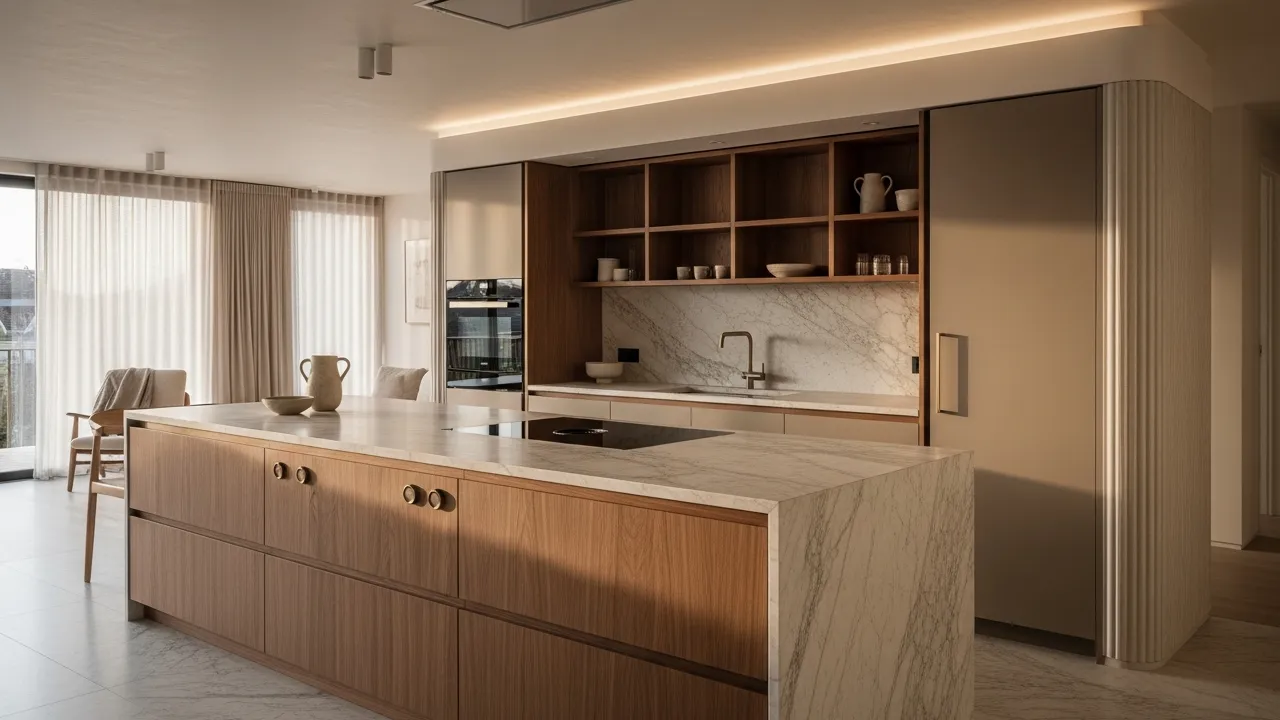
PVD vs Powder Coat Cabinet Finish: A Material Science Guide to 30-Year Durability
PVD vs powder coat cabinet finish: which actually survives three decades of daily use? The answer lies not in the surface, but in what lies beneath.
When the Surface Outlives What Supports It
PVD vs powder coat cabinet finish selection routinely disappoints because specifiers evaluate topcoats in isolation. The failure pattern is predictable: immaculate surfaces crack at seams, delaminate over outgassing substrates, or degrade from moisture intrusion at joints. True durability emerges from the marriage of substrate integrity and thermal bonding chemistry—specifically why Fadior's seamless steel bodies, formed on Italian Salvagnini automated bending centers, fundamentally alter the durability equation that finish comparisons typically ignore.
Most cabinet finish guides mistake aesthetics for performance. They compare color stability, scratch resistance, and gloss retention without addressing the structural reality that 88% of cabinet components undergo bending stress during formation, and 47.5% require welding—precisely where conventional cabinet construction creates failure points that propagate through any surface treatment. The seamless body construction eliminates these vulnerabilities entirely.
This analysis examines how three finish categories—220°C powder coat, PVD vacuum deposition, and brushed 304—perform when applied to architecturally appropriate substrates. The evidence draws from Fadior's Industry 4.0 production sequences, 9.5 million BOM-tracked components, and the ADEX Platinum validation for extreme exposure conditions.
Why Seamless Substrates Redefine Finish Longevity
From a material science perspective, cabinet finish durability is constrained by substrate behavior, not surface hardness. Conventional cabinet construction—whether particleboard, MDF, or even welded steel frames—introduces discontinuities: seams, joints, adhesive interfaces, and thermal expansion mismatches. Each discontinuity becomes a stress concentrator where finishes crack, moisture ingress accelerates corrosion, and thermal cycling induces delamination.
Fadior's seamless body construction eliminates these failure modes at origin. A single 304 stainless steel sheet, laser-cut to precision dimensions, undergoes multi-hole bending on Salvagnini automated centers to form an entire cabinet body without seams, joints, or visible welds. The 0.6mm door panels and 1.2mm countertop substrates maintain uniform thermal expansion coefficients throughout, eliminating the differential movement that fractures powder coat films and compromises PVD adhesion at corners and edges.
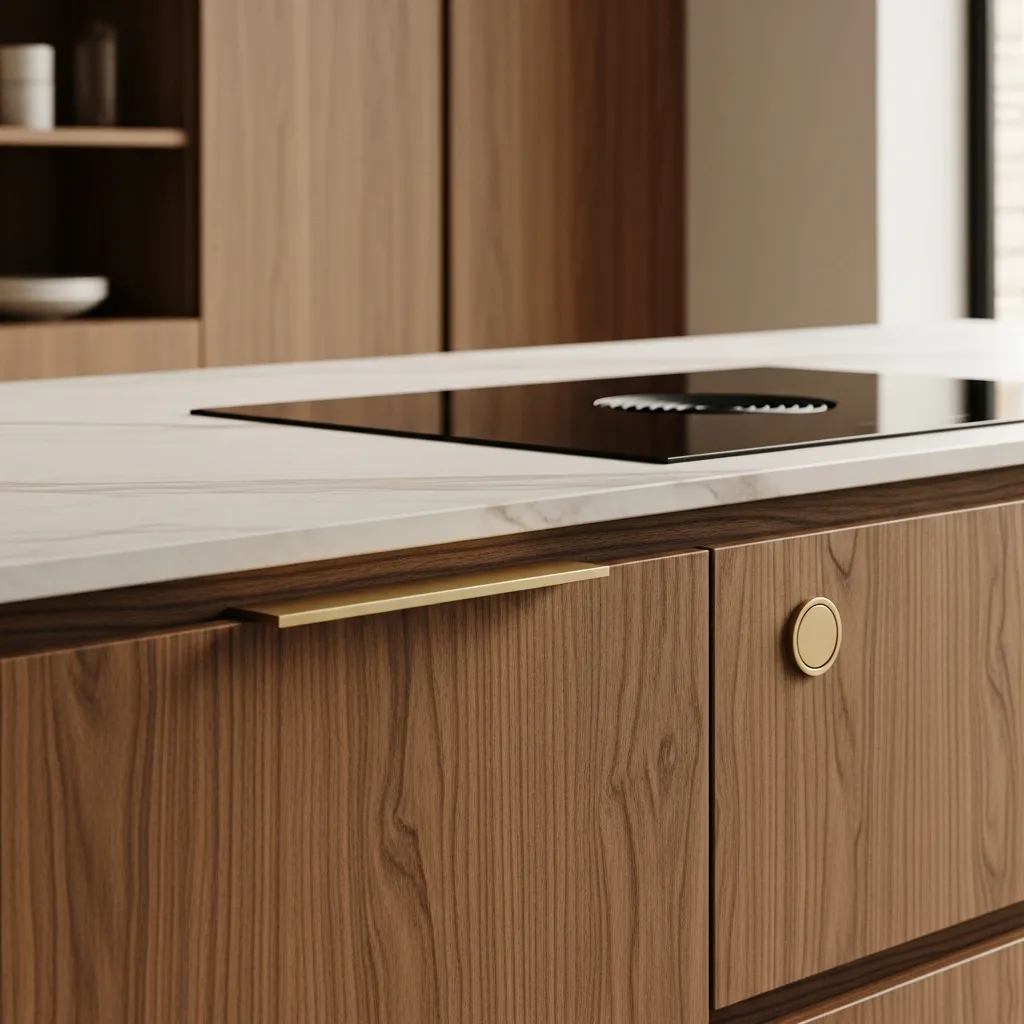
The glue-free steel frame manufacturing—protected by 12 patents—removes a second degradation pathway. Conventional cabinets rely on adhesives that continue curing, outgassing, and hydrolyzing throughout service life. ASTM D6007 and ISO 16000 formaldehyde emission testing protocols confirm that adhesive degradation beneath finishes causes visible blistering, discoloration, and structural compromise. Zero formaldehyde in the substrate means zero outgassing to undermine surface treatments.
What 220°C Thermal Bonding Actually Achieves
Powder coat durability hinges on a parameter rarely specified: cure temperature. Fadior's Line A production sequence bakes powder coat at 220°C, achieving thermoset crosslinking that lower-temperature processes cannot replicate. This thermal profile—documented in 26,000+ technical rules governing production quality—creates covalent bonds between polyester-epoxy hybrid powders and the 304 substrate that resist solvents, alkalis, and thermal shock.
The microparticle crystal resin surface developed for Fadior's premium lines extends this protection through six sub-innovations: solvent-free manufacturing eliminates volatile organic compound entrapment; high-infrared fixed-curing ensures uniform polymerization; anti-swelling protection maintains dimensional stability through humidity cycles; single-application thick coating eliminates interlayer adhesion failures; chain-linked crosslinking maximizes molecular density. The result is gem-grade surface density with scratch, stain, and fade resistance validated by 30-year surface warranty coverage.
Comparative performance data from the ADEX Platinum Outdoor Kitchen award demonstrates real-world validation. Exterior cabinets face UV exposure, thermal cycling from -20°C to 60°C, and salt spray in coastal installations—conditions that accelerate finish degradation by orders of magnitude beyond residential kitchen environments. The 220°C powder coat process withstood these exposures where conventional cabinet finishes would exhibit chalking, cracking, and color shift within 24 months.
PVD Vacuum Deposition: When Atomic-Layer Investment Is Justified
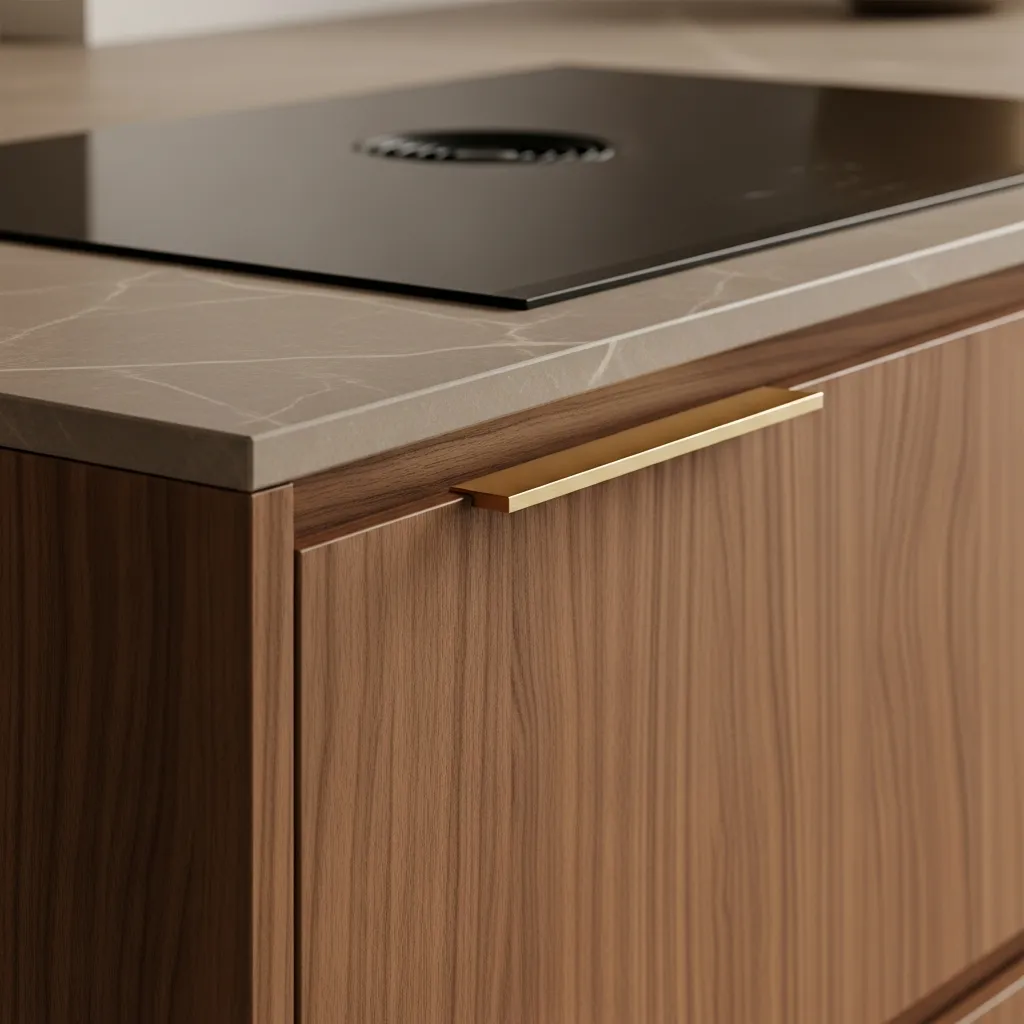
PVD—Physical Vapor Deposition—operates on fundamentally different principles than powder coat. Rather than depositing polymer films measured in microns, PVD evaporates target metals (titanium, zirconium, chromium) in vacuum chambers, depositing atomic-scale layers that diffuse into the 304 substrate surface. The available tones—bronze, champagne gold, rose gold—achieve precious-metal aesthetics impossible through pigmentation.
The performance profile differs accordingly. PVD coatings measure 0.3–5.0 micrometers versus 60–120 micrometers for powder coat, yielding exceptional hardness (HV 1500–3000) and wear resistance, but limited impact absorption. PVD excels in abrasion resistance and maintains metallic luster indefinitely; powder coat provides superior chip resistance and substrate protection. For bathroom vanities where hard water spotting and cosmetic product exposure dominate wear mechanisms, PVD's impermeable metallic film outperforms organic coatings. For kitchen cabinets subject to utensil impact and thermal shock from cookware, powder coat's thickness advantage proves decisive.
Cost structure follows capability. PVD requires vacuum chamber processing with cycle times and energy consumption that scale non-linearly with cabinet volume. The investment is architecturally justified for statement pieces—island bases, feature panels, hospitality installations—where metallic authenticity commands premium positioning. For full residential kitchens, 220°C powder coat in 80+ color options delivers equivalent functional lifespan at substantially lower lifecycle cost.
Brushed 304: The Maintenance Reality Nobody Discusses
Brushed satin finish—directional grain applied through abrasive belt processing—represents the third option, often selected for perceived authenticity and lower initial cost. The specification reality is more nuanced. Brushed 304 exposes the native steel surface without protective polymer or ceramic overlayer, making maintenance behavior entirely dependent on user discipline and environmental chemistry.
The 304 grade contains 18% chromium and 8% nickel, forming a passive oxide layer that self-heals in oxygenated environments. However, chloride exposure from coastal atmospheres, de-icing salts, or even aggressive cleaning products can penetrate brush grain valleys, initiating pitting corrosion that powder coat or PVD would prevent. Fingerprint oils, acidic food residues, and hard water deposits accumulate in the directional texture, requiring regular maintenance with appropriate stainless steel cleaners—not abrasive pads that alter grain direction and create visible damage patterns.
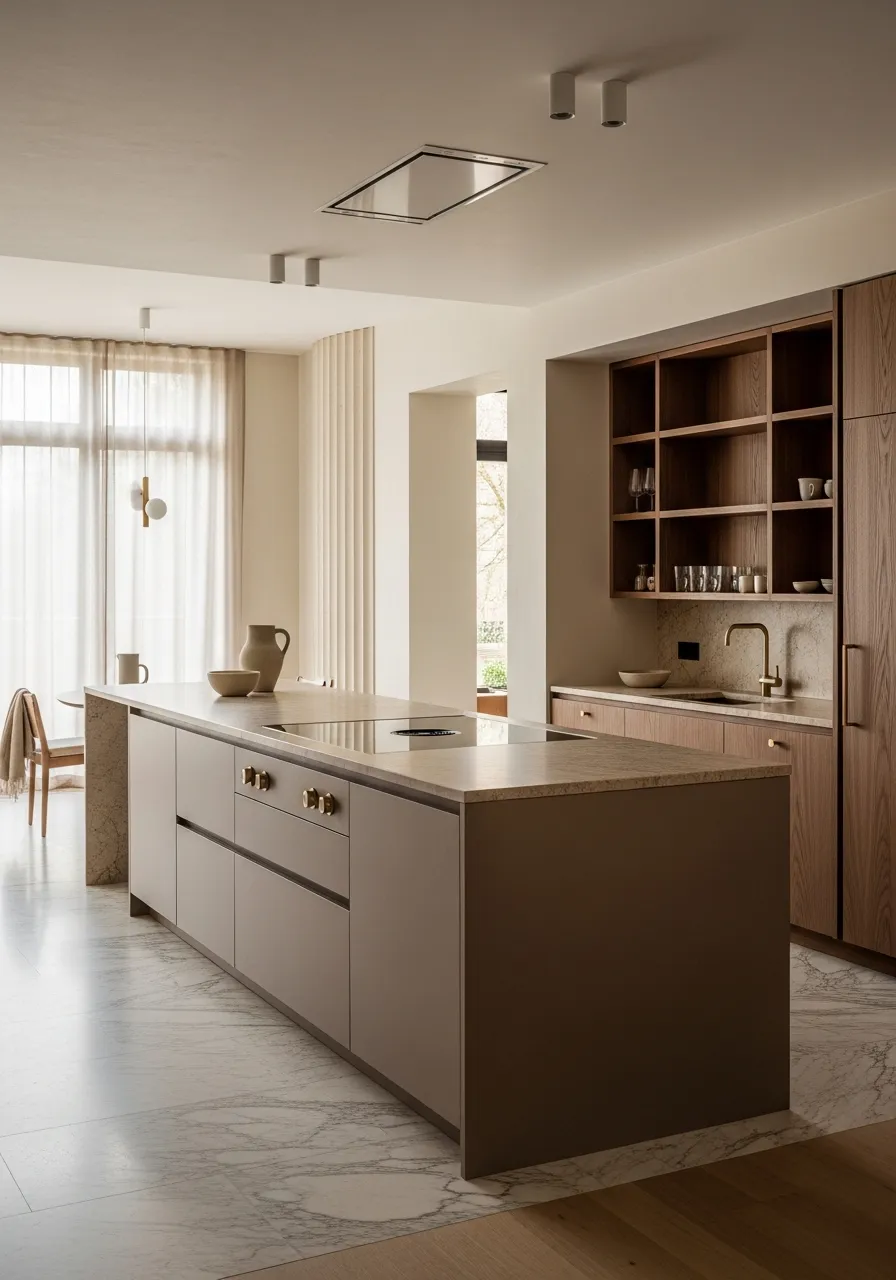
Fadior's cloud-texture anti-pollution and nano-coated pearl white treatments address these limitations for brushed-finish applications. These proprietary surface modifications maintain metallic aesthetics while adding fingerprint resistance and simplified maintenance. For outdoor and semi-outdoor applications, bead-blasted matte finish provides superior performance to directional brush patterns by eliminating grain-aligned stress concentrators and presenting more uniform surface topology.
Specification Checklist: Matching Finish to Application
The optimal finish selection follows a decision matrix grounded in use intensity, climate exposure, and lifecycle cost analysis. For residential kitchens in temperate climates with moderate cooking intensity: 220°C powder coat on seamless 304 bodies provides 30-year service life with minimal maintenance burden. Specify microparticle crystal resin surfaces for maximum durability, or 3D wood-grain transfer where warm aesthetics are prioritized.
For coastal, tropical, or high-humidity environments: prioritize the seamless body construction with any finish, as joint-free 304 construction eliminates the moisture intrusion pathways that destroy conventional cabinets regardless of surface treatment. The 100% waterproof characteristic of 304 stainless steel, combined with zero formaldehyde substrate stability, outperforms even marine-grade plywood with epoxy encapsulation.
For hospitality, commercial, or statement residential installations: PVD bronze, champagne gold, or rose gold on feature elements delivers architectural impact with genuine precious-metal permanence. Budget allocation should prioritize seamless body construction throughout, with PVD investment concentrated on visible surfaces.
Before final specification, confirm three parameters: substrate formation method (seamless bending versus welded frame), thermal bonding temperature for powder coat applications, and warranty terms that cover both body and surface. Fadior's 30-year cabinet body warranty—backed by MES-tracked production genealogy from 236,163 scan events—provides confidence metrics that generic stainless steel cabinet claims cannot match. Request project-specific performance validation through the Elite Family consultation process for premium-accessible residential applications.
Frequently Asked Questions
Questions this guide answers
- Which cabinet finish lasts longest in a busy family kitchen?
- 220°C thermal-bonded powder coat on seamless 304 stainless steel bodies delivers optimal longevity for high-use residential kitchens. The 60–120 micrometer film thickness absorbs impact better than PVD's atomic-scale deposition, while the seamless Salvagnini-formed substrate eliminates crack-initiation points where conventional cabinets fail. The 30-year cabinet body warranty outlasts any surface treatment, ensuring structural integrity regardless of finish selection.
- Does PVD coating wear off cabinets over time?
- PVD vacuum deposition creates metallurgical bonding at the atomic level, not mechanical adhesion. The 0.3–5.0 micrometer metallic film becomes integral to the substrate surface, with hardness exceeding HV 1500—substantially harder than 304 stainless steel itself. Wear manifests as gradual gloss reduction rather than film loss, with service life measured in decades under normal residential use. Unlike electroplated finishes, PVD cannot blister, peel, or chip.
- Why does seamless construction matter more than the finish type?
- Seamless bodies eliminate failure points where finishes crack, moisture intrudes, and thermal cycling induces stress. Conventional welded or joined construction creates discontinuities—88% of cabinet components undergo bending stress, and 47.5% require welding in standard manufacturing. Fadior's Salvagnini automated bending centers form entire bodies from single steel sheets, removing joints that propagate failure through any surface treatment. The substrate outlasts the finish by structural margin.
- How does the 220°C powder coat process compare to standard cabinet painting?
- Conventional cabinet finishing applies lacquers or conversion varnishes at ambient or low-elevated temperatures, achieving mechanical adhesion that remains vulnerable to solvent exposure and thermal shock. Fadior's 220°C thermal bonding creates thermoset crosslinking—covalent molecular bonds that resist alkalis, solvents, and temperatures to 150°C. The microparticle crystal resin surface adds gem-grade density with chain-linked crosslinking, validated by ADEX Platinum performance in extreme exterior exposure.
- Is brushed stainless steel harder to maintain than coated finishes?
- Brushed 304 requires realistic maintenance commitment: directional grain accumulates fingerprints, oils, and deposits that demand regular cleaning with appropriate stainless steel formulations. Abrasive pads alter grain direction permanently. For maintenance-averse clients, specify cloud-texture anti-pollution or nano-coated pearl white treatments that preserve metallic aesthetics while adding fingerprint resistance. Powder coat or PVD provide lower-maintenance alternatives with equivalent durability.
Related reading
Continue exploring the journal.
More guides, whitepapers, and insights from the Fadior journal.
Material Comparison
304 Stainless Steel vs Wood Cabinets: Defining Real Durability
When evaluating 304 stainless steel vs wood cabinets, the distinction lies in structural integrity. Explore how seamless bending and zero formaldehyde standards redefine longevity.
Material Comparison
304 vs 316 Stainless Steel: The Architect's Guide to Grade Selection
When specifying residential interiors, the debate over 304 vs 316 stainless steel often overshadows construction integrity. We examine why seamless 304 architecture delivers superior longevity.
Care & Maintenance
Anti-fingerprint stainless steel: myth, reality, and maintenance
Anti-fingerprint stainless steel promises pristine surfaces, but the reality is more nuanced. Discover what actually works, what doesn't, and how Fadior engineers true fingerprint resistance.
Buyer's Guide
Zero-formaldehyde cabinetry: what the claim really means
Zero-formaldehyde cabinetry is not a magic label. This guide explains what TSCA Title VI, CARB, NAF, ULEF, finishes, and stainless steel construction do — and do not — prove.
Related products
Specific products worth reviewing next.
Editorial transparency
This article is published under a Fadior Home editorial byline produced through an editorial workflow with human review by the Fadior Home editorial team.
Ready to specify?