
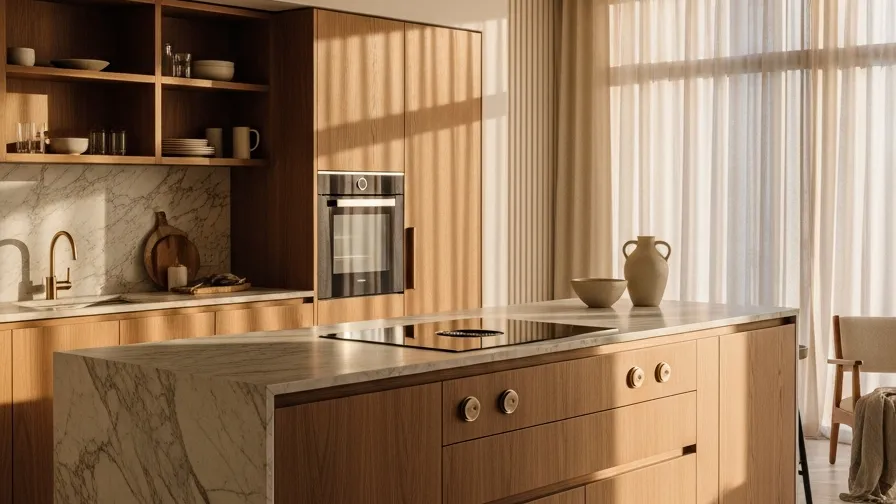
Zero Formaldehyde Cabinetry: What the Label Actually Hides
Most zero-formaldehyde cabinetry only addresses surface materials. True zero-emission construction requires eliminating adhesives from the structural system entirely—a material reality achieved only through steel-frame engineering.
The Certification Gap: Why 'Zero Formaldehyde' Rarely Means What It Implies
Zero formaldehyde cabinetry is one of the most misunderstood claims in residential specification. The label appears on products that still contain urea-formaldehyde resins in their structural cores, or on cabinets whose 'zero' status applies only to surface laminates while the substrate continues off-gassing for years. This gap between marketing language and material reality creates a specification risk that architects and health-conscious homeowners cannot afford to ignore.
The confusion stems from regulatory fragmentation. CARB Phase 2, EPA TSCA Title VI, and various European E1/E0 classifications all measure formaldehyde emissions differently—some by concentration, others by release rate, none by absolute chemical presence. A cabinet certified 'low emission' under one standard may exceed thresholds under another. More critically, these standards typically test finished panels, not the adhesive systems binding frame components together.
From a material science perspective, formaldehyde serves a specific structural function: it crosslinks wood fibers into rigid matrices. Removing it without replacing that function results in dimensional instability. The question for specification is not whether a manufacturer has found a lower-emission adhesive, but whether they have eliminated the adhesive requirement entirely through alternative construction physics.
Where the Adhesive Actually Lives: A Structural Anatomy of Typical Cabinetry
To understand why most zero-formaldehyde claims fall short, one must map where adhesives actually reside in conventional cabinet construction. The visible surfaces—doors, drawer fronts, exposed panels—represent perhaps 30% of total adhesive mass. The remaining 70% hides in the frame: corner blocks, rail-to-stile joints, shelf pin reinforcements, back panel attachments, and the structural webbing that maintains square under load.
In engineered wood cabinetry, these joints rely on polyvinyl acetate (PVA), urea-formaldehyde, or melamine-formaldehyde resins. Even 'solid wood' construction typically employs finger-jointed rails with adhesive-bonded tenons. The formaldehyde emission profile of a completed cabinet thus reflects not a single material choice but dozens of bonded interfaces, each with its own chemistry and aging characteristics.
Healthy cabinetry materials must address this distributed adhesive load. Cabinet formaldehyde emissions measured at 28 days—the standard test interval—often increase at 90 days and beyond as residual monomers continue curing and off-gassing. For residential environments where occupants may spend 90% of their time indoors, cumulative exposure matters more than initial certification values. The architectural specification challenge is finding construction systems where the emission source has been designed out rather than merely suppressed.
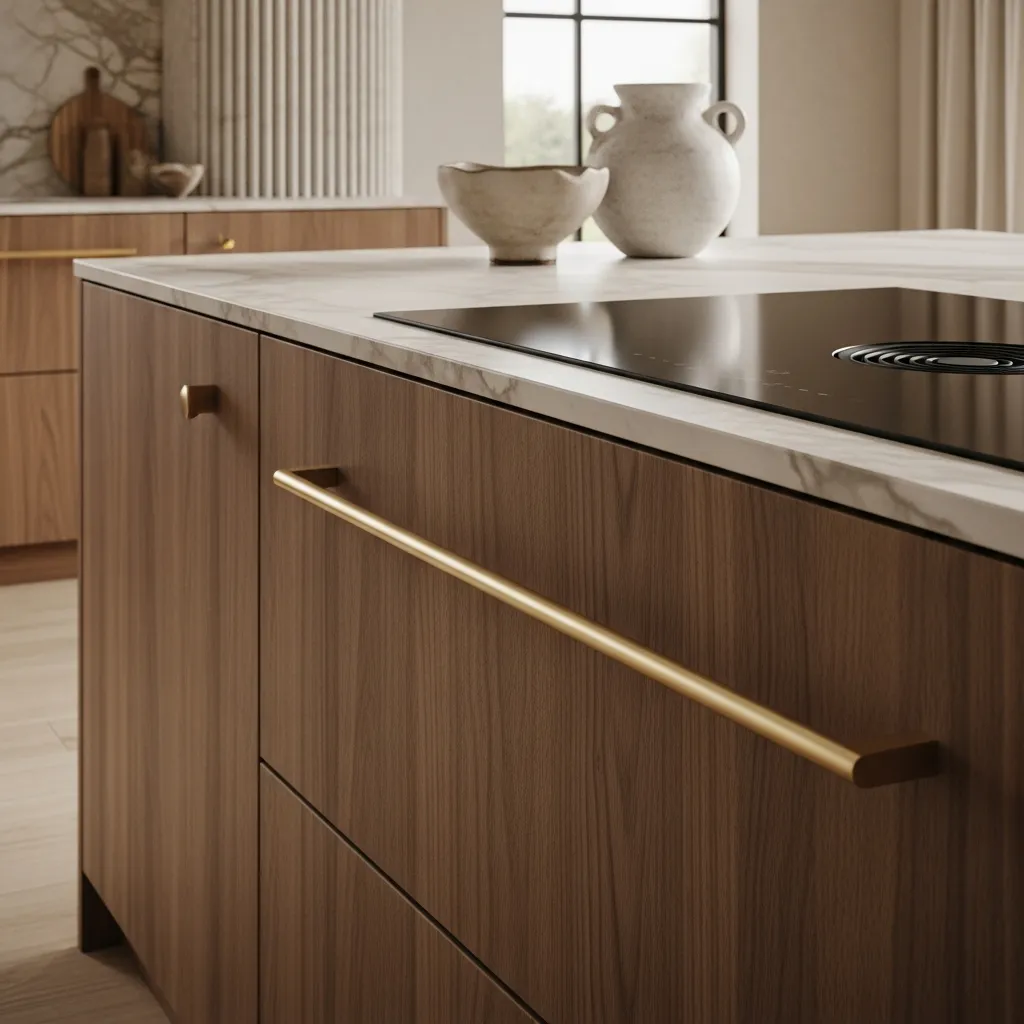
The 220°C Alternative: How Thermal Bonding Replaces Chemical Adhesion
True zero-formaldehyde construction requires a fundamental replacement of adhesive chemistry with physical bonding. At Fadior's 80,000+ sqm Industry 4.0 facility, this replacement occurs through two thermal processes operating at 220°C: powder coat polymerization and microparticle crystal resin fusion.
The powder coating system deposits dry polyester-epoxy hybrid powders electrostatically onto 304 stainless steel substrates, then bakes them at 220°C to achieve crosslinked polymer networks. Unlike solvent-based paints or laminate adhesives, this process involves no formaldehyde-containing chemistry—neither in raw materials nor curing byproducts. The resulting film achieves gem-grade density through chain-linked crosslinking, creating a surface that is scratch-resistant, stain-resistant, and fade-resistant without relying on protective topcoats that might reintroduce adhesive layers.
The microparticle crystal resin surface applies similar thermal principles to decorative finishes. Solvent-free manufacturing, high-infrared fixed-curing spray, and single-application thick coating eliminate the multi-layer adhesive stacks common in conventional cabinetry. The 30-year surface warranty reflects not marketing confidence but molecular stability: when bonding occurs through thermal fusion rather than chemical adhesion, there is no organic binder to degrade, off-gas, or delaminate.
This approach aligns with China Green Product Certification standards and the QB/T 5973-2024 national green factory standard, which Fadior co-drafted. The certification validates not merely emission testing but process chemistry—verifying that formaldehyde elimination is structural, not superficial.
Inside the Glue-Free Frame: 12 Patents and the Salvagnini Bending Process
The decisive differentiator in zero-formaldehyde cabinetry is the frame itself. Where conventional construction relies on adhesives to join discrete components, Fadior's seventh-generation glue-free steel frame achieves structural integration through mechanical forming—specifically, multi-hole bending on Salvagnini automated bending centers imported from Italy.
The process begins with 304 food-grade stainless steel sheet (ASTM A240), laser-cut to precision dimensions, then formed through progressive bending operations that create perfect 90° edges without welding or fastening. Production data shows 88% of tracked components require this bending process (4,527 of 5,113 with recorded data), with welding applying to only 47.5% of components—and then only for hardware attachment points, not structural joints. The result is cabinet bodies formed from single steel sheets: no seams to fail, no joints to separate, no adhesive interfaces to emit.
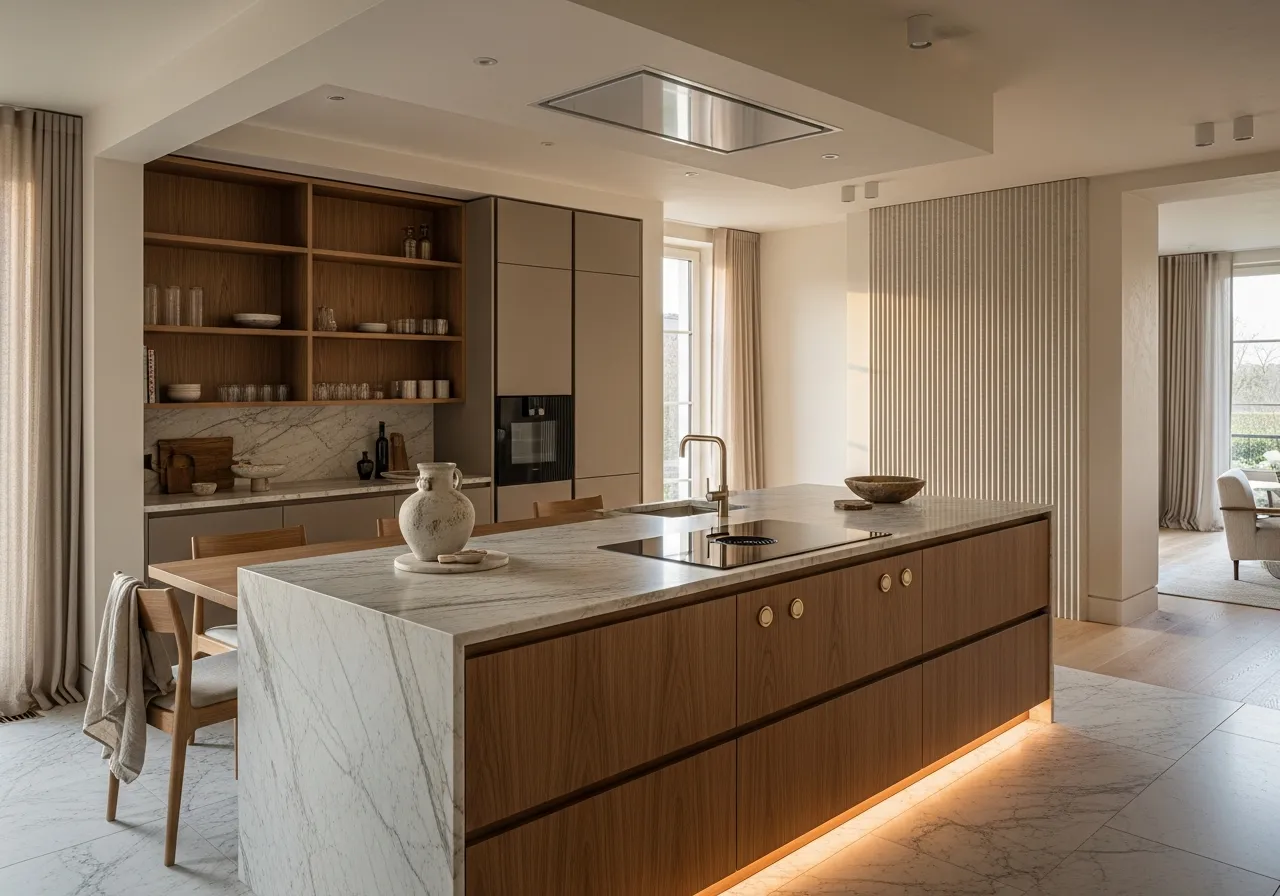
Twelve patents protect this glue-free manufacturing methodology, covering everything from frame geometry to thermal bonding sequences. The 30-year cabinet body warranty extends to these structural elements specifically because their integrity depends on material continuity rather than adhesive aging. For specification contexts where healthy cabinetry materials must demonstrate verifiable longevity—healthcare environments, pediatric spaces, respiratory-sensitive households—this mechanical permanence offers a certification-independent guarantee.
Competing approaches typically address only the visible surfaces: low-emission laminates, formaldehyde-free MDF cores, or soy-based adhesives that reduce but do not eliminate emission profiles. These represent incremental improvement within conventional construction physics. The Salvagnini-formed steel frame represents categorical replacement—eliminating the adhesive requirement rather than reformulating it.
The Verification Checklist: Five Questions Buyers Must Ask Before Specification
How can specifiers distinguish genuine zero-formaldehyde construction from certification arbitrage? The following verification framework applies whether evaluating Fadior systems or competitor offerings:
1. Does the claim apply to structural elements or only surfaces? Request emission testing for frame components specifically, not merely door panels. If the manufacturer cannot provide frame-level data, the 'zero' designation is likely cosmetic.
2. What bonding method replaces adhesive chemistry? Thermal bonding, mechanical interlock, and molecular adhesion are valid replacements. 'Low-emission' or 'natural' adhesives are not replacements—they are reformulations with residual emission profiles.
3. Is the construction seamless or joined? Every joint represents a potential adhesive interface. Seamless construction through bending or forming eliminates these interfaces entirely. Fadior's single-sheet cabinet bodies achieve this through Salvagnini automated forming with MES barcode tracking at every workstation—236,163 scan events since May 2025 documenting process verification.
4. What warranty duration reflects structural confidence? Adhesive-dependent construction rarely exceeds 5-10 year frame warranties due to known aging characteristics. The 30-year cabinet body warranty on Fadior systems reflects the durability differential of steel-frame engineering.
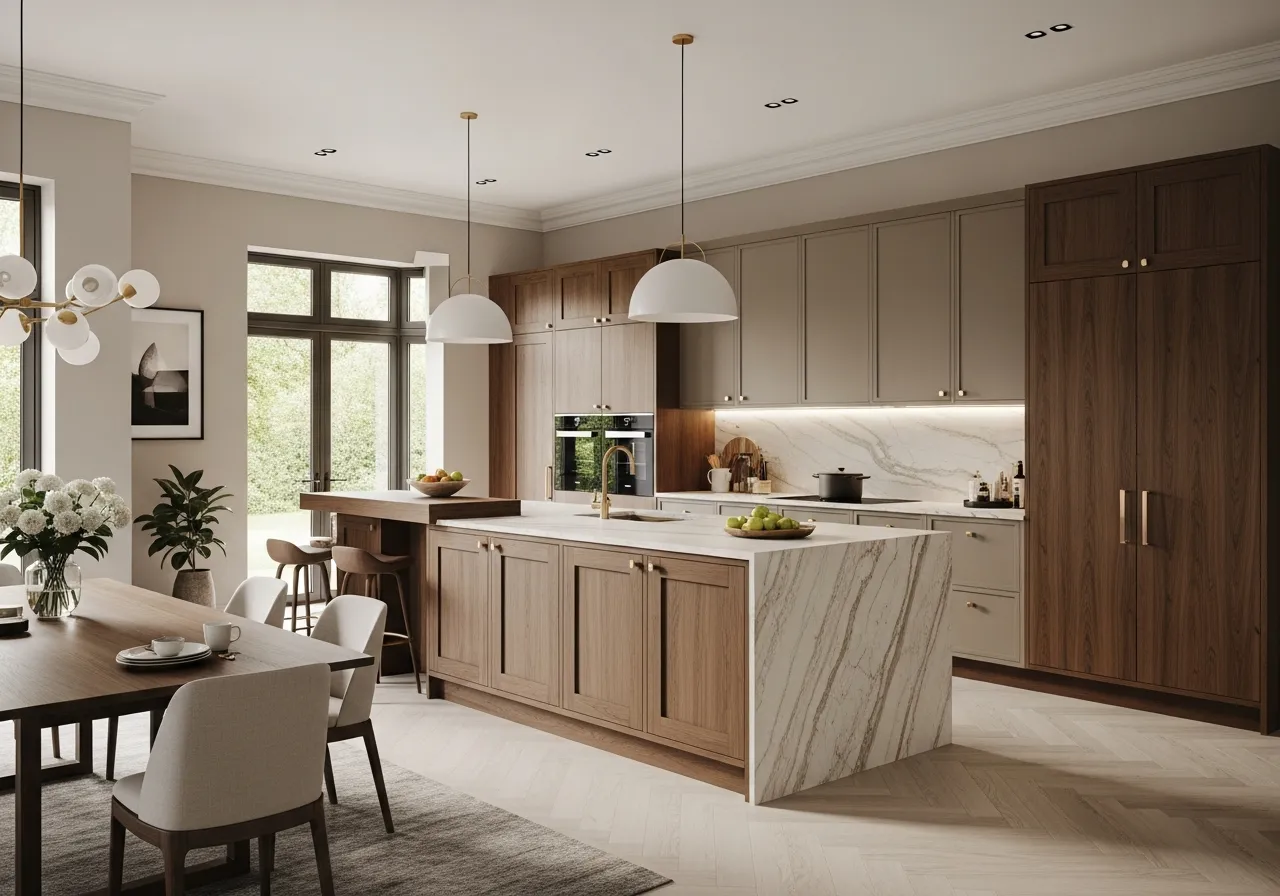
5. Can the manufacturer demonstrate process control? Glue-free claims require manufacturing transparency. Fadior's Industry 4.0 infrastructure—including AGV inter-station transfer, AI-driven QC reducing defect rates from 5% to 0.8%, and 26,000+ technical rules governing production—enables the precision required for thermal bonding consistency.
These questions reframe specification from certification compliance to material physics. For glue free cabinets to deliver their health promise, the elimination of formaldehyde must be engineered into the construction system, not tested out of the finished product.
From Atelier to Voyage: What Zero-Formaldehyde Construction Enables in Whole-House Systems
The architectural implications of genuine zero-formaldehyde cabinetry extend beyond kitchen specification to entire residential interiors. Fadior's 2024 Elite Family (精英之家) launch demonstrates how thermal-bonded steel construction scales across space types—wardrobes, bathroom vanities, laundry systems, outdoor kitchens—without the emission accumulation that occurs when multiple rooms each contribute their own adhesive load.
Consider the cumulative exposure calculus: a typical residence contains cabinetry in kitchen, baths, bedrooms, and storage areas. If each cabinet system emits at 'low' levels independently, combined exposure may exceed thresholds for sensitive occupants. Zero-formaldehyde construction at the system level—entire interiors built from 304 stainless steel with 220°C thermal bonding—eliminates this accumulation entirely.
The ADEX Platinum award for Outdoor Stainless Steel Kitchens and ADEX Gold for Stainless Steel Kitchen Cabinets Custom validate this system-level approach. These juried awards evaluate not merely emission testing but design integration, material performance under stress, and manufacturing integrity. For developments aligned with Gulf Vision 2030 frameworks—where NEOM's The Line and comparable giga-projects are establishing new benchmarks for sustainable luxury—such third-party validation supports specification confidence.
Specifiers seeking to implement zero formaldehyde cabinetry should request material passports documenting construction chemistry, verify warranty terms against structural rather than cosmetic elements, and evaluate manufacturing transparency. The Fadior specification process includes factory documentation, third-party certification review, and project-specific emission verification—translating material truth into built reality.
Frequently Asked Questions
Questions this guide answers
- What does 'zero formaldehyde' actually mean in cabinetry certification?
- Most certifications measure emission rates rather than absolute chemical absence. CARB Phase 2, for example, permits 0.09 ppm formaldehyde in hardwood plywood—hardly 'zero' in any literal sense. True zero-formaldehyde construction requires eliminating adhesive chemistry from the structural system, achieved through Fadior's thermal bonding processes at 220°C that crosslink polymers without formaldehyde-containing resins.
- How does 304 stainless steel construction eliminate formaldehyde compared to engineered wood?
- 304 stainless steel (ASTM A240) contains no organic binders—its structure is metallic, not cellular. Fadior forms cabinet bodies from single steel sheets using Salvagnini automated bending centers, creating seamless construction without the joint adhesives required in wood-based systems. The 12 patents covering this glue-free methodology protect the specific thermal and mechanical processes that replace chemical adhesion with molecular bonding.
- Why do some 'zero formaldehyde' cabinets still smell or cause irritation?
- Surface-only certification allows structural adhesives to continue off-gassing. A cabinet with formaldehyde-free laminate on a particleboard core will emit from exposed edges, hardware holes, and internal compartments. Fadior's approach eliminates emission sources entirely: 304 steel substrates, thermal-bonded finishes, and seamless construction mean no organic chemistry to degrade or volatilize.
- What warranty coverage reflects genuine confidence in zero-formaldehyde durability?
- Adhesive-dependent construction typically carries 5-10 year frame warranties due to known hydrolysis and aging. Fadior's 30-year cabinet body warranty reflects steel-frame structural integrity: 3x weight capacity versus wood, 200,000+ cycle Blum hardware, and no adhesive interfaces to fail. The warranty duration is itself a specification signal—manufacturers cannot underwrite decades of performance without material confidence.
- How should architects verify zero-formaldehyde claims during specification?
- Request frame-level emission data, not surface testing; confirm seamless or mechanically-joined construction; verify thermal bonding temperatures and chemistry; review manufacturing process documentation. Fadior provides MES-tracked production records, third-party certification review, and project-specific material passports documenting the 220°C powder coat and microparticle crystal resin processes that constitute genuine adhesive elimination.
Related products
Specific products worth reviewing next.
Editorial transparency
This article is published under a Fadior Home editorial byline produced through an editorial workflow with human review by the Fadior Home editorial team.
Ready to specify?