

Kitchen Energy Resilience Planning
Electric cooking only works well when the room is planned for price windows, appliance loads, cleanup cycles, and storage resilience before equipment is selected.
Direct answer
The Direct Answer
Kitchen energy resilience is the practice of planning an electric kitchen so cooking, cleanup, ventilation, and storage still work when electricity prices vary by hour. The room should separate urgent cooking loads from flexible appliance cycles, keep service access visible, and use durable cabinetry so rate windows support daily life instead of controlling it.
What is kitchen energy resilience?
Kitchen energy resilience is the discipline of designing an electric kitchen around real household loads before the owner chooses appliances. It starts with a simple fact: electricity price data is no longer background noise for homeowners who cook, clean, charge devices, and run ventilation every day. Utility bills and published rate schedules make the trend visible enough that a kitchen brief should now ask when power is used, not only how much equipment is installed.
For the Fadior design journal library, the useful translation is architectural. A resilient electric kitchen does not chase every gadget or promise a lower bill. It organizes cooking, dishwashing, ventilation, pantry backup, lighting, and service access so the owner can shift flexible loads without disrupting dinner. That keeps the conversation inside the home, away from broad energy commentary and close to decisions a specifier can actually draw.
- Kitchen energy resilience
- Kitchen energy resilience is a room-planning method that organizes electric cooking, flexible appliance timing, storage, and service access around changing electricity price patterns.
Why do electricity prices change kitchen planning?
Electricity prices change kitchen planning because the kitchen contains both urgent and flexible loads. Induction cooking during dinner is urgent. Ventilation during cooking is urgent. A dishwasher cycle, some appliance charging, some water heating adjacency, and some pantry or backup routines are flexible. Electricity bills separate delivered prices from a mix of generation, transmission, distribution, fuel, weather, demand, and other system factors. A homeowner does not need to become an energy analyst to act on that. The room simply needs zones that make shifting the flexible tasks easy.
That is why the design brief should separate four groups before choosing equipment: the cooking load, the cleanup load, the cooling and storage load, and the background convenience load. Once those groups are visible, the owner can decide which tasks must happen now and which tasks can wait for an off-peak window, a solar-rich period, or a quieter service moment.
How should induction cooking be placed in the room?

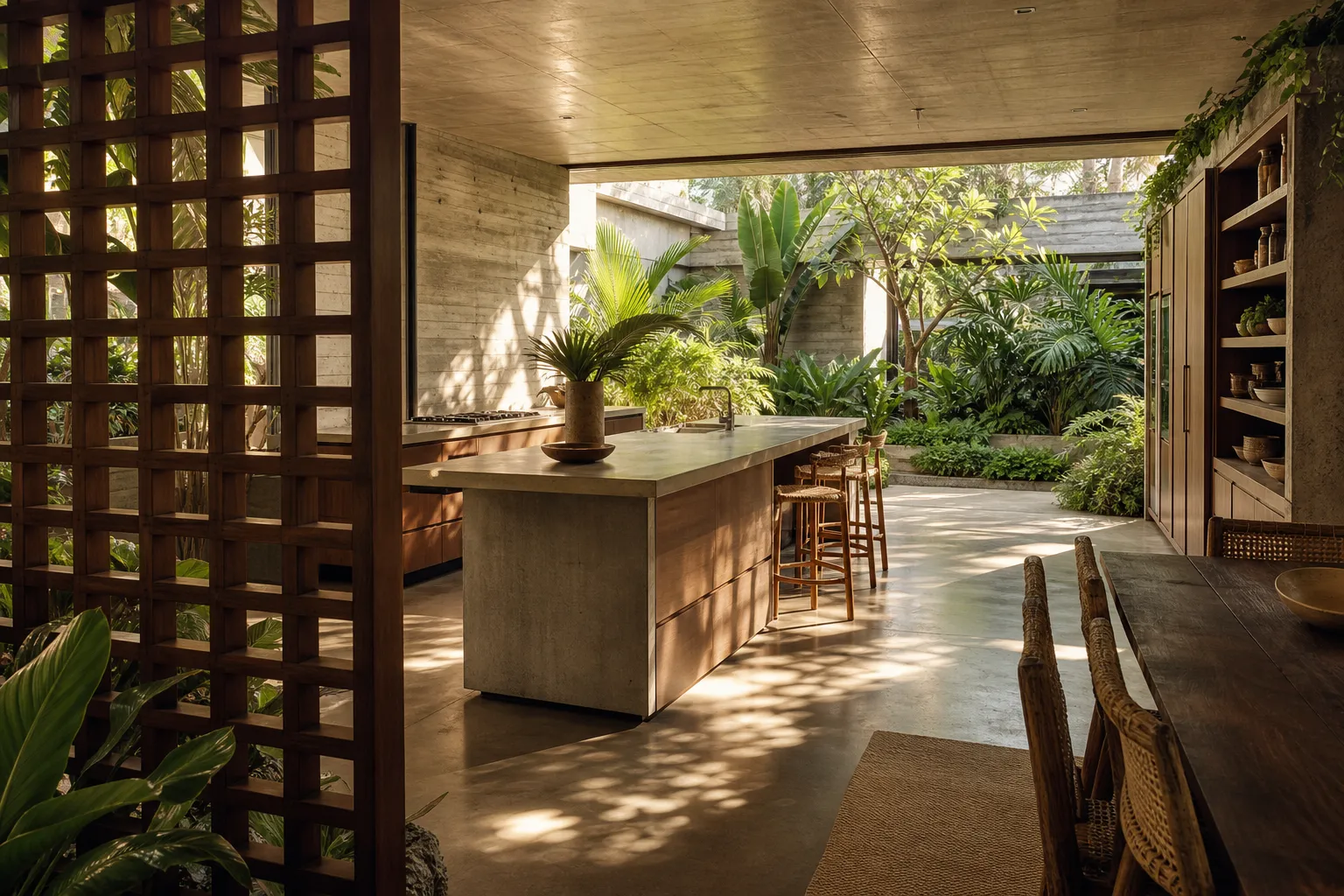
Induction cooking should be placed where the owner has safe landing space, short prep movement, clear ventilation, and access for future service. Induction cooking can support an electric-home strategy, but the kitchen still has to make the appliance usable. If the cooktop is isolated from prep storage or if hot pans have no landing surface, the efficiency story does not save the dinner routine.
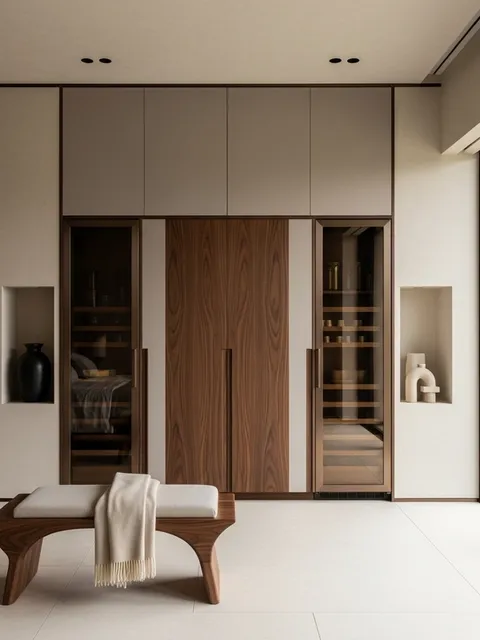
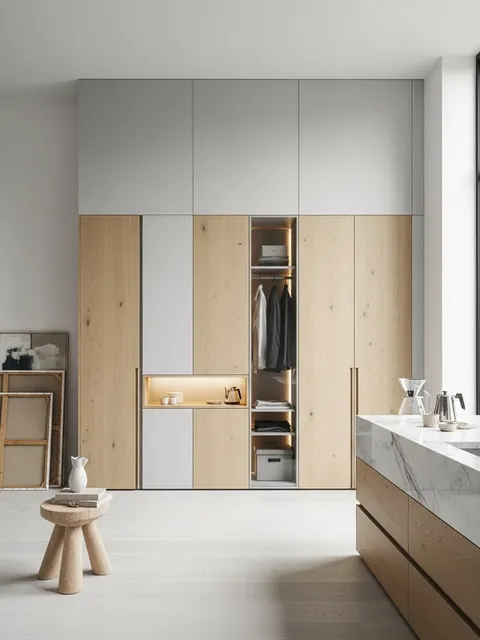
The better plan is room-first. Put induction near a durable prep surface, give it a quiet path to sink and pantry, keep ventilation visually integrated, and avoid hiding service access behind decorative mass. This is also where Fadior custom kitchen products matter: appliance towers and base cabinets can be planned as durable infrastructure rather than as a stack of replaceable devices.
| Kitchen load | Timing flexibility | Room-planning response |
|---|---|---|
| Induction cooking | Low flexibility during meals | Place near prep, ventilation, and heat-safe landing space |
| Dishwasher cycle | High flexibility after cleanup | Use delay-start logic and keep waterproof storage beside the sink |
| Ventilation | Low flexibility during cooking | Plan quiet extraction routes and reachable service access |
| Pantry backup | Medium flexibility across the week | Separate daily staples, reserve goods, and appliance accessories |
| Small appliance charging | High flexibility outside meals | Group outlets away from the main visual field |
Which loads can move to quieter price windows?
The flexible loads are usually cleanup, standby charging, some water-related appliance routines, and non-urgent prep support. Open home-automation references point toward schedules, time windows, occupancy patterns, and connected controls as practical tools. The kitchen design takeaway is direct: flexible loads need a place to wait. A dishwasher can run later only if the cleanup zone stores used cookware cleanly. Small appliances can charge away from peak hours only if there is a dedicated bay with ventilation and cable order. Pantry backup can reduce fragile just-in-time shopping only if reserve goods have a clear home. Without those physical details, a smart schedule becomes another reminder the household ignores.
Room-first energy resilience checklist
- Map urgent cooking loads separately from flexible cleanup cycles.
- Keep induction cooking near prep, ventilation, and landing space.
- Create a closed appliance bay for chargers and small devices.
- Separate daily pantry goods from reserve storage.
- Keep service panels and manual controls reachable.
- Specify wet-zone cabinetry that can handle repeated cleanup routines.
Why does storage matter when power prices move?
Storage matters because price volatility rewards households that are not forced into every task at the same hour. A pantry wall, freezer adjacency, appliance garage, and cleaning storage can reduce the pressure to cook, wash, restock, and reset in one narrow evening window. This is not a survivalist idea; it is normal residential planning for a kitchen that has become more electric and more scheduled.
Fadior's 304 stainless steel material system gives that storage logic a durable base. Company intelligence records glue-free steel-frame manufacturing, powder-coated and wood-grain finish options, anti-fingerprint surfaces, and a new smart factory with 26,000+ technical rules. The point is not to make the kitchen look technical. The point is to let an electric-home routine sit inside a calm room that resists water, cleaning wear, and long service cycles.
- Time-of-use kitchen planning
- Time-of-use kitchen planning is the process of identifying kitchen tasks that can shift to lower-demand or lower-price periods without disrupting cooking.

How does Fadior keep the room calm?
Fadior keeps the room calm by hiding resilience inside the architecture. The owner sees clean storage walls, appliance bays, durable counters, and quiet finishes, not a wall of controls. The brand builds whole-home systems from 304 stainless steel, supports powder coating and 3D wood-grain transfer, and uses a glue-free steel-frame manufacturing position that keeps the material story simple: durable, cleanable, and long-lived.
That matters for luxury electric homes because the technology layer will change. A cooktop, dishwasher, control standard, or battery interface may be replaced before the cabinetry is. The Fadior quality and warranty proof should sit under those choices, so the owner can update appliances without rebuilding the room envelope.
What should buyers ask before approving the plan?
Buyers should ask five questions before approving an electric kitchen. Which tasks must happen during dinner? Which tasks can move later? Where do small devices charge out of sight? How will the dishwasher, ventilation, cooktop, and storage wall be serviced? What happens if the owner ignores every smart feature for a month?
The last question is the most revealing. If the kitchen still cooks, cleans, stores, and hosts beautifully with every schedule turned off, the plan is resilient. If it needs alerts and automation to feel usable, the room is doing too little. A custom kitchen planning consultation should therefore begin with habits and load groups, then translate them into storage walls, wet-zone materials, appliance positions, and a simple future-service path.
When is kitchen energy resilience worth specifying?
Kitchen energy resilience is worth specifying when a household cooks daily, runs an electric cleanup routine, has a larger pantry or freezer zone, or expects utility pricing to affect appliance timing. It is also useful for villas, apartments, and second homes where staff, family members, or guests use the kitchen at different hours. The design method is not about predicting exact electricity bills. It is about lowering friction when timing matters.
The final design should still feel generous, residential, and quiet. Electricity price windows are invisible; cabinetry, surfaces, light, and circulation are visible every day. That is why the winning specification combines flexible appliance logic with durable Fadior kitchen design collections rather than turning the room into an energy dashboard.
Is kitchen energy resilience only about saving money?
No. It can support cost control, but the stronger design value is predictability. A resilient electric kitchen keeps urgent cooking, delayed cleanup, pantry backup, and service access organized so the household can adapt to price windows without changing how dinner works.
Does induction cooking require a different layout?
Yes. Induction cooking works best with nearby prep space, pan landing, ventilation, and a clear route to sink and pantry. The cooktop may be efficient, but the room still decides whether daily cooking feels calm or awkward.
Which kitchen tasks are easiest to shift later?
Dishwasher cycles, small appliance charging, some cleanup routines, and reserve pantry restocking are usually easier to shift than meal cooking. The design should give those tasks dedicated zones so waiting for a better timing window does not create clutter.
Why specify 304 stainless steel cabinetry?
304 stainless steel cabinetry gives wet zones, storage walls, and appliance bays a durable shell for repeated electric-home routines. It resists water and cleaning wear while allowing the visible finish to remain warm, quiet, and residential.
Can smart controls replace room planning?
No. Smart controls can schedule, remind, and coordinate, but they cannot fix poor storage, blocked service access, weak ventilation, or fragile wet-zone materials. The permanent room must work first; the control layer comes after.
Related products
Specific products worth reviewing next.

References
Authoritative sources cited in this article
- connected appliance interoperability
External technical reference used to verify connected-home planning terminology.
connected appliance interoperability reference
- home energy monitoring
External technical reference used to verify connected-home planning terminology.
home energy monitoring reference
- utility meter tracking
External technical reference used to verify connected-home planning terminology.
utility meter tracking reference
- schedule-based routines
External technical reference used to verify connected-home planning terminology.
schedule-based automation reference
- time-window automation
External technical reference used to verify connected-home planning terminology.
time-window automation reference
Editorial transparency
Jonas Weber is a composite editorial persona maintained by Fadior Home's editorial team. Articles attributed to this byline are produced through an AI-assisted editorial workflow with human review, and represent the consolidated voice of multiple researchers and contributors.
Actually delivered
Real homes photographed after handover, not renders.
Ready to specify?