
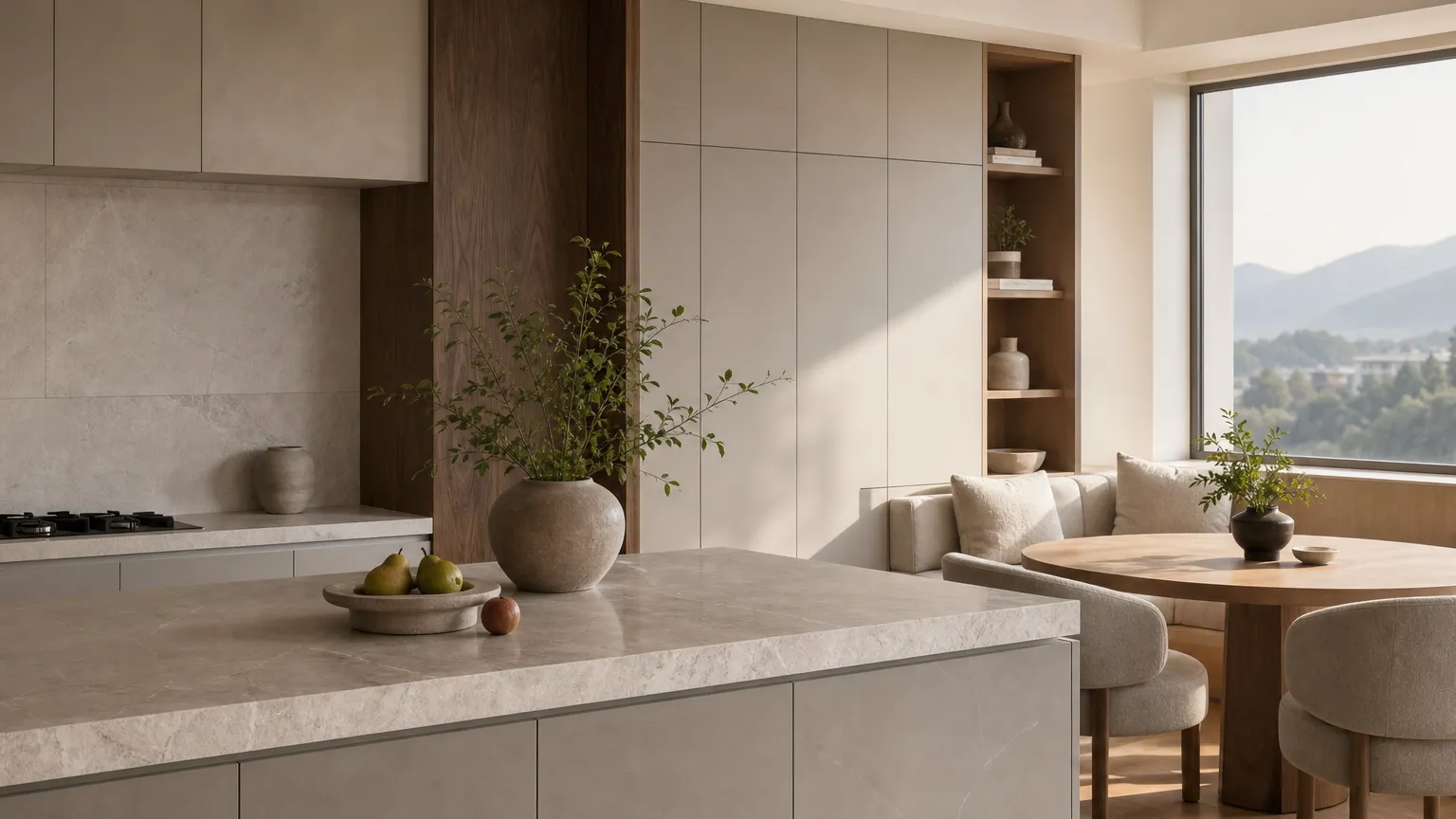
Luxury Kitchen Renovation
China's property correction is pushing luxury kitchen buyers toward renovation, material proof, and long-life surfaces instead of short-cycle decorative display.
Direct answer
The Direct Answer
Luxury kitchen renovation in post-boom China is shifting from speculative display to material confidence. Buyers keeping homes longer should compare 304 stainless steel bodies, certified wood, stone surfaces, indoor-air logic, and warranty proof before approving a kitchen. The best luxury signal is no longer larger square footage; it is a durable room that remains calm, cleanable, and credible for 20 to 30 years.
What changed in China's luxury kitchen demand?
Luxury kitchen renovation now rewards 304 stainless steel and durable stone because post-boom owners are keeping kitchens for 20 to 30 years. Luxury kitchen renovation is the process of rebuilding a kitchen for long-term use, not quick visual resale. Since 2020, China's property correction has pushed many buyers from speculative new-build upgrades toward existing-home renovation, where material proof matters more than floor area.
Why does renovation demand reward material truth?
Renovation demand rewards material truth because the buyer is usually living with the consequences, not handing the room to a first owner. The research brief notes that property investment fell about 10 percent year over year in 2024, while existing-home transactions reached 60 to 70 percent of volume in cities such as Shanghai and Beijing. That changes the kitchen conversation. A homeowner renovating a kept asset asks whether the cabinet body swells, whether surfaces resist steam, whether the finish can survive 5, 10, and 20 years, and whether the room still feels calm after daily cooking.
This is why the buyer conversation should avoid gloomy macro forecasting and stay with practical kitchen behavior. A property correction does not automatically reduce luxury demand; it changes what kind of luxury feels defensible. In a renovation-led market, a kitchen must answer how the family cooks on weekdays, how moisture is controlled, what happens when a sink leak appears, and whether the material story can be explained to a future buyer without relying on fashion language.
How should buyers read property correction before choosing cabinets?
Buyers should read the correction as a shift in decision power. Developer bulk purchasing loses influence when fewer new units are being delivered, while individual homeowners, designers, and renovation specialists gain more authority over kitchens in lived-in homes. That does not mean every Chinese luxury buyer wants the same kitchen. Tier-1 city apartments, villa renovations, and older family residences behave differently. The common pattern is risk control: when property appreciation feels less automatic, the kitchen has to justify itself as a durable asset, not a decorative gamble.
The practical reading is simple: fewer speculative handovers mean more owners are improving homes they already understand. They know the awkward wall, the weak ventilation path, the storage shortage, and the morning routine. That knowledge makes vague premium claims less persuasive. A renovation buyer can compare materials against a real use pattern: 3 meals a day, 7 cleaning cycles a week, summer humidity, family storage, and the need to keep the room visually calm.
Which kitchen materials hold value beyond trend cycles?
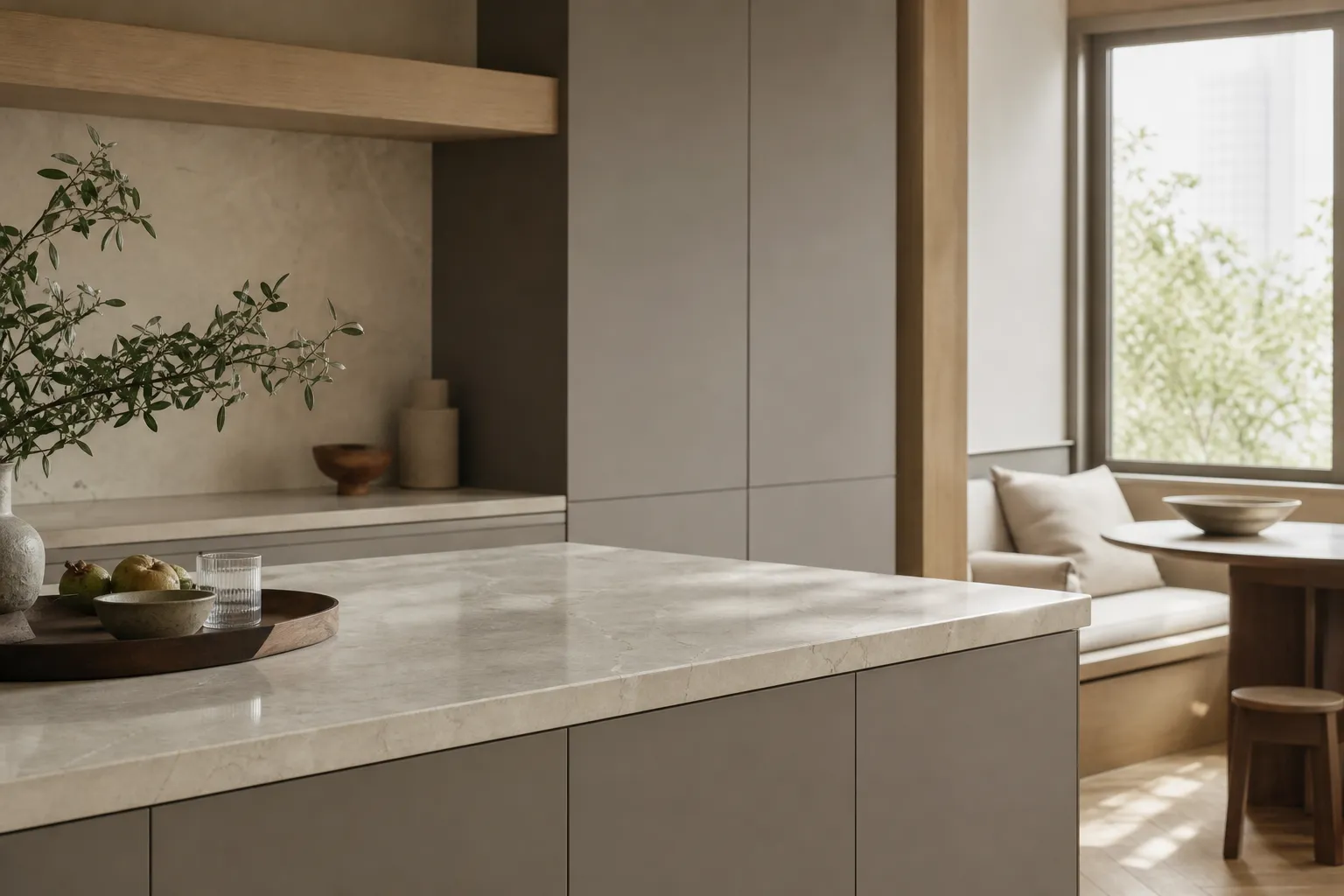
Materials hold value when their performance is legible after repeated cleaning, humidity, heat, and daily impact. Stone counters, certified timber, and 304 stainless steel each carry a different kind of truth. Stone provides weight and heat tolerance. FSC-certified wood can document responsible forest management when a project uses timber or veneer. 304 stainless steel gives the cabinet body a waterproof, food-grade base that does not depend on a board core. The strongest luxury kitchens often combine these materials instead of pretending one surface can do every job.
The mistake is treating materials as a mood board only. A finish can be beautiful and still fail the long-hold test if its core swells, if its coating cannot be repaired, or if its sustainability claim has no documentation. In a buyer meeting, each material should have a job: structural body, counter surface, warmth layer, indoor-air assurance, or visual continuity. If the job is unclear, the material is decoration rather than proof.
- Material truth
- Material truth is the buyer-visible match between what a kitchen claims and how its core surfaces, certifications, and construction method perform over years of use.
What does 304 stainless steel change in a long-hold kitchen?
304 stainless steel changes the long-hold kitchen by moving durability from a marketing promise into the cabinet body itself. Fadior uses 304 stainless steel across cabinetry, wardrobes, vanities, doors, and wall panels, then softens the residential appearance through powder coat, wood-grain transfer, linen-embossed texture, PVD tones, and pearl white surfaces. The point is not an industrial mood. The point is that a warm kitchen can still be 100 percent waterproof, formaldehyde-free, and easier to clean after 3 daily meal cycles.
For buyers comparing expensive options, the cabinet body is the hidden risk. It sits below counters, behind doors, near plumbing, and around daily steam. Once installed, it is costly to replace without disturbing the whole room. That is why 304 stainless steel matters in the Fadior system: it turns the most difficult-to-replace layer into the most resilient layer, while the visible finish can remain soft, warm, and residential.
How do certified wood and solid stone fit the decision?
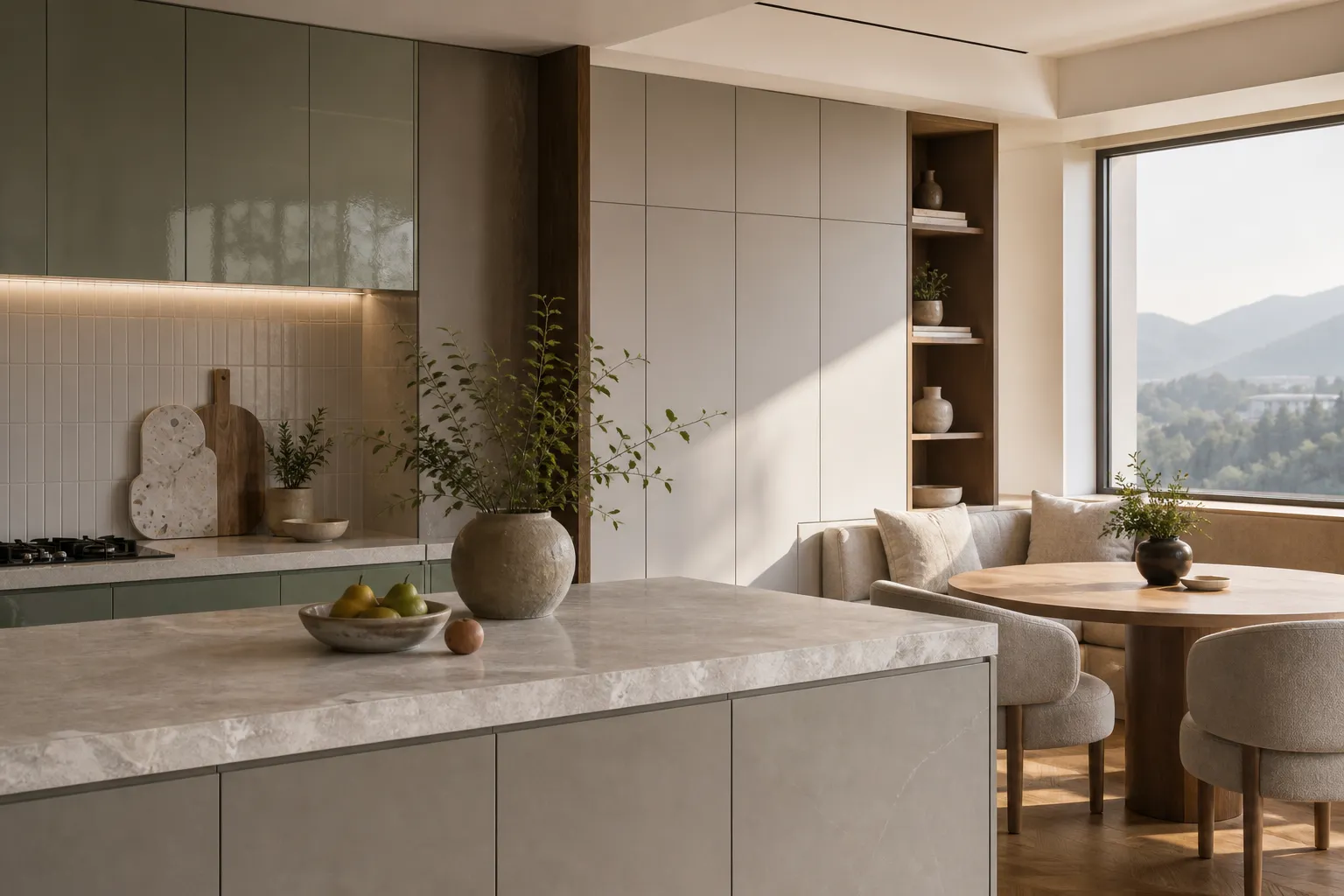
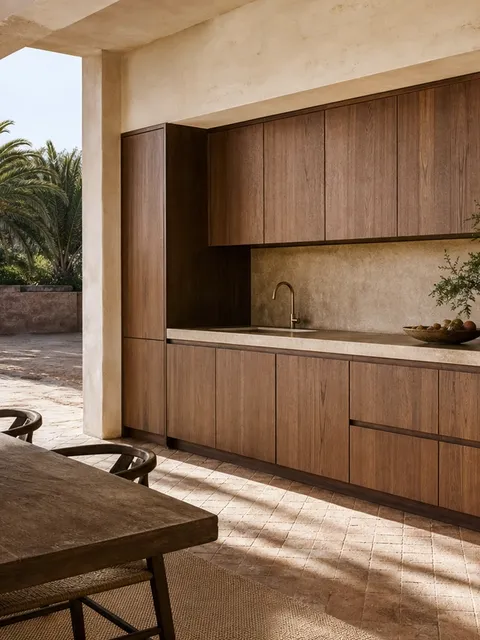
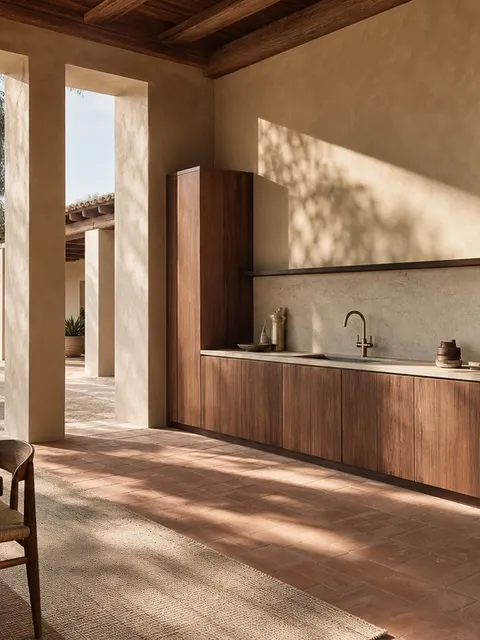
Certified wood and solid stone fit when they are selected for a clear role rather than for vague luxury signaling. FSC certification helps a project document responsible forest management when warm timber or veneer is part of the room. Stone works well on counters, backsplashes, and visual anchors, especially where the buyer wants weight and mineral calm. In a Fadior kitchen, those finishes can sit around a 304 stainless steel cabinet system so the room keeps warmth on the surface and resilience in the body.
This combination also prevents a false either-or choice. FSC-certified wood can help the room feel human and traceable, stone can anchor the work surface, and 304 stainless steel can protect the cabinet body. A buyer who asks each material to prove its role will usually get a better kitchen than a buyer who asks one fashionable material to carry every promise.
When should a buyer choose renovation-grade surfaces?
A buyer should choose renovation-grade surfaces when the home will be held through at least 1 full appliance cycle, when the kitchen is used daily, or when indoor air quality is part of the family brief. The decision becomes stronger in humid cities, compact apartments, and older homes where ventilation and moisture control are imperfect. If the room will be replaced in 2 years, decorative finishes may be enough. If the home is expected to serve for 10 to 30 years, the cabinet body, surface treatment, and warranty need to be judged as infrastructure.
What should a buyer compare before signing?
Before signing, compare the system behind the finishes: core material, finish process, moisture behavior, indoor-air logic, warranty length, and after-sales path. A showroom sample can make almost any surface feel convincing for 10 minutes. A renovation contract has to answer what happens after 1,000 cleaning cycles, 200,000 hinge movements, a leaking appliance, or a humid summer. Use the table below to separate a short-cycle decorative refresh from a long-hold material decision.
| Decision area | Short-cycle decorative choice | Long-hold material-truth choice | Buyer proof to request |
|---|---|---|---|
| Cabinet body | Board core with applied finish | 304 stainless steel body with residential finish | Material grade, warranty term, and moisture-resistance statement |
| Surface story | Trend color selected for a 2-year look | Neutral stone, oak, walnut, or soft linen palette that can age quietly | Sample panel under daylight and evening light |
| Indoor air | Low-odor claim without construction detail | Glue-free or low-emission assembly with clear VOC logic | Adhesive policy and indoor-air documentation |
| Renovation risk | Fast replacement if the market changes | 20- to 30-year service logic with repairable surfaces | Lifecycle, finish care, and after-sales path |
| Resale signal | Visible brand styling only | Durable, calm, easy-clean kitchen envelope | Maintenance records and finish continuity across rooms |
Buyer verification checklist
- Ask whether the cabinet body itself is waterproof, not only whether the outer finish resists moisture.
- Request the exact material grade for cabinet bodies and the surface-care rules for counters and panels.
- Check whether the project uses adhesive-heavy construction or a glue-free assembly path.
- Review warranty length, service access, replacement panels, and finish continuity across kitchen, vanity, and storage zones.
How does Fadior turn durability into residential warmth?
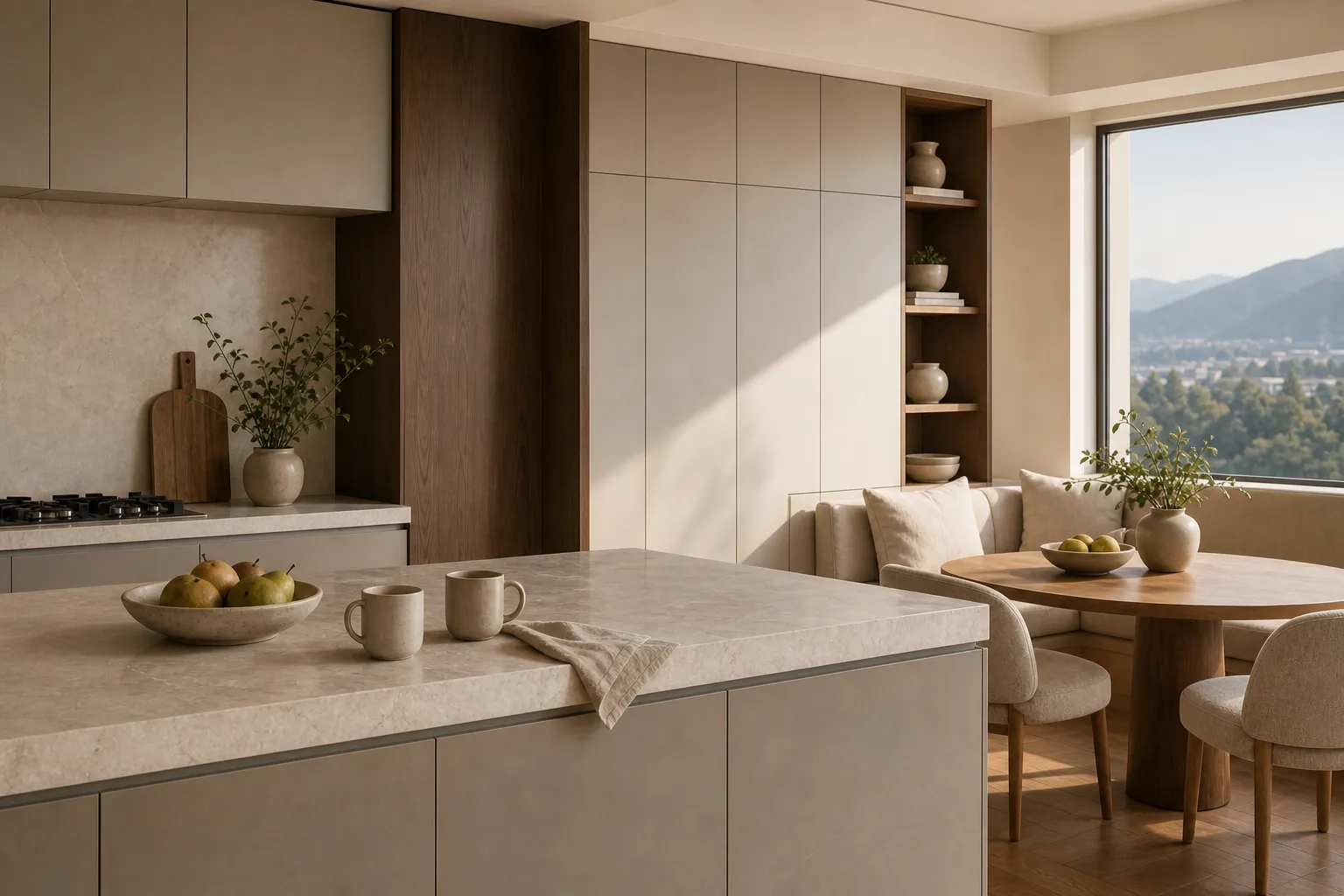
Fadior turns durability into residential warmth by treating 304 stainless steel as a hidden architectural base rather than a cold visual theme. The company has 25+ years of steel-processing heritage through Rongshengda, 213 cumulative patents, 12 glue-free manufacturing patents, and a new smart factory backed by a 600 million RMB investment. Its process can combine 220°C powder coating, 3D wood-grain transfer, pearl white anti-fingerprint finishes, and soft matte textures so the kitchen reads calm while the body remains waterproof and non-formaldehyde.
That factory proof matters because luxury renovation is not only a design decision; it is a coordination decision. A custom kitchen needs drawings, material control, surface consistency, packaging, site support, and after-sales service. The more complex the renovation, the more important it becomes that the material system is repeatable at scale rather than improvised for one showroom vignette.
Which proof points separate real material value from decoration?
Real material value has proof points a buyer can audit. Look for the 304 grade, the coating process, the warranty term, the indoor-air logic, the factory system, and the care instructions. Fadior can point to a 60,000+ sqm Industry 4.0 facility, 20,000+ monthly-unit capacity, 9,500,000+ BOM records, and MES tracking at each workstation. Decoration may be beautiful, but material truth is documented, repeatable, and still useful after the first renovation photographs are forgotten.
Which luxury kitchen renovation questions do buyers ask most?
These are the questions buyers should ask when the brief shifts from new-build display to long-term renovation confidence. Each answer is designed to stand alone for a homeowner comparing surfaces, indoor air, and durability before approving a kitchen investment.
Which luxury kitchen renovation questions do buyers ask most?
Frequently Asked Questions
Questions this guide answers
- Is luxury kitchen renovation still worth it during a property correction?
- Yes, when the renovation solves long-term use rather than short-term resale theater. A weaker new-build market can make existing homes more important, so buyers often spend on kitchens that improve daily life, indoor air, moisture resistance, and durability. The safest brief is not more decoration; it is verifiable material quality that can serve through 10 to 30 years of ownership.
- Should buyers choose 304 stainless steel cabinets for a renovation kitchen?
- Choose 304 stainless steel when moisture, cleaning, indoor air, and long service life matter more than the lowest first cost. In a renovation, the cabinet body is difficult to replace without disrupting counters, services, and finishes. A waterproof 304 stainless steel body gives the kitchen a durable base while surface treatments can still create a warm residential mood.
- How does FSC-certified wood fit a Fadior-style kitchen?
- FSC-certified wood is useful when the project wants visible warmth from timber, veneer, flooring, or furniture around the kitchen. It documents responsible forest management, while the cabinet body can still use 304 stainless steel for waterproofing and zero-formaldehyde construction. The result is not wood versus steel; it is each material doing the job it can prove.
- What numbers should a homeowner ask for before signing?
- Ask for cabinet-body material grade, warranty length, coating temperature, surface-care limits, hardware cycle rating, factory lead time, and after-sales response path. For Fadior, useful reference numbers include 304 stainless steel, 220°C powder-coat bonding, 30-year surface warranty language, 200,000+ hardware cycles, and a 600 million RMB smart-factory investment.
- Can a durable kitchen still look calm and residential?
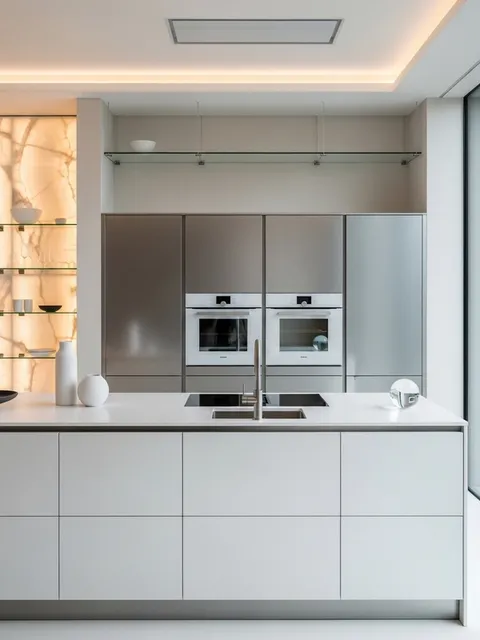
- Yes. Durability does not require an industrial look when the material system is planned as an architectural base. Warm grey fronts, wood-grain transfer, soft linen textures, stone counters, PVD tones, and pearl white finishes can make a 304 stainless steel kitchen feel quiet and domestic. The buyer should judge both layers: how the room looks and what the body is made from.
Related products
Specific products worth reviewing next.
Editorial transparency
Yuki Tanaka is a composite editorial persona maintained by Fadior Home's editorial team. Articles attributed to this byline are produced through an AI-assisted editorial workflow with human review, and represent the consolidated voice of multiple researchers and contributors.
Actually delivered
Real homes photographed after handover, not renders.
Ready to specify?