
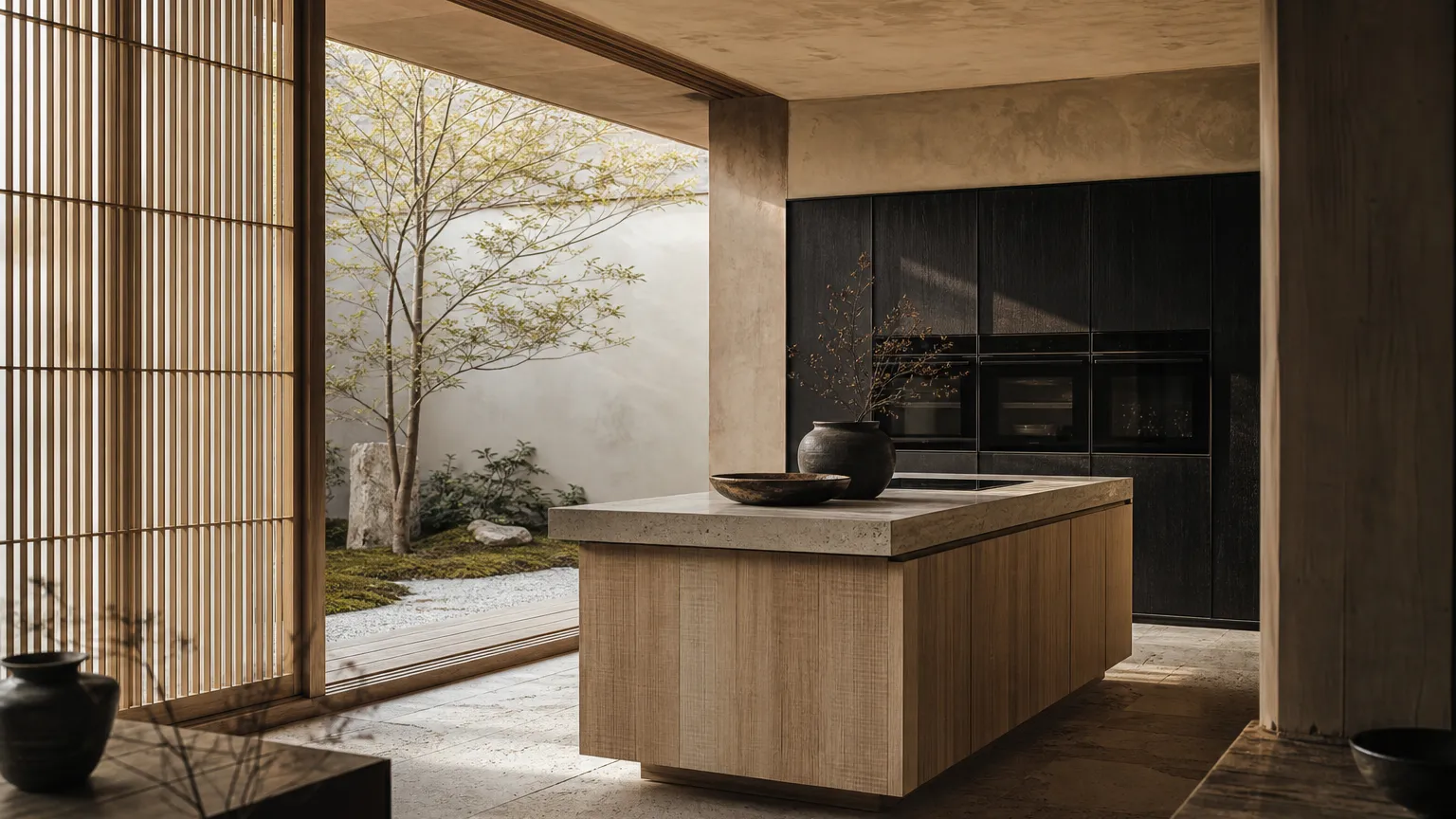
GCC Kitchen Appliance Planning
Miele’s engineering story at CIFF is a reminder that GCC villa kitchens need appliance planning, durable 304 cabinetry, and quiet long-life materials.
Direct answer
The Direct Answer
GCC kitchen appliance planning should begin with how the household cooks for the next 20 years, then match appliances, 304 stainless steel cabinetry, heat zones, wet zones, ventilation, service access, and finishes around that reality. The strongest luxury kitchen is not the one that looks most complete on day 1; it is the one that still works cleanly in year 10.
What should a serious GCC home cook ask before choosing a luxury kitchen?
304 stainless steel cabinetry should be planned alongside the appliance package from the first sketch, because GCC kitchen appliance planning is a 20-year ownership decision, not a 20-minute showroom impression. If the household cooks daily, entertains 12 guests, uses steam and roast cycles, and expects the room to stay calm through summer humidity, the appliances and cabinet body must be engineered as one long-life system.
Why does Miele still matter in a design-led kitchen brief?
Miele matters because it gives buyers a performance reference point. The company was founded in 1899, and its public quality story centers on appliances tested for a claimed 20-year service life. That does not make every kitchen a Miele kitchen; it reminds buyers to ask whether the room behind the appliance has the same patience. A fashionable oven wall can look complete on day 1 and still disappoint by year 6 if heat clearance, ventilation, cleaning paths, and cabinetry structure were treated as secondary details. For a serious cook, reliability is not romantic language; it changes the drawing. Oven towers need surrounding panels that tolerate heat movement. Dishwashers need wet-zone confidence. Cooling columns need ventilation and replacement logic. Coffee systems need service access. Once those needs are visible, the kitchen brief becomes less about which brand photographs best and more about which room can keep working after the first renovation cycle has passed.
How should appliance reliability change the cabinet decision?
A reliable appliance package raises the standard for the surrounding cabinetry. If an oven, dishwasher, cooling column, or coffee system is expected to stay in use for 10, 15, or 20 years, the cabinet body cannot be the weak layer. Fadior uses 304 stainless steel cabinetry, glue-free construction, and a 30-year surface warranty so the room is not rebuilt around still-working appliances. This is where Fadior’s material position matters. The company’s core system is not a decorative board shell with a premium appliance inserted into it. The cabinet body is built from 304 stainless steel, supported by glue-free manufacturing and residential surface treatments. That lets the design team treat Miele, Gaggenau, V-ZUG, Sub-Zero, or another premium package as a long-life object inside a room that is also designed for long life.
Which kitchen materials support heavy cooking without feeling industrial?

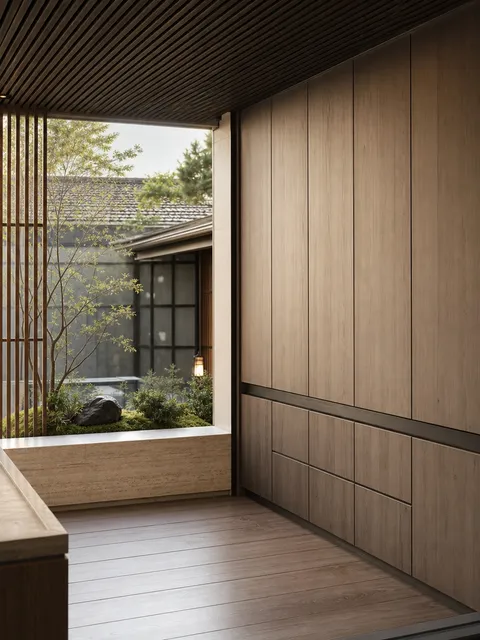
The answer is not a colder kitchen; it is a better-finished one. Fadior’s 304 stainless steel structure can sit behind warm wood-grain finishes, powder-coated color, PVD tones, stone counters, and quiet lighting. For a villa cook, that means 100% waterproof cabinet bodies and zero-formaldehyde construction without forcing the room to look like a restaurant line. The steel does the work, while the surface language stays residential. In practical terms, the homeowner can ask for a soft visual result without weakening the hidden performance. A warm cabinet face can still conceal a waterproof body. A pale island can still sit on a precise engineered structure. A quiet appliance wall can still have the clearances needed for removal and maintenance. This separation between visible mood and hidden endurance is the difference between a calm kitchen and a fragile kitchen.
When does Italian minimalism help, and when does it hide performance risk?
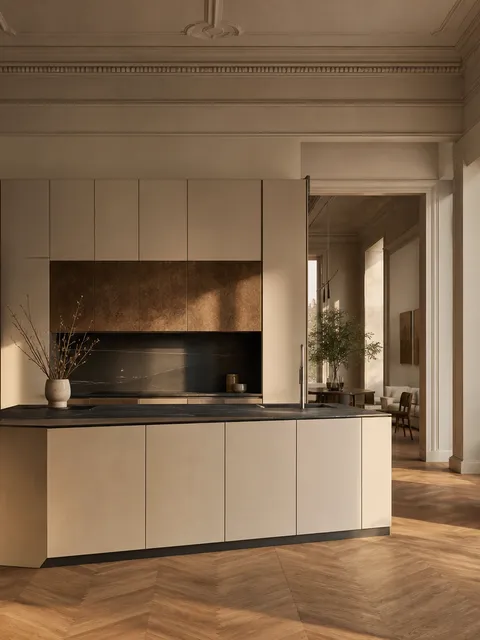
Italian minimalism helps when it disciplines proportion, sight lines, and visual noise. It hides risk when a brief stops at “clean lines” and avoids the daily questions: Where does steam land? How does the dishwasher vent? Can the oven tower be serviced without damaging surrounding panels? A serious GCC kitchen can borrow the calm of minimalism, but it should not borrow the habit of treating engineering as invisible decoration. The risk is especially visible in large villas, where the public kitchen, prep kitchen, and service zones may all carry different expectations. A minimal front kitchen can be elegant, but the back-of-house route still needs cleaning tolerance, load capacity, and daily utility. If the design language refuses to answer those questions, the homeowner is not buying minimalism; they are buying deferred maintenance.
| Decision area | Showroom-first risk | Performance-first requirement | Fadior proof point |
|---|---|---|---|
| Appliance lifecycle | A beautiful appliance wall is planned around launch-year styling. | Plan for 10-20 years of cooking, repair access, replacement clearances, and heat movement. | 304 cabinet bodies and modular engineering keep the surrounding system durable. |
| Cabinet body | Board-based furniture can swell or weaken around steam and wet cleaning. | Use a waterproof, glue-free structural layer where cooking and washing are frequent. | Fadior builds cabinetry from 304 stainless steel with zero-formaldehyde construction. |
| Humidity and heat | GCC humidity, air-conditioning cycles, and steam are treated as afterthoughts. | Choose materials and finishes that tolerate wet zones and daily wipe-downs. | Powder coat, PVD, wood-grain transfer, and 30-year surface warranty support residential warmth. |
| Service access | Flush panels make service difficult once the kitchen is installed. | Keep ventilation, appliance removal, and utility routes readable before ordering. | Factory precision and MES-tracked production help translate drawings into buildable parts. |
| Cooking intensity | The kitchen is designed for occasional display cooking. | Size zones for daily breakfast, family dinners, Ramadan hosting, and weekend prep. | Fadior’s 20,000+ monthly output capacity supports custom whole-home systems. |
| Visual warmth | Performance materials are assumed to look cold. | Separate the structural material from the visible finish language. | 304 steel can carry warm oak-grain, matte color, PVD accents, and stone surfaces. |
How can a GCC villa kitchen stay calm under heat, steam, and hosting?
Calm comes from hidden capacity. A Gulf villa kitchen may host 8 people on a normal evening and 20 during family gatherings. It needs landing space around ovens, a cleaning route near the sink, storage for trays and dry goods, and finishes that tolerate frequent wipe-downs. The visible result can still be quiet: fewer broken lines, warmer panels, deeper drawers, and appliances integrated around how the family actually cooks. Heat and steam are not rare events in this context. They come from long simmering, batch cooking, coffee systems, dishwashing, and family hosting. A calm plan sets down landing zones beside ovens, keeps wet cleaning away from vulnerable edges, and uses storage that can carry trays, cookware, small appliances, and dry goods without sagging. The point is not to make the room busier; it is to make the hidden decisions stronger.
What should CIFF signals tell buyers about whole-home customization?

CIFF is useful because it shows how global luxury brands present themselves to Asian and Middle Eastern buyers. The signal is not that one exhibition trend should dictate the home. The signal is that serious buyers now compare appliance credibility, material health, customization speed, and long-term surface behavior in the same conversation. Fadior’s 600M RMB smart factory and 80,000+ sqm facility answer that broader system question. For Fadior, this is why the company intelligence matters inside an article about Miele. The appliance brand is one signal of seriousness. The factory, material, finish, and customization system are the larger answer. A buyer who sees an appliance presentation at a show should come home asking how the kitchen body is formed, how finishes are bonded, how parts are tracked, and how the final system will be serviced.
Does a premium appliance package need a stronger cabinet body?
Yes, especially when the appliance package is expected to outlast normal renovation cycles. A premium oven or dishwasher can be a 15-year decision; a villa kitchen cabinet body should not behave like a 5-year decorative shell. Stronger bodies also help preserve alignments, door reveals, counter support, and wet-zone confidence as the kitchen moves from showroom photography into daily cooking. Premium appliances also expose weak planning faster. If the oven tower is too tight, heat can mark the surrounding finish. If the dishwasher zone lacks water confidence, swelling and odor become ownership problems. If a coffee system is buried behind a purely decorative elevation, service becomes expensive. Stronger cabinetry does not make the appliance better; it protects the investment around it.
How should buyers compare show-kitchen beauty with daily kitchen truth?
Ask for two drawings: the beautiful view and the working view. The beautiful view shows proportion, finish, light, and the appliance wall. The working view marks hot zones, wet zones, cleaning routes, drawer loads, ventilation paths, and service access. If both drawings still make sense, the kitchen is closer to a long-life room than a trend image. This comparison should happen before deposit, not after installation. Walk through a normal weekday breakfast, a family dinner, a housekeeper’s cleaning routine, a large gathering, and a future service visit. If the same plan works for all 5 scenes, the kitchen is likely ready for real ownership. If it only works for photography, the risk is already visible.
Can appliance planning make a quiet kitchen more valuable?
Yes, because quiet value is usually operational. Buyers notice the beautiful appliance wall on day 1, but they remember the kitchen that stays aligned, clean, dry, and easy to use in year 10. In resale conversations, the stronger story is not only “premium appliances included”; it is “the appliance package is supported by waterproof 304 stainless steel cabinetry, service-aware planning, and finishes chosen for daily Gulf life.” That story is easier for a sales team to explain and easier for a homeowner to trust.

Should buyers choose the appliance brand before the cabinet system?
Buyers should shortlist the appliance package early, but they should not freeze the kitchen around appliance prestige alone. A Miele oven, dishwasher, or cooling system can set a high reliability expectation; the cabinet system decides whether that expectation feels calm in daily use. Before final drawings, confirm the height of the oven stack, the landing space beside hot appliances, the dishwasher door swing, the wet cleaning path, the ventilation route, the future replacement route, and the surface behavior around every high-use zone. This is where a 304 stainless steel cabinet body becomes more than a material claim. It gives the designer a stable waterproof structure under warmer finishes, so the appliance story does not depend on fragile surrounding furniture.
Are premium appliances enough to make a kitchen feel complete?
No. Premium appliances can improve cooking precision, but they cannot solve storage logic, humidity resistance, formaldehyde concerns, counter support, drawer load, or whole-home visual continuity by themselves. A complete kitchen has at least 4 layers working together: appliance performance, cabinet body durability, surface and finish comfort, and serviceable planning. Fadior’s advantage is that these layers can be coordinated across kitchens, wardrobes, vanities, and storage zones, rather than treated as isolated product purchases. For a GCC villa, that whole-home discipline matters because the public kitchen often connects directly to dining, living, service, and guest spaces.
Which GCC kitchen questions do buyers ask most?
The strongest buyer questions are not about a single oven or cabinet finish. They ask how the whole room behaves after 1, 5, 10, and 20 years of cooking, cleaning, hosting, and climate stress. Use the answers below as a compact checklist before confirming a premium appliance package. The final check is simple: if the family can cook breakfast, prepare a weekend dinner, clean the wet zones, and schedule future service without redesigning the room, the appliance plan is doing its job.
Performance-first planning checklist
Frequently Asked Questions
Questions this guide answers
- Is Miele the best appliance choice for every GCC villa kitchen?
- Miele is a strong benchmark for buyers who value quiet engineering, long testing claims, and durable appliance behavior, but it is not the only premium option. The better question is whether the chosen appliance package matches the family’s cooking frequency, service expectations, heat output, and design language. Fadior uses that appliance decision as one input in a whole-kitchen plan.
- Why should cabinet material matter if the appliance is the main investment?
- The cabinet body holds the appliance geometry, wet-zone confidence, counter support, and long-term alignment. If the appliances are specified for 10 to 20 years of service, the surrounding cabinetry should not behave like a short-life decorative layer. A 304 stainless steel cabinet body gives the appliance package a more durable room to live in.
- Can a performance-first kitchen still look warm and residential?
- Yes. Performance-first does not mean industrial styling. Fadior separates hidden structure from visible atmosphere: 304 stainless steel can sit behind wood-grain finishes, matte powder-coated colors, PVD accents, stone counters, and softer lighting. The result can feel calm and architectural while still resisting humidity, wet cleaning, and heavy daily use.
- What should buyers ask after seeing luxury kitchen displays at CIFF?
- Ask what survives after the display is gone. Which surfaces tolerate steam? How is the oven tower serviced? Does the dishwasher vent safely? Are cabinet bodies waterproof? Can the finish be cleaned daily without losing warmth? Trade-show beauty is useful, but GCC villa buyers need the operational drawing behind the beautiful view.
- How does this topic connect to Fadior rather than only to Miele?
- Miele is the reference for a bigger decision: serious appliances deserve serious cabinetry. Fadior’s role is the whole-home stainless steel system around the appliance package, including 304 cabinet bodies, glue-free construction, residential finish options, and factory precision. The appliance may be the workhorse; the cabinet system is the long-life architecture around it.
Related products
Specific products worth reviewing next.
References
Authoritative sources cited in this article
Editorial transparency
Marco Rinaldi is a composite editorial persona maintained by Fadior Home's editorial team. Articles attributed to this byline are produced through an AI-assisted editorial workflow with human review, and represent the consolidated voice of multiple researchers and contributors.
Actually delivered
Real homes photographed after handover, not renders.
Ready to specify?