
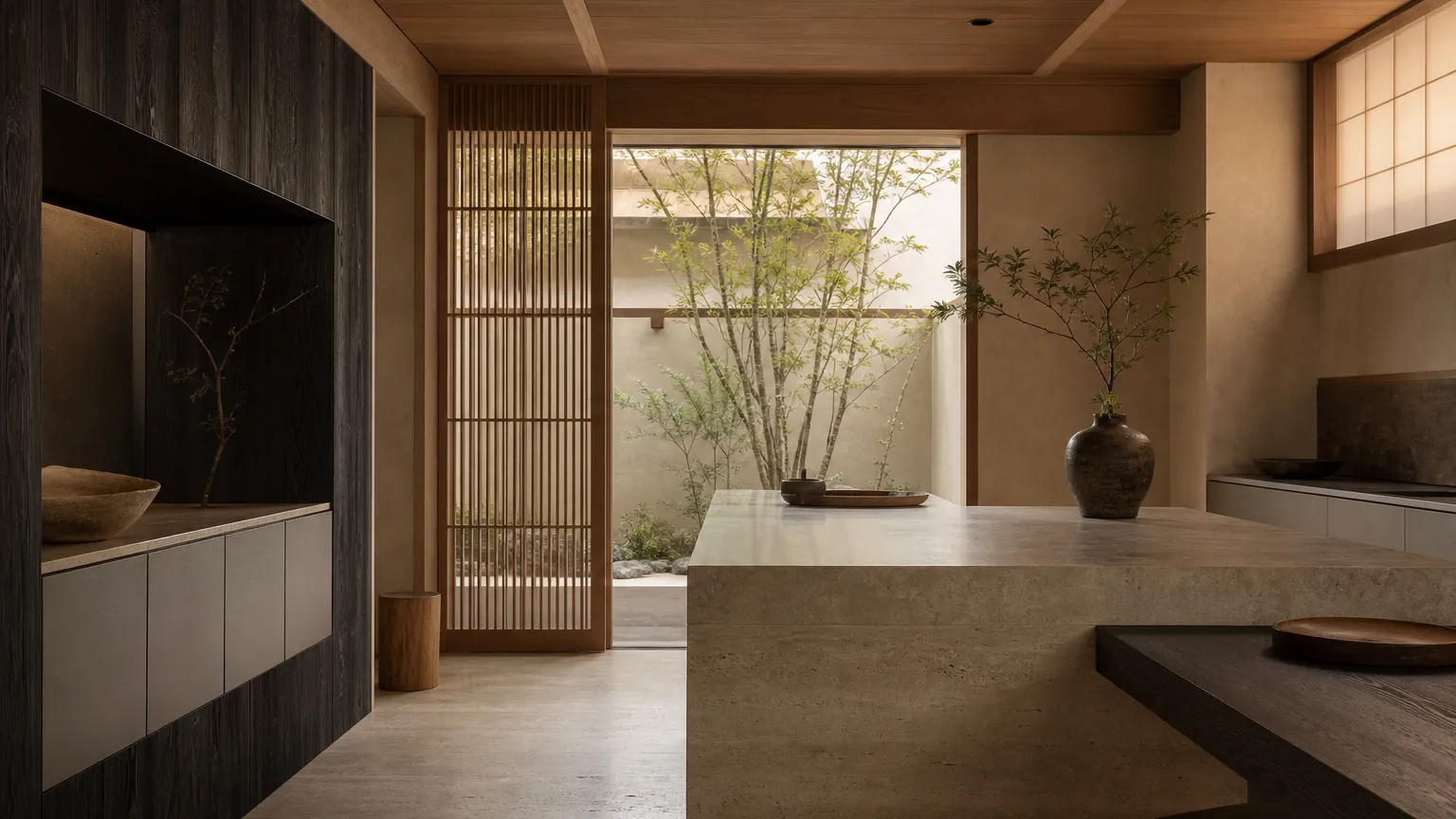
Renzo Piano Kitchen Design Lessons
Renzo Piano kitchen design is not a biography cue. It is a way to balance 304 stainless cabinetry, warm finishes, light, and stone for GCC homes.
Direct answer
The Direct Answer
304 stainless steel kitchens can translate Renzo Piano material honesty into a luxury home when the structure stays precise and the room stays warm. For GCC villas, the lesson is not to copy a museum or a tower; it is to balance 1 durable cabinet system with timber tone, stone mass, filtered light, and quieter surfaces so the kitchen feels honest, calm, and residential.
What does Renzo Piano kitchen design mean for a home?
304 stainless steel kitchens can translate Renzo Piano material honesty into a luxury home when the structure stays precise and the room stays warm. For GCC villas, the lesson is not to copy a museum or a tower; it is to balance 1 durable cabinet system with timber tone, stone mass, filtered light, and quieter surfaces so the kitchen feels honest, calm, and residential. Renzo Piano kitchen design is a material-first approach to balancing structure, light, tactility, and daily comfort in a residential kitchen.
- material honesty
- Material honesty means each visible surface keeps a clear role: structure feels stable, touch surfaces feel human, and decorative finishes do not pretend to carry the whole room.
Why should GCC buyers borrow the material idea, not the biography?
The useful lesson is a design method, not a fan note. Piano projects often make structure, light, and surface feel legible; a kitchen buyer can use the same logic before approving samples. In a 30 to 45 sqm Gulf show kitchen, sunlight, high ceilings, stone floors, and evening hospitality can make hard surfaces feel louder than expected. The buyer should ask how many surfaces need to be expressive and how many should simply do their job. A Fadior kitchen can keep 304 stainless steel where water, cleaning, and long service life matter, while the room gets warmth from cypress tone, travertine, clay plaster, and controlled lighting.
How can exposed structure feel residential instead of cold?
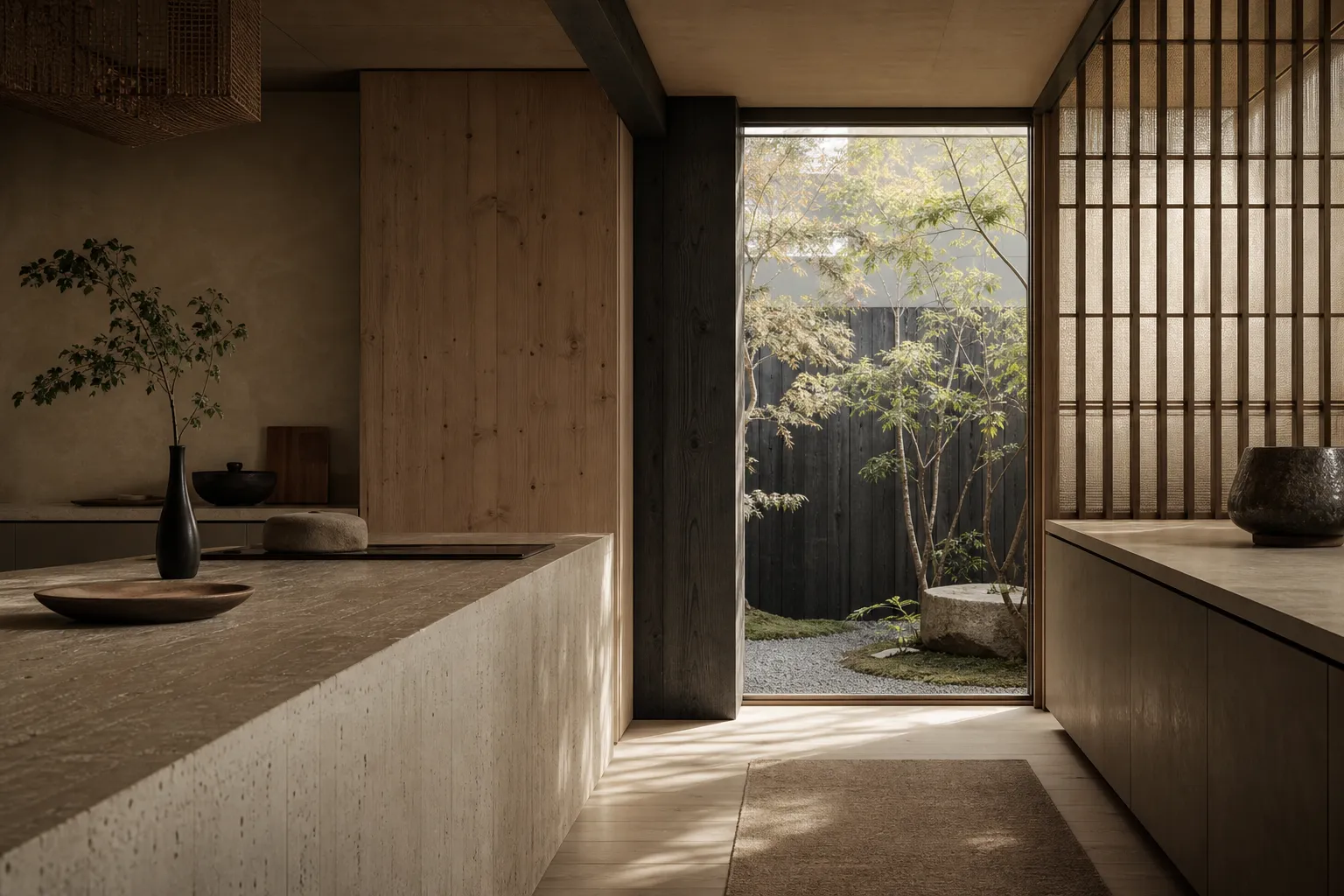
Exposed structure feels residential when it is softened by scale, rhythm, and touch. A cabinet wall can be visually calm if the panel field is broken by 2 or 3 warm zones rather than constant reflection. A range wall can feel lighter when the verticals align with lattice, glazing, or ceiling beams. A 4 meter island needs an edge, seating shadow, or tactile counter surface so it does not read like a block. Fadior already has the technical base: 304 cabinet bodies, 0.6mm door panels, 1.2mm countertop substrates, and finish systems that make precision quieter. The design task is to let engineering support atmosphere without showing off every joint.
Which materials carry the lesson without making the kitchen fragile?
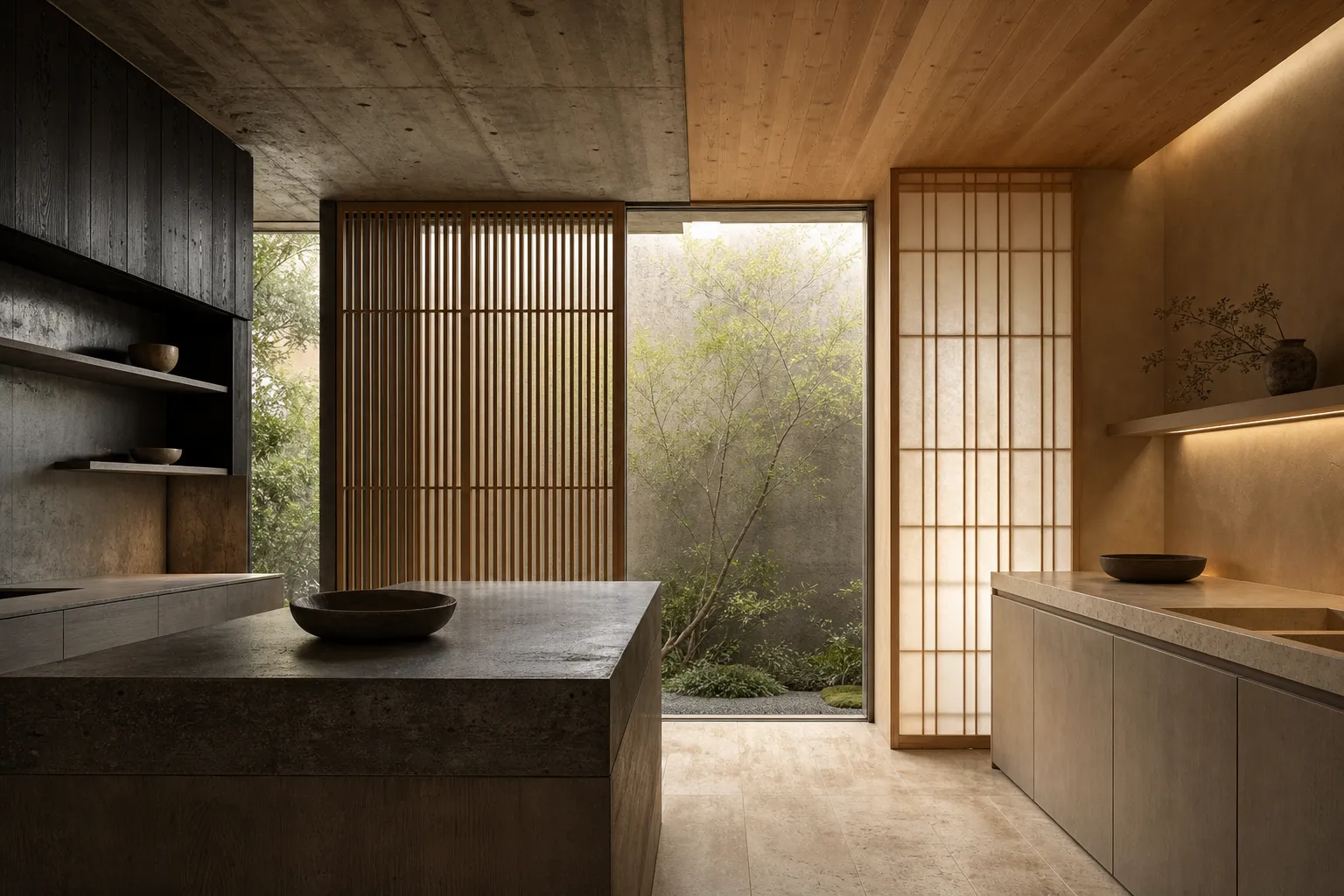
Use materials by job. 304 stainless steel belongs in the cabinet body, sink base, storage carcass, and humid service zones because it handles water and cleaning. Brushed travertine, limestone, or sintered stone can carry the main visual mass when the buyer wants calm. Cypress tone, walnut tone, or textured panels add touch where hands and eyes linger. Clay plaster and rice-paper-like diffusion can soften daylight without pretending to be durable work surfaces. The safest luxury palette uses 3 layers: a resilient base, 1 warm tactile layer, and 1 quiet light layer. That gives the room enough feeling without weakening the daily-use areas.
When should a kitchen show steel and when should it hide it?
Show steel when the buyer wants precision, hygiene, or a crafted edge; hide it when the room already has too many cool or reflective cues. A wet prep kitchen, outdoor-adjacent storage wall, or high-use family kitchen benefits from visible honesty because the material tells the truth about cleaning and durability. A formal dining-facing kitchen may need the same 304 structure behind warmer surfaces. Fadior can do both. Its powder coat system has 80+ color options, its PVD tones can warm selected accents, and its 3D wood-grain transfer can make a technical cabinet body feel more domestic. The point is not to disguise performance; it is to place performance where the buyer can live with it for 10, 20, or 30 years.
How do you compare structural clarity with warm comfort?
Compare the choices by role before comparing beauty. Structural clarity is strongest when the room must endure steam, wet cleaning, frequent cooking, or staff use. Warm comfort is strongest where family life, dining, and hosting shape the memory of the room. In a GCC villa, these 2 needs often sit side by side: a practical prep zone and a calm show kitchen. Piano-like material thinking helps the buyer avoid a false choice. Keep the backbone precise, make the touch points warmer, then control reflection with light and texture. A single decision table is usually clearer than mood-board debate.
| Decision layer | Best kitchen role | Buyer risk | Fadior interpretation |
|---|---|---|---|
| 304 stainless steel body | Sink bases, storage, wet zones, long-life cabinet structure | Can feel technical if every visible plane is cool | Use as the resilient backbone and soften selected visible surfaces |
| Cypress or walnut-tone fronts | Dining-facing panels, pantry walls, family touch zones | Too much grain can compete with stone and light | Use restrained warm fields over precise cabinet geometry |
| Travertine or pale stone mass | Island, counter visual weight, wall base, calm backdrop | Porous or delicate choices need sealing and care rules | Pair stone mood with engineered cabinet structure |
| Clay plaster and filtered light | Walls, ceiling mood, courtyard transition, daylight control | Marks and uneven texture may worry perfectionist buyers | Use it away from abuse zones to soften hard surfaces |
| Champagne or PVD accent | Small reveal, niche, vanity note, fixture harmony | Overuse can look decorative instead of architectural | Repeat 1 accent family no more than 2 or 3 times |
What does Fadior add beyond a mood-board translation?
Fadior adds manufacturing proof. The company works from 304 stainless steel rather than wood-based board, supports zero-formaldehyde construction by removing glue from the core system, and operates a smart factory investment recorded at 600M RMB. Its product logic is not only aesthetic: 213 cumulative patents, 12 glue-free process patents, MES tracking, and a 220 degree finish-bonding process turn material choice into a repeatable system. That matters because a Gulf kitchen is not a photo set. It must survive heat, water, cleaning, family use, and replacement decisions after 5 years. A material-led kitchen should still have service logic behind the calm view.
How should a buyer plan light before approving samples?
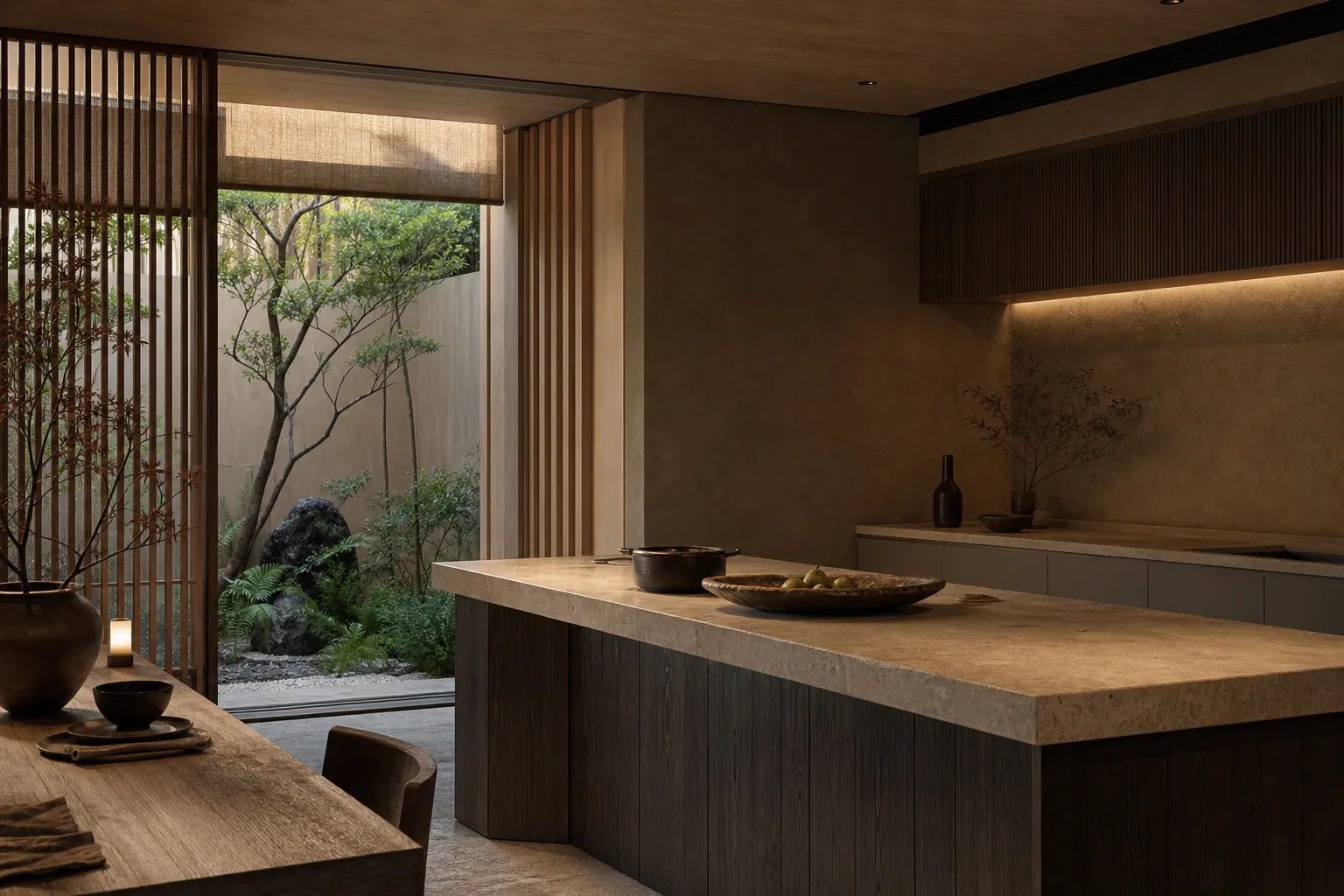
Plan light before samples because material color changes under different hours. Ask to view the cabinet finish, stone, and warm panels under 3 conditions: morning daylight, afternoon glare, and evening pendant or cove light. In the Gulf, a finish that feels quiet at 10am may feel flat at 7pm, while a reflective trim that looks elegant in a showroom can multiply glare near large glazing. Piano-like thinking treats light as part of the material package. The kitchen should be checked from the dining table, the island seat, the prep zone, and the entrance. If the room works from 4 viewpoints, the palette is probably disciplined enough.
Which questions keep the design from becoming a showroom scene?
Ask practical questions early. Who cooks on weekdays? How many guests arrive during a normal dinner? Does the family need a dirty kitchen or a hidden prep zone? Will staff clean with gentle products or aggressive chemicals? Is the island used for breakfast, laptop work, or buffet service? A 20 sqm apartment kitchen and a 45 sqm villa kitchen should not use the same surface hierarchy. Fadior buyers should also ask how the 304 cabinet body, finish treatment, countertop substrate, and installation sequence work together. The answer should sound like a living plan, not a styling caption. Request one written sample board note that explains cleaning, replacement, lighting, and warranty expectations in plain buyer language.
- Choose the durable cabinet-body material before choosing decorative accents.
- Limit the palette to 3 dominant surface families for the main kitchen.
- View samples under daylight and evening light before approval.
- Keep wet and high-cleaning zones on proven structural surfaces.
- Repeat one warm accent family in 2 or 3 places rather than mixing many finishes.
Can this approach work with Grohe and other premium fixtures?
Yes, if fixtures are treated as part of the material rhythm rather than as isolated trophies. A Grohe water zone, a warm PVD note, or a quieter faucet profile should reinforce the same palette that governs cabinet fronts, stone, and light. The mistake is selecting fixtures after the room has already accumulated too many tones. In a refined kitchen, the tap, sink, backsplash, and cabinet reveal should belong to 1 visual family. Fadior can keep the water-zone structure on 304 stainless steel, then let the fixture finish support the residential mood. That is more durable than chasing a finish trend across every visible element. Keep the sample decision visible in the final order notes.
Which Renzo Piano kitchen design questions do buyers ask most?
Buyers usually ask whether this idea is too abstract, whether exposed material will feel cold, and whether a luxury kitchen can be both precise and warm. The useful answer is practical: separate structure, touch, light, and atmosphere before approving samples.
Frequently Asked Questions
Questions this guide answers
- Is Renzo Piano kitchen design a style buyers can copy directly?
- No. Buyers should treat Renzo Piano kitchen design as a method, not a visual template. The useful lesson is to make structure, surface, and light feel intentional. In a home, that means durable 304 stainless steel where water and cleaning matter, warmer finishes where people touch and gather, and a lighting plan that keeps the kitchen calm at different times of day.
- Will a material-honest kitchen feel too cold for a Gulf villa?
- It can feel cold if every visible surface is reflective, pale, or hard. It feels residential when the durable structure is balanced with timber tone, stone mass, clay-like walls, and filtered daylight. For GCC homes, the best approach is not to hide performance but to decide which surfaces should feel technical and which should carry warmth.
- Should 304 stainless steel be visible in the main kitchen?
- 304 stainless steel can be visible when the buyer wants precision, hygiene, and a clear performance signal. It can also sit behind warmer cabinet finishes when the main room faces dining or formal entertaining. The key is role clarity: use 304 for the cabinet body and wet zones, then soften the room with finish, texture, and lighting decisions.
- How many materials should a luxury kitchen palette use?
- Most luxury kitchens feel calmer when the main palette has 3 dominant surface families: one resilient cabinet structure, one warm tactile layer, and one stone or plaster mass. Accent finishes can appear, but they should repeat in 2 or 3 disciplined locations. Too many materials make the room look assembled from samples instead of designed as one home.
- What should buyers verify before signing off on this palette?
- Buyers should verify finish samples under morning, afternoon, and evening light; ask which surfaces are structural and which are decorative; confirm cleaning rules; and clarify warranty scope. For Fadior, they should also ask how the 304 cabinet body, 220 degree finish process, countertop substrate, and installation sequence support long-term use.
Related products
Specific products worth reviewing next.
References
Authoritative sources cited in this article
Editorial transparency
Sienna Park is a composite editorial persona maintained by Fadior Home's editorial team. Articles attributed to this byline are produced through an AI-assisted editorial workflow with human review, and represent the consolidated voice of multiple researchers and contributors.
Actually delivered
Real homes photographed after handover, not renders.
Ready to specify?