
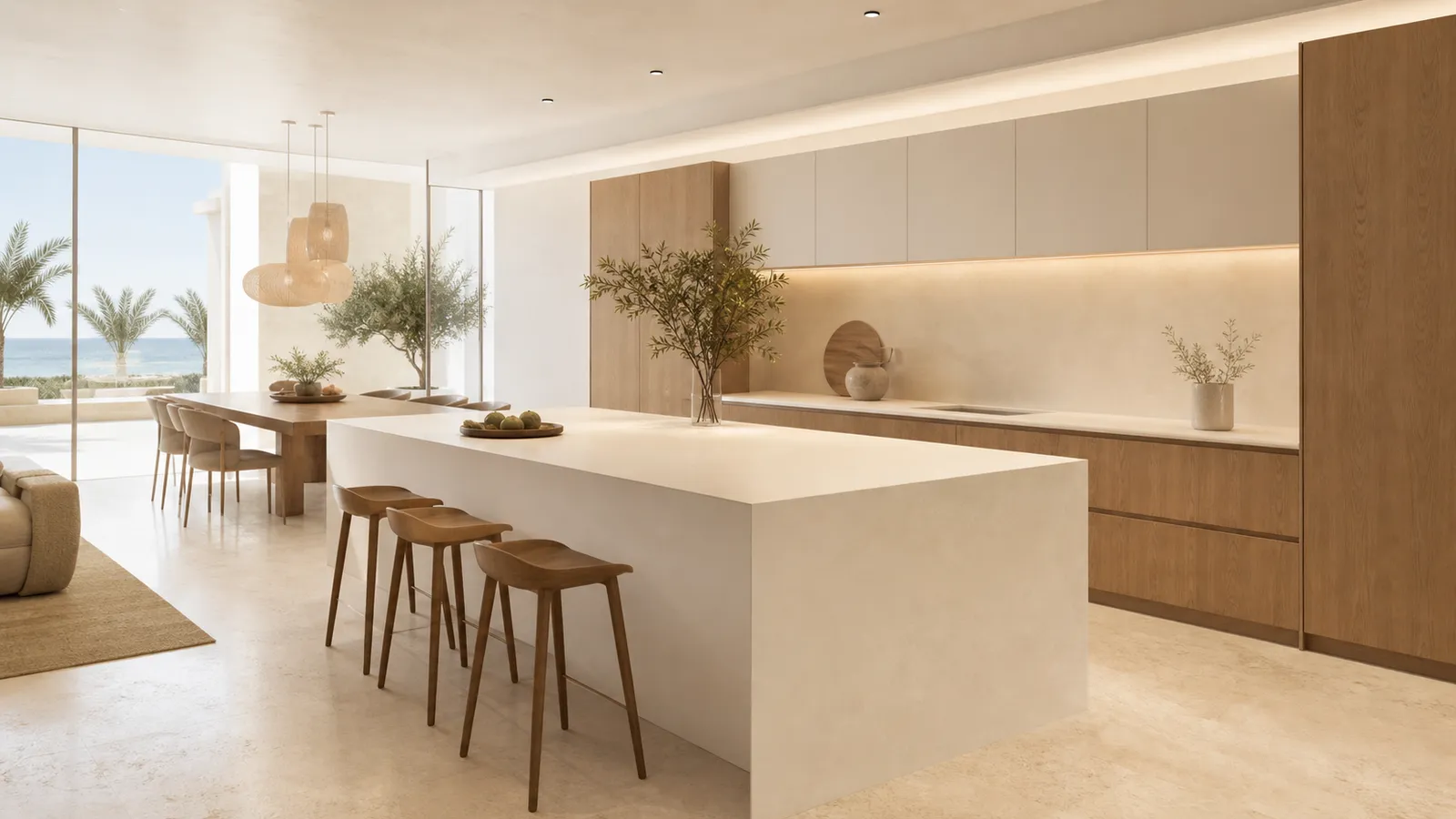
Solid Surface Kitchen Countertops, Seamlessly
HIMACS gives luxury kitchens a seamless surface language for islands, sinks, and backsplashes while Fadior’s 304 stainless steel bodies protect the structure below.
Direct answer
The Direct Answer
Solid surface kitchen countertops matter when a luxury kitchen needs continuous surfaces, quiet hygiene, and fewer visual breaks. For a GCC villa, HIMACS can shape the island, sink deck, and backsplash into one calm plane while Fadior keeps the 304 stainless steel cabinet body protected below. That combination separates the visible surface decision from the structural durability decision.
Why do solid surface kitchen countertops matter in a seamless luxury kitchen?
Solid surface kitchen countertops matter when a luxury kitchen needs continuous surfaces, quiet hygiene, and fewer visual breaks. For a GCC villa, HIMACS can shape the island, sink deck, and backsplash into one calm plane while Fadior keeps the 304 stainless steel cabinet body protected below. That combination separates the visible surface decision from the structural durability decision.
What is HIMACS in practical kitchen terms?
HIMACS is a solid surface made from roughly 70% natural minerals and 30% high-performance acrylic resin, according to our material research notes. In practical kitchen terms, it is a nonporous, repairable, thermoformable surface used for counters, integrated sinks, backsplashes, and furniture-like forms. It is not the cabinet body. That distinction matters because a 20 mm surface can make the room feel monolithic, while the cabinet structure below still carries water, load, cleaning, and ownership risk for 10, 20, or 30 years.
How does HIMACS change the look of a waterfall island?
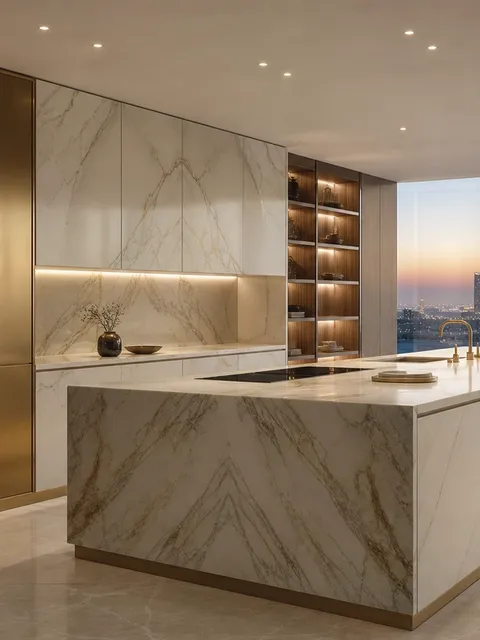
HIMACS changes a waterfall island by making the vertical and horizontal planes read as one sculpted object. Instead of a visible edge, grout line, or slab joint becoming the first thing a visitor sees, the surface can turn around the end of the island and continue into an integrated sink zone. In a 4.2 m island, that can reduce visual interruption across the main sightline. The gain is emotional as much as technical: the kitchen feels calmer because the eye does not stop every 600 mm at a separate tile, panel, or seam.
- HIMACS
- HIMACS is a thermoformable, nonporous solid-surface material made from mineral content and acrylic resin, used for continuous kitchen and bath surfaces.
Which surface choices should buyers compare before ordering?
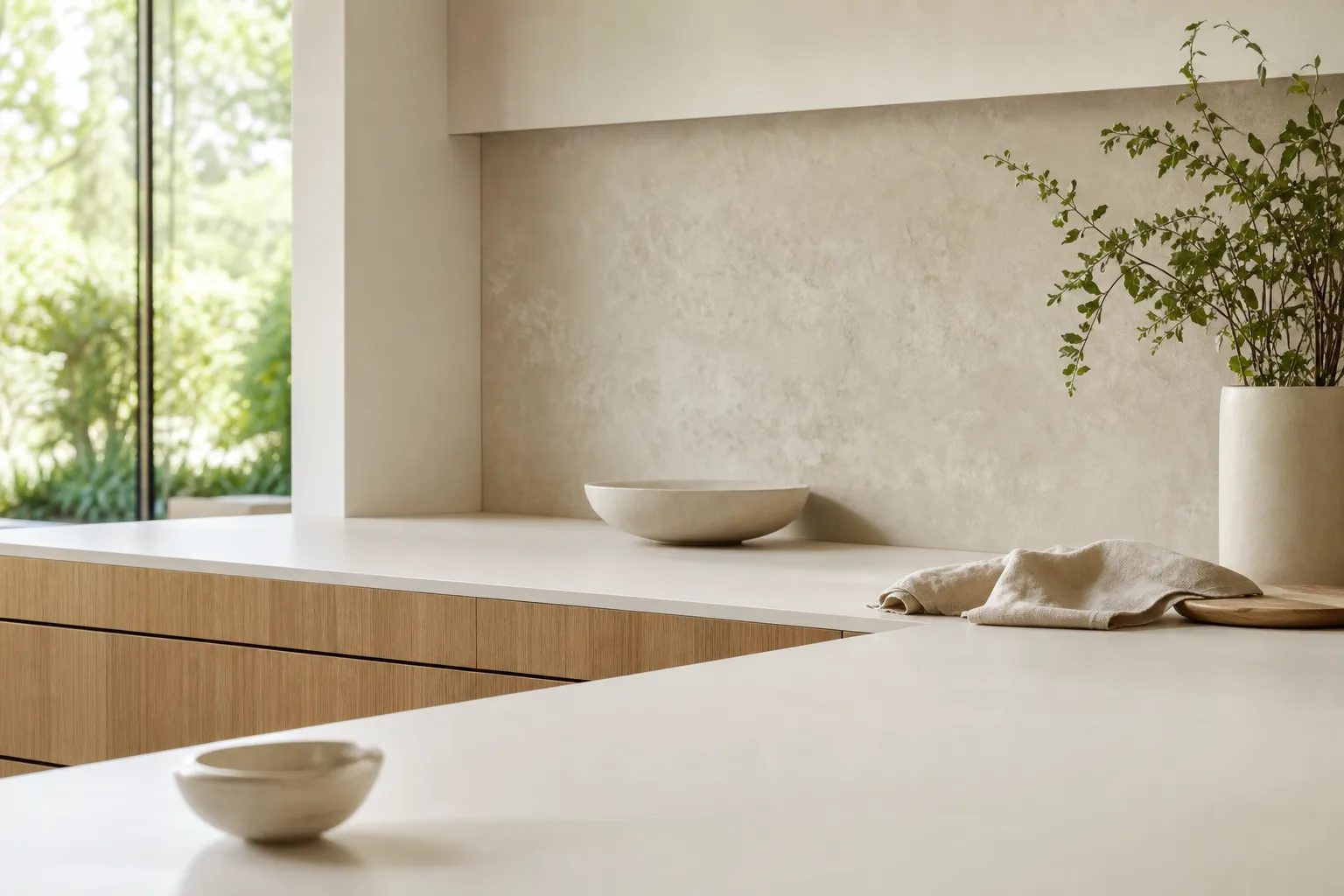
Buyers should compare HIMACS with quartz, porcelain, natural stone, and 304 stainless steel cabinet structures by role, not by marketing label. A counter surface handles touch, cleaning, sink integration, and visual continuity. A cabinet body handles moisture, load, fixing strength, and long-term repair risk. When those roles are mixed together, the conversation becomes vague. When they are separated, the decision becomes clearer: choose the visible surface for daily feel, then choose the hidden body for water resistance and service life.
| Choice | Best role | Decision trade-off | Buyer check |
|---|---|---|---|
| HIMACS solid surface | Waterfall island, integrated sink zone, continuous backsplash | Seamless look and local repair; needs fabrication discipline around heat zones | Ask how sink joins, hob clearances, and on-site sanding are handled |
| Quartz surface | Straight counters and broad color choice | High hardness and familiar supply chain; seams still matter on large islands | Check slab size, seam placement, and edge profile before deposit |
| Porcelain or sintered surface | Thin visual plane and heat-tolerant counter areas | Strong surface language; edges and chips need careful detailing | Inspect edge build-up, corner protection, and replacement route |
| Natural stone | Unique veining and high decorative value | Every slab is different; porosity and maintenance vary by stone | Confirm sealing schedule, stain risk, and final slab approval |
| 304 stainless steel body | Cabinet structure below the surface | Waterproof, recyclable, and strong; finish choice controls warmth | Verify body material, coating, and installation detailing separately |
How should HIMACS meet a 304 stainless steel cabinet body?
HIMACS should meet a 304 stainless steel cabinet body as a coordinated layer, not as a substitute. Fadior uses 304 stainless steel for cabinet bodies because water, vapor, and wet cleaning are daily risks in kitchens and vanities. HIMACS can then create the soft, seamless surface language above that body. In a villa kitchen with 18 linear metres of storage, this pairing keeps the tactile surface calm while the hidden structure resists swelling, adhesive failure, and moisture damage.
Why does hygiene depend on seams as much as material?
Hygiene depends on seams because dirt, moisture, and cleaning residue often collect where materials meet. NSF/ANSI 51 focuses attention on food-equipment material suitability, and the EPA warns that indoor material choices can affect air quality through volatile organic compounds. A nonporous surface helps, but the real kitchen test is the full detail: sink perimeter, backsplash turn-up, splash zone, and cabinet body. Reducing 6 grout lines does not help if the sink cut-out or lower cabinet edge becomes the weak point.
Can solid surface kitchen countertops handle heat and daily cooking?
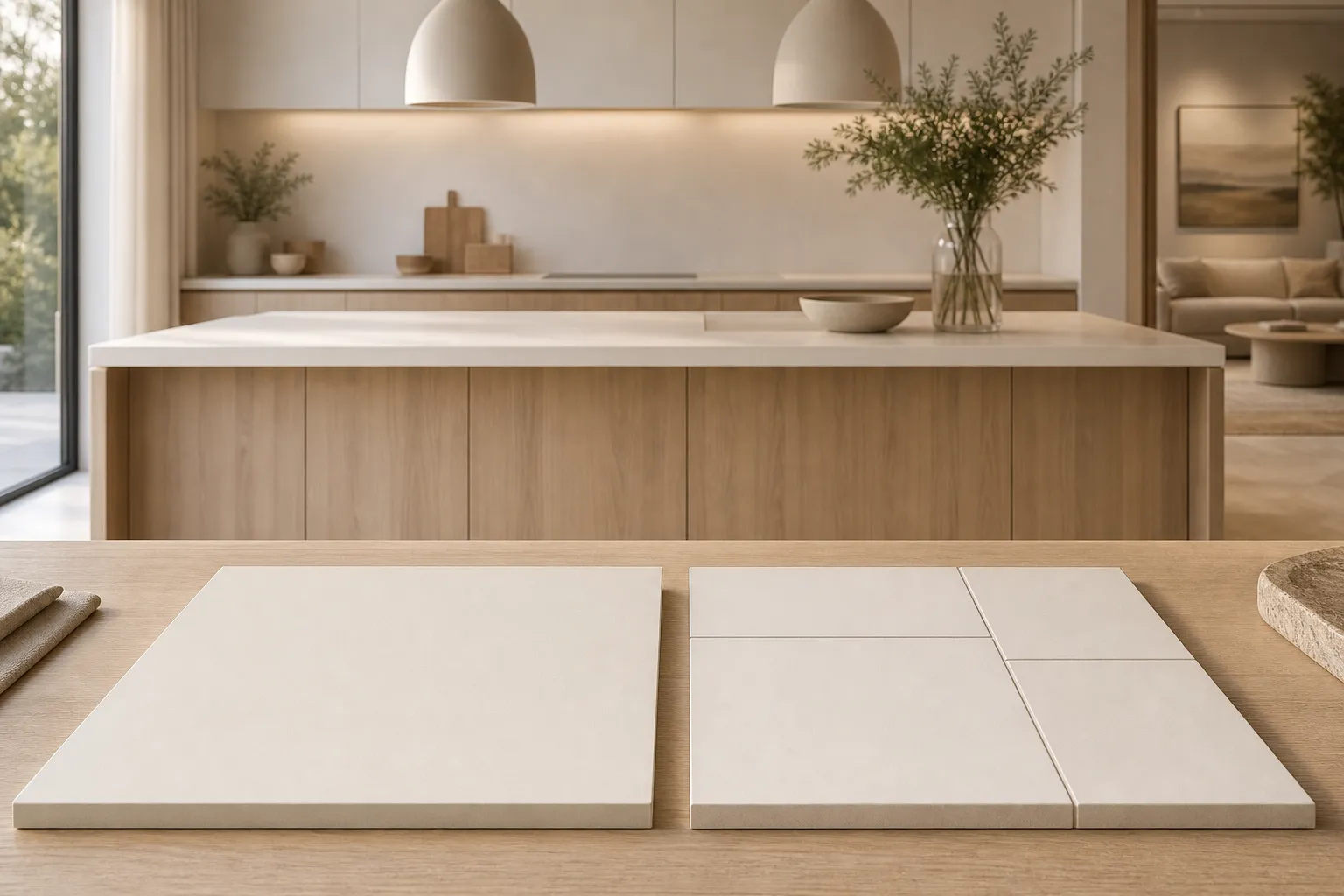
Solid surface kitchen countertops can work well in daily cooking when the design protects heat zones honestly. The buyer should not treat any surface as magic. Around a hob, oven landing point, or boiling-water area, the project should use trivets, heat buffers, and clear appliance spacing. A 20-minute cooking session may create different stress than a 2-hour family dinner preparation. The right question is not whether the surface is indestructible; it is whether the kitchen plan keeps heat, water, and impact in the right places.
- Confirm the island length, slab or sheet limits, and where any unavoidable seam will fall.
- Ask for the sink integration detail, splash-zone plan, and repair method in writing.
- Separate the surface warranty from the cabinet-body warranty so each risk is clear.
- Check whether the chosen color is available in recycled-content or certified lines if that matters to the project.
- Review cleaning instructions for coffee, oil, citrus, and spice stains before final approval.
When is HIMACS a better fit than quartz or stone?
HIMACS is a better fit when the design priority is continuous form rather than natural variation. It suits waterfall islands, curved breakfast counters, integrated basin zones, and long backsplashes where visible seams would weaken the room. Quartz may be better for familiar slab logistics; porcelain may be better where very high heat resistance is the main issue; natural stone may be better when unique veining is the emotional centre. For a 60 sqm kitchen and dining room, HIMACS wins when the client wants the surface to disappear into the architecture.
How does Fadior keep the kitchen from feeling clinical?
Fadior keeps the kitchen from feeling clinical by separating engineering from atmosphere. The cabinet body can be 304 stainless steel, while the visible room uses powder coat, 3D wood-grain transfer, linen-embossed texture, PVD tones, sintered stone, or a solid-surface counter. The company’s Foshan smart factory records 9,500,000+ BOM details, uses 26,000+ production rules, and supports 80+ powder-coat colors. That production discipline gives designers more freedom to make the room feel warm, not industrial.
Where can seamless surfaces still fail in a real home?
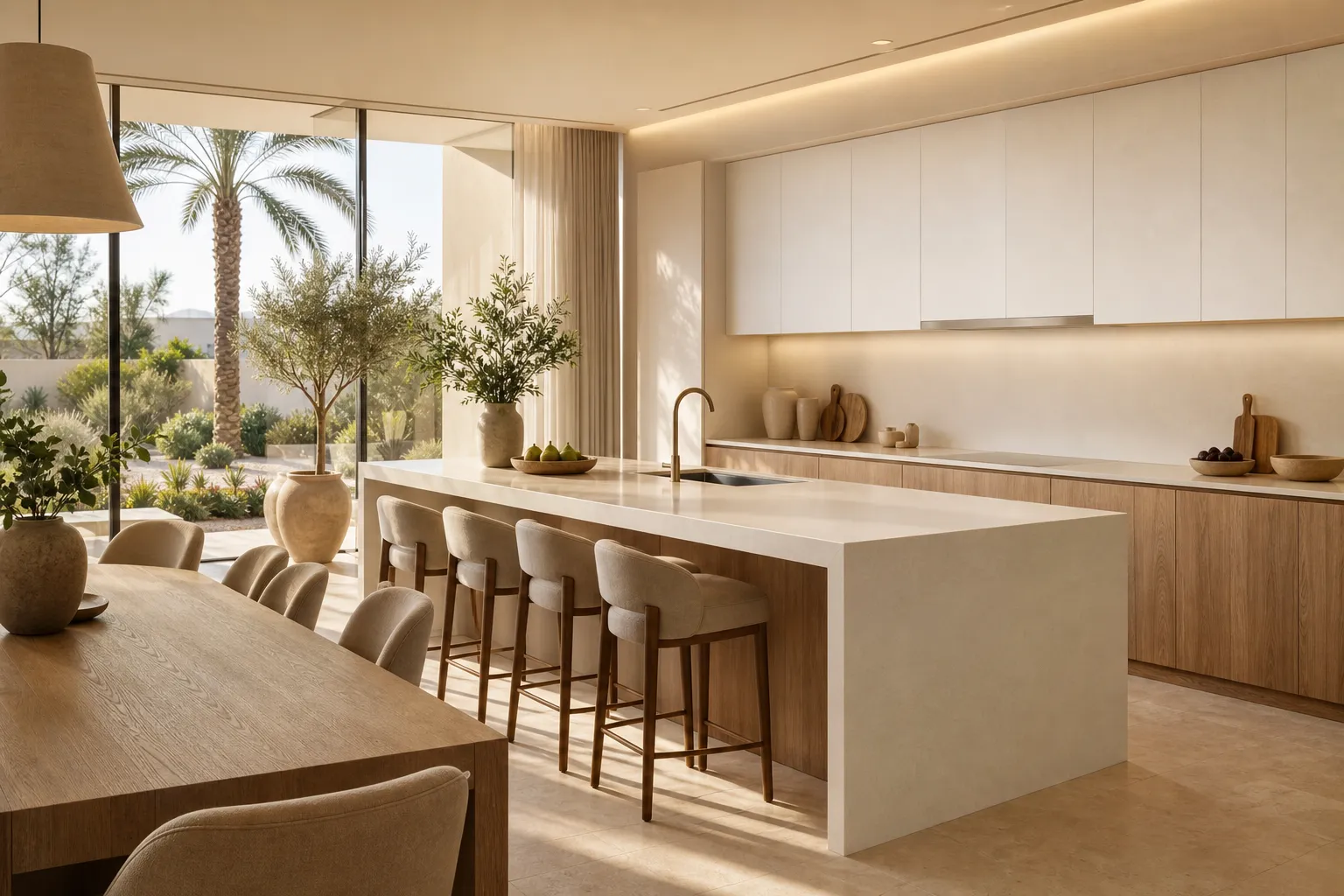
Seamless surfaces can still fail where the project treats fabrication as an afterthought. The risky areas are predictable: a sink that is too close to an unsupported corner, a hot pan landing zone without a practical buffer, a backsplash return that looks clean in drawings but traps water at the end, or a long island that ignores delivery access. A buyer should ask for 3 drawings before production: plan view, sink detail, and edge section. Those drawings make the difference between a showroom promise and a kitchen that survives daily use. Before deposit, put the HIMACS color, sink integration, heat-zone plan, cabinet-body material, and installation sequence on one page, then mark what is factory-made, what is site-finished, and what can be repaired later. That 30-minute review can prevent a 3-month order from depending on assumptions nobody signed.
Which HIMACS questions do buyers ask most?
Buyers usually ask whether HIMACS is practical, where seams go, how repair works, and how it should connect to the cabinet system. Those questions are useful because they move the conversation away from a small showroom sample and toward the real kitchen: sink water, cooking heat, cleaning habits, edge impact, and long-term service. A buyer should leave the meeting knowing the surface role, the cabinet-body role, and the maintenance routine.
How should a luxury buyer brief the design team?
A useful brief should name the surface experience first, then the technical boundaries. For example: one seamless island, one integrated sink run, a calm backsplash, 304 stainless steel cabinet bodies, no visible grout on the main sightline, and a documented cleaning and repair route. Add numbers: 4.2 m island length, 900 mm counter depth, 1 integrated sink, 2 appliance towers, 8 internal drawers, and a 30-year surface expectation. Specific briefs produce better kitchens than mood words alone.
Should solid surface be the whole kitchen answer?
Solid surface should not be treated as the whole kitchen answer. It is a surface answer: excellent for continuity, shape, touch, and repairable visual calm. The complete kitchen answer still includes cabinet-body material, ventilation, lighting, appliance fit, drainage, installation accuracy, and service access. For a high-end GCC home, the strongest specification is layered: HIMACS where seamless touch matters, 304 stainless steel where water and structure matter, and warm finishes where the family actually lives. This keeps design ambition tied to daily family use.
Frequently Asked Questions
Questions this guide answers
- Is HIMACS good for luxury kitchen countertops?
- HIMACS can be a strong luxury kitchen countertop choice when the design goal is a seamless island, integrated sink area, or continuous backsplash. Its nonporous solid-surface character supports easy cleaning and local repair, while thermoforming helps designers create softer shapes than many slab materials allow. Buyers should still confirm heat-zone detailing and fabrication quality before approval.
- Can HIMACS replace quartz in every kitchen?
- HIMACS should not automatically replace quartz in every kitchen. It is strongest when continuity, curves, integrated sinks, and repairability are the priority. Quartz may still suit projects that prefer a familiar slab look, high hardness, and broad contractor familiarity. The best choice depends on seam placement, heat zones, color goals, and the cabinet structure below.
- How does HIMACS work with Fadior cabinetry?
- HIMACS works with Fadior cabinetry as the visible surface layer, while Fadior’s 304 stainless steel cabinet body handles water resistance and structural durability. That pairing lets a kitchen look warm and continuous without relying on wood-based cabinet bodies below wet zones. The project should document counter support, sink integration, and cleaning instructions before production.
- Do seamless countertops remove all maintenance?
- No seamless countertop removes all maintenance. HIMACS can reduce grout lines and visible joints, but buyers still need sensible heat protection, stain cleaning, and periodic inspection around sinks and appliance zones. The practical advantage is that small scratches can often be sanded or repaired locally by trained fabricators, extending the usable life of the surface.
- What should buyers ask before approving HIMACS?
- Buyers should ask where seams will fall, how the sink will be integrated, what happens around hot cookware, which colors or recycled-content lines are available, and who handles future repair. They should also separate the countertop decision from the cabinet-body decision, because surface beauty and long-term cabinet durability are related but different risks.
Related products
Specific products worth reviewing next.
References
Authoritative sources cited in this article
- https://www.nsf.org/knowledge-library/nsf-ansi-51-food-equipment-materials
- https://www.ul.com/resources/ul-greenguard-certification-program
- https://www.epa.gov/indoor-air-quality-iaq/volatile-organic-compounds-impact-indoor-air-quality
- https://www.nkba.org/
- https://www.elledecor.com/design-decorating/room-ideas/g23928759/kitchen-countertop-ideas/
- https://www.iso.org/standard/63548.html
Editorial transparency
Jonas Weber is a composite editorial persona maintained by Fadior Home's editorial team. Articles attributed to this byline are produced through an AI-assisted editorial workflow with human review, and represent the consolidated voice of multiple researchers and contributors.
Actually delivered
Real homes photographed after handover, not renders.
Ready to specify?