
Italian Kitchen Design in 2026: What Buyers Should Specify
Italian kitchen design works best when warmth, proportion, storage, appliances, and 304 cabinet-body durability are specified together before production.
Direct answer
The Direct Answer
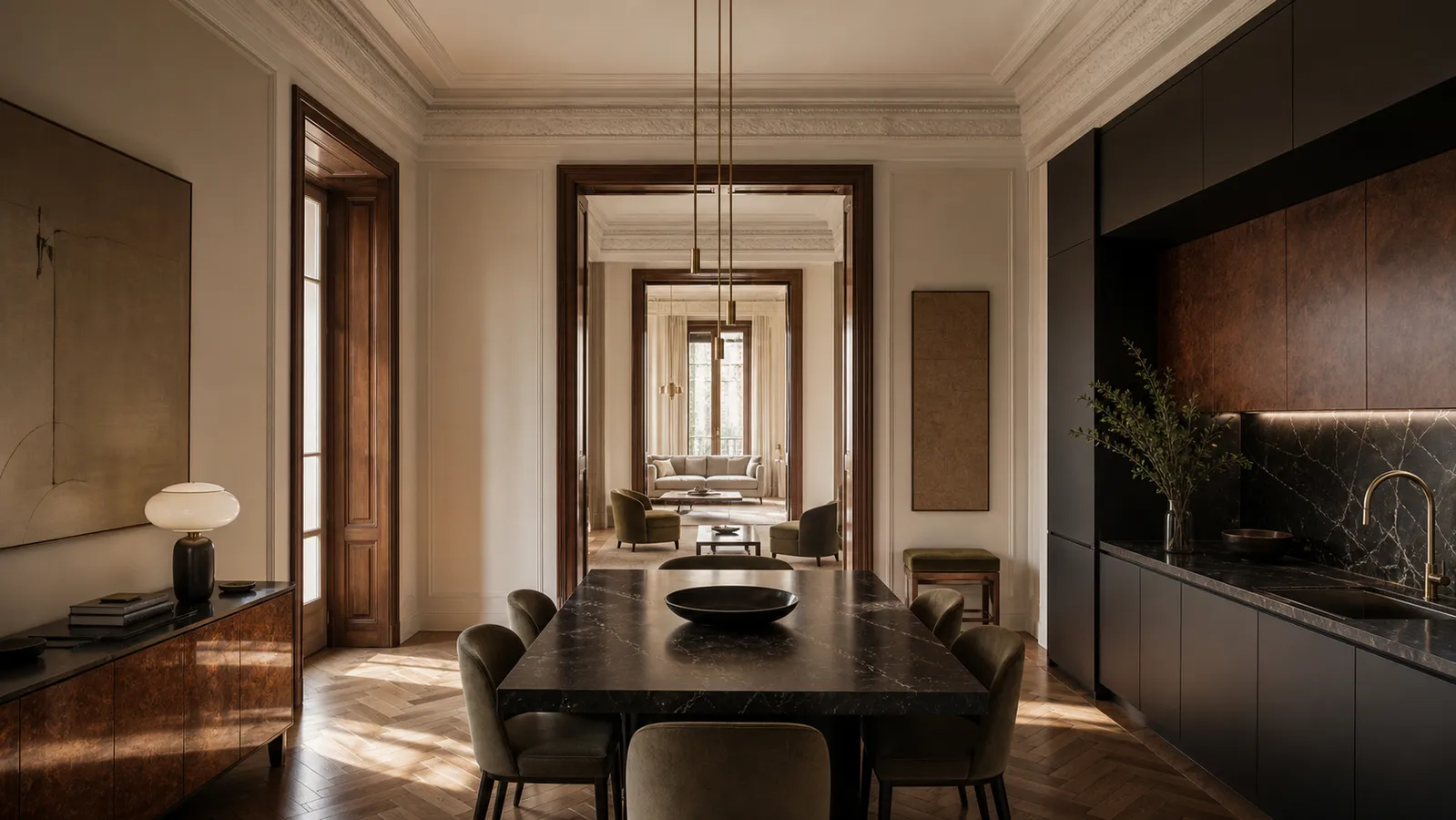
Italian kitchen design is not only a color palette. In 2026, the strongest Italian kitchen feels architectural, warm, sociable, and highly edited: a room with furniture-like storage, disciplined proportions, tactile surfaces, integrated appliances, and a cabinet body specified for moisture, cleaning, and long service life. For Fadior buyers, the practical answer is to use Italian warmth and Milan restraint on the visible layer, while keeping the permanent cabinet infrastructure in 304 stainless steel.
- Italian kitchen
- An Italian kitchen is a kitchen where cabinetry, dining, storage, lighting, appliances, and surfaces form one architectural room.
What defines an Italian kitchen in 2026?
An Italian kitchen in 2026 is defined by proportion before decoration. The best rooms do not shout with one signature finish. They use balance, sightlines, tactile materials, and concealed function to make cooking and hosting feel natural. Recent Milan design coverage keeps returning to craft, conscious material choices, daily wellbeing, and integrated living. That matters because the kitchen is no longer a closed service room in many premium homes. It is a front-room interior, a dining room, an espresso bar, a family landing zone, and a storage system at once. Buyers should therefore judge Italian kitchen design by the quality of the room logic: where the table sits, how the kitchen connects to living space, where tall storage ends, how appliances disappear, and whether the room still feels calm after daily use.
Why does Italian kitchen design search demand matter?
| Warm restraint | The room feels composed, not ornate, with quiet color and controlled contrast. | Approve palette, sheen, wall tone, flooring, and cabinet finish samples together. |
| Furniture-like storage | Tall walls, sideboards, and islands feel integrated with dining and living furniture. | Specify storage zones, appliance garages, pantry depth, and service access. |
| Milan proportion | Sightlines, symmetry, and table placement guide the room more than door style alone. | Review elevations, centerlines, island length, dining clearance, and lighting positions. |
| Tactile surfaces | Wood, stone, lacquer, textile, and soft finishes make the kitchen residential. | Separate visible finish choices from the cabinet body material and wet-zone protection. |
| Long-life body | The hidden structure must survive cleaning, humidity, impact, and heavy daily use. | Confirm 304 stainless steel bodies, counter support, toe-kick detail, and warranty scope. |
How should layout come before finishes?
Layout should come before finishes because Italian kitchen design depends on the relationship between cooking, dining, and living. A buyer can love walnut, marble, lacquer, or parchment tones and still end up with a weak kitchen if the working triangle, island clearance, pantry wall, sink position, and appliance access are unresolved. Start with a plan that shows who cooks, where guests stand, where groceries land, where coffee is made, where dishes return, and which path staff or family members use during service. Then test the plan as a room. Does the kitchen frame a dining table? Does the island block a door? Does the tall storage wall overpower the living area? Are sightlines calm from the entry? These questions make the Italian effect possible. Finishes can then support the room instead of disguising a poor layout.
What should buyers borrow from Milan design language?
Borrow the discipline, not the showroom costume. Milan design language is strongest when it treats the kitchen as architecture and furniture at the same time. That means balanced panel rhythms, long horizontal work surfaces, careful lighting, built-in appliances, and a limited number of tactile materials. It does not mean adding a random arch, a dramatic stone slab, or a famous Italian brand reference to every wall. Smeg and DesignWanted Milan coverage frame Italian appliance and kitchen culture as part of a broader room experience. Domus Academy news coverage also points toward conscious design and emotionally durable interiors. The practical takeaway is simple: choose fewer ideas and specify them better. A quiet room with precise storage, warm surfaces, and durable construction will feel more Italian than an overdecorated room with no order.
How can 304 stainless steel fit an Italian kitchen?
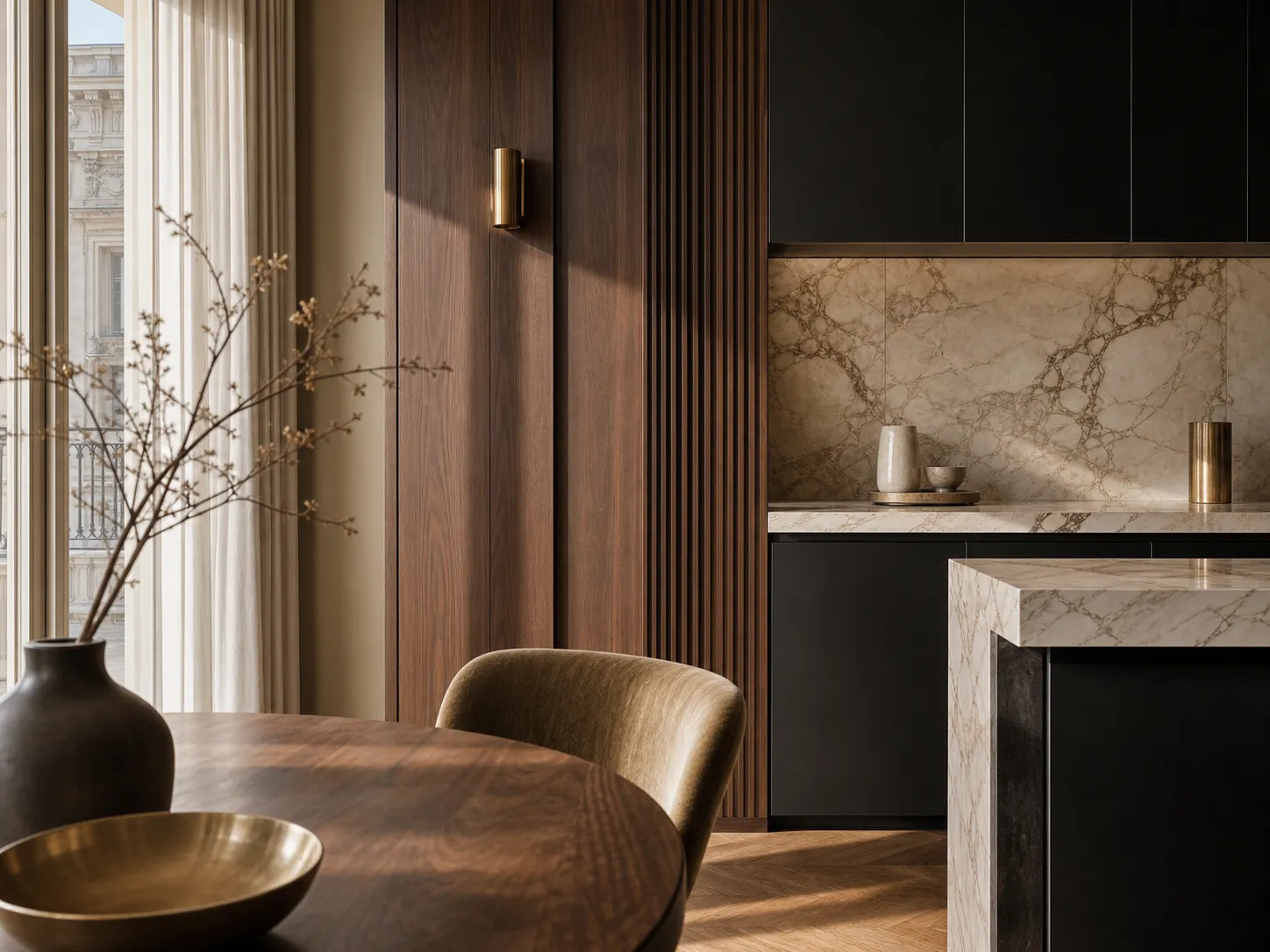
304 stainless steel fits an Italian kitchen when it is treated as the cabinet body, not as a cold visual stereotype. The visible room can use walnut tones, soft lacquer, stone counters, plaster walls, glass, and textile seating while the hidden cabinet body remains waterproof, hygienic, recyclable, and stable. This separation is important. Many buyers judge warmth only by the door finish, but long-term kitchen performance is carried by the structure behind the door. Fadior company intelligence records 304 stainless steel as the core cabinet material across kitchen systems, with surface treatments that allow residential finishes. That makes an Italian-inspired kitchen more practical: the design can look warm and architectural while the cabinet infrastructure resists moisture, cleaning, and daily wear.
Which finishes create warmth without weakening the system?
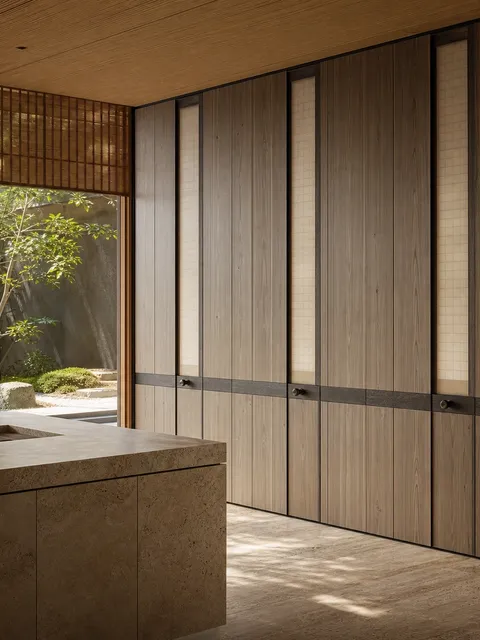
Warmth should come from controlled finish layers. In an Italian kitchen, that may mean a muted lacquer wall, walnut-effect panels, stone or sintered-stone counters, PVD accents, soft lighting, and a floor tone that connects the kitchen to dining. The key is to keep finish and structure separate in the quote. Finish describes what the homeowner sees and touches. Structure describes what carries the counter, protects wet zones, supports shelves, resists cleaning, and holds hardware over time. Fadior can support residential warmth through powder-coated finishes, PVD tones, textured surfaces, and wood-grain effects while keeping the cabinet body in 304 stainless steel. Buyers should ask each supplier to label which layer is decorative and which layer is structural. Without that separation, a warm sample board can hide a weak cabinet body.
How should storage look furniture-like but work hard?
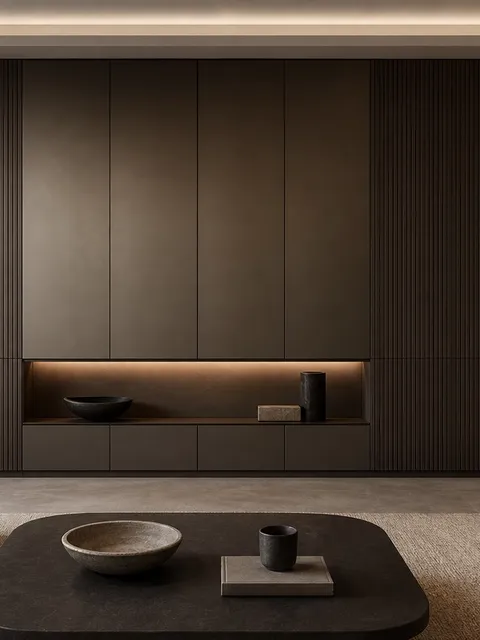
Furniture-like storage is one of the strongest Italian kitchen cues, but it should not reduce function. Tall walls can hide refrigeration, ovens, pantry goods, glassware, serving pieces, and cleaning supplies. Sideboard-like runs can connect kitchen and dining. Islands can hold prep storage, seating, charging, and serving space. The risk is that the room looks elegant while everyday items have no assigned home. Before approving drawings, map storage by routine: breakfast, coffee, cooking, cleanup, table setting, entertaining, staff use, and children if relevant. Then assign drawer depths, shelf heights, pantry pull-outs, appliance parking, waste sorting, and service access. NKBA 2026 kitchen reporting and Houzz research both point toward storage, cleaner planning, and warmer residential kitchen decisions, which are useful signals for daily wellbeing. Wellbeing in a kitchen is not only soft shape; it is the relief of finding everything easily.
Italian kitchen buyer checklist
- Confirm the room plan before choosing finishes.
- Approve cabinet body material separately from visible surface finish.
- Map storage by routine, not by cabinet count.
- Show appliance removal and service access on drawings.
- Review lighting, table position, island clearance, and sightlines together.
- Ask for care rules, warranty scope, and finish samples before deposit.
What role should appliances play?
Appliances should support the room rhythm instead of interrupting it. Italian kitchens often treat appliances as part of a larger interior composition: some are hidden behind tall storage, some are expressed with restraint, and some support the social ritual of coffee, wine, or hosting. Smeg coverage from Milan Design Week shows how appliance design can become part of a lifestyle and room story, but the ordering lesson is practical. Decide which appliances are meant to disappear, which can be visible, and which need daily access. Confirm ventilation, heat clearance, electrical service, water points, and replacement paths before cabinets are made. A beautiful appliance wall that cannot be serviced is not premium. It is a future repair problem.
How should lighting support the Italian effect?
Lighting should make the kitchen feel composed at different times of day. Use task light for prep, soft ambient light for dining, accent light for shelves or wall panels, and warmer evening scenes for hosting. Italian-inspired rooms often rely on shadow and restraint as much as brightness. Avoid lighting every surface equally. A strong kitchen plan might use daylight from one side, low-glare under-cabinet light at work zones, pendants aligned with the table or island, and dimmable wall wash on paneling. The lighting plan must be coordinated before fabrication because channels, drivers, access points, and sensor positions can affect cabinet construction. In a Fadior project, this is another reason to treat cabinetry as infrastructure. The body, finish, wiring, and service access need to work as one system.
How does an Italian kitchen differ from a generic luxury kitchen?
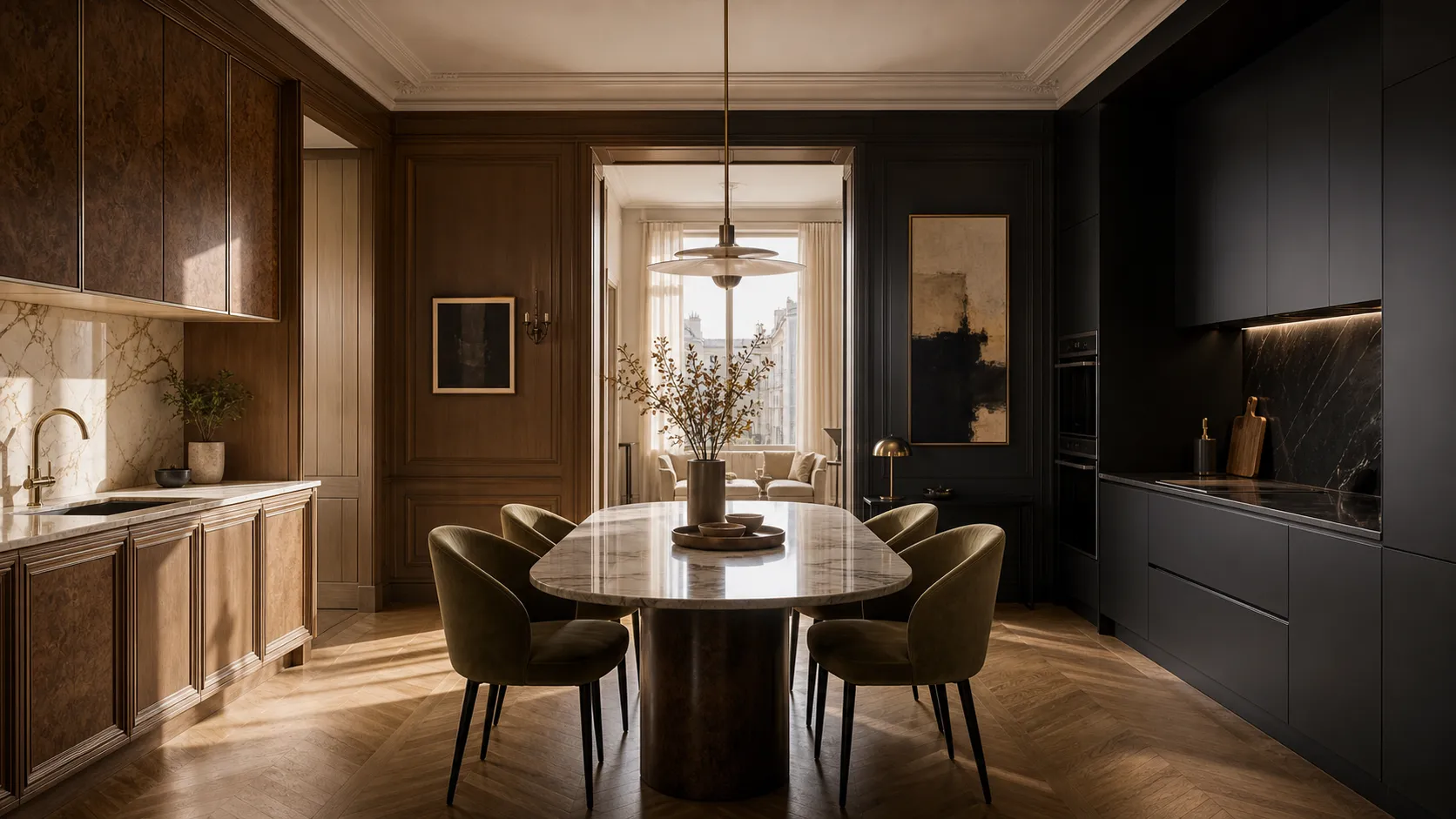
A generic luxury kitchen often starts with expensive surfaces. An Italian kitchen starts with composition. It asks whether the room feels inevitable: the cabinet wall belongs to the architecture, the table has a clear place, the island does not feel oversized, storage reads like furniture, and materials age gracefully. Luxury can become loud when every surface competes for attention. Italian restraint makes fewer elements carry more responsibility. That difference helps Fadior buyers because 304 cabinet bodies already solve part of the durability problem. The design work can then focus on proportion, warmth, and daily use instead of relying on fragile visual drama. The result should feel edited, not empty; warm, not rustic; precise, not showroom-cold.
What should the drawing package include?
The drawing package should include plan, elevations, appliance schedule, finish schedule, lighting locations, service access notes, cabinet body specification, counter thickness, sink and water details, ventilation path, installation tolerances, and maintenance instructions. For an Italian kitchen, it should also show how the room connects to dining and living. If the project has wall panels, wine storage, sideboards, or interior doors in the same palette, those should be coordinated in the same package. This protects the design language across the home. It also protects the buyer from comparing incomplete quotes. One supplier may include cabinet body durability, service panels, and finish warranties, while another may only price visible fronts. The drawing package makes those differences visible.
Which mistakes make Italian kitchens feel fake?
The first mistake is copying a moodboard without specifying performance. The second is using too many luxury cues at once: heavy stone, dark walls, ornate lighting, visible appliance clutter, and decorative hardware competing for attention. The third is choosing warm finishes while ignoring moisture, cleaning, and cabinet-body construction. The fourth is treating the kitchen as a photo angle rather than a daily room. A genuine Italian kitchen can be beautiful, but it must still handle groceries, dishes, oils, water, children, guests, and service work. If those routines are not planned, the room becomes theater. A strong Fadior specification keeps the calm visual layer and the durable 304 body layer in balance.
How should Italian design adapt to Gulf homes?
Gulf homes often need more than a single show kitchen. Many projects include a formal front kitchen, a back prep kitchen, outdoor hosting, staff circulation, large family meals, and high expectations for cleanability. Italian design language can work well in that context because it values whole-room composition, dining connection, and furniture-like storage. But the specification should adapt to climate, use, and service. Confirm wet zones, outdoor transitions, ventilation, pantry capacity, and cleaning routines. The GKP evidence for italian kitchen includes AE and SA demand above that demand floor, so the topic has regional relevance. For Fadior, the opportunity is to bring Italian warmth to homes that still need waterproof, hygienic, and durable cabinet infrastructure.
How should a buyer compare suppliers?
Compare suppliers by separating five layers: room planning, cabinet body, visible finish, appliance integration, and after-sales service. Ask each supplier to show what happens in wet zones, how shelves are supported, what the cabinet body is made from, how finish samples age, how appliances can be removed, and what the warranty covers. Do not compare a full system quote with a decorative-front quote as if they are equal. Italian kitchen design can make the room feel expensive, but supplier comparison should stay concrete. A better quote explains why the layout works, how the body performs, which finish is decorative, where service access is hidden, and how installation will be checked. That is the level of clarity a premium kitchen deserves.
How should the island be sized in an Italian kitchen?
The island should be sized as a piece of room furniture, not as the largest possible counter. In many Italian-inspired plans, a long dining table or table-like island creates the social center while tall storage stays quiet at the edge. Check circulation on every side, stool depth, drawer opening, dishwasher access, and the path from sink to cooking zone. If the island becomes too deep or too long, it can make a refined room feel like a showroom block. A better island leaves breathing space, frames the table or window, and supports daily prep without taking over the apartment or villa plan.
What should happen at the transition to dining?
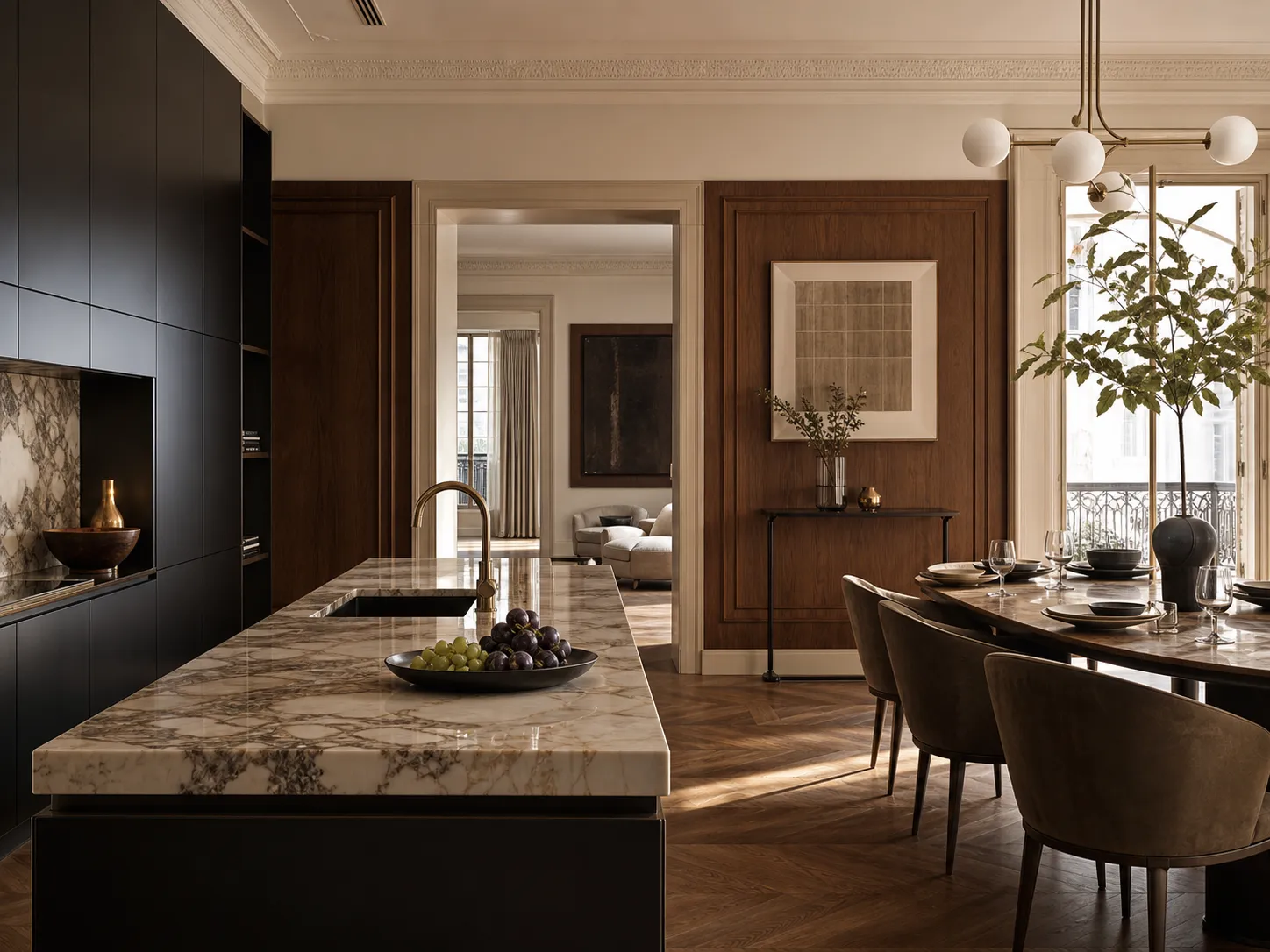
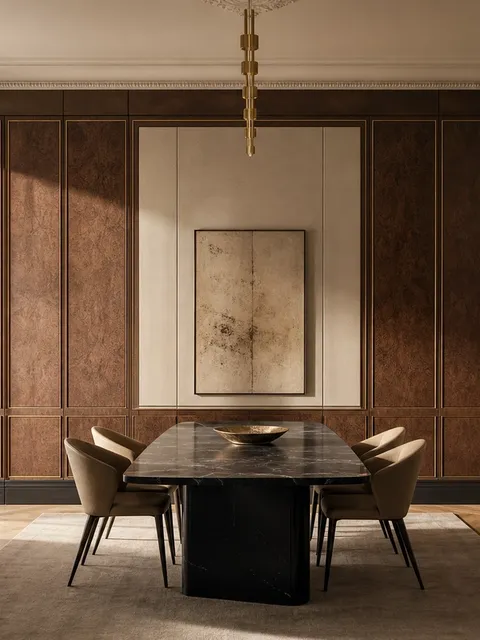
The transition to dining should be designed deliberately. Italian kitchens often succeed because the kitchen and table feel like one composed interior. That can be done with a sideboard run, a lower storage wall, matching panel rhythm, warm lighting, or a consistent floor plane. The buyer should decide whether the kitchen is meant to disappear during formal meals or remain visibly part of the hosting experience. This affects appliance placement, sink visibility, counter clutter, and tall-storage height. A front kitchen for entertaining may need more concealed storage, while a family kitchen can allow more daily openness.
How can wall panels support the kitchen language?
Wall panels can make an Italian kitchen feel more architectural when they are used with restraint. Instead of treating cabinetry as a row of boxes, panels can extend the rhythm across pantry doors, sideboards, appliance walls, and adjacent corridors. That whole-room approach is relevant to Fadior because the brand is not limited to cabinets; it also works across wall panels, doors, wardrobes, vanities, and whole-home storage. The risk is over-paneling every surface. Use panels where they calm a transition, hide storage, or connect rooms. Leave enough plain wall, art, or daylight so the space still feels residential.
What maintenance questions should be asked early?
Maintenance questions should be asked before the final finish approval. A warm Italian palette can include tactile and matte surfaces, but the household still needs to clean oil, water, fingerprints, dust, coffee, and food residue. Ask how each surface should be wiped, whether acidic cleaners are allowed, how scratches are handled, and what happens near the sink, dishwasher, hob, and outdoor connection. The cabinet body should be specified for real use, not just for a presentation. Fadior buyers should keep the visible warmth, but they should also ask for written care rules and warranty boundaries.
How should the article guide a showroom conversation?
Use the article as a showroom conversation checklist. Instead of asking whether a kitchen is Italian, ask what makes it work: the plan, the storage, the social axis, the appliance integration, the body material, the finish system, the lighting, and the handover. A good supplier should be able to explain each layer in plain language. If the answer stays at moodboard level, the project is not ready. If the answer connects Milan-inspired restraint with precise drawings and durable 304 cabinet bodies, the design has moved from inspiration to specification.
What should be saved in the final handover file?
The final handover file should include approved drawings, finish codes, appliance model numbers, care instructions, warranty terms, service contacts, lighting specifications, and installation photos. This matters because an Italian kitchen often integrates many elements into one calm wall or room. Future service teams need to know what sits behind that calm surface. Homeowners also need a record if a finish, hinge, lighting driver, appliance, or panel needs replacement. A premium room should not depend on memory. The more integrated the design, the more important the handover file becomes.
What is the final specification test?
The final test is whether the room remains convincing when every decorative word is removed. If the plan still has clear circulation, useful storage, stable cabinet bodies, protected wet zones, coordinated appliances, service access, warm lighting, and a calm relationship to dining, the Italian kitchen is real. If the room only depends on a color name or a dramatic surface, it is not ready for production. Fadior buyers should use Italian design as a discipline of restraint and proportion, then use 304 stainless steel cabinet bodies as the hidden durability layer. That combination gives the kitchen a better chance to look warm on day one and still perform after years of cooking, cleaning, and hosting.
Frequently Asked Questions
Questions this guide answers
- What makes a kitchen Italian in design?
- An Italian kitchen usually combines architectural proportion, furniture-like storage, warm restrained materials, integrated appliances, and a strong relationship to dining or living space.
- Can a 304 stainless steel cabinet body look warm?
- Yes. The cabinet body can be 304 stainless steel while the visible layer uses warm finishes such as lacquer, wood-effect surfaces, stone, PVD accents, or soft neutral colors.
- Is Italian kitchen design only for large homes?
- No. The principles also work in apartments and compact villas because proportion, storage planning, lighting, and material restraint are useful at any size.
- What should I specify before ordering an Italian kitchen?
- Specify layout, cabinet body material, visible finishes, appliance integration, storage zones, lighting, service access, warranty scope, and maintenance rules before deposit.
- Why does Fadior use 304 stainless steel in Italian-style kitchens?
- Fadior uses 304 stainless steel as the durable cabinet-body layer for waterproof performance, hygiene, zero-formaldehyde construction potential, recyclability, and long service life.
- How should Gulf homes adapt Italian kitchen design?
- Gulf homes should keep the warm Italian visual language while adding practical planning for prep kitchens, outdoor hosting, ventilation, wet zones, and high-frequency cleaning.
Related products
Specific products worth reviewing next.
References
Authoritative sources cited in this article
- https://www.smeg.com/news/smeg-at-milan-design-week-2026
- https://designwanted.com/smeg-milan-design-week-2026/
- https://www.domusacademy.com/news/
- https://www.houzz.com/magazine/see-the-top-trends-in-kitchen-cabinets-countertops-and-more-stsetivw-vs~179668579
- https://st.hzcdn.com/static/econ/2025_Houzz_US_Kitchen_Trends_Study.pdf
- https://kb-media.nkba.org/wp-content/uploads/2025/09/Final_2026-Kitchen-Trends-Report-Press-Release.pdf
Editorial transparency
Marco Rinaldi is a composite editorial persona maintained by Fadior Home's editorial team. Articles attributed to this byline are produced through an AI-assisted editorial workflow with human review, and represent the consolidated voice of multiple researchers and contributors.
Actually delivered
Real homes photographed after handover, not renders.
Ready to specify?