
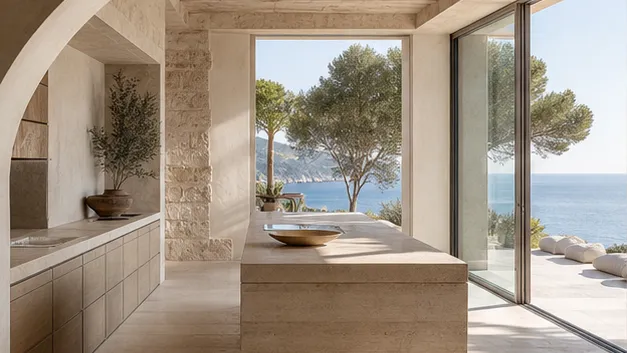
Minimalist Interior Design for Kitchens That Still Work
A practical guide to warm minimalist kitchens: storage first, quiet fronts, integrated appliances, controlled light, and durable 304 stainless steel structure.
Direct answer
The Direct Answer
Minimalist interior design is a way to make a kitchen calmer, easier to use, and more visually durable by removing weak details before removing useful function. In a premium kitchen, the goal is not an empty room. The goal is a precise storage plan, quiet cabinet fronts, integrated appliances, warm surfaces, controlled light, and a few hard-working materials that can support daily family life without visual noise.
- Minimalist interior design
- Minimalist interior design is a residential planning approach that reduces unnecessary visual detail while protecting proportion, function, material quality, light, and everyday comfort.
What is minimalist interior design in a kitchen?
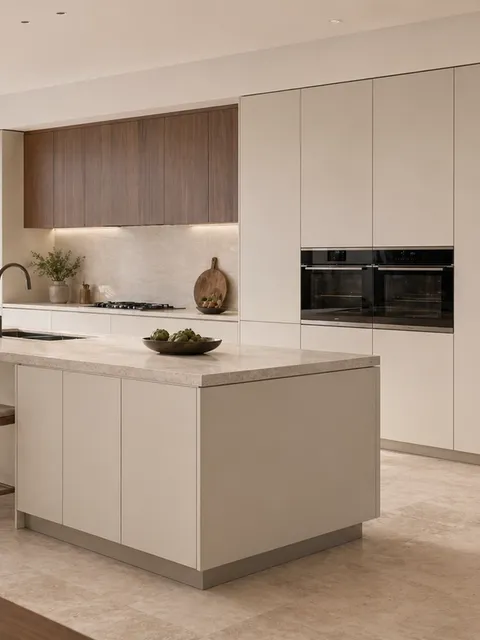
Minimalist interior design starts with subtraction, but good subtraction is selective. A kitchen still needs prep space, cleaning routes, power access, food storage, ventilation, dish storage, waste sorting, and places where people naturally pause. The design question is which parts of that workload should be visible. A minimalist kitchen puts daily friction behind a disciplined surface plan. Tall storage walls, slab fronts, concealed appliance zones, panel-faced refrigeration, and consistent reveals let the room read as one calm volume rather than a collection of separate boxes. This is why minimalism works best when the designer resolves the messy decisions first: where breakfast tools live, where the coffee machine parks, how children reach snacks, how serving pieces move to the dining table, and how cleaning supplies stay close without becoming part of the view. For premium buyers, this early mapping also protects budget. It is cheaper to adjust a pantry bay on paper than to discover after installation that the coffee station has no landing zone or that tall doors collide with a traffic route. The minimalist promise depends on decisions that visitors may never notice: consistent hinge-side logic, drawer depths matched to cookware, lift-up or pocket storage where appliances need to disappear, and enough ventilation around concealed equipment. When those invisible decisions are resolved, the visible surfaces can stay simple without asking the homeowner to behave unrealistically.
Why does minimalist interior design fit 2026 kitchen planning?
The current kitchen trend is not cold emptiness. The strongest 2026 signals point toward warmer rooms with smarter storage, simpler details, and more whole-home continuity. Houzz reports that homeowners are still investing in function, built-ins, and style updates, while NKBA frames the kitchen as a more personalized and health-conscious space. Those findings matter because minimalism is often misunderstood as a style photograph. For a real home, it is a planning discipline. It helps the kitchen absorb more tasks without looking busier. A family can host, cook, work, and store more when the cabinetry does more of the organizational labor. The visible room can stay quiet because the hidden plan is doing the work. The business implication is important for Fadior buyers in villas and apartments: a quiet room can still be a high-performance room. The homeowner does not need ornate moldings or decorative clutter to signal investment. Instead, investment appears in the precision of the fronts, the way refrigerator and dishwasher panels disappear, the quality of the finish under daylight, and the lack of swollen or chipped edges over time. That is why the article treats minimalism as a specification exercise rather than a mood board. A room can look peaceful on day one; the stronger test is whether it stays peaceful after 500 breakfasts, 100 dinner parties, and weekly cleaning.
How should a minimalist kitchen begin?
Begin with zones, not finishes. Map the room as four working bands: tall storage, wet prep, heat and cooking, and social landing. Each band needs a reason to exist and a clear route to the next band. If the tall storage wall is too far from the prep counter, minimal fronts will not save the workflow. If the island becomes the only surface for every task, the room will look clean only when nobody uses it. A minimalist kitchen should have at least one concealed small-appliance bay, one landing area near refrigeration, one recycling and waste location near cleanup, and one serving route that does not cross the main cooking stance. Once those decisions are locked, the cabinet finish can be simplified without making the room fragile.
| Decision | Minimalist Move | Buyer Checkpoint |
|---|---|---|
| Storage wall | Use full-height fronts and consistent vertical reveals | Confirm pantry, dishes, small appliances, and cleaning supplies have assigned locations. |
| Appliance visibility | Panel major appliances when the room connects to living space | Confirm service access and ventilation are not compromised. |
| Surface palette | Limit the room to a tight family of warm neutrals and natural textures | Check samples under morning, midday, and evening light. |
| Lighting | Layer ambient, task, and low-glare accent light | Confirm the counter is bright enough without reflective glare. |
| Hardware | Use recessed, integrated, or very quiet pulls | Test grip comfort before approving the final door profile. |
Which cabinet fronts make minimalism feel warm, not blank?
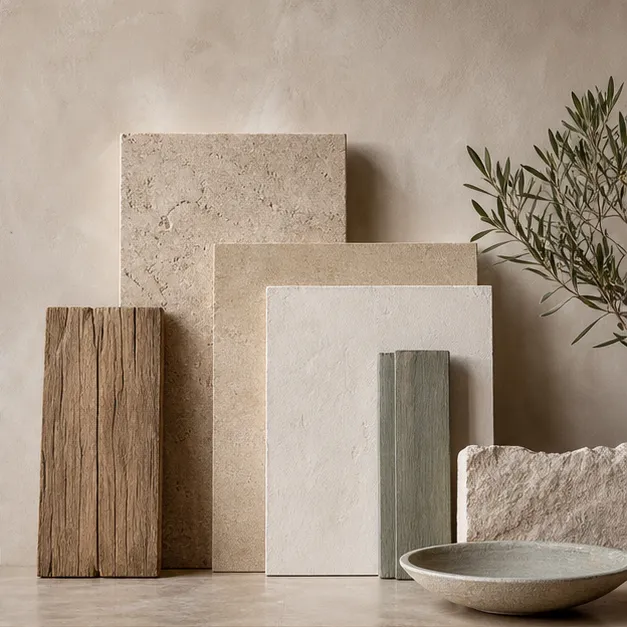
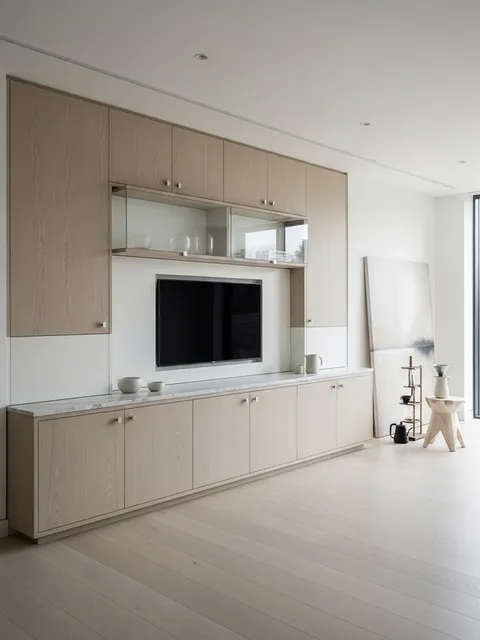
Flat fronts are useful, but flatness alone is not design. A slab door can feel elegant when its edges are accurate, its color has depth, and its surrounding joints are intentional. It can also feel cheap when the surface is too shiny, the reveal lines wander, or the door hides poor storage. Warm minimalism usually needs a tactile counterweight: wood grain, a honed stone surface, a soft matte finish, or a linen-like texture. Houzz Pro notes the rise of flat-panel cabinetry and minimalist hardware, but the lesson is not to delete every detail. The lesson is to let fewer details carry more responsibility. A Fadior kitchen can use 304 stainless steel as the structural body while giving the visible fronts a warmer color, texture, or wood-grain expression, so the room reads residential rather than clinical. The edge profile deserves special attention. In a minimalist room, the shadow line around each door becomes part of the architecture. A 2 mm inconsistency can be more visible than a decorative handle would have been in a traditional kitchen. Buyers should ask to see full-scale samples, not only finish chips. They should open and close doors, view the fronts from the dining area, and check whether the finish changes character under side light. Warmth often comes from micro-texture and reflected light, not from adding more decorative objects.
- Slab-front cabinetry
- Slab-front cabinetry uses a flat door or drawer face with no raised frame, recessed panel, or decorative molding.
What storage plan keeps a minimalist room honest?
Storage is the test of the entire look. If the homeowner needs to leave the toaster, blender, water bottles, supplements, pans, chargers, and school bags on the counter, the room will not stay minimalist. Houzz identifies pantry cabinets as a leading built-in feature in kitchen renovations, and that aligns with what good minimalism requires. A storage wall should have specific assignments: dry food, breakfast, beverage, cookware, serving pieces, and cleaning supplies. Drawers need organizers that match actual utensils, not a generic grid. Tall cabinets need pull-outs or inner drawers where depth would otherwise hide objects. The best minimalist kitchen has fewer exposed items because it has more thoughtful storage, not because the household owns nothing. The pantry decision also affects how minimal the main kitchen can be. If the project includes a secondary pantry, scullery, or appliance garage, the main island can stay clearer during hosting. If the home has only one compact kitchen, the minimalist strategy needs more internal drawers, vertical dividers, pull-out trays, and charging management. A designer should not copy the same elevation into both situations. Minimalism in a large villa might mean a continuous wall with hidden prep behind it. Minimalism in a city apartment might mean fewer upper cabinets, deeper drawers, and a single tall utility cabinet that works harder.
When should appliances disappear?
Appliances should disappear when the kitchen is part of a living room, dining room, or open villa floor plan. Panel-faced refrigeration and dishwashing can help the kitchen read as architecture rather than equipment. That said, hiding an appliance is only successful when service, airflow, door swing, and daily access are still easy. A panel-ready refrigerator that interrupts circulation or a concealed dishwasher that blocks cleanup is not minimalist; it is inconvenient. The practical rule is simple: conceal the appliance only when the surrounding cabinet system can make it easier to live with. Keep performance visible to the designer and installer, even if the finished view is quiet. There is also a psychological layer. Some homeowners enjoy seeing professional-grade appliances; others want the kitchen to recede when dinner is over. Neither preference is wrong. The brief should decide which objects are allowed to become visual anchors. A range hood, wine column, or coffee machine can be celebrated if it improves the room. But if every appliance competes for attention, the minimalist composition breaks. The best appliance plan makes hierarchy clear: one or two elements may be visible, while the rest support the architecture quietly.
How does light change minimalist interior design?
Minimalism depends on light because there are fewer decorative elements to distract from poor illumination. Strong daylight can make a pale kitchen feel spacious, but it can also reveal fingerprints, shadows, and glare. Evening light can make a simple room feel warm, or it can flatten every surface into a dull plane. Plan three layers: general room light, task light at counters, and low-level accent light for shelves, toe kicks, or a dining edge. Keep color temperature consistent in the main sightline. Use matte or satin finishes where reflections would become visual clutter. In a coastal villa or high-rise apartment, test the same finish in morning, noon, and evening conditions before approving the whole room. Light planning should include the surfaces that will receive the light. A dark matte front, pale plaster wall, satin cabinet finish, and stone counter all react differently. Under-cabinet light can create glare on a polished counter. A pendant can cast shadows exactly where prep work happens. A warm cove light can make a pale room feel hospitable, while a cold ceiling grid can make the same room feel commercial. Buyers should request a simple lighting scene list rather than approving fixtures one by one. The list should say what happens during breakfast, cooking, cleanup, and dinner.
- Warm minimalism
- Warm minimalism is minimalist planning softened by tactile materials, warmer color temperature, natural texture, and storage that supports lived-in routines.
Which materials belong in a minimalist Fadior kitchen?
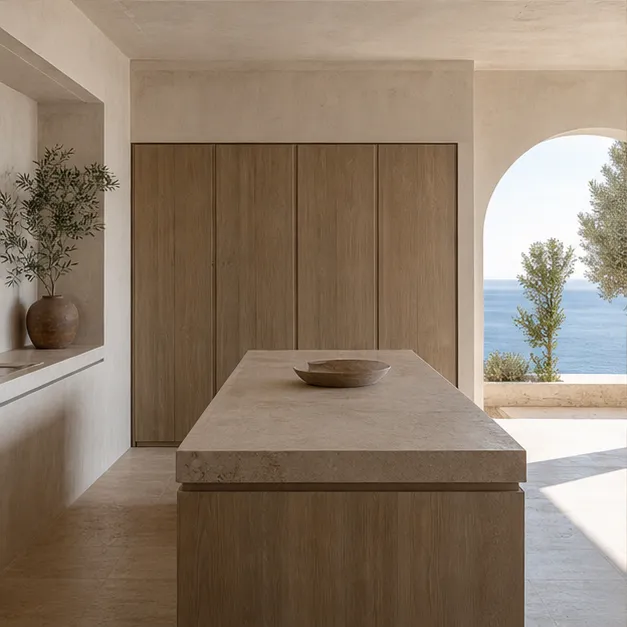
A minimalist material palette should be short but not weak. One structural material can do the durability work, one surface can provide visual warmth, and one counter or wall material can carry light. Fadior’s 304 stainless steel body system is useful here because it separates long-term cabinet performance from the visual stereotype of a cold kitchen. The visible room can use matte color, wood-grain finish, pale stone, or soft neutrals while the cabinet core remains waterproof, recyclable, and formaldehyde-free by material logic. The buyer should avoid choosing five decorative finishes just to make the room feel interesting. In minimalism, proportion, light, and touch should create the richness. This does not mean every visible finish must be expensive. It means every finish must have a role. A pale wall can carry light. A textured front can reduce fingerprints. A stone counter can give the room weight. A wood-grain plane can make a long cabinet wall feel domestic. The discipline is to stop once the roles are covered. If a new finish merely adds novelty, it should probably be removed. If it improves grip, cleaning, acoustics, warmth, or wayfinding, it may deserve a place.
Does minimalist interior design work for family kitchens?
It works when the room is planned around behavior rather than display. A family kitchen needs landing zones, reachable drawers, snack storage, charging locations, towel storage, and easy cleanup. Minimalism fails when it expects family life to disappear. It succeeds when the plan gives every recurring object a place. A breakfast cabinet can hold cereal, cups, coffee, and small appliances behind one pocket or lift-up zone. A tall utility cabinet can hold cleaning supplies near cleanup. A concealed pantry can absorb overflow without pushing clutter into the living space. The visual room stays calm because the plan acknowledges the household’s real routines. Family use also affects hardware. Handle-free fronts can look beautiful, but they must be comfortable for people with wet hands, children carrying plates, or older family members who prefer an obvious grip. Push-latch systems should be tested for force, reliability, and accidental opening. Recessed pulls or shadow gaps can be a better compromise when the room needs a quiet look without sacrificing usability. The most livable minimalist kitchens usually hide visual clutter, not ergonomic information.
What should buyers ask before approving the layout?
Ask for a storage inventory before approving elevations. Count daily dishes, cookware, dry food, small appliances, cleaning products, trays, entertaining pieces, and pet or child items if they apply. Then ask where each category lives. Ask for door swing clearances, drawer depths, counter landing widths, and appliance service routes. Ask where the room becomes intentionally open, and where it becomes intentionally closed. Minimalist interior design is less forgiving than decorative design because every line is visible. A wrong reveal, awkward appliance edge, or missing landing surface has nowhere to hide. The approval package should include both the beautiful view and the operational plan. The approval conversation should include what the room will look like on an ordinary Tuesday. Where does the school bag land? Where does the rice cooker go after use? Where do guests place a handbag? Where are serving platters stored? Where does a phone charge without creating a cable nest? These small questions decide whether minimalism survives. A beautiful elevation is not enough. A buyer should be able to describe the first 10 minutes after groceries arrive and the last 10 minutes after dinner ends.
Pre-Approval Checklist
- Confirm at least 4 task zones: storage, prep, cooking, cleanup.
- Assign 10 recurring object categories to specific cabinets or drawers.
- Check every main aisle against a 900 mm clear walking target where the room allows.
- Test 3 lighting scenes: daytime prep, evening cooking, and dinner hosting.
- Limit visible finish families to 3 primary materials or colors.
- Confirm each internal link and external citation before publish.
How much visual contrast is enough?
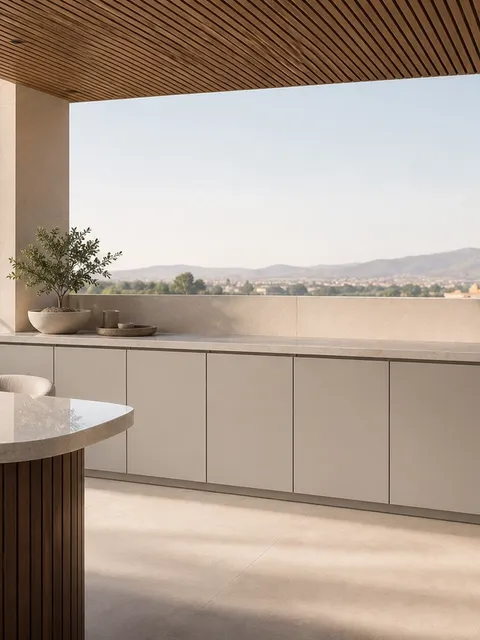
A minimalist kitchen still needs contrast, but the contrast can be quiet. Instead of using many colors, use changes in plane, depth, light, or texture. A pale wall beside a slightly deeper cabinet tone can give the eye enough structure. A travertine-like floor against a matte cabinet front can separate movement from storage. A darker shadow line under a floating shelf can make the shelf legible without turning it into decoration. The buyer should test contrast from the places where the kitchen is actually seen: entry, dining table, sofa, terrace, and hallway. A surface that feels calm at the island may disappear too much from the living room, or feel too strong from the dining table. Good minimalism controls those long views.
What budget choices matter most?
Spend first on the decisions that cannot be corrected easily: cabinet body durability, fabrication accuracy, storage hardware, counter layout, lighting wiring, and appliance integration. Decorative accessories can change later. A weak cabinet body, awkward aisle, or missing pantry cannot be fixed with styling. If the budget is limited, keep the visual palette simpler and protect the operational core. Use fewer finish changes, fewer display niches, and fewer bespoke gestures, but do not cut the storage plan that keeps the room calm. The best premium minimalist kitchens often look simple because more of the budget is hidden in structure, planning, and installation accuracy.
How should minimalist interior design be maintained?
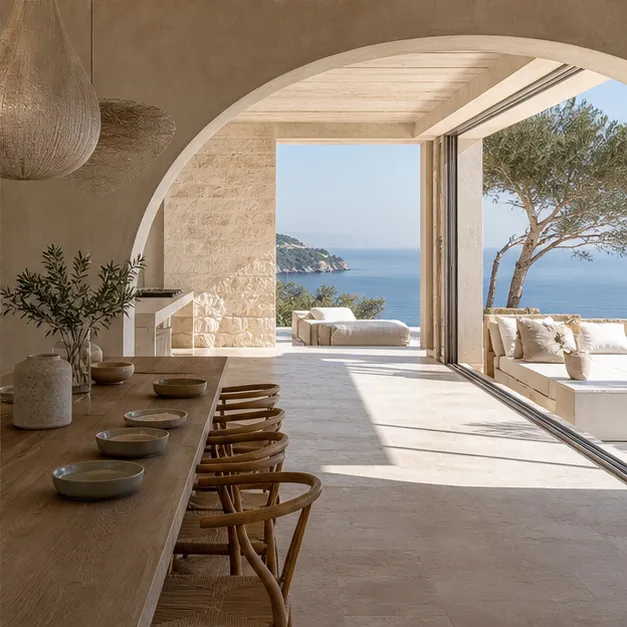
Maintenance should be designed into the room. Choose surfaces that can be wiped without special rituals, specify edge details that do not trap grime, and avoid open shelves where daily dust would become part of the design. A calm room also needs maintenance rules: where appliances return, which cleaning cloths are safe, how often cabinet fronts are wiped, and which products should never be used. If the kitchen has matte or textured finishes, the homeowner should receive care guidance before move-in. Minimalist interiors age best when the maintenance routine is simple enough to repeat every week. Cleaning logic should be equally specific. Matte surfaces can hide glare but may show oil differently. Textured finishes can feel warmer but need the right cloth. Pale stone can look serene but needs stain expectations. Integrated appliances can calm the view but create more panel edges that must align and clean consistently. Minimalist interiors reward steady maintenance because there are fewer distractions. The homeowner sees the line, the joint, the light, and the surface. The design package should make that reality easy, not intimidating.
Which mistakes make a minimalist kitchen feel sterile?
The common mistake is deleting warmth, texture, and human scale at the same time. A room with flat doors, cool white light, hard reflections, no texture, and no seating can feel like a utility room. Another mistake is using oversized blank runs without breaks for proportion, view, or touch. A third mistake is hiding every handle but leaving no comfortable way to open heavy doors. Minimalism should feel composed, not hostile. Keep one tactile surface, one warm light layer, one social landing point, and one material with visible depth. The room can be quiet without becoming silent. A sterile room often comes from fear of making a choice. Designers remove color, texture, storage expression, hardware, and lighting character, then hope the result will feel timeless. Timelessness is not the absence of personality. It is the presence of proportion, honest material behavior, and a room that supports life without chasing every trend. A warm minimalist kitchen can include a soft green wall, a weathered wood tone, a textured cabinet front, or a sculptural stone plane. The key is restraint after the strong choice, not refusal to choose at all.
What is the Fadior point of view?
Fadior’s point of view is that minimalist interior design should be engineered, not merely styled. The brand’s 304 stainless steel cabinet body, glue-free construction logic, powder-coated color options, wood-grain transfer, and whole-home customization make it possible to build calm rooms that still handle humidity, cleaning, storage, and family use. The visible kitchen can be warm, pale, coastal, dark, or architectural. The hidden discipline is the same: durable structure, formaldehyde-free material logic, accurate fabrication, and storage that reduces visual friction. For buyers planning a premium home, the right minimalist kitchen is not the one with the fewest things. It is the one where every visible thing has earned its place. That engineering view matters in humid, coastal, and high-use homes. When cabinetry is built around moisture-sensitive boards, minimalism can become visually risky because flat, quiet surfaces reveal swelling, edge failure, or finish damage quickly. A 304 stainless steel body gives the room a more resilient base. The homeowner can then choose visual warmth through finish and proportion rather than depending on a vulnerable substrate to carry the entire concept. This is the practical bridge between Fadior’s material identity and the softer minimalist interiors many buyers now want.
How do you brief a minimalist kitchen project?
A useful brief is specific. Name the household routines, the hosting pattern, the preferred warmth level, the visual tolerance for appliances, and the maintenance expectation. Then name what should disappear: small appliances, dry food overflow, dish clutter, cleaning products, charging cables, or decorative noise. Pair that list with what should remain visible: a long island, a stone plane, a view, a dining edge, a warm cabinet wall, or a single display niche. When the brief is this clear, the designer can use minimalism as a decision system. The room becomes quieter because the project has fewer unresolved questions. The final brief should also identify what success looks like after move-in. Success might be a counter that is clear within 5 minutes after breakfast, a pantry wall that holds 30 days of dry goods, or a dinner route where serving plates never cross the cooking zone. These operational targets turn an aesthetic preference into measurable design. Minimalist interior design is strongest when it can be inspected: fewer visible interruptions, clearer movement, better storage recovery, and a room that feels calm because the household does not have to fight it.
Frequently Asked Questions
Questions this guide answers
- Is minimalist interior design practical for a busy kitchen?
- Yes, if the storage plan is designed before the finishes. A busy kitchen needs assigned places for appliances, food, cleaning tools, serving pieces, and daily dishes. Minimalism works when those categories move behind calm fronts instead of spreading across the counter.
- Does minimalist interior design mean all-white cabinets?
- No. Minimalist rooms can use warm wood, matte color, stone, textured panels, or soft neutrals. The defining move is visual restraint and clear proportion, not a single color. A warmer palette often makes minimalism more comfortable for family life.
- What is the best cabinet style for a minimalist kitchen?
- Slab-front cabinetry is the cleanest starting point, but the best style depends on touch, edge quality, storage depth, and lighting. A slab door with poor proportions can feel flat. A simple door with precise reveals and warm finish can feel architectural.
- How many materials should a minimalist kitchen use?
- A useful target is three primary finish families: one cabinet finish, one counter or wall surface, and one floor or accent material. More materials can work, but each added finish should solve a clear design or performance problem.
- Can Fadior make minimalist interiors feel warm?
- Yes. Fadior can pair a 304 stainless steel cabinet body with residential finishes such as matte color, wood-grain expression, pale surfaces, and integrated lighting. The structure delivers durability while the visible palette controls warmth and calm.
Related products
Specific products worth reviewing next.
References
Authoritative sources cited in this article
- 2026 Houzz Kitchen Trends Study
Houzz surveyed 1,780 U.S. homeowners and reported storage, style, and spend patterns in 2026 kitchen projects.
Houzz Research
- NKBA 2026 Kitchen Trends release
NKBA describes 2026 kitchens as personalized, health-conscious spaces with simplified details and custom storage.
NKBA
- NKBA 2026 Kitchen Trends PDF
The NKBA PDF adds specific product-direction signals including slab doors and panel-faced refrigeration and dishwashers.
NKBA
- Architectural Digest minimalist interior guide
Architectural Digest defines minimalist interiors through restraint, clarity, and intentional object selection.
Architectural Digest
- Houzz 2026 home design predictions
Houzz Pro reports flat-panel cabinets, warm wood tones, matte finishes, and minimalist hardware as a 2026 design direction.
Houzz Pro
- Houzz 2026 kitchen remodeling trends
Houzz editorial coverage translates the 2026 study into kitchen remodeling trends including cabinet color and storage shifts.
Houzz Editorial
Editorial transparency
Marco Rinaldi is a composite editorial persona maintained by Fadior Home's editorial team. Articles attributed to this byline are produced through an AI-assisted editorial workflow with human review, and represent the consolidated voice of multiple researchers and contributors.
Actually delivered
Real homes photographed after handover, not renders.
Ready to specify?