
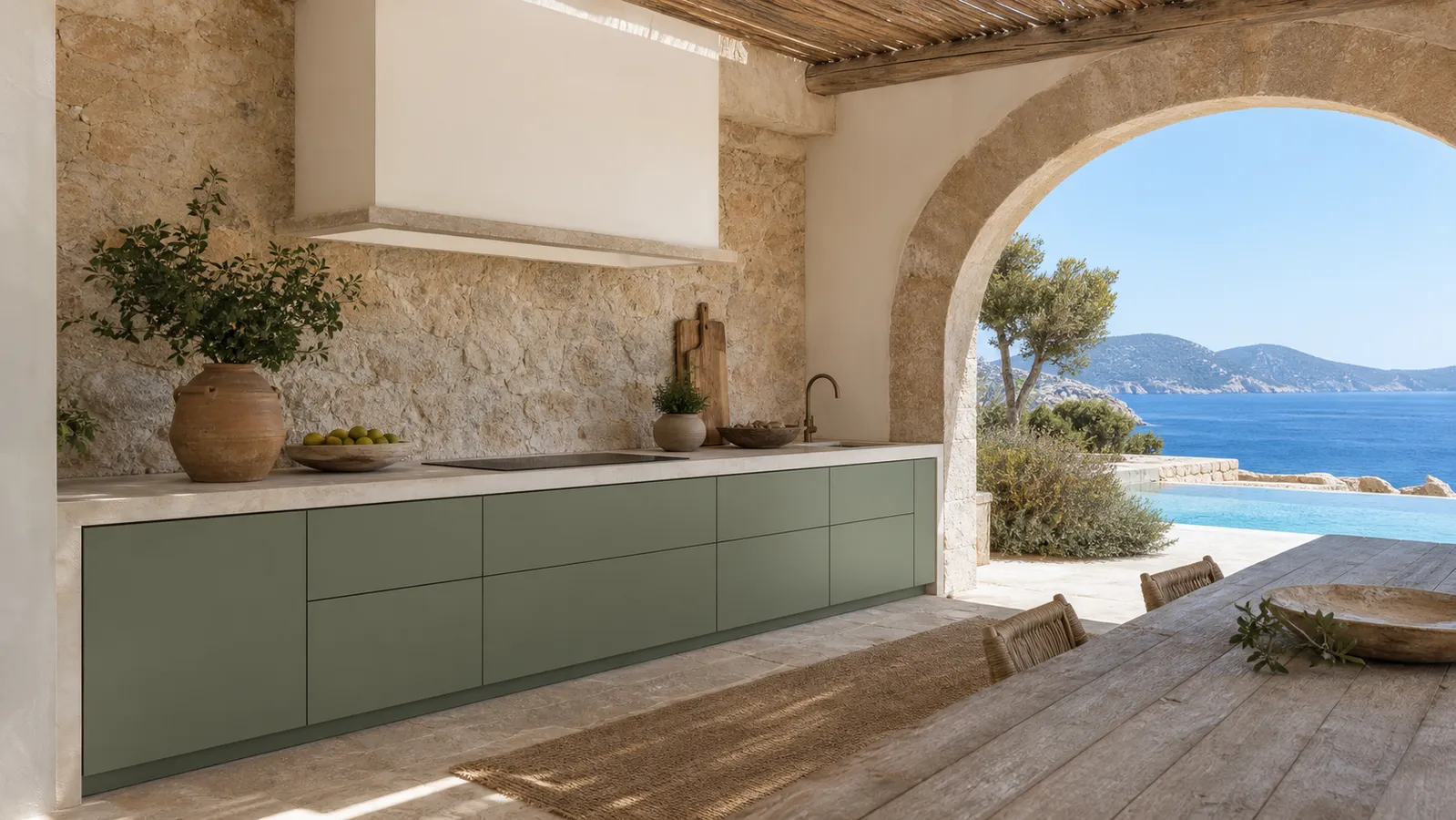
Outdoor Kitchen Cabinets: Materials That Survive Heat and Humidity
A buyer-first guide to outdoor kitchen cabinets for humid, hot, coastal, and high-use terrace kitchens.
Direct answer
The Direct Answer
Outdoor kitchen cabinets should be specified as a weather-exposed building system, not as indoor storage moved outside. The safest premium brief combines covered placement, 304 stainless steel cabinet bodies, sloped drainage, UV-stable finishes, ventilated storage, and a maintenance plan that anticipates heat, salt, grease, and standing moisture before the first drawing is approved.
- Outdoor kitchen cabinets
- Outdoor kitchen cabinets are exterior storage and prep modules designed for rain, heat, UV, grease, and humidity.
Why do outdoor kitchen cabinets fail faster than indoor cabinets?
Outdoor kitchen cabinets live in a harsher cycle than an indoor kitchen. A door may look sheltered during a showroom walk-through, but the real test is 365 days of sun, wind-driven rain, grilling heat, grease, salt dust, and night condensation. NKBA research on luxury outdoor kitchens frames the category around all-season outdoor living, while current design guidance keeps returning to weather resistance and low maintenance. That means the cabinet body, not only the visible finish, has to be selected for exposure. For a premium home, the question is not whether the cabinet looks warm on day one. The question is whether the body, surface, drainage, and storage cavity still perform after repeated wet and hot cycles. A covered outdoor kitchen reduces risk, but it does not turn the space into an indoor room. Specify every cabinet as exterior architecture.
What material logic should lead the specification?
For most premium outdoor kitchen cabinets, the base logic is simple: start with a non-wood structural body, then choose the finish around climate, cleaning, and architecture. Fadior uses 304 stainless steel as the core cabinet material because it is food-grade, non-porous, waterproof, recyclable, and suited to precision fabrication. That does not mean the room has to look industrial. Powder coating, textured surfaces, stone counters, plaster walls, and warm timber furniture can create a residential terrace while the hidden structure stays durable. Aluminum can be light and useful in some modular systems, but buyers should ask about panel thickness, fastener strategy, load capacity, and scratch repair. Polymer systems can resist moisture, but they can feel less architectural in a high-end villa. The strongest brief separates structure from styling: the structure must survive; the visible layer must belong to the home.
How should a buyer compare 304 stainless steel, aluminum, and polymer cabinets?
Compare the materials by exposure, not by brochure adjectives. A 304 stainless steel cabinet body is strongest when the project needs waterproof cabinetry, integrated fabrication, food-area hygiene, and long service life. Aluminum outdoor kitchen cabinets can work in dry, protected patios where weight and modularity matter, but they still need a robust coating and careful corner detailing. HDPE and other polymer cabinets can handle moisture well, yet they can expand, move, or feel less refined when the surrounding architecture is stone, plaster, and custom millwork. Wood belongs outdoors only when the owner accepts regular maintenance and a visible weathering story. The right decision is not one universal material. It is a hierarchy: permanent cabinet body first, climate exposure second, finish system third, and only then color, door rhythm, and styling.
Where should outdoor kitchen cabinets be placed?
Placement decides whether the material is being helped or punished. The best outdoor kitchen design keeps the cabinet run under a roof, pergola, deep eave, or architectural recess whenever possible. A fully exposed island can still work, but it needs more aggressive drainage, fewer vulnerable storage cavities, and a finish selected for UV. Keep cabinet backs away from wet retaining walls, leave air gaps where heat collects, and avoid setting cabinet boxes directly on surfaces that hold standing water. In coastal and humid climates, salt and condensation settle in quiet corners, so the layout should invite rinsing and drying. The cabinet should be protected from direct grill heat, but close enough to prep, water, refrigeration, and serving zones to remain useful. Good placement reduces maintenance before maintenance begins.
What drainage details matter before the first order?
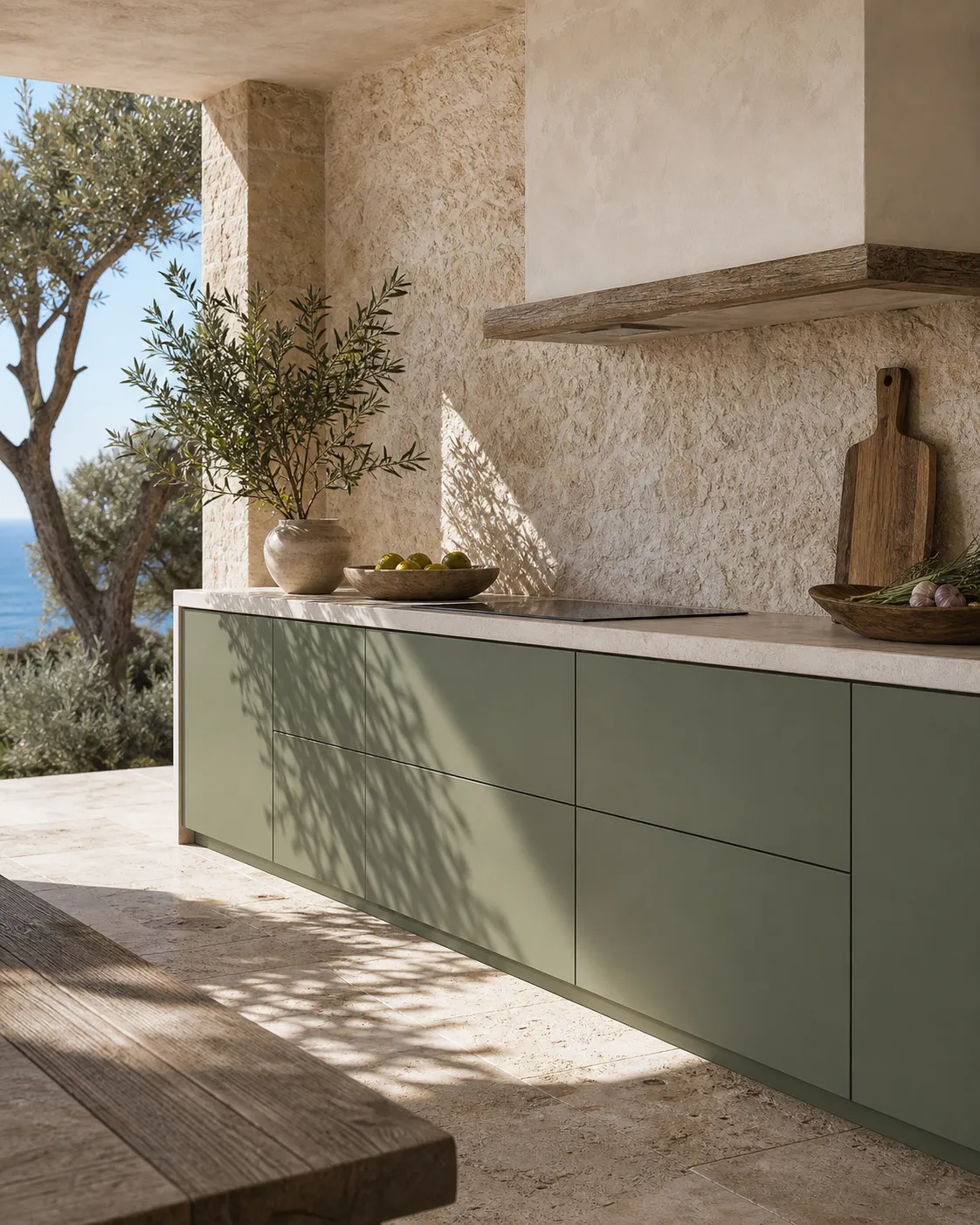
Drainage is the difference between exterior cabinetry and expensive outdoor furniture. The plan should show roof fall, counter drip lines, splash direction, floor slope, and where wind-driven rain lands during storms. Doors and drawers need a way to avoid trapping water inside the cabinet cavity. Toe areas should not become reservoirs. Countertop overhangs should throw water forward rather than pull it back across the cabinet face. If the outdoor kitchen includes a sink, ice maker, beverage fridge, or grill, the specification should show service access and cleaning access, not just the visible front elevation. Designers often review countertops and appliances carefully, then leave the cabinet base vague. That is backwards. The cabinet body is where water waits, heat accumulates, and grease settles.
How does heat change the cabinet brief?
Heat is not only a comfort issue. It changes how finishes age, how stored items behave, and how safe the grill wall feels during service. Outdoor kitchen cabinets near grills, griddles, pizza ovens, and smokers need clearances that follow appliance requirements and common sense. A cabinet face should not be asked to absorb direct heat every weekend without a heat shield, stone return, or air gap. Dark finishes can become hotter in direct sun, especially on unshaded islands, so color should be chosen with climate in mind. For family terraces in Dubai, Riyadh, coastal Florida, or the Mediterranean, shade strategy is part of the cabinet specification. Fans, roof depth, and orientation all affect how often the kitchen is actually used. A beautiful outdoor kitchen that is too hot to approach at noon is a design failure.
What should be stored outdoors?
Storage outdoors should be disciplined. Plates, grill tools, sealed cookware, cleaning supplies, and outdoor service pieces can make sense. Paper goods, spices, oils, and delicate pantry items need more caution because heat and moisture degrade them quickly. If a client wants year-round storage, specify ventilated interiors, easy-clean surfaces, and clear separation between cooking grease zones and clean serving zones. A luxury outdoor kitchen often fails because every indoor habit is copied outside. Better planning treats the terrace as a second kitchen with a narrower job description: prep, grill, serve, rinse, and store weather-tolerant items. That keeps the cabinet run cleaner and extends the useful life of both hardware and contents. Outdoor storage should make hosting easier without pretending the terrace is climate controlled.
Which finishes keep outdoor kitchen cabinets residential?
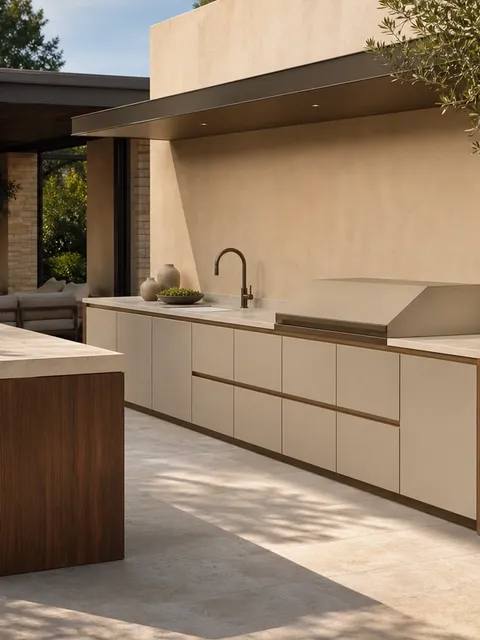
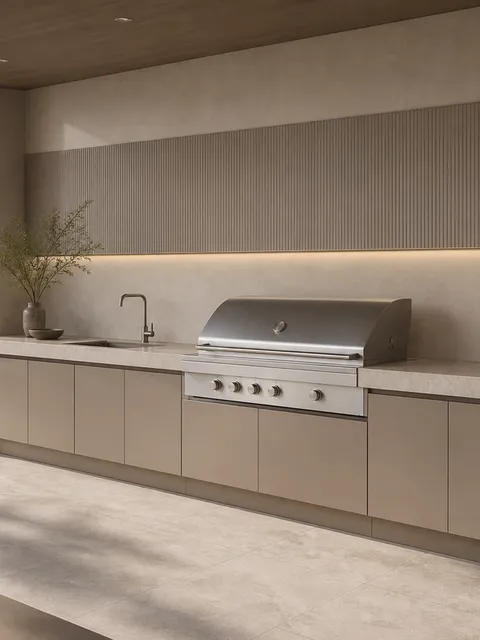
The finish has to carry warmth without hiding the maintenance truth. Soft olive, warm grey, sand, chalk white, and muted bronze tones sit naturally beside stone, plaster, teak, and landscaping. Powder-coated 304 stainless steel can support that palette while preserving a waterproof cabinet body. Strong gloss and mirror effects are harder outdoors because fingerprints, hard-water spots, and glare become obvious. Wood-look treatments can soften the mood, but the buyer should ask how the surface handles UV, grease, and abrasion. The goal is not to make outdoor kitchen cabinets disappear. The goal is to make them read like architecture: calm planes, controlled shadow lines, durable surfaces, and proportions that relate to the terrace rather than to a catalog display.
How should outdoor kitchen cabinets support entertaining?
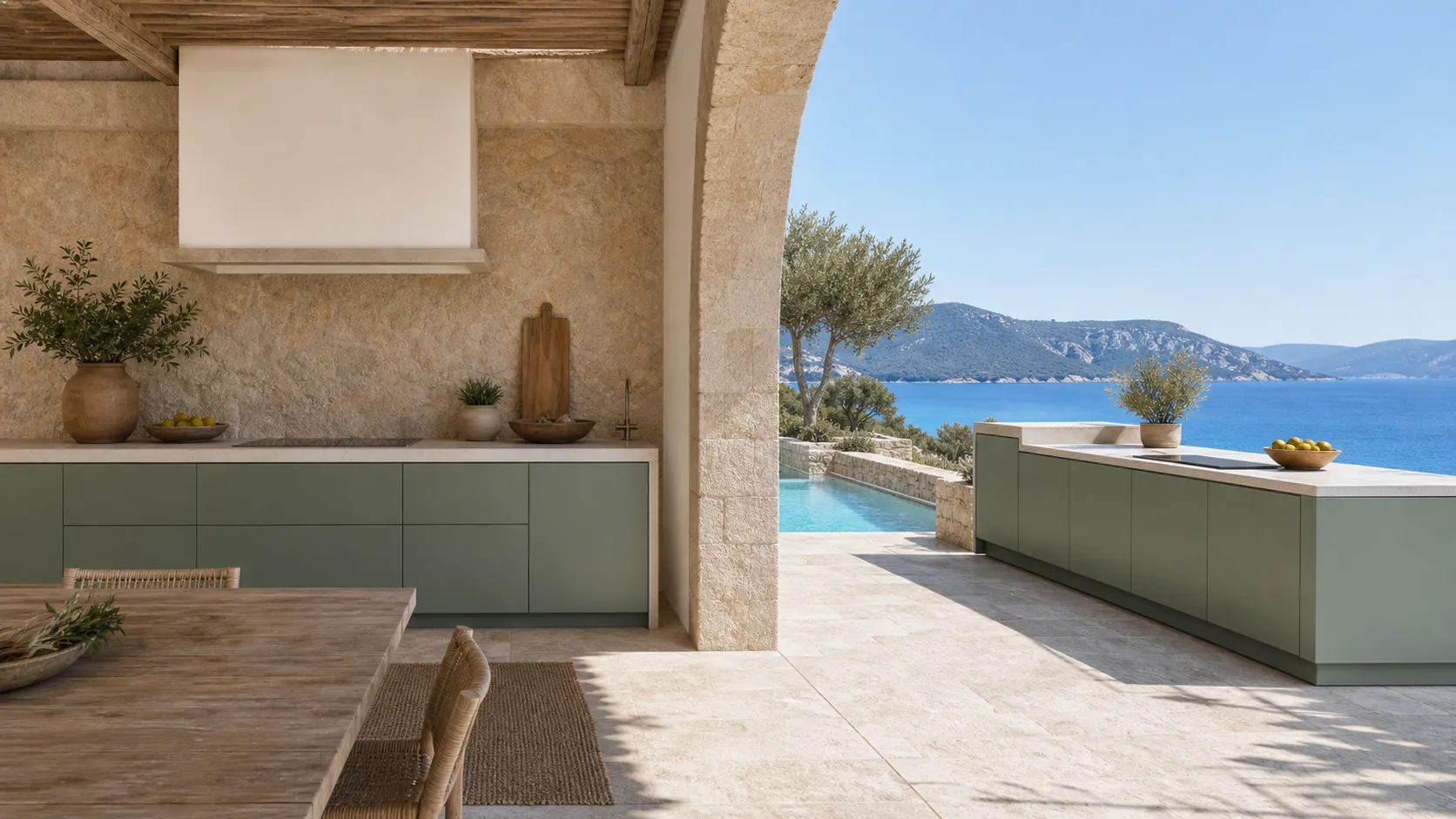
Outdoor kitchens are social rooms, so cabinet planning should follow the hosting sequence. Guests arrive, drinks are served, food is prepped, the grill is active, dishes are staged, and cleanup happens while people continue talking. Cabinets should support that flow with a landing zone near the grill, a clean serving counter away from smoke, a waste pullout or concealed bin, and storage for outdoor tableware close to the dining table. The cabinet run should not force the cook to turn their back on guests for every task. On larger terraces, a split plan works well: one sheltered working wall and one service island. On smaller patios, a single wall can be stronger than a crowded L shape. The right cabinet count is the count that protects movement.
What maintenance should be accepted before purchase?
Every outdoor cabinet system needs maintenance, including premium systems. The difference is whether maintenance is light, predictable, and honest. Buyers should plan for rinsing after salt exposure, wiping grease after grilling, checking drainage after storms, and cleaning high-touch surfaces before stains bake into the finish. A 304 stainless steel body reduces the risk of swelling and rot, but it still benefits from regular cleaning and a finish selected for the environment. Avoid any promise that says outdoor cabinetry is maintenance-free. The better promise is more credible: the cabinet should be built from materials that do not panic when maintenance is delayed, and the design should make cleaning simple enough that owners actually do it.
How do outdoor kitchen cabinets affect project budget?
Outdoor kitchen cabinets are a budget signal because they reveal whether the project is temporary, modular, or architectural. Lower-cost modular units can be useful for a first patio, but they often have limited sizing, fewer finish choices, and weaker integration with stone, walls, and appliances. Custom 304 stainless steel outdoor kitchen cabinets cost more because the body, finish, drainage, appliance openings, and installation logic are coordinated around the site. That higher cost is rational when the terrace is part of a villa, penthouse, resort home, or long-term family property. The cheapest cabinet is rarely cheap after replacement, water damage, and mismatched repairs. Budget should be judged over service life, not first invoice.
What should be in the final specification checklist?
The final checklist should be practical: site exposure map, roof and shade plan, floor slope, cabinet body material, finish system, countertop material, grill heat clearances, sink and water management, ventilation for stored items, appliance service access, cleaning plan, and warranty expectations. Include dimensions for every cabinet, but also include the environmental assumption behind each decision. Is the run covered or exposed? Is the climate coastal, desert, humid, or freeze-thaw? Will the owner store cookware outdoors year-round? Is the terrace used for daily family meals or occasional parties? These answers shape the cabinet more than a mood board. A good specification turns outdoor kitchen cabinets from a style purchase into a durable part of the home.
When should Fadior be considered for outdoor kitchen cabinets?
Fadior is strongest when the buyer wants a permanent outdoor kitchen with a residential design language and a cabinet body that can handle water, heat, and daily use. The brand position is 304 stainless steel whole-home customization, supported by steel-processing experience, glue-free manufacturing, powder-coated finishes, and custom fabrication. That matters outdoors because the cabinet is exposed to the same forces that punish weak indoor materials: moisture, heat, grease, and cleaning cycles. Fadior is not the right answer for a temporary patio cart or a weekend-only rental unit. It is the right conversation for a villa, coastal home, or high-use terrace where the owner wants quiet architecture and fewer material compromises.
| Best use | Permanent premium outdoor kitchens and wet zones | Light modular patios with controlled exposure | Moisture-heavy budget or utility settings |
| Main strength | Waterproof, hygienic, strong custom fabrication | Lightweight and often easy to install | Good moisture tolerance |
| Main caution | Needs finish discipline and regular cleaning | Coating damage and structural strength vary | Can feel less architectural in luxury homes |
| Buyer question | Is the full cabinet body 304 and how is drainage handled? | What is the panel thickness and coating warranty? | How does it move under heat and UV? |
What should coastal homes add to the brief?
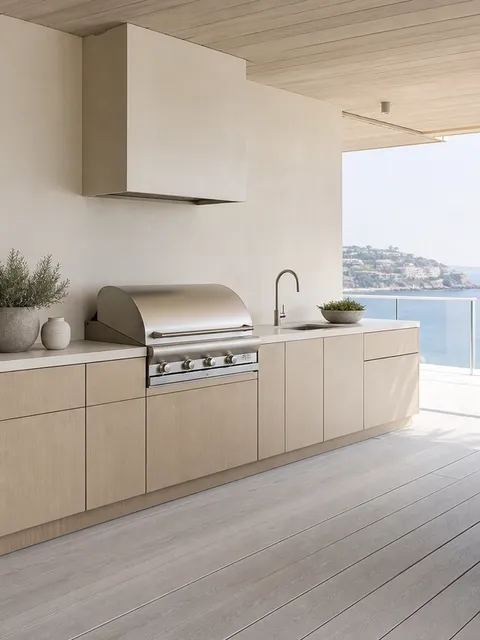
Coastal homes need one more layer of caution because salt does not arrive only as visible spray. It travels as fine dust, settles on horizontal ledges, and mixes with humidity overnight. Outdoor kitchen cabinets in these homes should be easy to rinse, easy to dry, and detailed without dirt-trapping grooves. A shaded placement helps, but the cleaning path matters just as much. If the terrace faces prevailing wind, put the most protected storage on the leeward side and keep open shelves to a minimum. Specify removable trays for items that may need indoor storage during storms. The cabinet finish should be tested against the actual routine: salt rinse, grease wipe, and warm-air drying, not only a lab adjective.
How should desert homes handle outdoor kitchen cabinets?
Desert homes have the opposite problem: less standing water, more heat, dust, UV, and thermal movement. Outdoor kitchen cabinets in Dubai, Riyadh, Doha, Palm Springs, or inland resort climates need shade, lighter finishes, and a plan for dust that settles inside gaps. Dark exterior planes can look dramatic in renderings but become uncomfortable under direct sun. A light olive, sand, chalk, or warm grey surface usually performs better for touch and glare. Keep appliance heat away from tall storage, avoid placing delicate contents behind sun-struck fronts, and allow service access around refrigeration. Desert durability is not only corrosion resistance. It is temperature control, dust management, and a finish that can be cleaned without becoming shiny or patchy.
What should installers verify on site?
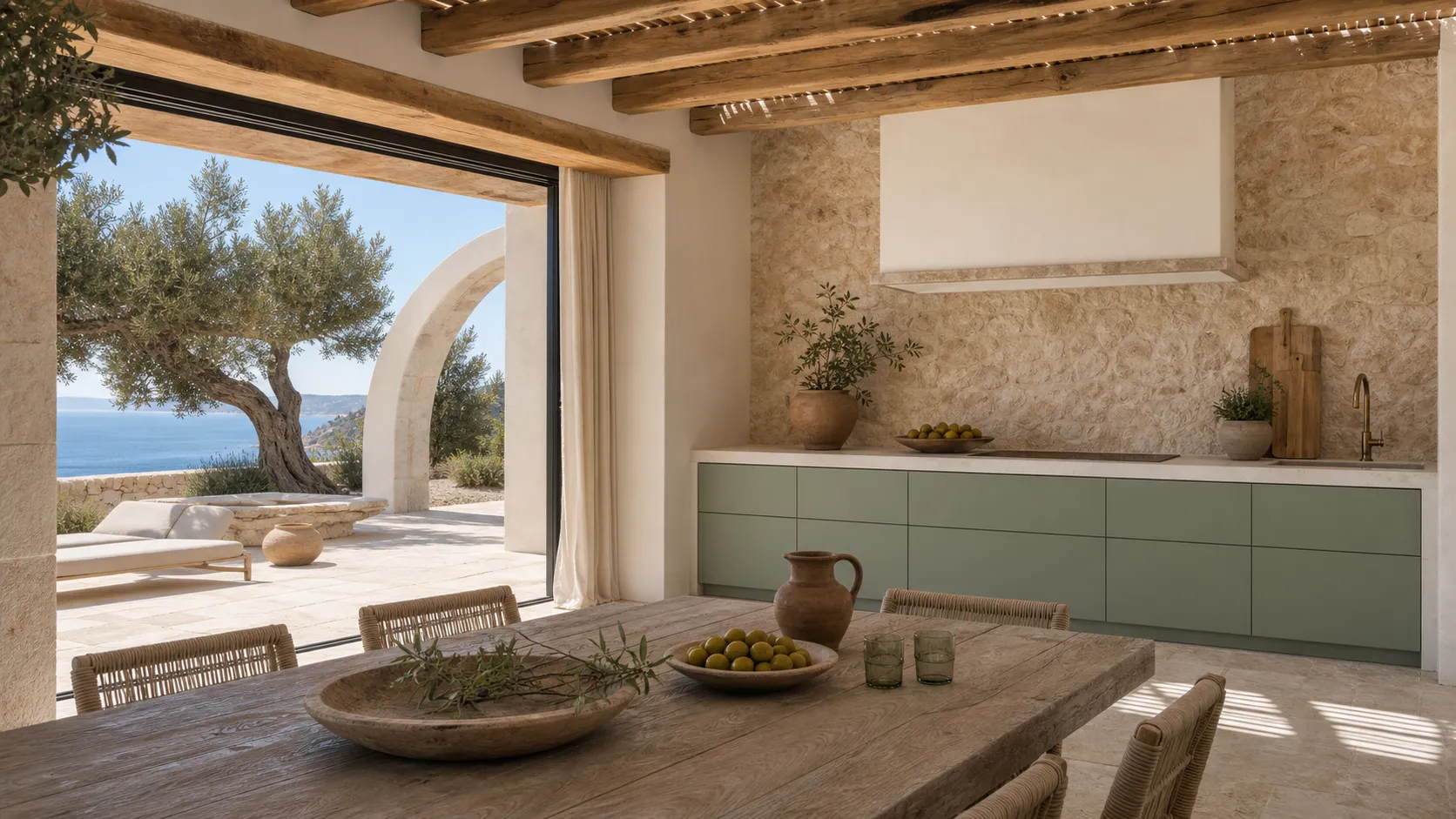
Installation should not be treated as a final formality. The installer should verify finished floor slope, wall plumbness, roof drip line, appliance openings, service shutoffs, and the exact place where water will leave the counter. Outdoor kitchen cabinets often fail at the boundary between good product and careless site conditions. A cabinet sitting over uneven stone can twist. A counter without a proper drip edge can pull rain down the face. A grill opening without the right clearance can punish nearby panels. The installation checklist should be signed against site reality, not just shop drawings. This is especially important for custom 304 stainless steel cabinetry because the system can last a long time when the site lets it work as designed.
How can the room feel warm without weaker materials?
A durable outdoor kitchen does not have to look cold. Warmth can come from stone texture, plaster depth, teak furniture, woven chairs, olive planting, soft lighting, and quiet cabinet colors. The cabinet body can be 304 stainless steel while the room reads as coastal, Mediterranean, desert, or contemporary. This separation is useful for buyers: do not ask a fragile material to provide warmth and structure at the same time. Let the permanent cabinet body solve water and hygiene, then let the surrounding architecture solve mood. In Fadior projects, that often means calm cabinet planes, powder-coated color, sintered stone counters, and architectural surfaces that make the outdoor kitchen feel connected to the villa rather than added later.
What is the simplest decision rule for buyers?
The simplest decision rule is exposure first, body second, finish third. If the cabinet is exposed to rain, salt, humidity, grease, and heat, choose a body material that can survive those forces. If the kitchen is fully covered and lightly used, a broader range of materials may be acceptable, but the same drainage and cleaning questions still apply. After the body is chosen, decide how the finish should behave under UV and routine wiping. Only after that should the design team discuss color, door rhythm, and accessories. This order prevents the common mistake of buying the look first and discovering the climate problem later. Outdoor kitchen cabinets are not decoration; they are a working part of the terrace.
What documentation should buyers request?
Buyers should request drawings and documents that make the outdoor cabinet system accountable. Ask for cabinet body material, finish name, countertop material, appliance cutout schedule, heat clearances, drainage assumptions, floor slope notes, service access, and a cleaning guide. If the proposal only shows renderings, colors, and appliance brands, it is not complete enough for an exterior kitchen. The document should also state what happens in covered, semi-covered, and exposed positions. That record protects the homeowner, designer, installer, and manufacturer because every party can see the exposure assumptions before production starts. Keep this documentation with the order record so future maintenance, replacement, and expansion decisions start from the original climate brief rather than guesswork. It also gives the installer a practical checklist instead of relying on memory. Clearly.
- Confirm covered, semi-covered, or exposed placement before choosing the cabinet body.
- Use 304 stainless steel where waterproof structure and long service life are priorities.
- Map grill heat, sink splash, rain direction, and floor slope before fabrication.
- Keep outdoor storage limited to items that tolerate heat and moisture.
- Choose UV-stable finishes and light-to-mid colors for hot climates.
- Plan cleaning access, service panels, and drainage before approving drawings.
Frequently Asked Questions
Questions this guide answers
- What are the best outdoor kitchen cabinets for humid climates?
- For premium humid-climate projects, 304 stainless steel cabinet bodies with a suitable finish, covered placement, drainage, and routine rinsing are the safest specification.
- Are outdoor kitchen cabinets waterproof?
- Some systems are highly water resistant, but the whole design still needs roof coverage, drainage, floor slope, and cleanable interiors to avoid trapped moisture.
- Can aluminum outdoor kitchen cabinets work?
- Yes, aluminum can work in protected patios, but buyers should verify coating quality, panel thickness, structural capacity, and repair options.
- Should wood be used for outdoor kitchen cabinets?
- Wood can be beautiful in protected settings, but it needs sealing, oiling, and close maintenance, especially in high-UV, wet, or coastal locations.
- How long should outdoor kitchen cabinets last?
- Service life depends on material, exposure, installation, drainage, and maintenance. A permanent luxury system should be specified for years of wet, hot, and greasy use.
References
Authoritative sources cited in this article
- NKBA luxury outdoor kitchen research
Outdoor kitchen demand, luxury use cases, and all-season expectations.
NKBA Luxury Outdoor Kitchen Research Report
- Fixr outdoor living trends
Survey-backed outdoor living priorities and features for 2025.
Fixr 2025 Outdoor Living Trends
- outdoor kitchen design material guidance
Practical material and storage guidance for exterior kitchen planning.
Homes & Gardens outdoor kitchen design guide
- outdoor countertop weather guidance
Outdoor surface durability, heat, UV, water, and maintenance tradeoffs.
Homes & Gardens outdoor countertop expert guide
- U.S. outdoor kitchen market outlook
Market demand signal for the U.S. outdoor kitchen category.
Grand View Research United States outdoor kitchen outlook
Editorial transparency
Yuki Tanaka is a composite editorial persona maintained by Fadior Home's editorial team. Articles attributed to this byline are produced through an AI-assisted editorial workflow with human review, and represent the consolidated voice of multiple researchers and contributors.
Actually delivered
Real homes photographed after handover, not renders.
Ready to specify?