
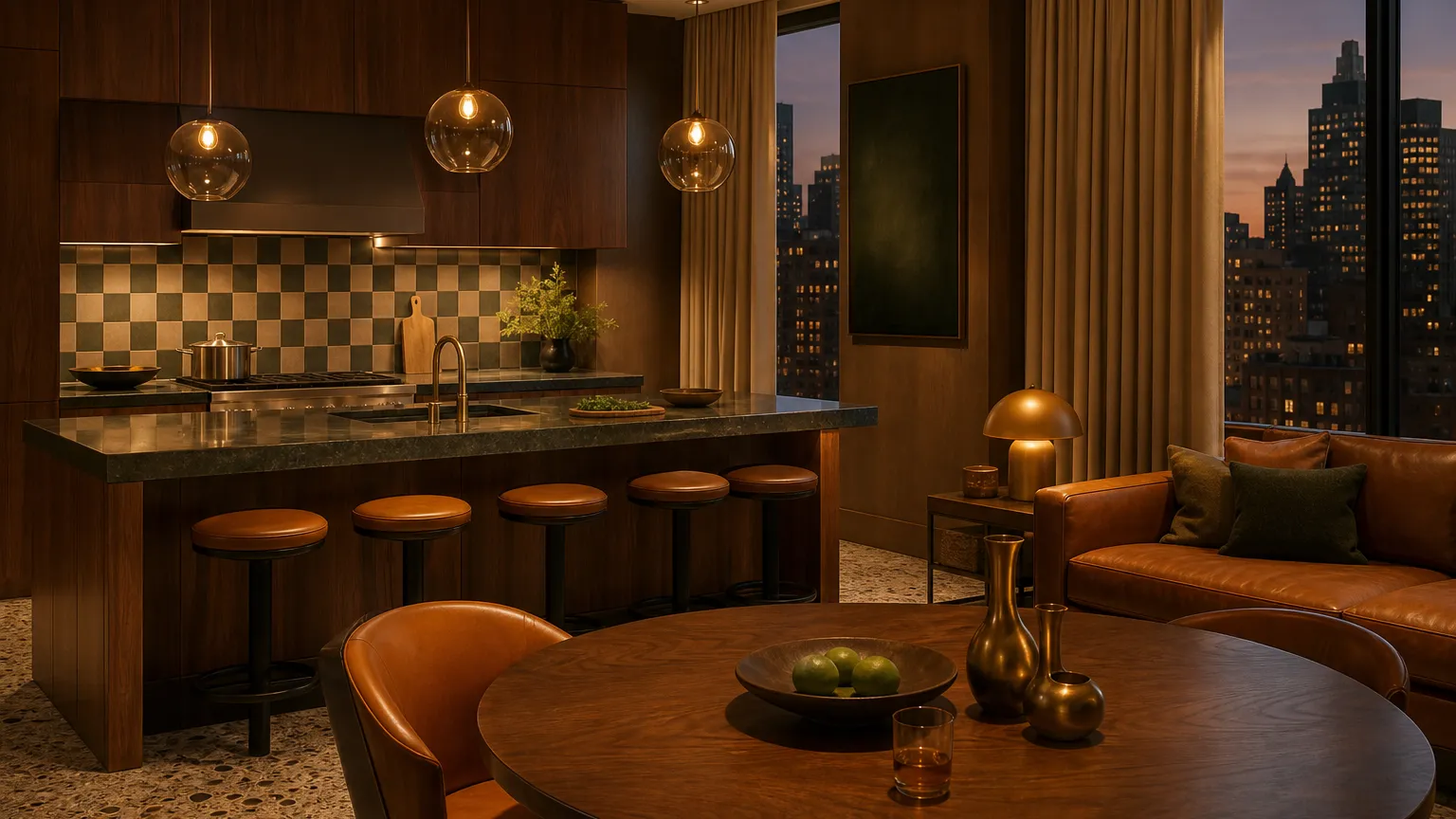
Viking Kitchen Performance Planning
Viking turns professional cooking into a residential planning question: how heat, hygiene, airflow, workflow, 304 cabinetry, and warm finishes can live in one calm home kitchen.
Direct answer
The Direct Answer
304 cabinetry should give Viking kitchen performance planning a durable, cleanable base before the homeowner falls in love with a range or a hood. The practical answer is to plan heat, ventilation, workflow, wet-zone access, and indoor-air confidence as one room system. Viking supplies the performance cue; Fadior turns that cue into cabinet bodies, finish samples, service routes, and daily-use rules that still feel residential.
What should Viking kitchen performance planning answer first?
304 cabinetry should give Viking kitchen performance planning a durable, cleanable base before the homeowner falls in love with a range or a hood. The practical answer is to plan heat, ventilation, workflow, wet-zone access, and indoor-air confidence as one room system. Viking supplies the performance cue; Fadior turns that cue into cabinet bodies, finish samples, service routes, and daily-use rules that still feel residential.
Why does Viking matter to a residential kitchen buyer?
Viking matters because it made professional cooking language feel possible at home. The brand is associated with residential ranges that borrowed from commercial discipline: heavy cooking loads, strong burners, visible utility, and a kitchen identity built around use. That does not mean every homeowner needs a restaurant-style room. It means a serious kitchen should be judged by performance questions before style language: how much heat it creates, where steam exits, how surfaces clean after 7 dinners, and how the room stays calm after 10 years. For a GCC villa owner or a New York apartment renovator, that shift is important because the kitchen is no longer only a decorative cabinet wall. It is a high-load room with daily cooking, guests, moisture, noise, and repair realities. The buyer should therefore treat Viking as a cue for better buying questions, not as permission to copy a commercial kitchen. A performance room needs domestic grace, measured clearances, and a material base that can survive use without making the home feel like a service corridor.
- Viking kitchen performance planning
- Viking kitchen performance planning is the process of turning professional cooking cues into a residential room plan for heat, hygiene, workflow, ventilation, and maintenance.
How should a homeowner translate professional heat into a calm room?
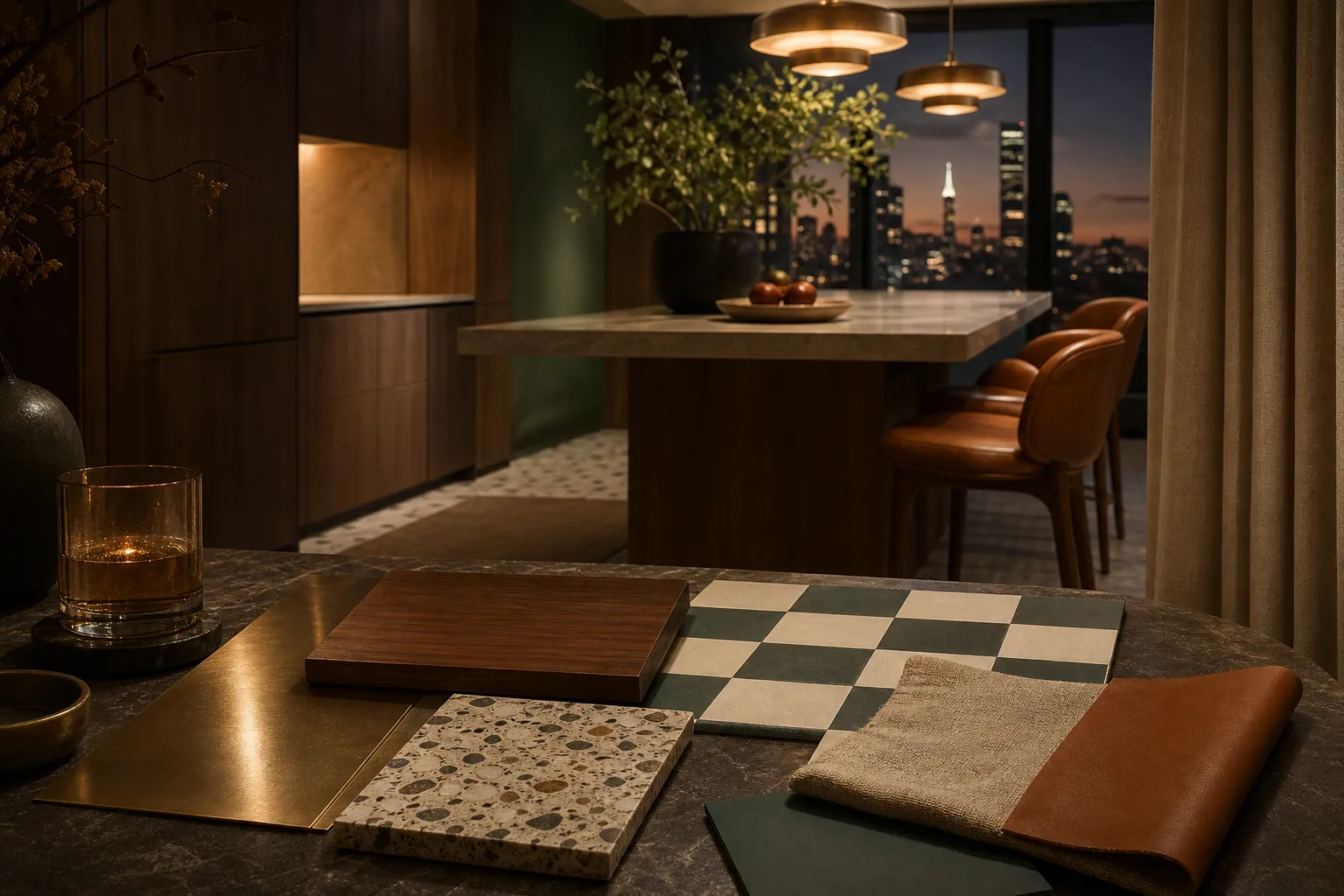
Start with the heat map, not the appliance wish list. A powerful range changes the hood size, make-up air discussion, landing zones, splash surfaces, lighting position, and the cabinet finish behind daily cleaning. In a villa or apartment, the buyer should mark 3 zones: cooking heat, washing moisture, and serving movement. Fadior then uses 304 stainless steel cabinet bodies, powder-coated or wood-grain finishes, and site-specific drawings so the professional cue becomes a residential sequence instead of a theatrical object. The practical sequence is simple: document the cooking habits, choose the appliance envelope, size the ventilation conversation, then test the cabinetry and surfaces around that pressure. If the family cooks 5 nights a week, stores heavy cookware, and hosts 12-person dinners, the room needs different landing space than a display kitchen used twice a week. This is where Fadior should be involved early, because cabinet-body material, counter support, and wet-zone access affect the success of the appliance decision.
Which planning checks separate performance from appliance theatre?
The difference is evidence. Appliance theatre stops at a dramatic range, a big hood, and a photograph. Performance planning asks whether the surrounding cabinetry, ventilation path, countertop support, storage reach, and maintenance routine make that appliance useful every week. A 900 mm cooking zone needs more than a beautiful front elevation. It needs landing space, wipeable backsplashes, protected sink-base storage, and a service route for filters, valves, and power points. The buyer should ask for those checks before approving the design. The strongest check is whether the plan still works after the first year. Can someone clean the backsplash without damaging finishes? Can a technician reach the filter or valve? Can a child move from refrigerator to dining table without crossing the hottest zone? Can the sink base handle repeated moisture without swelling? These are not decorative questions, but they decide whether a premium range becomes a daily asset or a demanding centerpiece.
| Buyer decision | Appliance-first answer | Room-system answer | Proof to request |
|---|---|---|---|
| Cooking power | Choose the most dramatic range | Match heat to ventilation and landing zones | BTU range, hood route, make-up air note |
| Wet zones | Hide the sink base behind finishes | Use resilient cabinet bodies and accessible plumbing | Material statement and service drawing |
| Hygiene | Rely on a wipeable look | Plan cleanable surfaces, waste storage, and air movement | Care sheet and cleaning sequence |
| Atmosphere | Make the room look professional | Balance durable base with warm residential finishes | Finish board under 2 light settings |
| Long-term service | Treat maintenance as an afterthought | Keep filters, valves, and panels reachable | Dated access plan before deposit |
How does 304 stainless steel support a high-use kitchen base?
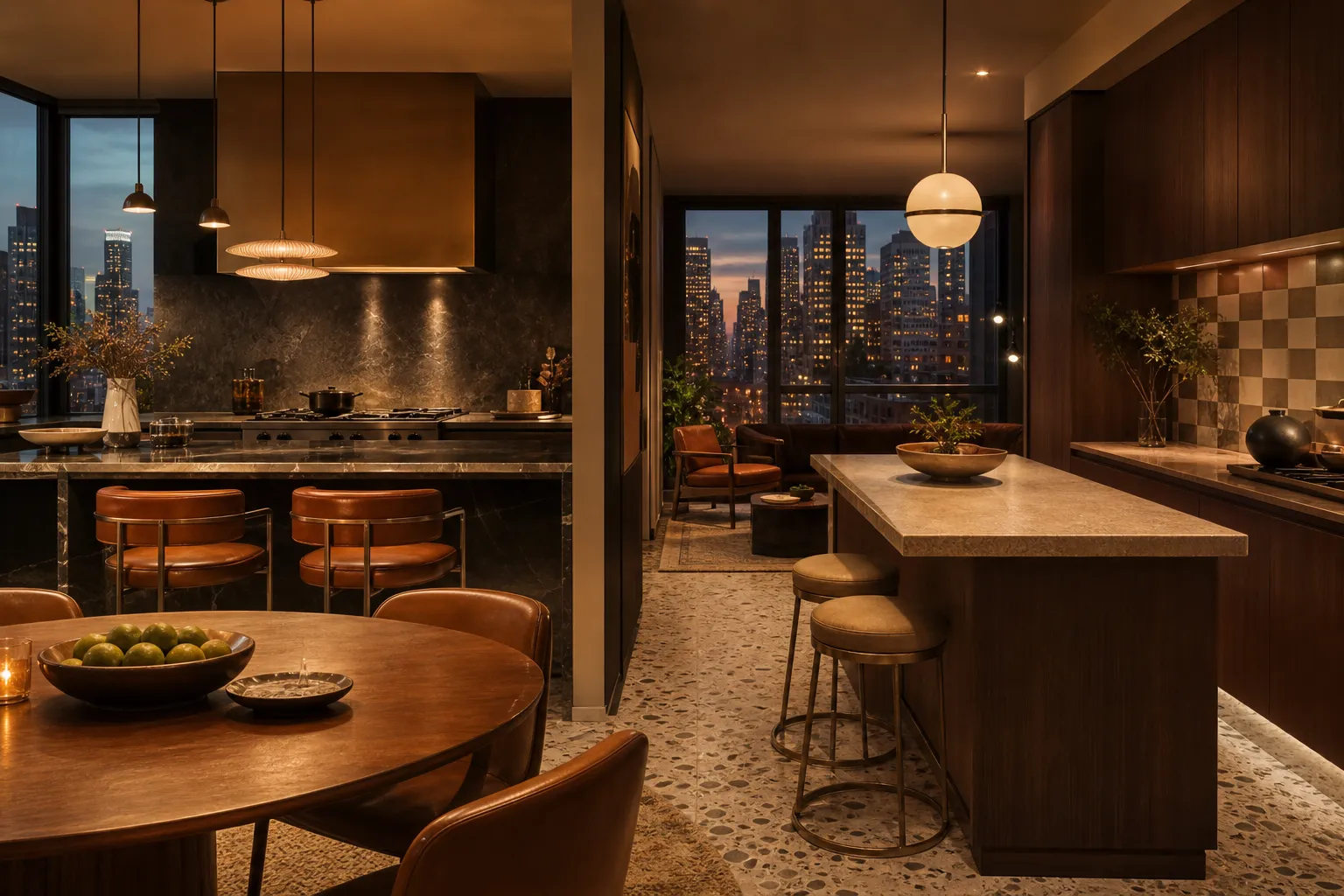
304 stainless steel is useful in this context because the cabinet body is the layer most buyers do not see after installation. Fadior uses 304 as the structural baseline for kitchen cabinets, wardrobes, vanities, and related whole-home systems. That matters around water, cleaning, food storage, and long service life. It also removes the need to rely on wood-based boards for the wettest zones. The visible room can still use walnut, leather, stone, and soft light; the hidden base carries durability. For that reason, buyers should not treat 304 as a slogan. The relevant question is where the material sits in the assembly and what pressure it solves. In a high-use kitchen, the cabinet body near water, food storage, waste, and cleaning products carries more risk than a display panel. Fadior can then add residential finishes over a strong base, so the buyer gets a warm room with a documented structural layer underneath.
What should buyers compare before approving the room?
Compare the room by decisions, not by mood boards. A Viking-led concept should be tested against at least 5 buyer questions: what heat level is realistic, what ventilation route is possible, what cabinet body sits near water, what cleaning cycle the family can accept, and what service access remains after installation. If a seller cannot answer those questions with drawings, material statements, and care notes, the kitchen is still a concept image rather than a durable purchase plan.
When does hygiene become a design decision?
Hygiene becomes a design decision when food preparation, moisture, and cleaning routines shape the room. NSF food-equipment certification shows why cleanable surfaces and food-zone thinking matter, even when a home kitchen is not a commercial kitchen. EPA indoor-air guidance adds another layer: ventilation and material choices affect comfort, not only smell. In practice, the buyer should review 4 touchpoints: sink base, cooking wall, waste storage, and pantry reach. Those zones decide whether performance feels effortless or exhausting. A homeowner does not need a commercial certification file for every surface, but the same logic helps clarify the brief. Food zones should be easy to wipe, moisture should not be trapped, waste should be separated from clean storage, and ventilation should remove cooking load rather than merely decorating the wall. When those decisions are made early, the kitchen feels easier because the family is not fighting the room after installation.
Performance kitchen approval checklist
- Confirm the real cooking load: weekly dinners, wok use, baking, grilling, and daily breakfast routines.
- Mark the cooking wall, sink base, pantry reach, waste storage, and serving path on one plan.
- Ask for the cabinet-body material statement before approving the visible finish board.
- Review ventilation, lighting, and cleaning access before selecting the final appliance package.
- Approve finish samples under daylight and warm evening light, then record care rules on the same sheet.
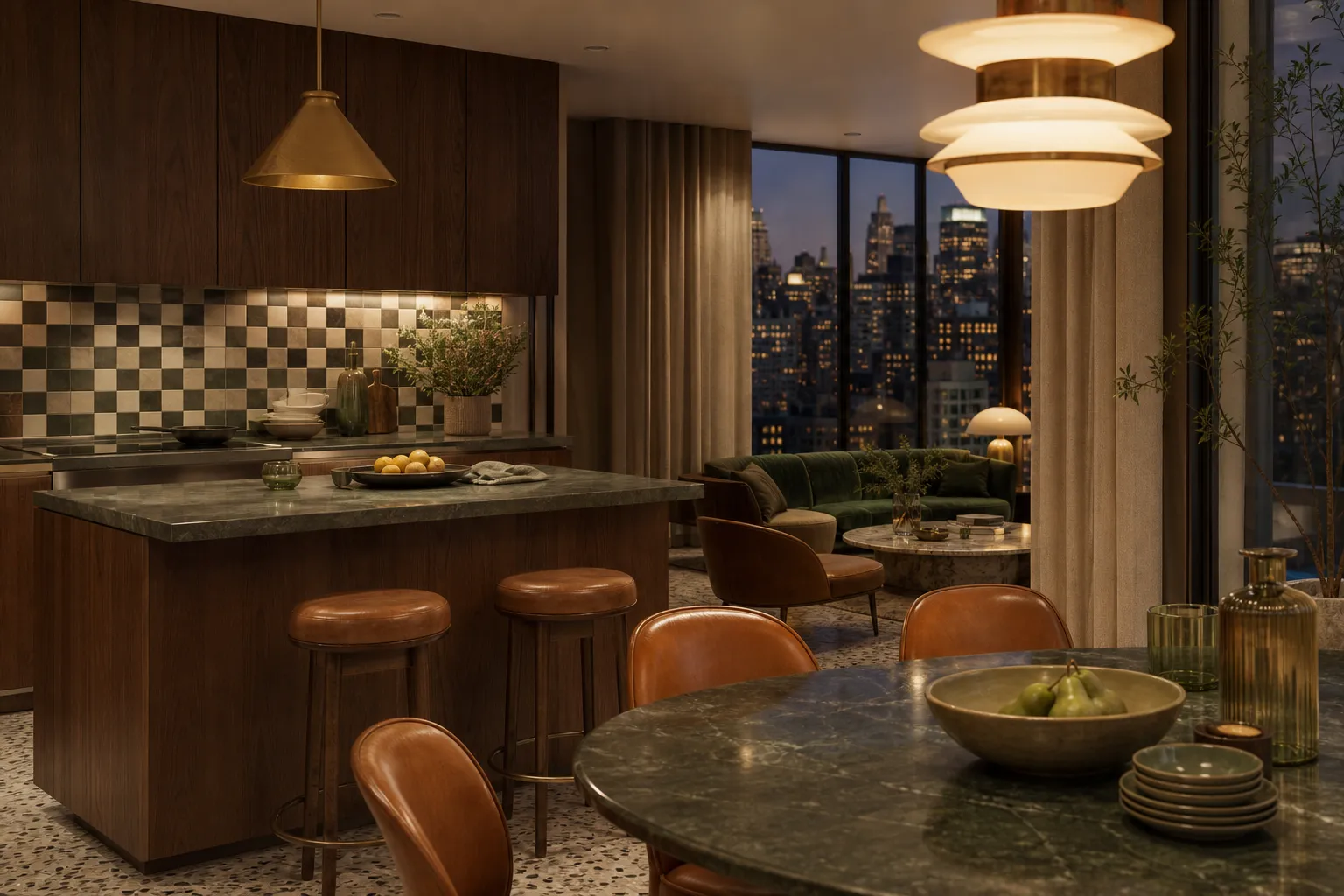
Should the kitchen look professional or feel residential?
It should feel residential while respecting professional pressure. A room can use a serious range and still avoid a cold service-kitchen mood. The visual work belongs to proportion, light, finish, and furniture rhythm: walnut paneling, warm seating, textured counters, and layered evening light can soften a performance room. The planning work belongs to Fadior drawings, 304 cabinet bodies, glue-free construction, and access details. One side carries atmosphere; the other carries proof. The most successful answer is neither extreme. A room that only looks professional can feel hard, loud, and overbuilt; a room that only looks soft can fail under serious cooking. The middle path is to let the planning be professional and the experience be residential. That means clear service logic behind the scenes, but warm materials, comfortable seating, low-glare light, and human scale in front of the camera.
How should a Fadior buyer turn this into a next step?
Bring a performance brief to the consultation. Include the preferred cooking style, household size, daily cleaning tolerance, wet-zone concerns, ventilation limits, and target finish mood. Ask Fadior to return a room-level plan that shows cabinet-body material, cooking-wall protection, sink-base access, ventilation path, and finish samples under 2 light conditions. That turns Viking kitchen performance planning from brand admiration into a purchase checklist for a 10-year to 30-year home. The consultation should finish with a single approval packet, not a scattered thread of images. That packet should include a plan drawing, appliance envelope, ventilation note, cabinet-body material note, finish board, sink-base access sketch, and care summary. If any one of those pieces is missing, the buyer has found the next question to ask before deposit. This makes the purchase easier for the homeowner and clearer for the designer, dealer, and installer.
Which Viking kitchen performance planning questions do buyers ask most?
Buyers usually ask whether a professional-style kitchen will feel too hard, too hot, or too technical for daily life. The better question is whether the performance load is matched by cabinet bodies, ventilation, cleaning logic, and storage workflow. The FAQ below turns that into practical buying language.
Frequently Asked Questions
Questions this guide answers
- Does Viking kitchen performance planning mean buying Viking appliances?
- Not necessarily. The useful idea is the planning discipline behind a professional-style kitchen: heat, ventilation, workflow, hygiene, and service access. A buyer can study Viking as a performance reference while still choosing the appliance package, cabinetry, finishes, and room layout that fit the home.
- Can a performance kitchen still feel warm and residential?
- Yes. The durable layer and the emotional layer do different jobs. Fadior can use 304 stainless steel for cabinet bodies while the visible room uses warm finishes, soft light, seating, and proportion. The result can feel like a home, not a commercial kitchen, if the technical decisions stay hidden but documented.
- What is the first drawing to request for this kind of kitchen?
- Ask for a room-system drawing, not only an appliance elevation. It should show cooking heat, ventilation route, sink-base access, pantry reach, waste storage, and traffic flow. That drawing reveals whether the kitchen can handle serious cooking after the showroom mood fades.
- Why does 304 stainless steel matter near a professional-style range?
- The range creates heat, cleaning, and moisture pressure around the busiest wall of the kitchen. 304 stainless steel cabinet bodies give Fadior a resilient baseline in wet and high-use zones. The visible finish can still be warm, but the hidden layer is planned for long service life.
- How should buyers avoid an overly industrial kitchen?
- Separate performance from atmosphere. Keep the heat, hygiene, ventilation, and service-access checks rigorous, then soften the room with proportion, lighting, color, furniture, and finish samples. A kitchen can borrow professional discipline without copying a restaurant back-of-house mood.
Related reading
Continue exploring the journal.
More guides, whitepapers, and insights from the Fadior journal.
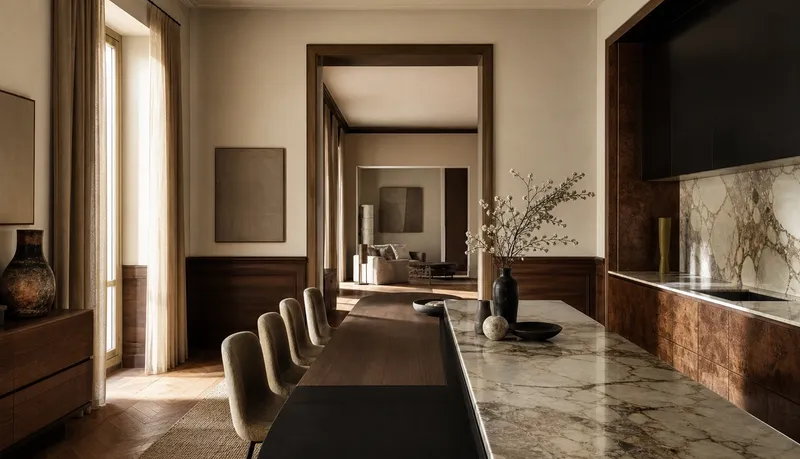
Buyer's Guide
Material Truth Kitchen Design
Anni Albers helps luxury kitchen buyers ask a sharper question: does the room reveal how its surfaces, structure, and daily use actually work?
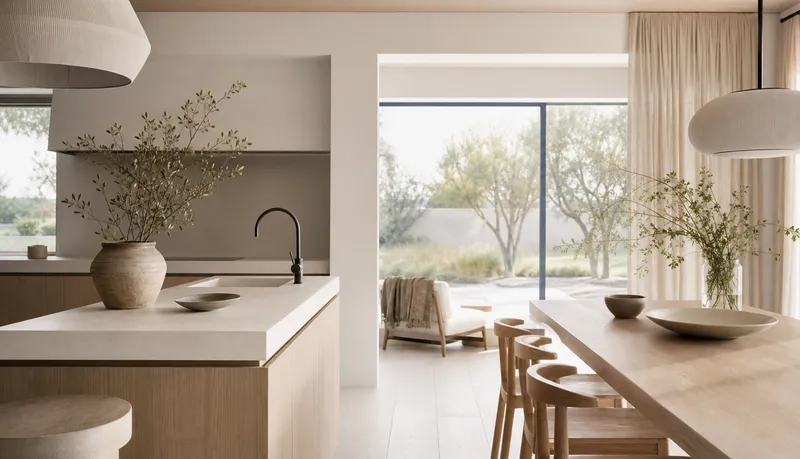
Buyer's Guide
Luxury Kitchen Fixtures for GCC Villas
Kohler’s fixture heritage is a useful lens for GCC villa buyers: choose sinks, taps, wet-zone support, and cabinet bodies as one material system.

Buyer's Guide
Bespoke Kitchen Design in Humid GCC Homes
Humid GCC homes are pushing buyers beyond modular kitchen packages toward bespoke plans that resolve water, appliance, storage, and service-life decisions.
Related products
Specific products worth reviewing next.

References
Authoritative sources cited in this article
- https://en.wikipedia.org/wiki/Viking_Range
- https://store.astm.org/a0240_a0240m-24.html
- https://worldstainless.org/media/press-releases/stainless-steel-in-figures-2024/
- https://www.nsf.org/food-beverage/commercial-food-equipment/food-equipment-certification
- https://kb.nkba.org/kitchen-bath-planning-guidelines/
- https://www.epa.gov/air-quality/indoor-air-quality
- https://www.epa.gov/formaldehyde/formaldehyde-emission-standards-composite-wood-products
Editorial transparency
Marco Rinaldi is a composite editorial persona maintained by Fadior Home's editorial team. Articles attributed to this byline are produced through an AI-assisted editorial workflow with human review, and represent the consolidated voice of multiple researchers and contributors.
Actually delivered
Real homes photographed after handover, not renders.
Ready to specify?