Project case
Design StudyThe Italian Lineage: How EuroCucina Defines the Global Luxury Kitchen Project
This 125 sqm Milan penthouse kitchen translates EuroCucina's biennial design-and-technology culture into a 304 stainless steel residential specification with 1.2 mm panels, 4 finish families, 120 kg storage loads, 200,000-cycle fittings, and a 30-year durability path. Request specs.

 Adriana HaleSenior Materials Editor
Published Reviewed
Project requirements
The brief behind this reference project, the design response, and the documented outcome.
This 125 sqm Milan penthouse kitchen translates EuroCucina's biennial design-and-technology culture into a 304 stainless steel residential specification with 1.2 mm panels, 4 finish families, 120 kg storage loads, 200,000-cycle fittings, and a 30-year durability path. Request specs.
Who it's for
Who this specification is for.
This project is for penthouse owners, architects, interior designers, and procurement leads working at the upper residential tier in Milan or similar global cities. The use scenario is an open-plan apartment where cooking, dining, entertaining, storage, and wet cleaning share one visible room, so the kitchen must carry Italian design culture while staying measurable enough for quotation and fabrication review.
Material spec
Material specification and standards.
Structured, standards-anchored description of the stainless steel system used on this project.
- Steel grade
- 304
- Sheet thickness
- 1.2 mm
- Standards referenced
- ASTM A240ISO 14001HACCPNSF/ANSI 51EN 1672-2
- Finishes
- brushedsatin champagnePVD bronzesoft matte
Key dimensions
The numbers behind this specification.
Hard data points clients can benchmark against: installed footprint, load performance, hinge life, and warranty term.
125m²
Installed area
120kg
Load rating
200,000open/close
Hinge cycles
30years
Warranty
Challenge
Milan Penthouse Challenge: EuroCucina Ideas in 304 Stainless Steel
EuroCucina is a biennial international exhibition dedicated to kitchen design and technology, held as part of Salone del Mobile.Milano. For a 125 sqm Milan penthouse, that event sets a high bar: the kitchen must feel culturally current, but it also has to survive steam, oil, citrus, daily cleaning, and visible entertaining use.
The apartment cannot read as a trade-show round-up. A working penthouse kitchen needs an island, sink run, pantry wall, dining threshold, and secondary wet zone that behave like one architectural system. The brief asks Fadior to translate exhibition themes into 1.2 mm 304 stainless steel panels, 4 finish families, and a layout that supports daily meals.
Fantini adds a useful Italian reference point because the company produces the iconic X-shape I Balocchi sink fittings and has collaborated with Piero Lissoni since 2001. The lesson is not to copy a tap profile; the kitchen needs the same precision around touch, water, proportion, and restrained drama.
Trade pressure also shapes the room. The US Section 232 tariffs impose 25% duties on most steel imports, with modifications through quota systems and country exemptions, so material decisions cannot wait until late procurement. A Milan penthouse kitchen with 304 stainless steel must define quantity, finish, and compliance early.
Historic trend cycles make the design problem broader than this year's fair. Kitchen design trends documented in the provided sources span industry forecasts from 2000-2006 and historical retrospectives from the 1920s-1970s, so the project needs more than a fashionable island. The room has to absorb long cycles of open-plan living, craft revival, and technical cabinetry.
Solution
Milan Penthouse Solution with 304 Stainless Steel Kitchen Planning
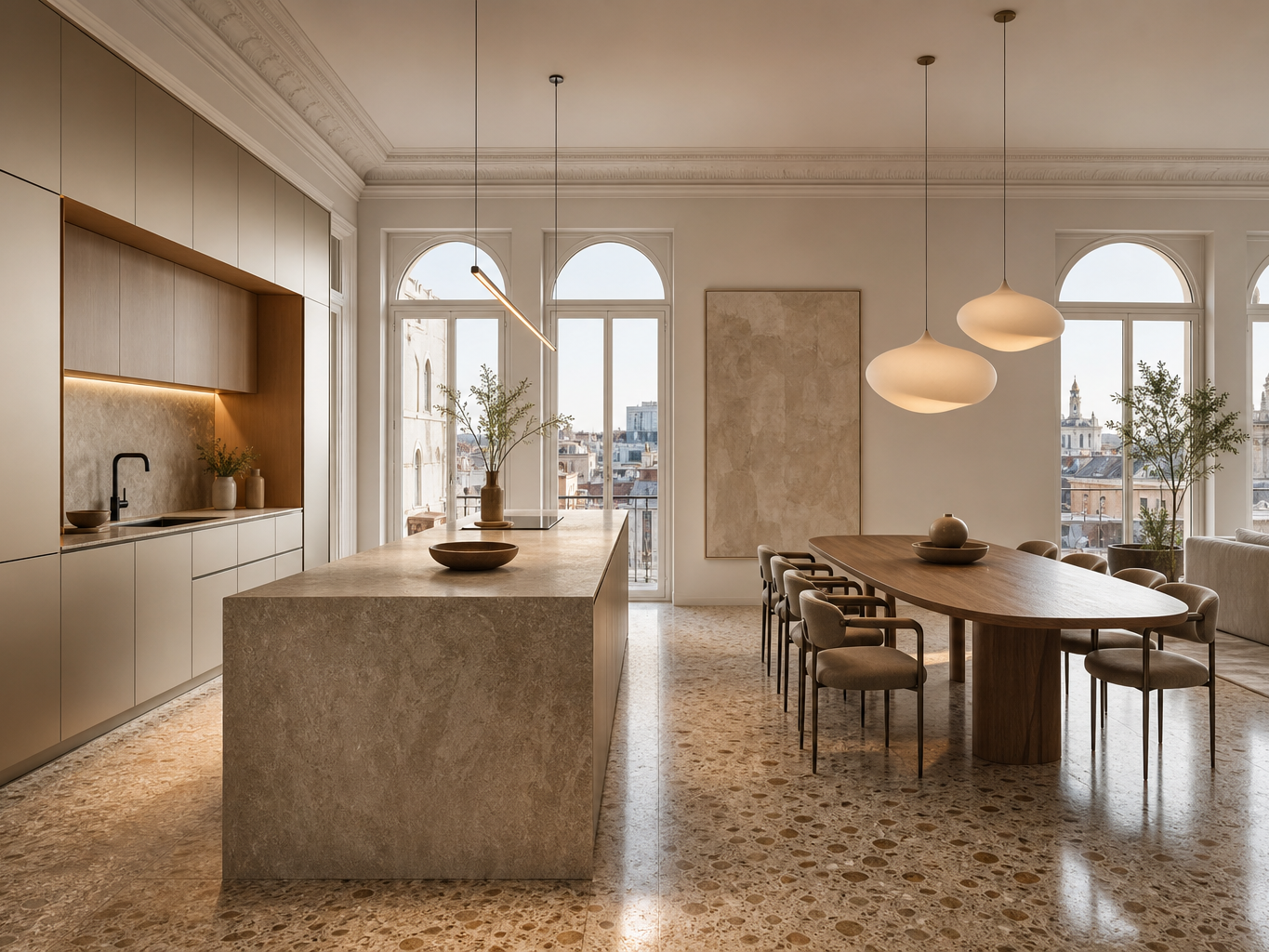
Fadior organizes the 125 sqm penthouse around three connected actions: prepare, gather, and conceal. The kitchen island faces the dining threshold, the sink run anchors the water side, and the pantry wall hides daily storage behind calm cabinet planes. Every zone uses the same 304 stainless steel performance logic under a Milan residential finish palette.
The visible room stays Italian without becoming theatrical. Champagne-tone cabinet fronts, pale marble counters, walnut wall panels, soft grey floor slabs, bronze-tone tap finishes, and low-glare lighting give the apartment warmth. Beneath that atmosphere, ASTM A240, NSF/ANSI 51, HACCP, ISO 14001, and EN 1672-2 give procurement a 5-part review path.
Fantini's I Balocchi and the Piero Lissoni collaboration guide the touch points as design moments. Fadior keeps the water zone composed around a clear tap line, generous counter landing, and cabinet faces that do not compete with the sink. The goal is a kitchen where one precise gesture can carry the room.
The Section 232 tariff fact changes the planning calendar. Fadior treats 304 stainless steel as an early specification line item, not a late decorative choice, because a 25% duty environment can alter quoted costs and delivery assumptions. The project fixes 1.2 mm thickness, 120 kg storage loads, and 200,000-cycle fittings before finish sampling.
A historical trend view keeps the design from chasing one exhibition season. The kitchen borrows open-plan integration, technical storage, craft-like tap attention, and warmer finish contrast, then tests each idea against measurable residential use. The same logic can be read beside the 2025 Bartok Rooftop precedent: a 125 sqm urban project where Artemide lighting supports a compact architectural plan.
Result
Milan Penthouse Result: 304 Stainless Steel with Italian Lineage
The result is a Milan penthouse kitchen that treats EuroCucina as lineage rather than decoration. Across 125 sqm, the island, sink run, pantry wall, dining edge, and vanity extension share a 304 stainless steel specification while the room presents marble, walnut, champagne-tone cabinetry, and measured city light.
For owners, the value is confidence during ordinary use. Cookware, pantry goods, tableware, glassware, and cleaning products can be planned around 120 kg storage loads, 200,000-cycle fittings, and a 30-year durability path. The kitchen remains suitable for entertaining without becoming delicate after a busy dinner.
For designers, the project gives Italian references a disciplined structure. EuroCucina supplies the biennial design-and-technology context, Fantini and Piero Lissoni sharpen the water-zone language, and long kitchen-trend histories prevent the room from becoming a single-season statement. The reference points become decisions about layout, finish, light, and procurement.
For procurement teams, the specification is clear enough to price and review. The project uses 1.2 mm 304 stainless steel, ASTM A240 sheet logic, NSF/ANSI 51 food-contact thinking, HACCP cleaning discipline, ISO 14001 environmental management, and EN 1672-2 hygiene principles before decorative upgrades are discussed.
The kitchen can now connect open living with measurable performance. A Milan dinner, a weekday breakfast, and a quiet cleaning routine all pass through the same island and wall system, while the trade-aware material plan keeps quotation risk visible. The room feels residential because the technical choices are resolved before the finishes ask for attention. That clarity also protects the project team when samples, shop drawings, import costs, and final site coordination have to move in the same sequence safely.
Why stainless steel
Why 304 stainless steel is the right fit for this project type.
A 125 sqm Milan penthouse kitchen needs a durable core because the kitchen, dining edge, pantry, and wet zone sit in public view. 304 stainless steel lets Fadior specify food-contact, cleaning, load, and finish performance without making the room look commercial.
ASTM A240, NSF/ANSI 51, HACCP, ISO 14001, and EN 1672-2 give architects and procurement leads a shared review checklist. Those standards matter when the same island supports cooking, serving, storage, and entertaining in one open-plan apartment.
The US Section 232 tariff context makes early specification useful. When most steel imports face 25% duties subject to quota and exemption changes, fixing 304 stainless steel thickness, quantities, and finish families early reduces late-stage price confusion.
EuroCucina's biennial kitchen design-and-technology focus fits 304 stainless steel because exhibition ideas need a material system before they become a buildable room. Fadior turns open-plan integration, tap precision, and craft attention into measurable residential planning.
The 30-year durability path protects the Italian finish story. Champagne-tone cabinetry, pale marble, walnut panels, and soft city light can stay visually refined because the working surfaces are backed by 1.2 mm 304 stainless steel planning and 200,000-cycle fittings.
Gallery
The Italian Lineage: How EuroCucina Defines the Global Luxury Kitchen Project — project gallery and key details.
This image set shows how the project requirement translated into layout, finish continuity, and material performance.
FAQ
Frequently asked questions about this project.
Why does a EuroCucina-inspired Milan kitchen use 304 stainless steel?
A EuroCucina-inspired Milan kitchen needs design culture and measurable performance at the same time. In this 125 sqm penthouse study, Fadior uses 1.2 mm 304 stainless steel, ASTM A240 references, NSF/ANSI 51 food-contact logic, and 120 kg storage planning beneath a warmer Italian finish palette.
How does EuroCucina influence this penthouse kitchen?
EuroCucina is a biennial international exhibition for kitchen design and technology within Salone del Mobile.Milano. This project translates that context into open-plan integration, technical storage, precise water-zone planning, and 4 coordinated finish families rather than copying a temporary exhibition display.
What role do Fantini and Piero Lissoni play in the design direction?
Fantini produces the iconic X-shape I Balocchi sink fittings and has collaborated with Piero Lissoni since 2001. The project uses that reference to sharpen the water-zone language: tap placement, counter landing, cabinet proportion, and visual restraint all carry the same precision.
Why mention steel tariffs in a residential kitchen project?
The US Section 232 tariff context matters because it imposes 25% duties on most steel imports, with quota and country-exemption changes. Fadior treats 304 stainless steel thickness, quantity, and finish selection as early procurement decisions so cost assumptions can be reviewed before fabrication.
Which standards guide this 304 stainless steel kitchen?
The main references are ASTM A240 for sheet logic, NSF/ANSI 51 for food-contact thinking, HACCP for cleaning discipline, ISO 14001 for environmental management, and EN 1672-2 for hygiene principles. Together they give designers, owners, and procurement teams a common checklist.
Can a 304 stainless steel kitchen still feel Italian and residential?
Yes. The performance core can sit behind champagne-tone cabinet fronts, pale marble counters, walnut wall panels, soft grey floor slabs, bronze-tone tap finishes, and warm lighting. The Milan penthouse reads as residential because the 304 stainless steel work is expressed through proportion and finish control.
Related projects
Reference projects related to The Italian Lineage: How EuroCucina Defines the Global Luxury Kitchen Project.
Other reference projects with similar material, program, or regional context.
Apartment
Siena Compact Residence
Siena, Italy
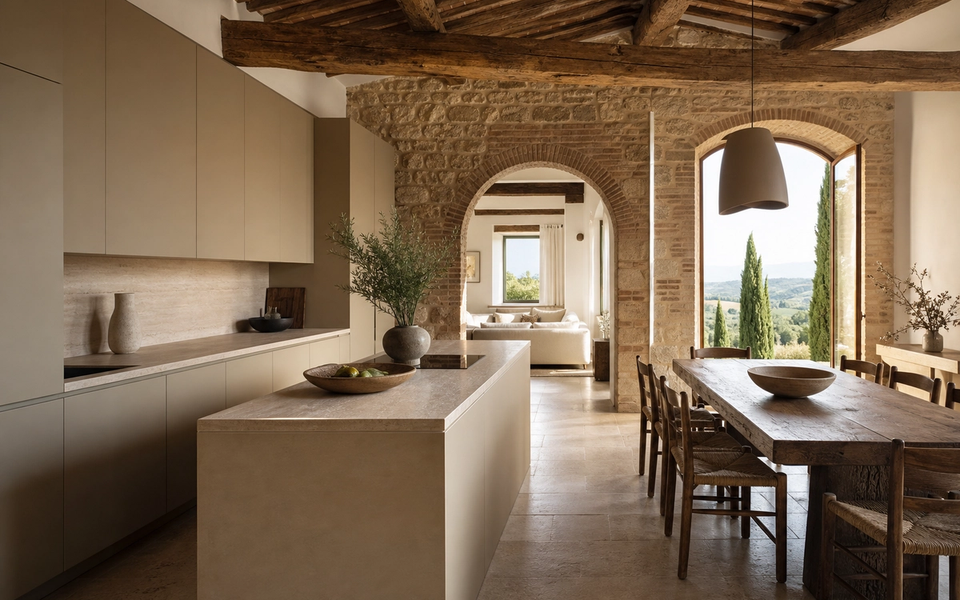
Siena Compact Residence turns a 140 sqm Tuscan apartment into a 304 stainless steel storage study, using 1.2 mm sheet, 3 primary spaces, 120 kg load planning, 200,000-cycle fittings, 4 finish families, and a 30-year Fadior durability path.
Apartment
A Stainless Steel Kitchen That Remembers
Brief-Led, Global
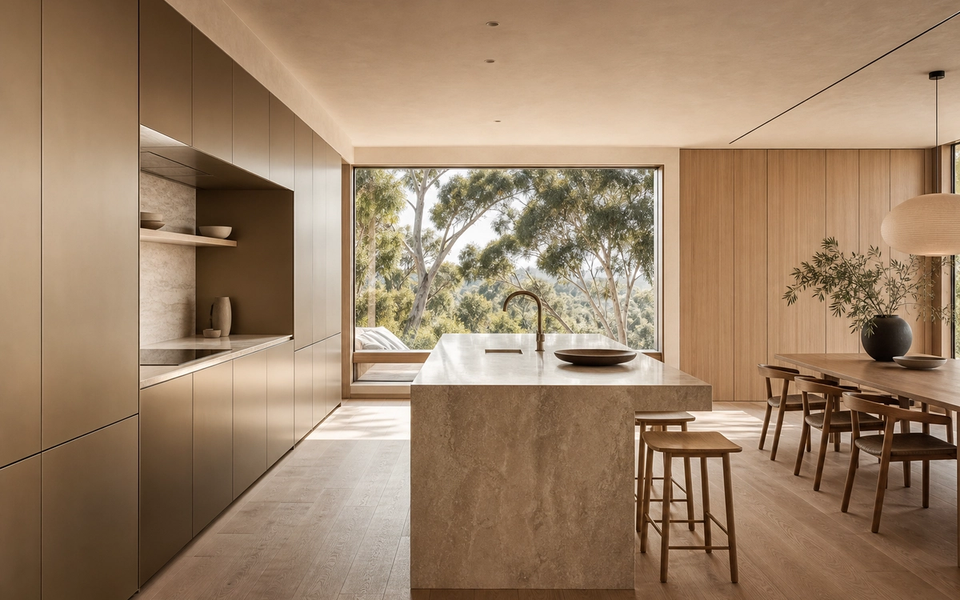
This 120 sqm global apartment kitchen pairs 304 stainless steel cabinetry with Japanese minimalist planning, 1.2 mm sheet discipline, 4 finish families, 120 kg storage loads, 200,000-cycle fittings, and a 30-year durability path informed by Australian supply precision and Naoto Fukasawa's human-centered design.
Apartment
The Designer’s Canvas: How Fantini and SieMatic Are Redefining the Luxury Kitchen and Bath as a Unified Sensory Experience
Brief-Led, Global
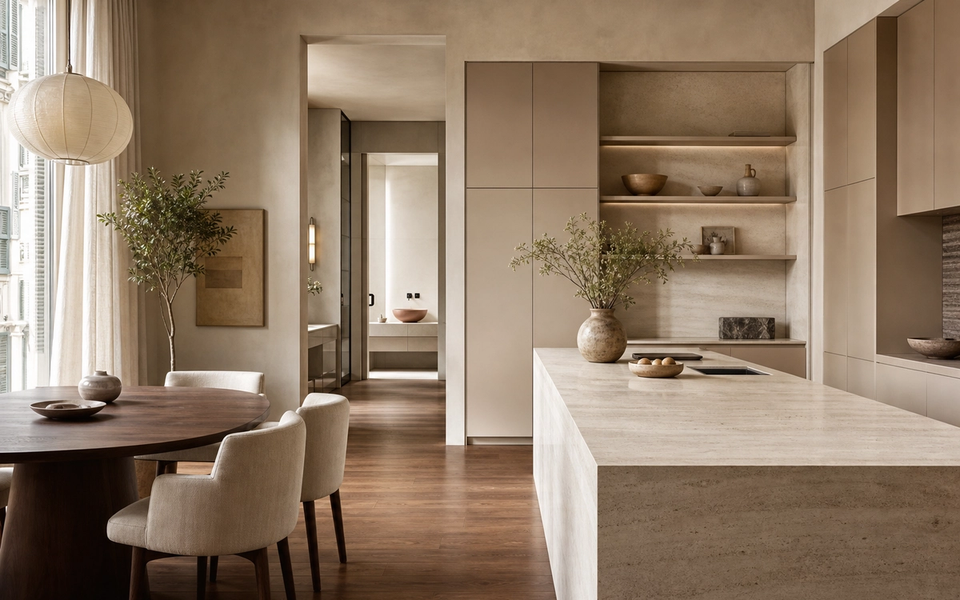
This 120 sqm global apartment study unifies kitchen, bath vanity, and storage around 304 stainless steel cabinetry, 1.2 mm sheet planning, 3 wet-and-dry zones, 120 kg storage loads, 200,000-cycle fittings, 4 finish families, and a 30-year durability path.
Villa
Sydney Garden Courtyard Villa
Sydney, Australia
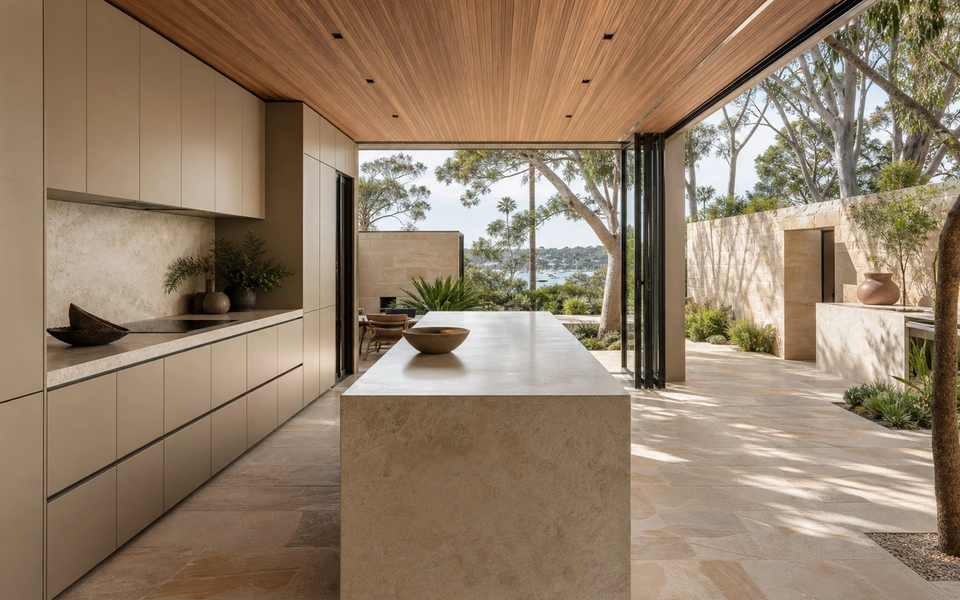
Sydney Garden Courtyard Villa turns a 400 sqm harbour home into a 304 stainless steel indoor-outdoor living system, using 1.5 mm sheet, 4 primary spaces, 240 kg load planning, 200,000-cycle fittings, 4 finish families, and a 30-year Fadior durability path.
Villa
Dubai Garden Courtyard Villa
Dubai, UAE
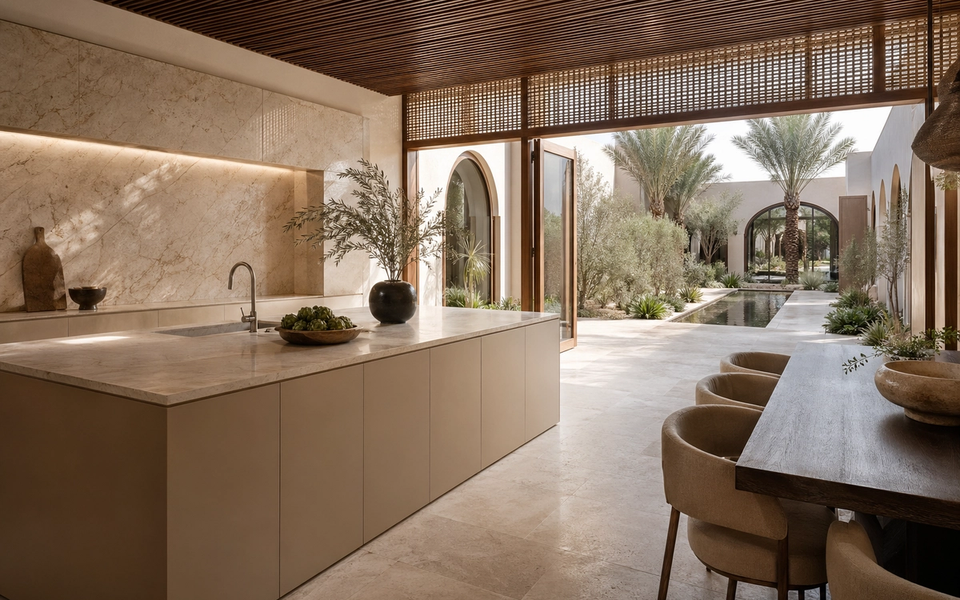
Dubai Garden Courtyard Villa turns a 500 sqm villa into a 304 stainless steel indoor-outdoor living concept, using 1.5 mm sheet, 4 primary zones, 220 kg load planning, 200,000-cycle fittings, 4 finish families, and a 30-year Fadior durability path for courtyard entertaining.
Apartment
Miami Compact Residence
Miami, USA
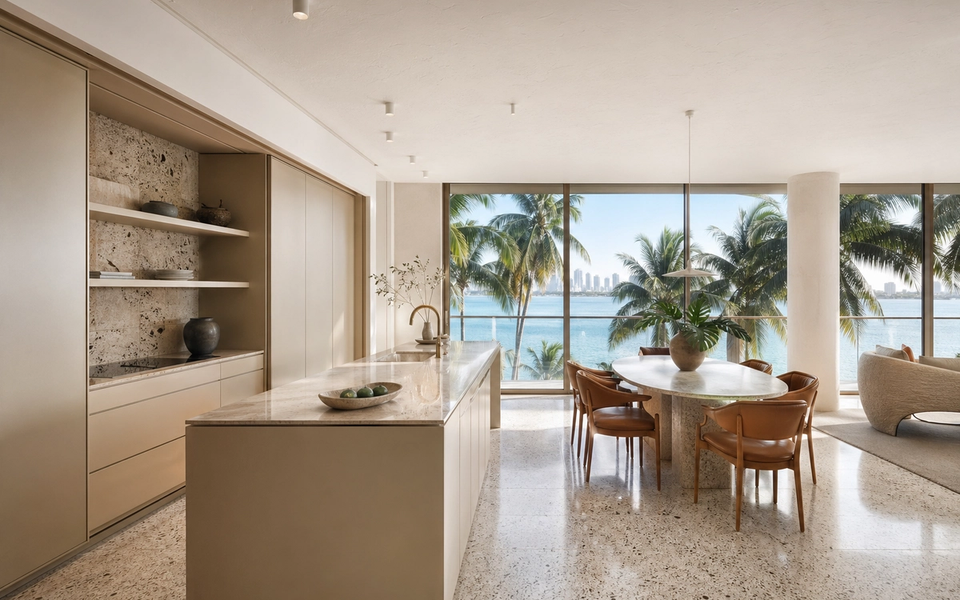
Miami Compact Residence turns a 180 sqm coastal apartment into a whole-home 304 stainless steel storage concept, using 1.2 mm sheet, 3 primary spaces, 120 kg load planning, 200,000-cycle fittings, 4 finish families, and a 30-year Fadior durability path for humid bayfront living.
Inquire about this project
Recreate this look in your space.
Send your details to the Fadior project team and we will scope a similar project for your home, hotel, or development. We reply within one business day.
Project consultation