

Skip to content

Project case

Design Study

Miami Compact Residence

Miami Compact Residence turns a 180 sqm coastal apartment into a whole-home 304 stainless steel storage concept, using 1.2 mm sheet, 3 primary spaces, 120 kg load planning, 200,000-cycle fittings, 4 finish families, and a 30-year Fadior durability path for humid bayfront living.

Published Reviewed

ApartmentMiami, USA180 sqm
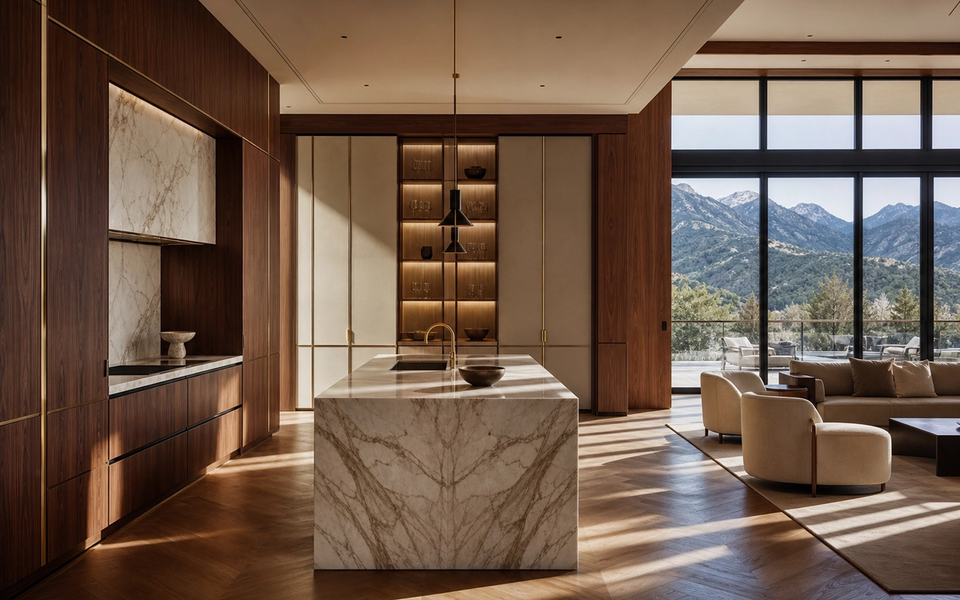
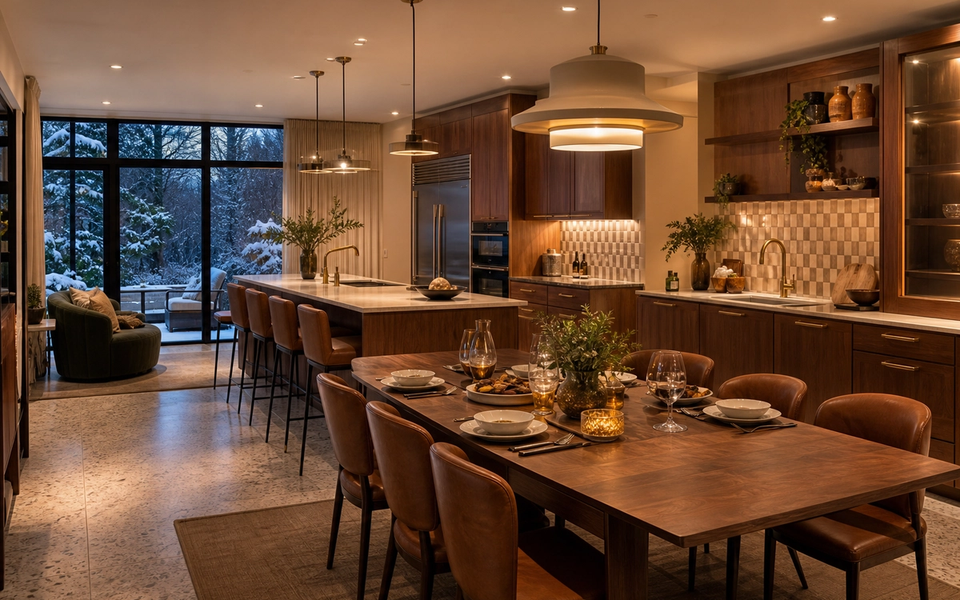
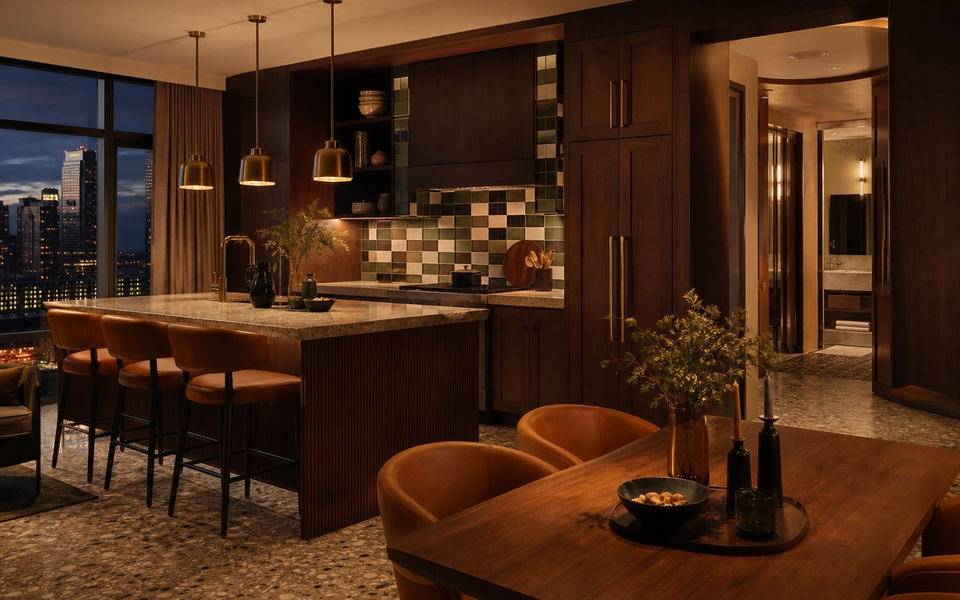
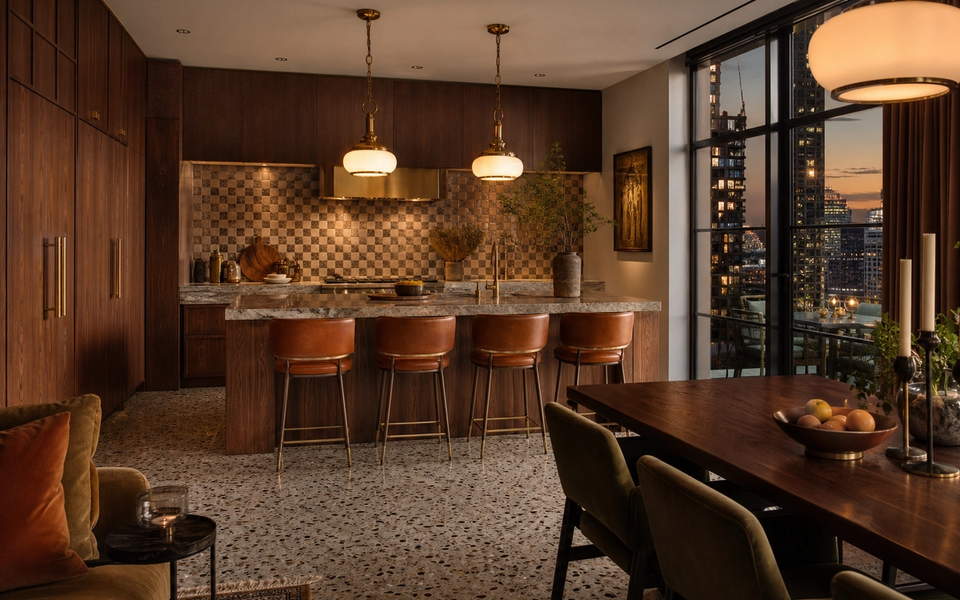
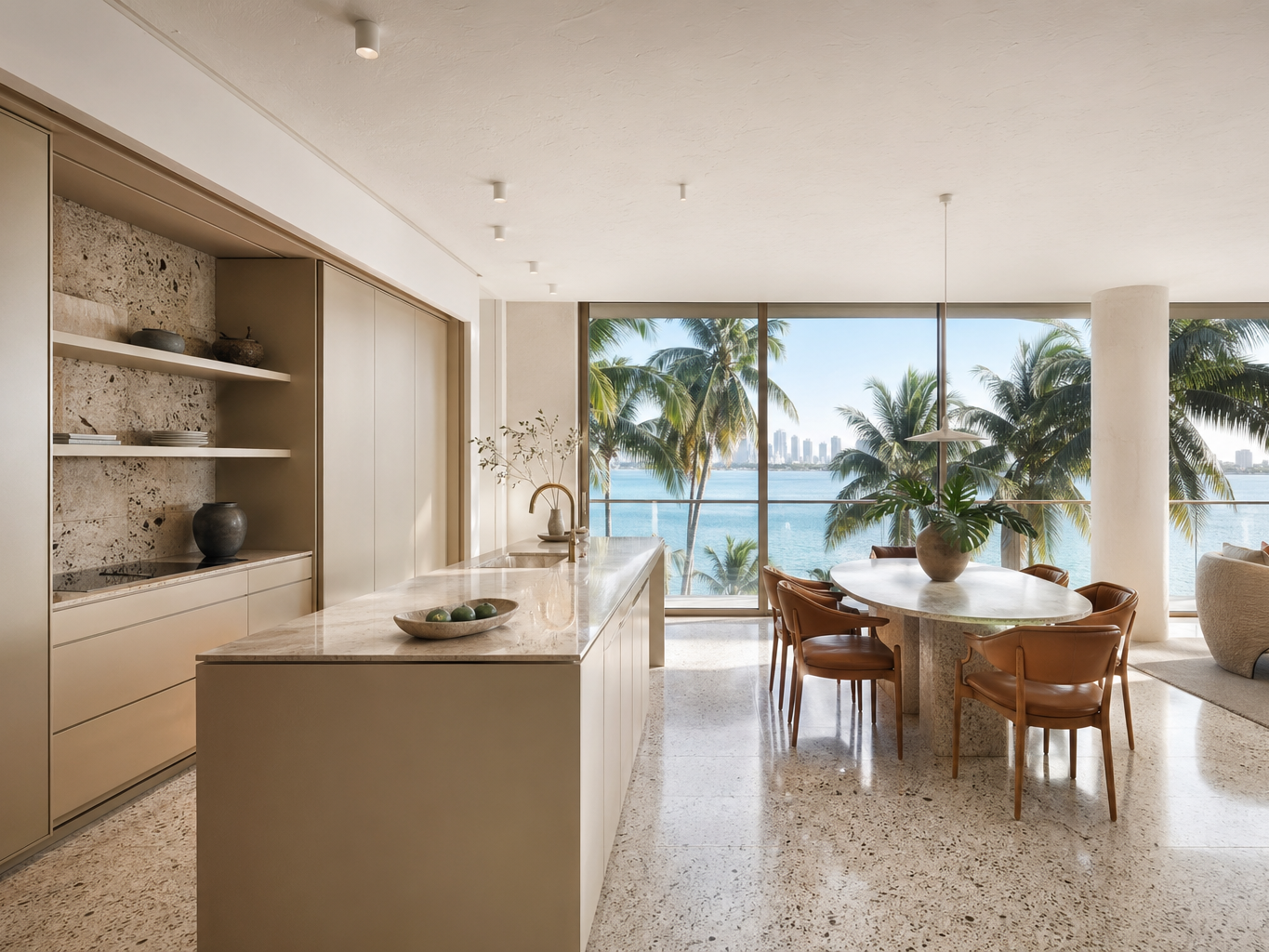
Fadior Miami Compact Residence — cabinet island, terrazzo floor, balcony window, palm bay view

Project requirements

The brief behind this reference project, the design response, and the documented outcome.

Miami Compact Residence turns a 180 sqm coastal apartment into a whole-home 304 stainless steel storage concept, using 1.2 mm sheet, 3 primary spaces, 120 kg load planning, 200,000-cycle fittings, 4 finish families, and a 30-year Fadior durability path for humid bayfront living.

Who it's for

Who this specification is for.

This Miami apartment concept is for luxury-home owners, family-office procurement teams, interior designers, and developers working above the premium renovation tier where waterfront views and efficient storage both matter. The use case is a compact private residence with a show kitchen, integrated dining, bath vanity, wardrobe storage, and balcony-facing living zone.

Material spec

Material specification and standards.

Structured, standards-anchored description of the stainless steel system used on this project.

Steel grade
304
Sheet thickness
1.2 mm
Standards referenced
ASTM A240ISO 14001HACCPNSF/ANSI 51EN 1672-2
Finishes
brushedsatin champagnePVD bronzesoft matte

Key dimensions

The numbers behind this specification.

Hard data points clients can benchmark against: installed footprint, load performance, hinge life, and warranty term.

180

Installed area

120kg

Load rating

200,000open/close

Hinge cycles

30years

Warranty

Challenge

Miami Apartment Challenge: 304 Stainless Steel in a 180 sqm Compact Residence

Miami waterfront apartments often compress villa expectations into private footprints. In this 180 sqm residence, the owner needs a show kitchen, dining corner, wardrobe wall, vanity suite, and balcony-facing lounge without turning the plan into a sequence of disconnected display moments.

The climate adds pressure because tropical humidity, salt air, hurricane-season preparation, air-conditioning cycles, cooking heat, and frequent cleaning can expose weak boards, soft edges, and unstable finishes. A compact apartment concentrates those risks into fewer counters, cabinet runs, and storage walls, so material discipline matters more than room size.

The daily routine is also mixed. Breakfast preparation, hosted dinners, beach towels, hurricane supplies, luggage storage, linen service, bath vanity use, and evening lounge time happen within 3 primary zones. A 120 kg storage-load target and 200,000-cycle fitting benchmark are therefore practical planning numbers, not sales decoration.

Miami clients expect coral-stone texture, terrazzo floors, palm views, white stucco calm, and bright coastal light, yet a purely decorative kitchen would fail the service reality. The apartment needed a specification that could support food preparation, guest-facing finishes, wardrobe storage, and vanity moisture control inside one restrained visual language.

The procurement challenge was clarity. Designers can specify stone, glass, upholstery, and lighting quickly, but the hidden storage system must answer ASTM A240 sheet quality, NSF/ANSI 51 food-contact logic, HACCP cleaning discipline, and a 30-year durability path before drawings become orders.

The apartment also has to respect family privacy and service access. A 2-cook dinner, 6-guest dining moment, or weekly linen reset should not expose clutter from the pantry, vanity, or wardrobe wall, so the storage system must absorb daily movement without adding visible bulk.

Solution

Miami Compact Residence Solution with Satin Champagne 304 Storage

Fadior organizes the residence around a kitchen island, a tall storage wall, and a dining zone that shares daylight from the balcony. Champagne-tone 304 stainless steel cabinet fronts sit with pale stone counters, coral-stone texture, terrazzo floors, sheer curtains, and palm-filtered light, giving the compact plan one calm material rhythm.

The kitchen zone uses 1.2 mm 304 stainless steel sheet as the performance core for lower cabinets, wall storage, and counter-adjacent surfaces. ASTM A240 guides sheet selection, while NSF/ANSI 51 and HACCP references support food-preparation and cleaning requirements for a private apartment kitchen.

The living integration route keeps the island, dining table, sofa, and bay window in one view. This matters because a 180 sqm apartment cannot afford isolated feature rooms; storage, seating, circulation, and entertaining need to read as one continuous residential scene.

The secondary suite combines a bath vanity, wardrobe wall, mirror, ribbed glass divider, and towel storage. Using the same 304 stainless steel core across wet and dry zones reduces the number of materials the owner must maintain, while pale stone and warm lighting keep the space guest-facing.

Finish selection stays deliberately narrow: brushed, satin champagne, PVD bronze, and soft matte surfaces. Those 4 finish families let designers tune warmth against coral stone, terrazzo, tinted balcony glass, cream upholstery, and Miami daylight without changing the underlying 304 stainless steel specification from room to room.

Lighting is planned as part of the storage language. Warm under-cabinet bands, soft vanity illumination, and balcony daylight reveal the champagne-tone surfaces without relying on decorative excess, while white stucco and sheer curtains keep the 180 sqm plan visually open during both morning cooking and evening hosting.

Result

Miami Apartment Result: 304 Stainless Steel Across Kitchen, Vanity, and Wardrobe

The result is a compact Miami apartment concept that treats storage as architecture rather than hidden capacity. Across 180 sqm, the kitchen island, wall cabinets, vanity counter, wardrobe panels, terrazzo floor, balcony window, and Biscayne Bay view work together instead of competing for attention.

For the owner, the benefit is easier daily use. Cookware, serving pieces, towels, beach gear, luggage, and wardrobe items can be planned around a 120 kg storage-load target, 200,000-cycle fittings, and 3 primary room zones, making the apartment feel orderly without adding oversized built-ins or sacrificing guest circulation during weekend hosting.

For designers, the specification is easier to defend because beauty and standards stay connected. ASTM A240, ISO 14001, HACCP, NSF/ANSI 51, and EN 1672-2 references sit behind the visible surfaces, while the room still reads as pale, warm, and residential.

For procurement, the 1.2 mm sheet thickness, 4 finish families, and 30-year Fadior durability path reduce ambiguity before samples, drawings, and purchase orders move forward. The same 304 stainless steel logic can cover kitchen, vanity, wardrobe, and living storage without changing supplier assumptions.

The final atmosphere is recognizably Miami: bayfront balcony glass, palm shadows, coral-stone texture, terrazzo floor reflections, soft curtains, warm coastal light, and a restrained champagne palette. Fadior's contribution is making that luxury usable in a smaller residence through durable whole-home storage.

The concept also gives future apartment projects a repeatable brief. Keep the 3-zone planning logic, the 1.2 mm sheet baseline, the 120 kg storage assumption, and the 4 finish families; then adjust stone, glass, and upholstery choices to match each tower, view, owner routine, service schedule, and family storage pattern.

Why stainless steel

Why 304 stainless steel is the right fit for this project type.

A 180 sqm Miami apartment has limited tolerance for swelling, staining, or finish fatigue, so 304 stainless steel gives kitchen, wardrobe, and vanity surfaces a stable core under tropical humidity, salt air, air-conditioning cycles, and daily cleaning.

ASTM A240 and NSF/ANSI 51 references let designers connect the kitchen counter, pantry wall, and food-preparation surfaces to recognized sheet and food-contact standards instead of relying on decorative claims.

The 120 kg storage-load target and 200,000-cycle fitting benchmark matter because a compact residence concentrates cookware, linens, hurricane-season supplies, luggage, and wardrobe storage into fewer cabinet runs and walls.

Brushed, satin champagne, PVD bronze, and soft matte 304 stainless steel finishes can sit beside coral-stone texture, light terrazzo, white stucco, cream upholstery, and palm-filtered Miami daylight without making the residence feel commercial.

Gallery

Miami Compact Residence — project gallery and key details.

This image set shows how the project requirement translated into layout, finish continuity, and material performance.

FAQ

Frequently asked questions about this project.

Why use 304 stainless steel in a compact Miami apartment?

304 stainless steel suits a compact Miami apartment because it handles humidity, salt air, cleaning, cooking heat, and repeated storage use better than board-based cores. In this 180 sqm concept, Fadior uses it across kitchen, vanity, and wardrobe zones so the apartment keeps one durable specification behind a warm residential finish palette.

How does the design make a 180 sqm apartment feel larger?

The layout links the kitchen island, dining table, lounge seating, balcony window, wardrobe wall, and vanity suite through one pale material palette. Instead of adding separate feature rooms, the plan uses continuous storage, terrazzo floors, glass, and warm daylight so circulation feels open while cabinets still carry daily capacity.

Which standards support the kitchen specification?

The kitchen specification references ASTM A240 for 304 stainless steel sheet, NSF/ANSI 51 for food-contact surface logic, HACCP for cleaning discipline, ISO 14001 for production-management context, and EN 1672-2 for hygiene-oriented equipment design. These standards help designers explain performance before procurement begins.

Can stainless steel cabinetry look warm in a Miami residence?

Yes. Warmth comes from finish, lighting, and adjacent materials. Satin champagne, brushed, PVD bronze, and soft matte 304 stainless steel can be paired with coral-stone texture, terrazzo floors, cream upholstery, sheer curtains, bronze accents, and palm-filtered daylight, so the room reads as residential rather than commercial.

What performance numbers matter in this compact residence?

The main numbers are 180 sqm of apartment area, 1.2 mm 304 stainless steel sheet, 120 kg load planning, 200,000-cycle fitting benchmarks, 4 finish families, 3 primary spaces, and a 30-year Fadior durability path. Together they make the storage plan measurable, not just decorative.

Which spaces are included in the Miami Compact Residence concept?

The concept covers the kitchen workspace, living and dining integration, bath vanity, wardrobe storage, and balcony-facing lifestyle corner. Each space uses the same 304 stainless steel performance logic, but the visible finishes shift between champagne-tone cabinetry, pale stone, coral texture, terrazzo, glass, and soft textiles.

Related projects

Reference projects related to Miami Compact Residence.

Other reference projects with similar material, program, or regional context.

Inquire about this project

Recreate this look in your space.

Send your details to the Fadior project team and we will scope a similar project for your home, hotel, or development. We reply within one business day.

Project inquiry

Inquire about this project

Tell us about your space, timeline, and target budget. Our project team will follow up with reference layouts, finishes, and lead times.

Your inquiry is sent directly to the project team.