
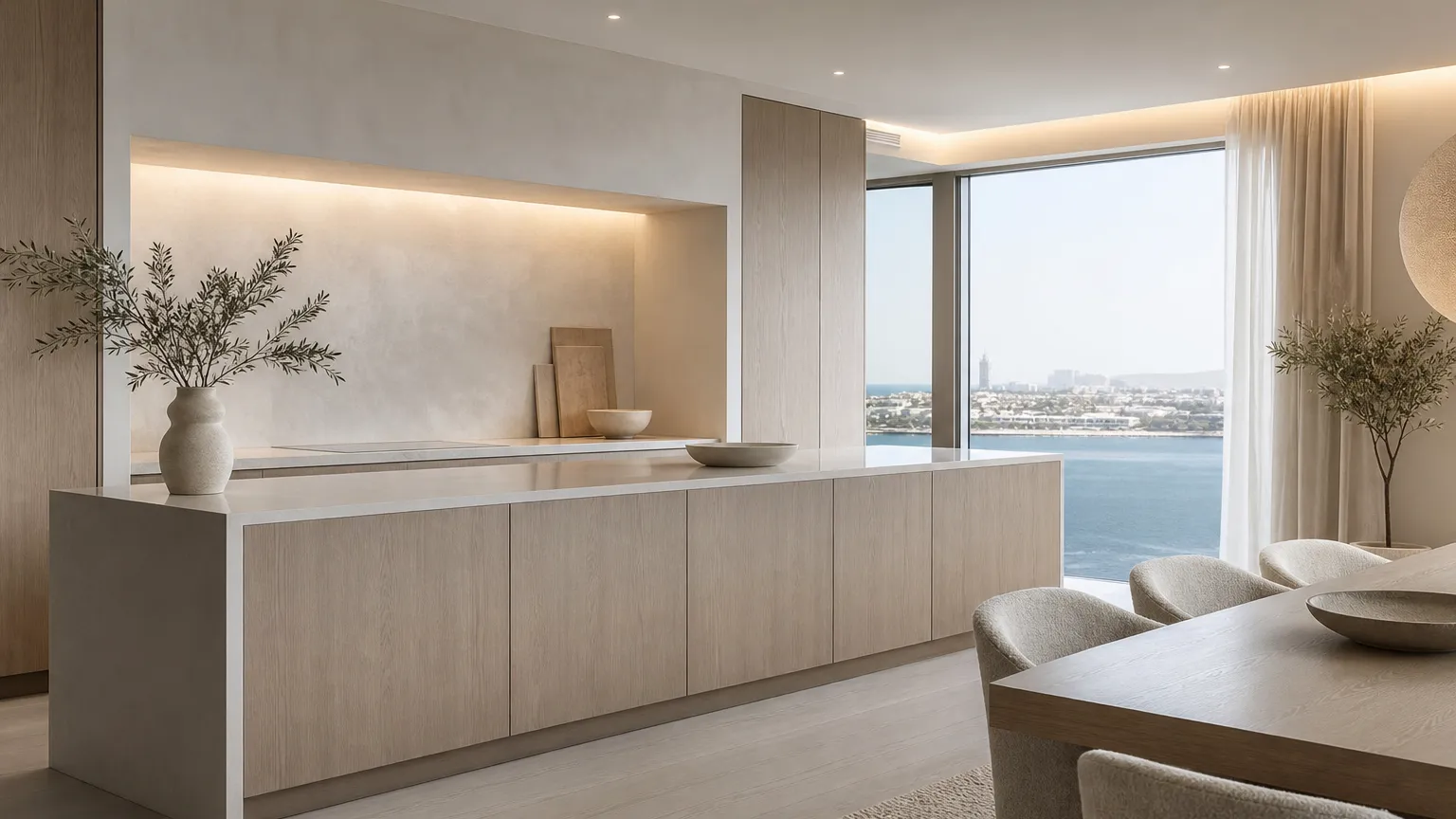
Gulf Kitchen Atmosphere Plan
A GCC luxury kitchen needs more than a beautiful color sample. It needs a room-by-room plan that tests finish warmth under daylight, evening hospitality light, humidity, cleaning, and 304 stainless steel performance requirements.
Direct answer
The Direct Answer
A Gulf kitchen atmosphere plan should approve finish color under the same light and use conditions the room will live with: hard daylight, coastal humidity, evening hospitality light, and daily cleaning. The palette can borrow from colored architectural surface trends, but Fadior should keep 304 stainless steel as the cabinet performance baseline while color, lighting, and zone planning carry the residential mood.
- Gulf kitchen atmosphere plan
- A Gulf kitchen atmosphere plan is a finish, lighting, and room-use approval map for a GCC luxury kitchen.
Why should atmosphere be planned before color?
Color alone is a weak way to specify a luxury kitchen in Dubai, Riyadh, Doha, or a coastal villa market. A champagne tone that feels elegant under one showroom lamp can look flat in hard daylight, too reflective at dinner, or too delicate in a family kitchen that is cleaned several times a day. Atmosphere planning starts earlier: it asks how the room should feel at breakfast, during staff preparation, during evening hosting, and beside the living or majlis edge.
How does GCC daylight change finish approval?
Strong daylight makes finish approval less forgiving. Pale warm fronts can become washed out, bronze and blue tones can shift more sharply than expected, and glossy materials can create glare near large windows. Humidity, air-conditioning cycles, coastal air, and sand-driven wiping also change the maintenance question. A surface that wins a mood board may still need a written cleaning routine and replacement expectation.
For Fadior, the safest baseline is 304 stainless steel cabinet construction. The visible language can become warmer through powder coat, PVD accents, pearl white, wood-grain transfer, linen texture, or a controlled colored-surface idea, but the performance claim should remain precise. That keeps the palette ambitious without turning a finish trend into an unsupported durability promise.
| Approval zone | Light condition | Buyer risk | Specification question |
|---|---|---|---|
| Window-facing work wall | Hard daytime brightness | Color looks cooler or flatter than sample | Has the finish been checked beside the final glazing and floor? |
| Island and dining edge | Warm evening hospitality light | Tone becomes too yellow or too reflective | Does the room still feel calm after sunset? |
| Service and wet zones | Frequent cleaning and humidity | Fingerprint and scratch visibility become daily issues | Which surfaces need the most practical maintenance story? |
| Feature plane or display wall | Mixed daylight and accent light | Statement color competes with stone, furniture, or art | Is the feature limited to a surface that earns attention? |
| Outdoor-facing threshold | Coastal air and temperature change | A decorative choice is asked to do technical work | Where does the 304 cabinet baseline need to stay dominant? |
Which colored-surface ideas are useful, and which are risky?
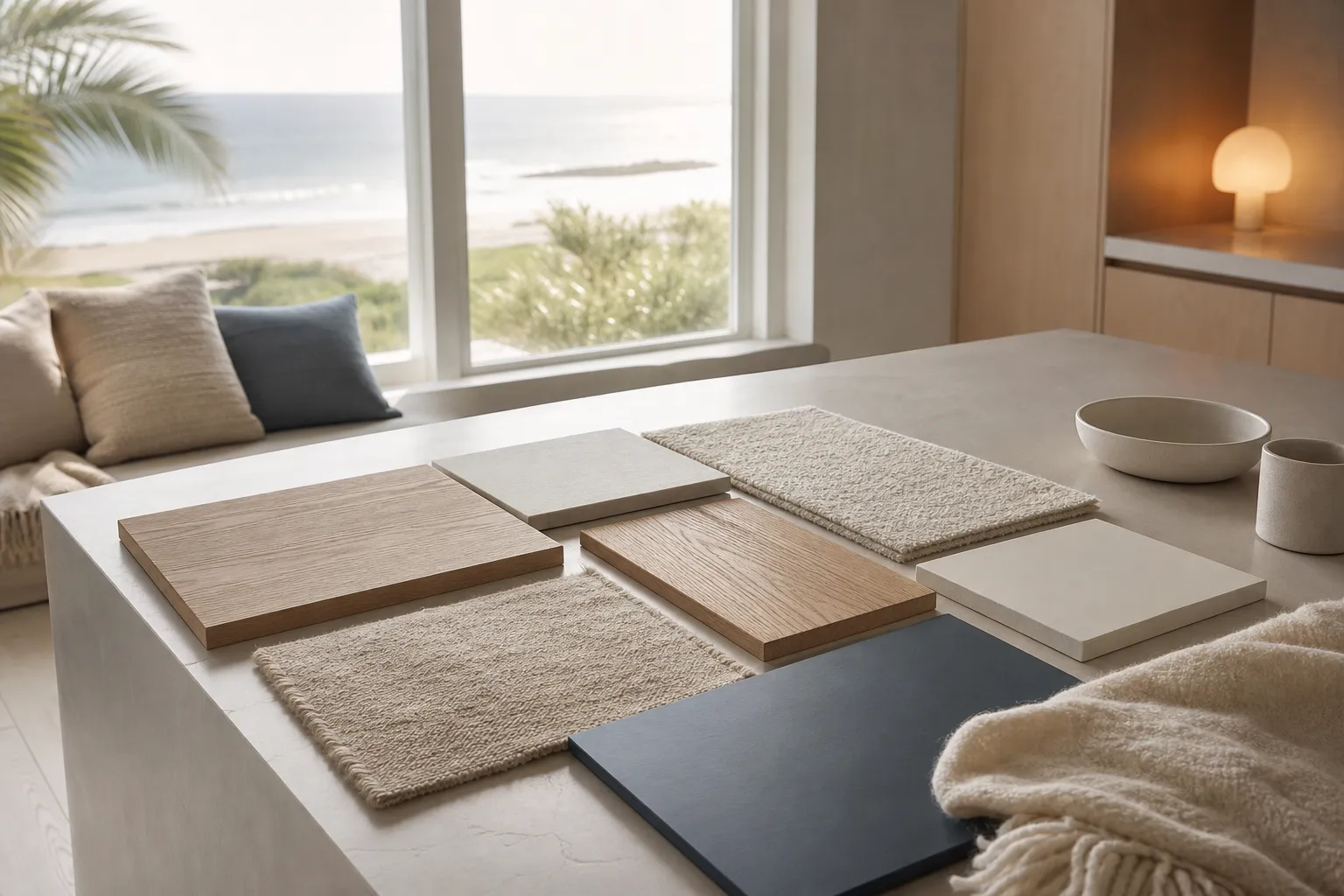
Colored architectural surface references are useful when they teach discipline. Uginox and Outokumpu examples show that color can be a controlled surface effect, not just an applied decorative layer. That belongs in the luxury kitchen conversation because high-end homeowners increasingly want a warmer and more personal palette. The risk is over-translation. A public architectural case study does not automatically prove that every residential cabinet plane should use the same finish route.
A better approach is to use colored-surface thinking as an approval method. Ask for the sample. View it under daytime and evening light. Check how it sits beside stone, glass, wood tone, and textiles. Confirm supply, fabrication, cleaning, and replacement expectations. Then decide whether the color is a broad cabinet direction, a limited accent, or a reference point that can be interpreted through Fadior’s established finish system.
What role should lighting play in the finish schedule?
Lighting is not decoration at the end of the project. It is the test environment for the finish schedule. The Bartok Rooftop residential project, which publicly documents a 125 square meter Budapest rooftop residence and Artemide lighting products, is a useful reminder that atmosphere comes from the relationship between architecture, light, and surface. A GCC kitchen needs that same kind of integrated review, even when the style language is different.
For a buyer, this means samples should be reviewed under at least two conditions: strong daylight and warm evening hospitality light. If a finish only looks good in one condition, it should not dominate the room. If it stays calm in both, it may deserve more visual responsibility. This is where a lighting plan becomes a buying tool, not just an aesthetic preference.
Where does Fadior proof belong in this decision?
Fadior’s proof should sit in the middle of the decision, not after the mood has already been chosen. The company intelligence file records 304 stainless steel as the core cabinet material, 80+ powder-coat color options, PVD decorative tones, 3D wood-grain transfer, linen-embossed texture, cloud-texture anti-pollution treatment, and a glue-free construction logic. It also records 213 cumulative patents, a 600M RMB smart-factory investment, and exports to 50+ countries and regions.
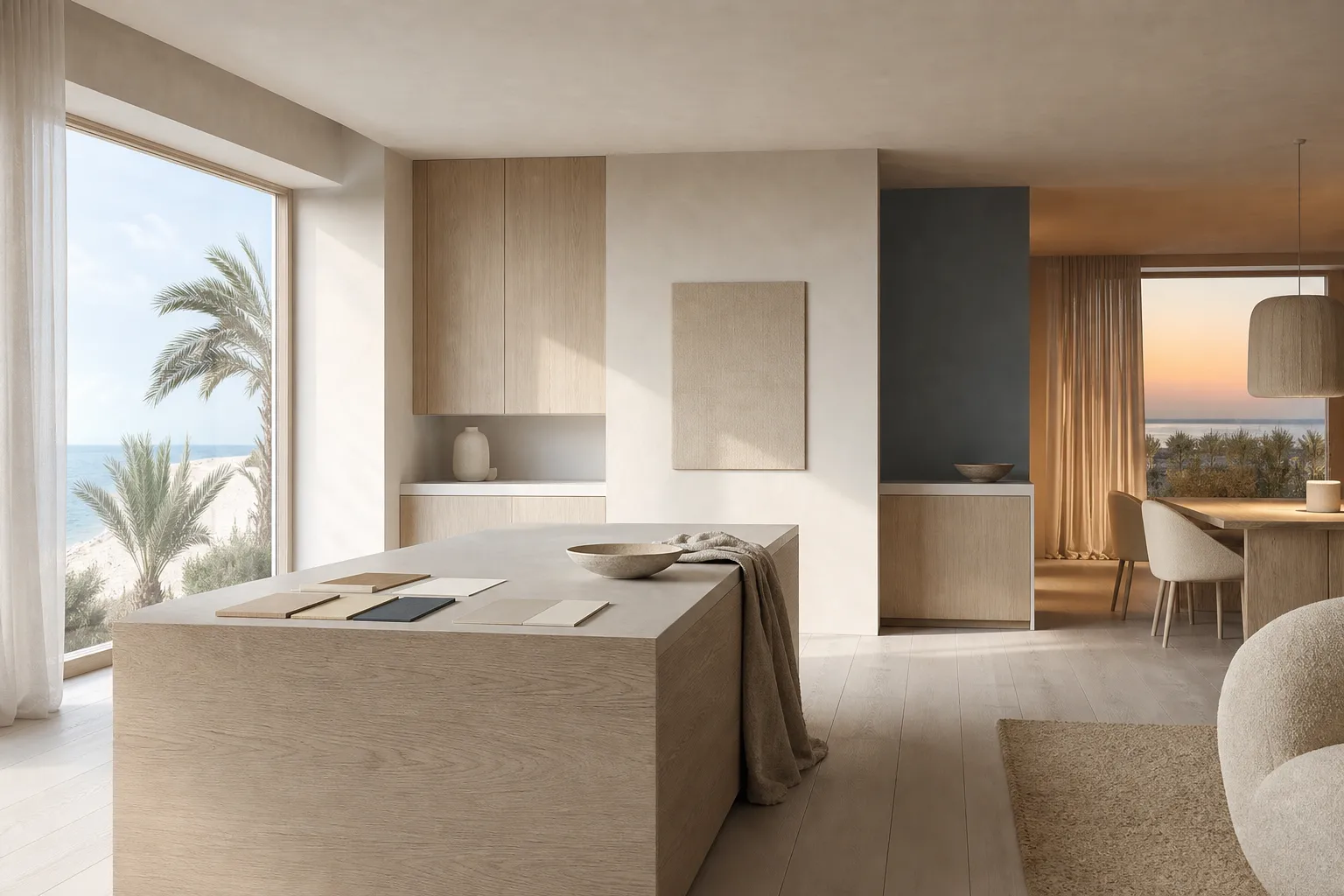
Those facts help a design team separate structure from atmosphere. The cabinet system can carry waterproof, formaldehyde-free, long-life performance, while the visible palette is tuned through color, light, and room role. That separation is especially useful in Gulf villas and high-rise apartments, where the kitchen may need to serve daily preparation, family living, staff work, and formal hosting without becoming visually loud.
Seven checks before approving the atmosphere plan
- Confirm the 3 main light scenes: hard daytime brightness, shaded afternoon light, and warm evening hospitality light.
- Separate the 304 stainless steel performance baseline from the decorative color and surface language.
- Map each finish to a room role: wet work wall, island face, dining edge, display plane, or service zone.
- Approve every key sample beside the planned stone, floor, textile, and window condition.
- Record fingerprint tolerance, cleaning method, scratch visibility, and replacement expectation before production.
- Limit strong color to surfaces that deserve attention rather than spreading one statement across every plane.
- Tie the final schedule to consultation, manufacturing proof, quality standards, and project references.
How should the final schedule be written?
The final schedule should read like a decision record, not a decoration list. Each surface needs a role, a light condition, a cleaning expectation, and a reason for the selected finish. A broad pale cabinet plane may be approved because it keeps the room calm under daytime brightness. A warm accent may be approved only on the dining edge because it looks best under evening light. A service wall may stay quieter because it takes more daily wiping and should be easier to maintain.
This written structure also protects the buyer after installation. If a replacement panel, added cabinet, or future room expansion is needed, the owner can see why the original finish was chosen and which sample controlled the decision. The schedule should connect the room plan to Fadior material pages, manufacturing proof, quality assurance, and project references so the design team is not relying on memory or one attractive image. In a Gulf residence, that kind of record is practical luxury: it keeps atmosphere beautiful, but it also keeps the purchase explainable.
The schedule should also identify what should not change after approval. If the island face is approved for a warmer tone, the work wall may still need quieter daily resilience. If the dining edge earns an accent, the service zone may stay practical. That discipline prevents late-stage upgrades from becoming visual noise, and it helps the homeowner understand why a calm, durable plan can feel more premium than a room filled with every available finish.
How should a buyer brief Fadior?
The best consultation brief is practical, not poetic. It should name the residence type, the climate exposure, the daylight direction, the evening hosting scene, and the desired warmth level. A Dubai high-rise display kitchen, a coastal family villa, and a staff-supported service kitchen should not receive the same atmosphere plan. They may share a 304 stainless steel cabinet baseline, but their visible finishes should carry different amounts of warmth, restraint, and accent value.
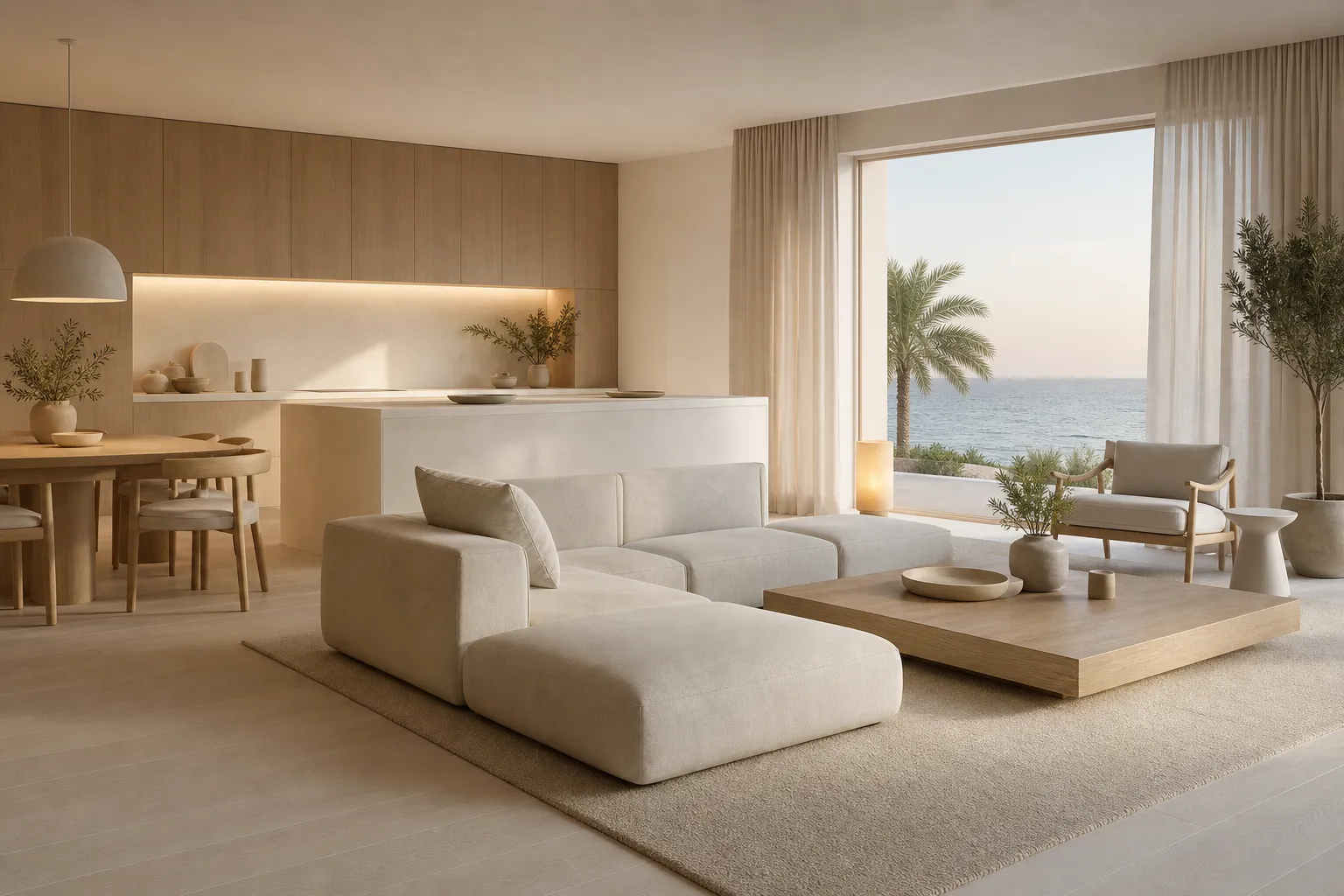
A strong inquiry might say: “We need a calm Gulf kitchen atmosphere plan with a 304 stainless steel cabinet baseline, soft pale surfaces, selected warm accents, and sample approval under daytime and evening light.” That sentence gives Fadior the business problem, the mood, and the proof boundary. It also avoids the common mistake of asking a single color to solve climate, maintenance, and room identity at once. The clearer the brief, the easier it is to protect both atmosphere and performance during quotation, drawing review, and final approval.
Which questions should buyers ask before approval?
Is colored stainless steel the main answer for a GCC kitchen? Usually no. It is better used as a reference for controlled color behavior or as a selected feature choice unless supply, sample consistency, fabrication, cleaning, and replacement logic are all confirmed.
Why keep 304 stainless steel as the cabinet baseline? Because the performance claim needs a stable material base. The color plan can shift the mood, but the cabinet system should still support waterproof, formaldehyde-free, durable residential construction.
Should the same finish cover the whole kitchen? Usually no. Wet work zones, island faces, dining edges, and display walls face different use patterns, so a layered schedule is safer than one all-over statement.
What should be checked first, color or light? Light should be checked with color. A sample should be reviewed under strong daylight and warm evening light before it is allowed to dominate the room.
What should a buyer send before consultation? Send plans, window orientation, room role, desired warmth level, inspiration images, maintenance expectations, and the surfaces where color should be calm, accenting, or restrained.
How does this help a sales consultation? It gives the design team a shared language for approval. Instead of debating whether one finish is beautiful, the conversation becomes more concrete: which zone needs daily resilience, which zone carries atmosphere, which light scene controls the sample, and which Fadior proof page supports the final choice.
Frequently Asked Questions
Questions this guide answers
- What should be checked first: color or light?
- They should be checked together. A finish sample should be reviewed under strong daytime brightness and warm evening hospitality light before it is allowed to dominate the room.
Related reading
Continue exploring the journal.
More guides, whitepapers, and insights from the Fadior journal.
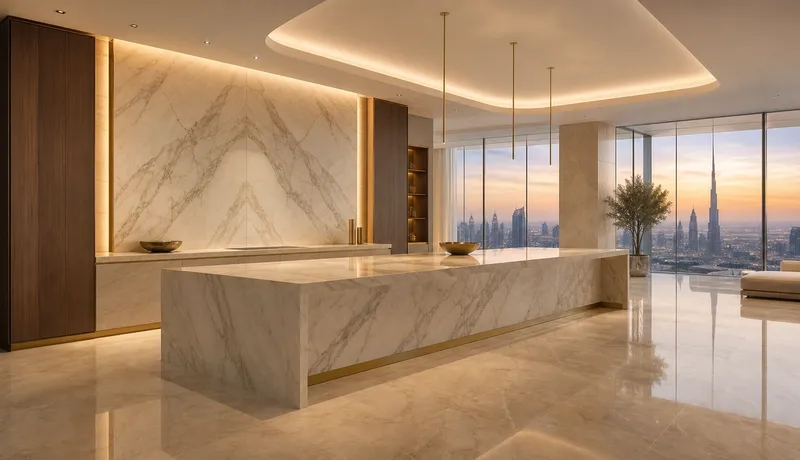
Buyer's Guide
Dubai Kitchen Finish Specification
A practical guide for Dubai villa and apartment buyers choosing warm luxury kitchen finishes without losing the 304 stainless steel performance baseline.
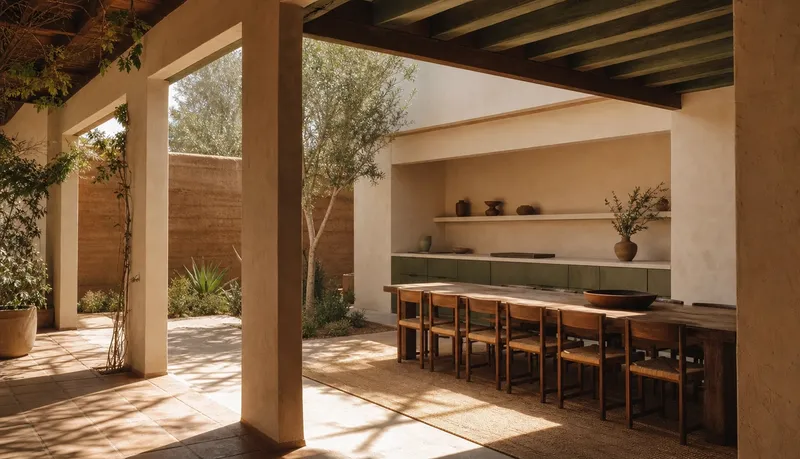
Buyer's Guide
Intrinsic Color Kitchen Finishes
Colored stainless steel is useful only when the color is treated as a material decision. This guide compares oxide color, PVD, powder coat, and a 304 stainless baseline for luxury kitchen planning.
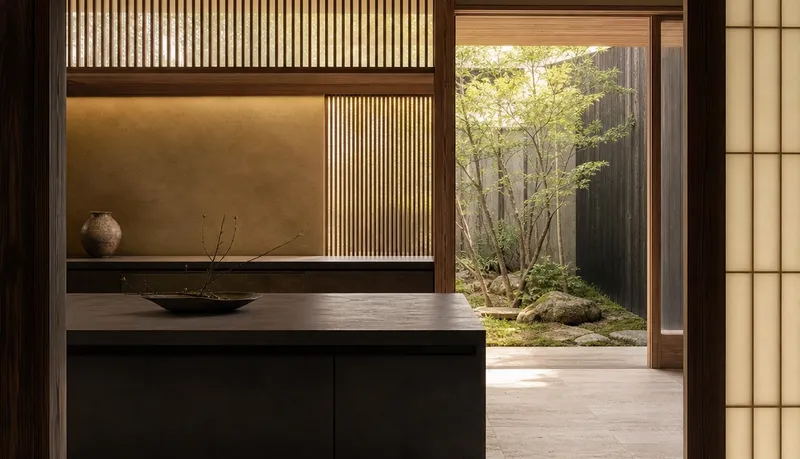
Technical Whitepaper
Oxide Color Kitchen Finish Approval
A specification guide to approving oxide-colored stainless surfaces through light tests, tolerance notes, cleaning rules, and 304 cabinet integration.
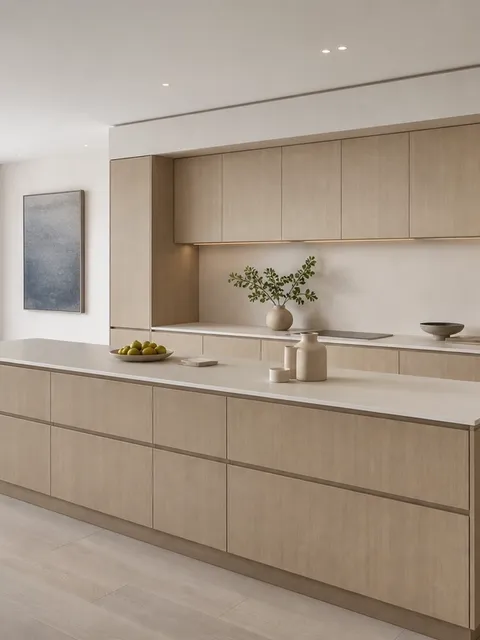
References
Authoritative sources cited in this article
- Uginox spectral color surface guide
Reference for colored architectural surface behavior and sample-led approval.
Uginox Spectral Colore
- Outokumpu colored surface case study
Shows light-responsive colored architectural surfaces on a major built project.
Outokumpu Amazon Doppler case study
- Bartok Rooftop residential lighting project
Supports the link between residential architecture, lighting products, and atmosphere planning.
ArchDaily Bartok Rooftop
- Dubai climate overview
Public climate context for heat, humidity, and coastal exposure in Dubai.
Dubai Media Office climate overview
- World Stainless special finishes guide
Background on architectural surface finish categories and approval language.
Editorial transparency
Jonas Weber is a composite editorial persona maintained by Fadior Home's editorial team. Articles attributed to this byline are produced through an AI-assisted editorial workflow with human review, and represent the consolidated voice of multiple researchers and contributors.
Actually delivered
Real homes photographed after handover, not renders.
Ready to specify?