
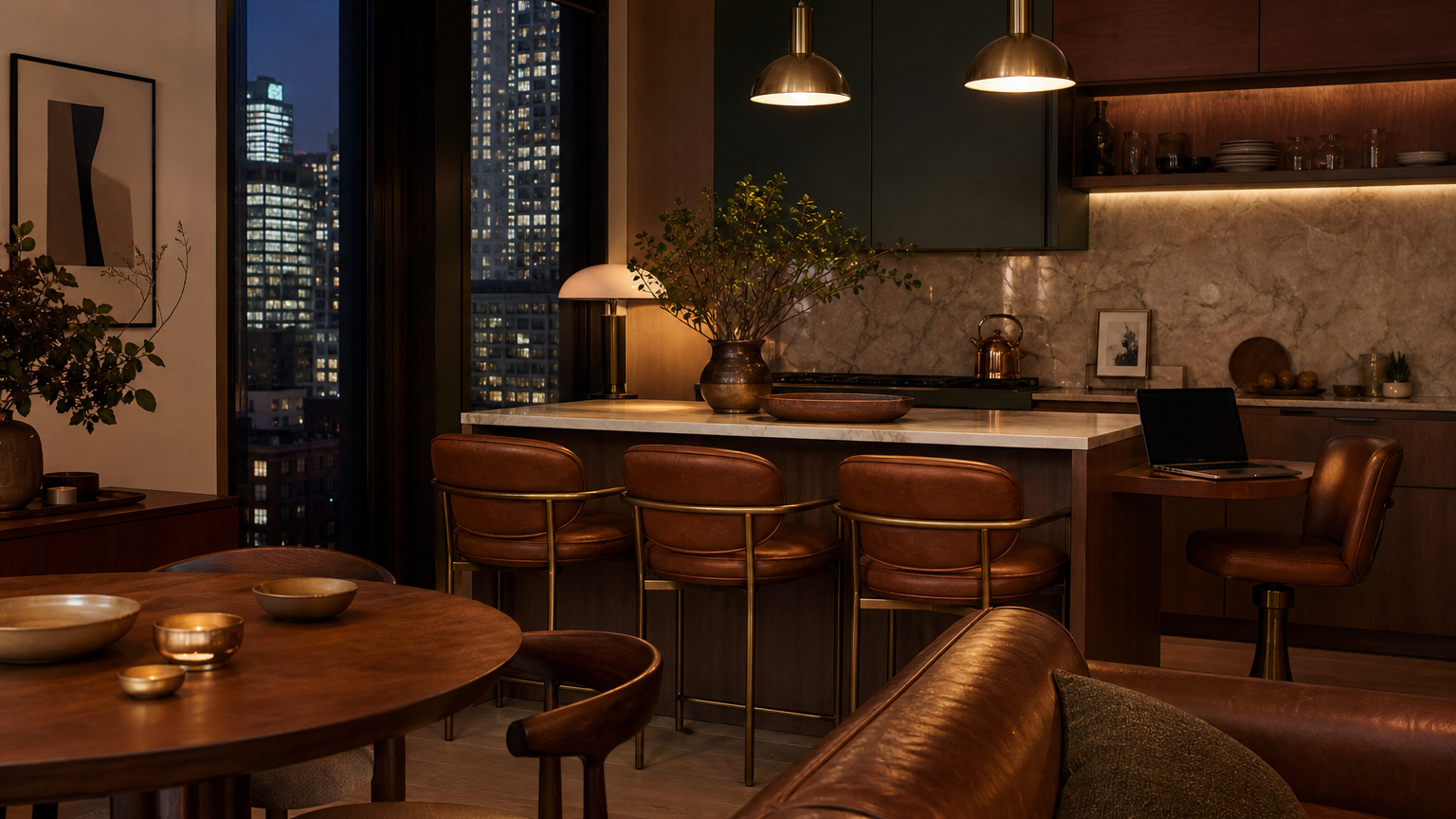
Second Office Kitchen Layout
Remote work changes the kitchen brief. Plan a second-office kitchen layout around quiet work, charging, lighting, storage reset, cooking flow, and durable cabinet construction.
Direct answer
The Direct Answer
A second office kitchen layout is a kitchen plan that gives laptop work, calls, charging, paperwork, cooking, serving, and cleanup their own places. Start by marking the quiet work corner, the active prep path, the charging drawer, and the storage that must disappear at dinner, then approve cabinetry around those daily transitions.
- Second office kitchen layout
- A second office kitchen layout is a kitchen plan that supports focused work without surrendering cooking, storage, or family circulation.
What makes a kitchen work as a second office?
The room needs three independent paths: a seated work position, an active cooking route, and a reset route that clears work objects before meals. In practice, that means the laptop zone should sit outside the wet prep triangle, the charging point should not cross a hot appliance landing area, and the storage plan should make notebooks, tablets, and chargers disappear in less than 2 minutes. This is why the cabinet order should not start from door color alone. It should start from a day map: 8:00 email, 12:30 lunch, 16:00 homework, 19:00 dinner, and 21:00 cleanup.
How should the work zone be separated from cooking?
Use distance, lighting, and storage instead of a visible office wall. A good work perch is 900 mm to 1200 mm away from the main sink splash zone, keeps a 600 mm clear landing surface beside the laptop, and avoids the 900 mm appliance pull-out path. The work seat can live at the island end, a breakfast bar, or a shallow side counter. The important rule is that the work zone must have one dedicated drawer or cabinet bay, not a loose pile on the counter.
| Decision | Weak layout | Second-office layout |
|---|---|---|
| Laptop position | Laptop shares the main prep counter and moves 3 to 5 times per day. | Laptop sits at a side bar, island end, or shallow desk zone with a 600 mm landing surface. |
| Charging | Cable crosses the walking path or appliance landing area. | Outlet, USB, or charging tray sits inside the work-zone bay with cable exit hidden. |
| Lighting | Only ceiling light covers cooking, reading, and video calls. | Pendant, under-cabinet, and small task light create 2 lighting levels for work and food prep. |
| Storage reset | Paperwork remains visible during dinner. | A drawer, tambour, or pocket-door bay clears work objects in under 2 minutes. |
Why does cabinet material matter for mixed use?
A second-office kitchen gets touched more like a workbench than a display room. Coffee rings, warm plates, keyboard dust, school supplies, and cleaning cloths all arrive at the same surface. Fadior’s 304 stainless steel cabinet bodies give this routine a washable base, while wood-grain, pearl white, powder-coated, or PVD finishes keep the room residential. The material choice is not just about durability; it decides whether daily reset feels easy enough to repeat.
When should power and lighting be approved?
Approve power and lighting before cabinet shop drawings are frozen. The 3 checks are simple: where the laptop charges, where the task light lands, and where small appliances park while the work zone is active. DOE kitchen appliance guidance is a reminder that appliance use and location are part of household planning, not an afterthought. A second office kitchen should keep high-draw cooking appliances, kettle use, and laptop charging from competing for the same surface or awkward cable path.
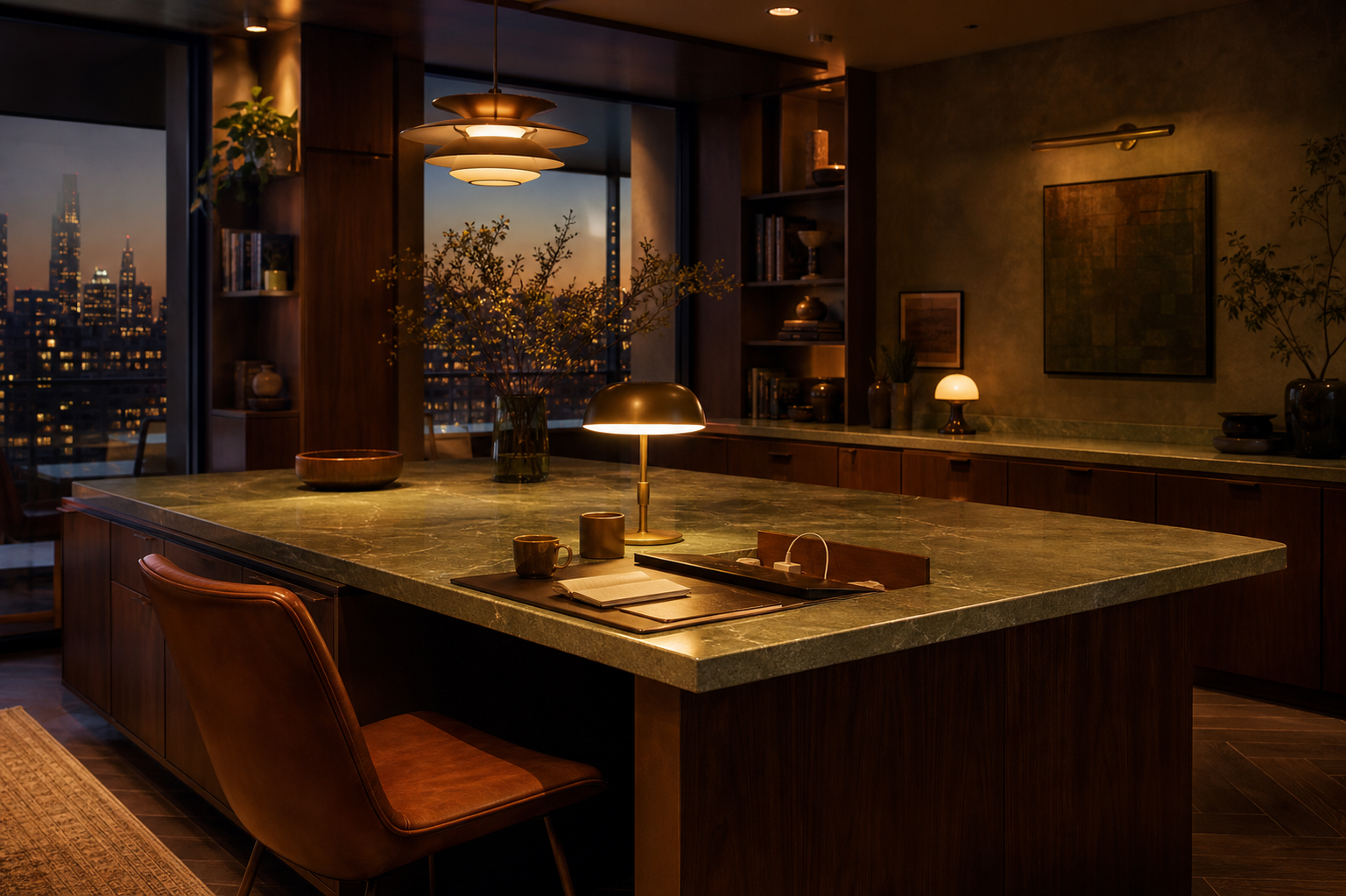
- Mark a quiet work seat outside the main wet-prep zone.
- Reserve at least 600 mm of landing surface beside the work seat.
- Place charging inside a drawer, cabinet bay, or side niche.
- Keep the appliance pull-out path clear by at least 900 mm.
- Use one cabinet bay for paperwork, tablet, headset, and charger reset.
- Choose washable cabinet construction for daily food and work contact.
How can the room avoid looking like an office?
Hide the office behavior inside kitchen-native elements. A charging drawer reads as storage. A side counter reads as a coffee station after work. A shallow cabinet behind pocket doors reads as a breakfast pantry, even if it stores a headset and planner during the day. The visual target is still a warm home kitchen. The office function should appear only when the homeowner opens a drawer, turns on a task light, or pulls out a chair.
Which storage details protect daily reset?
Plan for 4 object groups: laptop and tablet, charging cables, paper and pens, and household routines such as medicine, school forms, or recipe notes. Each group needs a home within one reach of the work seat. If the work zone needs a long walk to clear, it will stay messy. A whole-home cabinet system helps because kitchen, entry, laundry, and living-room storage can share the same finish logic while separating noisy household tasks from the kitchen’s quiet work corner.
Does indoor air quality affect the layout decision?
Yes, because a kitchen that doubles as a work room increases daily exposure time. EPA guidance identifies volatile organic compounds as an indoor air quality concern, which makes material and adhesive choices more visible in a space used for breakfast, work, homework, and dinner. Fadior’s glue-free steel-frame approach removes adhesive dependency from the cabinet body, supporting a cleaner material story for families who spend several extra hours in the kitchen each day.
How should ergonomics guide the final plan?
ISO 6385 frames ergonomics around fitting work systems to people. For a kitchen second office, translate that into reach, posture, glare, noise, and task switching. The seat should let the user face natural light without screen glare, the drawer should open without moving the chair twice, and the work corner should not trap a person in the cook’s route. A plan that feels efficient for a 30-minute email check may fail during a 3-hour remote-work morning if these details are ignored.
What is the right approval sequence?
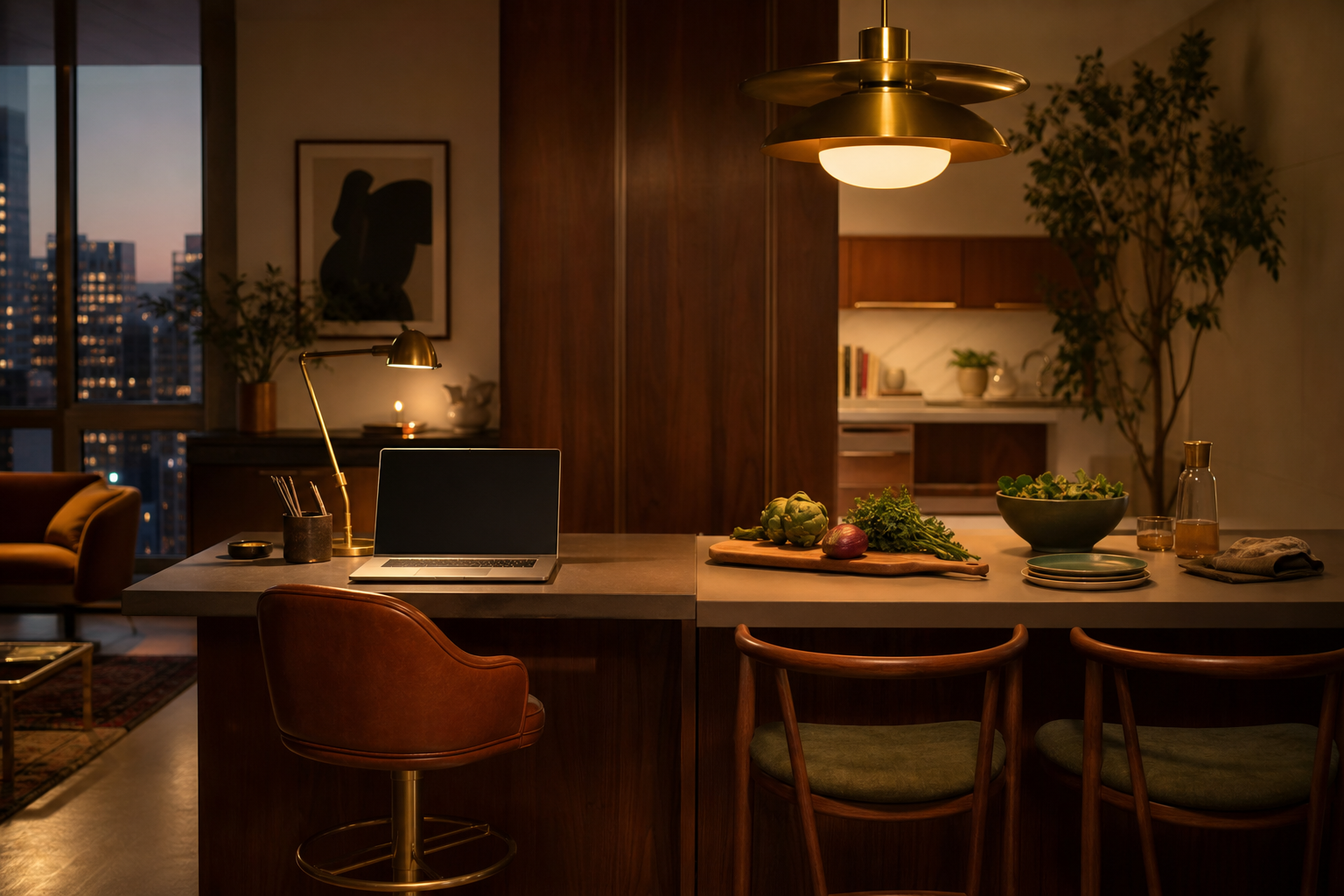
Approve the workflow first, the cabinet construction second, and the finish third. The workflow says where work, cooking, charging, and reset happen. The construction decides how the room handles moisture, cleaning, weight, and repeated touch. The finish decides whether the room feels warm, calm, and residential. In Fadior projects, this sequence suits 304 stainless steel cabinetry because the durable base can carry warm finishes without changing the underlying cabinet logic.
| Step | Question | Output |
|---|---|---|
| 1 | Where does laptop work happen without blocking cooking? | Marked second-office zone and clearances. |
| 2 | Where do power, task lighting, and charging live? | Electrical and lighting notes before cabinet drawings. |
| 3 | Which cabinet bays clear work objects fastest? | Storage map for laptop, cable, paper, and household routines. |
| 4 | Which finish keeps the room residential? | Warm finish palette over durable cabinet construction. |
What should buyers ask before signing?
Ask for a work-zone drawing, a charging detail, a reset-storage detail, an appliance path check, and a material explanation. The supplier should be able to show how the kitchen handles work and cooking on the same day. If the answer is only a bigger island, the plan is incomplete. The strongest layouts make the second-office function disappear quickly, keep food prep safe, and preserve the emotional role of the kitchen as a home room.
How does Fadior translate this into cabinetry?
Fadior can treat the second-office kitchen as part of a whole-home storage system rather than a loose furniture problem. A kitchen work bay can connect with entry storage for bags, living-room storage for devices, and laundry storage for utility items. The advantage is consistency: the homeowner gets one finish language, one washable cabinet base, and one planning logic across several rooms. For remote-work households, that matters because the work day rarely stays inside one room.
When is a second-office kitchen the wrong idea?
It is the wrong idea when the room is already too narrow, when calls require complete acoustic privacy, or when the only available laptop position blocks the cook. In those cases, a separate study, living-room console, or bedroom work niche may be better. The kitchen can still support light admin work, recipe planning, and homework, but it should not pretend to replace a closed office when privacy is the main requirement.
Which finish strategy keeps the room calm?
Use warm fronts, low-contrast surfaces, and a small number of visible objects. Wood-grain transfer, pearl white, satin color, or champagne-tone accents can soften the technical base. The finish should not advertise work equipment. It should make the laptop, notebook, and charger feel temporary. That is why the best second-office kitchens look like kitchens first and reveal their work support only through use.
How should family circulation be protected?
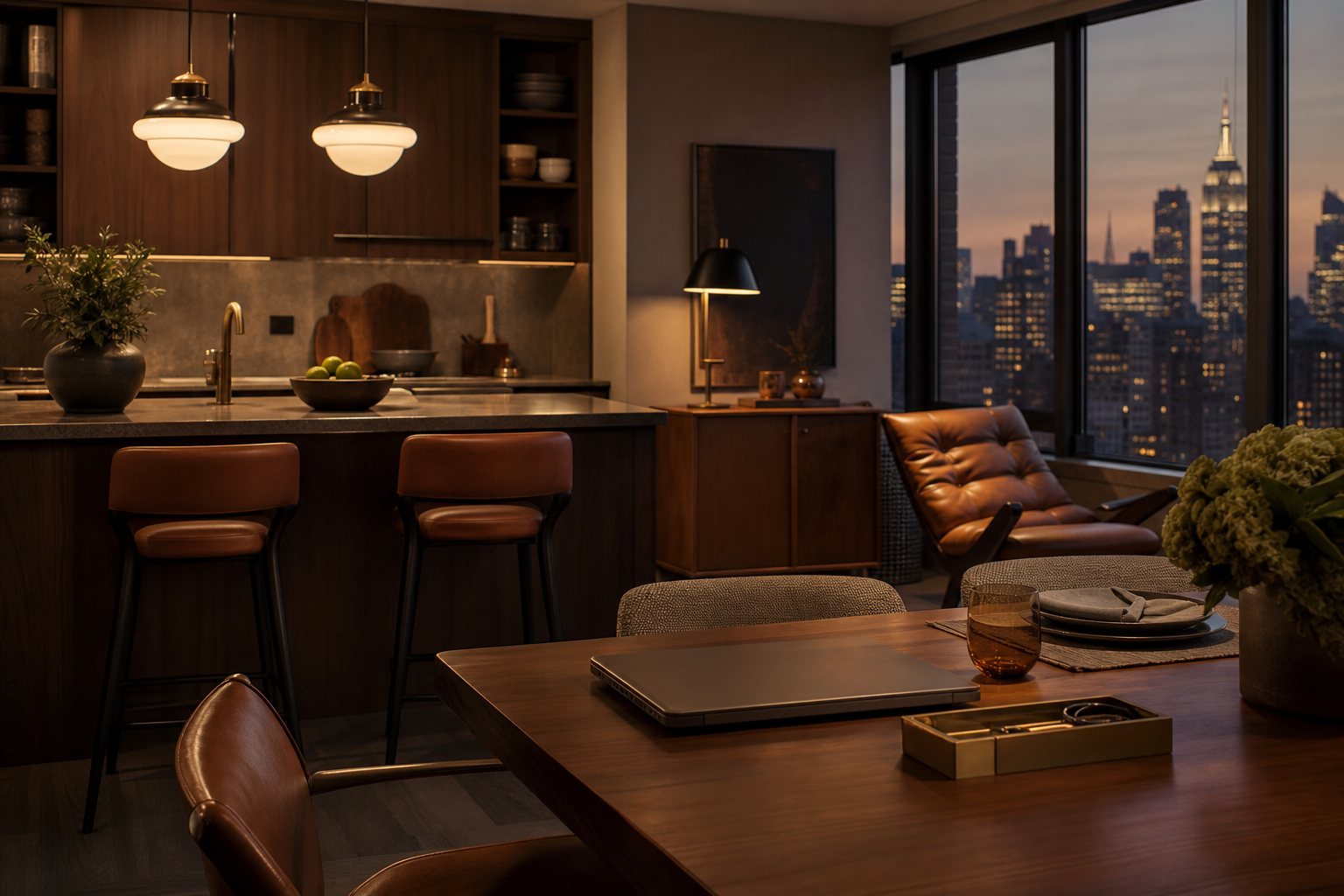
A kitchen work corner fails when every family member must pass behind the chair to reach water, snacks, or dinnerware. Keep a 900 mm clear walking line behind the work seat where possible, and avoid placing the work perch between the refrigerator and sink. If the kitchen is compact, use a side-facing seat rather than a chair that projects into the main route. The goal is simple: one person can answer email while another person prepares a meal without asking the first person to move 6 times in an hour.
Which signals show the plan is ready to order?
The plan is ready when the homeowner can point to 5 fixed decisions on the drawing: the work seat, the charging location, the task light, the reset-storage bay, and the cooking path. It is not ready if the work behavior is described only in words. A supplier should be able to mark these decisions on the cabinet layout and explain how they affect drawer depth, outlet placement, lighting, and appliance clearance.
How does the layout support resale and future routines?
The work-from-home pattern may change, but the storage and lighting remain useful. A second-office counter can become a coffee station, homework place, recipe surface, serving bar, or quiet reading perch. That flexibility protects the design from becoming a time-stamped home office gimmick. Durable cabinet construction, hidden charging, and warm finishes keep the room adaptable even if the household later uses the same corner for school routines or entertaining.
What should be documented for the designer?
Before the final drawing meeting, write a 1-page routine note. Include the number of daily laptop sessions, typical call length, whether children use the island for homework, which appliances run during work hours, and what must disappear before dinner. Add 3 photos of the current clutter pattern. This gives the designer evidence, not guesswork, and turns a vague second-office request into cabinet, lighting, and storage decisions.
Why should the brief stay human-sized?
The kitchen should not become a command center with visible technology everywhere. Keep the brief human-sized: one quiet seat, one charging home, one reset cabinet, one light setting for work, and one evening mode for meals. This restraint protects the room from feeling over-specified. It also helps the buyer judge proposals clearly, because every drawing can be tested against 5 everyday actions instead of a vague promise that the kitchen will be multi-purpose.
How should the installer protect the work zone?
Installation notes should protect the work corner from last-minute compromises. Confirm outlet height, chair clearance, drawer swing, lamp position, and the route for daily cleaning before site work begins. Small misses here create daily irritation, because the user touches this zone many times during a normal workday. Photograph the final setup after handover so future service visits preserve the same practical work rhythm.
Frequently Asked Questions
Questions this guide answers
- What is a second office kitchen layout?
- A second office kitchen layout is a kitchen plan that supports focused household work without turning the room into a visible office. It gives laptop use, charging, lighting, storage reset, cooking, and cleanup separate positions, so the room can shift from work to dinner quickly.
- Where should a laptop zone sit in a kitchen?
- The laptop zone should sit outside the wet prep area and away from appliance pull-out paths. An island end, shallow side counter, breakfast bar, or pocket-door work bay can work if it has a clear landing surface, task light, and nearby storage for fast reset.
- How much storage does a kitchen work zone need?
- Plan at least one dedicated drawer or cabinet bay for the work zone. It should hold the laptop or tablet, charger, headset, paper, pens, and small household documents. The goal is a reset that takes about 2 minutes, not a counter that stays busy all evening.
- Does 304 stainless steel make sense for a work-from-home kitchen?
- Yes, when the kitchen is used for food, work, homework, and cleanup in the same day. 304 stainless steel cabinet bodies give the room a washable and waterproof base, while residential finishes can keep the design warm rather than industrial.
- What should be approved before custom cabinets are ordered?
- Approve the work seat, appliance paths, power points, task lighting, reset storage, and material logic before cabinet drawings are finalized. Once these decisions are clear, the finish palette can be selected without hiding layout problems.
Related products
Specific products worth reviewing next.
References
Authoritative sources cited in this article
Editorial transparency
Adriana Hale is a composite editorial persona maintained by Fadior Home's editorial team. Articles attributed to this byline are produced through an AI-assisted editorial workflow with human review, and represent the consolidated voice of multiple researchers and contributors.
Ready to specify?