
What makes a stainless steel cabinet budget comparable?
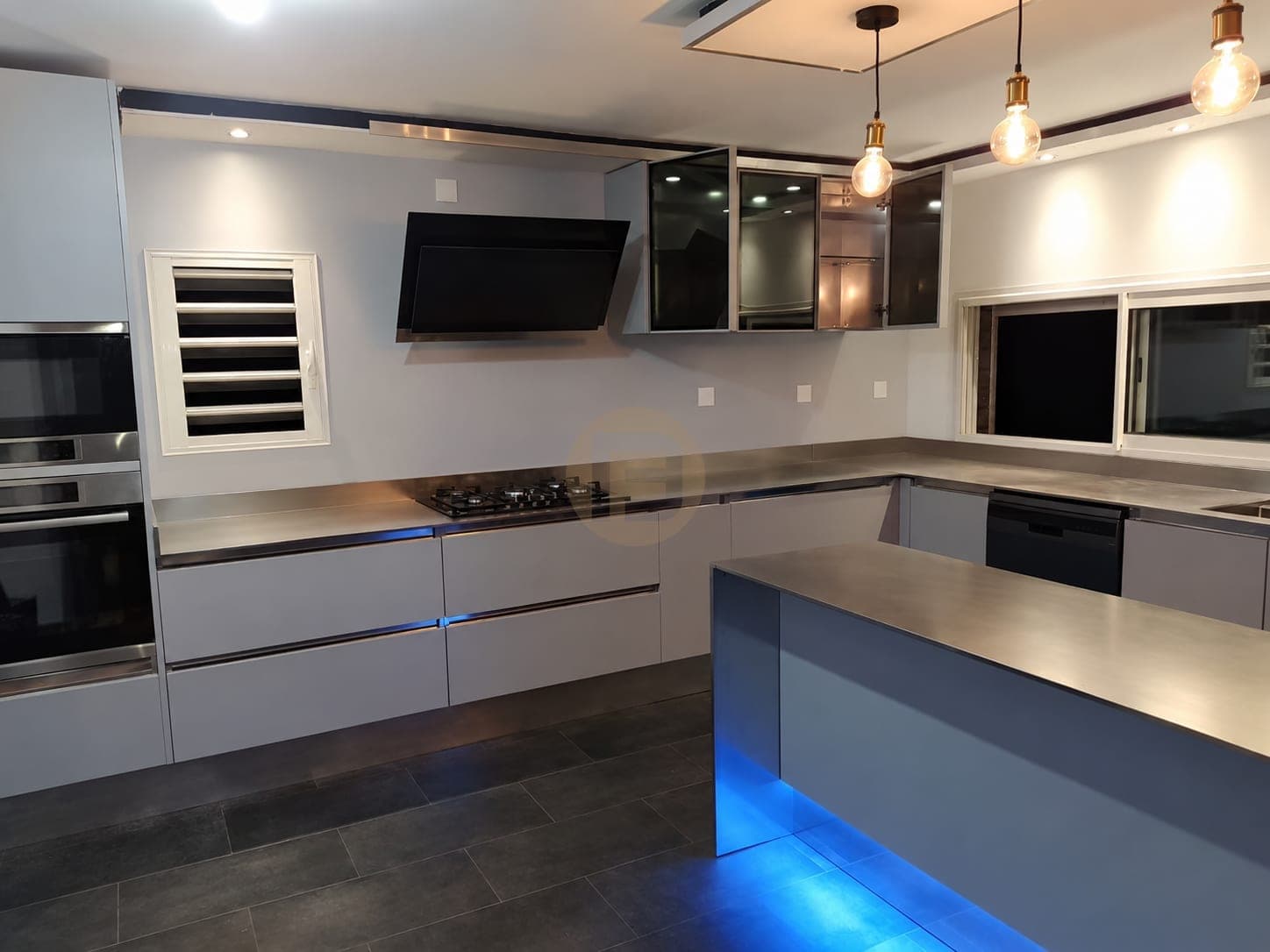
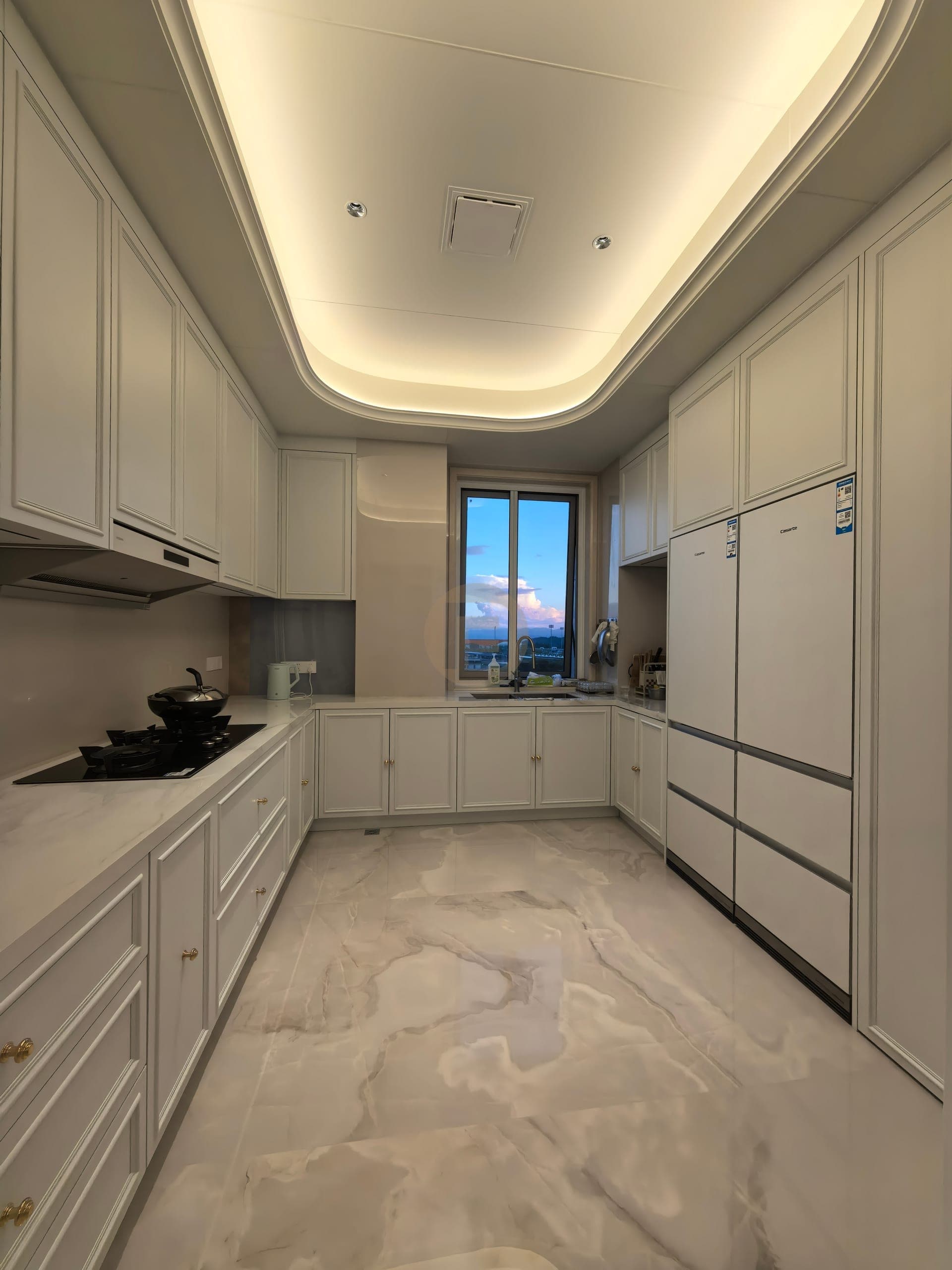
A comparable budget starts with the room plan, not a shopping-cart number. In a kitchen, a 304 stainless steel cabinet system may include floor, wall, and tall storage, panels, countertops, interior fittings, delivery, and installation; a wardrobe or vanity changes the mix again. Ask each supplier to identify what is measured, what is supplied, and who owns site conditions. A 2-room proposal and a 1-room proposal can share a similar headline while describing very different work. The material matters, but the useful decision is whether the full scope suits your household, not whether a single line appears inexpensive. Review cabinetry for wet zones alongside the room brief.
- Whole-life budget
- A whole-life budget is the initial project cost plus the clearly assigned requirements for fitting, maintenance, repair, and service during ownership.
Why do online cabinet prices create false comparisons?
Online figures often omit the details that make cabinetry livable: site measurement, design revision, drawer organization, panels, countertop coordination, delivery access, installation, final adjustment, and aftercare. They can also mix a single base cabinet with a complete 12-unit room. Use them only to frame questions, never as a promise. The National Kitchen & Bath Association is a useful planning reference because a kitchen project joins many decisions; it does not publish the price of your finished home. If a number cannot state its geography, date, room list, dimensions, and installation basis, it cannot settle a budget decision.
How should you separate material from finish and room scope?
Put the material and the visual finish on separate lines. Fadior identifies 304 stainless steel for its cabinetry systems and lists more than 80 powder-coat colours baked at 220°C, but neither fact establishes the price of a particular room. A warm matte kitchen, a PVD-accent vanity, and a large wardrobe can use different quantities, layouts, and finishing work. ASTM A240/A240M describes categories of chromium and chromium-nickel sheet and strip; it is material context, not a residential quotation. A proposal should say where the specified material begins and ends, then identify visible finish samples and room locations. Compare cabinet and countertop materials as separate decisions in the specification.
Which room decisions change the budget most?
Room count and complexity change a budget more honestly than a generic linear-foot rate. A 3.0 m run with one sink wall differs from a 3.0 m run that includes a tall pantry, appliance housing, corner storage, lighting, a 900 mm island, and a coordinated vanity. The cost conversation should include the cabinet bodies, fronts, panels, interiors, countertop interfaces, and the people needed to fit them. For a whole-home project, repeat the same questions for kitchen, wardrobe, vanity, laundry, and entry storage. This turns an emotional total into a checkable room-by-room decision.
Budget comparison checklist
- List every room and its approximate dimensions before requesting a proposal.
- Name the cabinet material, visible finish, countertop interface, and internal organization for each room.
- Assign delivery access, site preparation, fitting, adjustment, and protection to a named party.
- Record exclusions, provisional items, care instructions, warranty terms, and the post-installation service contact.
What should installation and site access include?
Installation is not a footnote. A quote can change when a building has restricted lift access, a 4th-floor stair route, incomplete walls, late appliance dimensions, or a countertop team working to a different drawing. Ask when the site will be measured, which drawing controls fabrication, what tolerance is expected, and who signs off at handover. A 7-day delivery window is not the same as a completed installation date. Clear responsibility reduces surprises because each change has an owner before materials and labour are committed. Check cabinet opening clearances before approving adjacent equipment and circulation.
How do standards and certificates help without setting a price?
Standards are useful when they identify what was tested or specified for a defined product. KCMA and ANSI publish information about cabinet performance programs, while ASTM publishes the material-standard context for sheet and strip. EPA rules on composite-wood formaldehyde emissions are useful when comparing material systems that use listed wood-based components. None of these sources can tell you the right installed total for a particular home. Use evidence to ask sharper questions about material, finish, durability, and documentation; then use the written project scope to compare money.
When does a lower first quote become a weaker ownership decision?
A lower first quote is not automatically poor value, but it needs the same inclusion list as the alternatives. It may exclude panels, interiors, delivery, fitting, site protection, later adjustments, or service. It may also rely on a finish sample that is not identified in the proposal. Compare 1 complete room with 1 complete room and ask what remains payable after the initial order. For a long-ownership home, the relevant question is not whether one total is smaller today; it is whether the remaining responsibilities are visible and manageable over 10, 20, or 30 years.
| Budget line | What to request in writing | Why it changes the decision |
|---|---|---|
| Room scope | Named rooms, dimensions, and storage zones | Prevents a 1-room total being compared with a 2-room total. |
| Material scope | Exact cabinet material and where it is used | Separates system construction from a decorative surface claim. |
| Finish | Approved sample, location, and care route | Makes colour and maintenance expectations comparable. |
| Installation | Measurement, delivery, access, fitting, and adjustment owner | Shows which site tasks are included and which are not. |
| Service | Written warranty terms, exclusions, and contact path | Turns a future problem into an assigned responsibility. |
Why should you ask for samples before comparing totals?
A sample makes the finish discussion concrete. Ask to see it in the light where the kitchen or wardrobe will live, then record its name and placement in the proposal. This matters because a broad cabinet field behaves differently from a small accent panel, and care expectations can vary by room use. Design publications such as Dezeen are useful for seeing how material choices change a room's character, but they are not installation instructions or price evidence. A sample paired with a written scope gives the buyer a stronger basis than a photograph or a broad finish name.
How can you protect the budget from late changes?
Freeze the decisions that affect fabrication before production begins: final room dimensions, appliance cut sheets, countertop interfaces, electrical and plumbing positions, opening directions, and approved finishes. If something must remain provisional, give it a named allowance and a decision date. A 600 mm appliance change or a 50 mm wall adjustment can alter adjacent storage and labour even when the cabinet material is unchanged. The goal is not to eliminate every change; it is to expose the cost and timing of a change before it becomes a surprise.
Which questions should you take into a cabinet consultation?
Bring a plan, photographs, room dimensions, appliance information, and a short list of non-negotiables. Then ask the supplier to show the 304 material scope, the finish sample, the room-by-room inclusion list, the delivery and fitting sequence, the warranty wording, and the service contact. Fadior's materials pages, manufacturing context, quality information, collections, and project examples can support that conversation, but the final decision should rest on the proposal for your own home. The best consultation ends with a written next step, not an unverified universal price.
Which stainless steel cabinet cost questions do buyers ask most?
What is the most useful next step after the budget conversation?
Ask for a consultation that converts the broad idea into a room-by-room written scope. Bring the measurements and priorities you have, then confirm the material, finish, storage, delivery, installation, handover, care, and service route. A precise proposal may take longer than a headline quote, but it is the only comparison that can explain what you are buying and what remains your responsibility.
Related: Kitchen planning