
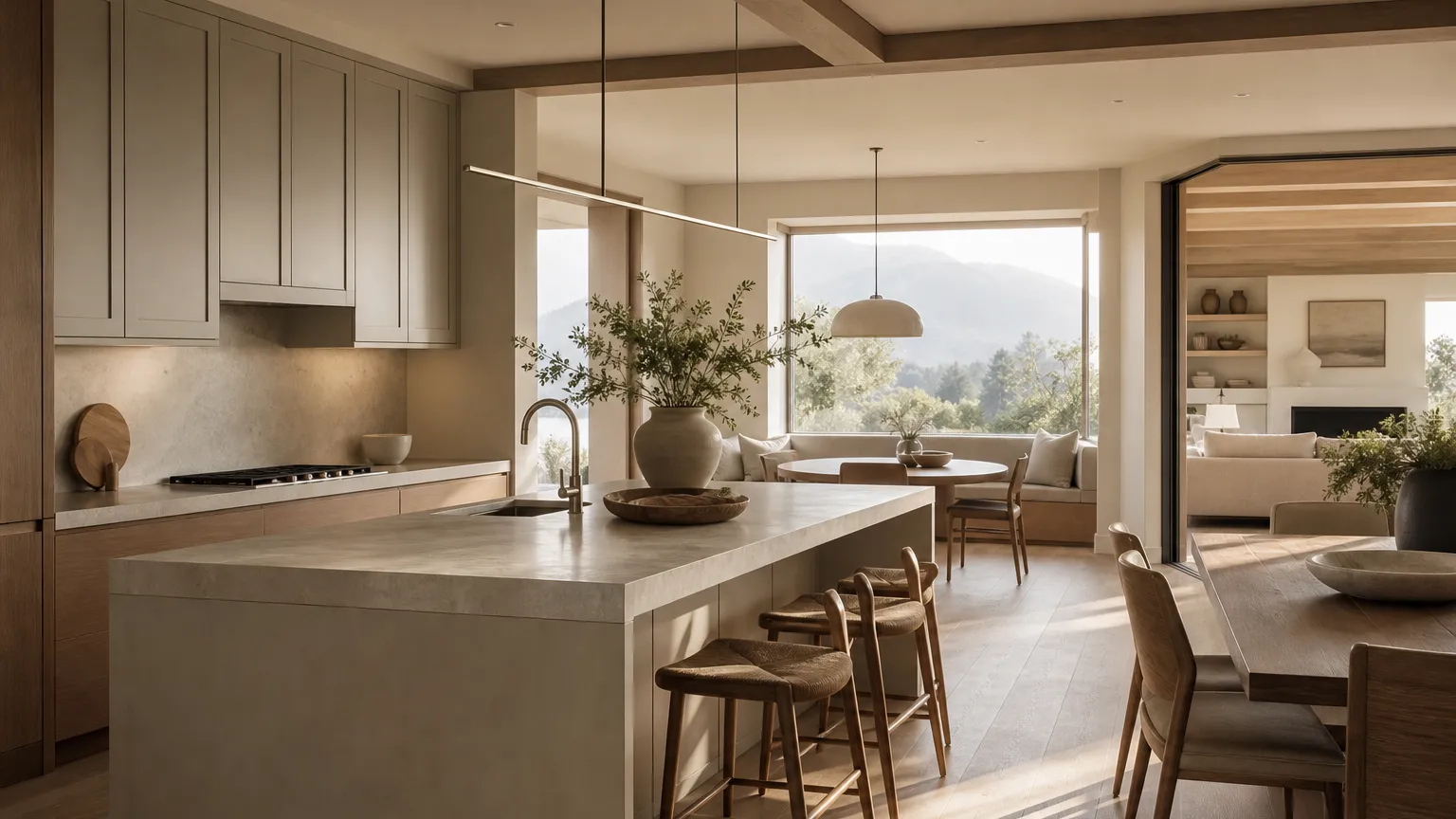
Residential Interior Design: Kitchen Decisions That Shape the Whole Home
A kitchen-led guide to residential interior design: plan circulation, hidden storage, lighting, finishes, and durable 304 wet-zone cabinetry before decorating.
Direct answer
The Direct Answer
Residential interior design works best when the kitchen is planned as the operating center of the home, not as a decorative room added late. Start with circulation, storage, lighting, wet-zone durability, and the view from dining and living spaces; then choose finishes that make the durable 304 cabinet body feel warm, calm, and residential.
- Residential interior design
- Residential interior design is the planning of rooms, routes, storage, light, surfaces, and daily rituals as one connected home.
What is residential interior design when the kitchen leads?
Residential interior design is the planning of rooms, routes, storage, light, surfaces, and daily rituals as one connected home. When the kitchen leads that plan, it stops being a room that receives decoration after the floor plan is fixed. It becomes the operating center that decides how people enter, cook, host, clean, store, and gather. A kitchen-led interior brief starts with movement: where groceries arrive, where breakfast happens, where children reach snacks, where guests pause, and where cleaning tools disappear after dinner. It then decides which surfaces should stay calm from the living room and which zones must work hard behind closed fronts. This is why a premium home should not separate interior design from kitchen specification. The cabinet body, island size, pantry location, dining route, lighting layer, and wet-zone material all affect how the whole home feels. A beautiful sofa view cannot compensate for a kitchen that blocks the dining route or leaves appliances scattered across counters. In Fadior's point of view, the visible room can be warm and residential while the permanent kitchen structure remains disciplined around 304 stainless steel, waterproof performance, and long service life.
Why should the kitchen plan come before the decoration schedule?
The kitchen plan should come before the decoration schedule because it carries the most daily actions per square meter in the home. Paint, loose furniture, rugs, and art can be adjusted late. Appliance doors, island clearances, plumbing points, exhaust routes, cabinet depths, and service access cannot be moved easily after production. If those decisions arrive after the interior palette, the design team starts making expensive compromises: a dining table moves because an appliance door collides, a breakfast nook shrinks because storage was underestimated, or a lounge view weakens because the kitchen wall needs more tall cabinets than expected. A better process starts with a 10-minute daily routine map. Trace the first 10 minutes after groceries arrive and the last 10 minutes after dinner ends. Then trace a hosting route from kitchen to table and a quiet route from living area to bedrooms. These routes reveal whether the kitchen should be open, semi-open, or supported by a scullery. They also reveal which storage can be beautiful and which storage should simply disappear. When the kitchen is resolved early, the rest of the residential interior has fewer unresolved problems to hide.
How does whole-home continuity change cabinet choices?
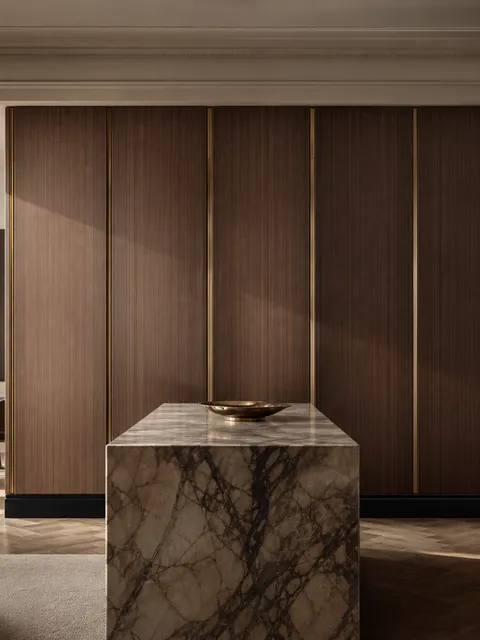
Whole-home continuity changes cabinet choices because cabinet fronts are seen from more than one room. In open villas and high-rise apartments, the kitchen wall may be visible from dining, lounge, stair, corridor, or garden doors. That means the cabinet system must behave like architecture, not only furniture. The fronts need a rhythm that aligns with doors, wall panels, ceiling breaks, and dining furniture. The finish needs enough warmth to belong with upholstery and flooring. The storage plan needs enough discipline to keep daily clutter from becoming the first thing visible from the sofa. NKBA's 2026 kitchen research emphasizes whole-home continuity, gathering, storage, wellness, and material sophistication; those are interior-design questions as much as kitchen questions. A buyer should therefore review the kitchen elevation with the surrounding rooms in view. Ask whether the tall storage wall feels too heavy from the living area, whether the island blocks a social route, and whether the palette still works in morning and evening light. The best residential interior design makes the kitchen feel inevitable: useful at close range, calm from a distance, and consistent with the rest of the home.
Which routes should a residential interior brief map first?
A residential interior brief should map 5 routes before approving a kitchen package. The first route is groceries to cold storage and pantry. The second route is pantry to prep. The third is prep to cooking and cleanup. The fourth is cooking to dining or outdoor serving. The fifth is guest movement through the kitchen edge without crossing the work triangle at the wrong moment. These routes are simple to draw, but they expose many hidden decisions. A 1100 mm aisle may feel generous until an appliance door and a drawer open at the same time. A beautiful island may need 300 mm more landing space if it supports daily breakfast. A dining table may need a different position if serving dishes cross the main cooking route. In villa projects, also map staff or service movement if the home has a back kitchen, laundry route, or outdoor entertaining terrace. In apartments, map the lift-to-kitchen route and the view from entry to living area. Good residential interior design is not only how rooms photograph; it is how movement feels when the home is busy.
When does hidden storage improve the whole home?
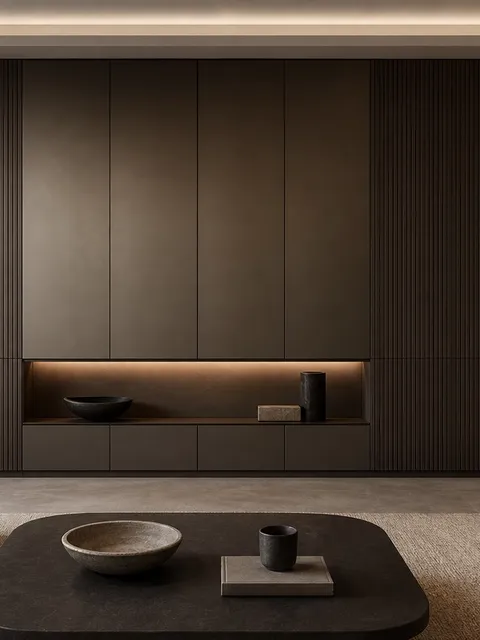
Hidden storage improves the whole home when it removes friction without pretending that daily life is empty. Livingetc's 2026 kitchen storage coverage points to concealed appliance zones, toe-kick drawers, behind-door racks, and storage that disappears into architecture. The lesson for premium interiors is practical: calm rooms need assigned places for the objects that normally break the view. Coffee tools, trays, pet bowls, table linens, chargers, cleaning products, water bottles, recycling, and occasional serving pieces all need homes. If the interior designer does not name those objects, they will return to the counter after move-in. Hidden storage should be planned by use frequency. Daily items belong near the action point; seasonal or hosting items can sit in deeper drawers or dining sideboards; cleaning supplies need a wet-zone cabinet close to the sink; small appliances need ventilation and power if they are parked behind pocket doors. Fadior's whole-home category range matters here because the kitchen can coordinate with wall panels, dining storage, vanities, and living room cabinets. The result is not more cabinetry everywhere. The result is fewer visible mistakes across the home.
How should finishes make a durable kitchen feel residential?
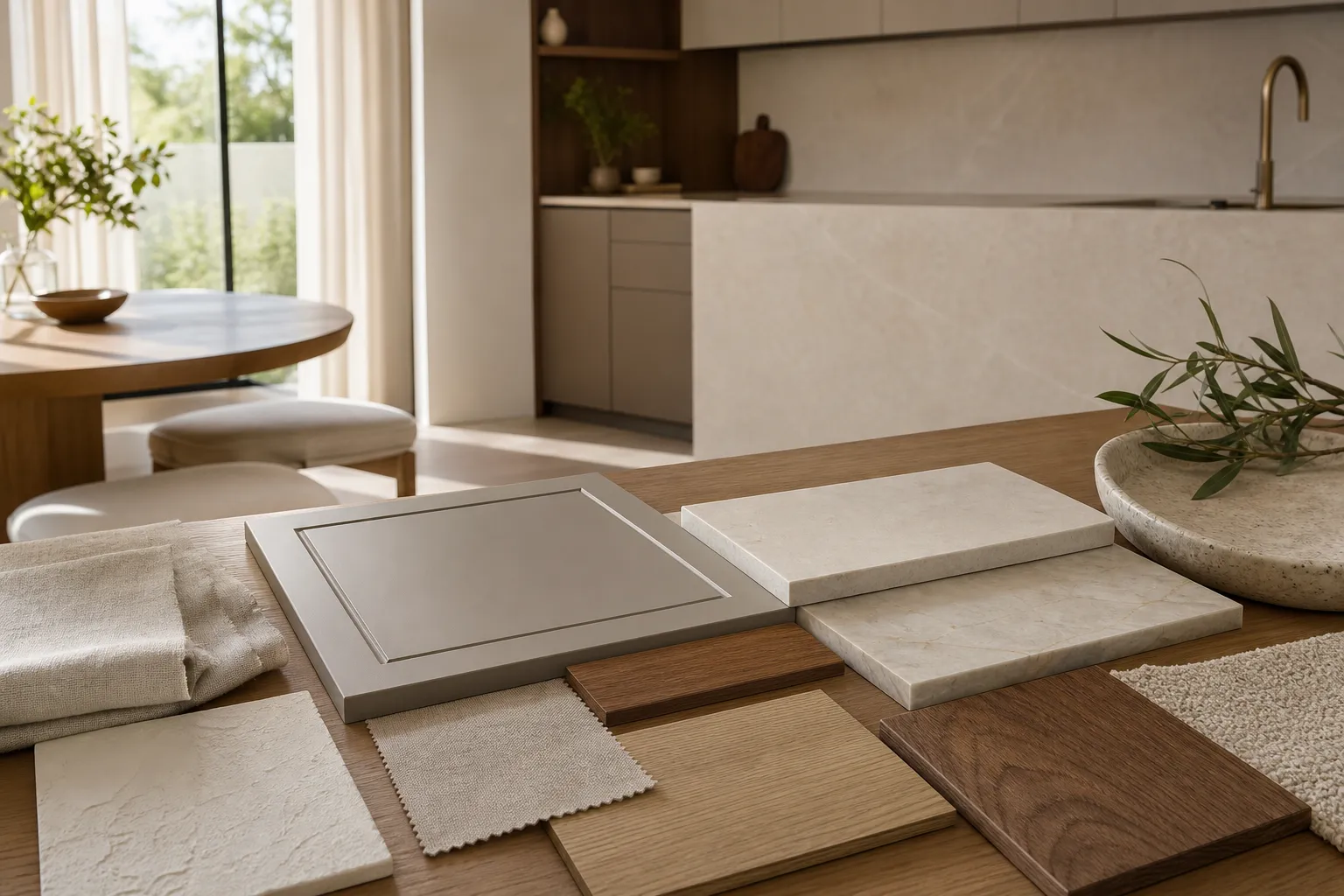
Finishes make a durable kitchen feel residential when they soften the visible experience without weakening the permanent structure. A warm interior does not require a fragile cabinet body. The visible layer can use walnut tones, pale stone, soft grey fronts, warm oak accents, textured wall panels, linen seating, or muted color. The hidden layer should answer tougher questions: water exposure, steam, cleaning, impact, hygiene, and long service life. This separation is central to Fadior's positioning. A 304 stainless steel cabinet body can carry a residential finish language without asking the homeowner to accept a cold commercial mood. The palette should be tested as a room, not as a single sample. Place cabinet finish, counter surface, flooring, wall color, upholstery, and lighting together. Then review the set from the dining table and living sofa, not only from the kitchen island. Houzz's 2026 kitchen coverage shows homeowners rethinking layouts, colors, and long-term function, often inside existing footprints. That makes finish discipline more important. If the room cannot grow, the palette and storage plan must carry more of the emotional work.
What should a villa owner decide differently?
A villa owner should decide differently because a villa kitchen usually connects to more zones than an apartment kitchen. There may be a formal dining room, daily breakfast corner, outdoor terrace, family lounge, staff route, wet kitchen, dry kitchen, pantry room, or garden view. Residential interior design should decide which kitchen functions belong in the public scene and which functions belong behind it. A display island can support drinks, breakfast, and conversation, while heavier cooking and cleanup may need a secondary prep zone. That does not mean the visible kitchen becomes fake. It means the home respects different rituals: weekday family meals, Friday hosting, outdoor dining, children's snacks, and quiet morning coffee. GCC villa owners should also think about humidity, frequent cleaning, and long service life. Wet zones, sink cabinets, utility cabinets, and outdoor-adjacent storage should not be specified like purely decorative millwork. Fadior's 304 stainless steel cabinet bodies, waterproof logic, and whole-home customization allow the visible rooms to stay warm while high-use zones remain durable. The earlier this is decided, the less the final interior has to compromise.
Does residential interior design need a separate service kitchen?
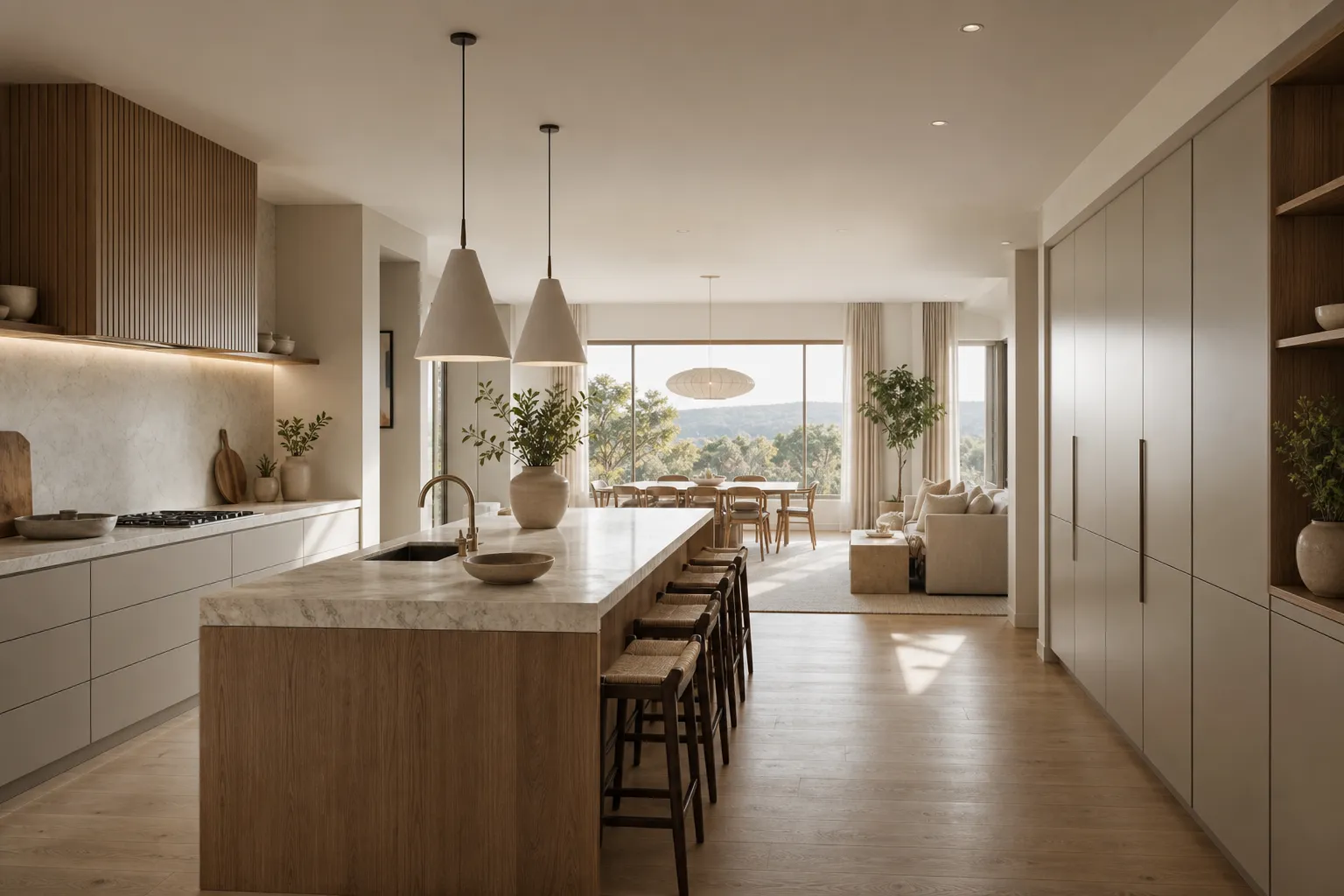
Residential interior design does not always need a separate service kitchen, but it should test the question honestly. A household that cooks heavily, hosts often, or wants the main kitchen to stay visually calm may benefit from a scullery, back kitchen, pantry wall, or appliance micro-zone. A smaller apartment may not have space for a second room, but it can still borrow the logic: pocket doors for breakfast equipment, a tall utility cabinet, a landing zone near the refrigerator, and a sink base that handles cleaning supplies without clutter. The decision should be based on routines rather than status. Count how often the household fries, bakes, entertains, orders groceries, stores bulk food, or uses countertop appliances. If those actions happen often, the home needs service capacity. If the interior design hides that capacity too late, it will appear as clutter. If it plans the capacity early, the main room can stay calm without becoming unrealistic. This is where kitchen specification becomes whole-home planning: the quiet view is made possible by a working back layer.
How should lighting connect kitchen and living areas?
Lighting should connect kitchen and living areas through layers rather than one ceiling grid. A kitchen needs task light for prep, soft light for dining, low glare around lounge views, and selective accent light for display or wall texture. If every surface is lit the same way, the room feels flat. If the kitchen is too bright compared with the lounge, the open plan feels divided. Start with the daily sequence. Morning breakfast needs clear but gentle light. Evening hosting needs the island, table, and lounge to feel related. Cleanup needs practical light that does not spill harshly into the living area. Integrated lighting can also make storage feel lighter, especially when tall walls or hallway cabinets might otherwise feel heavy. Livingetc's broader home storage trend coverage notes integrated lighting moving into larger storage solutions beyond kitchen and bath shelves. That is useful for whole-home projects: lighting can help cabinet walls, sideboards, and corridor storage feel intentional rather than bulky. The design goal is not spectacle. It is a readable home that shifts from work to rest without changing rooms.
Which checklist should buyers approve before production?
Buyers should approve a checklist that covers function, sightlines, and maintenance before production. First, confirm the 5 movement routes: groceries, prep, cooking, serving, and guest circulation. Second, confirm storage for at least 20 named categories, from daily dishes to cleaning products. Third, confirm appliance door swings, drawer extensions, stool clearances, and service access. Fourth, review the kitchen from the living room, dining table, entry, and outdoor door. Fifth, test the finish palette in morning and evening light. Sixth, confirm wet-zone cabinet bodies, sink base protection, cleaning expectations, and warranty logic. Seventh, confirm which functions are visible and which functions are hidden. Eighth, confirm internal links between kitchen, wall panels, vanities, and living storage if the home uses a whole-home system. A strong approval package should include plan, elevations, finish board, lighting intent, storage schedule, appliance schedule, and maintenance notes. Residential interior design becomes easier to judge when the owner can inspect these decisions rather than relying on mood images alone. The final question is simple: will this home still feel calm after breakfast, groceries, guests, and cleanup? If the answer is yes, the design is doing more than looking good.
Why is Fadior relevant to residential interior design?
Fadior is relevant to residential interior design because the brand treats cabinetry as a whole-home system, not only as kitchen furniture. Its 304 stainless steel cabinet bodies, glue-free construction logic, waterproof performance, surface finish range, wall panels, vanities, wardrobes, and living storage categories let designers connect durability with a residential palette. That matters when a kitchen is open to the rest of the home. The visible design can be warm, soft, and quiet, while the structure underneath is built for wet zones, cleaning, and long use. This is a practical difference, not only a brand story. Many interiors fail because the calm visual language depends on materials that are vulnerable in the highest-use room. Fadior's position is that a premium home should not choose between warmth and resilience. The kitchen can anchor the interior, the storage can disappear into architecture, and the whole-home palette can stay consistent. For owners and designers, the right brief is kitchen-led but not kitchen-limited: specify the room that works hardest first, then let the rest of the home inherit its discipline.
How can apartments use the same whole-home logic?
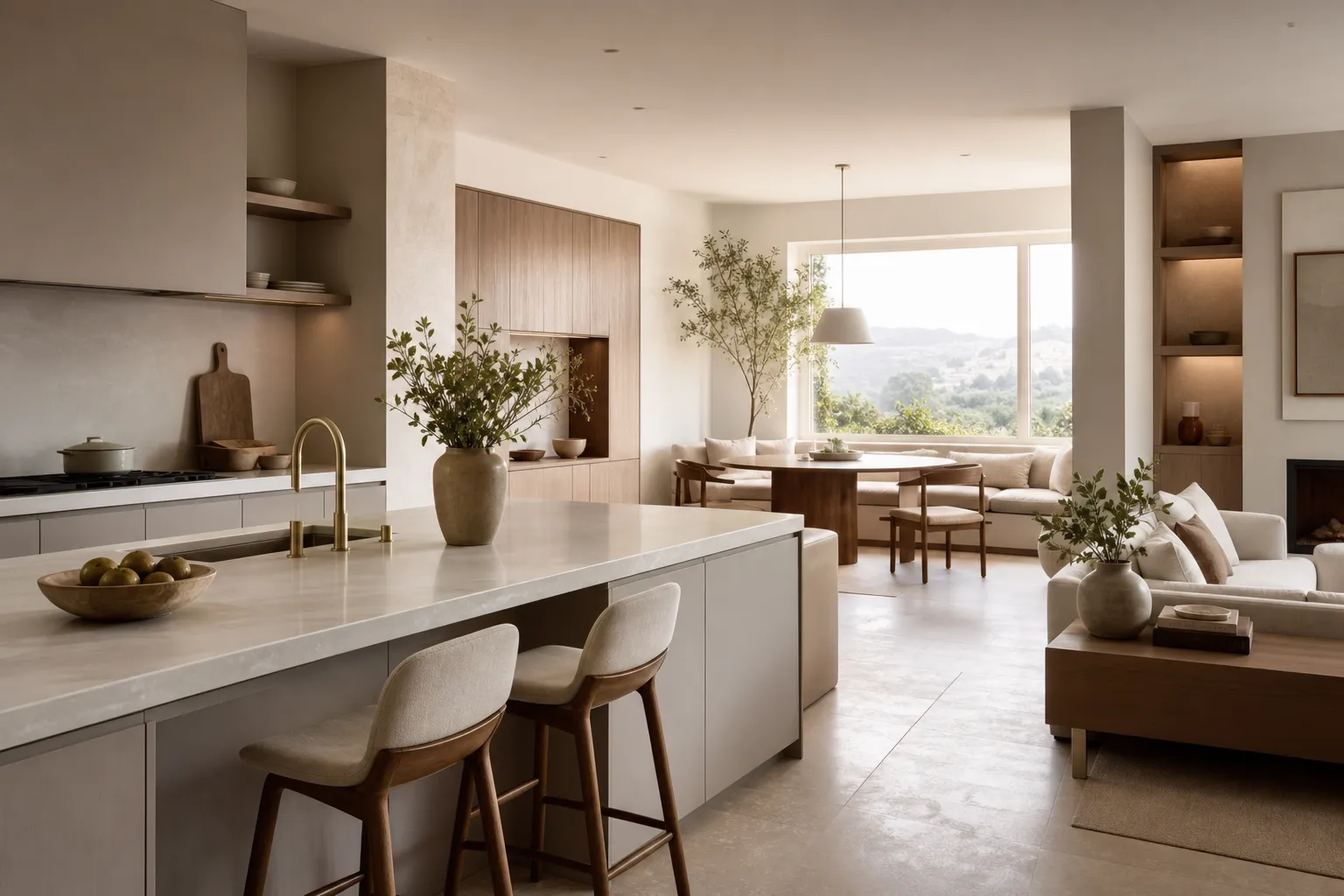
Apartments can use the same whole-home logic by making each fixed cabinet decision serve more than one room. A high-rise apartment may not have a separate scullery, pantry room, or outdoor service route, but it still has groceries, breakfast tools, cleaning products, serving pieces, and guests moving through the same open plan. The answer is not to force villa-scale ideas into a smaller footprint. The answer is to make the kitchen edge more precise. A tall cabinet wall can hold pantry goods, small appliances, and cleaning tools while reading as a calm architectural plane from the sofa. A compact island can provide prep, breakfast, and serving support if its seating side does not block the main route. A corridor cabinet can absorb table linens, chargers, and overflow storage so the kitchen counter does not become the home's default landing strip. In apartments, every visible surface works harder because there are fewer secondary rooms to hide mistakes. That makes 304 cabinet body specification and careful finish planning more valuable, not less. The interior should feel soft, but the fixed wet-zone decisions should still be durable.
What mistakes make kitchen-led interiors feel forced?
Kitchen-led interiors feel forced when the design team treats one visual idea as the answer to every room. A matching cabinet finish on every wall can become monotonous. A large island can dominate the home if dining, lounge, and circulation are not balanced around it. A hidden storage wall can become frustrating if frequently used items are buried too far from their tasks. Another common mistake is choosing warmth only through vulnerable surfaces, then asking those surfaces to survive sink cabinets, steam, daily wiping, and heavy use. The better approach is layered. Use the kitchen to set the home's discipline: routes, storage logic, wet-zone resilience, and lighting rhythm. Then let adjacent rooms vary the mood through furniture, textiles, art, and softer wall treatments. The result feels connected without becoming repetitive. Fadior's whole-home range supports that approach because the kitchen body, living storage, wall panels, and vanities can share a technical logic while still allowing different visual expressions. Good residential interior design does not make every room look like the kitchen. It makes every room benefit from the kitchen's planning clarity.
| Decision | Why it matters | Buyer check |
|---|---|---|
| Circulation routes | They control whether the home feels calm during cooking and hosting. | Map 5 routes before approving elevations. |
| Hidden storage | It protects living-room sightlines from daily clutter. | Name at least 20 stored categories. |
| Wet-zone structure | It decides how the kitchen handles water, steam, and cleaning. | Specify 304 cabinet bodies for sink and utility zones. |
| Lighting layers | They connect kitchen, dining, and lounge moods. | Review task, ambient, and accent light together. |
- Confirm 5 movement routes before final drawings.
- List 20 storage categories and their cabinet homes.
- Check 900 mm to 1200 mm practical aisle ranges against appliance doors.
- Review the kitchen from 4 adjacent viewpoints.
- Test finishes in 2 light conditions: morning and evening.
- Confirm wet-zone cabinet body, sink base, and cleaning expectations.
- Whole-home continuity
- Whole-home continuity is the alignment of kitchen, dining, lounge, storage, light, and finish decisions so connected rooms feel intentional.
Frequently Asked Questions
Questions this guide answers
- Is residential interior design different from kitchen design?
- Yes. Kitchen design focuses on one room, while residential interior design connects that room to circulation, dining, storage, lighting, and daily rituals across the home. The kitchen still matters most because it carries the highest number of fixed decisions.
- Should the kitchen always be the first room specified?
- For premium homes, it should usually be specified early. The kitchen affects plumbing, electrical routes, storage walls, island circulation, dining placement, and the view from connected rooms. Late kitchen decisions often force expensive compromises elsewhere.
- Can a durable kitchen still feel warm and residential?
- Yes. The visible palette and the cabinet body are separate decisions. A 304 stainless steel body can support waterproof durability, while warm grey fronts, oak, walnut, pale stone, linen, and soft lighting create the residential mood.
- Does every villa need a scullery or back kitchen?
- No. A villa needs a scullery only when cooking, hosting, or cleaning routines require a separate service layer. Smaller homes can use the same logic through appliance zones, pantry walls, and utility cabinets instead of a separate room.
- What should buyers ask before approving interior drawings?
- Ask where groceries land, how food moves to prep, how dishes move to dining, where cleaning tools live, what guests see from the lounge, and which cabinet zones handle water. Those answers reveal whether the design will work after move-in.
Related products
Specific products worth reviewing next.

References
Authoritative sources cited in this article
- https://kb.nkba.org/research/nkba-kbis-2026-kitchen-trends-report/
- https://www.houzz.com/magazine/10-kitchen-remodeling-trends-to-know-for-2026-stsetivw-vs~184007085
- https://www.livingetc.com/ideas/kitchen-storage-trends-for-2026
- https://www.livingetc.com/ideas/home-storage-trends-2026
- https://kb.nkba.org/research/2026-kitchen-bath-industry-outlook/
Editorial transparency
Jonas Weber is a composite editorial persona maintained by Fadior Home's editorial team. Articles attributed to this byline are produced through an AI-assisted editorial workflow with human review, and represent the consolidated voice of multiple researchers and contributors.
Actually delivered
Real homes photographed after handover, not renders.
Ready to specify?