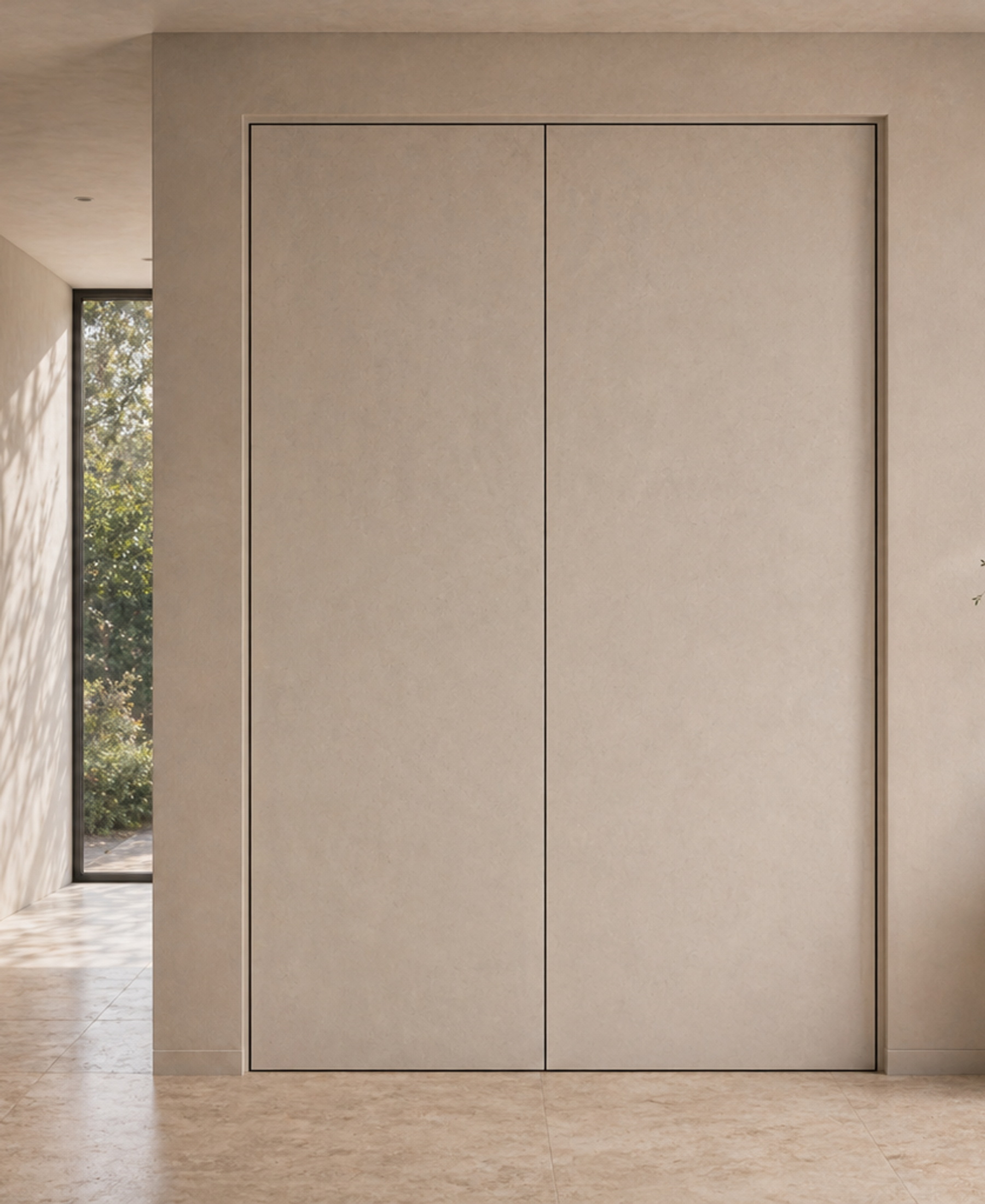
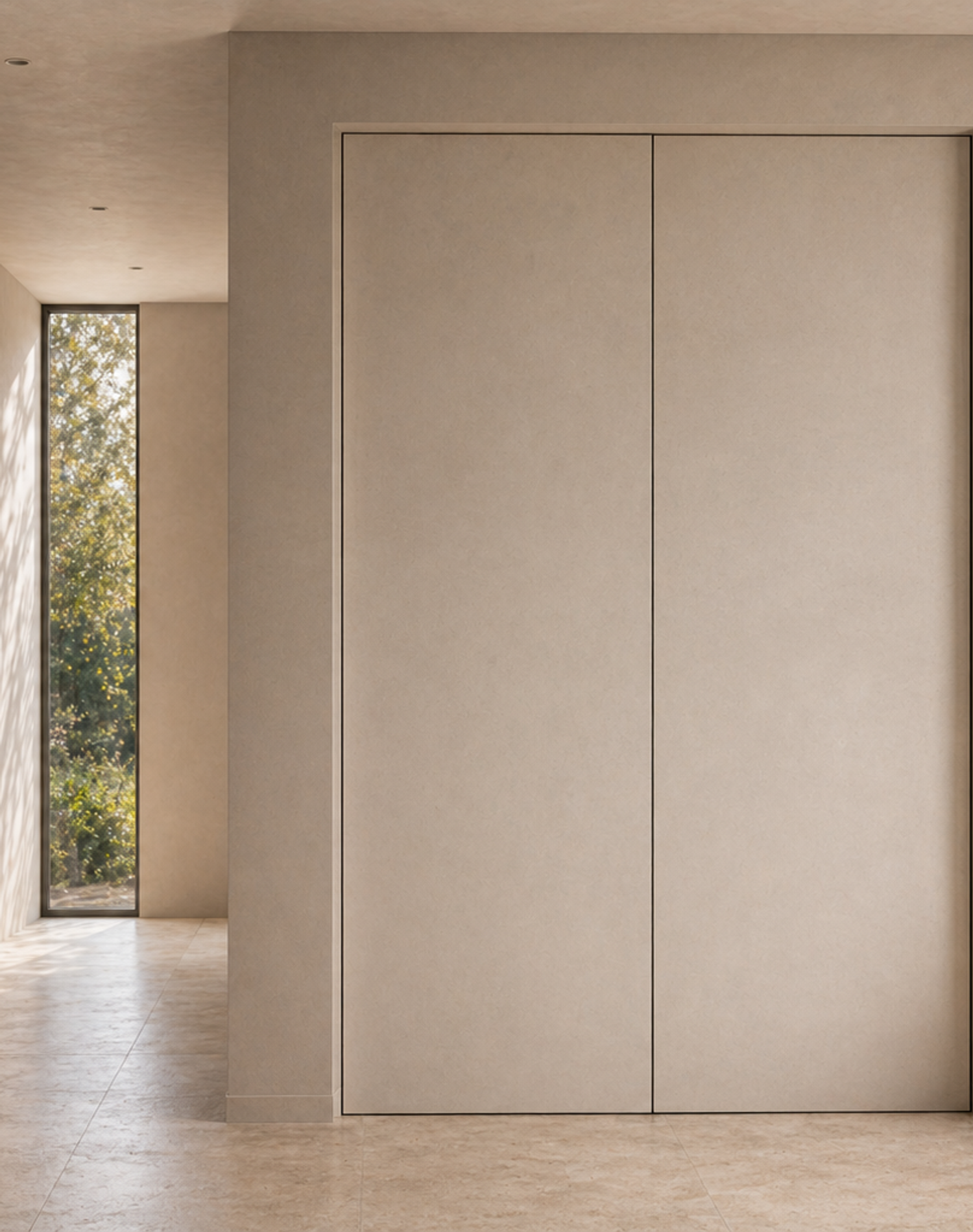
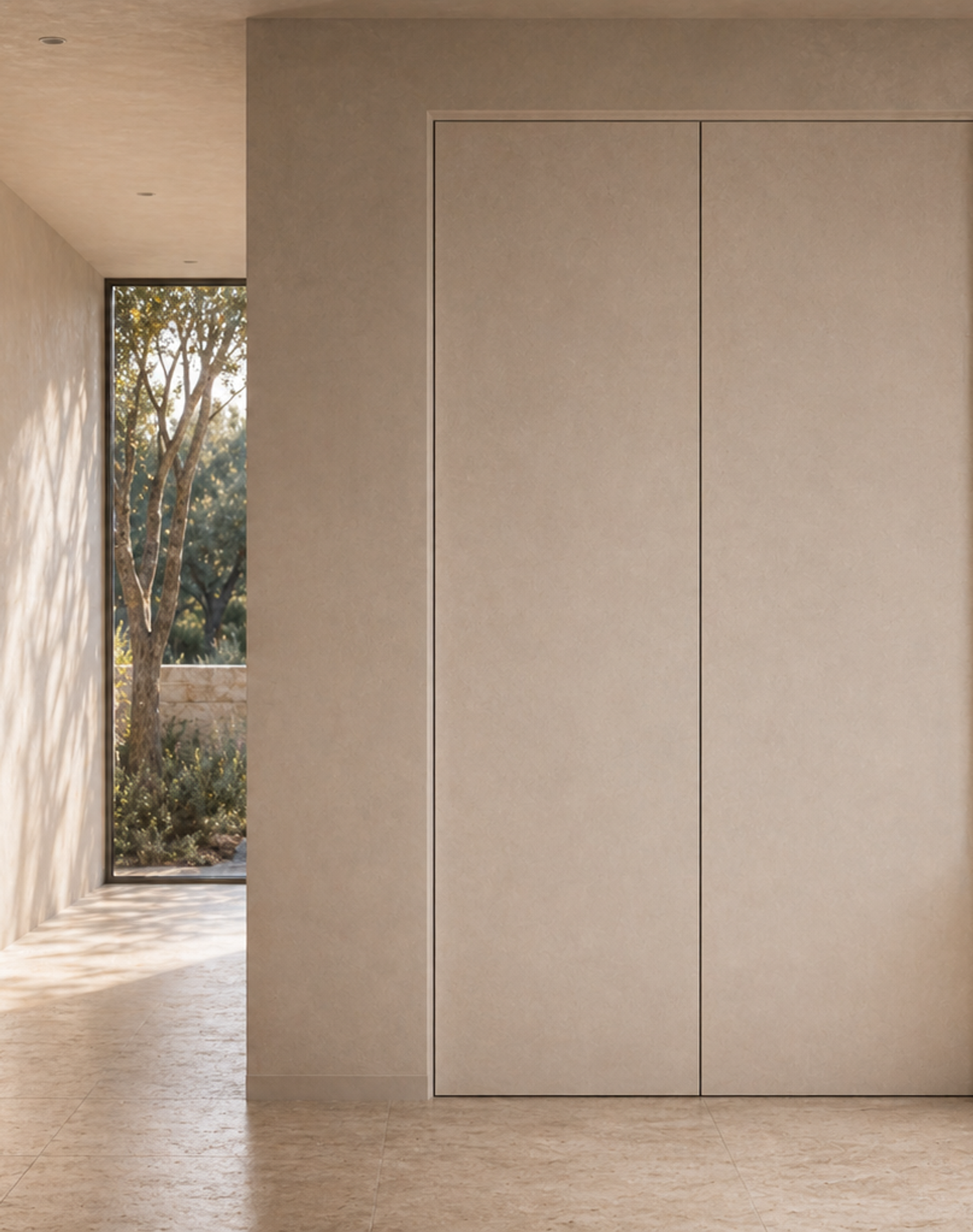
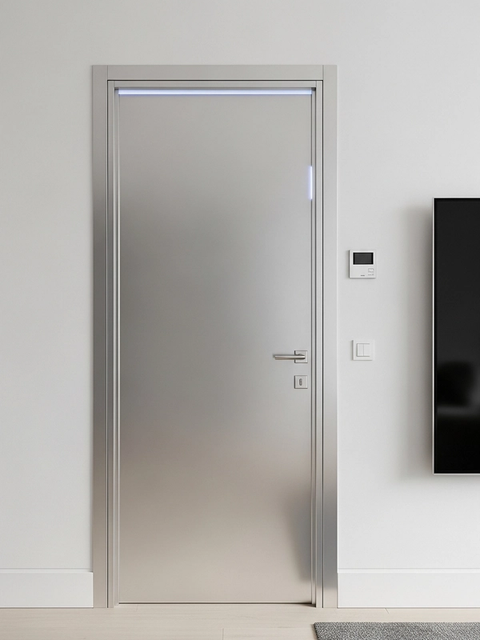
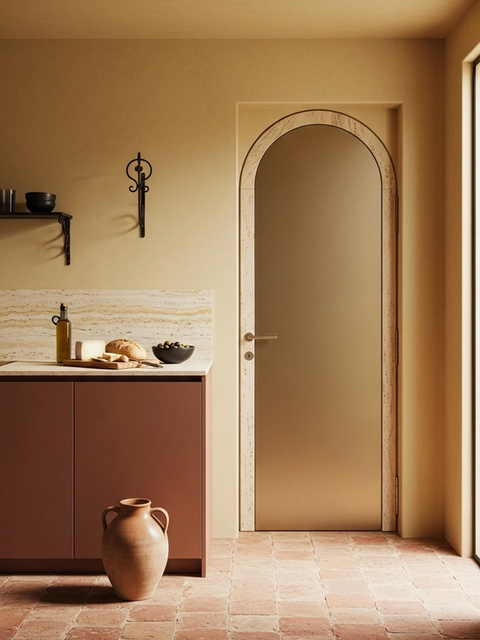
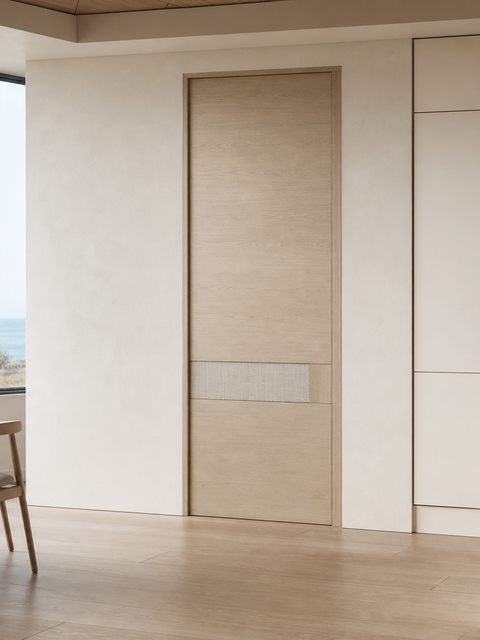
Alabaster Interior Door Suite with Shadow Reveal Pivot Pair is designed for homeowners who want interior doors to feel like part of the architecture rather than an afterthought added at the end of construction. The differentiator is the paired pivot composition. Instead of reading as standard door leaves dropped into trim-heavy openings, the suite creates a cleaner transition language with pale mineral planes, controlled shadow reveals, and a quieter full-height presence. That matters because doors influence how a luxury home feels every single day. They set the rhythm of movement between rooms, frame sightlines, and either support or interrupt the calm of the surrounding interior. Alabaster treats the door system as a whole-home surface decision, not a hardware choice alone. Fadior builds that decision on a real 304 stainless steel structure, so the visible precision is backed by a stronger material platform. The suite therefore combines cleaner design intent with the confidence of a more stable and durable construction logic behind the finished face.
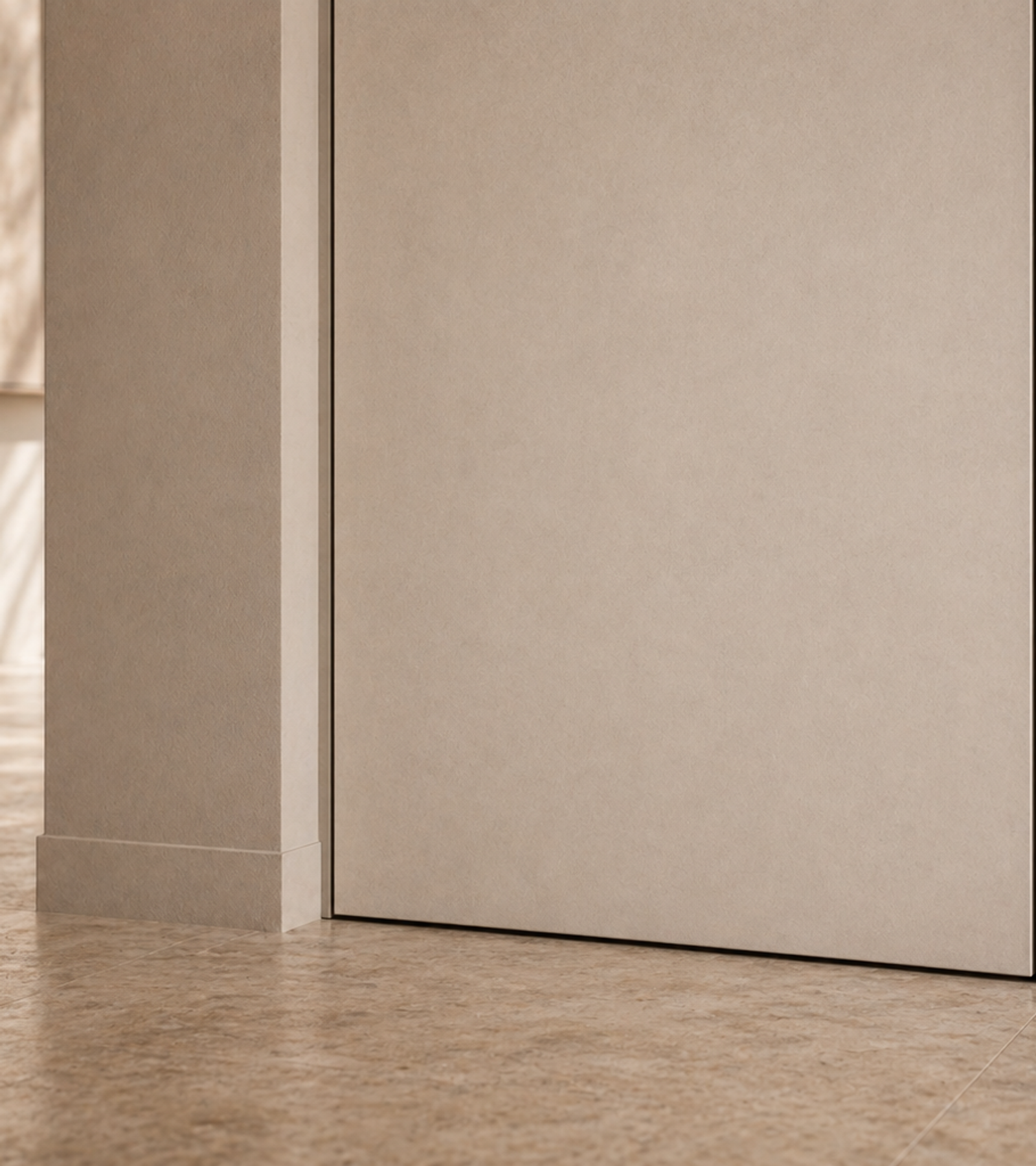
The shadow-reveal approach is especially important in contemporary homes where wall planes, ceiling lines, and floor transitions need to stay visually disciplined. Shadow Reveal Pivot Pair does not aim for drama through oversized decoration. It aims for composure. Pale mineral surfaces, warm plaster, and tight reveal control let the door system disappear into the room when closed, yet still feel substantial and premium at close range. This creates a more architectural expression than traditional framed doors with heavier trim interruption. It also fits naturally into the broader shift toward cleaner, more modular interior systems. Buyers increasingly want continuity across kitchens, wardrobes, vanity zones, and doors so the home reads as one resolved language rather than a mix of unrelated packages. Alabaster answers that demand by connecting the door system to Fadior's whole-home cabinetry logic. The result is a product that helps circulation spaces feel less fragmented and gives designers a better tool for preserving visual calm from one room to the next.
Planning value appears in the subtler parts of everyday life. Well-designed door systems improve how a hallway reads, how a suite entrance feels, how one room hands off to another, and how much visual noise accumulates in a circulation path. The paired pivot format can emphasize symmetry where needed, create a more generous suite entry, or reinforce the calm of a gallery-like corridor. Because Fadior works on a custom basis, the suite can be tuned for single or paired doors, adjusted for wall thickness and adjacent built-ins, and coordinated with surrounding cabinetry or paneling so the transition zones feel integrated rather than improvised. That flexibility matters for luxury homes where doors often intersect with wardrobes, media walls, vanity passages, or private study zones. The suite offers a way to keep those intersections cleaner. Instead of allowing every threshold to introduce a new trim language, Alabaster creates a quieter door grammar that helps the entire home feel more considered.
The 304 stainless steel structure gives that architectural calm a stronger technical basis. Interior doors are used constantly, and over time homeowners notice alignment drift, edge fatigue, surface inconsistency, and the small irritations that accumulate when a heavily used element was not built with enough discipline. Fadior's stainless steel approach provides a more stable core, a glue-free construction logic, and greater long-term confidence in a component that is opened and closed thousands of times over its life. That does not mean the suite looks industrial. It means the visible precision is easier to preserve because the product begins with a more credible structural platform. For specifiers, this matters because doors are not only a styling decision. They are also a durability decision and a coordination decision. Alabaster makes those two decisions easier to align. The homeowner gets a calmer, more premium threshold experience, while the designer gets a door system that behaves more like an architectural element and less like a decorative afterthought.
Customization allows the suite to adapt to private residences with very different circulation patterns and moods. Fadior can tune door height, pair width, pivot emphasis, adjacent panel coordination, handle treatment, reveal depth, and finish warmth so the suite complements the surrounding rooms. Some homes need a stronger gallery effect with longer, quieter wall runs. Others need a more intimate bedroom or dressing-suite threshold that still preserves the same clean transition logic. The suite can also coordinate with cabinetry, wardrobes, and wall panels so the whole property reads as one language. That is one of the strongest reasons to consider Alabaster. It is not only a door. It is a linking element between rooms, surfaces, and use patterns. By treating the system that way, Fadior gives luxury homeowners a more coherent path to whole-home refinement than isolated door packages can usually provide.
A further advantage is that the suite helps the expensive parts of a home work together more quietly. Luxury interiors often combine fine stone, built-in storage, concealed lighting, and carefully tuned wall finishes, yet a poorly handled door opening can still break the continuity in an instant. Alabaster is designed to prevent that break. By using cleaner reveals and calmer door planes, it lets the surrounding materials stay in dialogue with one another instead of competing with a separate trim story at every threshold. This can make corridors feel longer, private entries feel more deliberate, and secondary rooms feel more connected to the overall design language of the property. For specifiers, that means fewer compromises when coordinating doors with wardrobes, media walls, vanity passages, or panel systems. For homeowners, it means the home feels more coherent day after day, not just in staged photographs.
That coherence is a real luxury benefit because it is experienced constantly, not only noticed occasionally. Every opening and closing moment reinforces the same sense of calm. When a door system can do that while also carrying a stronger structural story, it becomes much easier to justify as part of a serious whole-home specification rather than as a decorative upgrade. The suite effectively turns thresholds into design assets instead of tolerated interruptions. It also helps premium rooms feel related to one another instead of loosely connected by standard joinery decisions. That added sense of continuity can make an entire residence feel more curated, more intentional, and more quietly expensive over time. It strengthens the daily experience of moving through the home with less visual interruption and more architectural confidence.
From a search-intent and buyer-value perspective, Alabaster answers an important question directly: what does a luxury interior door system look like when it is designed as architecture and built for repeated long-term use? It looks quieter, cleaner, and more integrated, with a stronger material platform behind the finish. The suite is relevant to buyers comparing pivot doors, frameless interior door design, and custom architectural door systems because it avoids the common tradeoff between visual simplicity and technical confidence. Alabaster provides both. The pale mineral finish direction keeps the room calm, the shadow reveals preserve visual discipline, and the 304 stainless steel structure gives the suite more dependable long-life credibility. That makes the product a practical investment as well as a design one. The thresholds feel better every day, and the home keeps a more coherent language from one space to the next.