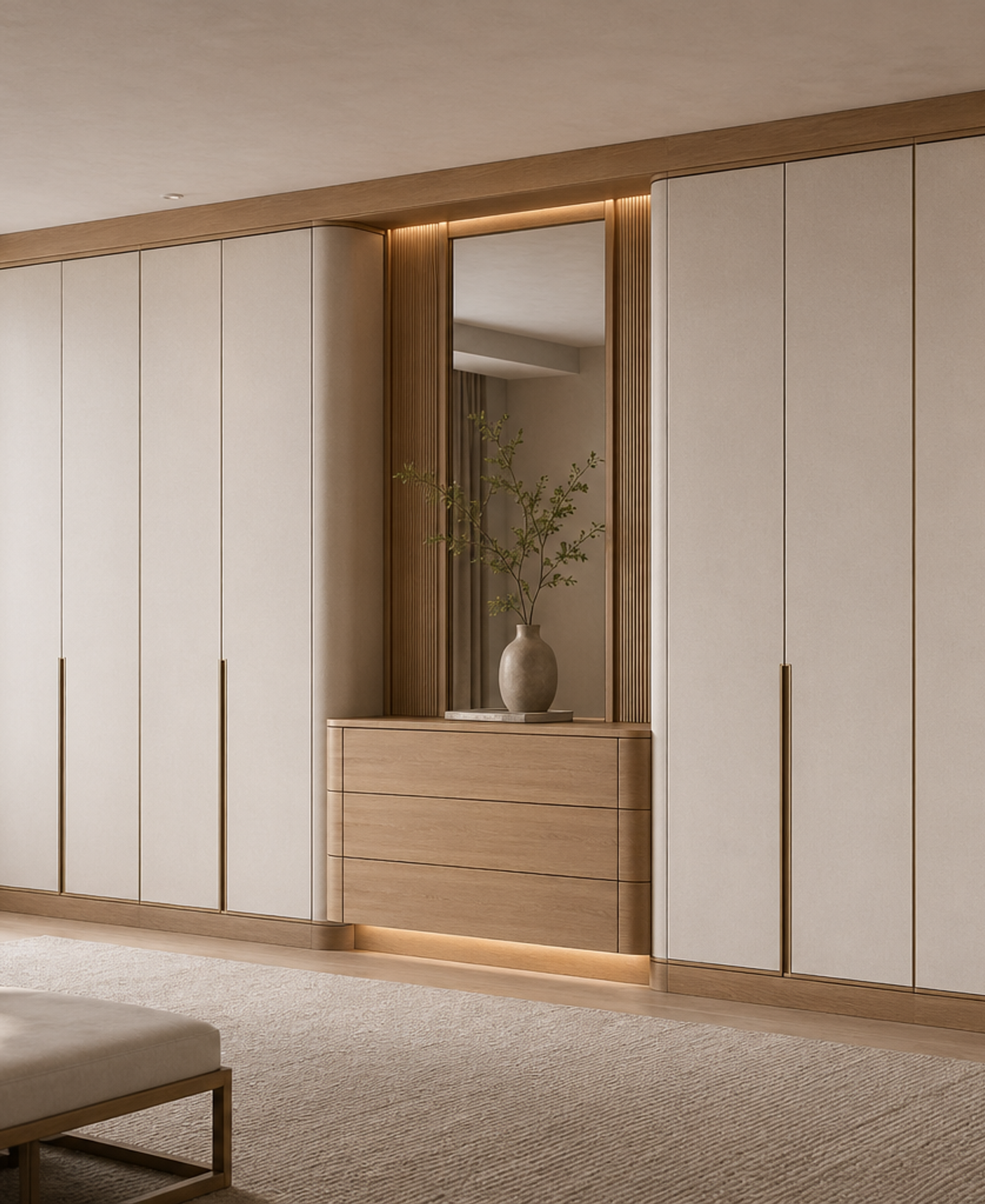
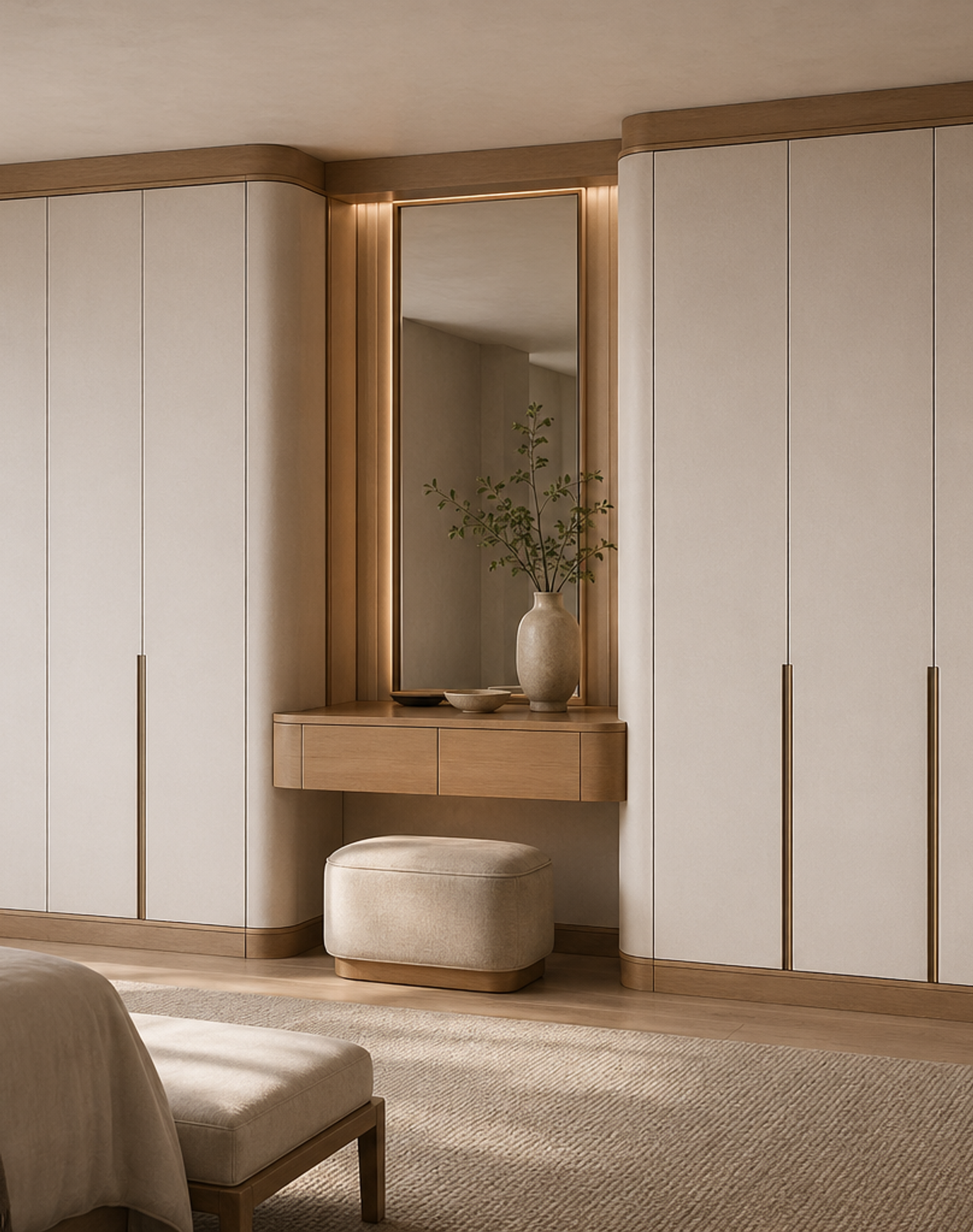
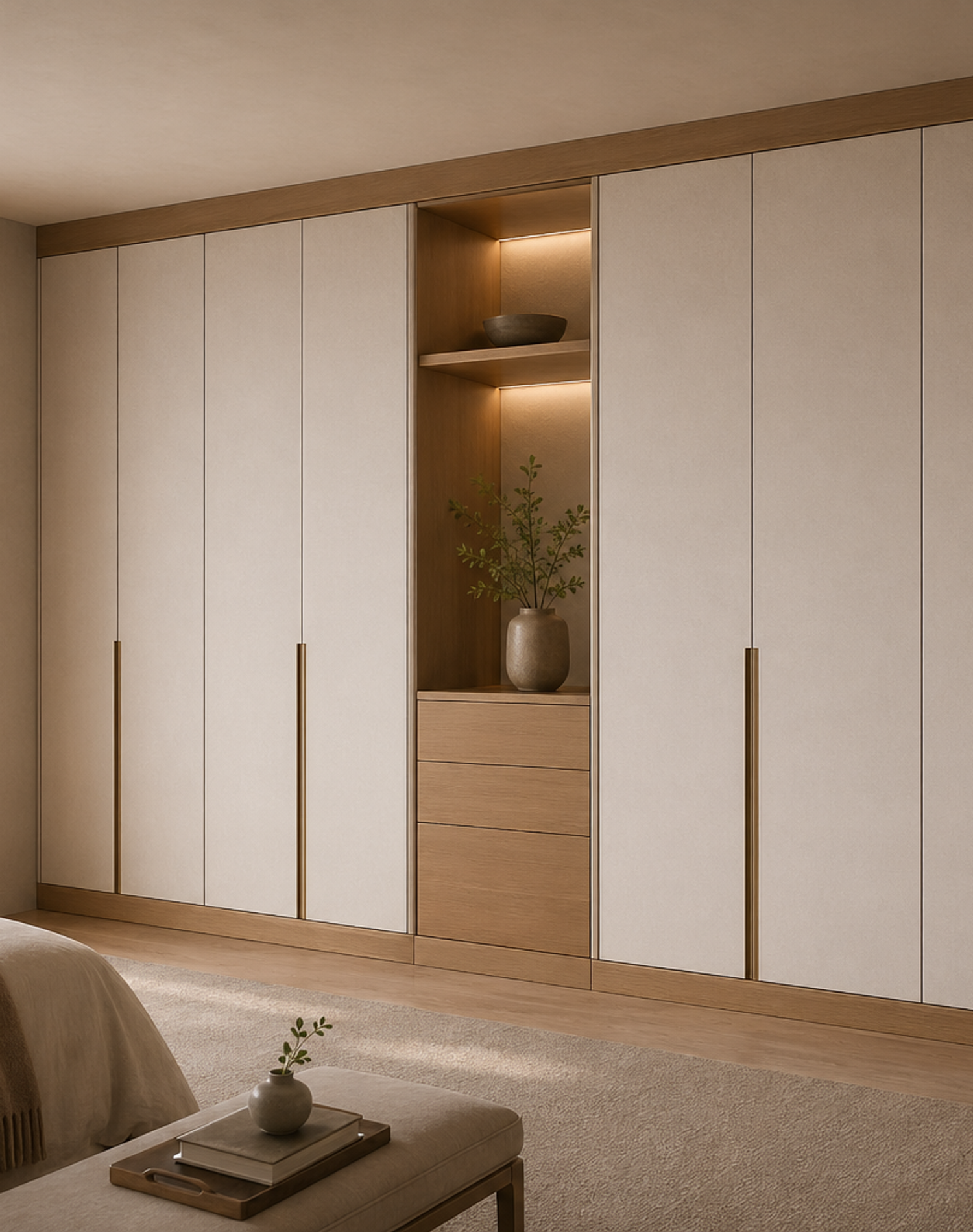
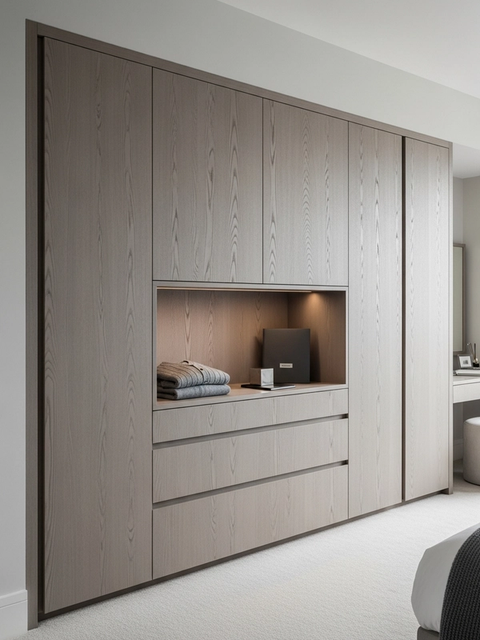
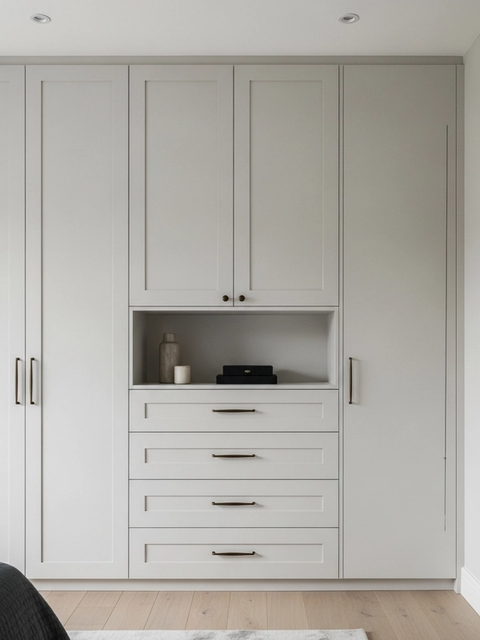
Canopy Wardrobe Suite with Linen Gallery Dressing Wall is designed for buyers who want a wardrobe to feel edited, calm, and deeply custom without reading like a temporary boutique set. The differentiator is the dressing wall itself. Rather than treating storage as a set of repeated tall boxes, the suite composes the room as a continuous gallery plane with linen-toned fronts, a warmer timber note, and a rhythm that feels tailored to the architecture. That approach matters because wardrobes often fail in one of two ways. They either become aggressively minimal and cold, or they add so much decorative contrast that the room stops feeling restful. Canopy aims for a quieter luxury. The wardrobe is still highly functional, but the first read is one of order, softness, and proportion. Fadior builds that expression on a real 304 stainless steel cabinet body, which means the calm exterior is supported by a more durable, moisture-resistant, glue-free core than many wood-based wardrobe systems can offer. The result is a dressing room that feels composed at eye level and more trustworthy over the long term.
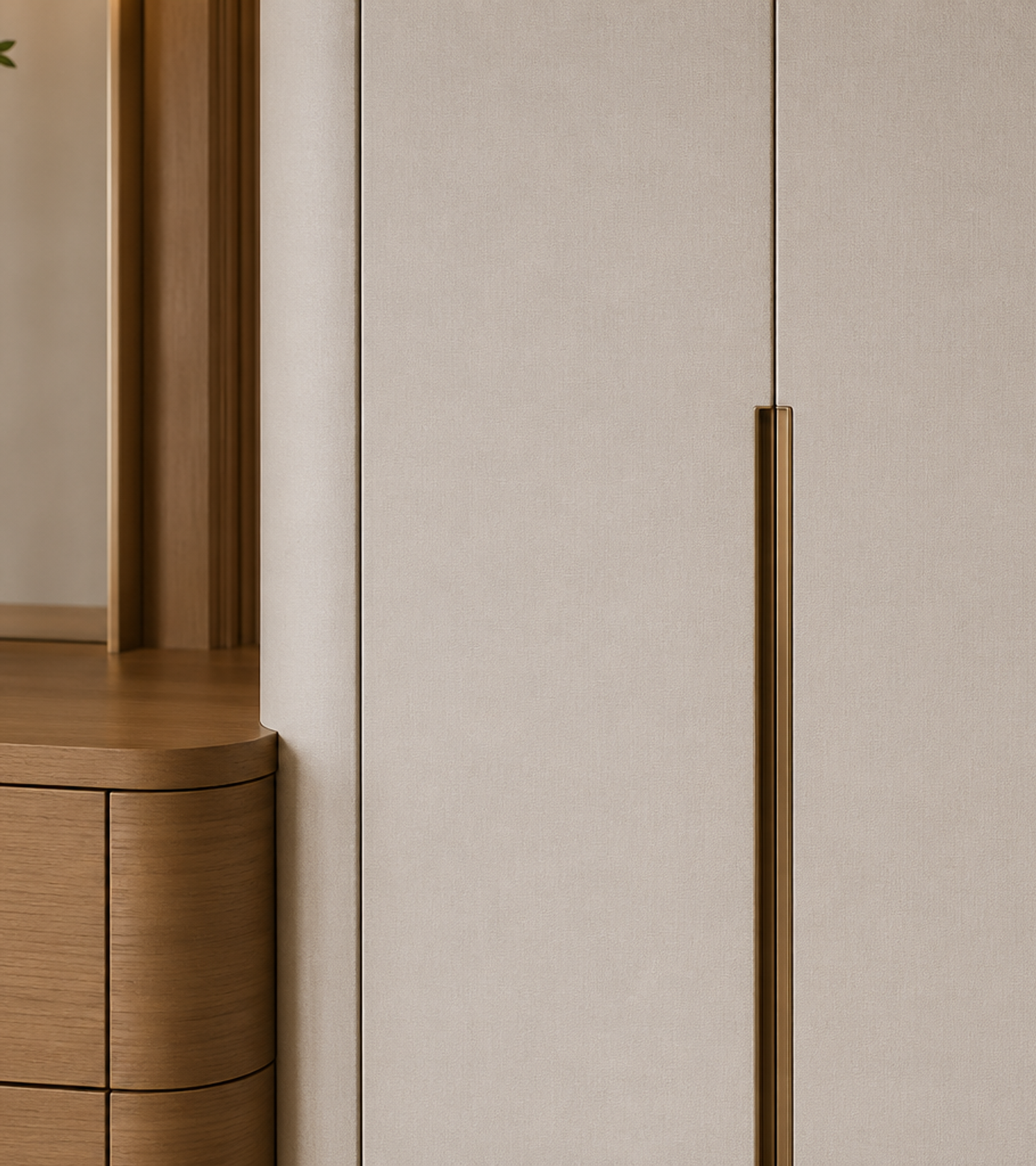
The visual mood is important because wardrobes are used at close range every day. Linen Gallery Dressing Wall does not rely on strong contrast or glossy surfaces to signal luxury. It uses softer matte fronts, subtle oak-toned warmth, and a disciplined shadow line so the room feels like custom interior architecture rather than retail display. That restraint supports better daily experience. The bedroom or dressing room stays restful, and the wardrobe reads as part of the home instead of a separate object competing for attention. Because the cabinet body underneath is 304 stainless steel, the suite can hold onto that softness without feeling delicate. Fadior does not need to mask a weak carcass behind a premium finish story. The visible finish and hidden structure are aligned. Buyers who compare the suite to lacquered or veneer-heavy alternatives often notice that the Canopy room feels cleaner in proportion and more credible in construction, especially once the conversation turns to longevity, humidity stability, and daily wear around handles, plinths, and floor edges.
Planning strength comes from how the suite organizes dressing routines. Full-height storage, folded-clothes capacity, long-garment accommodation, accessory placement, and mirror adjacency can be tuned to the user instead of forced into a preset catalog. The gallery wall makes those functions feel quieter because the exterior remains orderly even when the internal planning becomes highly specific. That matters for homeowners who want a wardrobe to support real morning and evening use without making the room feel busy. It also matters for designers who need the joinery to balance against upholstery, wall finishes, and daylight rather than dominate them. Fadior's custom process lets the suite stretch along a bedroom wall, wrap a dressing niche, or define part of a walk-in sequence while preserving the same controlled exterior language. Instead of placing emphasis on visible compartment novelty, the suite creates value by making storage density feel calm and almost effortless from the outside.
The 304 stainless steel cabinet body brings a quieter but very practical benefit to ownership. Wardrobes are not wet rooms like kitchens, but they still live through humidity change, repeated opening cycles, floor cleaning, and seasonal use shifts. A more stable cabinet body helps protect alignment and makes the suite less vulnerable to the swelling, odor retention, or hidden deterioration that can trouble wood-based systems over time. Fadior's glue-free approach also supports a cleaner materials story, which matters in private rooms where comfort and air quality are part of the luxury equation. Homeowners therefore get a wardrobe that feels softer and warmer in appearance while still being grounded in a technically serious construction method. That combination is especially useful for premium residences where buyers want the visual atmosphere of tailored residential joinery without accepting the hidden compromises that often sit behind it.
Customization is central because every dressing room solves a different life pattern. Some clients prioritize long hanging and seasonal wardrobes. Others need more drawers, accessories, or integrated seating nearby. Some want the wardrobe to disappear into the room. Others want it to frame a stronger architectural backdrop for a principal suite. Fadior can adapt panel rhythm, wall length, storage mix, finish balance, and lighting emphasis to match those priorities without giving up the same 304 stainless steel structural base. The linen tone can move warmer or cooler depending on the room. The timber note can become more pronounced or more subtle. Mirror placement and circulation can be recalibrated to suit either a compact bedroom edge or a more dedicated dressing sequence. That flexibility is what lets the suite behave like a bespoke product rather than a style sample copied into different homes.
From an investment perspective, Canopy Wardrobe Suite with Linen Gallery Dressing Wall is strongest when understood as atmosphere backed by engineering. The atmosphere is what the buyer sees first: a calm, tailored room that supports dressing with hotel-level polish. The engineering is what protects that mood from becoming fragile over time: a 304 stainless steel cabinet body, glue-free construction logic, and better long-term stability behind the finish. Together they give specifiers a stronger answer when clients want a wardrobe that feels soft and premium but also wants real material credibility. The suite is not about showy storage gimmicks. It is about making one of the most frequently used private rooms in the house feel settled, orderly, and durable for years of everyday life.
The suite becomes even more valuable when the wardrobe has to support different routines inside one household. One person may need faster access to business clothing, another may need more casual folded storage, and both may still want the room to feel calm rather than over-divided. Canopy handles that pressure by keeping the exterior language consistent while letting the interior planning become more specific. The wall stays quiet, which means daily complexity does not automatically turn into visible complexity. That is a stronger luxury signal than decorative display because it makes the room easier to inhabit over time.
There is also a whole-home advantage to the suite. The wardrobe can carry the same material credibility as the kitchen or bath while shifting its mood toward privacy and rest. That gives designers a better way to keep the home coherent without making every room feel the same. The stainless steel cabinet body provides continuity in performance, while the linen tone and calmer rhythm give the bedroom a softer emotional identity. Over time that balance tends to matter more than novelty. Owners continue to value the room because it stays ordered, stable, and quietly elegant through everyday use rather than only during the first impression.
That quieter confidence also helps the wardrobe remain relevant as clothing habits evolve. Seasonal changes, travel storage, and new routines can all be absorbed within the same calm exterior, which means the room keeps feeling tailored instead of constantly needing visible adjustment. The suite therefore supports not just storage volume, but a more stable emotional tone in the bedroom. That emotional steadiness is often what turns a good wardrobe into a lasting favorite room detail for homeowners who notice comfort every single day, year after year. It keeps mornings calmer too.