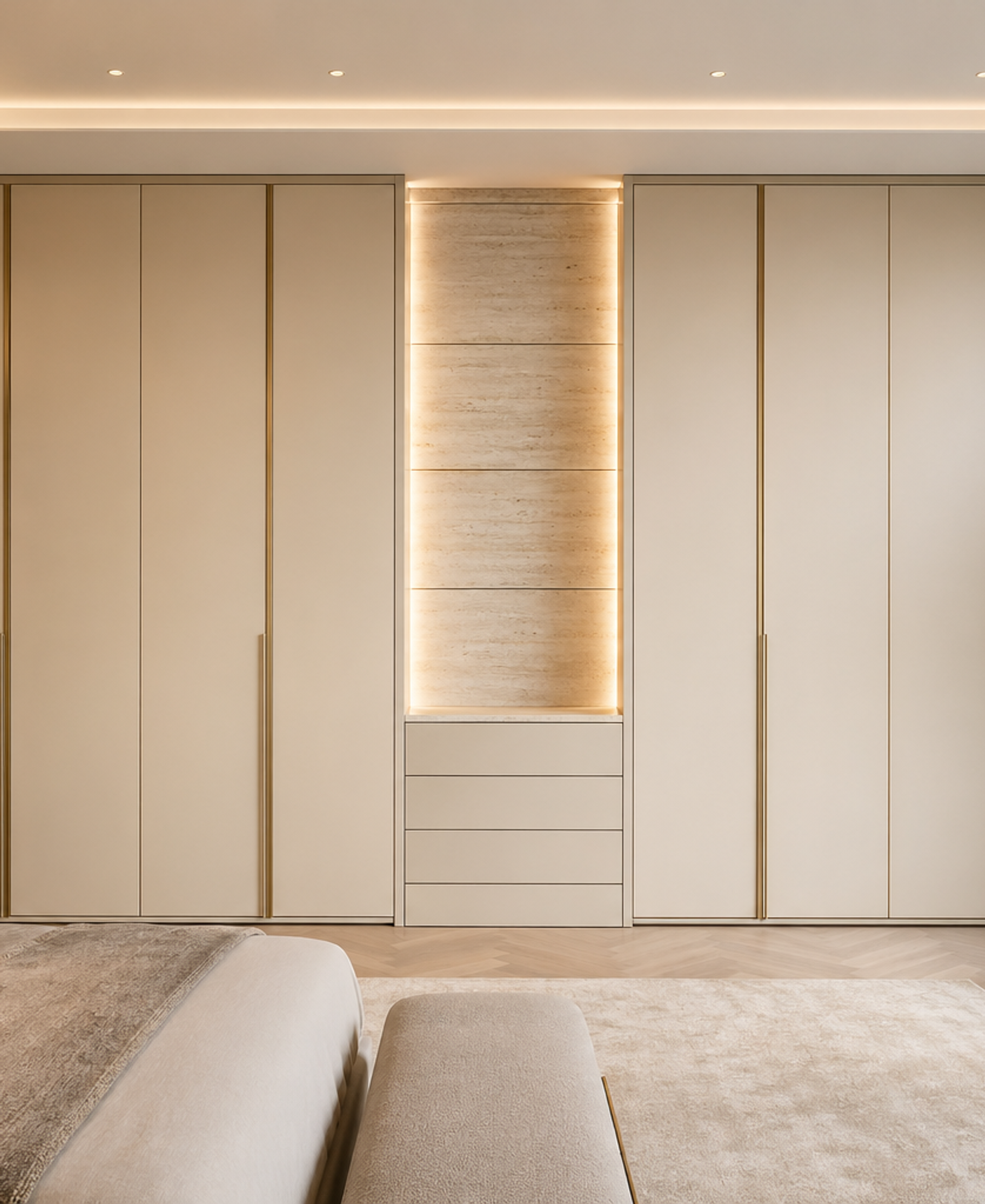
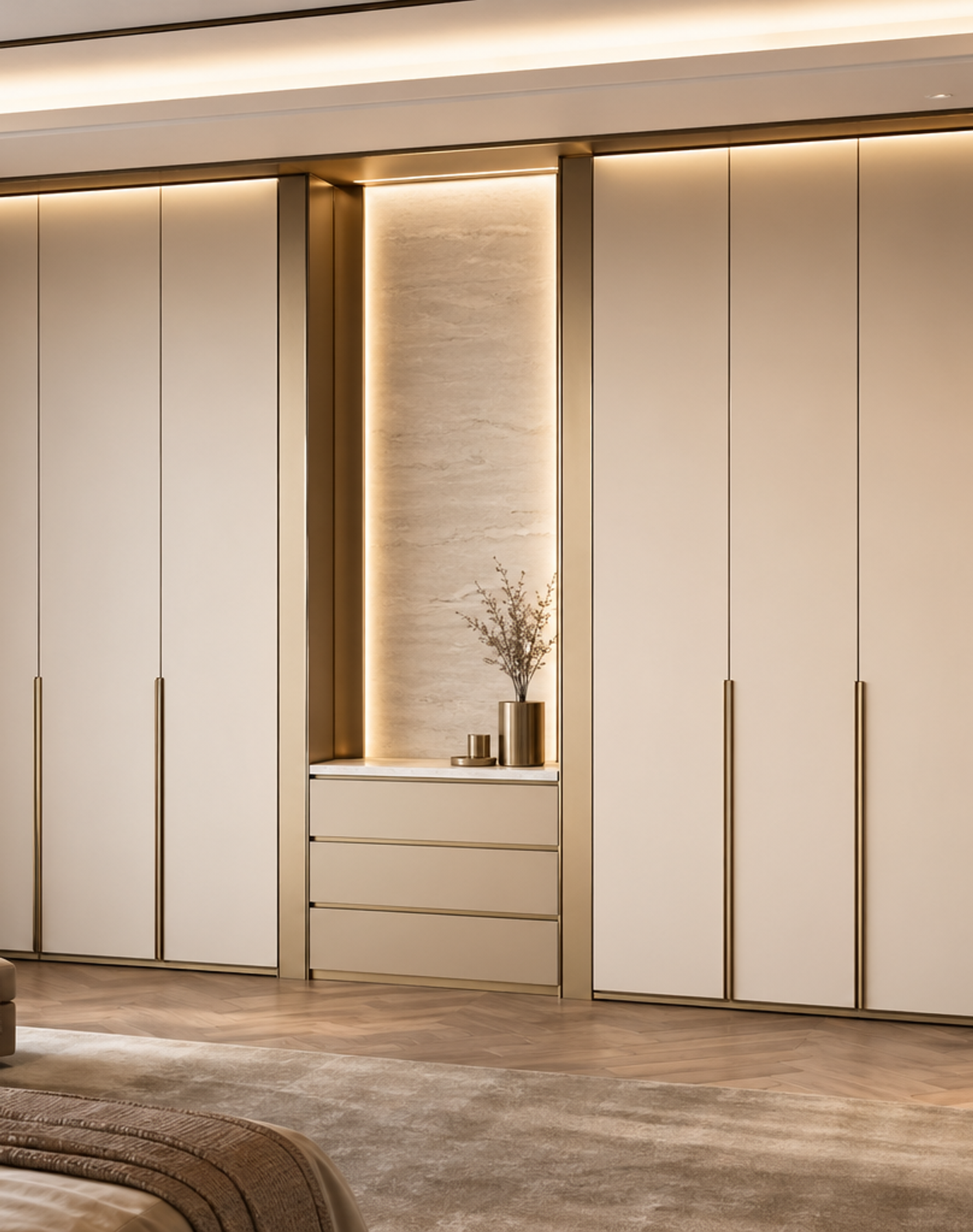
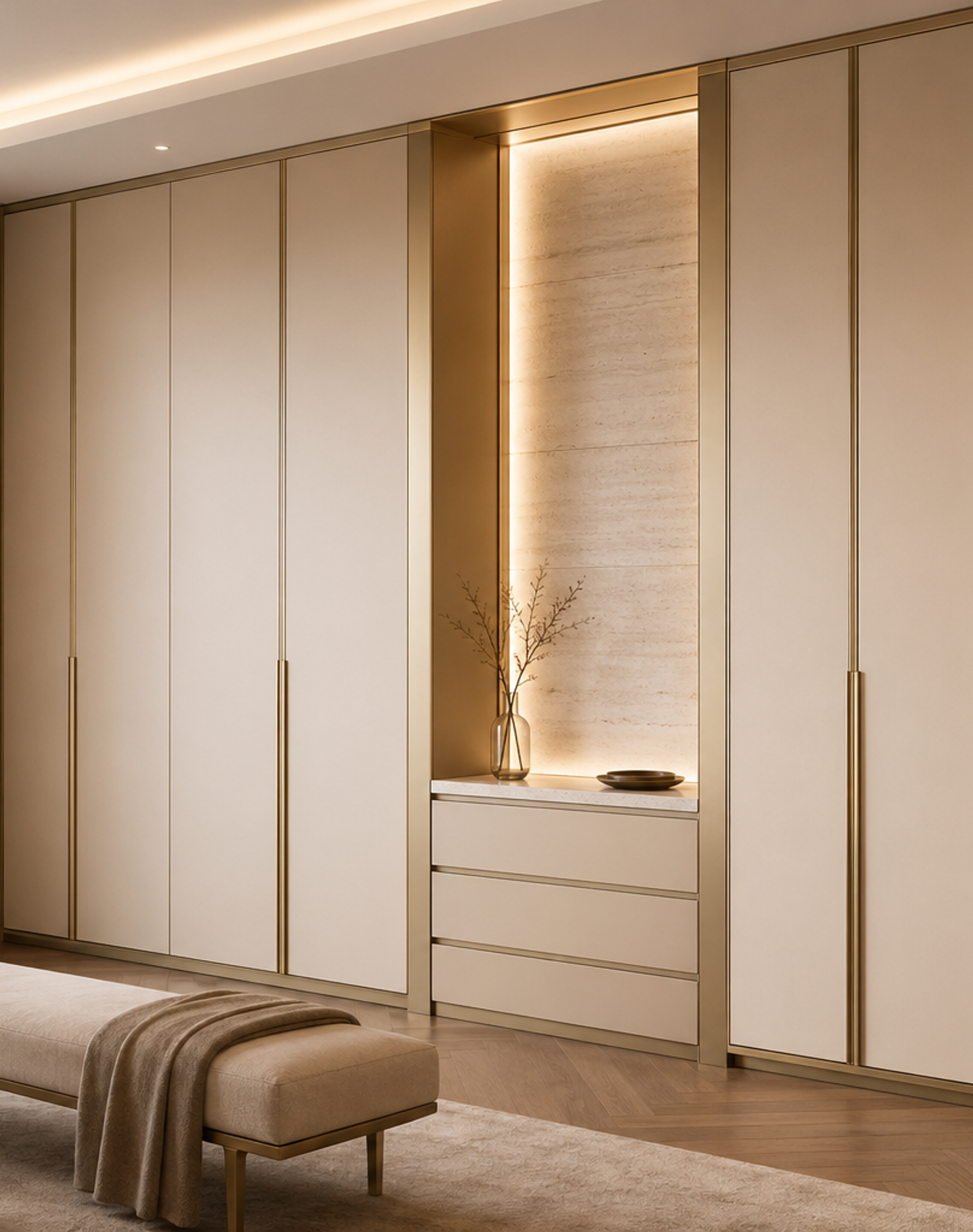
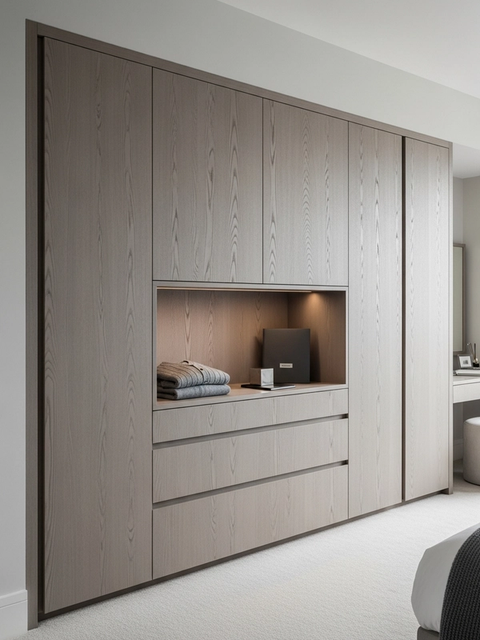
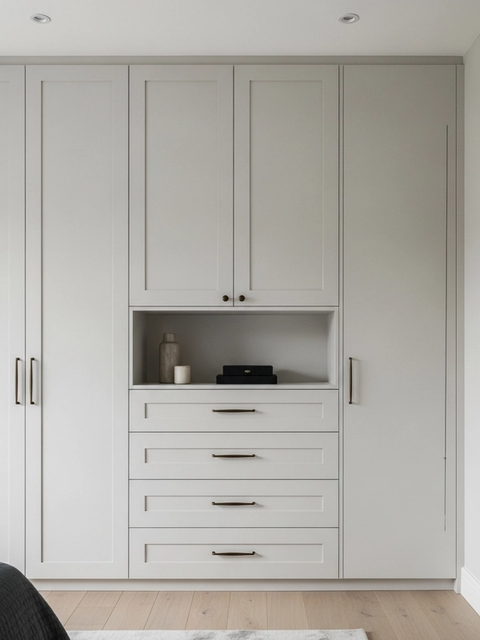
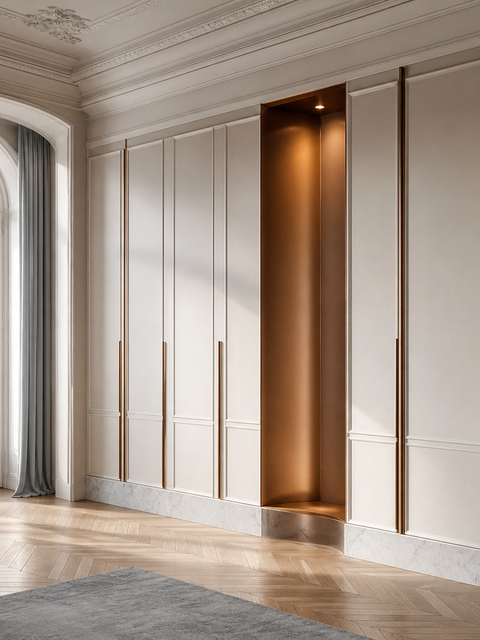
Elementum Wardrobe Suite with Low-Silica Dressing Spine is built for homeowners who want their dressing room to feel composed like architecture rather than crowded like storage. The direct answer is that this suite uses a real 304 stainless steel cabinet body and a centered mineral spine to bring order, durability, and a more health-conscious surface strategy into one wardrobe system. The spine is the differentiator. Instead of treating the middle of the room or wall as dead space between cabinets, Elementum makes that zone work harder by using a pale low-silica mineral expression as the visual anchor for valet use, accessory placement, and lighting emphasis. That decision changes how the wardrobe reads at first glance and how it works every day. Many premium closets still feel like banks of doors with expensive finishes but weak hierarchy. Elementum creates hierarchy without clutter. The eye understands the wardrobe immediately, and the owner gains a better dressing rhythm from the same square meters.
The finish language is deliberately warm and tailored. Cream-toned fronts, champagne accents, and a pale mineral spine give the suite the restraint of a private dressing salon without slipping into gloss-heavy glamour. This is where the current discussion around healthier, lower-silica material choices becomes especially useful. Buyers are becoming more selective about the surfaces they specify, especially in intimate daily-use rooms where touch, cleaning, and visual calm matter just as much as appearance. Elementum responds by treating the mineral spine as a precise architectural device rather than a decorative luxury flourish. It softens the room, brightens the center line, and supports a clearer routine for laying out watches, small leather goods, fragrance, or folded pieces without turning the dressing area into a display stage. The effect is more mature than a mirrored or overly lacquered center zone, and it allows the wardrobe to feel quietly expensive over time instead of trend-driven.
Planning value is where the suite earns its footprint. A serious wardrobe has to store hanging clothes, folded garments, shoes, accessories, and occasional luggage while still preserving the feeling of a calm room. The Low-Silica Dressing Spine helps distribute those tasks more intelligently. It creates a centerline for quick-access and ritual use while the flanking cabinets protect the visual calm of long-term storage. That separation matters because luxury wardrobes fail most often through accumulated visual pressure. When everything competes for the same front plane, the room feels busy even when the joinery is expensive. Elementum instead gives the owner a clearer order of use: arrive, place, select, return, move on. Fadior can stretch the suite into walk-in or wall-to-wall formats, change the balance between hanging and folded storage, add integrated seating, or reshape the central spine into a gentler corner or return condition. The important thing is that the wardrobe remains a suite, not a pile of customized modules pretending to be one idea.
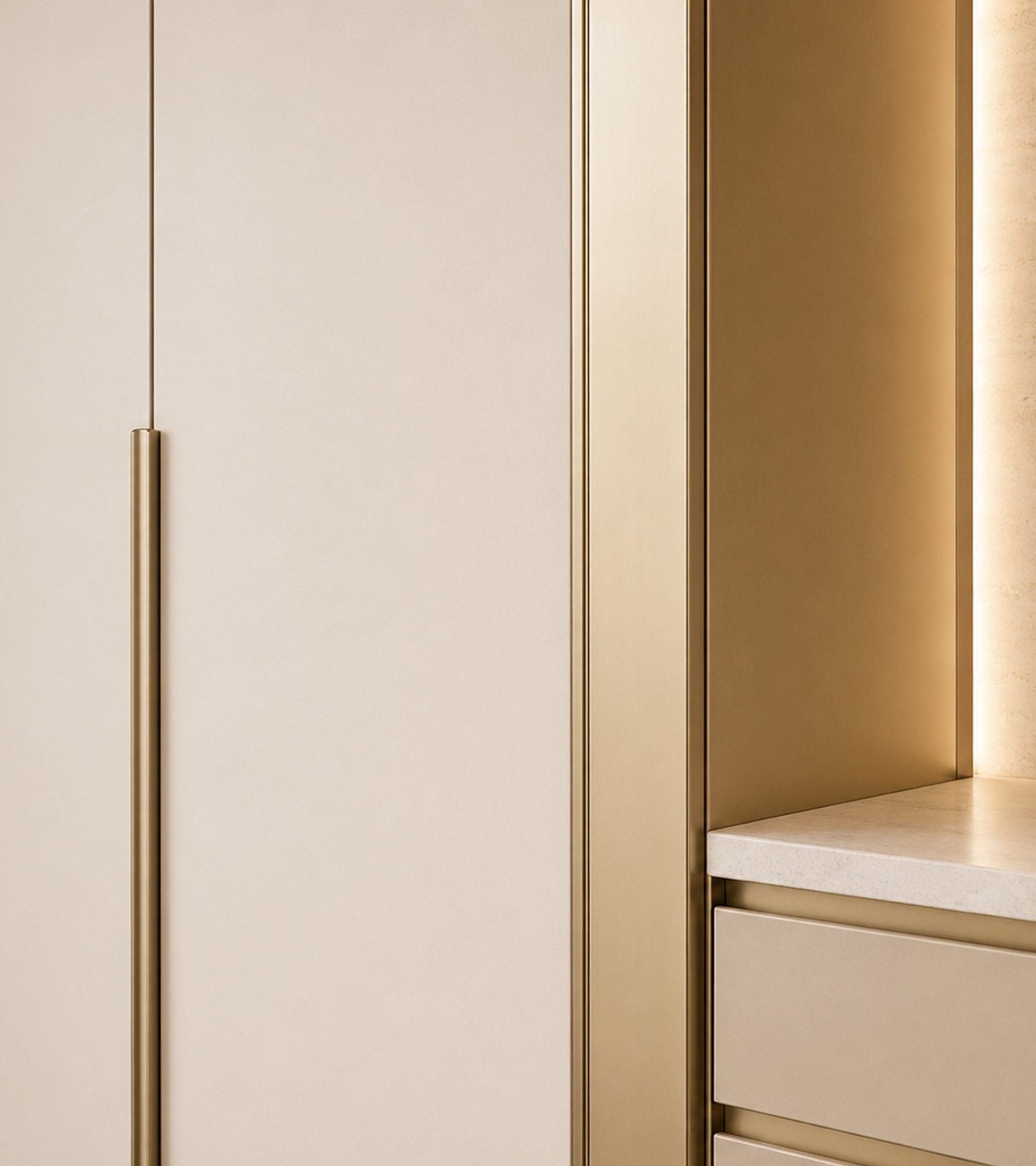
The 304 stainless steel cabinet body is a major part of that calm because it lets the product stay strong underneath a softer finish story. Wardrobes are not wet rooms in the same way kitchens and bathrooms are, but they still benefit from a cabinet body that resists humidity drift, keeps geometry stable, and avoids the formaldehyde concerns that continue to shape premium residential buying decisions. Fadior's glue-free cabinet logic supports a cleaner materials narrative while also improving confidence in long-term door alignment and structural consistency. This becomes valuable in larger dressing rooms where a long run of doors can quickly reveal any weakness in tolerances or carcase stability. The luxury benefit is not only about durability in the abstract. It is about making sure the wardrobe still feels quiet, square, and precise after years of real use. For buyers who are investing in a whole-home steel system or designers who need continuity between wardrobes, vanities, and kitchens, that underlying material discipline is part of the product's design value, not separate from it.
Customization is one of Elementum's strongest selling points because dressing behavior is intensely personal. Some owners prioritize long hanging and suiting. Others need heavier folded storage, bag display behind closed-looking fronts, jewelry organization, or a center gesture that works more like a boutique valet station than a traditional island. The suite can respond without losing its identity. Fadior can adjust door rhythm, module width, spine depth, lighting temperature, and the mix of side towers or returns so the wardrobe reflects the room and the user. This is particularly important in projects where the wardrobe connects visually to a bedroom or vanity suite. The central mineral line becomes a bridge, helping the room feel designed rather than furnished in parts. That is a valuable distinction for luxury buyers, because the best wardrobes do not announce storage first. They announce composure. Elementum is designed around that idea: better storage through better hierarchy, not more visible complexity.
Another advantage of the suite is that it helps a dressing room stay premium even when life is not perfectly curated. The mineral spine offers a contained zone for short-term objects, while the closed storage mass behind it preserves order. That means the room is easier to reset after travel, evening routines, or seasonal wardrobe rotation. The owner does not have to constantly restage the entire closet to keep it looking calm. This practical composure is often the hidden line between a wardrobe that feels luxurious and one that simply costs a lot. The palette also supports longevity. Cream, pale mineral, and champagne accents give the room warmth without depending on fashion-led contrast or dark dramatic finishes that can tire more quickly. Elementum therefore works well in homes that want softness, architectural order, and long-term relevance rather than a one-season boutique effect. The room can still feel intimate and indulgent, but it does so through proportion, light, and detail discipline.
For homeowners comparing premium wardrobe systems, Elementum answers a useful question directly: how do you create a dressing room that feels warmer, more organized, and more materially credible without filling it with visible fittings or visual noise? The answer is a better cabinet body, a stronger centerline, and a finish strategy that treats luxury as quiet control rather than spectacle. The Low-Silica Dressing Spine becomes the practical and visual hinge of the room, while the 304 stainless steel structure keeps the suite grounded in long-term performance. That combination makes Elementum especially well suited to buyers who want storage discipline, health-conscious specification, and a luxury dressing mood to live in the same product rather than sit in separate wish lists.
Elementum also performs especially well when the wardrobe must connect visually to a bedroom, vanity room, or corridor sequence. The centered mineral spine reads as a designed architectural move from outside the room, yet remains practical once the owner steps in to dress, sort, or reset after travel. It can support watches, fragrance, folded garments, and short-term objects without turning the entire wardrobe into visible storage. That makes the room easier to coordinate with adjacent fabrics, wall finishes, and lighting, and easier to keep feeling premium through seasonal changes in wardrobe use. Instead of depending on mirrored glamour or decorative overstatement, the suite builds luxury through steadiness. That steadiness is a major part of its long-horizon value over time.