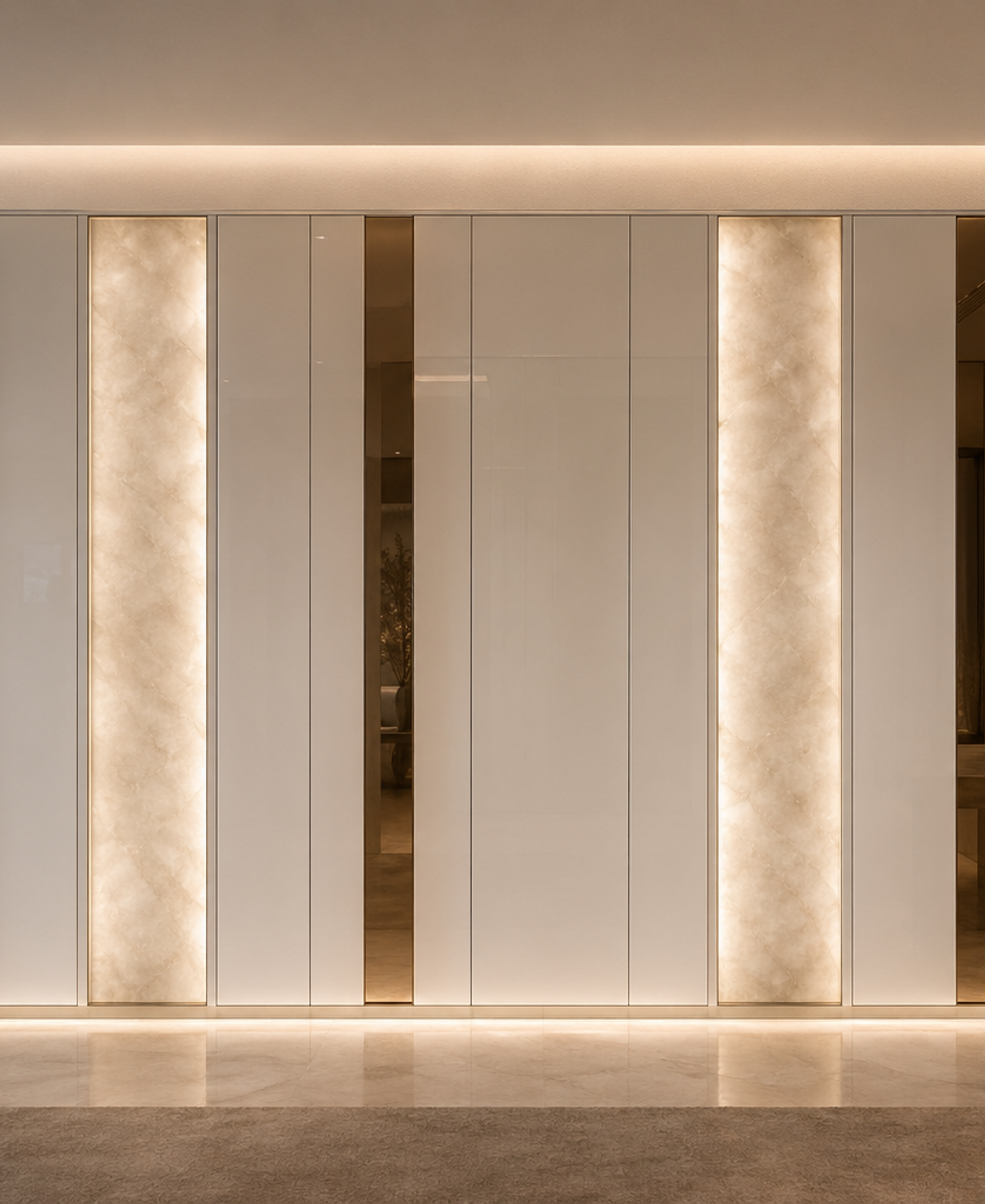
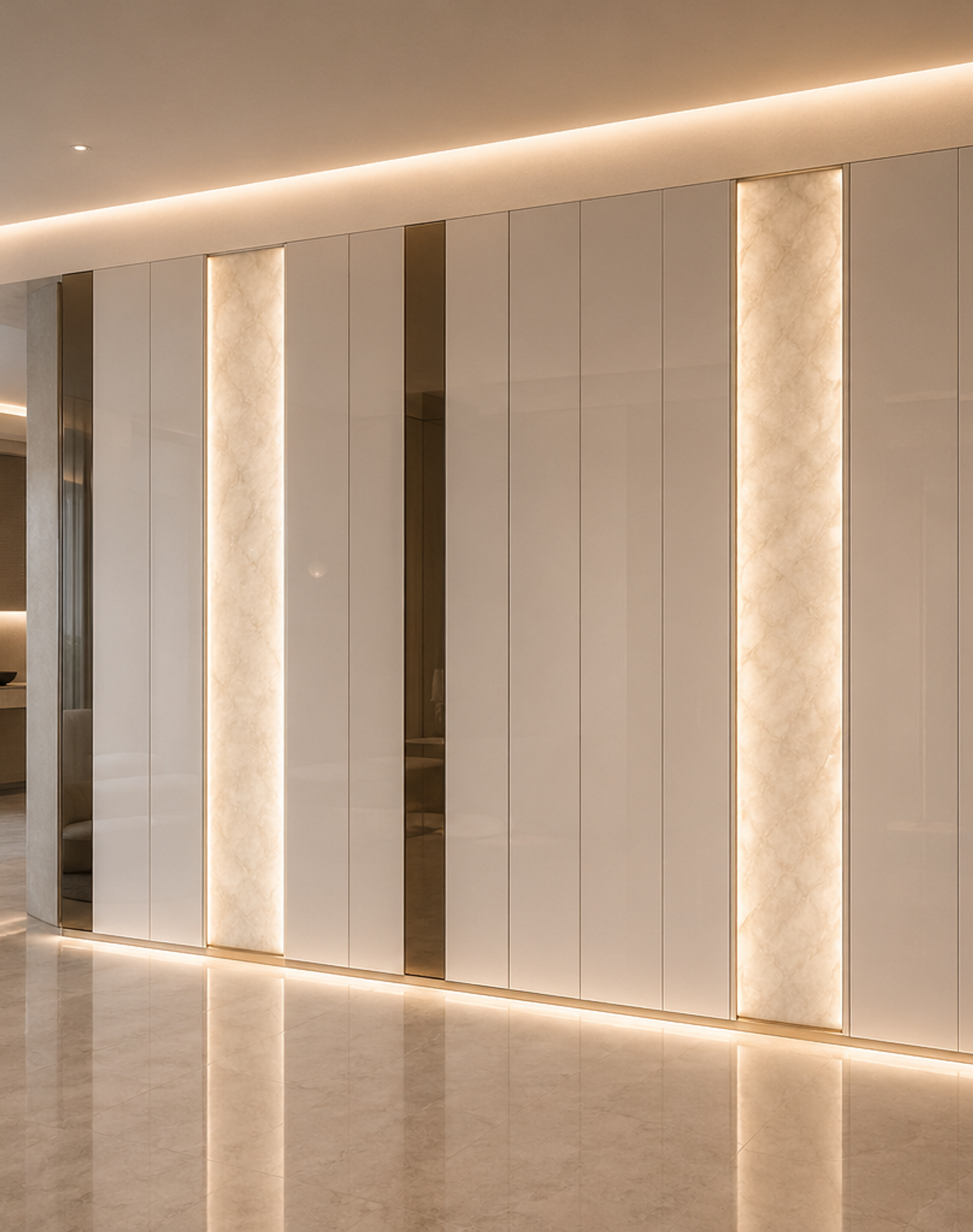
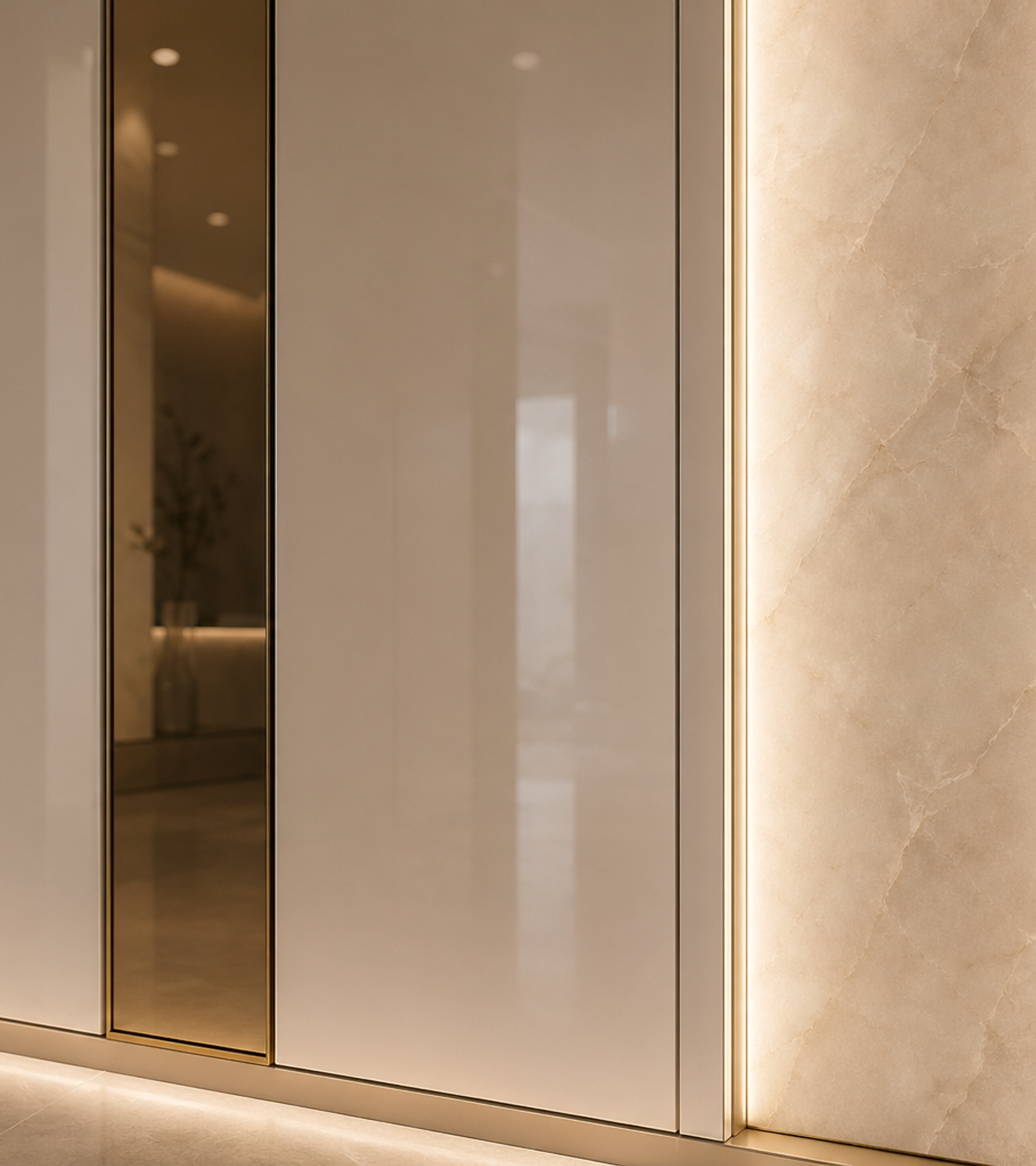
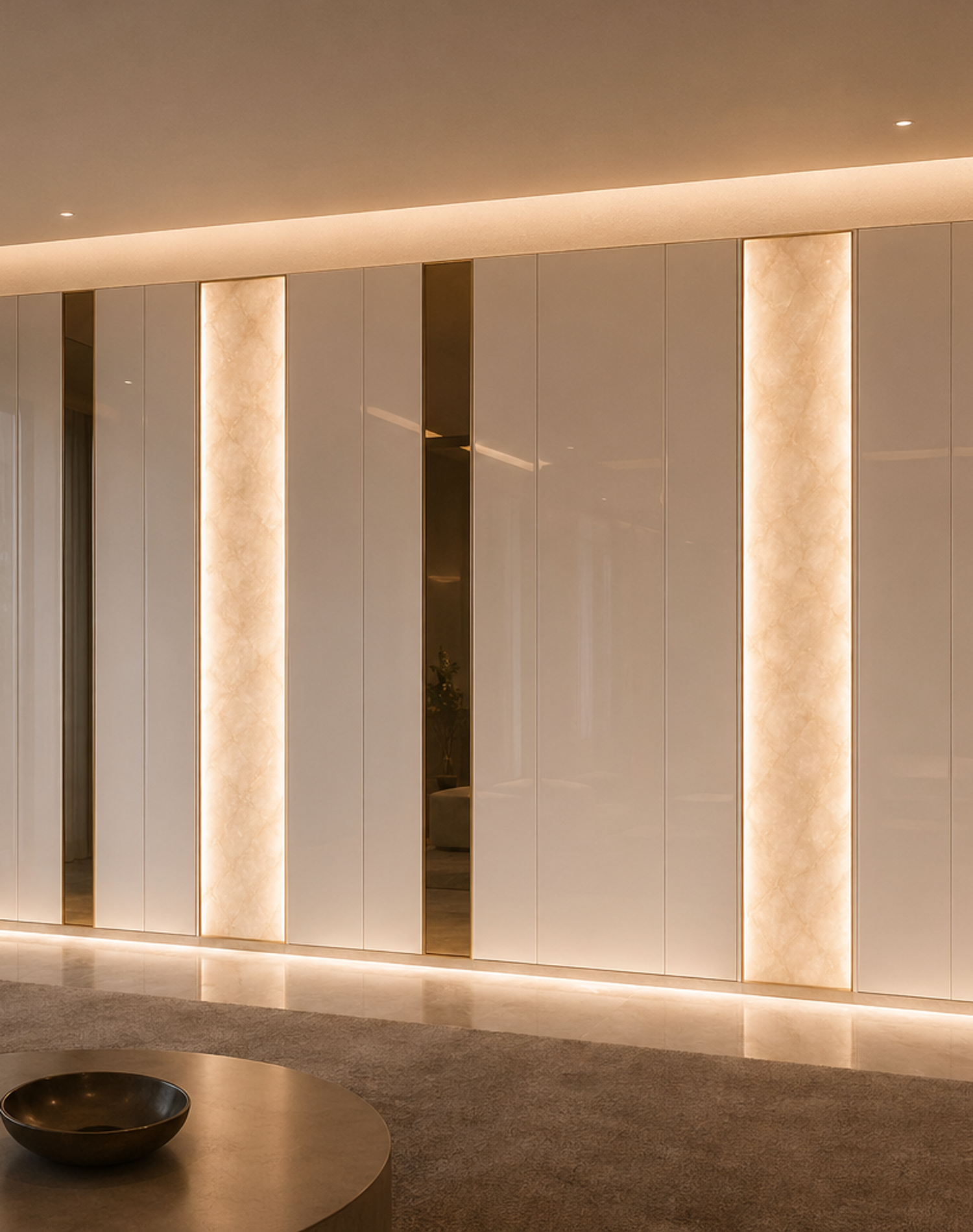
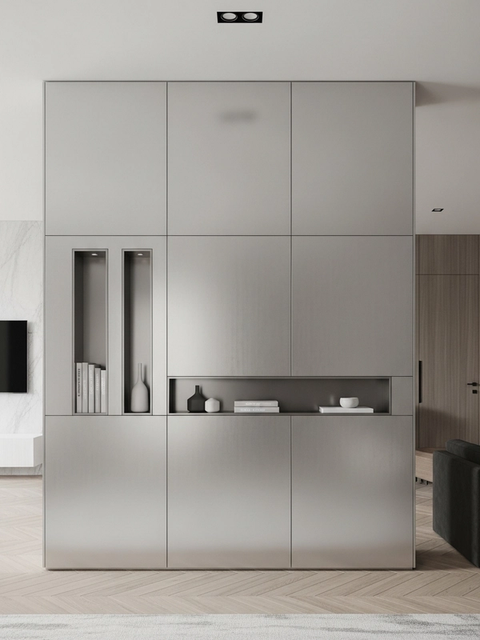
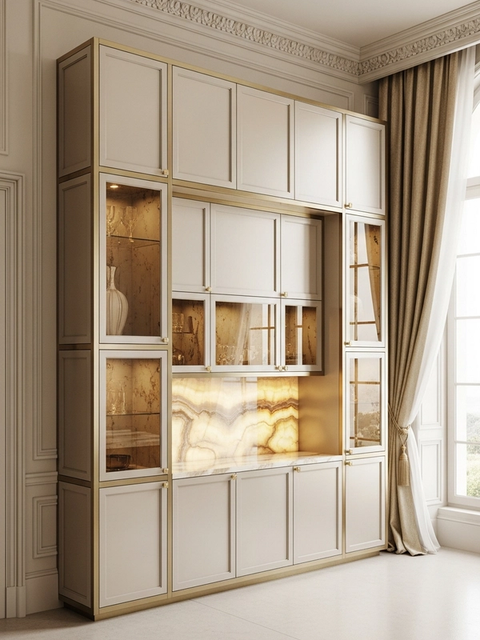
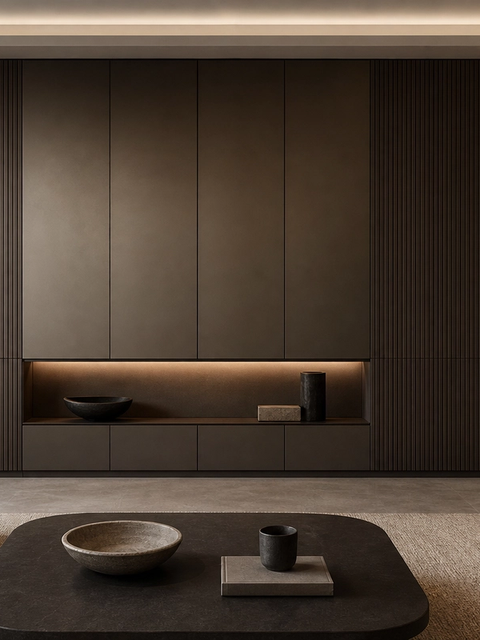
Miroir Wall Panel Suite with Backlit Mineral Glow Plane is designed for homeowners and designers who want a wall feature to shape atmosphere, not just fill a surface. The direct answer is that this suite combines a real 304 stainless steel panel system with a pale backlit glow plane so the wall can reflect light, soften circulation, and add architecture to the room without relying on heavy decorative pattern. The glow plane is the differentiator. Instead of using illumination as an afterthought or a bright accent strip, Miroir makes light part of the wall's compositional logic. That matters because many feature walls feel impressive for a few minutes but become tiring in real life. They use too much contrast, too much graphic pattern, or too many isolated decorative moves. Miroir takes a different route. It gives the room a cleaner vertical rhythm, a more controlled reflective field, and a gentle luminous center that makes the wall feel integrated into the architecture rather than pasted onto it.
The mineral glow idea is especially timely because luxury interiors are moving toward surfaces that feel more thoughtful and less show-driven. Buyers are asking sharper questions about what gives a room atmosphere and whether the answer is material quality, light quality, or simply excess. Miroir responds by treating the wall as a precision surface. Pearl-white planes, reflective vertical bands, and a softly backlit mineral field create depth without visual aggression. The result is not mirror glamour for its own sake. It is controlled luminosity. This is useful in corridors, entry lounges, and living-adjacent feature zones where the wall has to make a room feel larger and calmer at the same time. A hard glossy wall can bounce too much energy. A flat dark wall can deaden the space. Miroir sits between those extremes, adding brightness and articulation while keeping the room residential, warm, and believable.
Planning value comes from how the suite shapes movement. A wall panel system is often judged only as a finish, but in real projects it influences how a person enters a room, where the eye lands, and whether a transition space feels compressed or generous. The Backlit Mineral Glow Plane helps because it creates a visual horizon within the wall. It gently pulls attention, defines a center, and makes the surrounding panel rhythm feel more intentional. This becomes powerful in long corridors, entry sequences, and formal living transitions where a plain wall would feel unfinished but an overly decorative treatment would feel forced. Fadior can tune the glow plane's width, vertical emphasis, surrounding panel cadence, and lighting warmth depending on the architecture. That means the suite can move from statement feature wall to quiet spatial divider without changing its core language. In high-end homes, this flexibility is valuable because the wall may need to connect multiple rooms, finishes, and lighting moods while still feeling like one resolved system.
The 304 stainless steel panel system gives the product a stronger structural and finish foundation than decorative board-based wall treatments. Wall panels are often touched, cleaned, and exposed to changing light conditions that quickly reveal weak joints, fragile coatings, or uneven alignment. Fadior's panel logic supports cleaner geometry, more controlled edge conditions, and a more dependable substrate for reflective and luminous effects. This matters because the visual success of a panel wall depends on precision. If lines wander or surfaces distort, the room immediately feels less expensive. Miroir therefore pairs its atmospheric ambition with a panel structure intended to hold crispness over time. The result is a feature wall that does not depend on busy pattern to disguise weak construction. It depends on proportion, reflection, and line discipline. For designers, that makes the suite easier to specify in demanding interiors where the eye will linger on every seam and glow transition.
Customization is also essential because wall panel systems sit at the meeting point of architecture, lighting, and furniture. Some homes need a brighter entry sequence, others need a calmer living-room backdrop, and others need a transitional divider between dining and lounge space. Miroir can adapt by changing the proportion of reflective bands, the scale of the glow plane, the surrounding panel finish, and the overall warmth of the illumination. It can feel more sculptural or more restrained. What stays constant is the suite's preference for calm over spectacle. This makes it especially valuable in homes that want a signature surface without turning the whole room into a stage set. The wall contributes identity, but it does not dominate everything around it. That balance is one of the hardest things to get right in high-end interiors, and it is where Miroir is strongest.
Another advantage is how well the suite supports layered lighting in residential life. During the day, the reflective field helps distribute available light and make the room feel deeper. In the evening, the glow plane can take over as a calmer ambient layer that reduces the need for harsh overhead emphasis. This gives the wall a real job beyond appearance. It participates in how the room feels across different hours and moods. That is important in luxury homes, where a single space may shift from quiet morning circulation to evening entertaining. A well-designed wall panel system should support those shifts rather than look static in all conditions. Miroir does that through reflection, glow, and disciplined detail rather than through novelty tricks.
For buyers searching for a luxury wall panel system in 304 stainless steel, Miroir answers the key question directly: how do you add light, depth, and architectural identity to a room without overdecorating it? The answer is a better panel substrate, a calmer glow strategy, and a reflective language that serves the room instead of competing with it. Miroir is therefore best suited to homeowners who want a wall to perform spatially, atmospherically, and materially all at once.
Miroir is particularly useful in homes that need a feature wall to bridge very different moods without forcing a style jump. A corridor may need brightness in the morning, a lounge may need softness at dusk, and an entry may need enough presence to feel memorable without overpowering art or furniture. Because the suite relies on reflection, glow, and disciplined line rather than on graphic pattern, it can adapt to those shifts gracefully. The wall becomes a lighting partner for the architecture, helping compress or release space, underline height, and frame movement without shouting for attention.
That wider usefulness matters commercially as well. Buyers investing in premium panel work are rarely paying only for a pretty surface; they are paying for a more complete environmental effect. Miroir answers that expectation by finishing the room, improving luminous depth, and reinforcing spatial hierarchy through one measured design language. A suite that can do all three feels far more defensible than a decorative wall whose whole impact depends on novelty. That is why Miroir works as a long-term architectural asset rather than a short-lived accent. It can stay memorable without becoming loud, which is exactly the balance many premium residential interiors struggle to achieve. In practice, that restraint makes the wall easier to place beside art, furniture, and changing seasonal lighting. The room gains atmosphere without losing composure or clarity over time.