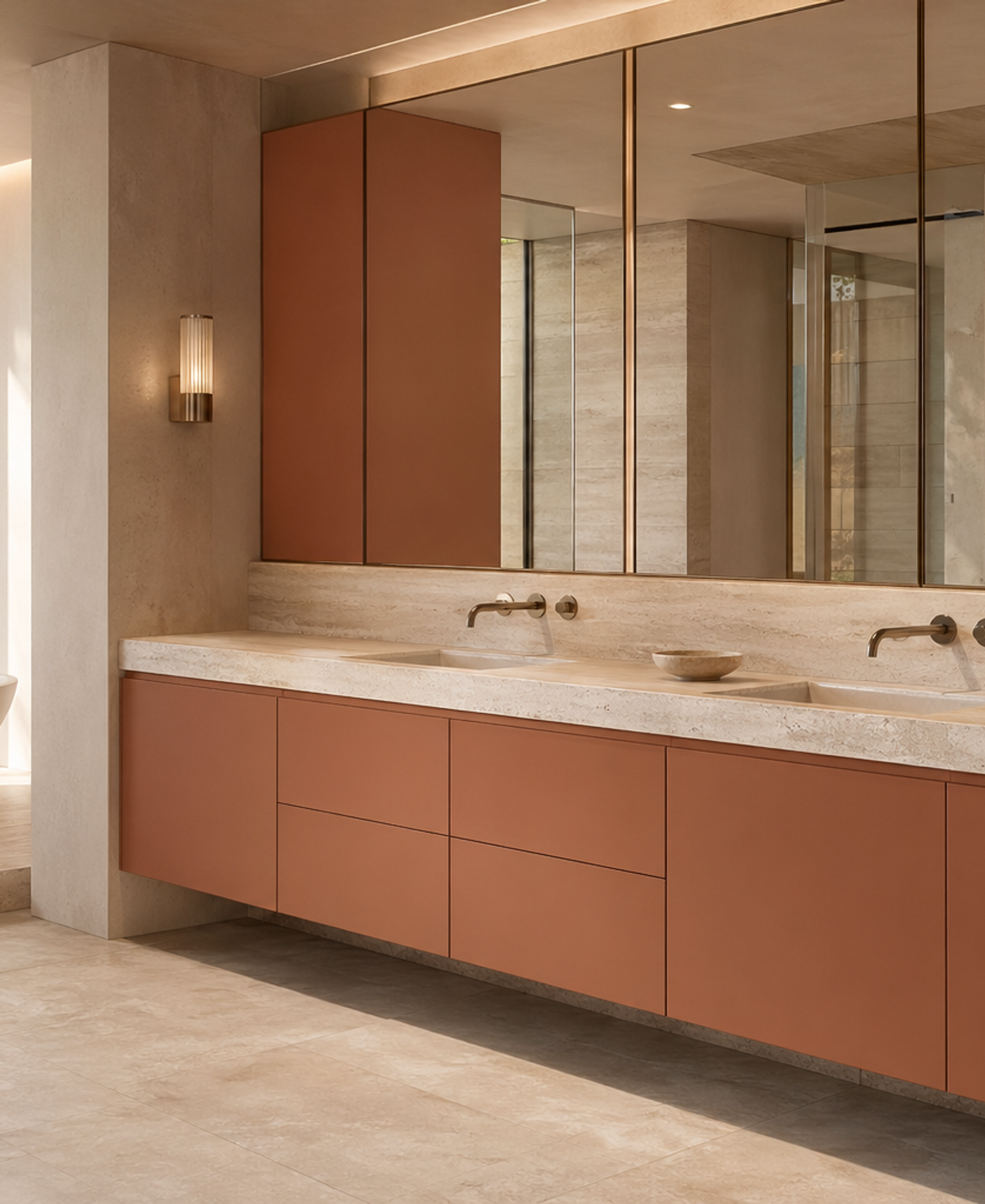
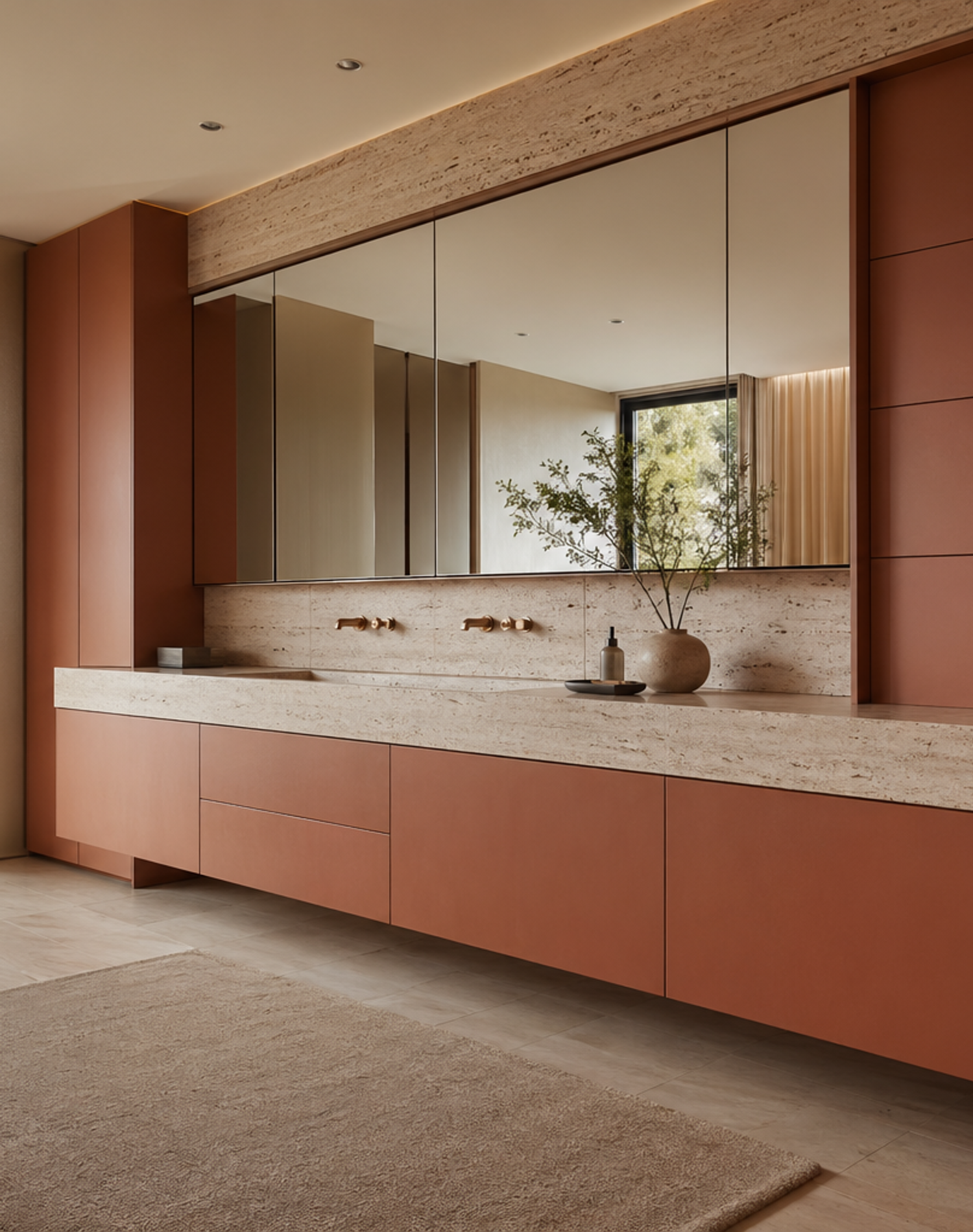
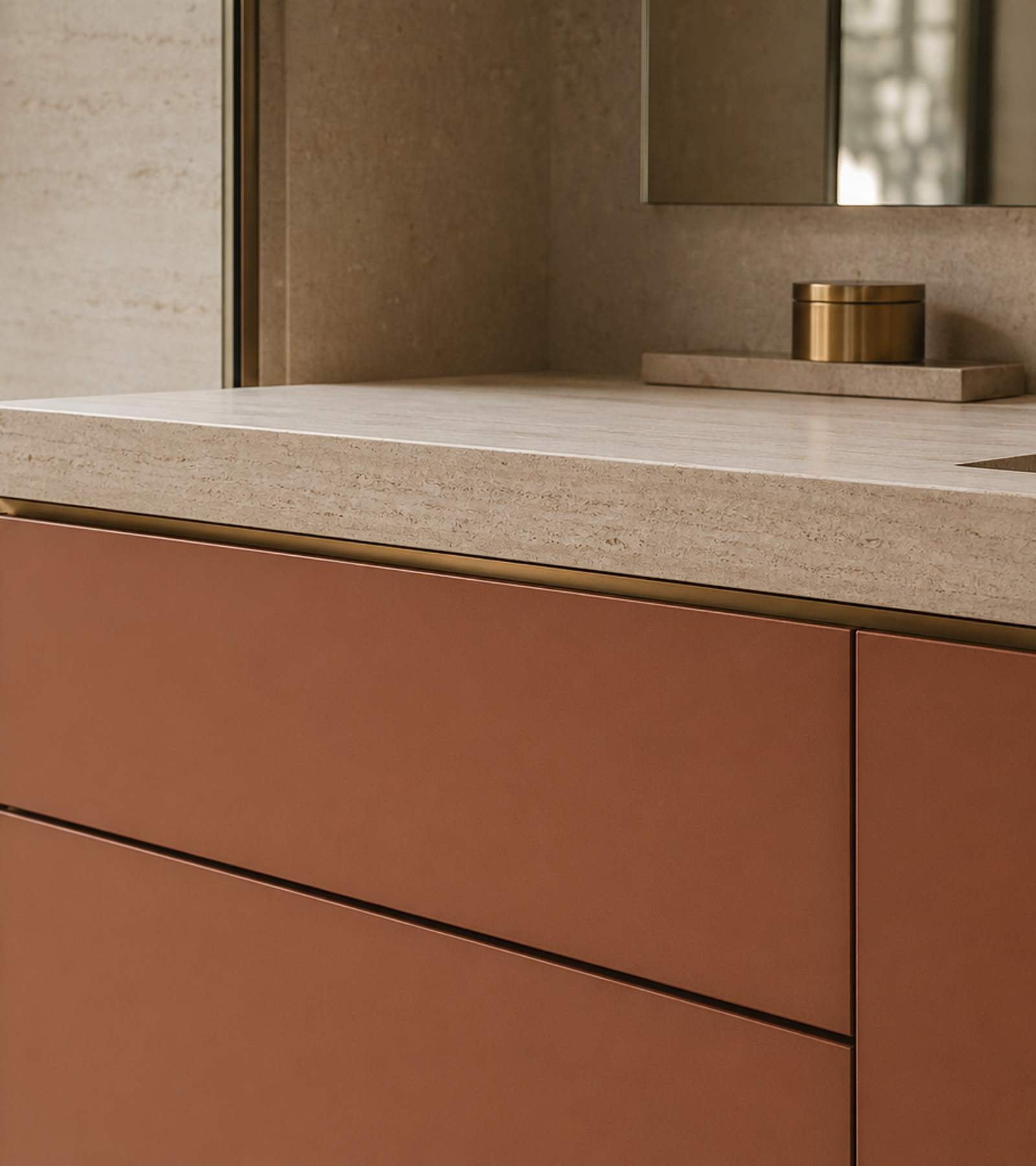
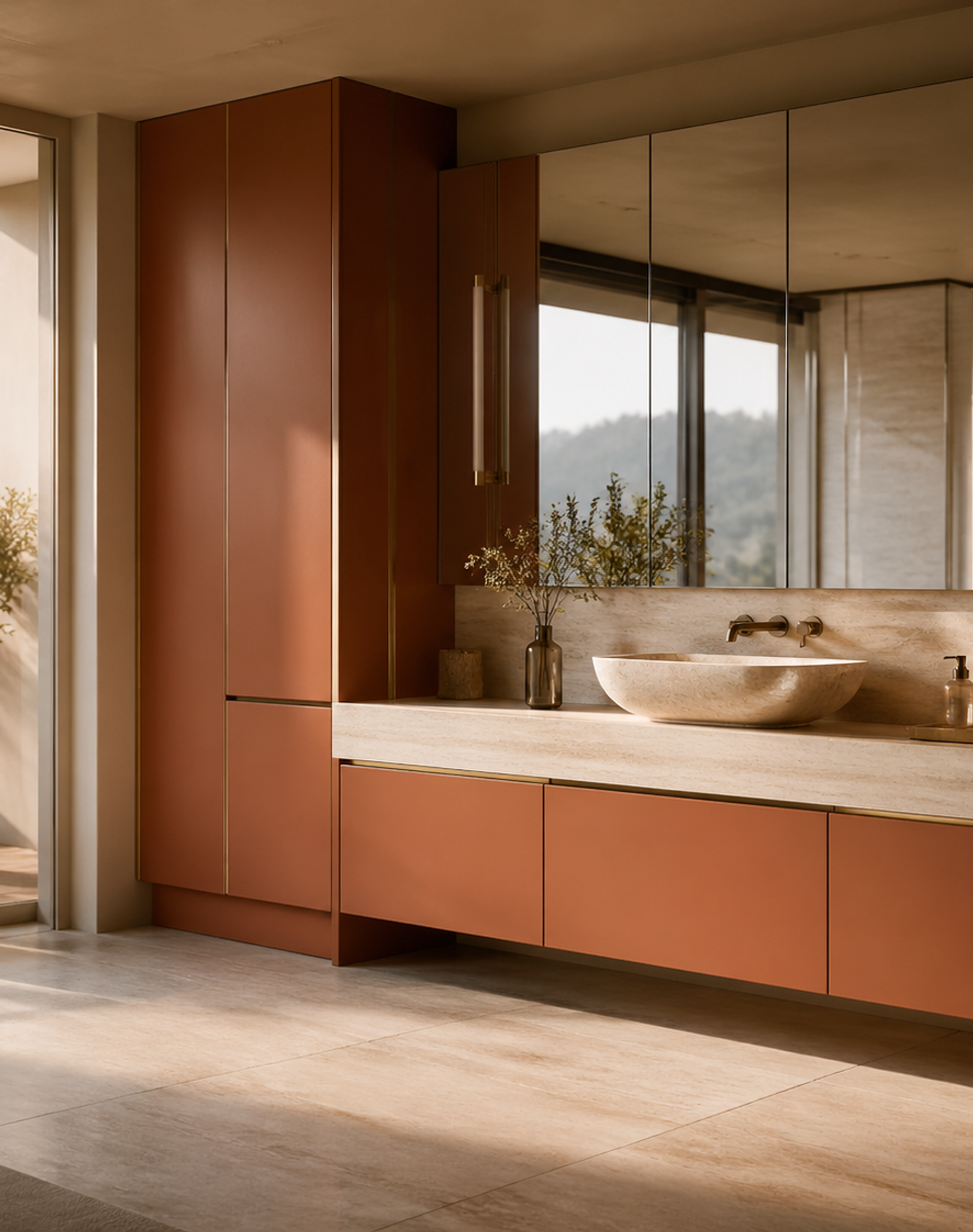
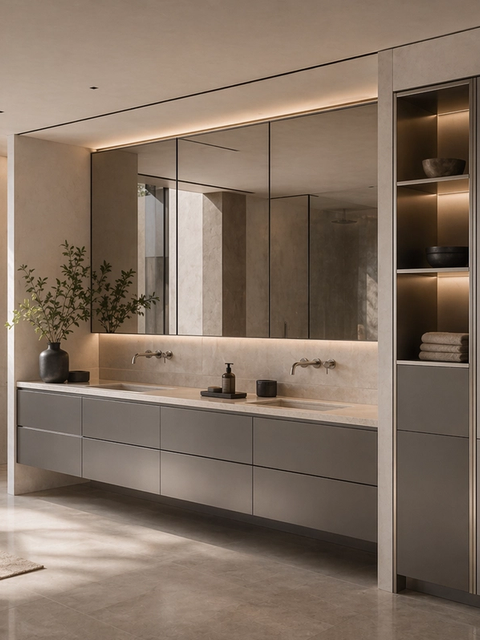
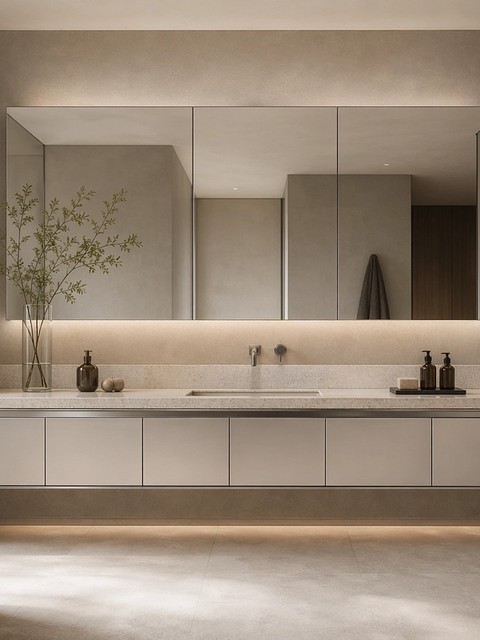
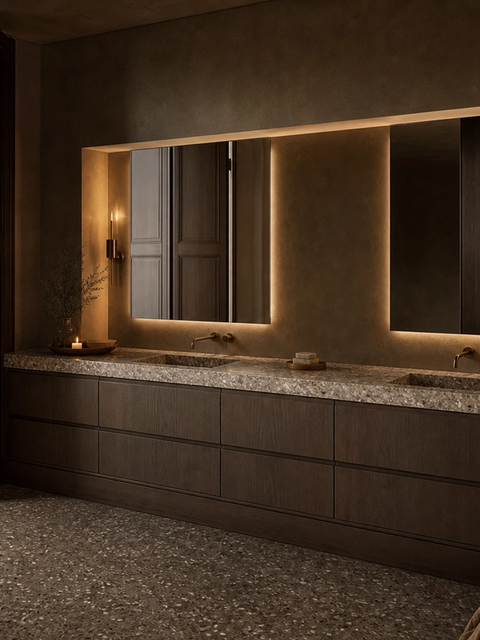
Nacre Bath and Vanity Suite with Low-Silica Travertine Ledge is designed for homeowners who want a luxury bathroom to feel restorative, well planned, and materially credible at the same time. The direct answer is simple: this suite combines a real 304 stainless steel cabinet body with a calmer low-silica stone strategy, so the vanity wall looks warm and residential while staying better aligned with long-term moisture resistance, wipe-down maintenance, and health-conscious specification choices. The differentiator is the ledge itself. Instead of using a heavy slab only as a decorative cap, Nacre turns the travertine ledge into an organizing line that visually stretches the vanity, gives the basin zone a more architectural footing, and creates a practical surface for grooming essentials without crowding the main counter. That matters because many premium bathrooms still feel overlayered. They may have expensive materials, but the composition becomes visually noisy once mirrors, accessories, storage, and hard finishes all compete for attention. Nacre solves that by treating the vanity as one integrated suite rather than a pretty cabinet with separate stone and mirror decisions bolted on afterward.
The terracotta direction gives the suite emotional warmth, but the product is not relying on warmth alone to feel premium. The palette is disciplined: matte clay-toned fronts, pale travertine movement, and restrained champagne accents around the mirror or edge conditions. The result is more Mediterranean spa than ornate hotel set. This is also where the current low-silica countertop discussion becomes useful. Sophisticated buyers are increasingly asking not only how a surface looks, but how sensible its specification is in real life. Nacre responds by framing the visible stone as part of a broader wellness-minded material composition instead of an isolated showpiece. The suite still delivers luxury texture and depth, yet it avoids the hyper-polished, high-contrast stone theatrics that can make a bathroom feel dated or aggressively performative. A softer travertine ledge, a calmer finish rhythm, and a better underlying cabinet body create a room that feels composed when used every day, not just when photographed. That balance between visible richness and measured specification is exactly what many high-end homeowners are now looking for.
Planning logic is where the suite becomes especially convincing. In a primary bathroom, the vanity has to do several jobs at once: hold daily products, support mirror use, preserve circulation, visually anchor the room, and maintain calm when the morning routine is at its busiest. The Low-Silica Travertine Ledge helps by separating the display and grab zone from the main basin work area. Instead of turning the countertop into one clutter magnet, the suite creates a lighter organizing horizon that can absorb trays, fragrance, folded towels, or small ritual objects while leaving the sink zone cleaner. This is not just a styling idea. It changes how the bathroom feels to use. The homeowner gets more visual order with less effort. Fadior can also stretch the suite across double-basin arrangements, integrate side towers, extend the ledge into a makeup niche, or compress the composition for urban master baths where width is limited. Because the suite is built as a system, not a freestanding piece, its planning logic adapts without losing its calm elevation. That system quality is critical in luxury bathrooms, where weak storage planning is often the reason an otherwise beautiful room stops feeling premium within a few months of occupancy.
The 304 stainless steel cabinet body gives Nacre a practical advantage that is easy to overlook if the conversation stays only at the finish level. Bathrooms expose cabinet bodies to humidity swings, condensation, cleaning agents, and repeated wet-hand contact. A wood-based cabinet wrapped in attractive surfaces may look acceptable at handover, but the long-term risk sits behind the surface. Fadior's stainless steel structure gives the suite a more dependable core for that environment, while the glue-free cabinet logic also supports a cleaner indoor-air story than conventional engineered-wood alternatives. This is one reason the suite can speak credibly to health-conscious buyers without turning into a technical lecture. The room still feels warm, tactile, and residential, yet the material logic underneath is stronger. That matters for homeowners who do not want to choose between a soft visual mood and a durable, easy-to-maintain cabinet platform. It also matters for designers who are increasingly asked sharper questions about what is actually inside a premium vanity, not only what the front finish looks like in a rendering or sample box.
Customization is central because bathroom rituals vary far more than standard vanity catalogs admit. Some households need better drawer zoning for skincare and grooming. Others need a cleaner dual-user layout, a seated makeup point, more closed tall storage, or a stronger integration between vanity, mirror, and side niche. Nacre is designed to absorb those differences while keeping the same architectural language: terracotta warmth, stone restraint, and a long organizing ledge that makes the suite feel deliberate from end to end. Fadior can rebalance basin spacing, extend the ledge beyond the main sink zone, adjust mirror proportions, change side-storage height, and refine the lighting mood depending on the size of the bathroom and the user's routine. This flexibility is one of the strongest value arguments for the suite. Rather than buying a decorative vanity and then compensating with add-on shelving, trays, or separate medicine units, the homeowner gets a more coherent system that already understands how luxury bathrooms are actually used. The investment therefore goes into better planning discipline, not just a prettier facade.
Another reason Nacre stands out is that it keeps the room visually calm across very different design contexts. In a warmer Mediterranean-inspired home, the terracotta direction can amplify plaster walls and pale stone. In a more contemporary residence, the same suite can read as a soft counterpoint to cleaner architecture and sharper lighting. The low-silica stone narrative supports both because it signals discernment rather than trend chasing. The homeowner is not simply buying a color story; they are buying a more thoughtful material composition. This becomes especially important in resale-sensitive projects or long-horizon homes, where overly theatrical bath finishes can age quickly. Nacre avoids that trap by tying its luxury expression to proportion, line, and credible material balance instead of novelty. The ledge, the front rhythm, the mirror scale, and the cabinet body all work together to create a bathroom that feels complete when empty and still composed when fully lived in. That is the mark of a better vanity suite, and it is difficult to fake with superficial styling alone.
Care and long-term ownership are also part of the product's premium logic. A bath and vanity system should not ask the owner to constantly manage visual fragility. Nacre is arranged so the surfaces that are seen most often are also easy to read and easier to keep orderly. The ledge creates a contained object zone, the closed fronts protect storage calm, and the underlying cabinet body is better suited to wet-area reality than traditional timber-based alternatives. Even the visual rhythm helps maintenance by making the suite feel tidy faster after daily use. That may sound subtle, but it changes the ownership experience. A luxury bathroom should reset easily, not require constant re-staging. For specifiers, this makes Nacre easier to defend because its value is not abstract. It lives in daily convenience, cleaner air-quality logic, moisture-ready structure, and a more enduring visual language. Those are real benefits that homeowners notice over time, not just at install.
For buyers searching for a luxury bathroom vanity in 304 stainless steel, Nacre answers the key question directly: how do you get spa-like warmth, disciplined storage, and a smarter stone strategy in one integrated suite? The answer is a better cabinet platform, a calmer ledge-based composition, and finishes chosen for longevity rather than visual noise. Nacre therefore positions the bathroom as a place of daily restoration without surrendering the practical advantages that make a premium installation worth the cost.