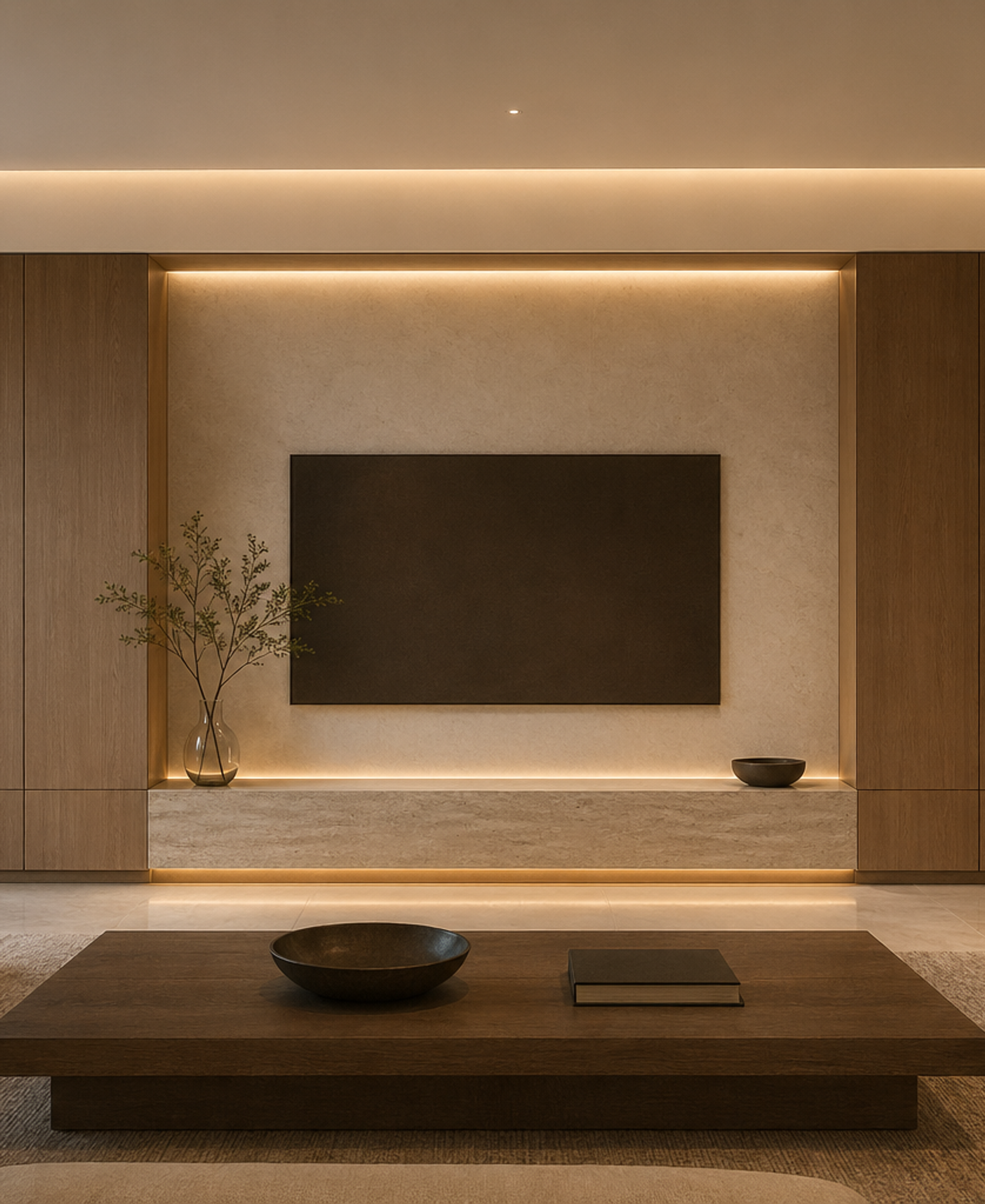
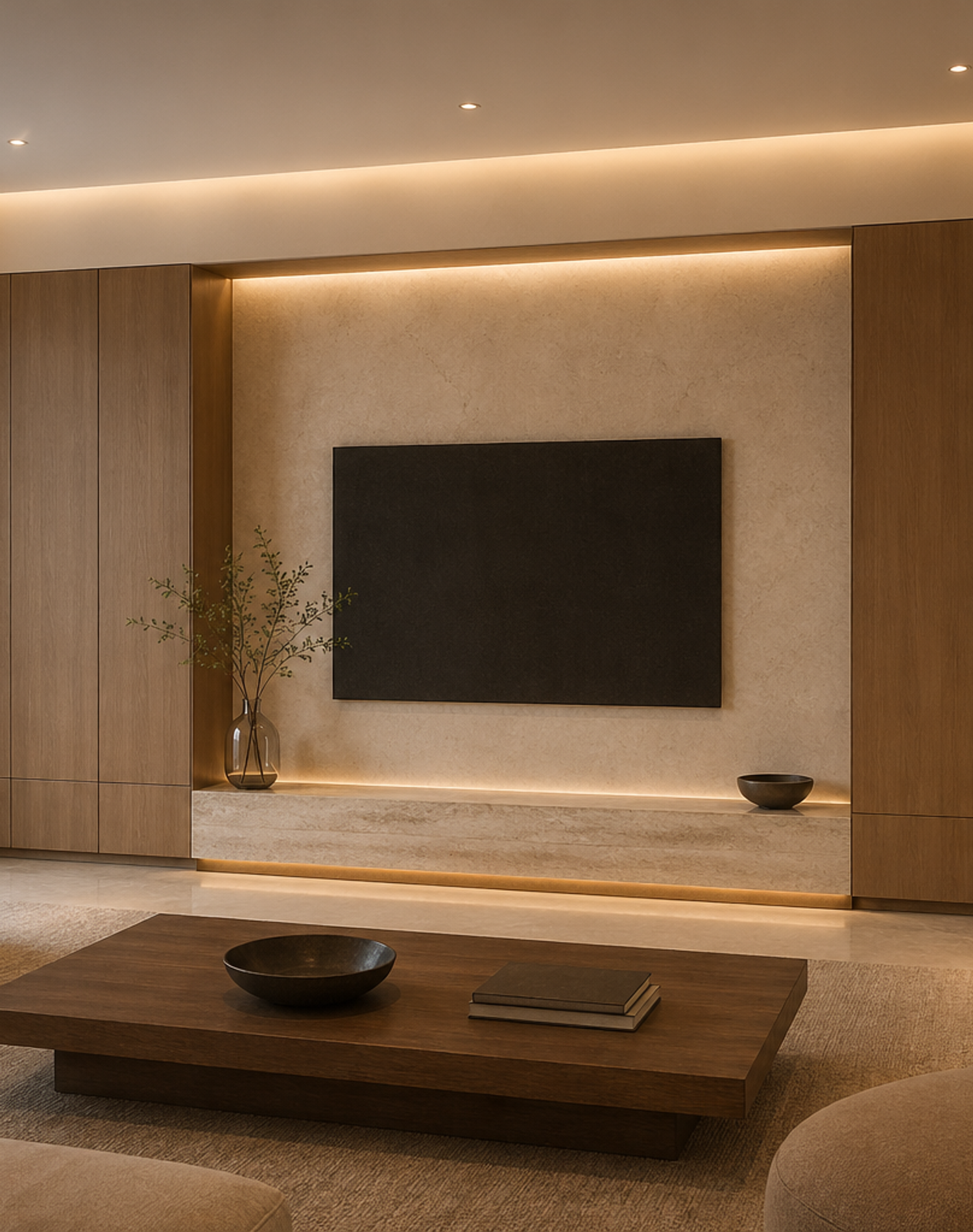
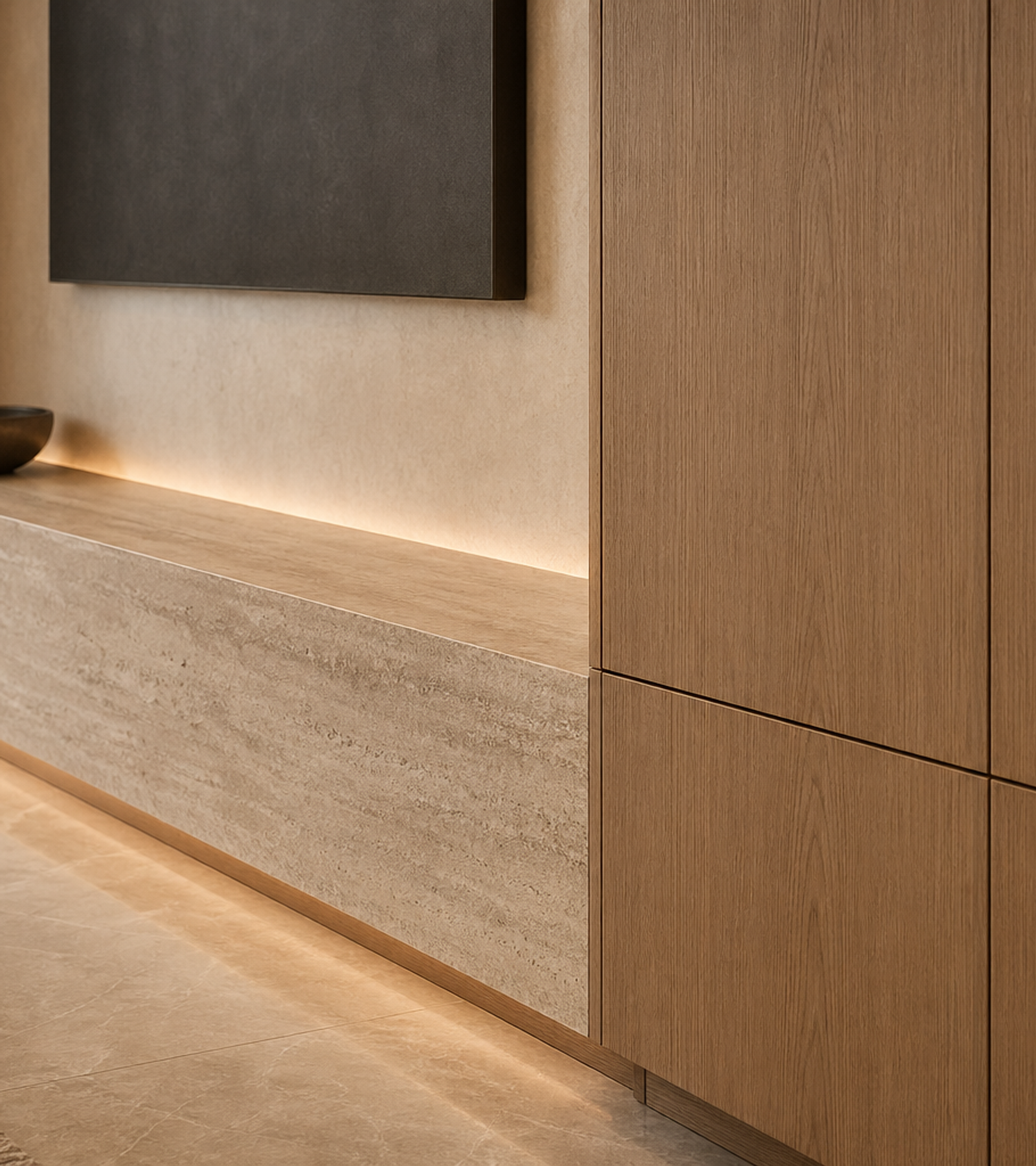
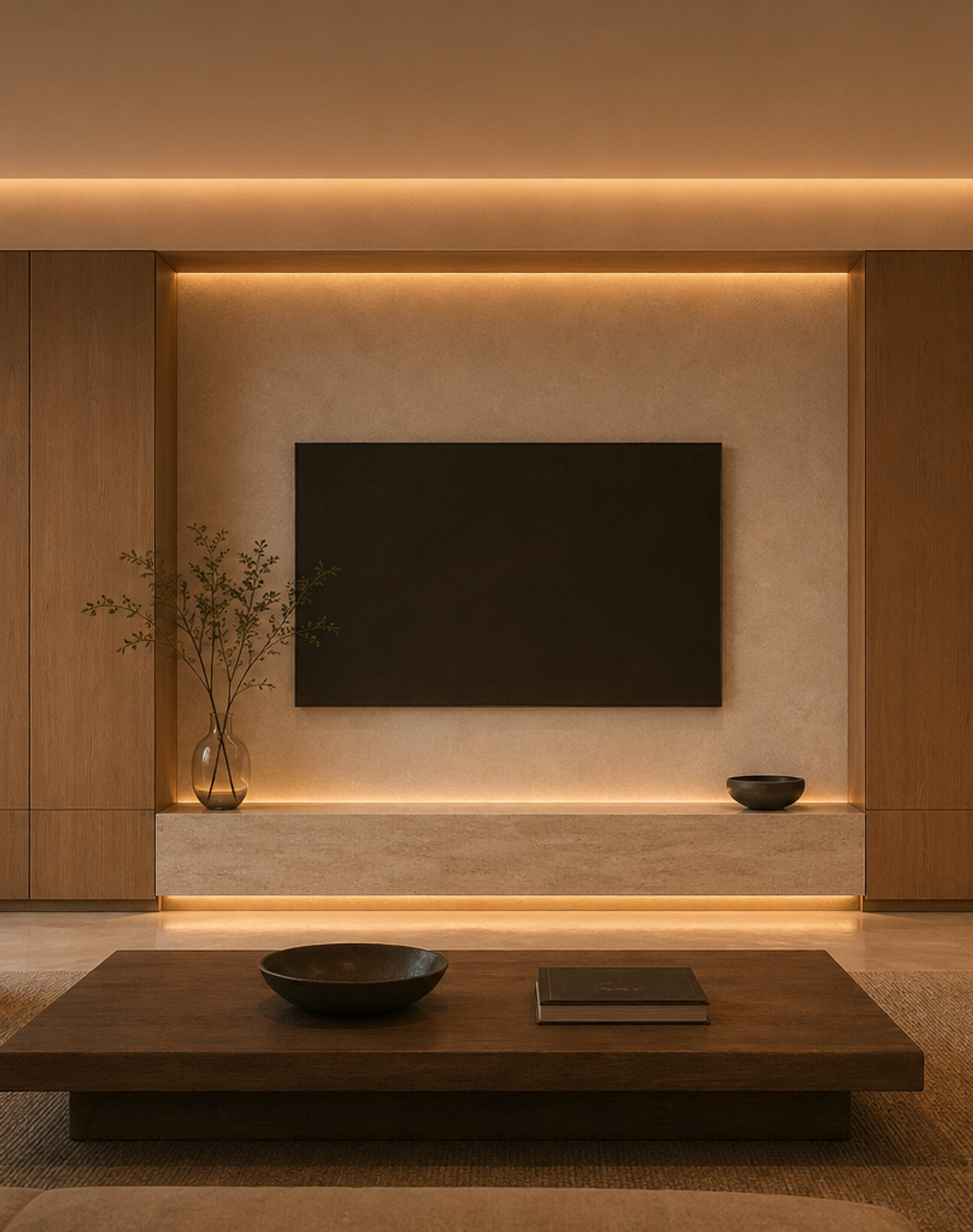
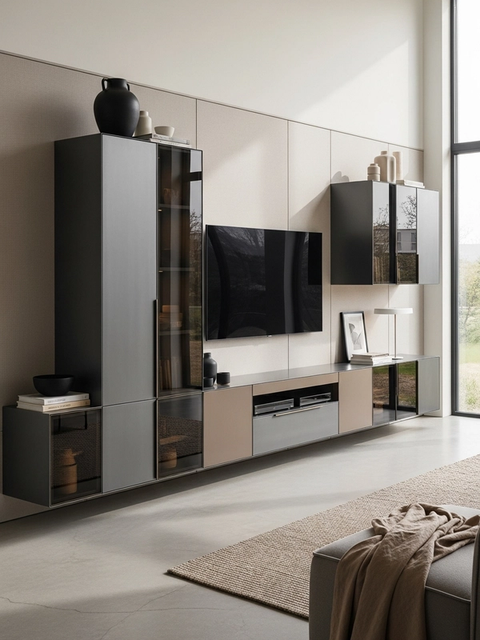
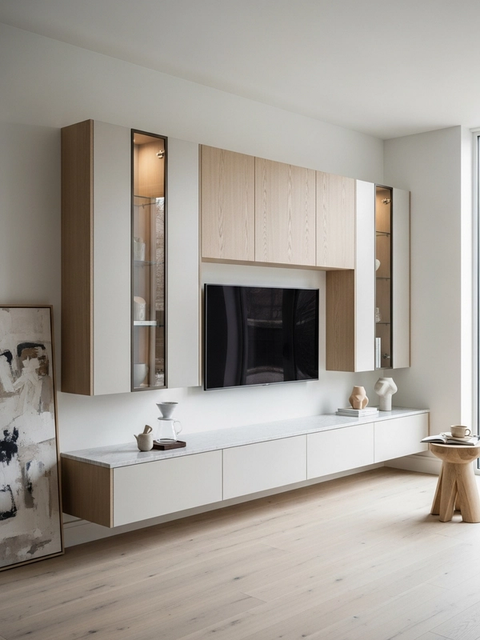
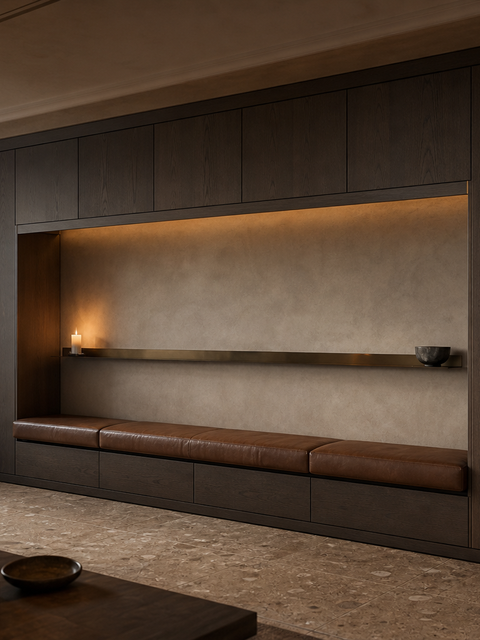
Patina Living Room Suite with Mineral Hearth Media Wall is designed for homeowners who want the media wall to feel architectural, not electronic. The direct answer is that this suite combines a real 304 stainless steel cabinet body with a pale mineral hearth center so the living room gains a clearer focal point, better storage hierarchy, and a calmer material story. The hearth center is the differentiator. Instead of allowing the television or decorative objects to dominate the whole wall, Patina creates a more grounded centerline that helps the room feel composed whether the media system is in use or not. That matters because many premium living rooms now revolve around one oversized screen wall that becomes visually dead when switched off or visually noisy when surrounded by too many shelves and contrast finishes. Patina avoids both problems. It gives the wall a stable architectural middle, flanked by warm oak-toned storage and matte cream balancing surfaces, so the room keeps its identity beyond the device it contains.
The mineral hearth idea also responds to a broader shift in buyer taste. More homeowners want their living room surfaces to feel calm, intelligent, and materially credible rather than performatively luxurious. A pale mineral center does that better than glossy contrast or heavily veined spectacle surfaces. It references the comfort of a hearth without literally recreating one, which is useful in contemporary homes where open flame may be secondary or absent but the emotional logic of a grounding center is still desirable. Patina therefore creates warmth through proportion and finish balance rather than through decorative theme. Oak-toned planes, matte cream continuity, and a restrained mineral focus give the room softness without making it rustic. This is important because a living room has to work across more moods than almost any other space. It hosts guests, absorbs family time, frames evening light, and often sits in direct view of dining or kitchen areas. The wall has to feel stable through all of that. Patina is designed to deliver that stability.
Planning is where the suite becomes especially valuable. A living room storage wall has to conceal media equipment, absorb irregular objects, provide display restraint, and keep the room visually balanced even when the furniture layout shifts. The Mineral Hearth Media Wall helps by giving the room a center that is not dependent on the screen itself. The hearth-like zone can frame the media area, support lower console massing, or act as the visual pause that separates storage towers from display surfaces. That makes the wall easier to read from across the room and easier to live with up close. Fadior can extend the composition horizontally, compress it for apartment living rooms, or integrate adjacent shelving and side returns while keeping the same center logic. This flexibility matters in projects where the living wall must mediate between lounge, dining, and circulation rather than sit on one isolated facade. Patina treats the media wall as a piece of living-room architecture, not an overgrown TV cabinet.
The 304 stainless steel cabinet body gives that architecture a stronger core than conventional decorative entertainment walls. Living rooms may not face the same moisture load as kitchens, but they do expose weaknesses in material stability quickly because large wall runs make alignment errors obvious. Doors that drift, panels that soften, or finishes that age unevenly can make an expensive room feel ordinary very fast. Fadior's glue-free cabinet logic helps protect against that by starting with a more dependable cabinet body and a cleaner indoor-air narrative than many wood-based alternatives. This matters for buyers who are extending steel cabinetry logic beyond the kitchen into a whole-home system. Patina therefore sits comfortably inside that broader architectural story. The room feels softer and more residential, but the structural argument underneath is consistent with the rest of the home. For designers, that continuity is useful because it allows the living room to share design grammar with kitchens, wardrobes, and vanities without becoming repetitive.
Customization is central because living rooms vary enormously in scale and use. Some owners need a more library-like wall with quiet storage and minimal equipment emphasis. Others want the media center framed more strongly, or need integrated niches for objects, speakers, or a lounge-side work edge. Patina can adapt to those needs by adjusting the width of the mineral center, the density of oak-toned storage, the ratio of closed to semi-open zones, and the lighting treatment around the wall. What remains constant is the suite's commitment to calm hierarchy. This is the real premium advantage. Instead of simply offering more shelves or more decorative cladding, the suite helps the room feel settled. That is often the difference between a media wall that dates quickly and one that continues to support the room with quiet authority. Patina is meant to hold that authority without becoming heavy or formal.
Another strength is how well the suite handles off-screen life. In many homes, the media wall is judged entirely by how it looks when the television is on, but the room is lived in far more often when the screen is off. Patina is tuned for that off-screen reality. The mineral hearth center keeps a visual anchor in place, the oak-toned masses retain warmth, and the overall wall stays legible as furniture for the architecture, not just housing for electronics. This improves the room's ability to support conversation, reading, family downtime, and softer evening moods. The wall participates in atmosphere instead of interrupting it. That is especially valuable in luxury homes where the living room needs to shift fluidly between display-ready and deeply lived-in states.
For buyers searching for a luxury living room wall in 304 stainless steel, Patina answers the key question directly: how do you create a media wall that feels warmer, calmer, and more architectural without letting the technology own the room? The answer is a better cabinet platform, a mineral-centered focal strategy, and storage planned as part of the room's emotional balance. Patina is therefore best suited to homeowners who want a living room that remains composed in everyday life, not only in design photography.
Patina also works especially well in homes where the living room must move between public presentation and private comfort without changing character. The wall can look polished enough for entertaining, yet still absorb blankets, books, small devices, and irregular household objects without losing order. The mineral center supports that by giving the room a visual pause that does not depend on open shelving or decorative clutter, while the warmer oak-toned masses keep the space grounded once evening light takes over. This makes the suite easier to live with over many years, not just easier to admire on reveal day. It also helps the living room remain coherent when adjacent dining and kitchen views are active, because the wall reads as architecture first and equipment housing second. That steadier identity is one of the clearest reasons the suite keeps feeling luxurious under real family use. It preserves atmosphere even when the room is busy, which is exactly what many media walls fail to do. The result is a room that stays settled rather than staged, even during everyday family movement and relaxed evening use at home.