
Surface finishes
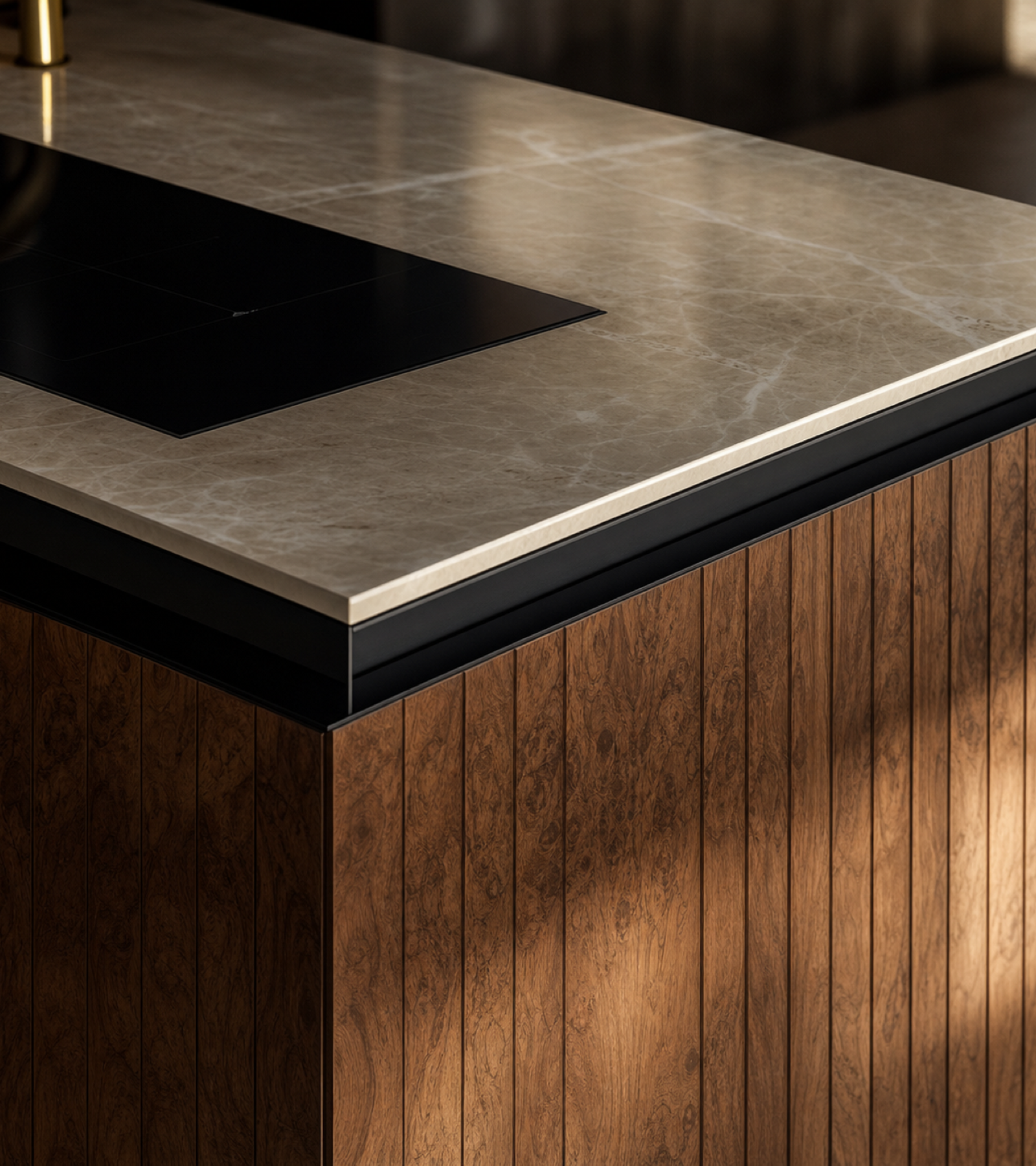
- Walnut-toned boiserie front rhythm
- Lacquer-black side and tall-unit planes
- Book-matched stone-look worktop
- Warm satin cabinet finish over 304 stainless steel body
Forge
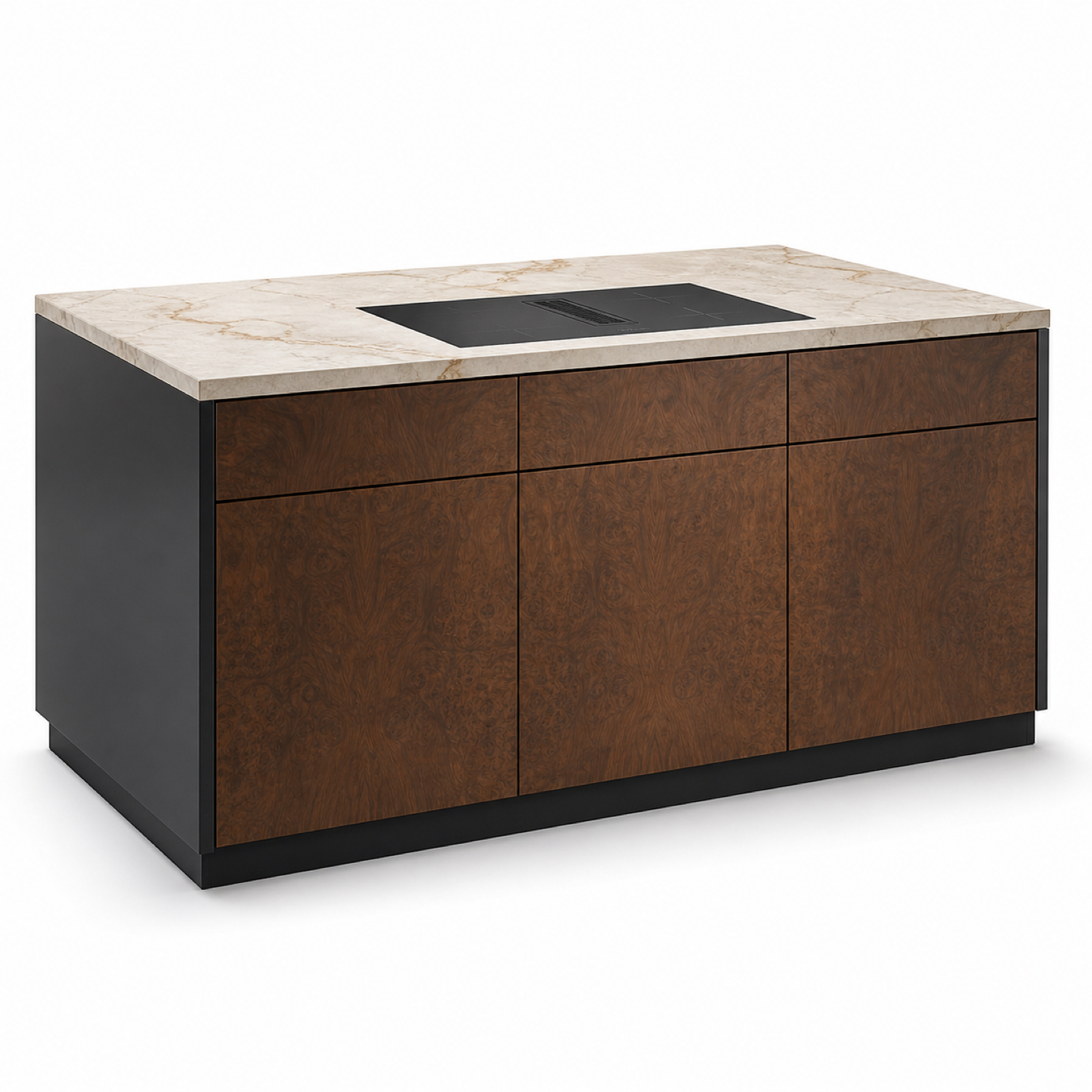
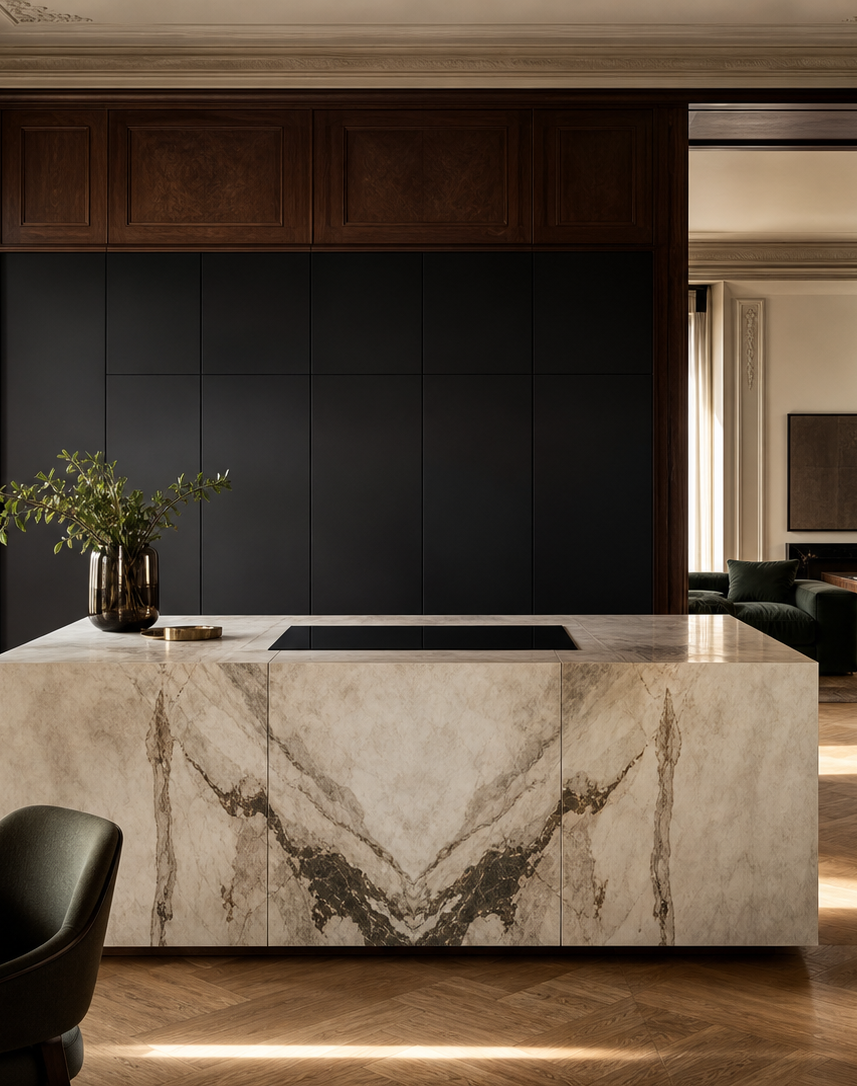
A made-to-order Forge kitchen island module with flush induction planning, closed storage, book-matched stone-look worktop, lacquer-black vertical planes, walnut-toned fronts, and a durable 304 stainless steel cabinet body.
Published Reviewed
Overview
The full design intent, materials, and how this system is built — in detail.
The Forge Induction Flush Island Dock is a made-to-order kitchen island module manufactured in our Foshan, China factory with a 30-day production lead time for villas, penthouses, and apartment renovations that want induction cooking to sit inside a clean architectural island rather than read as a loose appliance decision. Its design rendering shows a closed, handleless island body with a black flush cooking zone, a broad preparation surface, lacquer-black side planes, walnut-toned fronts, and a calm cabinet rhythm that can anchor an open kitchen without creating visual noise. The brief for this SKU draws from the architecture of heat around Smeg and the induction kitchen island: Smeg is an Italian appliance manufacturer founded in 1948 by Vittorio Bertazzoni, and its history as Smalterie Metallurgiche Emiliane Guastallae gives the topic a useful manufacturing lens. For Fadior, that lesson is not about copying a retro appliance style. It is about respecting appliance geometry, heat clearance, surface compatibility, and precise cabinet fabrication so an induction zone can be planned as part of the island from the beginning.
In luxury Gulf kitchens, a flush induction island often becomes the place where daily cooking, hosting, and conversation meet. That makes the cabinet body work harder than a normal prep island. It must hold closed storage below, protect surface alignment, allow a clear landing area beside the cooking zone, and keep the visual plane composed from the dining side. Forge uses a 304 stainless steel cabinet body for durability, hygiene, moisture resistance, and long service life, then resolves the visible face with warm cabinet fronts and a stone-look top so the room still feels residential. The induction zone is deliberately positioned as a quiet inset rather than a showpiece. Guests see the island as a tailored furniture object; the owner knows that the cabinet carcass, service voids, and countertop plan were prepared for cooking heat, cleaning routines, and daily reach.
Cold rolled coil is relevant because it explains why Fadior treats the inner cabinet body as a precision-made system rather than a decorative shell. Cold rolled coil, strip, and sheet products are valued for dimensional tolerance, surface finish, and strength, and those qualities matter when an island has long horizontal reveals, repeated door fronts, and a flush cooking cutout that must stay visually even. The Forge module is not priced or sold as an appliance. It is a shop SKU for the island cabinetry around the appliance zone, with formula pricing calculated later from module dimensions. The cabinet plan gives a designer a controlled base for the induction surface, landing area, storage drawers or doors, and side cladding. That separation helps buyers compare cabinet value without confusing it with the appliance brand or the final countertop supplier.
The island is sized for a generous cooking dock: 4.2 meters of base cabinet run, no wall cabinet run, 1.6 meters of tall coordination, and 4.4 meters of countertop planning. Those dimensions let the live publisher compute the formula price without any invented price in the copy. The island can be specified as a single large preparation block or divided into cooking, serving, and cleanup zones. The visible composition favors a book-matched stone-look top, black induction insert, lacquer-black end panels, and warm wood-grain front rhythm. Behind those finishes, Fadior can tune the drawer widths, door swing direction, plinth height, toe-space, service access, and electrical coordination to the project drawings. The important point is that the induction surface is not treated as an afterthought; it is absorbed into the island's proportion, storage logic, and daily cleaning path.
For homeowners and designers, the strongest benefit is decision control. A typical kitchen island conversation quickly becomes fragmented across appliance model, countertop slab, cabinet carcass, door finish, ventilation, and electrical routing. The Forge Induction Flush Island Dock gives the design team a single cabinet module around which those decisions can be coordinated. A client can ask whether a Smeg induction cooktop, or another approved appliance selected by the project team, has enough landing area, whether the countertop cutout will preserve the island edge, and whether the storage below supports pans, serving pieces, or daily breakfast tools. Because the SKU is made to order, those answers can be resolved against project measurements instead of forced into a fixed retail cabinet size. That is especially useful in Gulf homes where the show kitchen, service kitchen, and entertaining zone may each have different expectations.
The visual character stays restrained. The room-facing side is closed and composed, so the island does not expose clutter or internal hardware. The cooking surface is flush and dark, so it reads as a precise plane inside the worktop. The warm front material softens the technical function, while the lacquer-black vertical planes give the island the quiet authority expected from the Forge series. The design can support an Italian appliance reference without becoming a retro-themed kitchen. It uses Smeg's manufacturing history as a prompt to think about enamel, metalwork, surface durability, and appliance integration, then translates that thinking into Fadior's own cabinet construction, 304 stainless steel body, and made-to-order production. The result is a shop-ready kitchen island module for buyers who want the cooking zone, cabinet mass, and countertop surface to feel planned together.
Every project still needs final site coordination. The design rendering is a visualization of the intended product direction, not a substitute for approved measurements, appliance cutout data, local electrical requirements, ventilation strategy, or slab fabrication drawings. Fadior's role is to manufacture the cabinet module and prepare the island body for the approved induction plan, while the project team confirms the appliance model, worktop material, and installation conditions. That transparent boundary is important for Merchant Center trust and for buyer confidence: the SKU is made-to-order, manufactured in Foshan, China, and planned with a 30-day production lead time once project details are confirmed. It gives the client a clear product promise without hiding the customization process behind generic luxury language.
From a daily-use perspective, the island is meant to protect both performance and calm. A flush induction surface changes how people gather because cookware can move quickly between heat, prep, plating, and conversation. If the cabinet below is poorly planned, that convenience creates clutter: pans land in the wrong bay, utensils drift across the top, and electrical clearances become a late-stage compromise. Forge answers by treating the underside as part of the cooking plan. Wider closed bays can hold pans and serving ware, narrower bays can organize utensils and breakfast tools, and the tall coordination length can align nearby storage so the island does not carry every task alone. The result is a kitchen module that supports smart-kitchen use without turning the room into a technical showroom.
The module also gives specifiers a cleaner language for value. Buyers can see that the product is not just a surface with a hole cut into it. It includes a cabinet body, finish discipline, storage planning, dimensional inputs, and disclosure of how the images should be read. The design rendering helps the team discuss proportion and atmosphere; the aggregate facts and specifications help the same buyer understand manufacturing, material body, lead time, and formula-price inputs. That combination is important for cross-border commerce because a preorder product must be clear before a client asks for project adaptation. Forge keeps the promise simple: a made-to-order induction island dock, manufactured in Foshan, China, with a 30-day production lead time and a cabinet body built for long residential service.
Visual interpretation
See how the product holds its design language at room scale and in close detail.
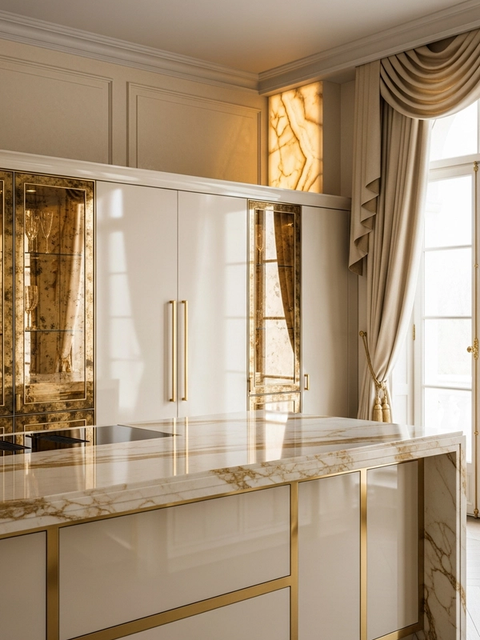
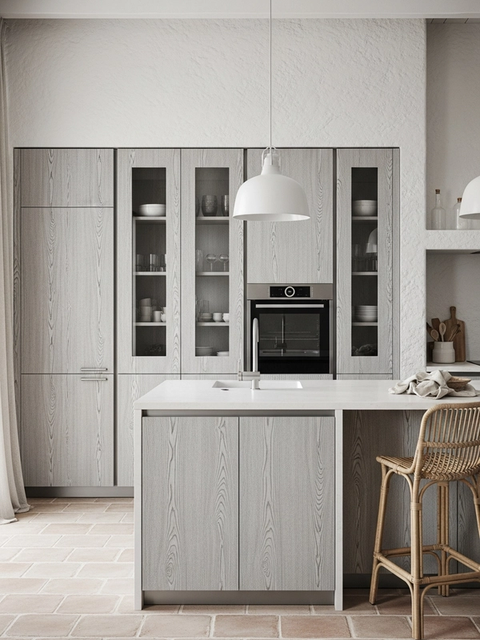
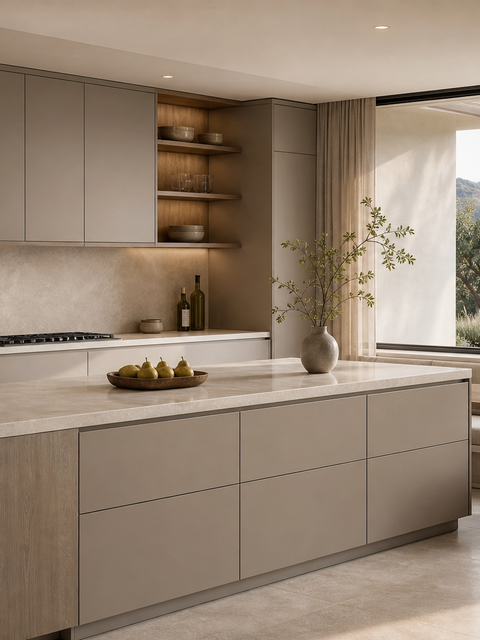
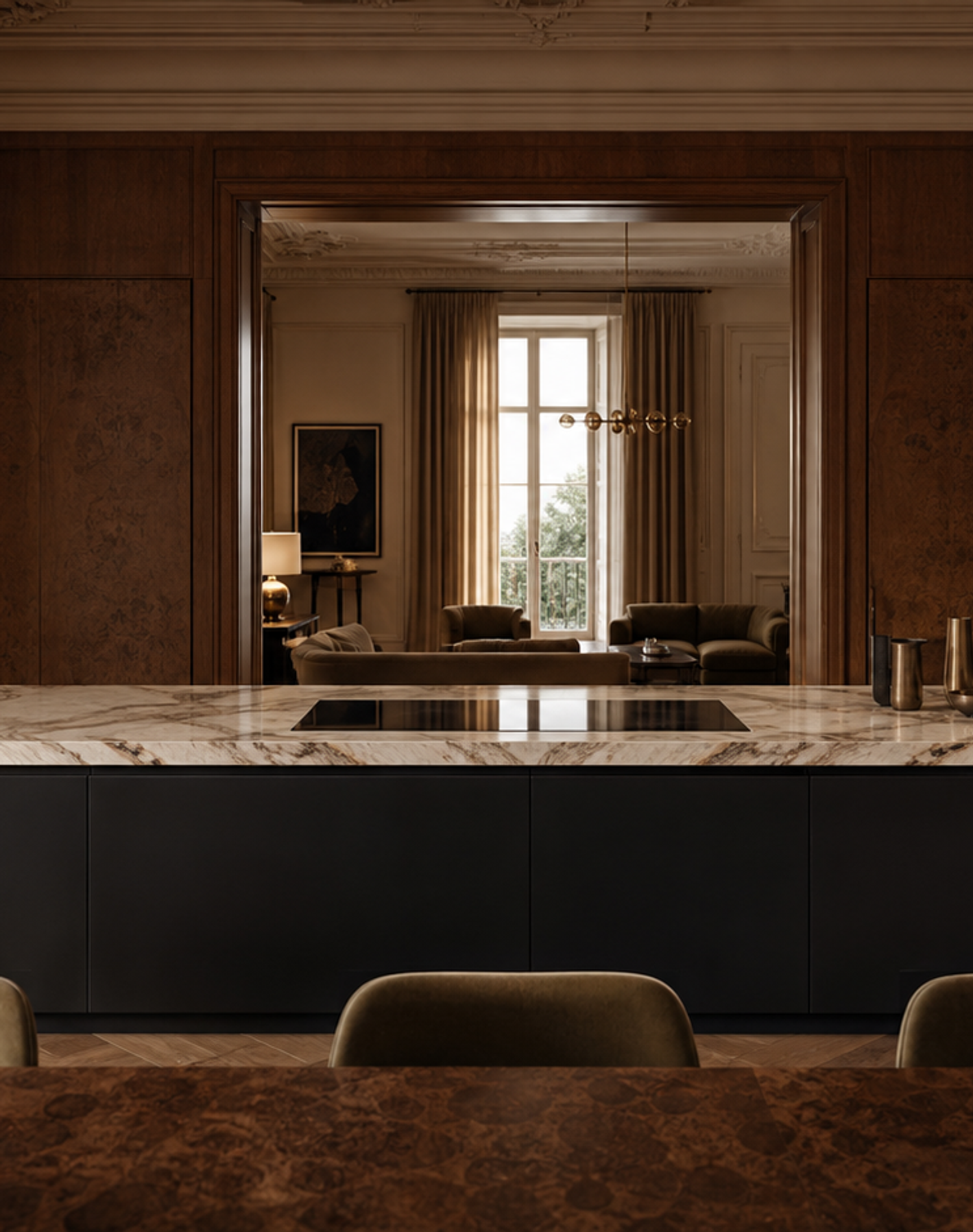
The image set presents the island as a closed, inspectable product: a pure-white commerce view for shape, a warm Milan-inspired installed kitchen for scale, a surface detail for the flush cooking zone, and a wide lifestyle view for landing-page context.
The visual direction keeps the induction surface quiet and architectural. The black insert, book-matched top, warm cabinet fronts, and lacquer-black planes communicate precision without showing internal construction.
Key features
These points explain why this flagship product stands out.
Flush induction planning
The island is proportioned around a recessed black cooking zone, adjacent landing space, and a continuous worktop so the induction area feels planned into the cabinet mass.
Closed room-facing storage
Handleless fronts keep the dining side composed, hiding daily cookware and serving pieces behind a calm panel rhythm that suits open-plan entertaining kitchens.
304 stainless steel cabinet body
Fadior builds the cabinet body in 304 stainless steel for durability, hygiene, moisture resistance, and long service life beneath the selected exterior finish.
Made-to-order island coordination
Dimensions, door planning, service access, plinth height, and appliance cutout coordination are resolved from project drawings before Foshan factory production begins.
Materials and finish
Finish, color, and detailing are selected to keep the product convincing in both specification and daily use.
Surface finishes
Color options
Customization
This is where the product moves from inspiration into a live project discussion.
Fadior can tune the Forge Induction Flush Island Dock around the approved cooktop cutout, landing zone, storage width, drawer or door mix, side cladding, plinth height, and countertop overhang. The cabinet body remains formula-priced from module dimensions, while appliance model, slab selection, and site services stay coordinated through the project team.
Finish direction can move warmer or quieter depending on the surrounding architecture. The module can keep a walnut-toned front rhythm, shift to a darker lacquered plane, or adopt a lighter residential palette while preserving the flush induction planning and 304 stainless steel cabinet body.
Specifications
The key data is organized for clear review before planning and quotation.
| Series | Forge |
|---|---|
| Category | Kitchen |
| Module dimensions | 4.2 m base cabinets, 0.0 m wall cabinets, 1.6 m tall coordination, 4.4 m countertop planning |
| Cabinet body | 304 stainless steel structure with made-to-order exterior finish |
| Availability | Preorder with 30-day production lead time after project confirmation |
| Manufacturing location | Foshan, China factory |
Quick facts
Material standards, hardware ratings, and construction methods you can cite or verify before you specify.
| Claim | Value | Standard | Context |
|---|---|---|---|
| Forge Induction Flush Island Dock is made to order in Fadior's Foshan, China factory. | Foshan, China | Shop disclosure | Manufacturing location |
| The SKU has a 30-day production lead time after project details are confirmed. | 30-day lead time | Shop disclosure | Availability planning |
| The cabinet body is specified as 304 stainless steel. | 304 stainless steel | Material contract | Cabinet structure |
| The module dimensions are 4.2 m base, 0.0 m wall, 1.6 m tall, and 4.4 m countertop planning. | 4.2 / 0.0 / 1.6 / 4.4 m | Formula pricing input | Publisher computes price from these values |
| The page images are design rendering views for planning and buyer visualization. | Design rendering | Visualization disclosure | Image status |
| The island is planned around a flush induction cooking zone and adjacent landing area. | Flush induction zone | Functional planning | Primary product differentiator |
| The room-facing elevation is closed and handleless to reduce visible kitchen clutter. | Closed storage | Design intent | Open-plan kitchen use |
| Cold rolled coil is relevant to precise cabinet fabrication because it supports dimensional tolerance and surface finish control. | Dimensional tolerance and surface finish | Wiki source fact | Cabinet body manufacturing rationale |
FAQ
These questions help buyers compare options and reduce friction before inquiry.
No. This SKU is for the made-to-order Fadior cabinet module around the induction zone, not for a bundled appliance sale. The project team chooses and approves the cooktop model, cutout data, electrical requirements, and ventilation strategy. Fadior manufactures the island cabinet body in Foshan, China with a 30-day production lead time after details are confirmed, then coordinates the cabinet dimensions so the selected appliance can sit cleanly inside the worktop plan.
The design rendering is a planning visualization, not a final site drawing. Designers should use it to evaluate massing, finish rhythm, landing area, and the relationship between the flush cooking zone and surrounding storage. Before production, Fadior still needs confirmed measurements, appliance cutout data, countertop direction, and site-service notes. That process keeps the made-to-order promise clear while reducing mismatch between image expectation and installed reality.
A normal island often starts as storage and receives an appliance later. This Forge SKU starts with the cooking zone as part of the architecture: the black flush surface, countertop landing space, closed room-facing storage, tall coordination, and service access are planned together. The 304 stainless steel cabinet body supports long-term durability, while the visible fronts keep the island warm enough for open-plan Gulf homes and premium residential entertaining.
Related products
These references help the current product stay connected to the wider collection.