
Surface finishes
- pearl-white fluted exterior fronts
- pale limestone counter surface
- muted bronze-tone reveal lines
- warm sand side panels
- graphite cooking insert
Horizon
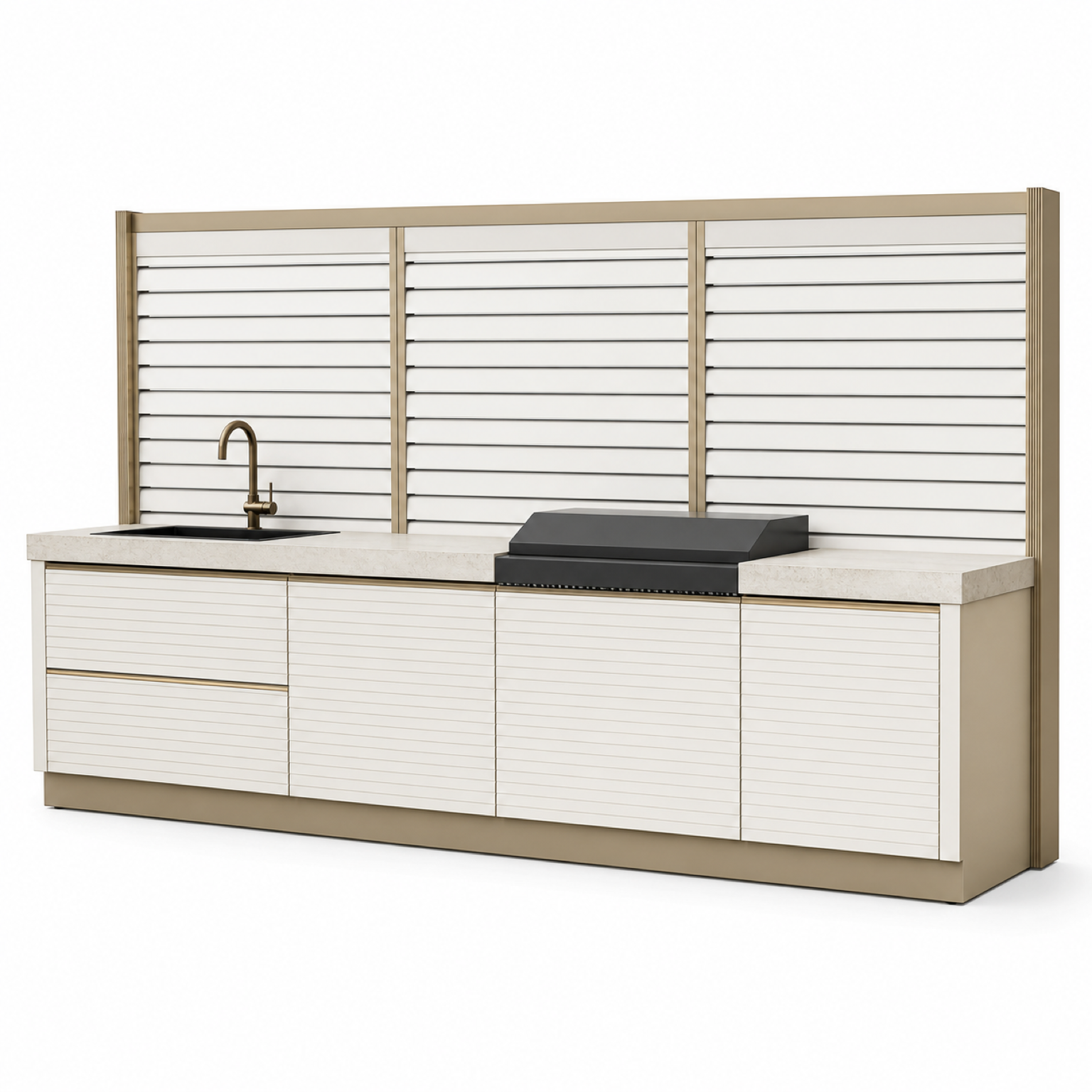
A custom Horizon outdoor kitchen module with closed pearl-white fluted fronts, pale limestone counter planning, panel-screen privacy, integrated rinse and grill zones, and a durable 304 stainless steel cabinet body.
Published Reviewed
Overview
The full design intent, materials, and how this system is built — in detail.
Horizon Coastal Panel Screen Prep Wall is made to order in our Foshan, China factory, with an approximate 30-day production lead time before shipping coordination. It gives homeowners, architects, and outdoor living designers a closed terrace kitchen module where a privacy screen, rinse point, prep counter, and grill bay are planned as one measured wall instead of scattered equipment. The product is built for coastal villas, roof terraces, and shaded garden kitchens that need a calm cooking zone without making the terrace feel like a commercial back-of-house station.
The differentiator is the Coastal Panel Screen Prep Wall. Existing Horizon products already cover a general outdoor kitchen suite, an al fresco entertaining kitchen, diamond rinse terrace bar, limestone pavilion ribbon, panel ready chef veranda, travertine courtyard grill line, and whitewashed grill terrace. This SKU takes a different role: it adds a tall fluted screen behind the work surface so the kitchen can organize sightlines, reduce visual clutter, and create a more architectural backdrop for outdoor cooking. The screen is not a decorative wall applied after the fact; it is part of the module identity.
The layout starts with a long closed base run. Base cabinets provide the primary storage length for outdoor serveware, cleaning items, grill accessories, spare towels, trays, utensils, and dry goods that should not stay visible on the terrace. Closed fronts matter because outdoor kitchens quickly look messy when shelves, baskets, and loose service pieces are exposed. This module keeps the lower rhythm quiet, easy to wipe, and visually ordered after a family meal or hosted dinner.
The panel screen gives Horizon a more coastal architectural expression. It can sit behind the counter as a partial privacy plane, help frame a sea-view terrace, and shield the preparation zone from a dining table or pool deck without closing the terrace completely. For Gulf homes where outdoor cooking often happens near lounge seating, the screen helps separate food preparation from hospitality while keeping the space open, bright, and breezy.
The prep counter is sized as a practical working line rather than a shallow decorative ledge. It supports washing, trimming, plating, resting trays, setting down serving bowls, and staging food before grilling. The rinse point keeps basic cleanup close to the cooking area, which reduces traffic back into the indoor kitchen. The grill bay is placed within the same linear composition so cooking, sink access, and serving can happen without crossing the terrace repeatedly.
A 304 stainless steel cabinet body sits behind the visible finish direction. That concealed construction basis supports outdoor cleaning, repeated door use, and alignment in damp coastal air, while the visible language stays softer: pearl-white fluted fronts, pale limestone counter planning, warm sand side panels, graphite cooking insert, and muted bronze-tone reveals. The result is durable service expressed through a residential, mineral, Mediterranean-inspired exterior rather than a heavy industrial cooking station.
For architects, the planning value is clarity. The module gives one object to coordinate: counter length, sink position, grill bay, screen height, base storage, service access, drainage, ventilation, power, shade, and terrace circulation. That clarity helps early drawings because the kitchen is not a cluster of independent parts. The team can discuss the screen, counter, and storage rhythm together before site measurement and production drawings begin.
For interior designers, the value is visual restraint. Outdoor kitchens can easily become appliance displays, but this SKU keeps the cooking insert low and dark, the fronts closed, and the screen light in color. The palette supports limestone floors, whitewashed walls, olive planting, sandy plaster, and blue coastal views. It can sit beside a dining table or lounge without making the hospitality zone feel technical.
For homeowners, the module answers a common terrace problem: where to put the working kitchen so it is useful but not visually loud. The panel screen lets the owner host near the cooking zone while keeping prep work from dominating the view. The closed fronts help the terrace reset quickly after use, and the rinse zone supports basic cleaning without carrying everything inside.
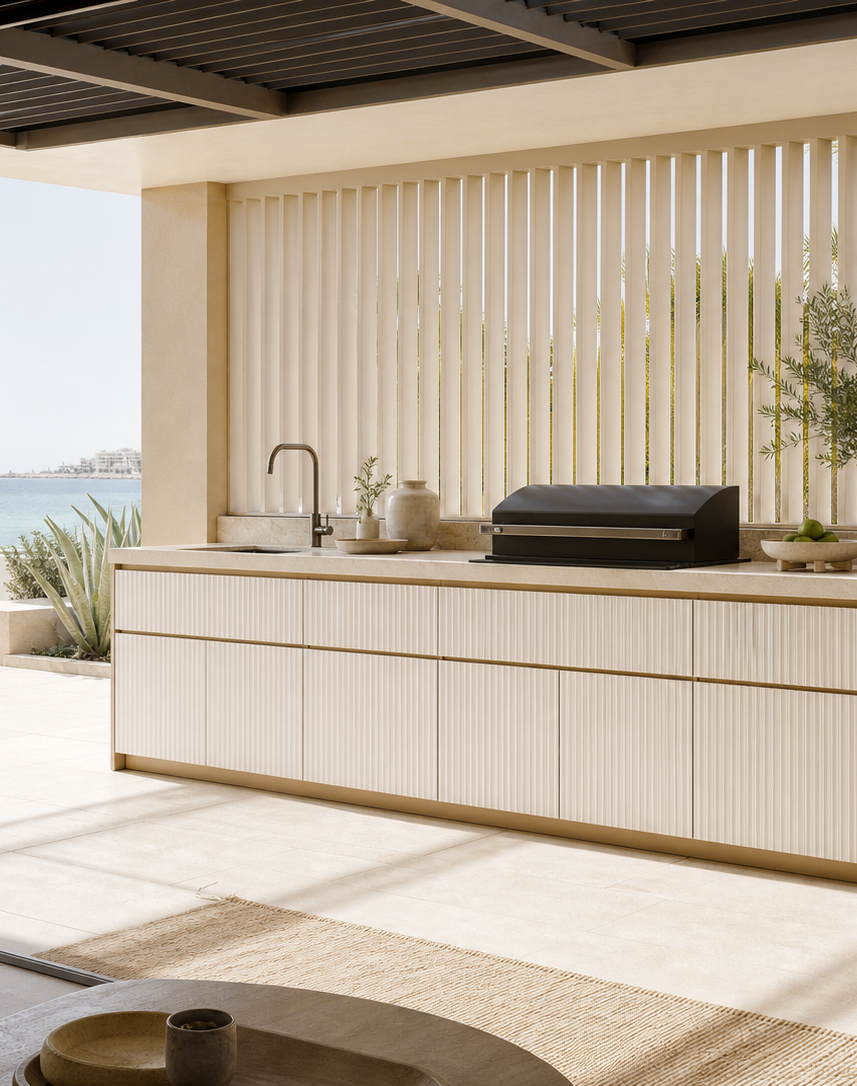
The white hero image is intentionally plain. It allows the buyer to inspect the shop SKU as an object: closed base run, counter thickness, fluted screen, sink, grill bay, side panels, and overall proportion. The richer terrace images then show how the same module behaves in a shaded coastal residence. The image set is a design rendering for review and proportion, not a promise that every project will have the same view, planting, appliances, or architectural background.
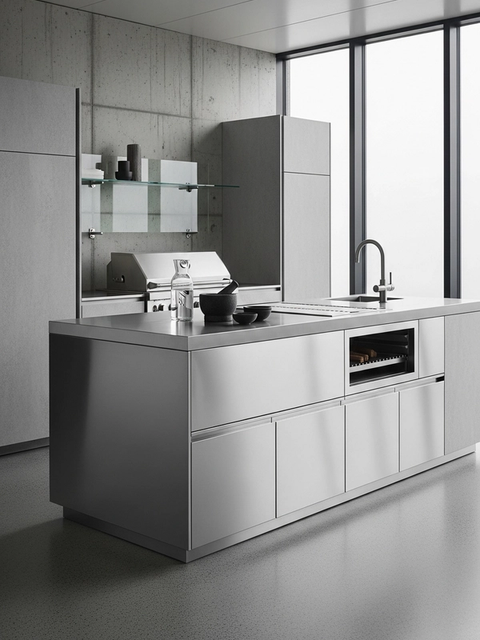
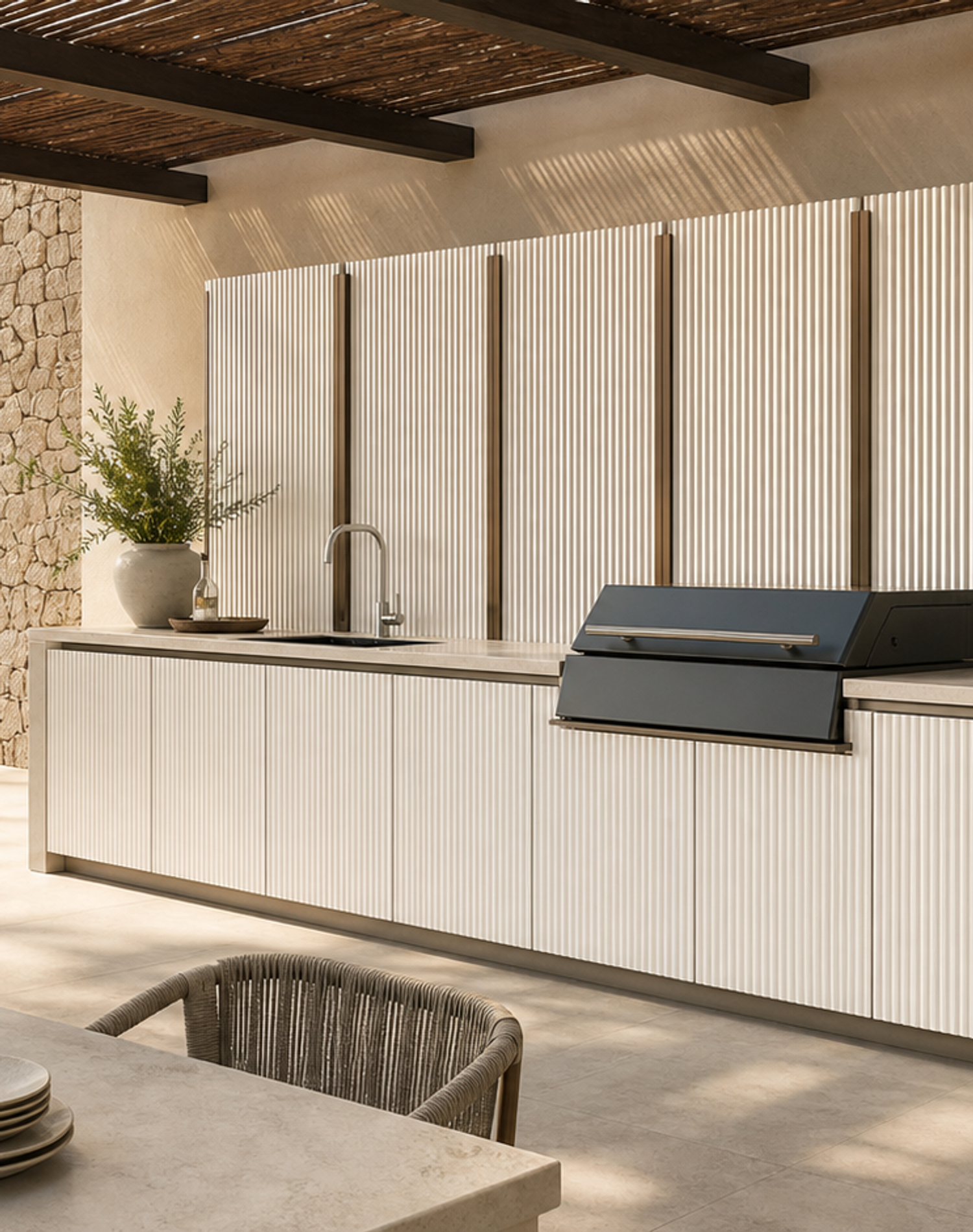
The midscene image shows circulation and sightline behavior. The module is strongest when there is enough standing room in front of the doors, clear approach from the indoor kitchen, and a direct relationship to outdoor dining. The screen should not block ventilation or make the cook feel enclosed. It should create a calm backdrop while leaving the terrace easy to move through during service.
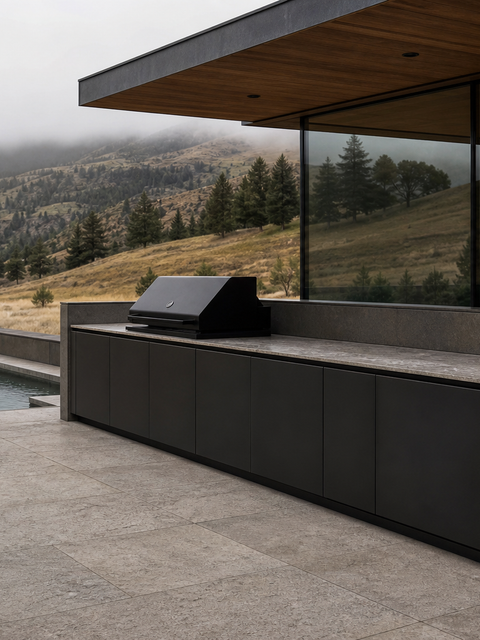
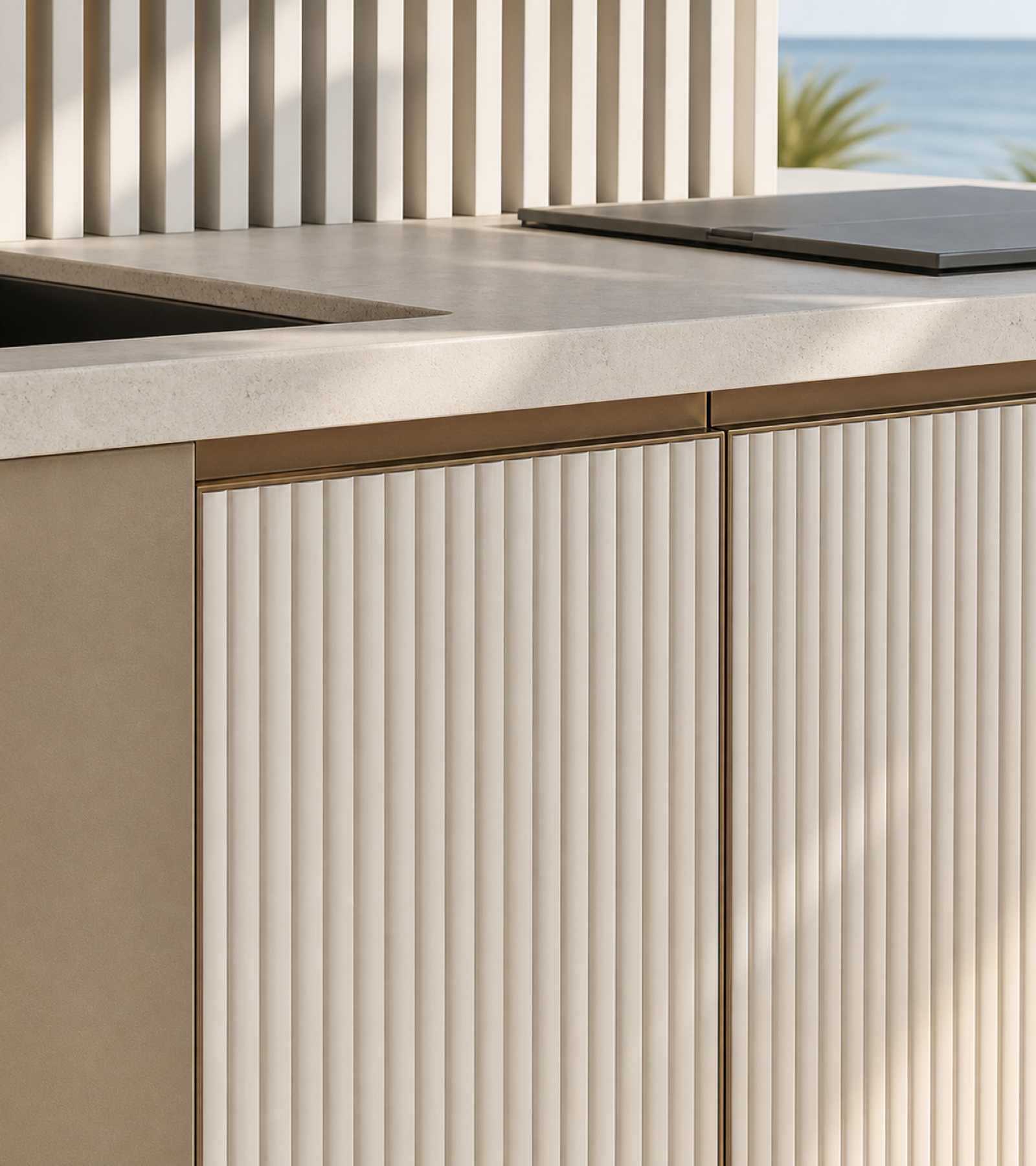
The detail image focuses on finish decisions that matter before production. A buyer can compare fluted front rhythm, reveal color, counter edge, sink rim, panel shadow, and the dark cooking insert. Those small transitions decide whether the outdoor kitchen reads as a premium built-in module or as loose equipment pushed under a counter. Good alignment is especially important outdoors because strong sun exposes every gap and uneven edge.
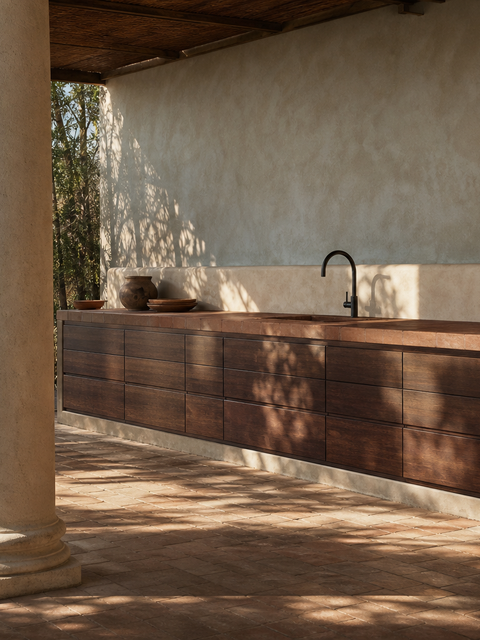
The lifestyle image places the product in a hospitality setting without adding people. This keeps the module as the subject while still showing how bowls, plates, shade, sea air, and seating relate to the outdoor kitchen. The goal is to help the buyer imagine serving and cleanup, not to stage a busy party scene that hides the product behind props.
Before production, Fadior can adapt the width, sink choice, grill cutout, counter overhang, panel-screen height, side return, plinth, drainage approach, door split, accessory planning, and finish samples to the measured terrace. The published SKU defines the priced module direction and formula dimensions; the final project still needs site review, service coordination, and confirmed installation access.
Climate behavior is part of the planning conversation. Coastal terraces face glare, salt air, wind, and sudden dust, so the module should be reviewed for shade, cleaning access, drainage fall, counter exposure, and how the screen handles wind without becoming a solid sail. Those practical checks do not change the exterior concept, but they decide whether the kitchen remains comfortable during repeated outdoor use. Fadior keeps the shop SKU readable while leaving enough project review space for local climate, appliance ventilation, and service routing to be confirmed before production.
The SKU works best for a coastal villa, shaded pool terrace, roof dining deck, or garden kitchen where the owner wants cooking readiness and visual privacy in one object. It is not a freestanding barbecue cart, and it is not an open display bar. It is a manufactured-to-order Horizon module for buyers who want outdoor storage, rinse access, prep surface, and a refined screen wall to stay coherent in one terrace composition.
Visual interpretation
See how the product holds its design language at room scale and in close detail.
A sunlit Mediterranean terrace outdoor kitchen with pearl-white fluted closed fronts, pale limestone counter, graphite cooking insert, integrated rinse point, and a tall panel screen that frames coastal hosting without exposing storage.
Key features
These points explain why this flagship product stands out.
Panel screen prep wall
A tall fluted screen creates privacy, backdrop, and sightline control behind the outdoor work surface.
Closed terrace storage
Long base fronts conceal serveware, tools, cleaning items, and grill accessories so the terrace resets cleanly.
Integrated rinse and grill zones
Sink, counter, and cooking insert sit in one measured line for outdoor prep, cooking, and serving.
Durable cabinet body
The concealed 304 stainless steel cabinet body supports cleaning, alignment, and long-term outdoor service.
Materials and finish
Finish, color, and detailing are selected to keep the product convincing in both specification and daily use.
Surface finishes
Color options
Customization
This is where the product moves from inspiration into a live project discussion.
Fadior can tune width, sink position, grill cutout, screen height, panel spacing, door rhythm, side return, drainage route, service access, finish sample, counter overhang, and installation sequence after site measurements are reviewed.
Specifications
The key data is organized for clear review before planning and quotation.
| Base cabinet planning | 3.6 meters |
|---|---|
| Wall or screen planning | 1.8 meters |
| Tall cabinet planning | 0.0 meters |
| Countertop planning | 3.4 meters |
| Primary cabinet material | 304 stainless steel |
| Visible finish direction | Pearl-white fluted fronts, pale limestone counter surface, graphite cooking insert, warm sand side panels, and muted bronze-tone reveal lines |
Quick facts
Material standards, hardware ratings, and construction methods you can cite or verify before you specify.
| Claim | Value | Standard | Context |
|---|---|---|---|
| Made to order | Manufactured to order in Foshan, China with an approximate 30-day production lead time | Production disclosure | Stated in the first product paragraph for buyer transparency |
| Design rendering disclosure | Product imagery is a design rendering for proportion, finish direction, and terrace atmosphere. | Image transparency | Final manufactured product may vary with site measurements, finish samples, appliance choice, lighting, and installation conditions. |
| Base planning length | 3.6 meters | Formula dimension input | Used by the publisher for formula calculation |
| Wall or screen planning length | 1.8 meters | Formula dimension input | Represents the screen and upper planning length used by the publisher |
| Tall planning length | 0.0 meters | Formula dimension input | This module uses a screen plane, not a tall cabinet tower |
| Countertop planning length | 3.4 meters | Formula dimension input | Used by the publisher for formula calculation |
| Primary cabinet material | 304 stainless steel cabinet body | Brand rule | Visible finishes remain softer and residential while the concealed cabinet body supports outdoor service |
| Outdoor use case | Coastal terrace prep, rinse, storage, and grill wall | Buyer intent | Designed for villas and shaded outdoor hospitality zones |
| Image role plan | 1:1 white hero, 4:3 terrace context, 1:1 detail, and 16:9 lifestyle | GMC image baseline | Covers product inspection, installation context, finish review, and landing-page support |
FAQ
These questions help buyers compare options and reduce friction before inquiry.
The published SKU sets the Horizon series, outdoor kitchen category, visible exterior concept, formula dimensions, and design rendering direction. Before production starts, Fadior reviews the measured terrace, service positions, drainage route, grill requirements, screen height, door rhythm, finish samples, and installation access. The final module is then manufactured to order around the confirmed project details so the screen, storage, prep counter, and cooking bay fit the actual site rather than a generic terrace layout.
This SKU is centered on a tall coastal panel screen behind the prep wall. Other Horizon products already cover entertaining, rinse-bar, pavilion, chef-veranda, courtyard grill, and whitewashed terrace directions. Coastal Panel Screen Prep Wall adds a privacy and sightline layer to the outdoor kitchen itself. It is designed for terraces where the owner wants a working rinse and grill zone that still feels architectural, calm, and appropriate beside dining or lounge seating.
Yes. The shop SKU gives a clear module direction, but Fadior adjusts the final layout after measurements and project review. Screen height, panel spacing, base width, door splits, sink selection, grill cutout, side panels, counter overhang, drainage, service access, lighting channels, and accessory storage can be tuned for the property. The exterior concept remains Coastal Panel Screen Prep Wall while the final production drawings respond to the terrace, climate, appliances, and installation route.
Coastal Panel Screen Prep Wall works best on a shaded coastal terrace, villa pool deck, roof dining area, or garden kitchen where cooking happens near hospitality spaces. It is useful when the owner wants a practical sink and grill run but does not want exposed storage or loose equipment to dominate the view. The screen helps frame the work zone, the closed fronts simplify cleanup, and the counter supports serving without turning the terrace into a commercial kitchen.
Related products
These references help the current product stay connected to the wider collection.