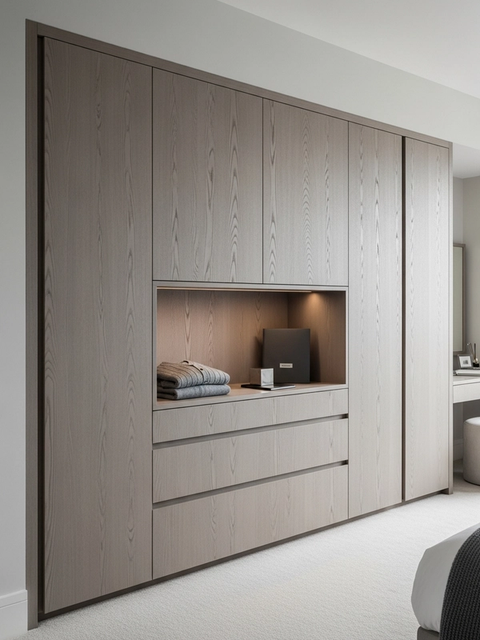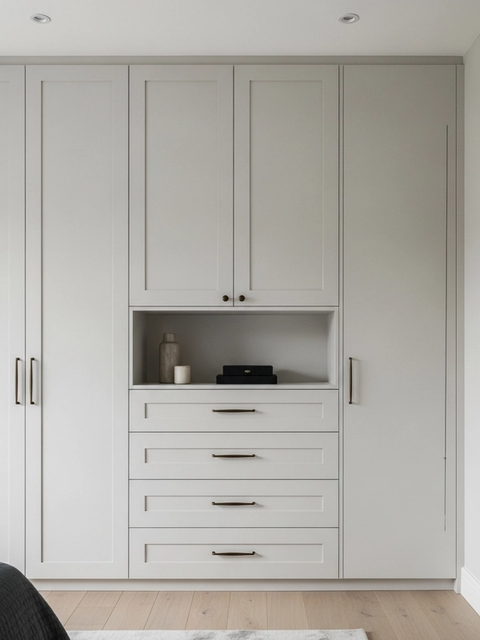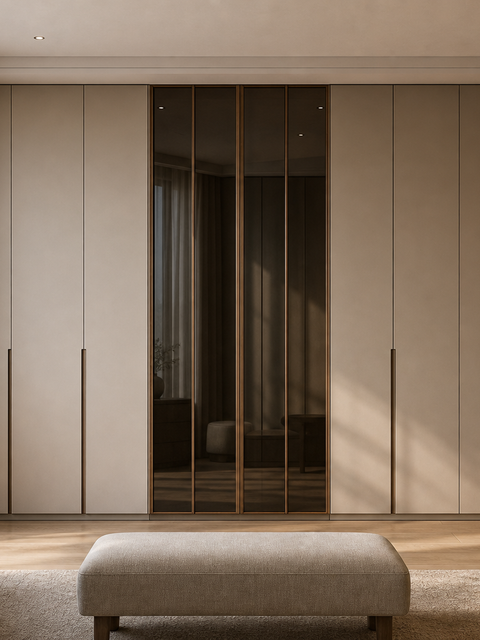

Surface finishes
- ipe-toned closed wardrobe fronts
- lime-washed clay end panel
- brass handle reveal
- handwoven jute tray surface
- aged terracotta floor tone
Voyage
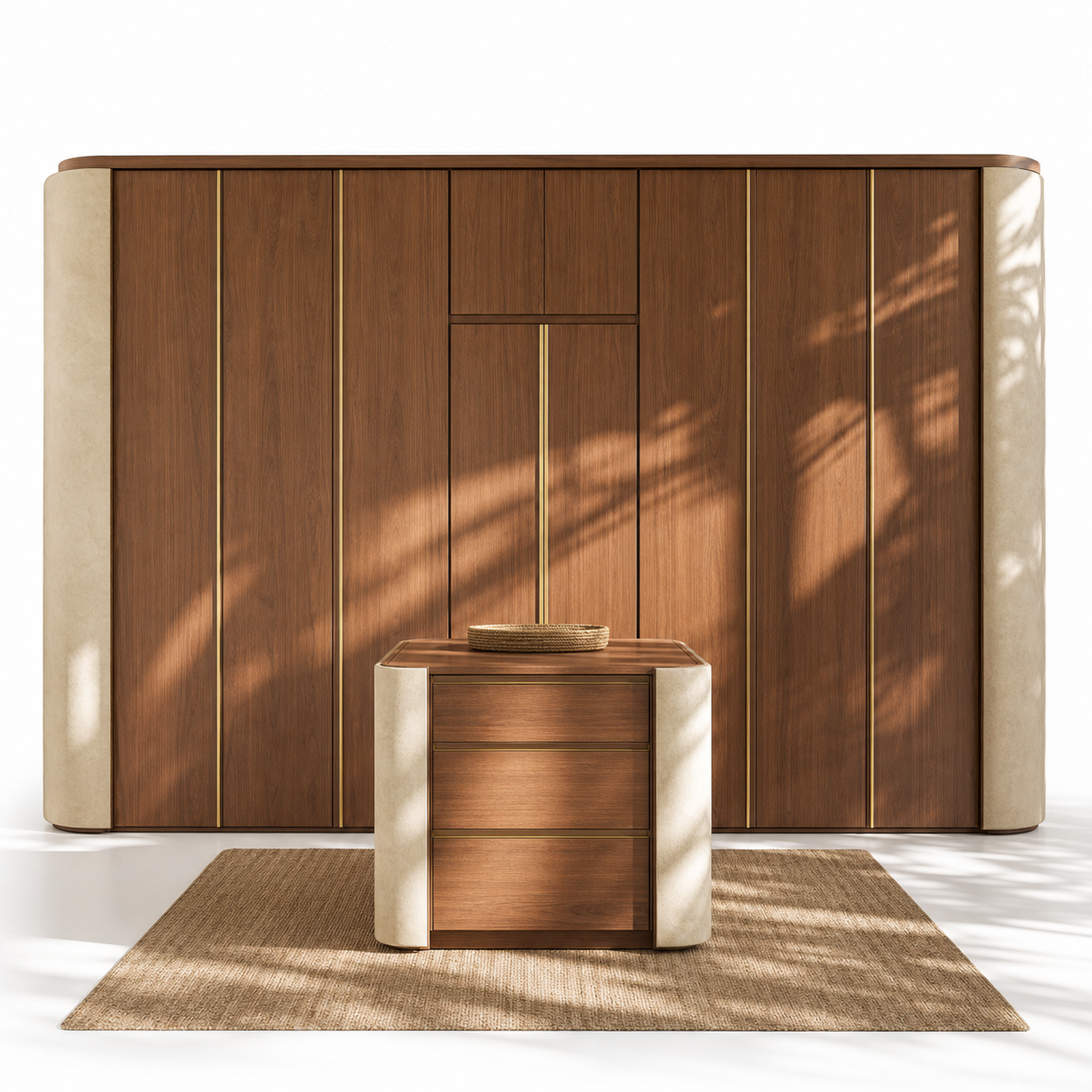
A custom Voyage wardrobe module with closed ipe fronts, a compact valet island alcove, lime-washed clay end panel, brass handle reveal, and durable 304 stainless steel structural core.
Published Reviewed
Overview
The full design intent, materials, and how this system is built — in detail.
Voyage Ipe Valet Island Alcove is made to order in our Foshan, China factory, with an approximate 30-day production lead time before shipping coordination. It gives homeowners, interior designers, and project teams a closed wardrobe wall with a compact valet island alcove for packing, folding, and daily dressing prep.
The differentiator is the Ipe Valet Island Alcove. Existing Voyage products already cover atelier gallery spine, bronze veil packing wall, cedar shadow dressing passage, Copenhagen loft pocket wall, FSC oak provenance wall, mirror-lit dressing run, tailored dressing gallery wardrobe, and tambour trunk dock wall. This SKU adds a different planning object: a wardrobe wall paired with a closed island alcove for packing and outfit staging.
The layout is intended for villa dressing rooms, primary suites, boutique apartments, and hospitality residences where wardrobe storage needs a clear working surface without exposing personal items. The closed wardrobe fronts keep the room calm, while the island alcove gives a defined place for folded garments, travel preparation, and daily selection.
A 304 stainless steel structural core sits behind the visible finish direction. That concealed basis supports alignment, long-term service, and repeated use, while the visible language stays residential: ipe-toned wardrobe fronts, lime-washed clay end panel, brass handle reveal, handwoven jute tray surface, terracotta floor context, and warm courtyard light.
For buyers, the value is clarity. The series is Voyage, the category is Wardrobe, the differentiator is Ipe Valet Island Alcove, and the formula dimensions are listed before the publisher computes the commercial offer. The SKU gives a concrete planning object rather than a vague dressing-room mood.
The valet island is the practical center of the module. It gives the owner a landing surface for packing, folding, sorting accessories, and reviewing outfits without opening the wardrobe wall for display. The island remains closed and architectural, so the room still reads as a polished residential interior.
Closed wardrobe fronts matter in a premium dressing room because the owner should not have to keep every item on view for the space to feel finished. The Voyage wall uses a quiet panel rhythm, vertical handle reveal, and warm wood tone to create order even before the room is styled.
The lime-washed clay end panel softens the wardrobe wall and prevents the island from feeling like a loose furniture piece. It gives the module a built-in edge condition and ties the storage run to surrounding architecture, especially in villas with textured walls, courtyard light, or terracotta floors.
The brass handle reveal is deliberately restrained. It provides a clear hand point and warm accent without turning the wardrobe into decorative hardware. The long vertical rhythm supports inspection, daily reach, and a calm composition when the room is viewed from the doorway.
Project teams can use this SKU to discuss wardrobe length, island position, circulation width, drawer planning, hanging zones, accessory storage, lighting, floor finish, wall backing, elevator route, and installation sequence. Those details decide whether the dressing room works after the visual direction is approved.
For interior designers, the module creates a warm villa expression without relying on clutter or open shelving. Pale clay, adobe sand, patagonia jade, deep olive, and lime-washed wall tones support an understated setting, while the product remains the subject of the page and the room supports its use.
For procurement, the scope is readable through meter inputs. Base cabinet planning length, tall cabinet planning length, and countertop-equivalent island surface length are listed as formula dimensions, while the publisher applies the approved calculation. That keeps the shop page consistent without asking editorial copy to invent a price.
The white hero image is intentionally plain. It lets the module be reviewed as a shop SKU with the wardrobe wall, central alcove, closed fronts, handle reveals, and side panels visible. The richer room images show circulation and atmosphere, but they do not hide the product inside styling.
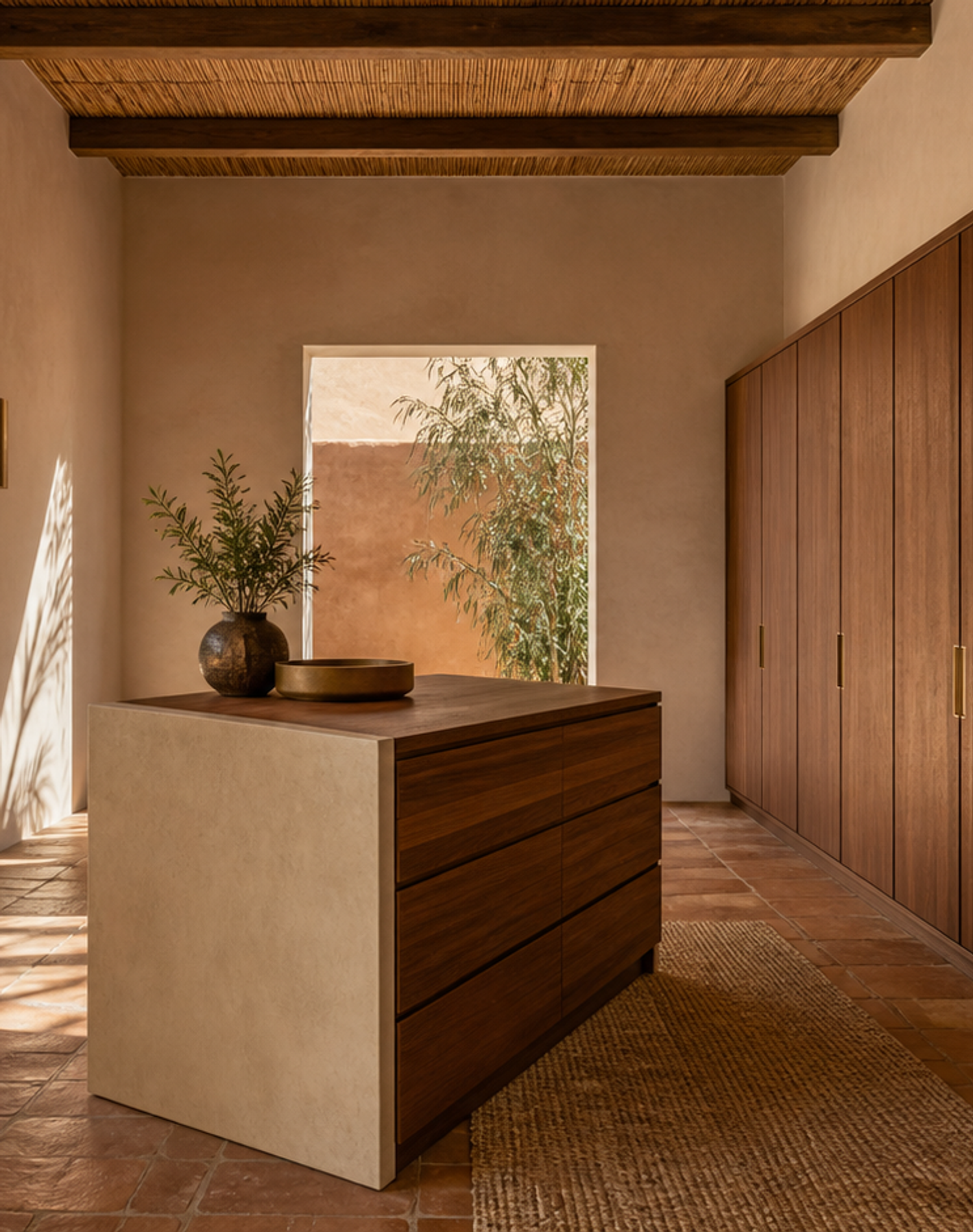
The midscene image explains the daily route through the dressing room. A wardrobe island can fail when it blocks circulation, competes with doors, or feels too much like a separate table. This SKU should be planned with comfortable clearances, closed storage faces, and a surface height that supports dressing routines.
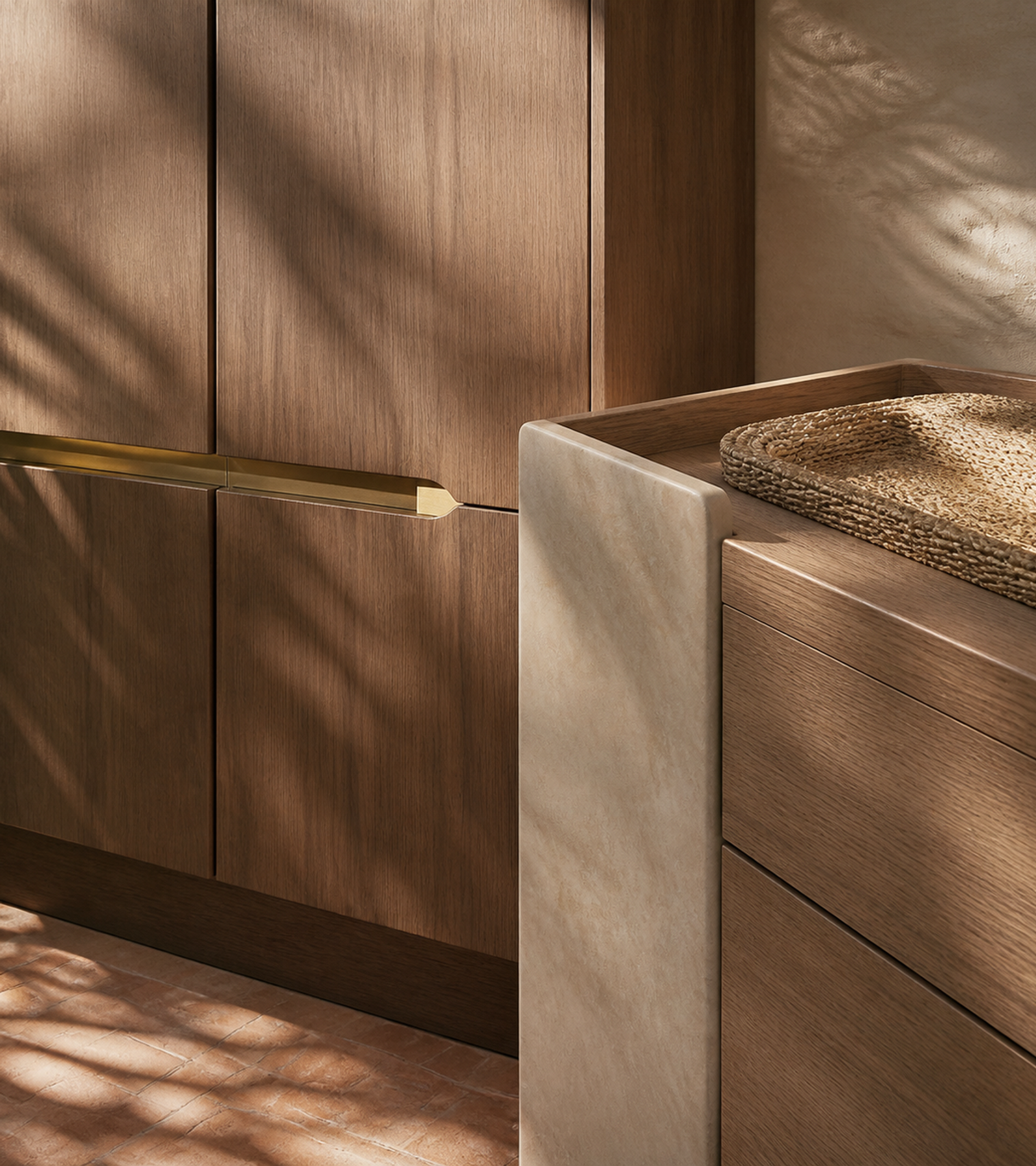
The detail image slows the buyer down on touched and inspected parts: wood grain, handle reveal, clay edge, tray surface, panel gaps, island corner, and floor transition. These details matter because dressing-room furniture is used every day and weak alignments become visible quickly.
The lifestyle image stays unoccupied so the product remains the focus. Courtyard light, textured walls, terracotta floor, and a quiet tray can suggest the residential setting, but people, open doors, exposed mechanisms, and readable objects would distract from the shop SKU review.
During project review, Fadior can tune wardrobe width, island length, drawer mix, hanging depth, handle tone, end-panel finish, tray detail, lighting plan, and installation sequence after site measurements are reviewed. The external concept remains Ipe Valet Island Alcove while technical choices respond to room dimensions and owner routine.
Maintenance planning is part of the product story. Closed fronts reduce visible clutter, the island top should tolerate daily garment handling, and the handle reveals should be easy to clean. These choices make the module more useful than a decorative dressing-room scene.
Before approving production, the project team should verify finished wall length, ceiling height, floor buildup, island clearance, drawer access, door swing conflicts, lighting positions, power needs, elevator access, delivery path, and local installation requirements. These details shape the final usefulness of the wardrobe module.
The SKU is strongest for buyers who want a warm villa dressing room with calm storage, a central prep surface, and a specific finish direction. It is not meant to replace a fully open closet display or a generic cabinet run. It is a measured shop-tier module for homes where dressing routines need order and privacy.
The valet island also helps the room work from more than one viewpoint. From the doorway, it gives the wardrobe wall depth; from the island, it creates a practical place to prepare clothing or luggage. That two-sided behavior is why the differentiator belongs in the product title rather than being treated as background styling.
It also gives project teams a concise reference for approving the dressing-room scope as one object. The buyer can discuss wardrobe wall, valet island, clay end panel, handle reveal, and room clearance together instead of splitting the design into unrelated cabinet and furniture decisions.
Because the island and wardrobe are ordered as one module, the project team can check the working surface, drawer reach, handle position, and walkway width together before production. That makes the room easier to review than a separate loose island placed after the wardrobe wall is already fixed.
The module also supports buyers who travel often or share a dressing room. One person can prepare luggage or folded garments at the island while the closed wall keeps long hanging storage visually calm. The goal is not display; it is a measured routine that keeps the room quiet after daily use.
Finish review should include physical samples whenever possible. Ipe tone, clay texture, handle warmth, jute tray weave, and terracotta floor color can shift under different lighting, so the page establishes direction while the final order should be confirmed against the home, climate, cleaning routine, and adjacent rooms.
Installation planning should treat the island as part of the traffic path, not as a decorative object. Clearances around drawers, nearby bedroom doors, mirrors, stools, and suitcase movement should be checked before release so the wardrobe remains comfortable after the first week of use.
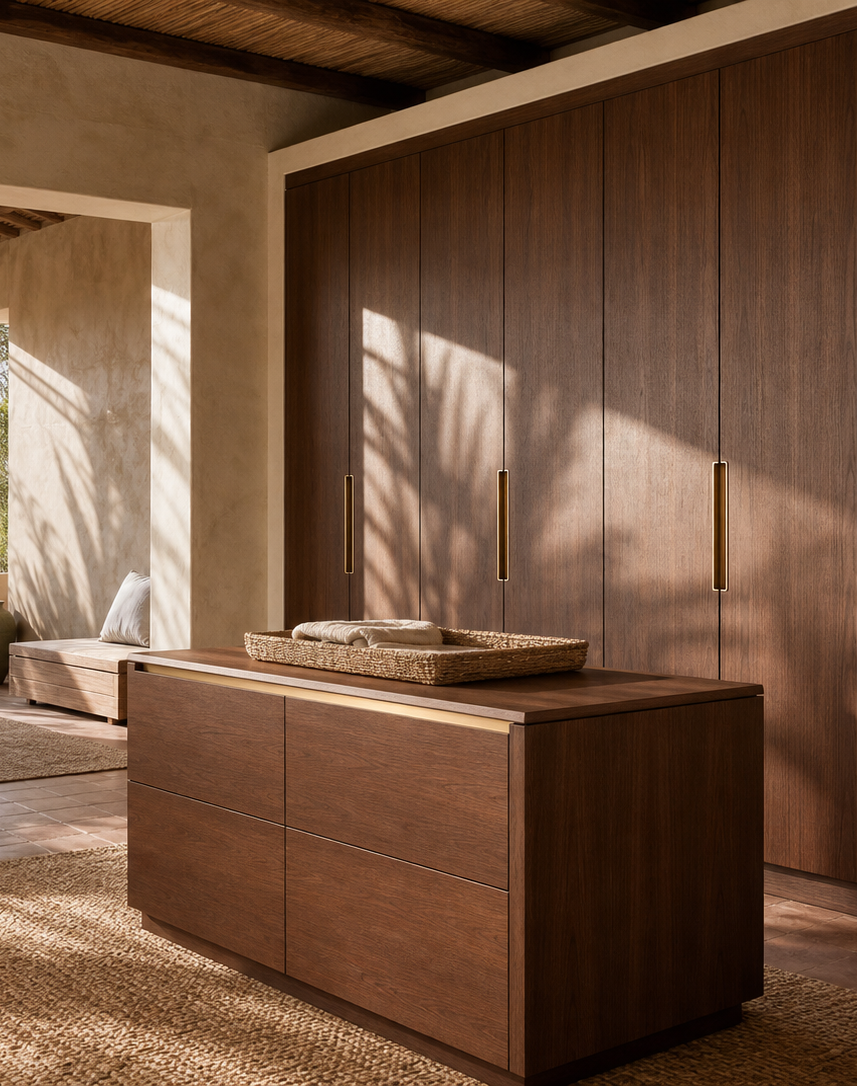
Visual interpretation
See how the product holds its design language at room scale and in close detail.
The visual direction is a warm villa dressing-room wardrobe with closed ipe fronts, a compact valet island alcove, lime-washed clay end panel, and restrained brass handle reveals.
The image set keeps the wardrobe closed and exterior-facing: a white-background commerce view for inspection, a room midscene for circulation, a close material detail, and a 16:9 villa dressing suite for landing-page context.
Key features
These points explain why this flagship product stands out.
Closed wardrobe wall
Long closed fronts keep the dressing room calm while giving the storage run a clear architectural rhythm.
Valet island alcove
A compact island creates a dedicated surface for folding, packing, and daily outfit preparation.
Clay end-panel transition
The lime-washed end panel softens the wardrobe edge and helps the module feel integrated with the room.
Durable structural core
The concealed 304 stainless steel core supports alignment, repeated use, and long-term service.
Materials and finish
Finish, color, and detailing are selected to keep the product convincing in both specification and daily use.
Surface finishes
Color options
Customization
This is where the product moves from inspiration into a live project discussion.
Fadior can tune wardrobe width, island length, drawer mix, hanging depth, accessory storage, handle tone, end-panel finish, tray detail, lighting plan, and installation sequence after site measurements are reviewed.
Project review can adapt circulation clearances, drawer access, vertical divisions, finish samples, island height, floor protection, and delivery route while preserving the Ipe Valet Island Alcove concept.
Specifications
The key data is organized for clear review before planning and quotation.
| Base cabinet planning | 2.4 meters |
|---|---|
| Wall cabinet planning | 0.0 meters |
| Tall cabinet planning | 4.8 meters |
| Countertop planning | 1.8 meters |
| Primary cabinet material | 304 stainless steel |
| Visible finish direction | Ipe-toned wardrobe fronts, lime-washed clay end panel, brass handle reveal, handwoven jute tray surface, terracotta floor context, and warm courtyard light |
FAQ
These questions help buyers compare options and reduce friction before inquiry.
The published SKU sets the Voyage series, wardrobe category, exterior concept, formula dimensions, and visible finish direction. Before production starts, Fadior reviews wall length, ceiling height, island clearance, drawer access, hanging depth, lighting positions, finish samples, delivery route, and installation sequence so the wardrobe wall and valet island work as one room-scale module. This also helps the buyer compare the module against separate carpentry proposals, because the wardrobe face, island footprint, end-panel treatment, and finish direction are reviewed together instead of being split across multiple informal decisions.
Existing Voyage products already cover atelier gallery spine, bronze veil packing wall, cedar shadow dressing passage, Copenhagen loft pocket wall, FSC oak provenance wall, mirror-lit dressing run, tailored dressing gallery wardrobe, and tambour trunk dock wall. Ipe Valet Island Alcove focuses on a closed wardrobe wall paired with a compact central prep surface for packing, folding, and daily outfit staging.
It works best in primary suites, villa dressing rooms, boutique apartments, and hospitality residences where the owner wants closed storage plus a practical island surface. The room should allow comfortable circulation around the island, clear access to drawers and hanging zones, and enough wall length for the wardrobe front rhythm to feel intentional. It is less suited to narrow corridors where the island would reduce movement, or to display closets where open shelving is the main goal. The strength of this SKU is closed storage with a deliberate working surface.
Buyers should confirm finished room dimensions, wall backing, ceiling height, floor buildup, island clearance, drawer access, door swing conflicts, lighting and power needs, elevator access, delivery path, finish samples, hardware tone, and any local installation requirements. The page images support finish and proportion review, while final technical decisions should be confirmed through project review. These confirmations matter because the island changes movement inside the room, and the wardrobe wall depends on clean vertical alignment. The final order should match the real site rather than only the visual direction shown online.
Related products
These references help the current product stay connected to the wider collection.