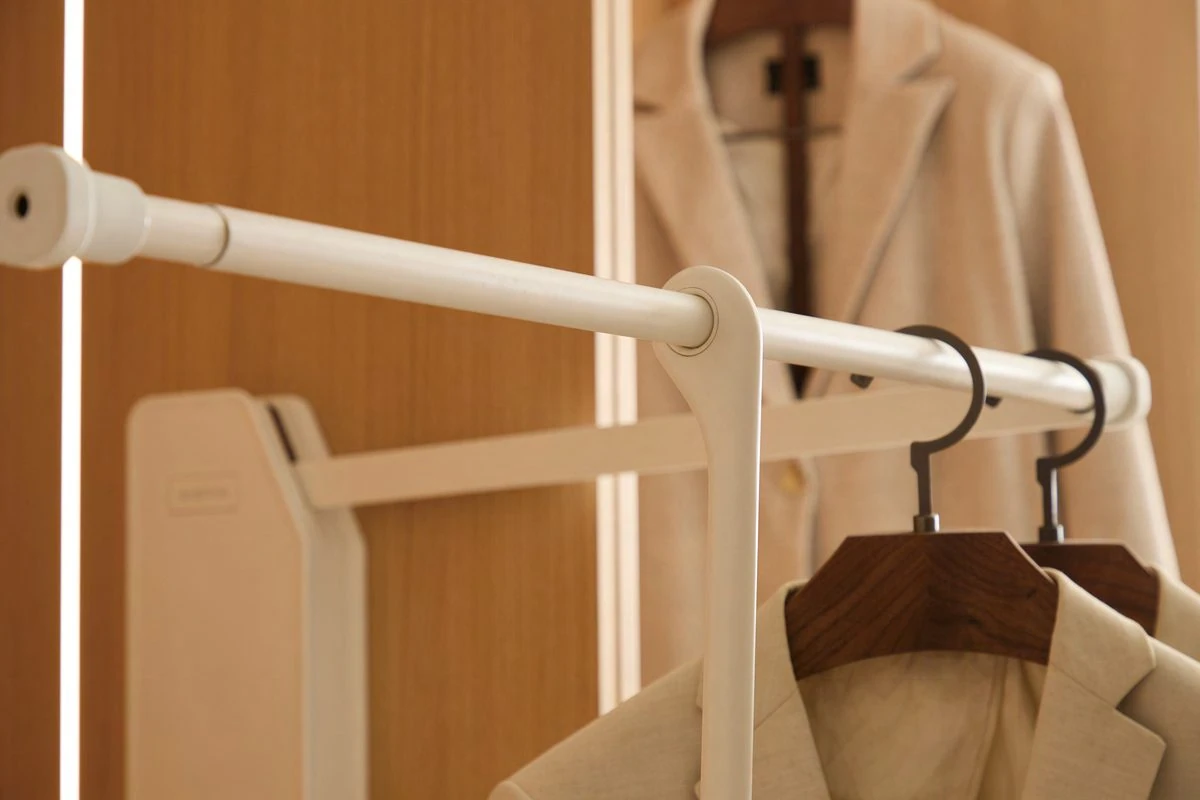
Electric Pull-Down Hanging Rail
LAMBERT
Electric movement brings upper garments down.
View hardwareA wardrobe lift system brings hanging clothes down from a high zone through a documented rail movement that is sized with the cabinet.
Use the room height, clear cabinet width and the intended hanging load to compare electric, pull-down and corner movements. Keep each bought-in brand and its action visible in the specification.
The selected records show LAMBERT electric movement, BASISTEM Vella construction and a Fadior corner hanging rail. They cover different wardrobe zones without claiming that every mechanism has the same fit.
Compare the recorded widths, construction and height with the clear wardrobe elevation. The final operating reach and adjacent door clearance belong in the project drawing.
| Fitting | Brand | Action | Fit and specification | Cabinet body |
|---|---|---|---|---|
| Electric Pull-Down Hanging Rail | LAMBERT | Electric movement brings upper garments down. | Action: Electric height movement with hand-wave switch; Clear cabinet width: 560–1164 mm | 304 stainless steel |
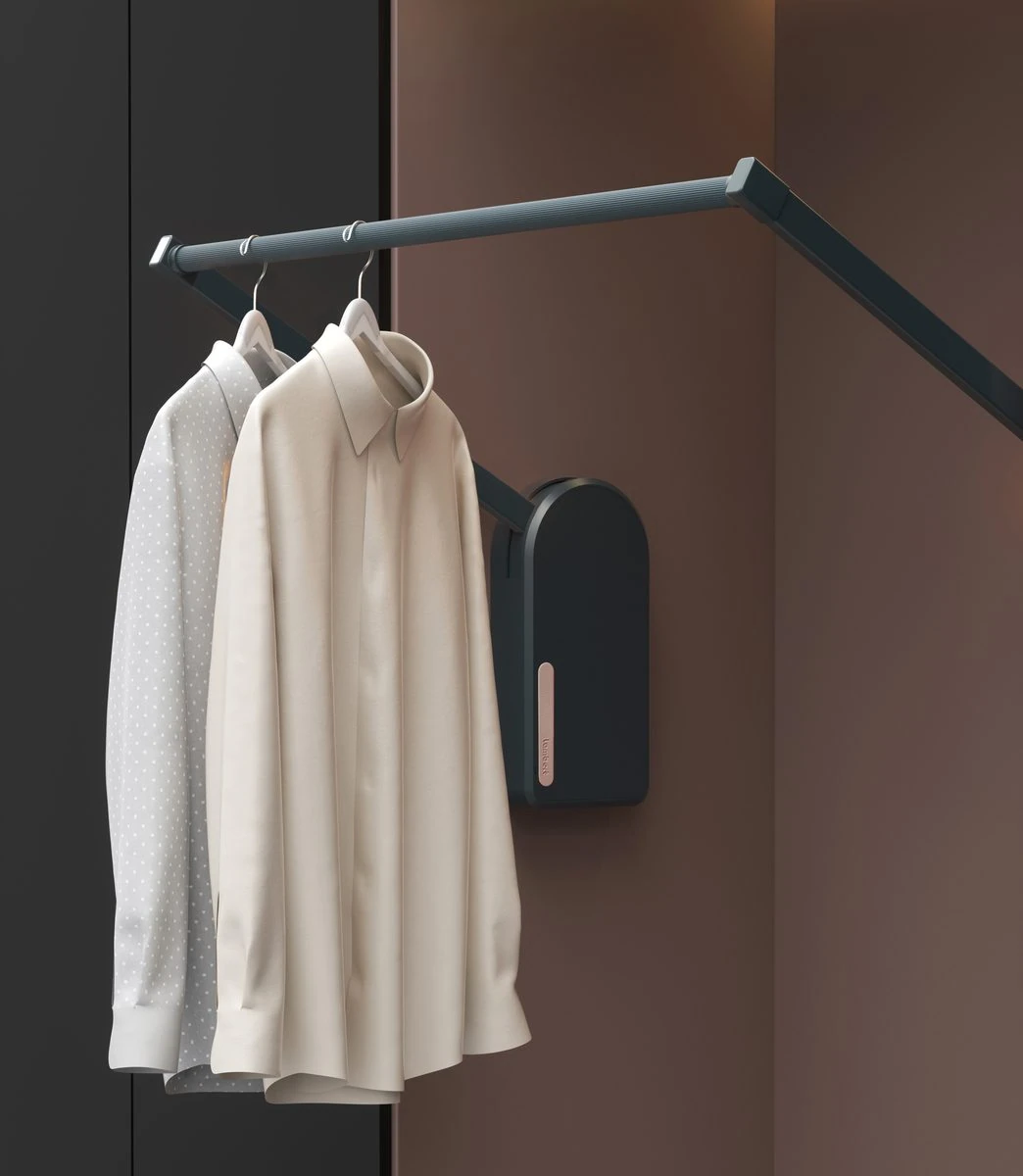
| Vella Pull-Down Hanging Rail | BASISTEM | Damped lowering and a hollow central grip. | Widths: 660–860 mm / Wide version; Construction: Leather + aluminium alloy | 304 stainless steel |
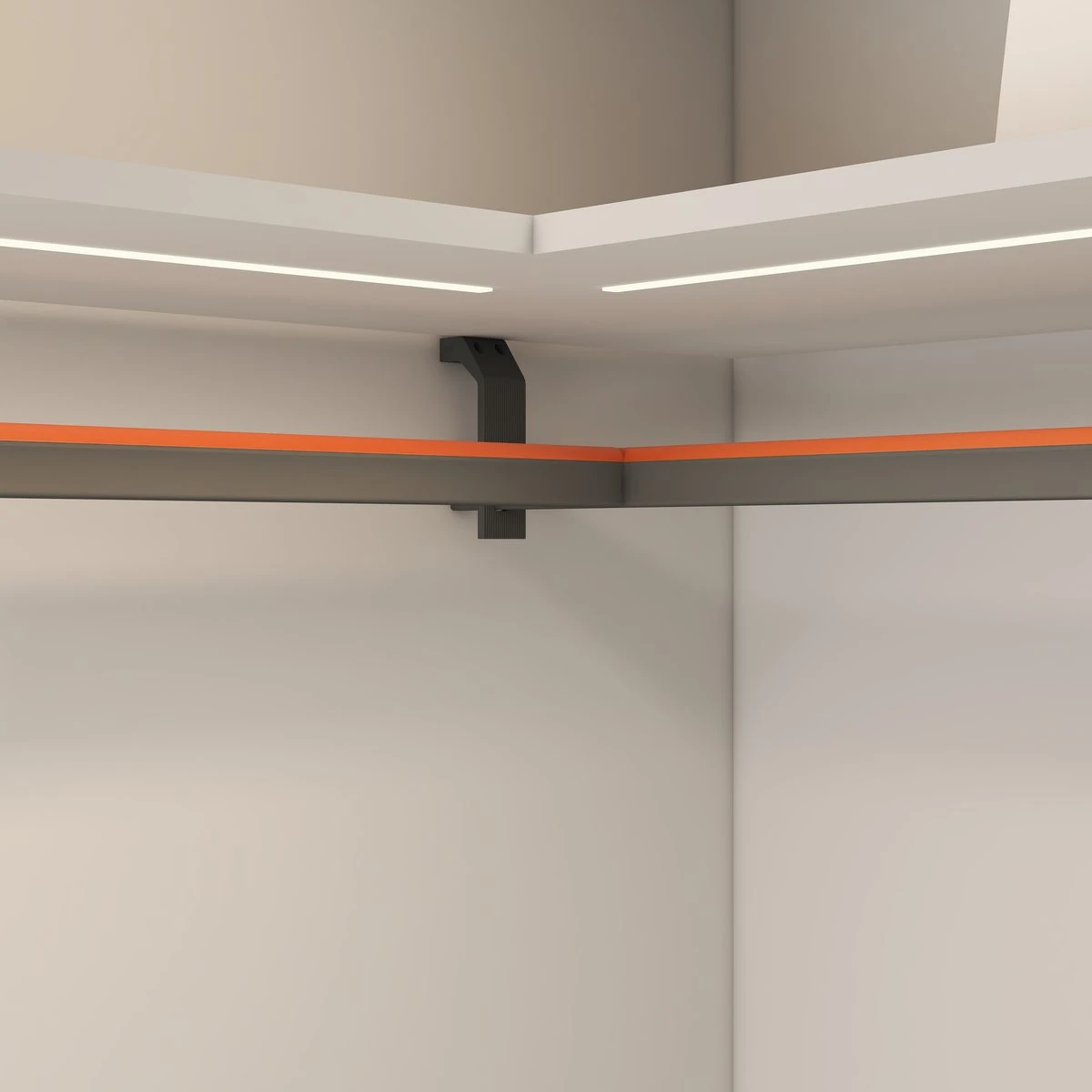
| Corner Hanging Rail | Fadior | A corner return for wardrobe hanging space. | Hand: Left / Right; Height: 415 mm | 304 stainless steel |
Share the room measurements and the storage routine so the cabinet envelope and each fitting can be reviewed together.
A lift changes the position of the hanging rail so a high zone can be reached. A fixed rail does not provide that movement; both still require a measured cabinet envelope.
The page shows a LAMBERT electric pull-down rail, a BASISTEM Vella pull-down rail with leather and aluminium alloy construction, and a Fadior corner hanging rail.
No. The lift is a fitting with its own documented brand and construction. The Fadior cabinet body remains a separate 304 stainless steel specification.