
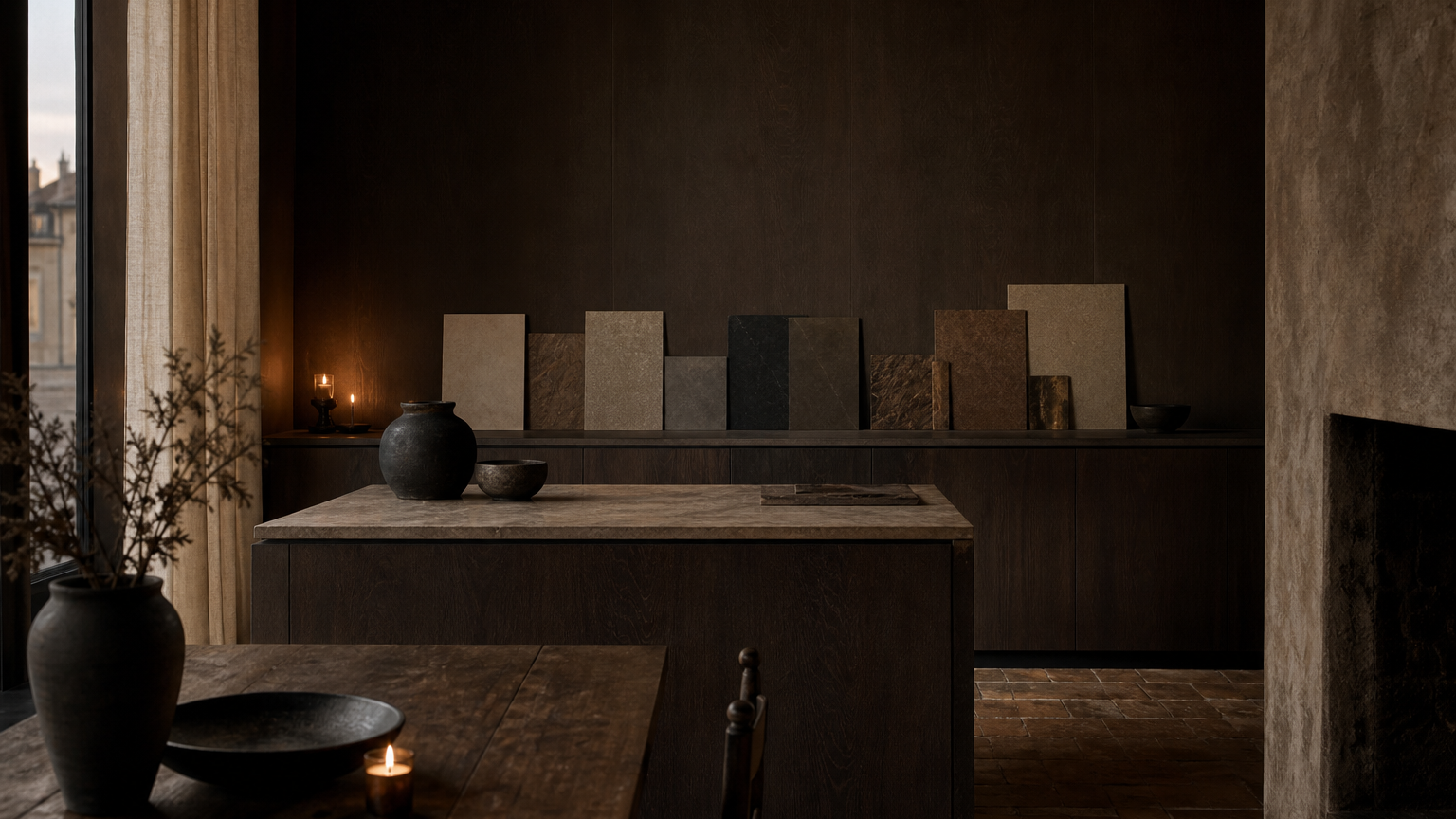
Milan Design Week 2026 Kitchen Material Manifesto
Milan Design Week 2026 shows that luxury kitchens now depend on tactile materials, tested surfaces, and durable cabinet structure.
Direct answer
The Direct Answer
304 stainless steel kitchen systems give Milan’s 2026 material conversation a practical residential answer: luxury now depends on surfaces that feel tactile, perform under daily use, and connect the kitchen to the rest of the home. For a GCC buyer, the lesson is not to copy a fair stand. It is to test whether stone, wood, glass, and finished cabinet bodies can stay beautiful for 10, 20, and 30 years.
What does Milan Design Week 2026 say about luxury kitchens?
304 stainless steel kitchen systems give Milan’s 2026 material conversation a practical residential answer: luxury now depends on surfaces that feel tactile, perform under daily use, and connect the kitchen to the rest of the home. For a GCC buyer, the lesson is not to copy a fair stand. It is to test whether stone, wood, glass, and finished cabinet bodies can stay beautiful for 10, 20, and 30 years.
Why is EuroCucina important for kitchen buyers?
EuroCucina matters because it is the kitchen-focused stage inside Salone del Mobile, and the 2026 edition returned from 21 to 26 April with FTK - Technology For the Kitchen. Salone’s own 2026 coverage says EuroCucina involved 106 brands from 17 countries, which makes it useful evidence of where premium kitchen language is moving. The strongest signal for buyers is that the kitchen is no longer treated as a closed technical room. It is becoming an open, connected room where material, technology, storage, dining, and emotional comfort have to work together. That shift is especially relevant for villas and penthouses where the kitchen is visible from living, dining, and terrace zones.
How should a buyer read the phrase material manifesto?
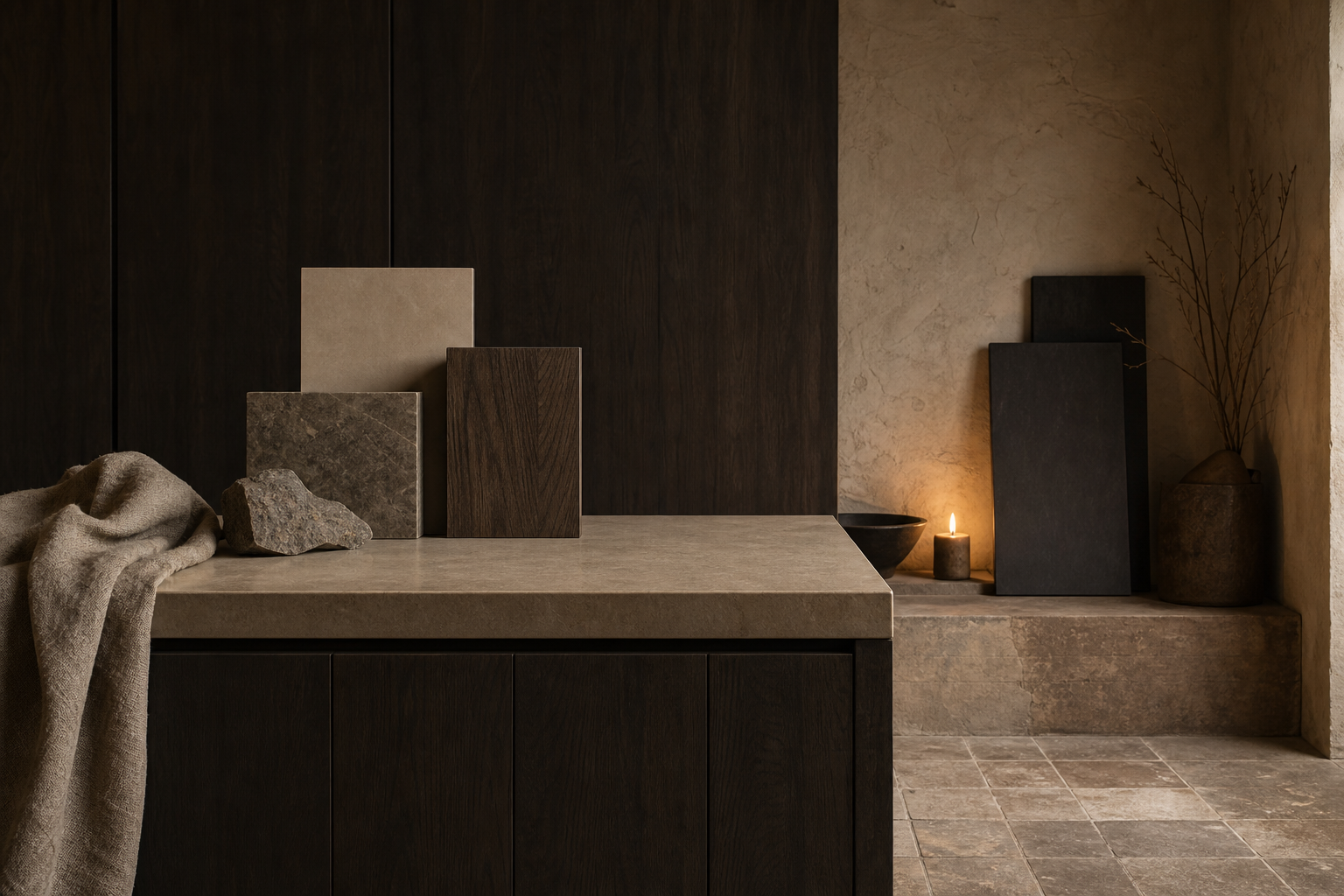
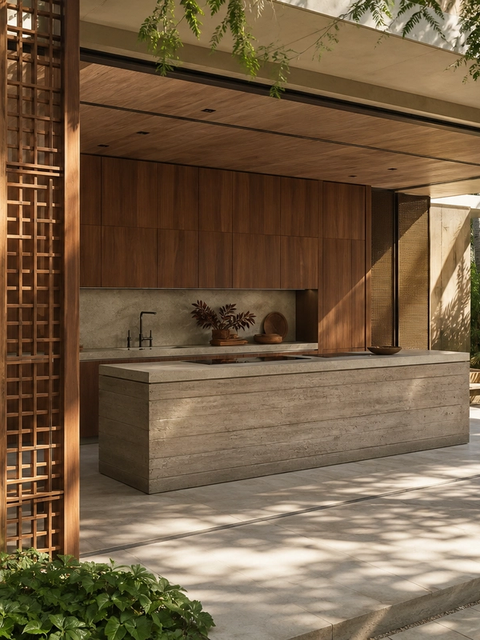
A material manifesto means the room declares what it believes about durability, touch, light, and maintenance. It is not just a dramatic stone slab or a dark cabinet photo. At Milan, the language around kitchens increasingly points to tactility: surfaces with grain, patina, texture, and softer industrial character. Architectural Digest’s 2026 trend report highlighted stone, wood, craft, glass, and a gentler form of industrial influence. A buyer should translate that into a checklist: what does the surface feel like by hand, how does it behave under 3000K evening light, how does it clean after 7 days, and what happens near water, steam, heat, and fingerprints? If the answer is only visual, it is not yet a kitchen decision.
Which materials carried the clearest 2026 signal?
The clearest signals were not one fashionable color or one appliance idea. They were families of material behavior: expressive stone, darker warm woods, craft surfaces, softened metal language, imperfect glass, and textured wall treatments. Those signals fit luxury kitchens because they make the room feel less like a showroom and more like architecture. For Fadior, the useful bridge is 304 stainless steel below the finish layer: the cabinet body can be waterproof and structurally calm while the visible face carries warmer finishes, powder coating, wood-grain transfer, linen embossing, PVD accents, or stone context. That matters because a GCC kitchen often has 2 cooking zones, strong daylight, air-conditioning cycles, and service use. A material can look poetic in Milan, but it still has to survive a family kitchen.
How does Milan inspiration become a practical GCC kitchen?
Treat the fair as a filter, not a shopping list. First, select the atmosphere: monastic dark, luminous stone, warm wood, or soft industrial restraint. Second, assign performance zones: sink, dishwasher, cooking wall, utility storage, island, pantry, and outdoor-connected prep. Third, test each visible material against real use. In a Gulf villa, the wettest 2 zones usually deserve the most resilient cabinet body. A 304 stainless steel base makes sense where water, cleaning, and heat are daily facts. The visible mood can still be refined: smoked oak, warm putty, stone counters, aged bronze accents, or matte powder-coated fronts can soften the structure. The best kitchens borrow Milan’s courage but keep the buyer’s maintenance reality.
How do you compare material-first kitchens before signing drawings?
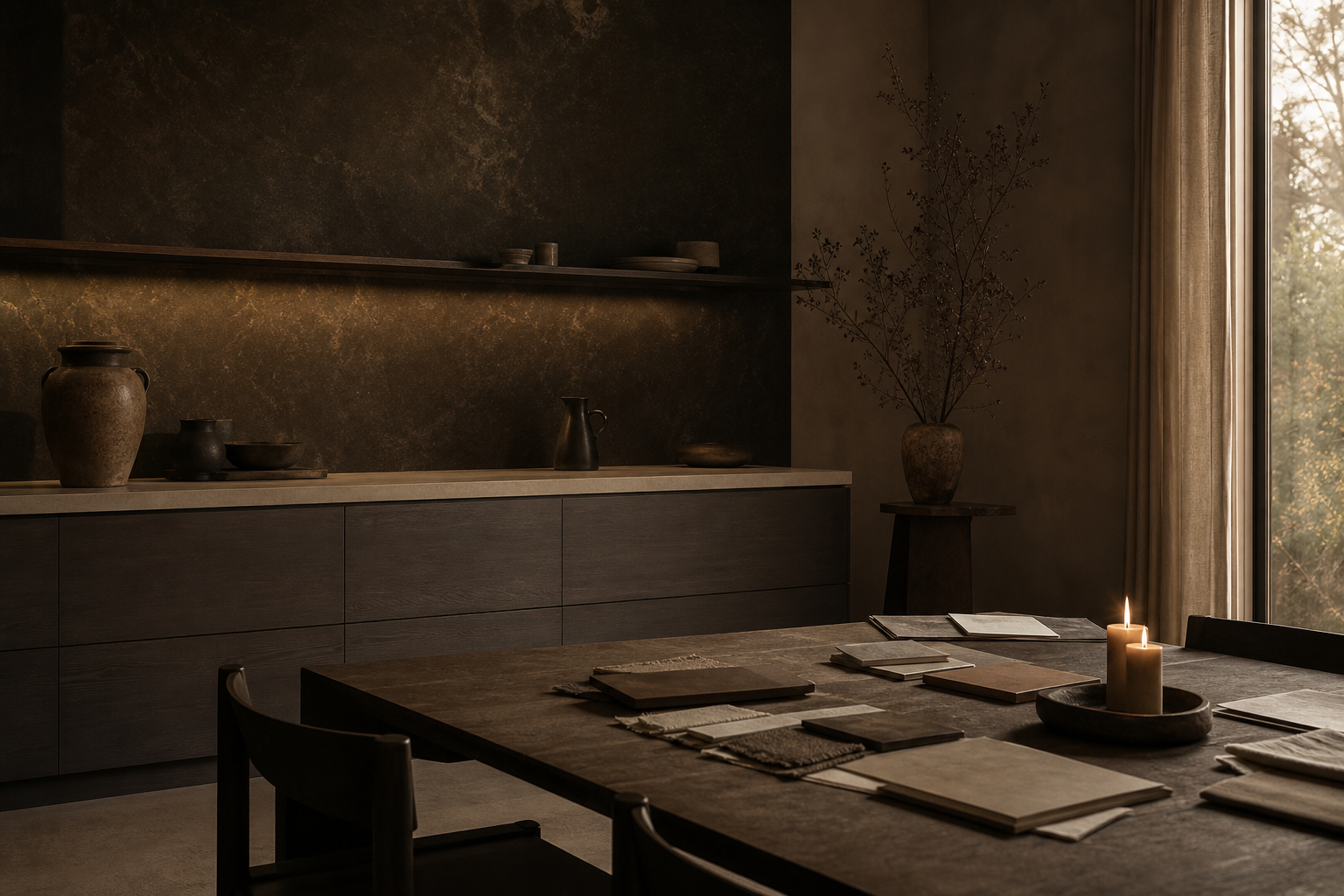
Compare the kitchen by decision risk rather than by trend names. A material-first room should answer 5 questions: what fails first, what cleans fastest, what ages gracefully, what can be repaired, and what still feels warm after daily use? The table below is the conversation a buyer should have before approving surfaces, especially when the home combines a show kitchen, back kitchen, dining room, and terrace.
| Decision factor | Milan 2026 signal | Practical buyer test | Fadior translation |
|---|---|---|---|
| Stone presence | Expressive stone and sculptural counters | View the slab in daylight and warm evening light | Pair stone with waterproof 304 cabinet bodies near wet zones |
| Warm wood mood | Darker woods and tactile residential depth | Check whether wood is structural, veneer, or visual accent | Use wood-grain transfer or warm accents over a stable cabinet system |
| Soft industrialism | Metal language becomes quieter and more sculptural | Avoid raw industrial surfaces in family kitchens | Use finished 304 stainless steel, powder coating, and PVD accents |
| Craft texture | Hand-feel, woven, plaster, tile, and patina cues | Touch samples and clean them for 7 days | Use texture as the visible layer, not as an excuse for weak structure |
| Open-home kitchen | Kitchen connects to dining, lounge, and terrace | Test sightlines from 3 adjacent rooms | Carry one material logic through kitchen, storage, vanity, and wall panels |
When should 304 stainless steel sit behind the visible finish?
304 stainless steel should sit behind the visible finish when the kitchen needs water resistance, hygiene, and long-term shape stability but the buyer still wants a warm residential mood. Fadior’s argument is strongest in sink bases, dishwasher sides, cooking walls, utility cabinets, vanities, laundry rooms, balcony cabinets, and outdoor-connected prep. The company’s 304 focus also keeps the specification simple: one clear residential cabinet material, no alternate-grade confusion, and no particle-board core hidden inside wet zones. In a Milan-inspired kitchen, that means the poetry can live on the surface while the body carries the practical burden. This is also where material inspiration needs discipline. A patinated or softer industrial surface can make the kitchen feel current, but the hidden body decides how the room ages. Buyers should ask whether the surface is only decorative, whether the body is waterproof, whether the finish can be renewed, and whether replacement would require rebuilding the whole cabinet run.
Why does Fadior fit a material-led kitchen conversation?
Fadior fits because its material story is tied to production rather than mood words. The brand comes from more than 25 years of stainless processing through its parent company, uses 304 stainless steel as the primary cabinet material, and runs a new smart factory with more than 60,000 square meters of production space. Its process includes laser cutting, bending, welding, powder coating at 220 degrees Celsius, assembly, and QC. The company also records 213 cumulative patents, including 12 related to glue-free manufacturing. Those details matter because a material manifesto must become a production promise. A kitchen that feels soulful in the showroom still has to stay square, dry, and repairable after years of meals, staff use, humidity, and cleaning. Fadior also has a whole-home advantage. The same material logic can continue from the main kitchen into wardrobe systems, bathroom vanities, balcony cabinets, laundry storage, doors, and wall panels. That continuity matters in large residences because the kitchen is no longer an isolated room; it is part of a larger material identity.
Should buyers copy a Milan trend exactly?
Buyers should not copy a Milan trend exactly. A fair installation is a controlled argument; a home kitchen is an everyday tool. Copying a dark monastic booth into a bright coastal apartment can make the room heavy. Copying a dramatic stone island without testing cleaning, edge exposure, and glare can create anxiety. Use Milan to ask sharper questions instead. Does the room need darker warmth or lighter calm? Should the island be the sculptural object, or should the cabinet wall disappear? Can the kitchen connect to dining without exposing visual clutter? Can the wettest 2 zones use a tougher body while the visible room remains soft? Those questions protect the budget better than a trend board. A safer approach is to translate one idea at a time. If Milan points to stone, decide whether stone belongs on the island, backsplash, or dining-side wall. If it points to softened industrialism, decide whether that means a muted finish, a darker cabinet wall, or only a small accent. If it points to craft, decide whether the hand-feel belongs in fabric, plaster, tile, or a textured cabinet face. Translation protects the project from becoming a themed room.
What should the showroom checklist include?
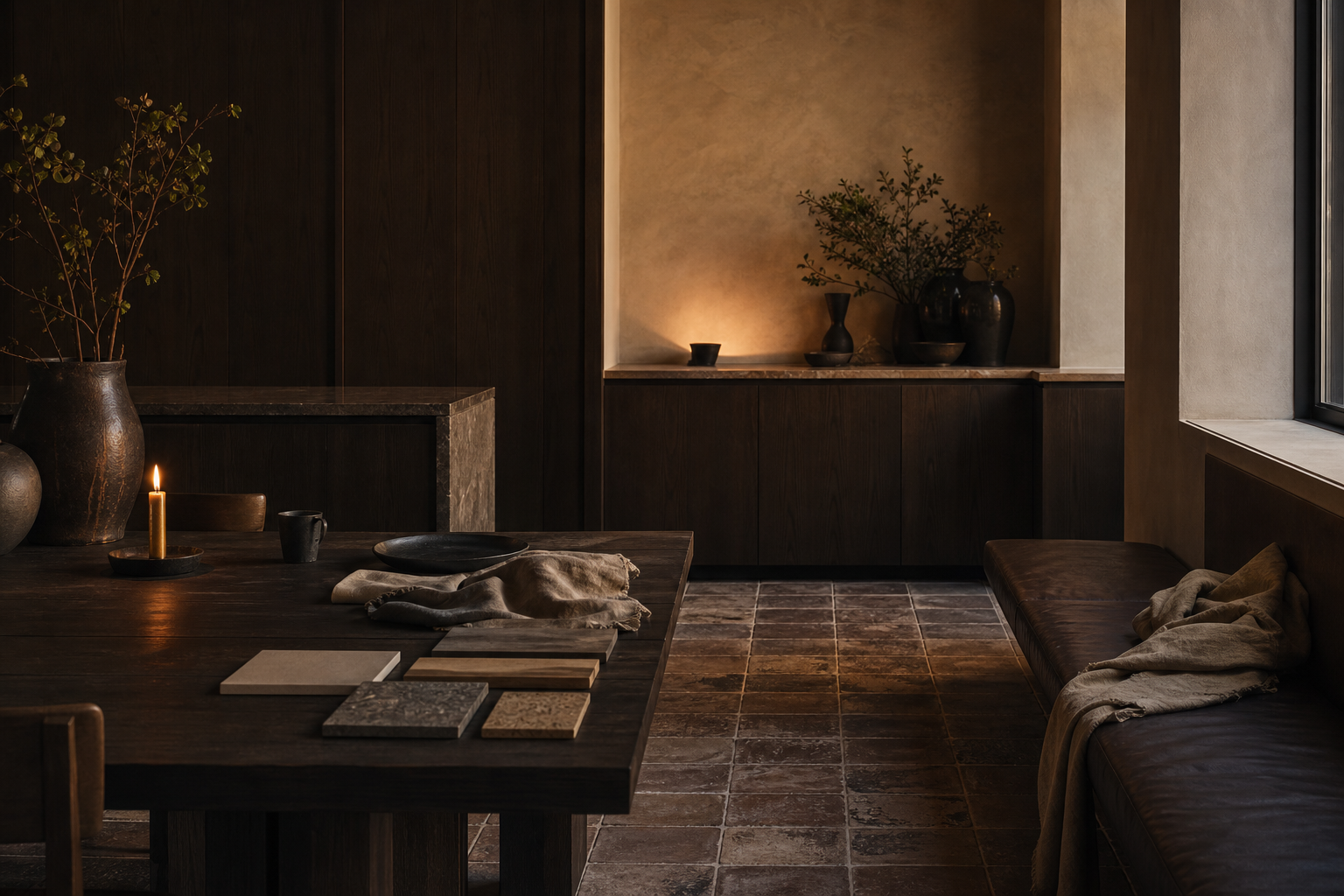
A Milan-informed showroom visit should include 6 checks. Ask for the main cabinet finish, stone sample, wall/floor finish, lighting temperature, and touch sample in one place. View them under midday light and 3000K evening light. Clean the sample for 7 days before approving a matte or textured finish. Identify the 2 wettest zones and the 2 highest-touch zones. Ask which parts are 304 stainless steel and which are decorative finish layers. Finally, map the next internal pages: materials for proof, manufacturing for process, journal for education, and consultation for a project conversation. The right material decision should survive both visual desire and operational questioning.
Which Milan kitchen material questions do buyers ask most?
Buyers usually ask whether Milan trends are practical at home, whether dark or tactile surfaces are hard to maintain, whether metal can feel warm, whether stone should dominate the room, and where a stronger cabinet body matters most. These are buying questions, not style trivia.
How does the material manifesto become a finished room?
It becomes a finished room when the buyer separates inspiration, structure, and maintenance. Milan can provide the inspiration: tactile surfaces, softened industrial cues, craft, stone, wood, and light. Fadior can provide the structure: 304 stainless steel cabinetry, factory-controlled production, powder coating, PVD options, and whole-home continuity. The buyer provides the final discipline: sample testing, zone planning, and a refusal to choose surfaces only because they photographed well at a fair. That is the practical manifesto: beauty that can be touched, cleaned, lived with, and trusted. The final approval should be physical. Put the cabinet finish, counter, floor, wall color, and lighting temperature together before production. Photograph them in morning light, midday glare, and evening warm light. Touch the highest-use sample with clean and oily hands. Ask how the surface will be repaired if a child, cook, or guest damages it. A luxury kitchen earns its cost when that testing makes the decision calmer, not more confusing. If the sample still feels right after that process, the project has moved from exhibition excitement to a buildable kitchen brief. That discipline matters.
Frequently Asked Questions
Questions this guide answers
- Is Milan Design Week 2026 useful for real kitchen decisions?
- Yes, if buyers use it as a way to read material direction rather than as a list of products to copy. The useful 2026 lesson is that kitchens are becoming more tactile, open to the home, and emotionally layered. A buyer should translate that into sample testing, wet-zone planning, lighting checks, and cabinet body decisions before approving a finish.
- Does a material-first kitchen have to look dark or dramatic?
- No. A material-first kitchen can be dark, pale, warm, or luminous. The point is that every surface has a reason: stone for mass, wood tone for warmth, glass for light, 304 stainless steel for waterproof structure, and texture for human touch. Drama is optional; material coherence is the real standard.
- Can stainless steel feel warm enough for a luxury home?
- Yes, when it is used as a finished residential system rather than a raw commercial cue. 304 stainless steel can sit behind powder coating, wood-grain transfer, linen texture, or PVD accents. Warm stone, smoked wood tones, soft plaster, and controlled lighting make the kitchen feel residential while the cabinet body remains water-resistant and durable.
- What is the biggest mistake after seeing Milan kitchen trends?
- The biggest mistake is approving the surface mood before testing daily use. A kitchen sample should be viewed in daylight and evening light, touched repeatedly, cleaned for 7 days, and compared beside the floor, wall, and counter. If the material only works in a photo, it is not ready for a family kitchen.
- Where should Fadior’s 304 system matter most?
- It matters most in wet, hot, and high-use zones: sink bases, dishwasher sides, cooking walls, utility storage, laundry cabinets, vanities, balcony storage, and outdoor-connected prep kitchens. Those are the places where a resilient cabinet body can protect the finished room while the visible design remains refined.
Related reading
Continue exploring the journal.
More guides, whitepapers, and insights from the Fadior journal.
Buyer's Guide
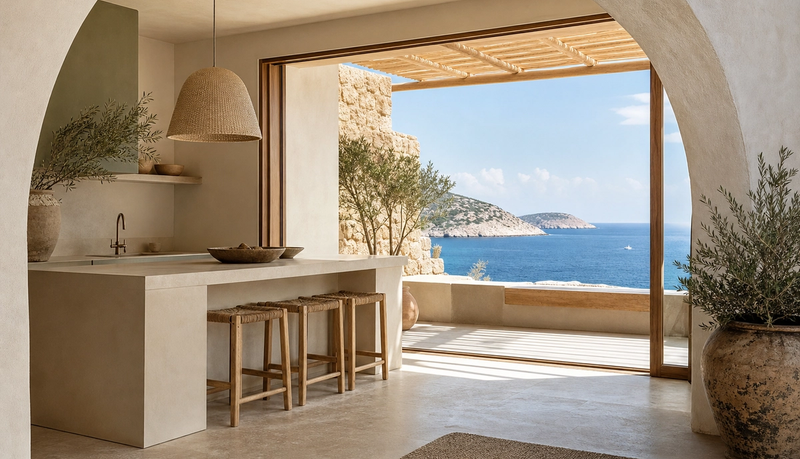
Matte 304 Stainless Kitchen Surfaces for Gulf Homes
Gulf kitchens can use matte 304 stainless steel without looking cold when finish, stone, light, and waterproof cabinet structure are planned together.
Buyer's Guide
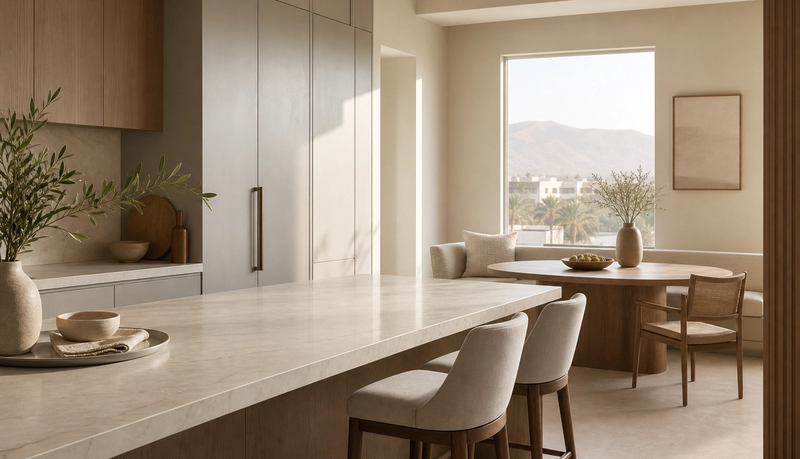
Solid Surface Kitchen Materials
A Gulf kitchen guide to choosing Staron, HIMACS, Cambria, natural stone, and 304 cabinet systems by hygiene, repair, heat, and daily use.
Related products
Specific products worth reviewing next.
References
Authoritative sources cited in this article
- EuroCucina returns from 21 to 26 April 2026
- EuroCucina 2026 features 106 brands from 17 countries
- the kitchen is becoming open and connected to the home
- AD editors saw tactile materials, craft, stone, softer industrialism, and wood
- stainless steel is durable and recyclable when specified correctly
- ASTM A240 covers chromium and chromium-nickel stainless plate, sheet, and strip
- kitchen design coverage tracks material, layout, and residential design trends
Editorial transparency
Daniel Okonkwo is a composite editorial persona maintained by Fadior Home's editorial team. Articles attributed to this byline are produced through an AI-assisted editorial workflow with human review, and represent the consolidated voice of multiple researchers and contributors.
Ready to specify?