Verified Quality, Certifications & Buyer Proof

304 Stainless Steel Kitchen Cabinets: Independent Testing, Warranty & Care

Overseas homeowners, architects, and villa contractors searching for moisture-resistant, formaldehyde-free kitchen cabinets need verifiable proof before committing a deposit. Below are Fadior's 12 independent laboratory reports (2025–2026), honest 304 stainless steel vs MDF, plywood, and aluminum comparisons, transparent material boundaries, 30-year structural warranty terms, and official cleaning rules.

Formaldehyde Not Detected

Glue-free 304 bodies, shelves, countertops & doors

304 Stainless Verified

19.31% Cr · 8.02% Ni alloy chemistry lab-confirmed

Food-Contact Tested

No detectable heavy-metal migration (< 0.002 mg/kg)

30-Year Structural Warranty*

Backed by 12 independent 2025–2026 lab records

Request Lab Reports & Quote

Reviewed by Fadior Quality & Engineering Team · Updated 2026-11-22 · *30-year cabinet-body structural warranty; specific terms are subject to the contract.

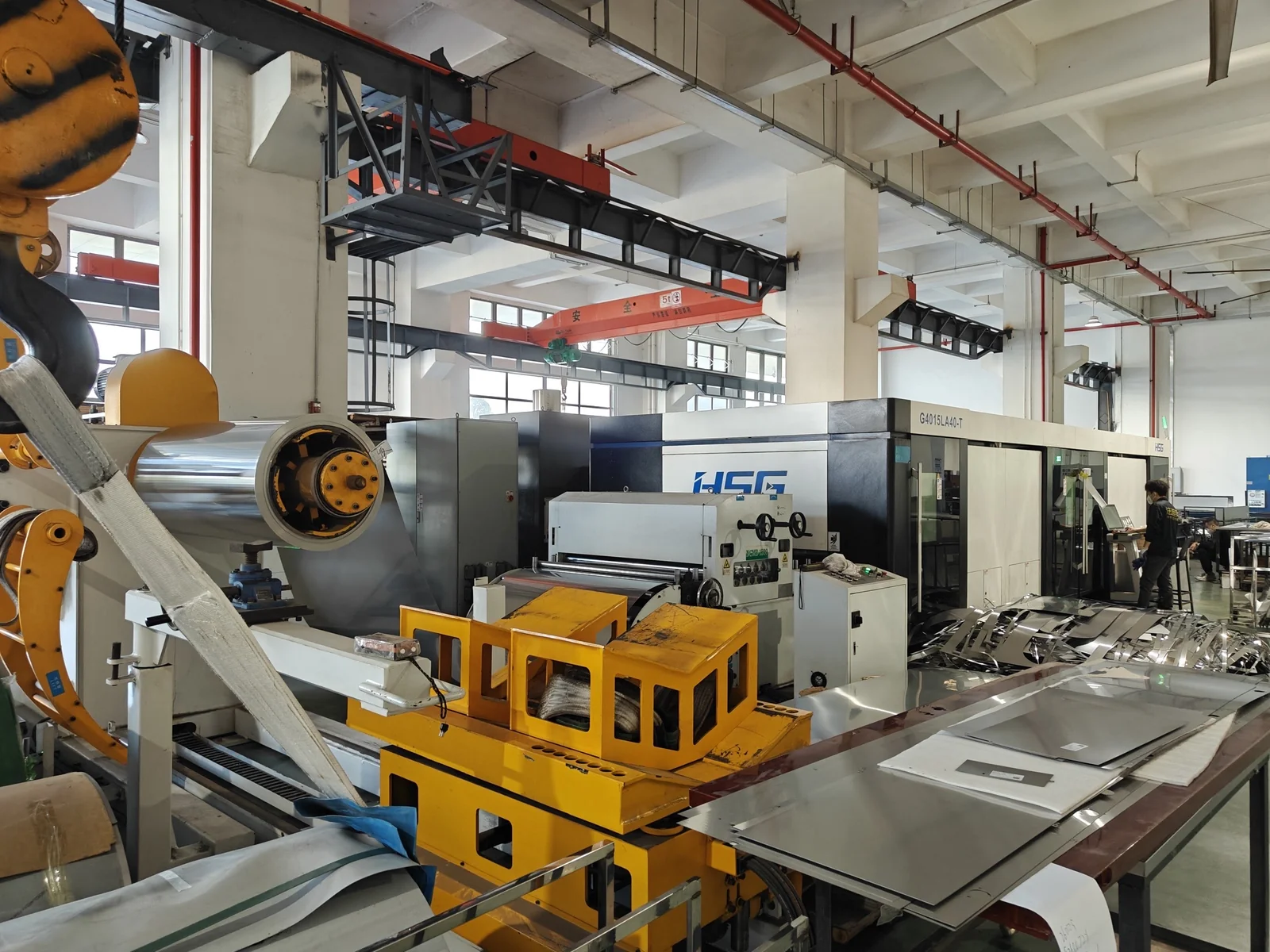
Coil-fed fiber laser cutting line processing 304 stainless steel sheets inside Fadior's Foshan factory
304 Stainless Verified · 2026 Lab Proof
Fadior 80,000+ sqm smart factory in Chencun, Shunde, Foshan — coil-fed fiber laser cutting of 304 stainless steel sheets

Factory Heritage — Not a Newcomer

Over two decades of Foshan stainless steel manufacturing behind every certificate.

Fadior's stainless steel manufacturing heritage began in Foshan in 1999; the Fadior brand was founded in 2012. Its 80,000+ sqm smart manufacturing headquarters opened in Chencun, Shunde, Foshan in 2025 — expanding a 25+ year manufacturing foundation rather than starting a new company.

  1. 1999

    Stainless Steel Manufacturing Heritage (Rongshengda)

    Precision stainless steel sheet processing and fabrication roots established in Foshan, Guangdong.

  2. 2012

    Fadior Brand Founded

    Dedicated architectural brand launched for 304 stainless steel kitchens, wardrobes, and whole-home cabinetry.

  3. 2025

    80,000+ sqm Smart Factory Campus Opened

    Five integrated lines with Salvagnini automated bending, MES barcode tracking, 213 cumulative patents, and QB/T 5973-2024 co-drafting.

01 · Custom Cabinet Certifications & Independent Lab Verification

Which factory and product certifications should you verify when buying custom cabinetry for an international project?

Serious international projects should verify four distinct proof layers rather than relying on brochure slogans: (1) accredited laboratory accreditation marks (CNAS / CMA / ilac-MRA), (2) alloy chemical composition proving genuine 304 stainless steel, (3) indoor emission and food-contact migration reports on finished components, and (4) explicit scope matching between each certificate and the quoted room schedule.

How can you verify that a cabinet supplier's test certificates apply to the exact quoted products?

  1. 01

    Match the exact tested sample name and alloy grade on the report cover (e.g., 304 base cabinet vs 201 shelf SQ2505796 vs QN1803 countertop) against your line-item quotation.

  2. 02

    Check the issuing laboratory and accreditation code directly on the report header — distinguish Fadior-commissioned GQI reports (CNAS L0153) from component supplier reports such as Dongguan QSI (CNAS L0468).

  3. 03

    Read the exact test item scope: for example, our 24-hour acetic-acid salt-spray Grade 10 results (SQ2505797, SQ2505798, SQ2505799) tested metal accessories on the base-cabinet sample only, not the 304 stainless panels.

  4. 04

    Request the full multi-page PDF packet matched to your approved bill of materials before releasing your production deposit.

Strict Test-Scope Accuracy Notice

Ten scanned reports below were issued by the Guangdong Testing Institute of Product Quality Supervision (GQI, CNAS L0153 / CMA), one CNAS-accredited interior door record (SQ2505793) is referenced from Fadior's 2026 Architectural Doors dossier, and one report (J250800251, plastic-steel infill profile) was commissioned by the profile supplier from the Guangdong Dongguan Quality Supervision & Testing Center (CNAS L0468) — never grouped as GQI. Every result applies strictly to the submitted sample.

SQ2505797GQI · CNAS L0153
2026-01-13

Classic Series 304 stainless steel base cabinet body

Guangdong Testing Institute of Product Quality Supervision (GQI) · CMA 240020349096 · CNAS L0153 · ilac-MRA

Formaldehyde not detected (< 0.010 mg/m³) · Metal accessories: 24h acetic salt-spray Grade 10

Formaldehyde (< 0.010 mg/m³), benzene, toluene & xylene (< 0.002 mg/m³) not detected; TVOC 0.027 mg/m³ (limit ≤ 0.25); metal accessories 24h acetic-acid salt spray Grade 10 (limit ≥ 7) — Pass.

Standards: QB/T 2531-2010 · GB/T 35607-2024

Applies to the submitted Classic Series 304 base-cabinet sample. The 24h acetic-acid salt-spray Grade 10 rating tested metal accessories only — not the 304 stainless cabinet panels.

SQ2505799GQI · CNAS L0153
2026-01-13

20 mm floor-standing 304 stainless steel base cabinet body

Guangdong Testing Institute of Product Quality Supervision (GQI) · CMA 240020349096 · CNAS L0153 · ilac-MRA

Formaldehyde not detected · TVOC 0.014 mg/m³ · Metal accessories: 24h acetic salt-spray Grade 10

Formaldehyde, benzene, toluene & xylene not detected; TVOC 0.014 mg/m³ (limit ≤ 0.25); metal accessories 24h acetic-acid salt spray Grade 10 (limit ≥ 7) — Pass.

Standards: QB/T 2531-2010 · GB/T 35607-2024

Applies to the submitted 20 mm floor-standing 304 base-cabinet sample. The 24h acetic-acid salt-spray Grade 10 rating applies to metal accessories only, not to 304 cabinet panels.

SQ2505798GQI · CNAS L0153
2026-01-13

Dream Home Series 304 stainless steel kitchen base cabinet body

Guangdong Testing Institute of Product Quality Supervision (GQI) · CMA 240020349096 · CNAS L0153 · ilac-MRA

Formaldehyde not detected · TVOC 0.037 mg/m³ · Metal accessories: 24h acetic salt-spray Grade 10

Formaldehyde, benzene & xylene not detected; toluene 0.021 mg/m³ (limit ≤ 0.08); TVOC 0.037 mg/m³ (limit ≤ 0.25); metal accessories 24h acetic-acid salt spray Grade 10 (limit ≥ 7) — Pass.

Standards: QB/T 2531-2010 · GB/T 35607-2024

Applies to the submitted Dream Home 304 kitchen base-cabinet sample. The 24h acetic-acid salt-spray Grade 10 result covers metal accessories only, not the stainless panels.

SQ2505790GQI · CNAS L0153
2026-01-26

Classic Series whole-home 304 stainless steel shelf (Grade E_NF)

Guangdong Testing Institute of Product Quality Supervision (GQI) · CMA 240020349096 · CNAS L0153 · ilac-MRA

Formaldehyde, toluene & TVOC all not detected (Grade E_NF)

Formaldehyde (< 0.005 mg/m³; E_NF limit ≤ 0.025), toluene (< 2 μg/m³), and TVOC (< 0.010 mg/(m²·h)) all not detected — Pass.

Standards: GB/T 39600-2021 · GB/T 35601-2024 · HJ 571-2010

Applies to the submitted Classic Series whole-home 304 stainless shelf sample.

SQ2505796GQI · CNAS L0153
2026-01-26

Dream Home Series 201 stainless steel shelf (Grade E_NF)

Guangdong Testing Institute of Product Quality Supervision (GQI) · CMA 240020349096 · CNAS L0153 · ilac-MRA

Formaldehyde & toluene not detected · TVOC 0.01 mg/(m²·h)

Formaldehyde (< 0.005 mg/m³; E_NF limit ≤ 0.025) and toluene not detected; TVOC 0.01 mg/(m²·h) (limit ≤ 0.50) — Pass.

Standards: GB/T 39600-2021 · HJ 571-2010 · GB/T 35601-2024

Tested on a specific Dream Home 201 stainless steel shelf sample — a distinct shelf alloy from Fadior's 304 stainless steel main cabinet bodies.

J250800251Dongguan QSI · CNAS L0468
2025-09-19

Supplier-Commissioned · Dongguan QSI (Not GQI)

Plastic-steel cabinet infill profile (supplier-commissioned)

Guangdong Dongguan Quality Supervision & Testing Center · CMA 202319001340 · CNAS L0468 · ilac-MRA

Formaldehyde, TVOC, phthalates & 8 heavy metals not detected

Formaldehyde, TVOC, phthalates (DBP, BBP, DEHP), and 8 heavy metals all not detected — Pass.

Standards: Ref. GB 18584-2024

Commissioned by the profile supplier from Guangdong Dongguan Quality Supervision & Testing Center (separate laboratory from GQI). Applicant identity, security code, barcode, and QR code are redacted on the public scan.

SJ2501763GQI · CNAS L0153
2026-01-08

304 stainless steel cold-rolled sheet (rain-dot texture)

Guangdong Testing Institute of Product Quality Supervision (GQI) · CMA 201719002006 · CNAS L0153 · ilac-MRA

Cr 19.31% · Ni 8.02% · C 0.020% — Authentic 304 Alloy Verified

Chemical composition verified: Chromium 19.31% (spec 17.50–19.50%), Nickel 8.02% (spec 8.00–10.50%), Carbon 0.020% — Pass.

Standards: GB/T 3280-2015

Verifies authentic austenitic 304 (GB designation 06Cr19Ni10) alloy chemistry on the submitted cold-rolled stainless sheet sample.

SC2500663GQI · CMA 201719002006
2026-01-30

Food-contact 304 stainless steel sheet (heavy-metal migration)

Guangdong Testing Institute of Product Quality Supervision (GQI) · CMA 201719002006

40°C × 10d × 3 cycles: Chromium & Nickel migration not detected (< 0.002 mg/kg)

After three consecutive 10-day immersion cycles at 40°C, Chromium and Nickel migration were not detected (< 0.002 mg/kg vs limits 0.25 / 0.14 mg/kg) — Pass.

Standards: GB 31604.49-2023 · GB 4806.9-2023

Applies to the submitted 304 stainless steel sheet sample tested under national food-contact metal migration standards.

SQ2505791GQI · CNAS L0153
2026-01-26

304 stainless steel kitchen countertop (Grade E_NF)

Guangdong Testing Institute of Product Quality Supervision (GQI) · CMA 240020349096 · CNAS L0153 · ilac-MRA

Formaldehyde & toluene not detected · TVOC 0.01 mg/(m²·h)

Formaldehyde not detected (< 0.005 mg/m³; E_NF limit ≤ 0.025); toluene not detected; TVOC 0.01 mg/(m²·h) (limit ≤ 0.50) — Pass.

Standards: GB/T 39600-2021 · GB/T 35601-2024 · HJ 571-2010

Applies to the submitted 304 stainless steel kitchen countertop sample.

SQ2505792GQI · CNAS L0153
2026-01-26

Q1803 (QN1803) stainless steel countertop (Grade E_NF)

Guangdong Testing Institute of Product Quality Supervision (GQI) · CMA 240020349096 · CNAS L0153 · ilac-MRA

Formaldehyde (< 0.005 mg/m³), toluene & TVOC all not detected

Formaldehyde (< 0.005 mg/m³), toluene (< 2 μg/m³), and TVOC (< 0.010 mg/(m²·h)) all not detected — Pass.

Standards: GB/T 39600-2021 · GB/T 35601-2024 · HJ 571-2010

Tested on QN1803 stainless countertop specification — a distinct stainless alloy from 304, always confirmed separately per order.

SQ2505795GQI · CNAS L0153
2026-01-26

304 stainless steel cabinet door panel (Grade E_NF)

Guangdong Testing Institute of Product Quality Supervision (GQI) · CMA 240020349096 · CNAS L0153 · ilac-MRA

Formaldehyde & toluene not detected · TVOC 0.01 mg/(m²·h)

Formaldehyde (< 0.005 mg/m³; E_NF limit ≤ 0.025) and toluene not detected; TVOC 0.01 mg/(m²·h) (limit ≤ 0.50) — Pass.

Standards: GB/T 39600-2021 · HJ 571-2010 · GB/T 35601-2024

Applies to the submitted 304 stainless steel cabinet door panel sample.

SQ2505793CNAS-Accredited Lab
Jan 2026

Classic Series stainless steel interior room door

CNAS-Accredited Testing Laboratory (2026 Architectural Doors Dossier) · CNAS-Accredited · Jan 2026

Formaldehyde not detected (< 0.005 mg/m³) · TVOC 0.02 mg/(m²·h)

Formaldehyde not detected (< 0.005 mg/m³; limit ≤ 0.025 mg/m³); toluene not detected (< 2 μg/m³); TVOC 0.02 mg/(m²·h) (limit ≤ 0.50) — Pass.

Standards: GB/T 39600-2021 · GB/T 35601-2024 · HJ 571-2010

Referenced from Fadior's 2026 Architectural Interior Doors catalogue dossier. Cover scan is not attached to this web summary; the complete PDF is supplied via Fadior's project desk upon quote request.

Referenced from 2026 Architectural Doors dossier · Cover scan not attached · Full PDF via project desk

Need these 2026 certificates matched to your kitchen or villa quotation?

Send your floor plan or room schedule and our Foshan project desk will pair your quotation with the exact applicable laboratory test reports and component material confirmation sheet.

02 · Humid-Climate & Indoor Air Quality Comparison

Are 304 stainless steel kitchen cabinets better than MDF, plywood, or aluminum in humid climates?

Buyers searching for waterproof kitchen cabinets in coastal villas, tropical apartments, or heavy-cooking homes usually discover wood-based carcasses swell around sinks and dishwashers, while thin hollow aluminum cabinets dent and loosen at hinge screws. Folded 304 stainless steel over a rigid structural core solves moisture swelling without sacrificing structural rigidity.

CABINET BODY SUBSTRATES · 304 STAINLESS VS MDF / PLYWOOD VS HOLLOW ALUMINUM

CUTAWAY · N.T.S.
304 STAINLESS + COREMDF / PARTICLEBOARDHOLLOW ALUMINUM

Fadior 304 Stainless + Core

Folded 0.4–0.6 mm 304 steel + rigid profile core

  • Humidity: non-porous steel does not swell or delaminate
  • Air quality: glue-free body, formaldehyde not detected (< 0.010 mg/m³)
  • Load strength: rated up to 50 kg base / 40 kg whole-home shelf
30-Year Structural Warranty*

MDF / Particleboard / Plywood

Compressed wood fibers or plies + resin adhesive

  • Humidity: swells & softens near sinks, dishwashers, and steam
  • Air quality: relies on resin binders & intact edge-banding
  • Load strength: hinge screws loosen once moisture softens board
Vulnerable in Wet Zones

Hollow Aluminum Cabinets

Thin extruded hollow chambers, lightweight walls

  • Humidity: moisture-resistant metal substrate
  • Rigidity: thin walls dent more easily and sound hollow
  • Load strength: softer alloy wears faster at hinge screw points
Lower Surface Hardness
Structural cutaway comparing Fadior's folded 304 stainless steel cabinet body against resin-bonded wood boards and lightweight hollow aluminum profiles. *30-year cabinet-body structural warranty; specific terms are subject to the contract.Substrate Cutaway

Are stainless steel cabinets formaldehyde-free, hygienic, and fire-resistant?

The glue-free 304 stainless steel cabinet body is formaldehyde-free. Doors, finishes, and countertops follow their own material specifications and supporting documents. Independent 2026 laboratory reports show formaldehyde not detected on Classic, Floor-Standing, and Dream Home 304 base cabinet bodies (< 0.010 mg/m³), 304 shelves, countertops, cabinet doors, and Classic interior doors (< 0.005 mg/m³), plus food-contact Chromium and Nickel migration not detected (< 0.002 mg/kg, report SC2500663). Because the cabinet carcass is non-porous austenitic metal rather than combustible wood particleboard, it does not harbor damp mold or ignite like wood-based board — while exterior finishes, countertops, hardware, and site sealants follow their own specifications.

Stainless steel 304 vs MDF/plywood vs hollow aluminum kitchen cabinet bodies
Evaluation CriterionFadior 304 Stainless + CoreMDF / Particleboard / PlywoodHollow Aluminum Cabinets
Moisture, steam & under-sink durabilityNon-porous 304 stainless steel body does not absorb water, swell, or delaminate in humid or coastal kitchens.Organic wood fibers swell, blister, and soften once edge-banding breaks near sinks, dishwashers, or damp walls.Moisture-resistant metal frame, though thin hollow walls and exposed joints can trap condensation if poorly sealed.
Formaldehyde & indoor air qualityGlue-free 304 cabinet body; formaldehyde not detected across 2026 laboratory emission reports (< 0.005–0.010 mg/m³).Requires resin adhesives to bind wood fibers or plies; emission levels depend heavily on board grade and edge sealing.Metal profiles contain no wood-resin formaldehyde; adhesives or polymer inserts depend on each manufacturer's spec.
Mold, pests & kitchen hygieneInorganic stainless surface cannot feed mold or termites; food-contact Cr/Ni migration not detected (< 0.002 mg/kg, SC2500663).Damp dark under-sink cabinets are vulnerable to mold growth, swelling odors, and termite or cockroach nesting.Resists pests and rot, though hollow multi-chamber crevices can accumulate kitchen grease if not closed cleanly.
Screw-holding, dent resistance & acousticsFolded 0.4–0.6 mm 304 steel over extruded aluminium or plastic-steel core profiles; rated up to 50 kg base bottom & 40 kg whole-home shelf.Good initial screw bite when dry, but hinge screws pull loose once moisture softens particleboard or MDF.Lighter and softer alloy; thin walls dent more easily under heavy cookware impact and can sound hollow when shut.
Heat & fire behaviorNon-combustible stainless steel body resists oven and cooktop heat without charring; exterior coatings have their own ratings.Combustible wood substrate; prolonged steam and oven heat degrade edge adhesives and laminate skins.Non-combustible metal with a lower melting point (~660°C) than 304 stainless steel (~1,400°C).
Expected service life & structural warrantyEngineered for multi-decade residential service; backed by a 30-year cabinet-body structural warranty (terms per contract).Shorter service life in humid or sink zones once moisture penetrates edge-banding and swells wood fibers.Good humidity lifespan, though door alignment and dent wear vary widely by profile wall thickness.

Comparison reflects residential cabinetry material behavior and Fadior's verified 2026 laboratory records. Specific finishes, hardware, and countertops are confirmed per project quotation.

03 · Real Engineering Cross-Sections & Honest Trade-Offs

Do stainless steel kitchens look cold or clinical — and what are the real pros and cons?

Commercial restaurant kitchens look clinical because they leave raw, unpainted metal exposed everywhere. Modern residential 304 stainless steel cabinetry hides the folded steel structure inside while wrapping visible doors, islands, and wall panels in warm wood-grain transfers, satin Cloud-Touch lacquer, microparticle crystal resin, sintered stone, and tinted architectural glass.

Where 304 Stainless Excels

  • Eliminates under-sink swelling, peeling edge-band, damp odors, and termite damage in coastal or humid homes.
  • Glue-free 304 cabinet bodies tested formaldehyde not detected (< 0.005–0.010 mg/m³) across 2026 laboratory reports.
  • Holds heavy cookware and stone countertops reliably: rated 50 kg base bottom, 30 kg wall bottom, and 30–40 kg steel shelves.
  • Backed by a 30-year cabinet-body structural warranty (contract terms apply), avoiding repeat kitchen remodels.

Real Trade-Offs to Plan For

  • Higher upfront factory investment than entry-level particleboard or MDF cabinets, making it best suited for long-term homes and villas.
  • Custom precision fabrication requires 45–60 days in Foshan after final laser measurement sign-off — not an off-the-shelf flat pack.
  • Raw brushed steel countertops develop natural micro-patina with daily knives and pots; buyers who prefer zero scratch marks choose sintered stone, quartz, or textured snow-crystal stainless.
  • Field cutting is not like sawing wood — accurate CAD shop drawings and MEP coordination before production are essential.

304 STAINLESS CABINET BODY CROSS-SECTIONS

SCHEMATIC · N.T.S.
01 · CLASSIC 16 MM02 · FLOOR-STANDING 20 MM03 · DREAM HOME 20 MM

01 · Classic 16 mm Body

  • 0.6 mm 304 stainless steel skins
  • Extruded aluminium profile core
  • Two-sheet folded & spot-welded panel

02 · Floor-Standing 20 mm Body

  • 0.6 mm 304 stainless steel skins
  • Extruded aluminium profile core
  • Full-welded structural frame

03 · Dream Home 20 mm Body

  • 0.4 mm 304 rain-dot stainless skins
  • Plastic-steel profile core
  • Mechanical fastener carcass assembly
Factory Finished-Panel QC Tolerances:Dimensional tolerance: ±0.2 mmSurface flatness: ≤ 2.0 mmInner/outer panel seam gap: ≤ 0.5 mm
Schematic cutaway of Fadior's three 304 stainless steel kitchen cabinet body structures, showing outer steel thickness, internal rigid core profile, and panel joining method.Cabinet Structure · mm
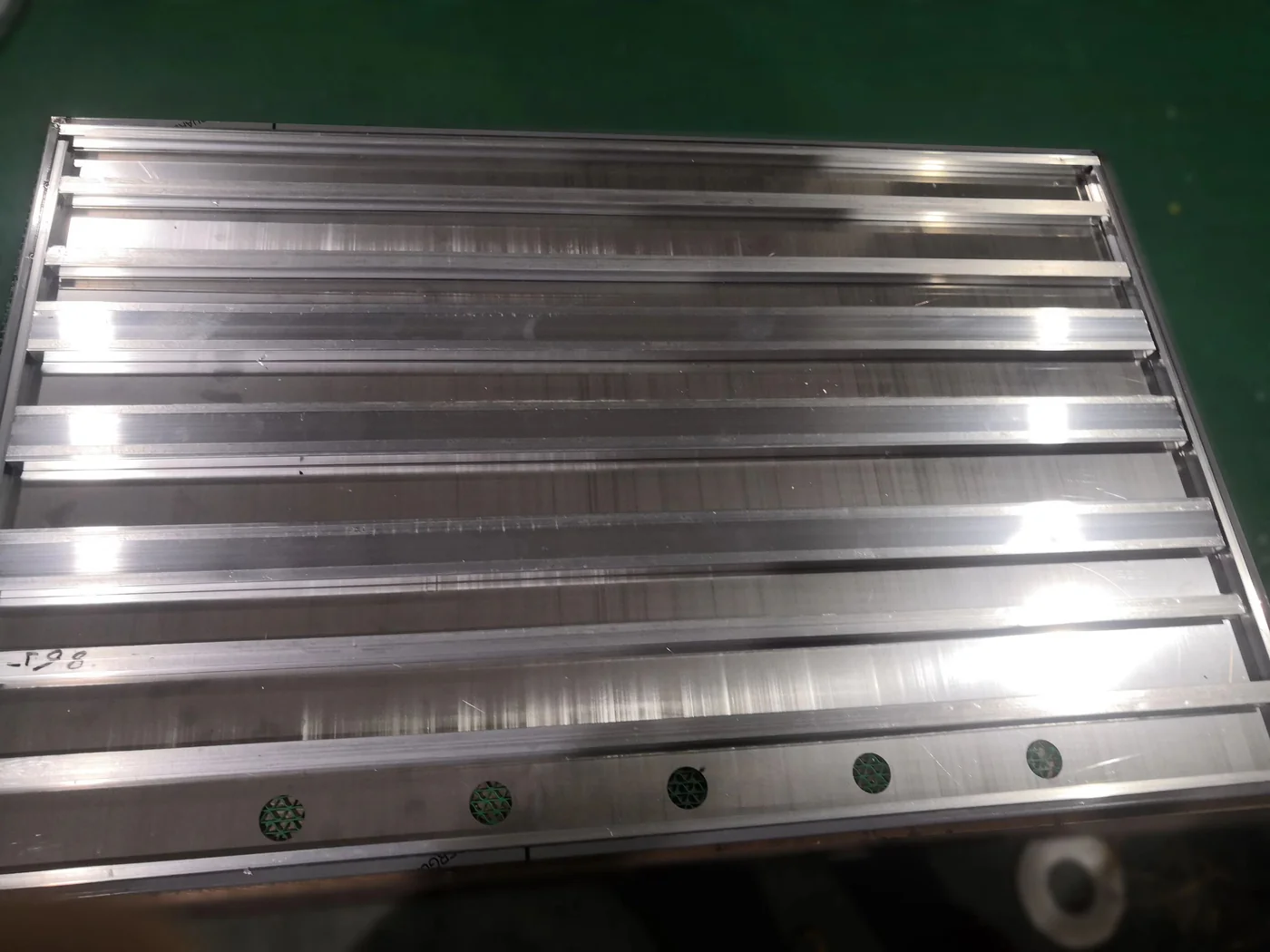
Real Fadior workshop photograph showing extruded aluminium profiles positioned inside a folded 304 stainless steel cabinet panel

Inside the Carcass

Extruded Aluminium Profile Core

Real Foshan workshop view of extruded aluminium structural profiles laid inside a folded 304 stainless steel panel — creating rigidity and solid acoustic feel without wood board.
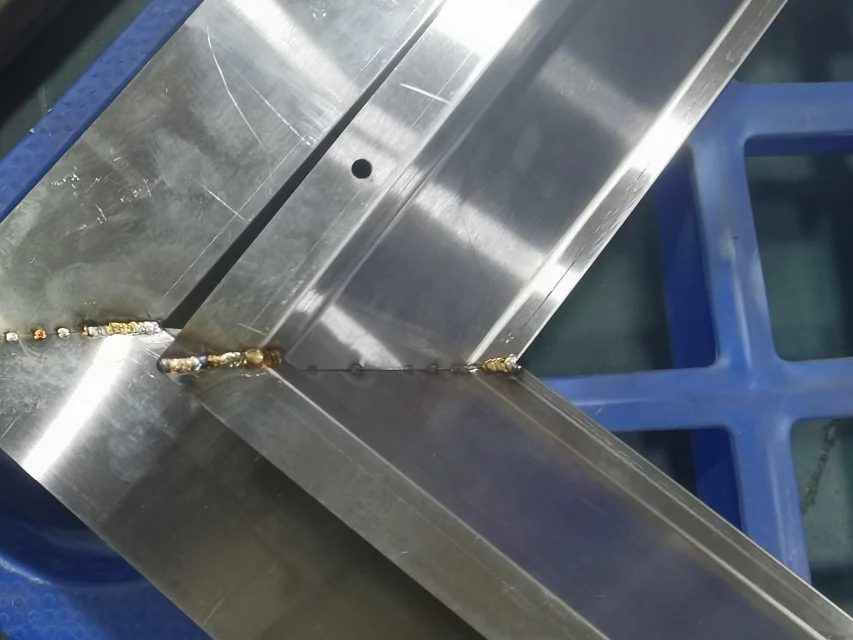
Real factory close-up photograph of a folded stainless steel cabinet corner joined with spot welds

Precision Joining

Folded Corner & Controlled Welding

Authentic factory close-up of a folded mitered corner closed with controlled spot welds (Classic series uses two-sheet spot welding; 20 mm floor-standing frames use full welding).
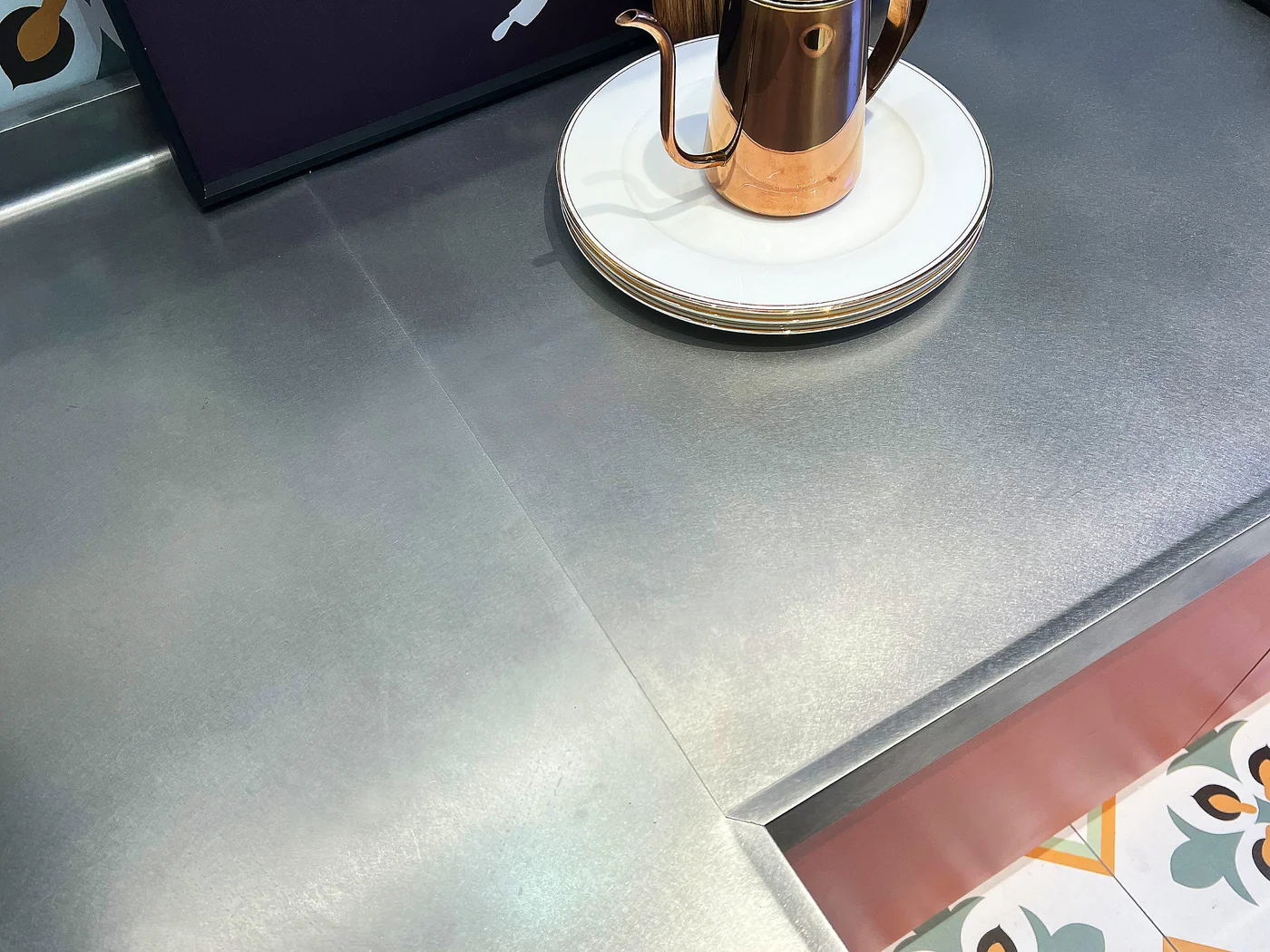
Real photograph of a tight-seam brushed stainless steel countertop corner joint in an installed kitchen

Countertop Craft

Tight-Seam Stainless Worktop Joint

Precision tight-seam stainless countertop corner joined underneath with bolted L-plates — clean straight seam with no raised silicone lip.
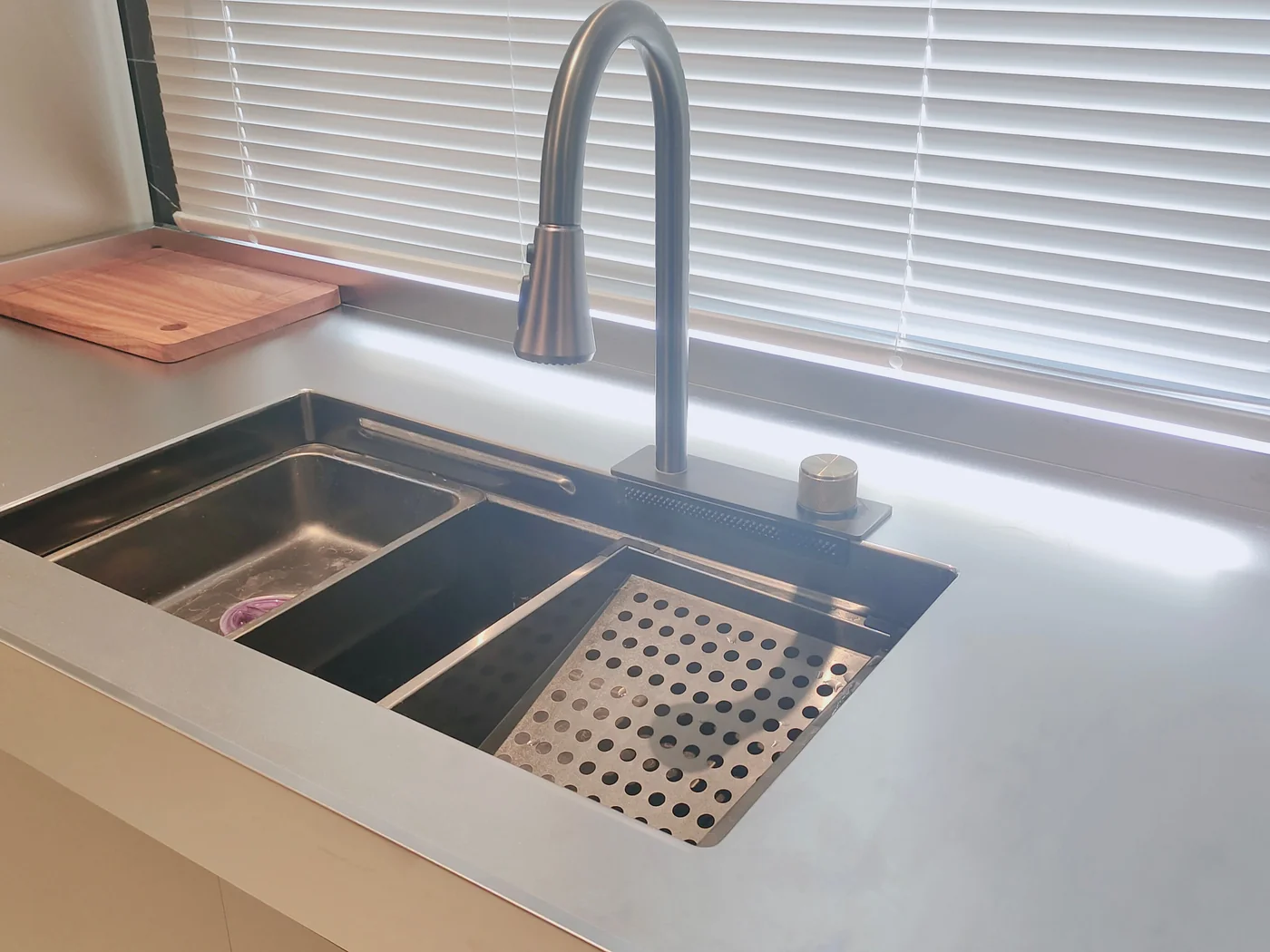
Real photograph of a stainless steel kitchen sink integrated flush into a brushed stainless worktop

Wet-Zone Integration

Integrated Stainless Steel Sink Basin

Stainless steel sink basin integrated cleanly into a stainless worktop and inspected for tidy seams and smooth drainage; exact sink model and alloy grade are confirmed per kitchen quotation.

04 · Corrosion Proof & Honest Material Boundaries

Do stainless steel kitchen cabinets rust? Alloy proof and transparent material boundaries.

Genuine 304 stainless steel (18–20% chromium, 8–10.5% nickel; verified at 19.31% Cr and 8.02% Ni in GQI report SJ2501763) forms a passive chromium-oxide layer that resists household moisture and food acids far better than 201 steel or mild steel. However, no kitchen is 100% immune to strong chlorine bleach or mislabeled alloys — and Fadior never falsely claims every trim piece, countertop, faucet, or specialty panel is 304.

Why do some 'stainless' cabinets still spot or corrode?

Two real-world causes explain almost every corrosion complaint: (1) unverified 201 steel substituted for 304 on wet kitchen bodies without buyer disclosure, or (2) harsh chlorine bleach, muriatic tile acid, or lingering salt residue left un-rinsed on metal. Verifying 304 alloy chemistry (SJ2501763), itemizing every non-304 part clearly before manufacturing, and rinsing after cleaning protects your cabinets for decades.

Official Fadior component-by-component material transparency matrix
Cabinetry ComponentDocumented MaterialsIntended ApplicationHow It Is Confirmed
Main Kitchen & Vanity Cabinet Bodies304 stainless steel (0.6 mm Classic & 20 mm Floor-Standing; 0.4 mm Dream Home) + aluminium or plastic-steel profile coreMain cabinet carcasses across kitchens, bathroom vanities, wardrobes, and whole-home cabinetry.Confirmed by series and production drawing; backed by SJ2501763 and SQ2505797/798/799.
Specific 201 Shelves, Panels & Trim OptionsMain bodies remain 304; specific 201 parts include Dream Home 201 shelf SKUs (e.g., SQ2505796), Dream Home heavy-hinge top/bottom panels (0.4 mm), optional trim/top-seal panels (0.6 mm), and specified wall-panel inner sheets (0.4 mm)Only on those exact listed shelves, specialty hinge plates, optional closure trims, and inner honeycomb wall sheets — never on main 304 cabinet bodies.Itemized part-by-part by model and SKU before production; backed by SQ2505790 (304 shelf) & SQ2505796 (201 shelf).
Countertops304 stainless (nominal 1.2 / 1.5 mm or 5–10 mm solid plate), QN1803 stainless (nominal 1.0 mm), 20 mm quartz, or 12 mm sintered stoneKitchen worktops, islands, and integrated backsplashes.QN1803 is never described as 304; nominal vs actual tolerance and alloy confirmed on quotation (SQ2505791 / SQ2505792).
Cabinet & Interior Room Doors304 or 201 stainless sheets, 5 mm tempered glass, sintered stone, or aluminium-framed mirror doorsKitchen fronts, wardrobe showcase doors, and full-height architectural room doors.Cabinet door panels and interior room doors are offered in 304 and 201 options confirmed per door model.
Open Shelving, Wall Panels & Illuminated Backs5 mm solid aluminium (ultra-slim open cabinets) · 304 stainless outer honeycomb wall panels · aluminium frame + acrylic light panelsDisplay niches, illuminated bookcases, corridors, and feature walls.Outer/inner wall-panel sheets and solid-aluminium open modules are confirmed individually on the room schedule.
Runners, Hardware, Handles, Faucets & AppliancesPartner-sourced components in brass/copper, zinc alloy, aluminium, plated steel, or stainless steel by modelBlum runners & branded architectural hardware, handles, sinks, faucets, lighting, and built-in kitchen appliances.A partner brand name alone does not establish 304 grade; faucet materials and destination-country appliance voltage/certifications are verified per selected model.

Our Material-Verification Promise

We confirm alloy grade by specific model and component — never by sweeping '100% 304 everywhere' marketing claims. Fadior's standard for main cabinet bodies is verified 304 stainless steel, and every order receives a written component material breakdown prior to manufacturing.

05 · Official Warranty & Practical Care Guide

How to clean and maintain stainless steel kitchen cabinets — plus what the 30-year warranty covers.

Stainless steel cabinetry is easy to live with when you follow a few simple habits. Avoid harsh bleach or abrasives, keep plated hardware dry, stay within rated shelf loads, and your cabinet bodies stay straight and clean for decades.

Official Fadior Warranty Framework

304 Stainless Steel Cabinet Bodies

30-Year Structural Warranty

30-year cabinet-body structural warranty; specific terms are subject to the contract.

Microparticle Crystal Resin Finish

30-Year Resin Finish Warranty

30-year surface warranty on the microparticle crystal resin finish; specific terms are subject to the contract.

Doors, Countertops, Hardware & Appliances

Component & Partner Specifications

Doors, other finish families, stone or stainless countertops, hardware fittings, faucets, and integrated partner appliances follow their respective documented material specifications and contract terms.

How to Clean and Maintain Stainless Steel Kitchen Cabinets

Recommended Care (Do's)

  1. 01Peel protective factory film during installation

    Remove all transit protective films upon installation so adhesive does not bake onto finished steel under kitchen light or warmth.

  2. 02Wipe along the grain with a soft microfiber or semi-damp cotton cloth

    Use mild neutral dish soap diluted in warm water for cooking oil, wiping gently along brushed grain lines on stainless fronts and countertops.

  3. 03Rinse thoroughly with clean water and dry

    Never leave soap or detergent film sitting on stainless surfaces; rinse cleanly and dry with a soft towel to prevent water-mineral spots.

  4. 04Keep hinges, runners, handles & locks dry

    Wipe hinges, drawer slides, lever handles, and plated hardware only with a dry soft cotton cloth — avoid damp rags on electroplated hardware.

  5. 05Use trivets for hot cookware & clear sink drains

    Place heat pads under scorching pans fresh from burners to protect coatings and prevent thermal shock, and rinse sink channels after salty or acidic food prep.

What to Avoid (Don'ts)

  1. ✕ 01Zero chlorine bleach, strong acids, or drain chemicals

    Bleach, hydrochloric tile cleaners, and strong acidic sprays attack stainless passive layers and cured coatings — rinse immediately if accidental splashes occur.

  2. ✕ 02Never use steel wool, wire brushes, or abrasive pads

    Carbon-steel wool embeds microscopic iron particles that cause surface rust spots and permanently scratch satin or brushed finishes.

  3. ✕ 03Never force doors past maximum hinge angles

    Do not over-open cabinet or room doors past their rated hinge stop, and never hang heavy bags or towels on lever handles; retighten loosened screws promptly.

  4. ✕ 04Avoid sharp scraping tools and un-rinsed salt or food acids

    Do not scrape cured or brushed stainless panels with knives or sharp metal tools, and rinse salty, pickled, or acidic spills promptly with clean water.

Verified Safe Working Load Limits

Official Fadior cabinet bottom-panel and shelf load limits (evenly distributed)
Cabinet PositionRated Safe LoadApplicable Range
Kitchen base cabinet bottom panel50 kgClassic, Floor-Standing & Dream Home kitchens
Kitchen wall cabinet bottom panel30 kgWall-hung kitchen units
Kitchen base stainless steel shelf30 kg304 stainless steel base shelves
Kitchen wall stainless steel shelf20 kg304 stainless steel wall shelves
Kitchen tempered glass shelf10 kgBase or wall glass shelves
Whole-home stainless shelf (width ≤ 700 mm)40 kgWardrobes & whole-home cabinets
Whole-home stainless shelf (700–1,200 mm)30 kgAdd center support for heavy zones > 700 mm

06 · Direct Buyer Answers

Frequently asked questions about 304 stainless steel cabinetry quality, testing, and care.

Clear, evidence-backed answers to the exact technical questions overseas homeowners, interior designers, and villa contractors ask before placing an order.

Which factory and product certifications should I verify when buying custom cabinetry for an international project?

Verify accredited testing marks (CNAS / CMA / ilac-MRA), chemical composition reports confirming genuine 304 stainless steel (Fadior GQI report SJ2501763: 19.31% Cr, 8.02% Ni), food-contact migration testing (SC2500663: Cr/Ni < 0.002 mg/kg), and component-level formaldehyde and TVOC emission reports (SQ2505790–SQ2505799). Also confirm factory capability — Fadior operates an 80,000+ sqm Foshan smart factory with Salvagnini bending, MES tracking, 213 patents, and QB/T 5973-2024 co-drafting.

How can I verify that a cabinet supplier's test certificates apply to the exact quoted products?

Check four details on every certificate before signing: the exact tested sample name and steel grade (for example, 304 base cabinet vs 201 shelf SQ2505796 vs QN1803 countertop), the issuing lab and CNAS accreditation number (GQI L0153 vs Dongguan QSI L0468), the exact scope of each tested metric (such as 24h acetic salt-spray Grade 10 covering metal accessories only on base-cabinet samples), and written confirmation matching those report IDs to your final bill of materials.

Are 304 stainless steel kitchen cabinets better than MDF, plywood, or aluminum in humid climates?

Yes for moisture durability and indoor air hygiene. Unlike MDF, particleboard, or plywood — which absorb humidity, swell near sinks, and rely on resin adhesives — Fadior's folded 304 stainless steel cabinet bodies do not swell or rot and test formaldehyde not detected (< 0.005–0.010 mg/m³). Compared with thin hollow aluminum cabinets, 304 stainless steel backed by extruded aluminium or plastic-steel core profiles delivers higher surface hardness, stronger hinge screw retention, and a solid acoustic feel.

Are stainless steel cabinets formaldehyde-free, hygienic, and fire-resistant?

Fadior's glue-free 304 stainless steel cabinet bodies are tested formaldehyde not detected across 2026 laboratory reports (< 0.010 mg/m³ on base cabinets; < 0.005 mg/m³ on shelves, countertops, cabinet doors, and Classic interior doors SQ2505793) and food-contact Cr/Ni migration not detected (< 0.002 mg/kg, SC2500663). The metal carcass is non-porous and non-combustible; exterior doors, coatings, countertops, hardware, and site sealants retain their own separate specifications.

Do 304 stainless steel kitchen cabinets rust, and is every single part 304?

Authentic 304 stainless steel (19.31% Cr, 8.02% Ni verified by SJ2501763) strongly resists everyday kitchen moisture and steam when kept clear of chlorine bleach and strong acids. For full honesty, main cabinet bodies are 304 stainless steel, while specific parts use other documented materials: certain Dream Home shelves (e.g., SQ2505796), heavy-hinge top/bottom panels, optional 0.6 mm trim/top-seal pieces, and specified wall-panel inner sheets use 201; specified countertops use QN1803, quartz, or sintered stone; ultra-slim open shelving uses 5 mm solid aluminum; and partner runners, handles, faucets, and appliances follow their documented model materials.

Do stainless steel kitchens look cold or clinical, and what are the real pros and cons?

No — modern residential stainless kitchens hide the structural 304 steel inside while finishing doors and wall panels in warm wood-grain transfers, satin Cloud-Touch matte, microparticle resin, sintered stone, or bronze glass. The main pros are moisture resilience, glue-free indoor air quality, heavy load capacity (50 kg base bottom), and 30-year structural warranty coverage. The real trade-offs are higher upfront cost than entry-level wood board, a 45–60 day custom production lead time, and the need for locked CAD shop drawings before manufacturing.

How do you clean, maintain, and care for stainless steel cabinets, and what does the warranty cover?

Wipe cabinet bodies and countertops with a soft microfiber or semi-damp cotton cloth and mild neutral soap along the grain, rinse with clean water, and wipe dry; wipe hinges, slides, and plated hardware only with a dry soft cotton cloth. Never use chlorine bleach, strong acids, abrasive cleaners, or steel wool, and stay within rated shelf loads (30–50 kg depending on position). Fadior provides a 30-year cabinet-body structural warranty and a 30-year surface warranty on the microparticle crystal resin finish, with specific terms subject to the contract.

Verify Before You Order

Request the full 2026 lab certificate packet and a project quote tailored to your floor plan.