
Surface finishes
- Smoked-oak cabinet fronts
- Velvety lime-plaster surround
- Bronze-toned rack highlights
- Dark tinted bottle-bay glazing
Grotto
A made-to-order Grotto wine cabinet module with closed decanter pantry storage, smoked-oak fronts, tasting-service counter planning, and a durable 304 stainless steel cabinet body.
Published Reviewed
Overview
The full design intent, materials, and how this system is built — in detail.
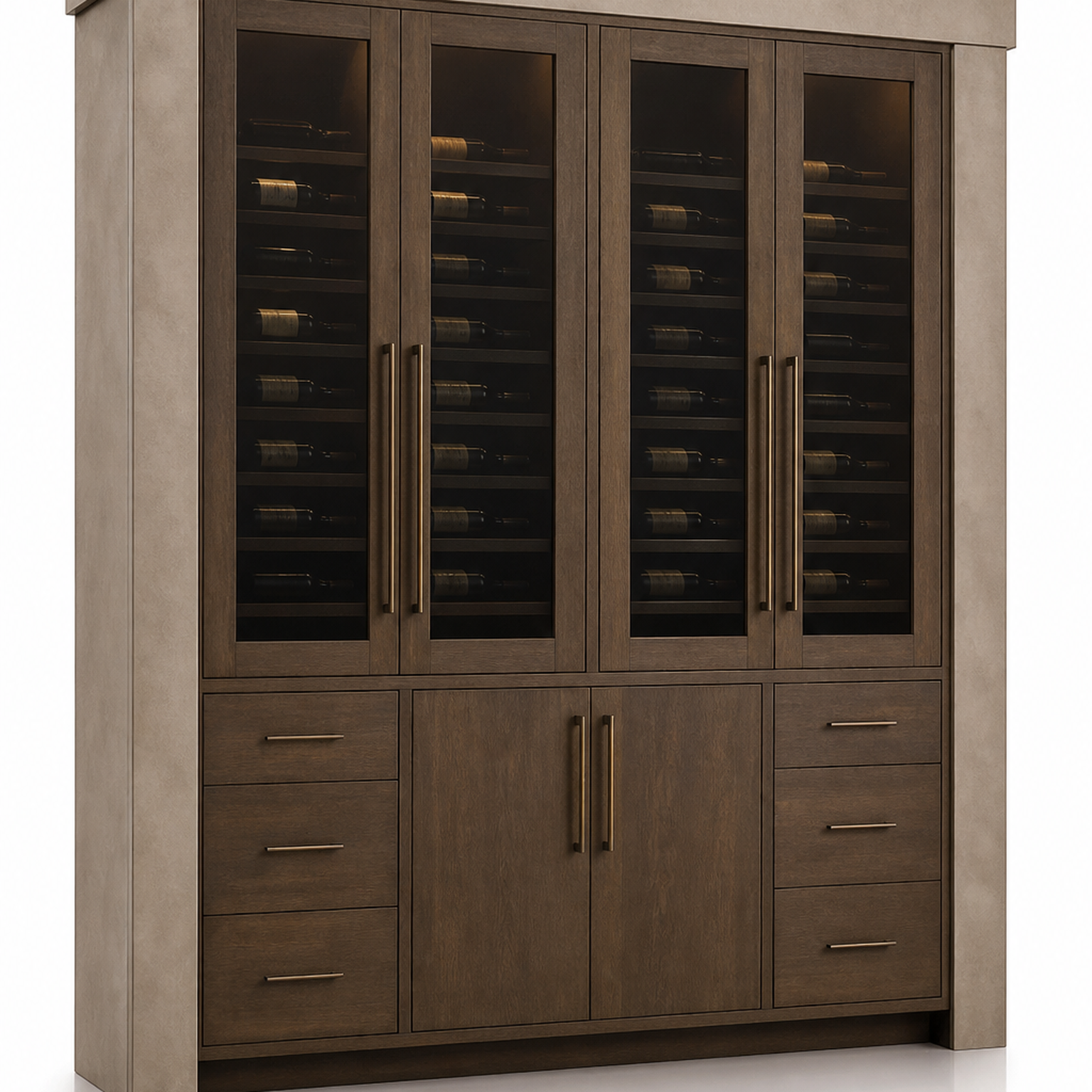
The Grotto Cove Decanter Pantry is a made-to-order wine cabinet module manufactured in our Foshan, China factory with a 30-day production lead time for private homes, villas, and hospitality-style residences that need cellar service to feel calm rather than improvised. Its design rendering shows a closed wall of smoked-oak cabinet fronts, dark bottle bays, a restrained lime-plaster surround, and a dedicated decanter pantry zone where glassware, open bottles, and tasting tools can be staged without turning the room into a commercial bar. The product is planned as cabinetry first: a durable 304 stainless steel body behind the visible finish, measured storage runs, closed lower bays, and a worktop section that helps the owner serve wine with a clean residential rhythm.
Most wine rooms are judged by bottle count, but daily use is decided by what happens around the first opened bottle. A homeowner needs a place to remove a bottle, rest it safely, decant it, return accessories, and keep the surrounding lounge quiet. The Cove Decanter Pantry answers that problem with a composition that combines tall display, wall storage, base storage, and counter planning in one shop SKU. The visible wine bays give the room atmosphere, while the closed pantry base keeps corkscrews, polishing cloths, tasting notebooks, spare stems, and service trays out of sight. That balance is important in Gulf villas and international apartments where the wine cabinet may be visible from a dining lounge or formal sitting room.
The Grotto series gives this SKU a deeper, more architectural mood than a bright entertaining bar. Smoked-oak faces create weight, the lime-plaster surround softens the wall, and bronze-toned rack details bring a warm highlight without making the cabinet feel decorative. The cabinet body remains practical: Fadior uses 304 stainless steel structure for durability, hygiene, moisture resistance, and long residential service beneath the exterior finish. That construction matters because wine service zones are touched often, cleaned often, and expected to stay aligned across repeated opening, closing, and staging routines. The buyer sees a composed wall; the project team gets a cabinet module built around measured use.
The dimensional inputs are intentionally clear for commerce review and formula pricing. This module carries 2.4 meters of base cabinet planning, 1.8 meters of wall cabinet planning, 2.2 meters of tall cabinet planning, and 1.6 meters of countertop planning. Those numbers let the publisher compute the USD price from the locked formula after validation, without invented pricing language in the product copy. In project use, those dimensions can translate into a closed lower pantry run, a raised bottle-storage field, a small tasting counter, and tall coordination around surrounding architecture. The SKU is not a loose accessory; it is a measured cabinet module for a wall that needs to support service, storage, and atmosphere together.
The decanter pantry idea is deliberately different from Grotto's existing bottle rinse, luminous service, shadow glass, Milan specification, and terrazzo tasting products. This SKU is about a cove-like service recess: a protected counter area with closed storage below and bottle display above, designed for the quiet moment between storage and serving. That gives the differentiator real project value. A homeowner can pour without scattering tools across a dining table, and a designer can keep the wine wall visually disciplined because the service function has a home. The concept also works for clients who want a wine cabinet that supports tea, spirits, or non-alcoholic hosting without visually declaring itself as a nightclub-style bar.
Finish planning stays buyer-friendly. The smoked-oak direction can remain dark and monastic for a private tasting room, or it can be warmed with lighter adjacent wall finishes if the cabinet sits near a dining room. The lime-plaster surround gives the wall a crafted texture, while the bronze-toned rack line adds a small highlight inside the darker mass. The surface palette is intentionally low glare so bottles, glassware, and cabinetry remain legible under evening lighting. Because every order is made to order, Fadior can tune cabinet widths, reveal rhythm, counter length, rack layout, plinth height, handle detail, and the relationship to adjacent millwork after measurements are confirmed.
The product page also separates visualization from purchase facts. The images are design rendering views that help buyers inspect proportion, finish direction, and room mood; they are not a substitute for final shop drawings, approved site dimensions, appliance or cooling decisions, local compliance notes, or installation details. That distinction protects trust. A client can understand the intended product clearly while still knowing that the manufactured cabinet will be adapted to project measurements in Foshan. The 30-day production lead time begins after those project details are confirmed, which keeps the preorder promise realistic for a custom cabinet module.
For designers, the strongest value is coordination. Wine storage often pulls in several decisions at once: bottle display, glassware, ventilation, lighting, counter durability, service access, door swing, room humidity, and the question of how much hospitality energy the room should show. The Cove Decanter Pantry gives those decisions a cabinet framework. It can hold a quieter residential line than a freestanding bar, and it can be specified with closed pantry storage so the practical objects remain hidden. The module also helps a project team discuss what belongs inside Fadior's scope and what remains site-specific, such as cooling equipment, final lighting design, bottle inventory, and local installation work.
In daily use, the cabinet should reduce friction. A bottle can move from storage to counter, a decanter can rest without competing for dining-table space, and used accessories can return to closed storage. The room-facing surface stays composed because the lower pantry is not open display. That makes the SKU useful for owners who host carefully and dislike visual clutter. It also supports specifiers who need a clear product story for cross-border commerce: Grotto Cove Decanter Pantry is a made-to-order wine cabinet module, manufactured in Foshan, China, with a 30-day production lead time, transparent design rendering disclosure, and formula-price inputs already declared for the publisher.
The planning value also extends to maintenance. A wine service wall is handled differently from a normal storage cabinet because bottles, glass stems, decanters, and counter surfaces all move through the same narrow zone. If the service counter is too small, the owner ends up using a dining table for opening and pouring. If the storage is too exposed, the room looks busy after one evening of hosting. The Cove Decanter Pantry keeps the working pieces close but contained: closed base bays below, visible bottle rhythm above, and a measured counter between them. That structure helps the room recover quickly after use and supports the quiet, weighted character expected from the Grotto series.
The SKU is especially useful when a project team wants a wine cabinet that can sit in a lounge rather than a back-of-house cellar. In that position, the cabinet must carry two responsibilities at once. It needs enough practical depth for bottles, stems, trays, and service objects, but it also needs an exterior face that can be seen from sofas, dining chairs, or a circulation route. Fadior resolves that tension through closed fronts, controlled reveals, and a warm dark palette that feels architectural instead of theatrical. The module can then become part of the room's millwork language while still giving the owner a clear place to prepare and serve wine.
Visual interpretation
See how the product holds its design language at room scale and in close detail.
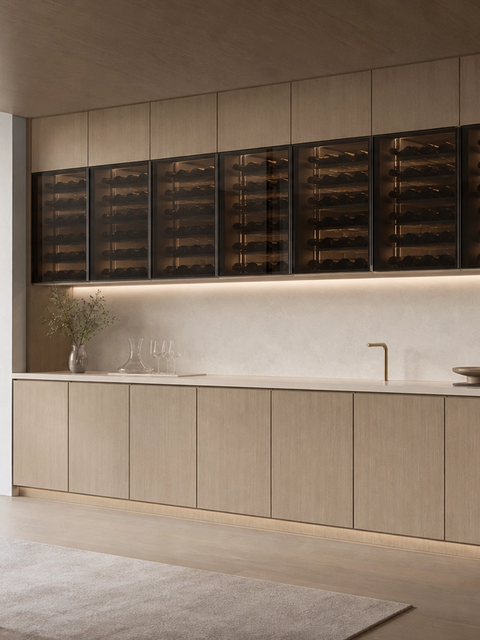
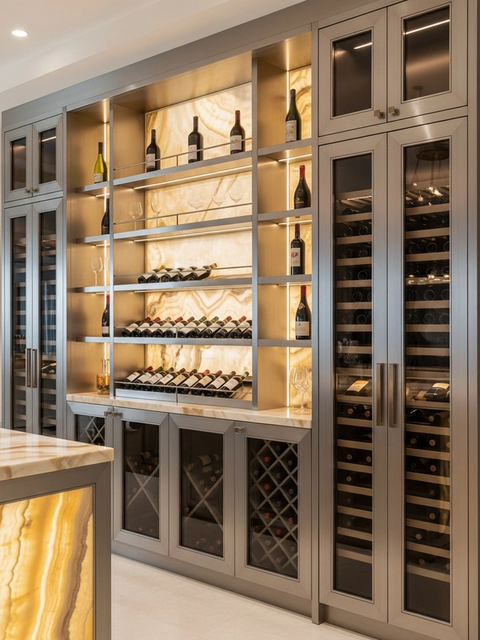
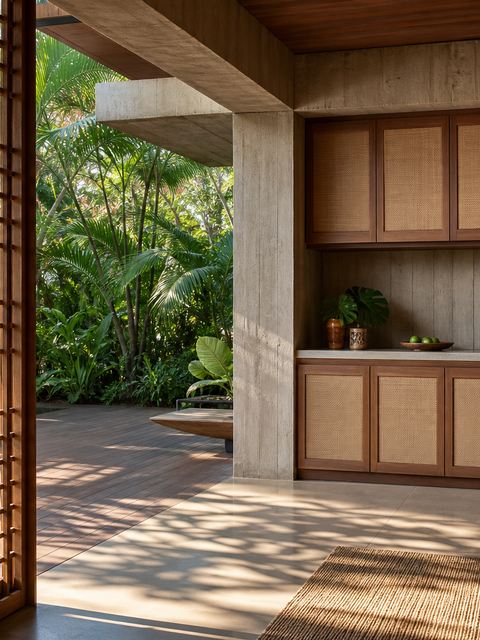
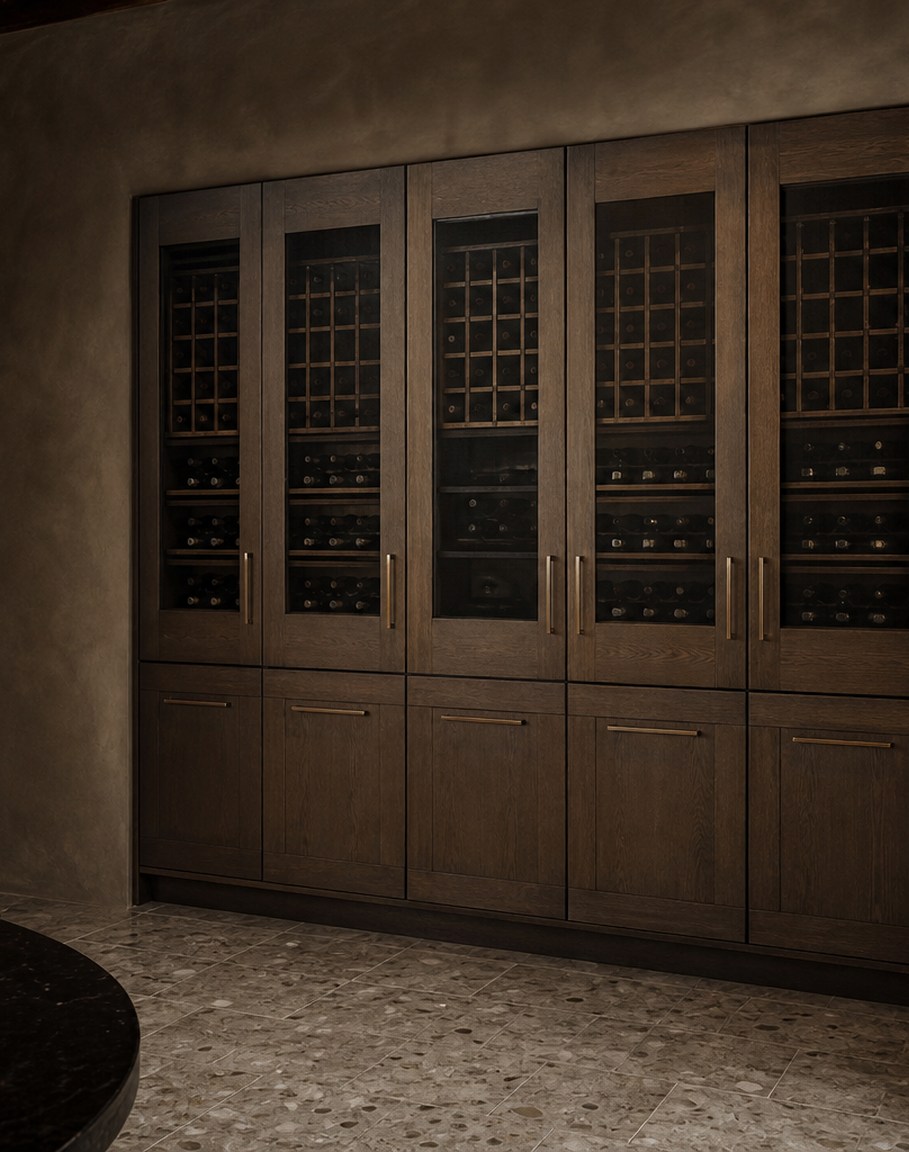
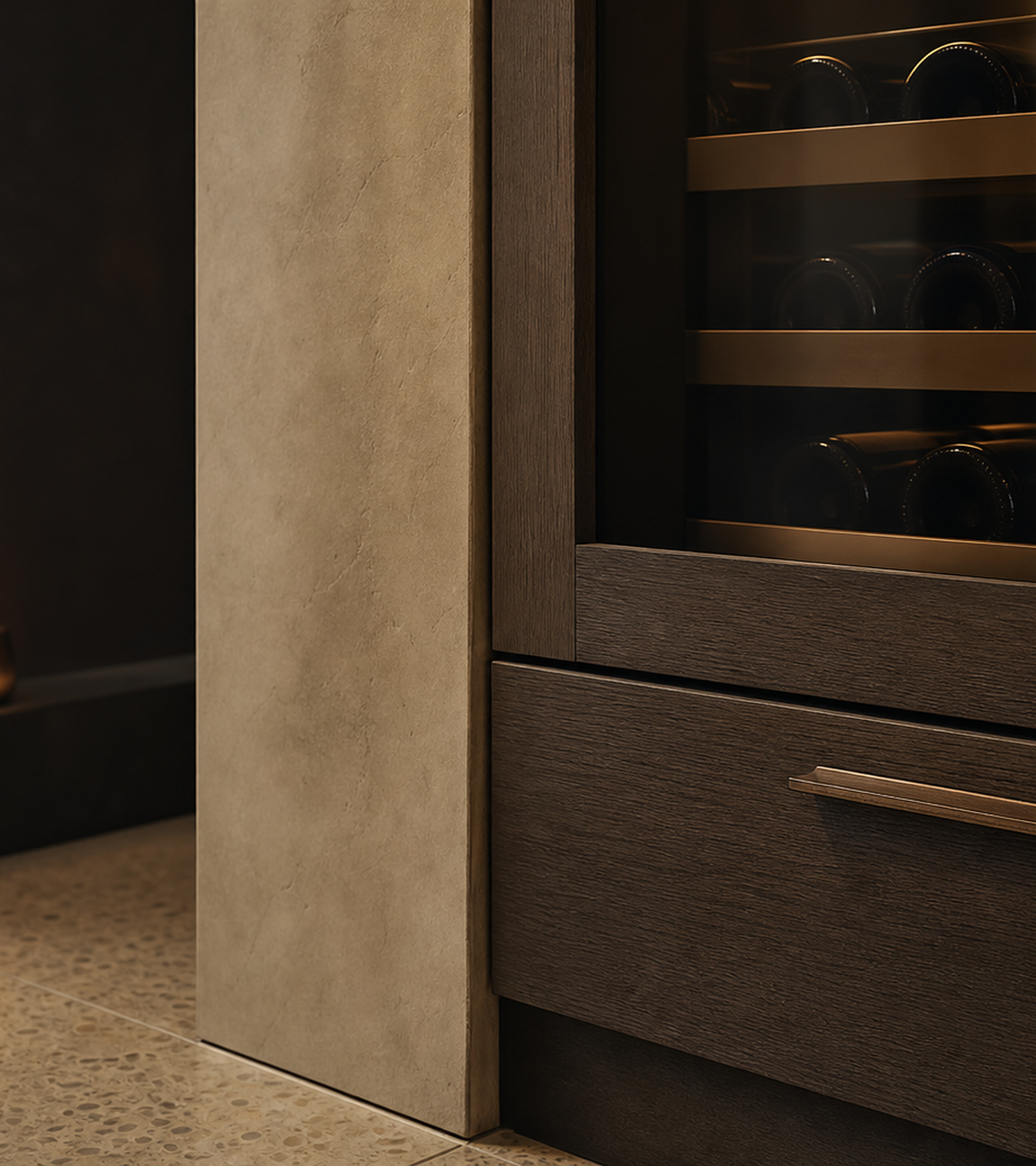
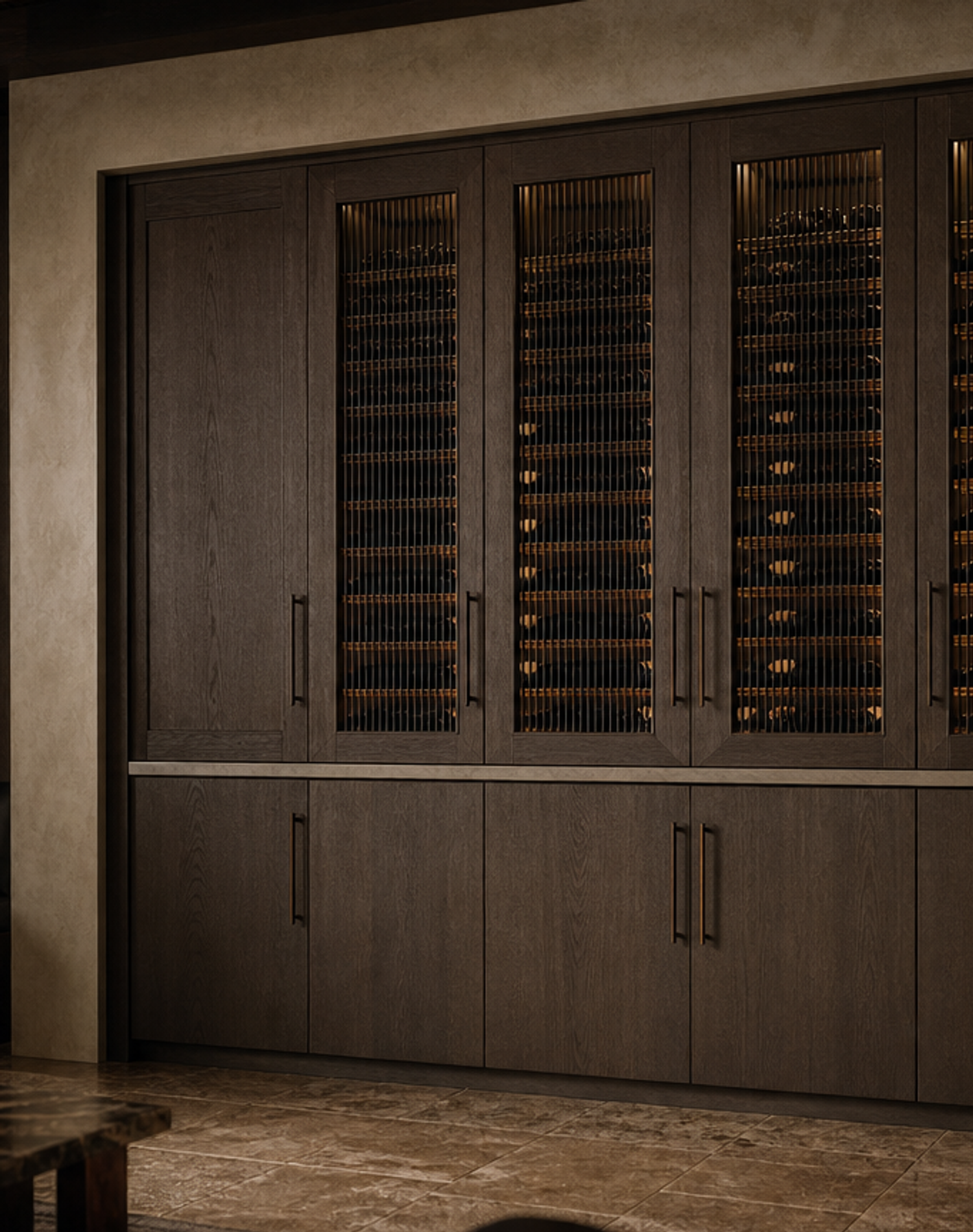
The image set presents the wine cabinet as a closed, inspectable product: a pure-white commerce hero for shape, an installed tasting-room view for scale, a finish detail for surface quality, and a wide lifestyle view for landing-page context.
The visual direction keeps the service function quiet. Dark bottle bays, smoked-oak fronts, lime-plaster surround, and bronze-toned rack highlights communicate cellar service without showing internal construction or clutter.
Key features
These points explain why this flagship product stands out.
Cove decanter pantry zone
A protected counter area and closed lower storage support bottle opening, decanting, glass staging, and accessory organization without exposing service clutter.
Closed residential storage rhythm
Smoked-oak cabinet fronts and dark bottle bays keep the wine wall composed for dining rooms, lounges, and private tasting spaces.
304 stainless steel cabinet body
Fadior builds the cabinet body in 304 stainless steel for durability, hygiene, moisture resistance, and long service life beneath the selected exterior finish.
Made-to-order cellar coordination
Base, wall, tall, and counter lengths can be tuned to project drawings before Foshan factory production begins.
Materials and finish
Finish, color, and detailing are selected to keep the product convincing in both specification and daily use.
Surface finishes
Color options
Customization
This is where the product moves from inspiration into a live project discussion.
Fadior can tune the Grotto Cove Decanter Pantry around confirmed bottle count, glassware needs, decanter staging habits, counter length, closed pantry capacity, rack spacing, handle detail, plinth height, and surrounding wall dimensions. The cabinet body remains formula-priced from module dimensions, while cooling strategy, lighting, site services, and installation conditions stay coordinated through the project team.
Finish direction can stay dark and monastic or shift warmer depending on the surrounding dining room. The module can keep smoked-oak fronts, soften the wall with warmer plaster, or adjust bronze-toned rack highlights while preserving the cove decanter pantry function and 304 stainless steel cabinet body.
Specifications
The key data is organized for clear review before planning and quotation.
| Series | Grotto |
|---|---|
| Category | Wine Cabinet |
| Module dimensions | 2.4 m base cabinets, 1.8 m wall cabinets, 2.2 m tall coordination, 1.6 m countertop planning |
| Cabinet body | 304 stainless steel structure with made-to-order exterior finish |
| Availability | Preorder with 30-day production lead time after project confirmation |
| Manufacturing location | Foshan, China factory |
Quick facts
Material standards, hardware ratings, and construction methods you can cite or verify before you specify.
| Claim | Value | Standard | Context |
|---|---|---|---|
| Grotto Cove Decanter Pantry is made to order in Fadior's Foshan, China factory. | Foshan, China | Shop disclosure | Manufacturing location |
| The SKU has a 30-day production lead time after project details are confirmed. | 30-day lead time | Shop disclosure | Availability planning |
| The cabinet body is specified as 304 stainless steel. | 304 stainless steel | Material contract | Cabinet structure |
| The module dimensions are 2.4 m base, 1.8 m wall, 2.2 m tall, and 1.6 m countertop planning. | 2.4 / 1.8 / 2.2 / 1.6 m | Formula pricing input | Publisher computes price from these values |
| Product imagery shown is design rendering for planning and buyer visualization. | Design rendering | Visualization disclosure | Image status |
| The differentiator is Cove Decanter Pantry. | Cove Decanter Pantry | Slug and title contract | Series-level uniqueness |
| The product combines bottle display, closed pantry storage, and counter staging. | Display, pantry, counter | Functional planning | Primary use case |
| The room-facing storage is closed to reduce visible service clutter. | Closed storage | Design intent | Residential tasting rooms |
| The product type is Wine cabinet modules > Made-to-order cellar service wall > Cove decanter pantry. | Wine cabinet module | Commerce taxonomy | GMC productType |
| Google product category is 4600650 for Wine Storage Cabinet. | 4600650 | GMC taxonomy | Merchant feed classification |
FAQ
These questions help buyers compare options and reduce friction before inquiry.
It is designed for the service moment between bottle storage and serving. Instead of treating the wine cabinet as display only, this module gives the homeowner a protected counter zone, closed lower pantry storage, and tall bottle storage in one composed wall. That lets corkscrews, cloths, spare stems, serving trays, and open-bottle tools stay hidden until needed. Fadior manufactures the cabinet module to order in Foshan, China with a 30-day production lead time after project details are confirmed.
The page image is a design rendering used to show product direction, proportion, finish rhythm, and the relationship between display storage and decanter staging. Final manufactured product may vary in lighting, site context, measurements, and finish texture after the project drawings are confirmed. The rendering is useful for early selection, but Fadior still needs approved dimensions, storage requirements, installation notes, and finish confirmation before the cabinet module enters production.
This differentiator centers on the decanter pantry function, not only bottle display or a tasting niche. Existing Grotto directions already cover bottle rinse, luminous service, shadow glass, Milan specification, and terrazzo tasting ideas. Cove Decanter Pantry adds a sheltered service recess with closed storage below and a calmer wall composition around it. That makes it better for clients who want the room to support serving routines without exposing every accessory or making the cabinet feel like a commercial bar.
Fadior can tune the base cabinet length, wall storage layout, tall storage rhythm, worktop length, rack spacing, glass tone, reveal size, plinth height, handle detail, and finish palette after drawings are reviewed. The 304 stainless steel cabinet body remains the durable structural base, while the visible smoked-oak and lime-plaster direction can be adapted to the room. Cooling, lighting, site electrical work, and installation conditions should be coordinated by the project team before final production release.
Related products
These references help the current product stay connected to the wider collection.