
Surface finishes
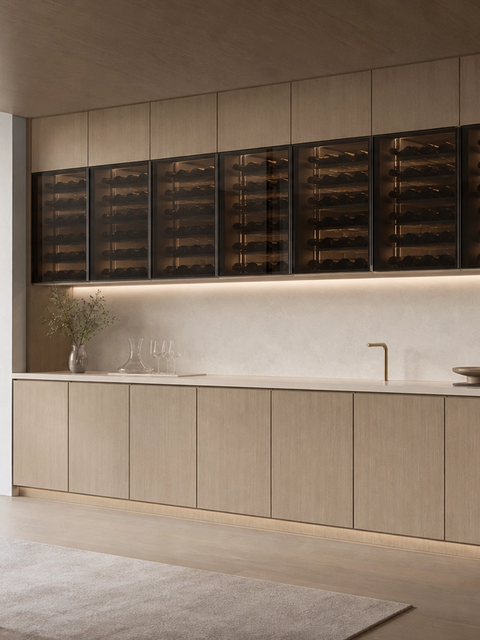
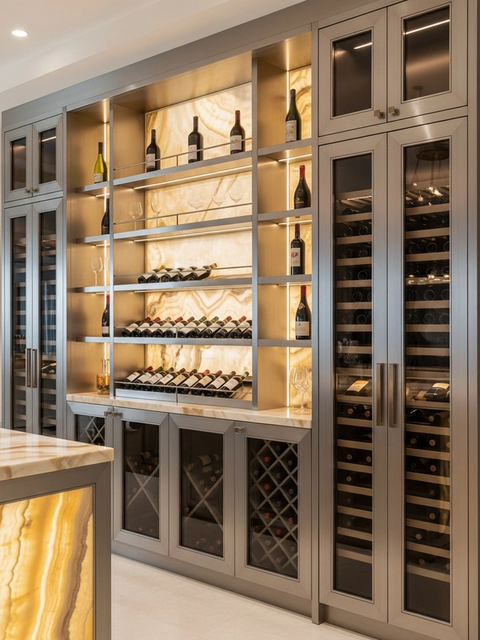
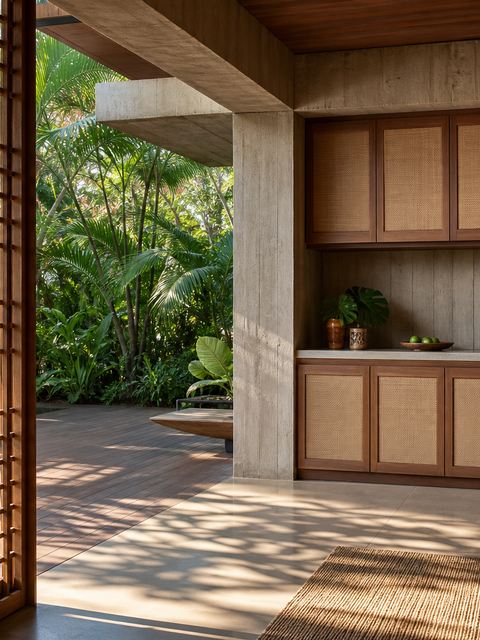
- Walnut boiserie fronts with lacquer-black vertical rack rhythm
- Book-matched stone tasting counter with smoked-glass storage zones
Grotto
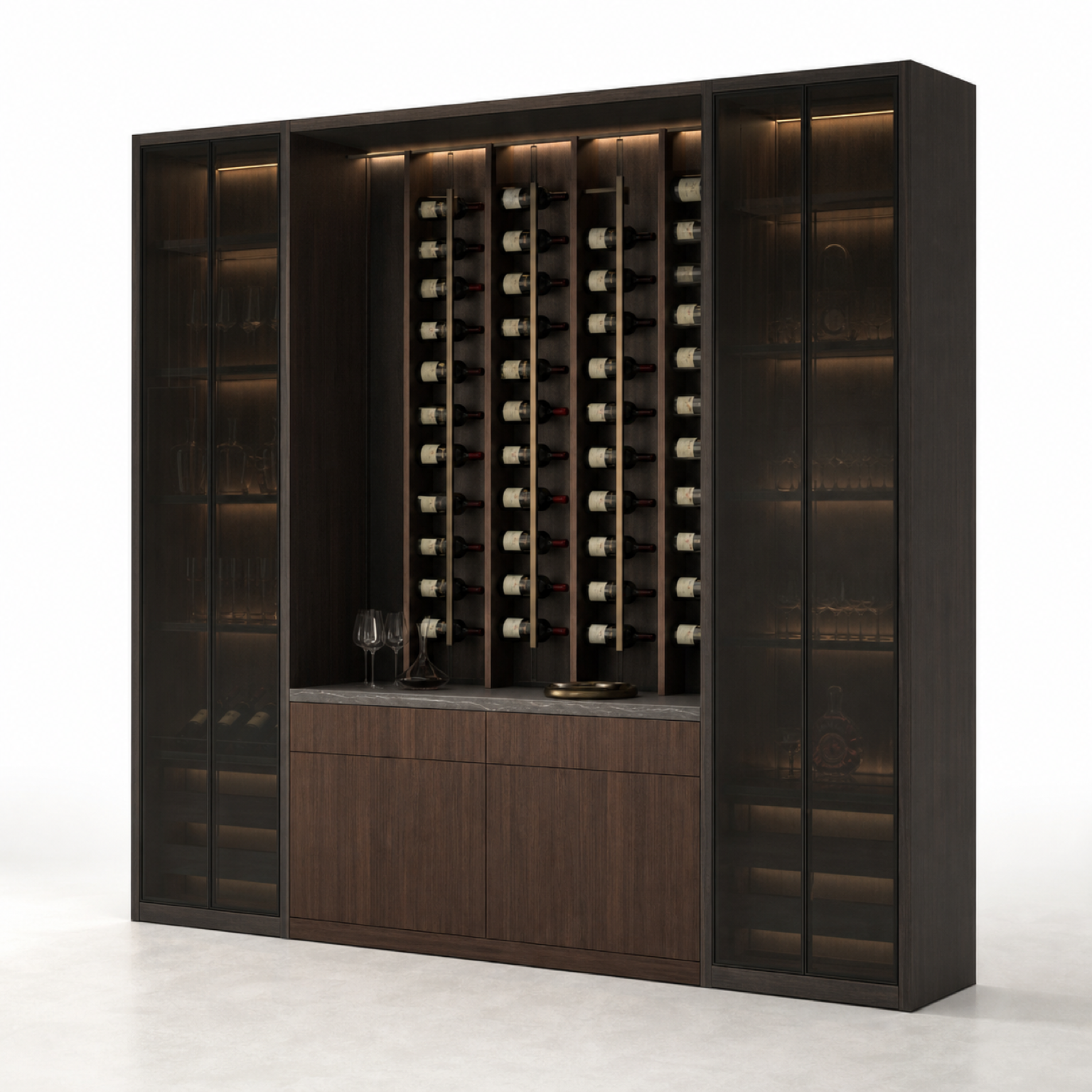
A bespoke Grotto wine cabinet module with a vertical bottle gallery, closed service storage, a tasting counter, and a durable 304 stainless steel cabinet body.
Published Reviewed
Overview
The full design intent, materials, and how this system is built — in detail.
The Grotto Vertical Bottle Gallery Bar is manufactured to order in our Foshan, China factory with an approximately 30-day production lead time for homes that want wine storage to read as architecture rather than loose display furniture. It pairs a tall bottle-gallery rhythm, closed service drawers, a stone tasting counter, and smoked-glass storage so the collection is visible in a controlled way while the working storage stays calm.
This module solves a different problem from a full cellar wall or a compact decanter pantry. Many homes need a wine feature that can sit between dining, lounge, and kitchen zones without turning the room into a commercial bar. The vertical bottle gallery creates a clear center line for selected bottles, while the side storage and lower drawers handle glassware, openers, spare accessories, and unopened stock behind controlled fronts.
Grotto already includes bottle rinse, decanter pantry, cellar service, specification wall, shadow glass, and tasting niche ideas. The Vertical Bottle Gallery Bar takes another position inside the series. Its main value is the upright display spine paired with a practical tasting surface. The wine collection becomes part of the room architecture, but the module still behaves like a disciplined storage product rather than a decorative shelf.
Fadior builds the hidden cabinet body from 304 stainless steel for long-term alignment, hygiene, and resistance to daily wear in service zones. The visible finish direction is deliberately richer: walnut boiserie, lacquer-black rack lines, smoked glass, and a book-matched stone top. For this shop SKU, the formula inputs are 2.4 meters of base cabinet run, 2.2 meters of wall cabinet planning, 1.8 meters of tall cabinet planning, and 2.0 meters of countertop planning. The publisher computes the shop price from those dimensions; this copy does not invent one.
The vertical bottle gallery is useful because it gives the owner one strong place to show a curated selection. A cellar can hide too much. Open shelving can show too much. This module sits between those extremes. The central gallery gives a measured display field, and the surrounding closed cabinetry keeps the rest of the service items out of sight. That balance helps the room stay elegant after guests leave and daily use resumes.
The tasting counter is kept low and simple. It gives enough surface for opening, pouring, checking labels, staging two glasses, or preparing a small tray, without becoming a kitchen island. The counter also protects the wall composition from feeling purely vertical. It creates a horizontal pause at hand height, which makes the tall bottle spine feel usable rather than ceremonial.
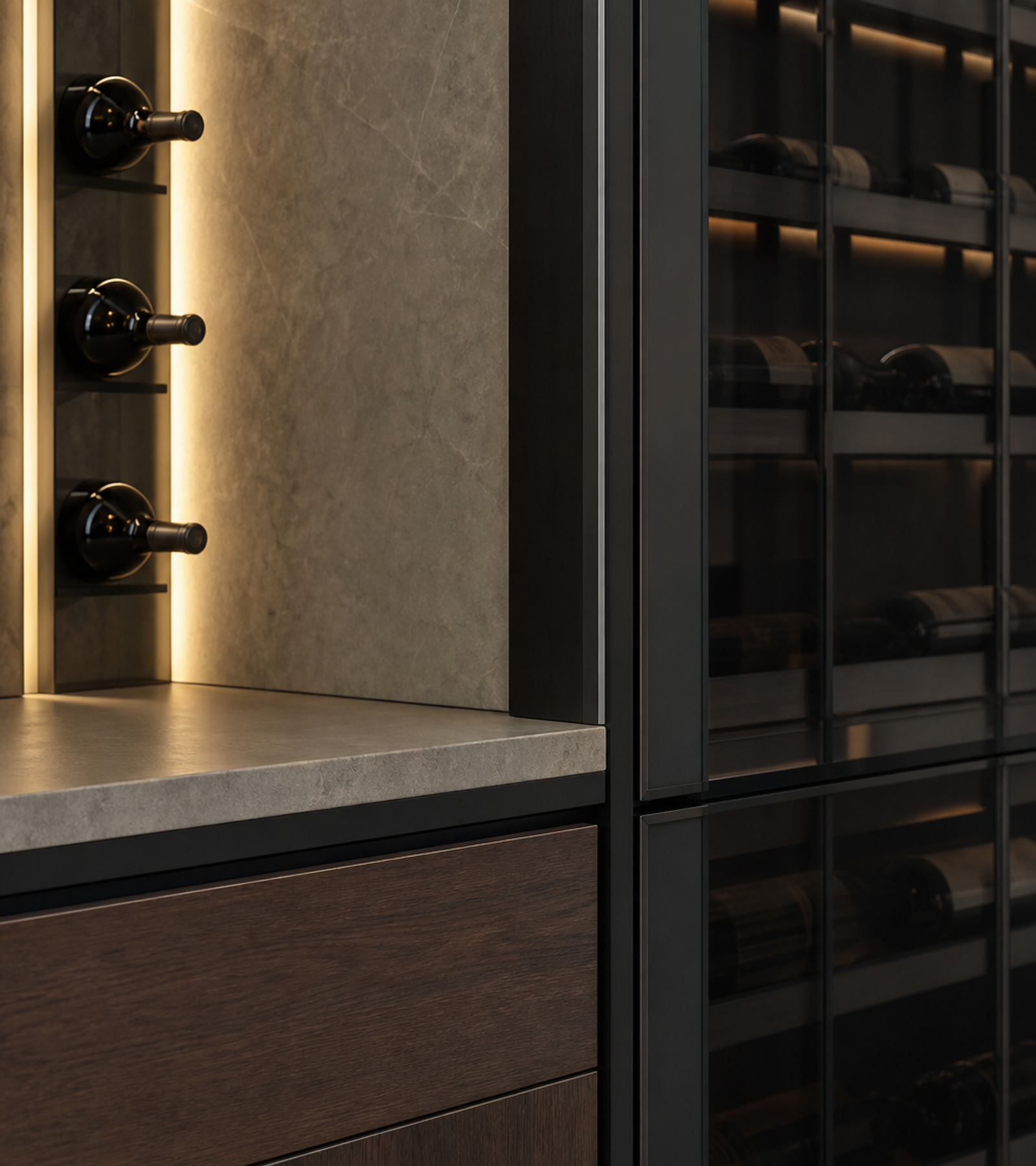
The smoked-glass storage zones are intended to suggest depth without exposing every object inside. In a real home, glassware, bottles, and accessories rarely stay perfectly staged. A controlled glass tone softens that reality. It lets the cabinet feel layered, while the most important lines remain the walnut boiserie field, lacquer-black rack rhythm, stone top, and closed lower storage.
Design teams can use the SKU as a clear starting point for drawings. The base run defines the lower storage and tasting surface. The wall run defines the backing panel and upper composition. The tall run defines the vertical bottle gallery. The countertop run defines the service ledge. From there, Fadior can tune depth, display count, rack spacing, light route, counter thickness, drawer rhythm, glass tone, ventilation, and appliance clearances after measurement.
Installation coordination should happen before production. Wall strength, floor level, lighting route, ventilation, appliance specification if required, nearby water points, socket placement, delivery access, elevator size, ceiling height, and service access all affect the final result. Fadior reviews those details before factory work starts so the cabinet arrives as a resolved module rather than a collection of loose joinery parts.
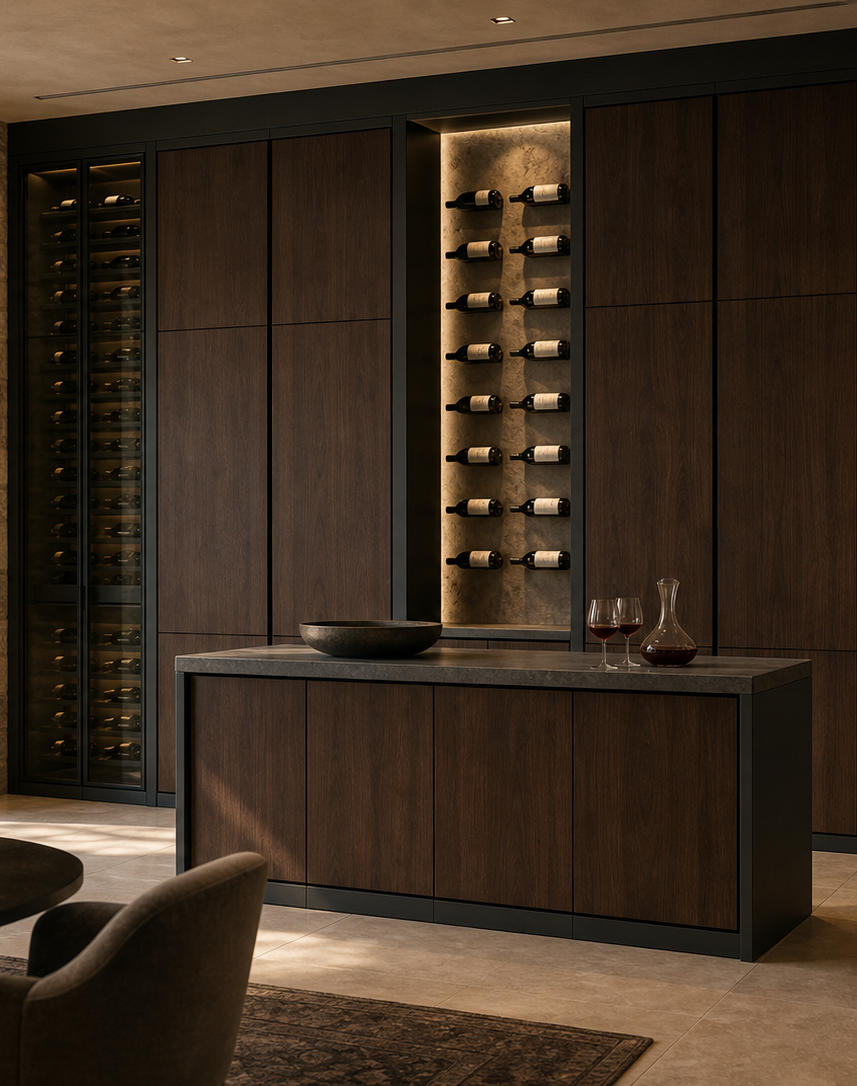
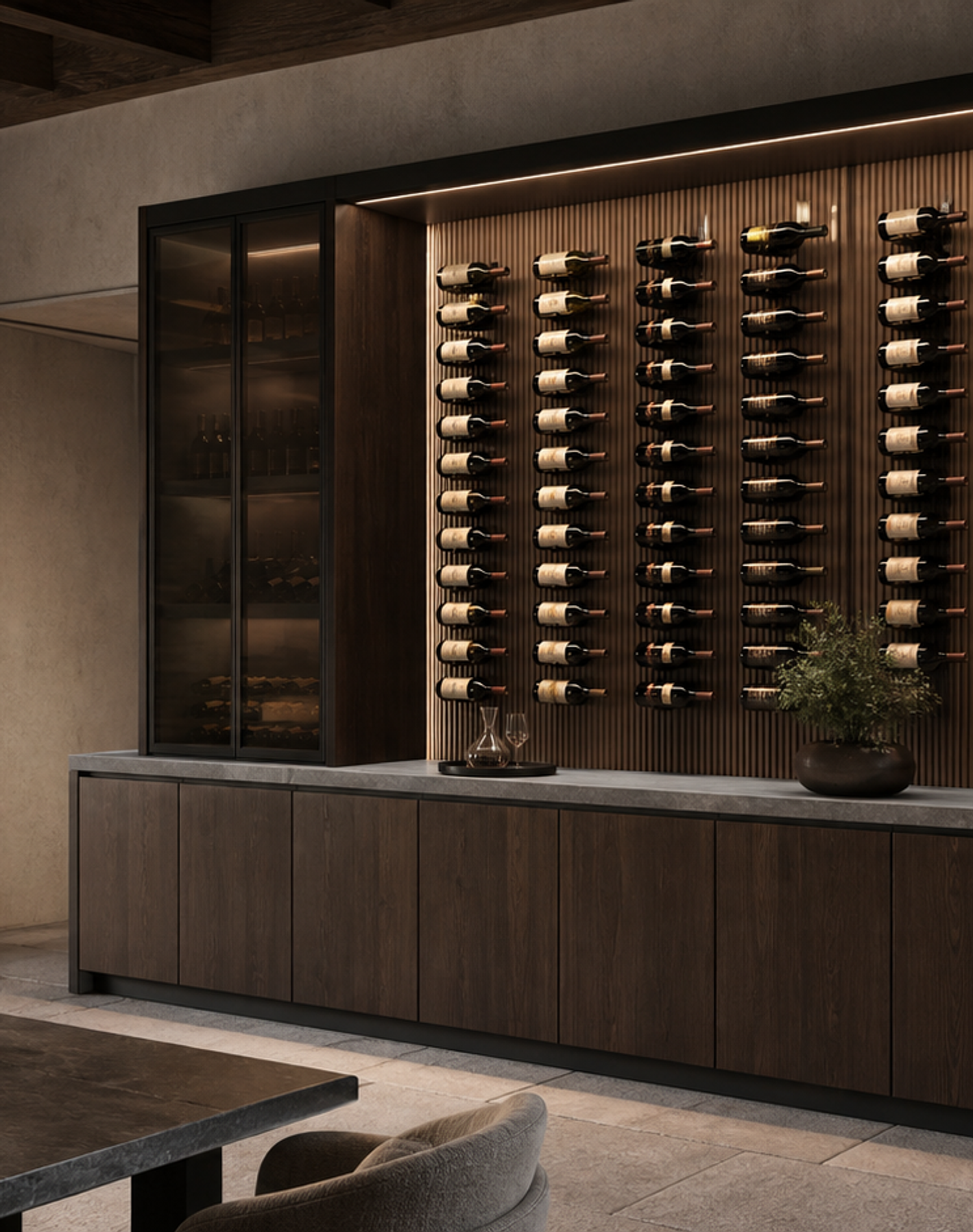
The product imagery is a design rendering for planning massing, finish relationship, bottle display rhythm, and buyer expectation before final project drawings. The white-background hero isolates the module for comparison. The installed scene shows how the vertical gallery can sit in a refined tasting lounge. The detail image studies the display spine, glass tone, walnut face, and stone edge. The wide lifestyle view shows the cabinet supporting a calm evening service moment without people or clutter.
This SKU is especially useful for homeowners who want a wine moment near dining but do not want a separate cellar room. It can work along a lounge wall, beside a dining table, between kitchen and living areas, or inside a private entertaining suite. The important idea is that wine storage becomes a built-in architectural feature with a practical counter, not an afterthought placed on furniture.
The specification can become quieter or more dramatic depending on the project. A darker walnut tone and stronger glass tint can make the cabinet feel private and evening-focused. A lighter stone top and softer wall color can make it more residential and less bar-like. The rack rhythm can be dense for collectors or more open for display. Those choices are confirmed through drawings and samples before production.
For procurement teams, the scope is explicit: made-to-order wine cabinet, vertical bottle gallery, closed lower service storage, smoked-glass side zones, stone tasting counter, 304 stainless steel body, formula dimensions, Foshan production, and preorder timing. That reduces ambiguity during quotation, finish review, site measurement, delivery planning, installation coordination, aftercare, and owner handover.
A strong wine cabinet should make the collection easier to enjoy without making the room feel busy. The Grotto Vertical Bottle Gallery Bar does that by giving selected bottles a disciplined vertical field, giving service tools a closed home, and giving the owner a counter for small tasting tasks. It keeps the display intentional and the working storage quiet.
The module also separates presentation from inventory. The central gallery can show the bottles that matter for the evening, while side storage and lower compartments hold the rest. That makes the product useful for real residential use, where a wine zone must support both hospitality and everyday order.
Because the display spine is vertical, approval drawings need to confirm bottle angle, rack spacing, hand clearance, lighting temperature, glass tone, counter height, and the relationship between rack depth and wall structure. These details are not decorative extras. They decide whether the cabinet feels precise and easy to use after installation.
The shop SKU should be read as a planning module rather than a fixed furniture size. It gives buyers a clear design and pricing basis, while the final project still responds to room width, ceiling height, wine equipment, power route, door swing, floor finish, and maintenance access. That balance keeps online comparison simple without ignoring the site-specific work required for a built-in wine cabinet.
The module is also practical for phased decision making. Buyers can begin with the visible idea, then let drawings settle the exact storage mix: how many bottles stay on display, which glasses need closed drawers, whether a compact cooling appliance is required, and where service lighting should sit. That process keeps the online SKU clear while preserving the care needed for a built-in wine wall. It also gives architects a stable reference when coordinating dining furniture, wall finishes, ceiling heights, and circulation around the tasting counter.
Final approval can also confirm drawer dividers, cleaning access, replacement parts, and long-term care expectations before the factory schedule is locked.
Visual interpretation
See how the product holds its design language at room scale and in close detail.
The image set presents the SKU as an inspectable shop module: a white-background hero, an installed wine lounge view, a display-and-counter detail, and a wide lifestyle scene. Buyers can understand the vertical bottle gallery, smoked-glass storage, closed service drawers, and tasting counter without seeing open cabinet interiors.
The visual direction keeps Grotto rich but controlled. Walnut boiserie, lacquer-black rack lines, stone, and warm side light make the wine cabinet feel architectural rather than like a loose bar unit.
Key features
These points explain why this flagship product stands out.
Vertical Bottle Gallery
A central upright display spine gives selected bottles a clear architectural rhythm while keeping the overall wall controlled.
Closed Service Storage
Lower drawers and side cabinet zones hide tools, extra glassware, and unopened stock so the tasting area stays composed.
Stone Tasting Counter
A low counter supports opening, pouring, label review, and small serving tasks without becoming a kitchen island.
304 Stainless Steel Cabinet Body
The hidden cabinet body is specified for alignment, hygiene, durability, and long-term daily use.
Materials and finish
Finish, color, and detailing are selected to keep the product convincing in both specification and daily use.
Surface finishes
Color options
Customization
This is where the product moves from inspiration into a live project discussion.
Fadior can adapt the display count, rack rhythm, glass tint, counter length, drawer layout, light route, ventilation, appliance bay, wall backing, and finish samples after site measurement. The shop SKU gives a clear starting module; final drawings confirm the project-specific size, service route, delivery access, and installation details before production.
Specifications
The key data is organized for clear review before planning and quotation.
| Series | Grotto |
|---|---|
| Category | Wine_Cabinet |
| Differentiator | Vertical Bottle Gallery Bar |
| Module Dimensions | 2.4 m base, 2.2 m wall, 1.8 m tall, 2.0 m countertop planning |
| Cabinet Body | 304 stainless steel |
| Availability | Preorder, manufactured to order with approximately 30-day production lead time |
Quick facts
Material standards, hardware ratings, and construction methods you can cite or verify before you specify.
| Claim | Value | Standard | Context |
|---|---|---|---|
| Grotto Vertical Bottle Gallery Bar is manufactured to order in Fadior's Foshan, China factory with an approximately 30-day production lead time. | Foshan, China / 30 days | Made-to-order disclosure | Production timing |
| The product imagery is a design rendering for planning massing, finish relationship, bottle display rhythm, and buyer expectation before final project drawings. | Design rendering | Visualization disclosure | Image status |
| The SKU uses 2.4 meters of base cabinet planning input. | 2.4 m | Formula pricing input | Base cabinet run |
| The SKU uses 2.2 meters of wall cabinet planning input. | 2.2 m | Formula pricing input | Wall cabinet planning |
| The SKU uses 1.8 meters of tall cabinet planning input. | 1.8 m | Formula pricing input | Vertical bottle gallery run |
| The SKU uses 2.0 meters of countertop planning input. | 2.0 m | Formula pricing input | Tasting counter run |
| The cabinet body is specified as 304 stainless steel. | 304 stainless steel | Material contract | Cabinet structure |
| The differentiator is Vertical Bottle Gallery Bar, a wine cabinet module with a central upright display spine and integrated tasting surface. | Vertical bottle gallery | Series differentiation | Grotto series uniqueness |
| The visible finish direction combines walnut boiserie, lacquer-black racks, smoked glass, and a stone counter. | Walnut / lacquer black / smoked glass / stone | Finish direction | Buyer-facing finish |
| The productType is Wine cabinet modules > Made-to-order tasting storage > Vertical bottle gallery bar. | Wine cabinet modules | Merchant taxonomy | GMC product type |
| The Google product category is 6356, used as a commerce taxonomy for wine storage furniture. | 6356 | Google Product Taxonomy | Merchant Center category |
| The module is designed for dining-adjacent lounges, private tasting rooms, and residential entertaining walls where wine display should stay architectural. | Architectural wine display | Use case | Placement guidance |
FAQ
These questions help buyers compare options and reduce friction before inquiry.
Yes. This wine cabinet is manufactured to order in Fadior's Foshan, China factory with an approximately 30-day production lead time after approved drawings and order confirmation. The shop SKU defines the starting layout, while final width, bottle spacing, counter height, glass tone, lighting route, ventilation, delivery access, and installation details are confirmed before production begins. This keeps the online module consistent while still allowing the real room conditions to shape the final approved drawings.
The central display spine gives selected bottles a tall architectural rhythm, while the surrounding storage remains calmer and more practical. It is different from a decanter pantry, rinse arcade, tasting niche, or cellar service wall because the display is vertical and central rather than spread across shelves or focused on washing and serving tasks. The module is meant for homes that want wine to be visible, but still disciplined.
The product imagery is a design rendering that shows intended massing, bottle display rhythm, finish relationship, and buyer-facing composition before final project drawings. It helps compare the vertical gallery, smoked-glass storage, stone counter, closed lower drawers, and walnut boiserie face. Final dimensions, site conditions, power routing, ventilation, glass tone, finish samples, delivery access, and installation details are confirmed through Fadior's approval process.
Yes. The display count, rack spacing, counter length, drawer rhythm, glass tone, lighting temperature, and equipment allowance can be adjusted after site measurement. The important design idea is that the selected bottles sit in a clear vertical gallery while service tools and extra stock stay behind controlled fronts. Fadior confirms those details in project drawings before production, so the finished module fits the room and owner routine.
Related products
These references help the current product stay connected to the wider collection.