
What does importing furniture from China to the UAE involve?
Importing furniture from China to the UAE is a chain of product definition, export packing, transport, UAE entry and final receiving decisions. Start with a written goods schedule, then keep the chosen Incoterm, port, customs responsibility, VAT treatment and delivery boundary beside it. The UAE Government portal describes VAT as a consumption tax and states that the rate is 5 per cent.
Read the China sourcing and Foshan visit guide before asking for a final quote. It helps separate factory selection from the freight leg.
What should be written before you request freight?
Create one line per SKU: product name, material, finished size, packed size, quantity, gross weight if known, intended room, UAE emirate and destination address. Mark whether the item is loose furniture, cabinetry, a door, glass, a worktop or an appliance. Add floor, lift, stairs, appointment and receiving-contact information.
Ask every supplier to quote against the same schedule and revision date. A directory listing can show an offer; use the signed schedule to confirm your specification, packing method and delivery scope.
Which UAE ports should you compare?
Dubai Customs states that its Jebel Ali Customs Center provides customs-clearance services through smart services. Abu Dhabi Ports’ saved report describes Khalifa Port’s semi-automated container terminal. Treat both as routing choices; ask the forwarder to state the current sailing, origin cut-off, trans-shipment assumption, destination handling, customs handoff and final-delivery estimate. Ask the forwarder to state the current sailing, origin cut-off, trans-shipment assumption, destination handling, customs handoff and final-delivery estimate.
If the project has a move-in date, request a shipment-specific transit range in writing. Keep generic “China to UAE” numbers out of the order unless the forwarder confirms the current shipment.
| Decision | Ask the forwarder to state | Why it matters |
|---|---|---|
| Jebel Ali route | Origin, cut-off, customs center, destination handling and final delivery assumption | A Dubai entry does not settle unloading or last-mile scope. |
| Khalifa Port route | Origin, sailing, terminal handoff, customs responsibility and Abu Dhabi delivery assumption | The port and final emirate are separate decisions. |
| Consolidated load | Warehouse receipt, consolidation date, packing condition and damage process | Several suppliers need one named receiving owner. |
| Full container | Loading plan, seal record, container number and delivery appointment | A box-level plan is easier to reconcile on arrival. |
How should the commercial handoff be written?
Use the quoted delivery term as a responsibility map. Write which party handles origin collection, export clearance, the Chinese port handoff, destination clearance, duty or VAT, and final delivery; keep the importer of record explicit.
For every quote, write the named place after the delivery term, the included transport leg, export and import clearance, destination handling, unloading, storage, insurance and exclusions. A “door” promise is incomplete unless access, floor, appointment and inside placement are visible.
What do VAT and customs need you to verify?
The UAE Government VAT page says a 5 per cent VAT is levied at the point of sale, that the rate is 5 per cent, and that VAT applies to taxable goods and services. It also says VAT was introduced in the UAE on 1 January 2018.
Dubai Customs’ personal-effects page gives a narrower example: personal-use and used household items may be exempt after inspection, while goods found in commercial quantities are subject to a 5 per cent customs tax. That page is not a blanket HS-code ruling for a commercial cabinetry order. Ask the importer or customs representative to confirm classification, customs value, origin documents and current treatment for each SKU. Dubai Customs personal-effects guidance
Do cabinets need UAE conformity paperwork?
MOIAT’s ECAS service says: “This service allows you to apply for a UAE Certificate of Conformity for products subject to technical regulations,” and states that the products comply with the country’s applicable standard specifications. The service page lists industrial establishments, supply and distribution companies and individuals as its target audience.
Ask the importer or customs representative whether the shipment falls within a technical regulation, then record the required certificate, test report, label and responsible applicant. Keep the product scope with the paperwork you have verified.
How should installation and after-sales be assigned?
Separate factory packing, port or terminal clearance, delivery to the address, and installation or adjustment in the room. State who measures openings, protects floors and walls, unloads, disposes of packing and records damage. If a local installer is outside the written scope, appoint a UAE contractor and say so in the quote.
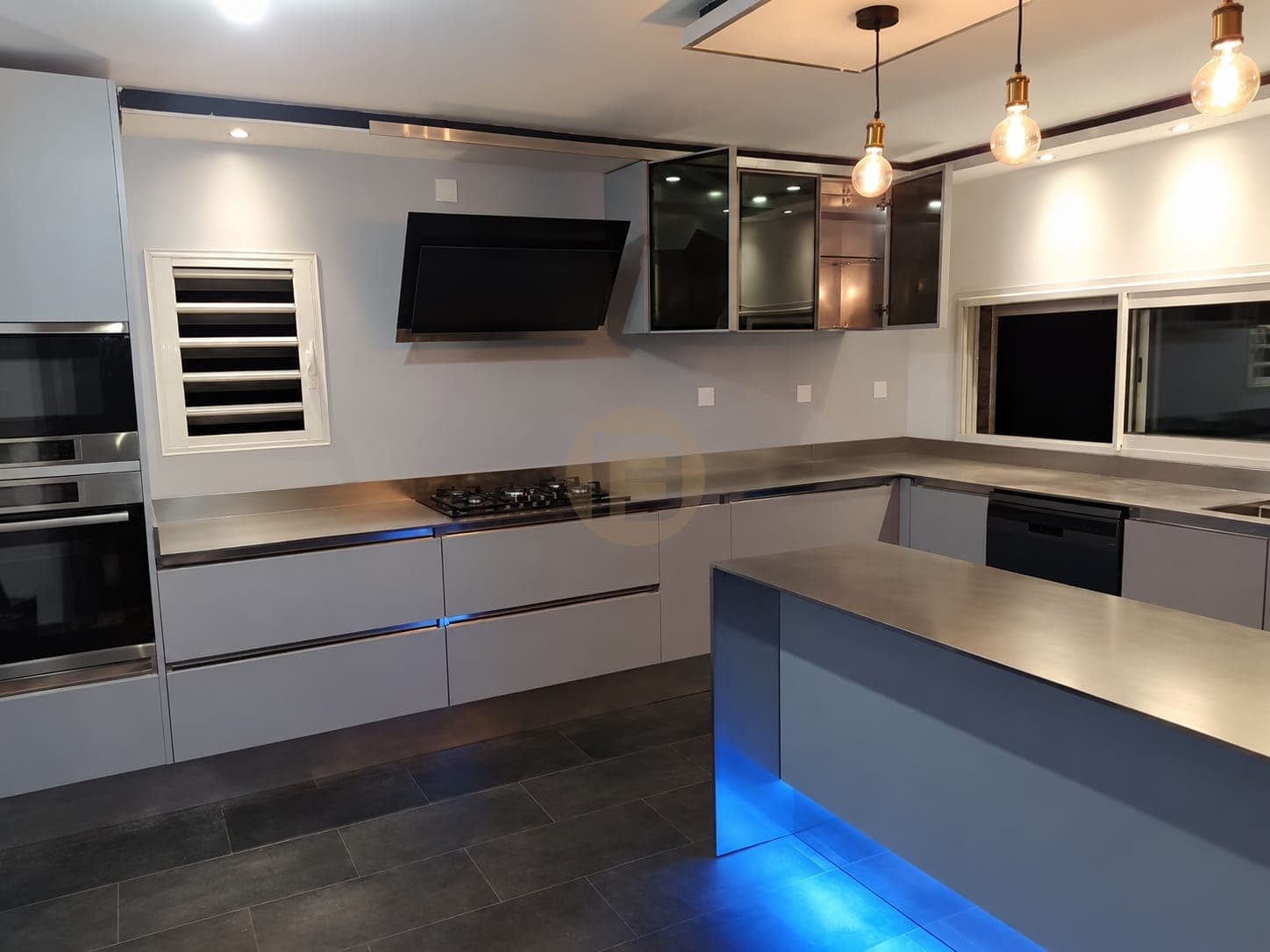
For Fadior cabinetry, the country facts are precise: assembled and packed at our Foshan factory; the final order document confirms the freight charge, destination and service level before an order is accepted; 30-year cabinet-body structural warranty; terms per contract. These statements define the written order boundary; local installation remains a separate scope question.
What should the UAE buyer check before release?
Use this sequence after the supplier answers the first enquiry. Keep the same revision of the schedule, drawings and quote attached to every approval so a later freight revision cannot silently change the goods or responsibility split.
How should a cabinetry order describe materials?
Use the company boundary exactly. Fadior’s cabinet bodies are 304 stainless steel; standard door panels are also 304 stainless steel, while glass, mirror and sintered-stone door faces, stone or quartz worktops, third-party hardware, appliances and installation materials follow their own specifications. Do not call a glass, mirror or sintered-stone face stainless steel.
For the next commercial decision, read the signed quotation guide, factory verification checklist and dated manufacturer scorecard. For the room, use the kitchen space guide and wardrobe space guide.
What belongs in the site and access brief?
Give the forwarder a compact site brief with the address, emirate, building entrance, loading restrictions, lift dimensions, stair turns, parking or appointment rules, floor protection and the room where each package will be opened. For a villa, add the gate width, driveway slope and the route from the unloading point to the kitchen, wardrobes or vanities. For an apartment, confirm the building manager’s delivery window and whether a service lift is required.
Keep this brief attached to the same revision as the drawings and packing list. If a room changes after production, recheck the packed dimensions and the access path before the truck is dispatched. A delivery that reaches the correct emirate can still fail at the building entrance, so access is part of the commercial scope. Record the person who approves a change, the date, the affected SKU and the resulting cost or time adjustment. This simple log gives the buyer and supplier one shared reference for receiving, adjustment and after-sales decisions.
How should receiving day be documented?
Prepare a receiving sheet before the truck is booked. Give the driver or site contact the same package count, item schedule and room map that the supplier used for packing. Photograph outer damage before opening, then match labels to the schedule and record any missing, wet or crushed package against the delivery note. Keep a separate line for glass, mirrors, stone faces and worktops because those components have their own material and handling requirements.
The person accepting the shipment should know whether the delivery ends at the building entrance, inside the room or after an installation team has checked the fit. Record the lift size, turning space, protective covering and temporary storage area. If a package cannot enter the building, write the exception immediately and contact the named responsibility owner. This turns an uncertain last-mile conversation into a dated evidence trail. It also gives the buyer a clear starting point for a replacement, adjustment or warranty discussion without changing the original order scope.
What should the final quote prove?
The final quote should reproduce the comparison: goods schedule, Incoterm and named place, origin and destination, port assumptions, customs and VAT treatment, delivery boundary, access conditions, installation responsibility, warranty scope, after-sales contact and exclusions.
If a line is still unknown, keep it open and name the person responsible for confirming it. A clean “to be confirmed” field is safer than an invented transit range, duty rate or service promise. Continue with the Fadior trade programme when you need the next commercial step.
Use the cabinet price worksheet to keep product, freight and receiving scope separate, then check the manufacturer route route before requesting a final proposal.