
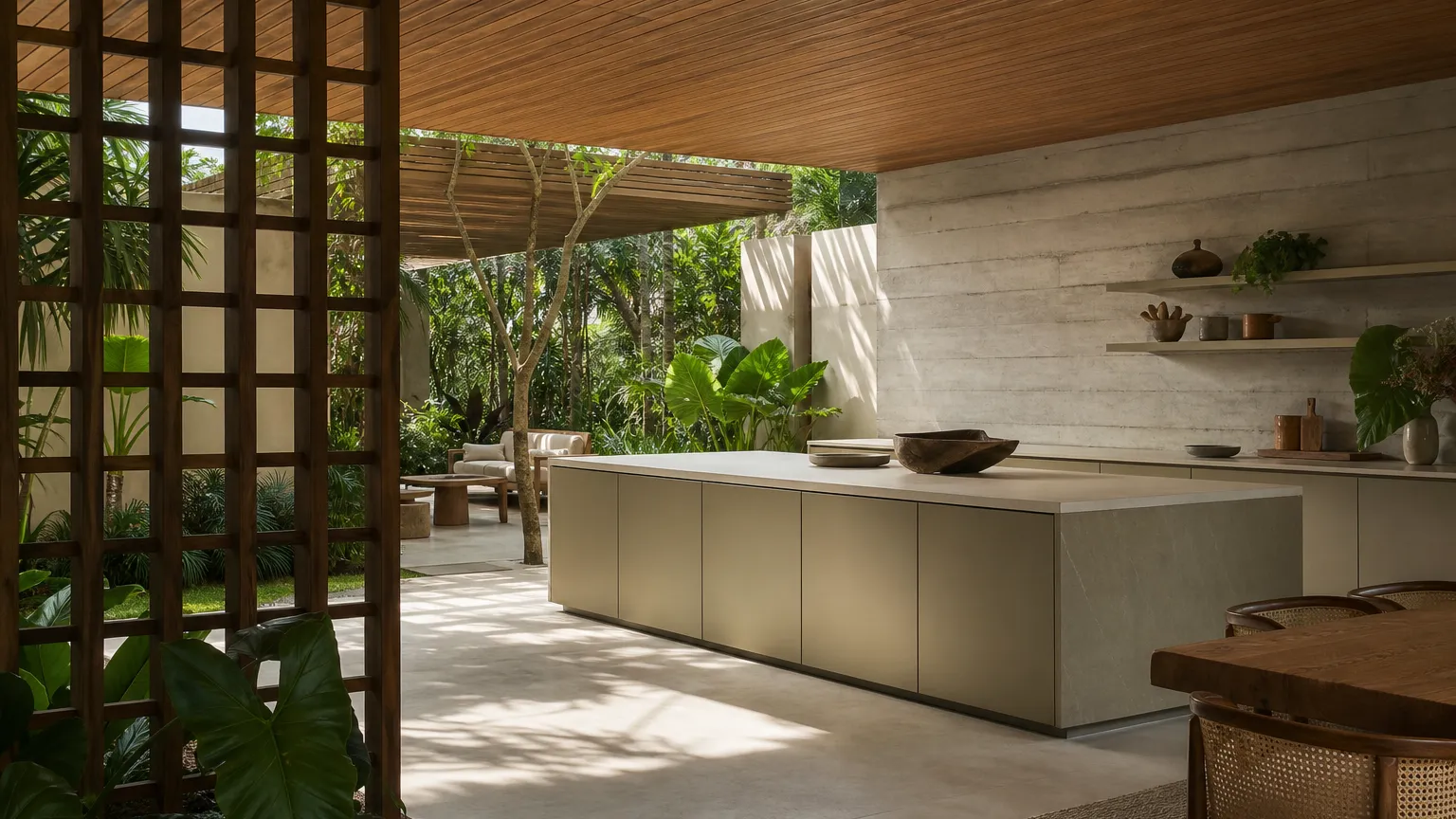
Colored Stainless Steel Kitchens
Colored stainless steel lets luxury kitchens use champagne, bronze, and dark tones without depending on fragile lacquer or stone on every surface.
Direct answer
The Direct Answer
304 stainless steel gives colored kitchen surfaces a practical luxury role: it lets a buyer choose champagne, bronze, or darker tones without treating color as a fragile paint layer. The decision is not whether a kitchen should look decorative. It is where color belongs, how it cleans after daily cooking, and whether the hidden cabinet system can survive heat, humidity, and 10 to 30 years of use.
What does colored stainless steel change in a luxury kitchen?
304 stainless steel gives colored kitchen surfaces a practical luxury role: it lets a buyer choose champagne, bronze, or darker tones without treating color as a fragile paint layer. The decision is not whether a kitchen should look decorative. It is where color belongs, how it cleans after daily cooking, and whether the hidden cabinet system can survive heat, humidity, and 10 to 30 years of use.
- Colored stainless steel
- Colored stainless steel is stainless steel whose surface color is created by modifying the passive oxide layer rather than by applying ordinary paint.
Why is color different when it comes from the surface itself?
Color behaves differently when it is connected to the surface rather than laid on top as a decorative skin. A lacquered front can look perfect on day 1, but chips, yellowing, and corner wear become visible when the kitchen sees steam, oil, UV exposure, and hand contact 7 days a week. Natural stone has a different problem: it can feel permanent, but porous varieties need sealing cycles and careful stain management. Colored stainless steel changes the design question. The buyer is no longer asking for color as fashion only; the buyer is asking whether the surface can hold a controlled tone while the 304 base keeps water, heat, and cleaning risk under control. That is why the brief matters for Gulf homes, where humidity and salinity punish weak finish systems faster than a mild inland climate.
How should buyers compare colored stainless steel with lacquer and stone?
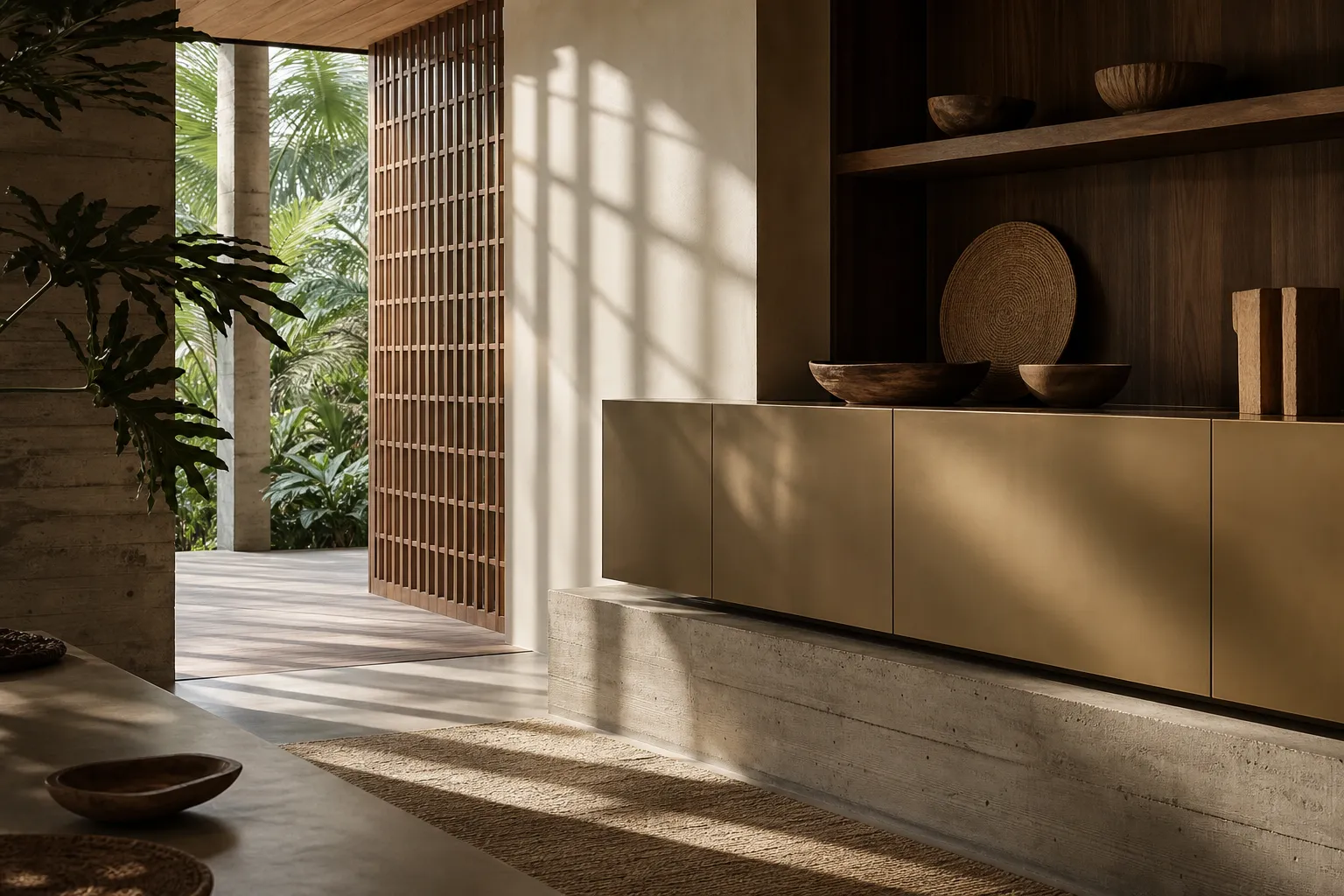
Start with the job each surface must do. Lacquer is excellent when the homeowner wants a perfect flat color and accepts repair risk. Stone is excellent when the buyer wants mineral depth and a strong counter or island mass. Colored stainless steel is strongest when the buyer wants a warmer or more jewelry-like visual language but still needs the cabinet plane to tolerate moisture, touch, and cleaning. The useful comparison is not beauty versus performance. It is which material carries the daily burden. In a 25 sqm kitchen, one colored wall, one island face, or one pantry elevation can carry the whole mood. Covering every plane may be expensive and visually loud. Fadior’s approach is to keep the 304 stainless steel body as the stable layer, then let color act as a controlled design decision.
| Decision factor | Colored stainless steel | Lacquer cabinets | Natural stone |
|---|---|---|---|
| Daily moisture exposure | Strong when built over 304 stainless steel and cleaned with non-abrasive routines | Can chip or swell at edges if the substrate is weak | Good on counters, but seams and sealing need attention |
| Color depth | Champagne, bronze, blue, or dark tones can shift with light angle | Uniform color is easy to specify and retouch locally | Mineral variation is natural but harder to control panel by panel |
| Heat and humidity logic | Best for humid kitchens where the cabinet body must stay stable | Best in lower-risk dry zones or decorative panels | Best as a counter or island mass, not every vertical cabinet face |
| Repair expectation | Specialist fabrication and finish control matter before order sign-off | Local refinishing can be simpler but may show mismatch | Chip or stain repair depends on stone type and installer skill |
| Luxury signal | Reads like jewelry when used on 1 or 2 composed elevations | Reads tailored and quiet when well maintained | Reads architectural and heavy when proportion is controlled |
Which surfaces should carry color in a humid villa kitchen?
Use colored stainless steel where touch, light, and water risk meet. In a GCC villa kitchen, that usually means 1 hero elevation, 1 island face, or a pantry wall seen from dining. Keep the sink surround, high-use drawer banks, and cleaning zones practical before making the palette louder. A good rule is 60 percent calm base surfaces, 30 percent warm support surfaces, and 10 percent expressive color. That ratio keeps the room from feeling like a showroom. It also protects maintenance. A bronze or champagne plane can be dramatic under morning light, but the work triangle still needs sensible storage, a 900 mm landing area, and an easy path from preparation to serving. Color should guide the eye; it should not make the room harder to use.
When does 304 stainless steel matter more than the finish color?
304 stainless steel matters most when the room is exposed to water, heat, and repeated cleaning. Fadior uses 304 stainless steel as the system material because the cabinet body has to perform before the visible finish can succeed. The company’s manufacturing facts are practical, not decorative: 0 adhesive in the glue-free frame, powder processes bonded around 220 C, more than 9,500,000 BOM detail records, and a new 80,000+ sqm smart factory designed for repeatable control. This is the difference between an impressive finish sample and a serious kitchen system. The sample helps the buyer choose tone. The cabinet body determines whether the kitchen remains square, dry, hygienic, and usable after thousands of cooking cycles.
Why is the Gulf climate a useful test for colored kitchen surfaces?
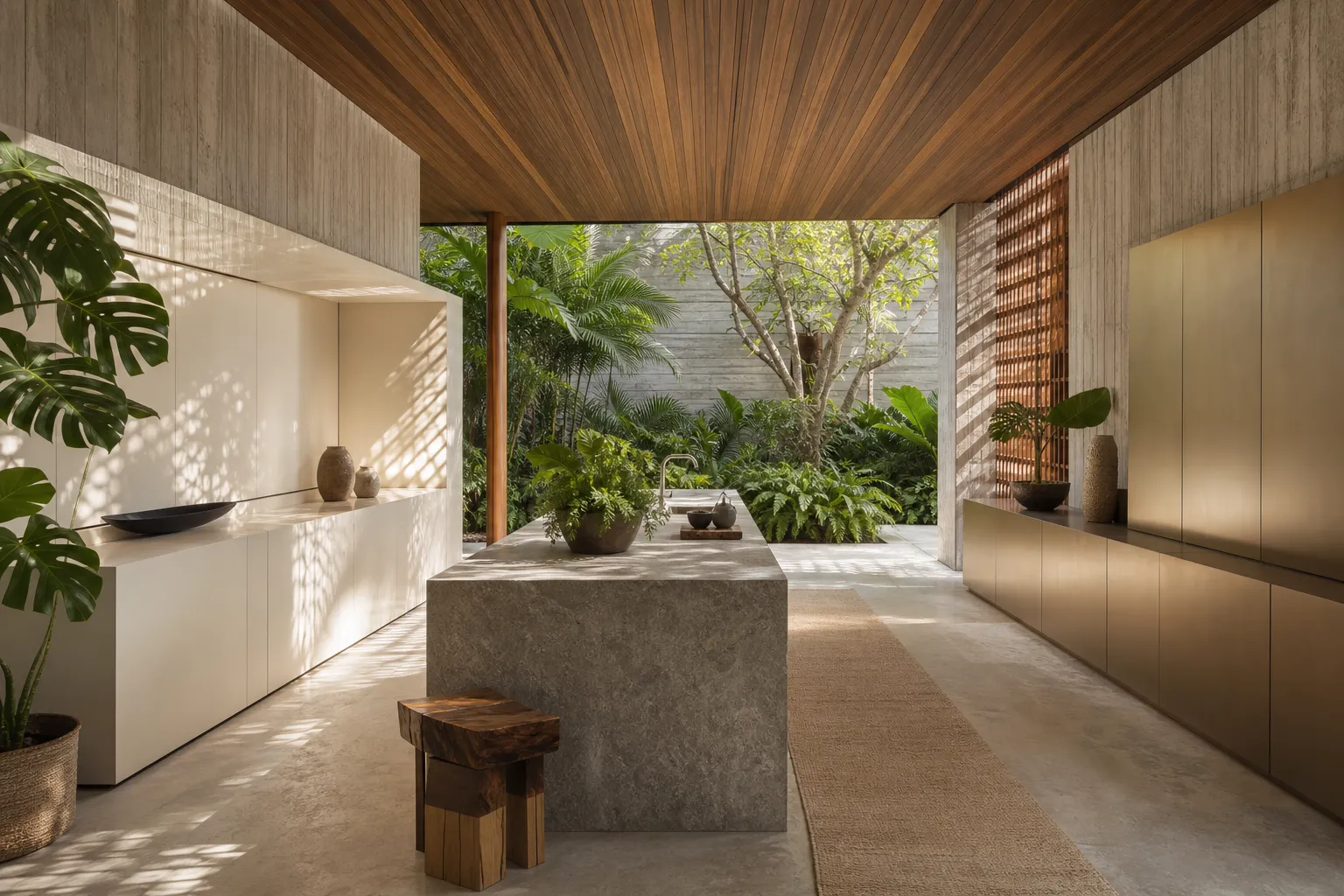
Gulf homes are a useful stress test because heat, humidity, air-conditioning cycles, and coastal salinity expose weak surfaces quickly. A kitchen that works in Dubai, Doha, Riyadh, or coastal Abu Dhabi has to survive more than good photography. It sees cold indoor air beside hot exterior walls, family cooking, frequent cleaning, and summer humidity that can remain high for months. Lacquer can still be beautiful, but its edge protection and substrate choice become critical. Stone can still be beautiful, but sealing and stain discipline matter. Colored stainless steel is attractive here because it lets the buyer build a jewel-like surface story over a 304 base that is inherently non-porous and waterproof. In practical terms, climate turns color into an engineering choice.
How much color should a serious buyer specify?
A serious buyer should specify enough color to define the room, not enough to overwhelm it. For a 35 sqm villa kitchen that opens to dining, 1 colored pantry wall and 1 quieter island face may be more elegant than coloring every cabinet. For a compact 12 sqm apartment kitchen, a single champagne-toned vertical plane can do the work of a full palette. The number to watch is not square meters alone; it is sightlines. If color appears in the first 3 seconds from the living room, it has done its job. If every turn reveals another reflective surface, the kitchen can feel nervous. The best luxury rooms edit the signal down until it feels inevitable.
- Confirm that the visible color is used on 1 or 2 deliberate elevations, not scattered across every cabinet.
- Review samples under morning daylight, afternoon glare, and evening task light before approval.
- Ask whether high-touch areas can be cleaned without abrasive pads or harsh chemicals.
- Keep wet zones and daily drawer banks on the most durable cabinet construction available.
- Compare the surface plan against ventilation, salinity, humidity, and family cooking frequency.
Can colored stainless steel replace stone everywhere?
No. Colored stainless steel should not replace stone everywhere just because it is durable. Stone still makes sense for counters, islands, and mineral weight when the buyer wants a substantial working surface. The smarter choice is a division of labor. Let stone carry horizontal mass where heat, cutting boards, and serving rituals matter. Let colored stainless steel carry vertical planes, pantry walls, or island faces where tone and durability meet. Let quieter cabinet colors rest around them. This produces a layered kitchen instead of a single-material statement. Fadior’s whole-home advantage is that the 304 system can continue into wardrobes, vanities, and storage, so the kitchen’s surface decision does not have to carry the entire house alone.
Does colored stainless steel make a kitchen feel cold?
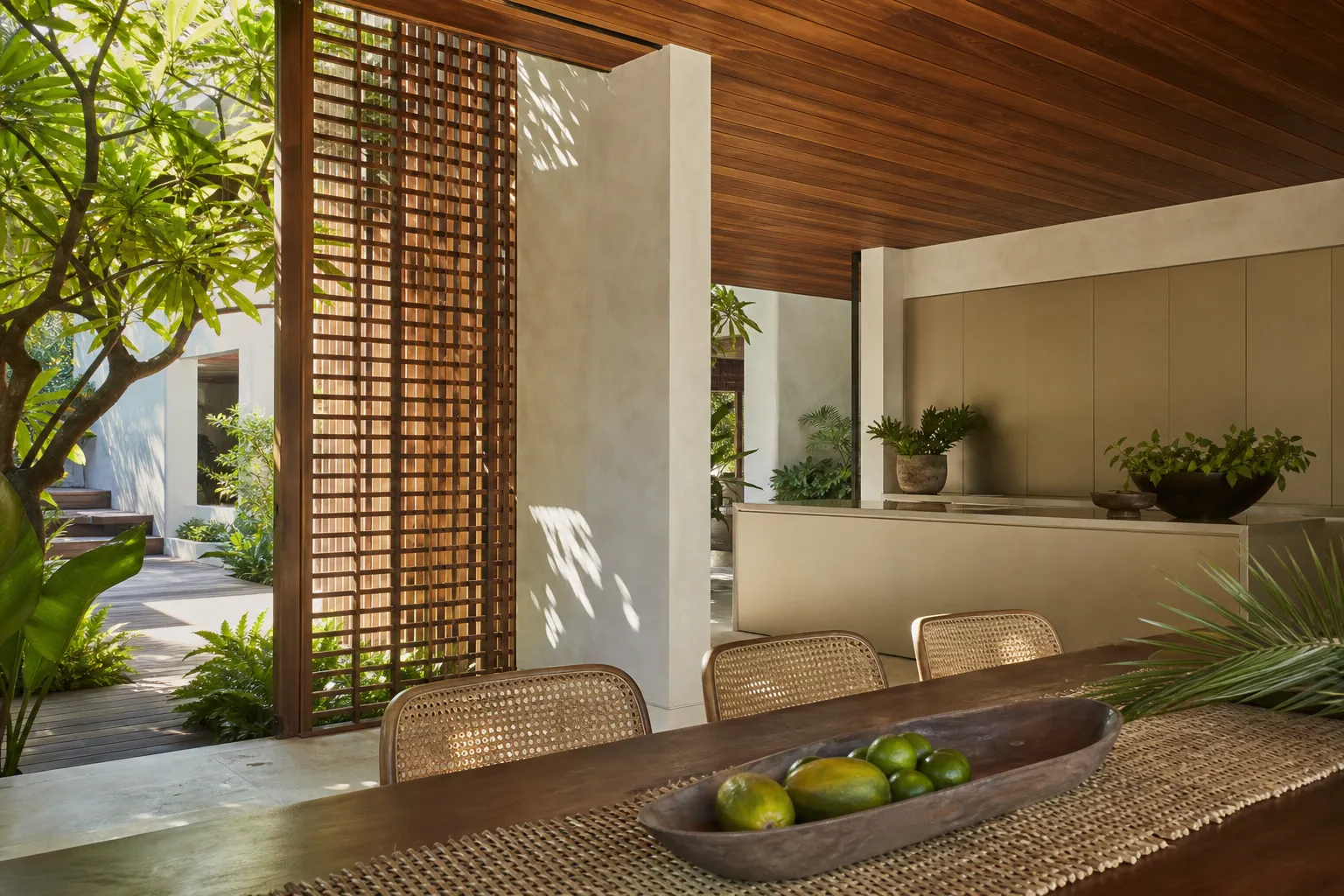
It can feel cold if the room treats it like an appliance finish. It feels residential when the color is paired with wood, cane, plaster, fabric, and warm indirect light. That is why tropical hardwood, concrete, lime-wash walls, and foliage matter in the room: the visible color reads as jewelry only when the room around it feels human. A champagne or bronze front beside a harsh white floor may look commercial. The same front beside deep wood, a woven chair, and plant-filtered morning light can feel calm and expensive. The buyer should judge the full room palette, not a sample in isolation.
Where should Fadior proof enter the decision?
Fadior proof should enter before the buyer falls in love with the finish. The brand’s advantage is not simply that it can make a kitchen look colored, dark, or warm. The advantage is that the underlying cabinet system is 304 stainless steel, glue-free, waterproof, and produced through a vertically controlled manufacturing chain. That matters when a project involves 20,000+ monthly unit capacity, 213 cumulative patents, and a 600 million RMB smart-factory investment. These numbers do not make the room prettier by themselves. They make the design decision less fragile. A buyer can choose a more expressive color because the base system is not depending on MDF, particleboard, or adhesive chemistry to survive the hardest room in the house.
Which colored stainless steel questions do buyers ask most?
The best buyer questions are practical: where should the color go, what should remain quiet, how does it clean, and when is stone still the better surface. Those questions turn a beautiful finish into a purchase decision.
Frequently Asked Questions
Questions this guide answers
- Is colored stainless steel painted?
- No. In the architectural processes described by suppliers such as Outokumpu and INOX-COLOR, color comes from changing the passive surface layer rather than applying ordinary paint. That distinction matters because the buyer is not choosing a simple lacquer skin. The practical caveat is that fabrication quality, base grade, and cleaning guidance still matter.
- Is colored stainless steel better than lacquer cabinets?
- It depends on the zone. Lacquer can be beautiful for calm color, especially in lower-risk areas, but it can chip or yellow if the substrate and edge protection are weak. Colored stainless steel is stronger when the buyer wants a high-touch surface in a humid kitchen and accepts specialist fabrication and a higher specification cost.
- Should a Gulf villa use colored stainless steel instead of stone?
- Use it beside stone, not automatically instead of stone. Stone can still be the right choice for counters and island mass. Colored stainless steel is more useful on vertical cabinet planes, pantry walls, or island faces where a champagne, bronze, or dark tone gives the kitchen a jewelry-like signal without making every surface heavy.
- How much colored stainless steel is enough?
- Most luxury kitchens need one clear color gesture, not a full-room treatment. A 25 to 35 sqm kitchen may use one pantry wall and one island face. A smaller kitchen may only need one vertical plane. The goal is to make color visible from the main sightline while keeping work zones calm and easy to clean.
- Why does Fadior keep the 304 stainless steel base?
- Fadior keeps the 304 stainless steel base because the cabinet body has to survive water, heat, cleaning, and long use before any visible finish can succeed. The color may create the emotion, but the 304 structure protects the practical promise: waterproof construction, glue-free assembly, and a kitchen that remains stable under daily family use.
Related products
Specific products worth reviewing next.
References
Authoritative sources cited in this article
- Outokumpu colored stainless steel case study
Colored stainless steel process and optical qualities.
Outokumpu
- INOX-SPECTRAL color process overview
INOX-SPECTRAL architectural coloring capability.
INOX-COLOR
- ASTM A240 stainless sheet standard
304 stainless steel sheet specification context.
ASTM A240
- NSF food equipment material standards
Food equipment material standard context for hygienic surfaces.
NSF
- CARB composite wood products program
Composite wood formaldehyde regulation context.
CARB
- EPA formaldehyde standards for composite wood
Federal formaldehyde standards for composite wood products.
EPA
- World Stainless association
Global stainless steel industry context.
World Stainless
- NKBA kitchen and bath association
Kitchen and bath industry planning authority.
NKBA
- Dezeen kitchen interiors coverage
Design publication kitchen interiors context.
Dezeen
Editorial transparency
Daniel Okonkwo is a composite editorial persona maintained by Fadior Home's editorial team. Articles attributed to this byline are produced through an AI-assisted editorial workflow with human review, and represent the consolidated voice of multiple researchers and contributors.
Actually delivered
Real homes photographed after handover, not renders.
Ready to specify?