
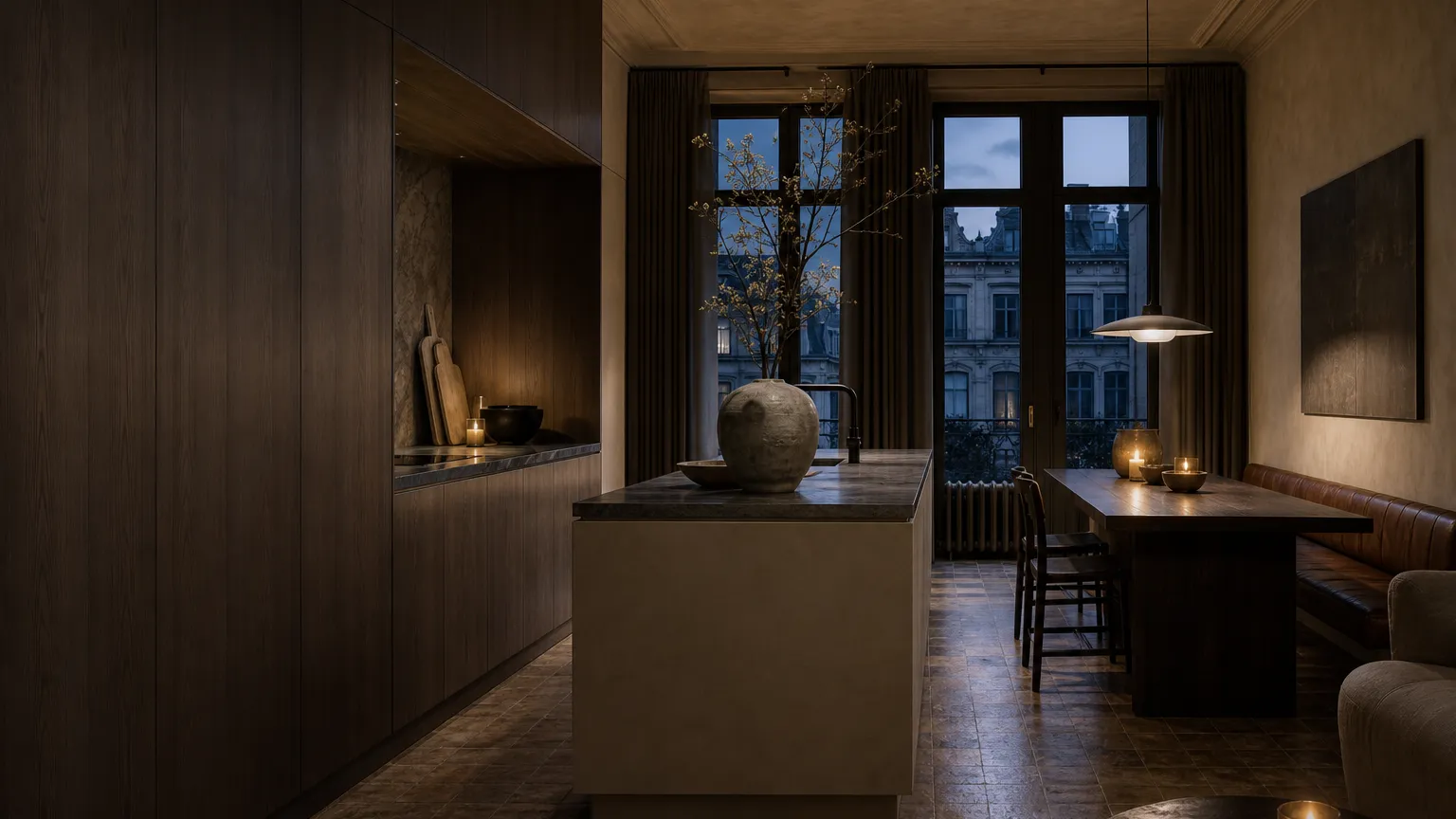
Milan Kitchen Design Material Signals
Milan Design Week 2025 points luxury kitchens toward sculptural surfaces, modular service logic, and 304 stainless steel systems that keep the mood practical.
Direct answer
The Direct Answer
304 stainless steel kitchen systems make the Milan 2025 message practical because they let buyers treat sculptural surfaces as durable architecture, not temporary styling. The useful lesson is to separate visual drama from daily risk: let sintered-stone-like planes, dark wood, and modular service walls shape the mood while a waterproof, glue-free cabinet body carries cooking, cleaning, and storage.
What did Milan kitchen design really signal in 2025?
304 stainless steel kitchen systems make the Milan 2025 message practical because they let buyers treat sculptural surfaces as durable architecture, not temporary styling. The useful lesson is to separate visual drama from daily risk: let sintered-stone-like planes, dark wood, and modular service walls shape the mood while a waterproof, glue-free cabinet body carries cooking, cleaning, and storage.
- Milan kitchen design
- Milan kitchen design is the translation of Milan Design Week material, furniture, and architectural signals into kitchens that work as rooms, not appliance displays.
Why are sculptural surfaces becoming more than decoration?
At the fair level, a surface is never only color. In a serious home, it has to control light, hide storage, survive touch, and keep the room calm after 1,000 ordinary meals. That is why the 2025 signal matters: buyers are moving from decorative fronts toward large planes that behave like walls, furniture, and service zones at the same time. A buyer should ask 3 questions before approving the idea: does the plane hide useful storage, does it reduce visual clutter from at least 2 angles, and can the finish be cleaned after oil, steam, and hand contact? If the answer is no, the surface is only a photograph. If the answer is yes, it becomes a room-making tool that can justify its cost.
How do liquid-looking finishes change the room without weakening it?
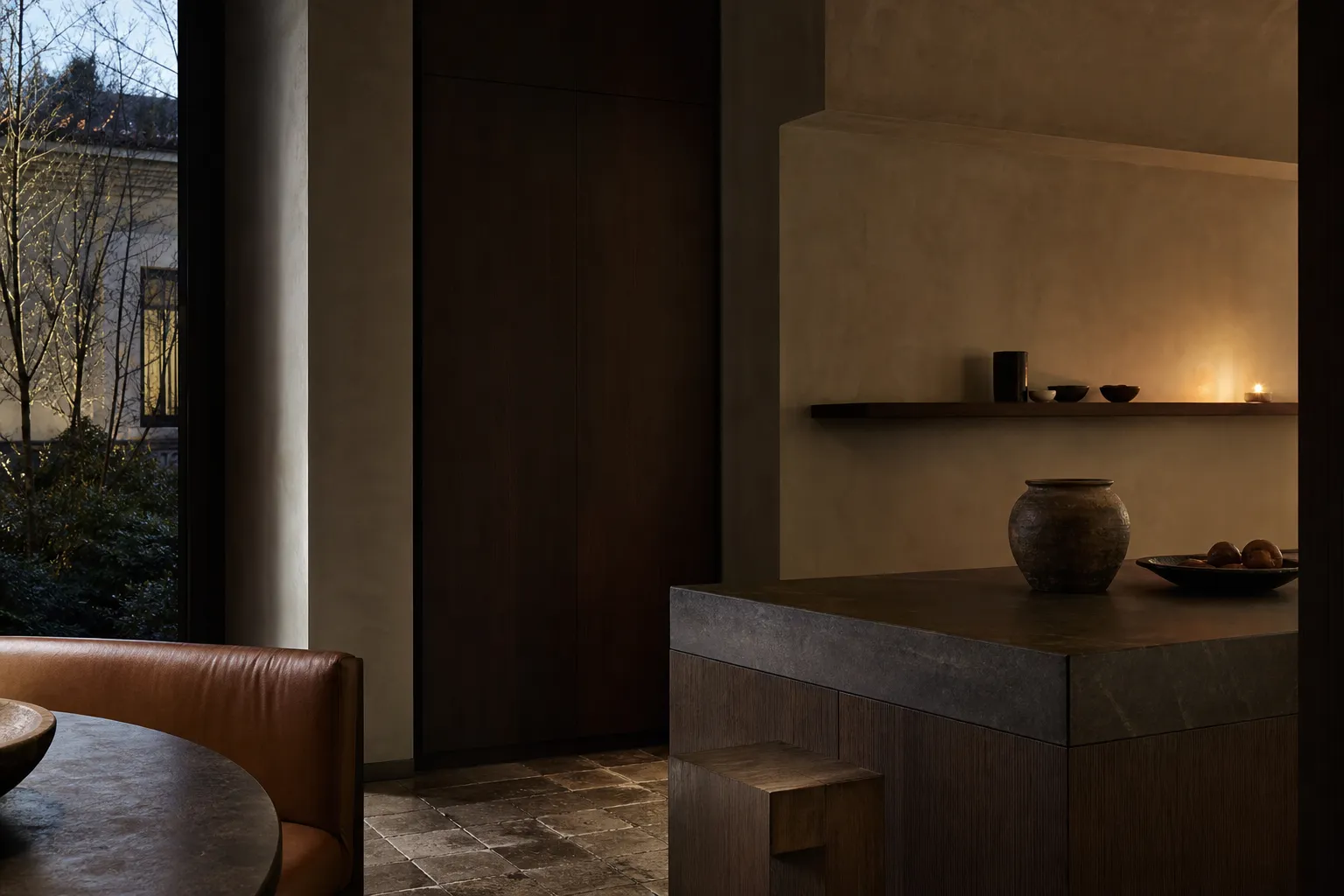
Liquid-metal and stone-like finishes are useful when they soften the edge between cabinetry and architecture. The risk is fragility: a finish that looks poetic in a booth can fail when steam, oil, salt, or children reach it 7 days a week. Fadior solves that tension by using 304 stainless steel as the structural base, then applying residential finishes where touch and atmosphere matter. The practical translation is restraint. Use the reflective or liquid-looking finish on 1 plane that receives controlled light, then keep adjacent working surfaces calmer. This prevents the kitchen from becoming visually noisy. It also lets the homeowner replace or retune one expressive layer later without rebuilding the cabinet system beneath it.
Which modular chassis ideas are useful at home?
The best modular idea is not a visible grid. It is the ability to plan a sink wall, cooking wall, appliance garage, and storage run as one service system. In a villa kitchen, 4 zones usually decide the result: wet work, heat work, pantry storage, and serving flow. If those zones are solved, the room can afford stronger material gestures. The home version of a chassis should feel invisible. A 3,600 mm storage run can hold pantry, ovens, tall refrigeration, and cleaning tools, but the front should still read as one composed wall. The buyer gets the operational logic of a modular system while guests experience a quieter room. That is the difference between useful modularity and showroom grid-making.
| Milan signal | Useful home translation | Risk if copied literally | Fadior safeguard |
|---|---|---|---|
| Sculptural stone-like planes | Use large calm surfaces for island and wall rhythm | Heavy visual mass can overpower small rooms | Balance surface drama with measured storage runs |
| Liquid-looking dark finishes | Add depth through controlled reflectance | Fingerprints and scratches can dominate daily use | Use engineered finish systems over a durable 304 base |
| Modular chassis logic | Plan wet, heat, pantry, and serving zones together | A visible grid can feel commercial | Hide the service logic behind residential cabinet planes |
| Furniture-architecture blur | Let kitchen, dining, and storage read as one room | The kitchen may lose cleaning discipline | Keep waterproof and glue-free construction inside the calm exterior |
| Exhibition lighting drama | Test materials under evening and morning light | Booth lighting can mislead color decisions | Review 3 lighting scenes before sign-off |
When does a kitchen become furniture architecture?
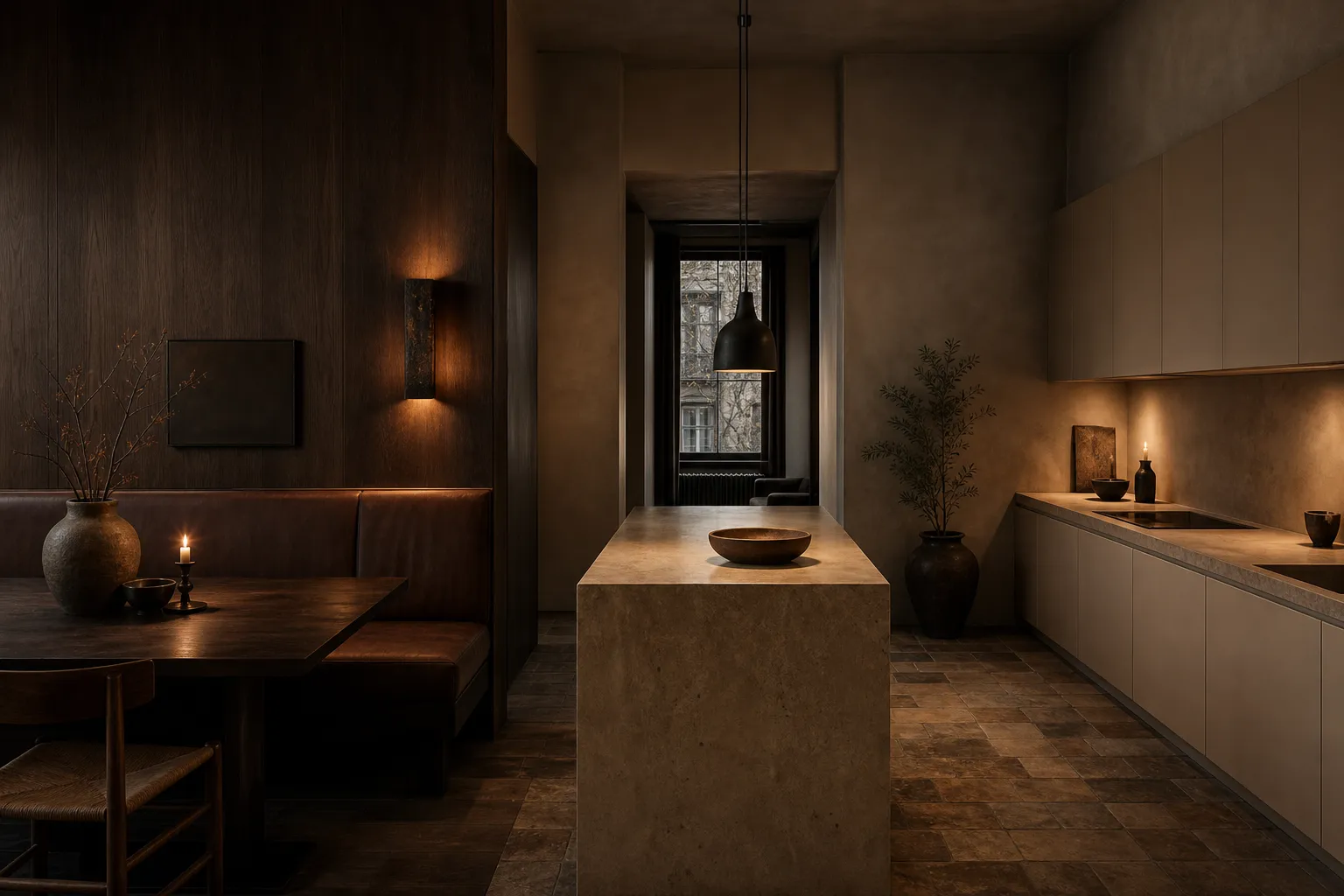
A kitchen becomes furniture architecture when the cabinet no longer reads as a set of boxes. The island acts as a table, the tall wall behaves like millwork, and the pantry works like a hidden room. For most buyers, the threshold is visible from 3 meters away: if the room feels composed before any door opens, the system is doing architectural work. This is where Milan’s furniture culture becomes relevant. A kitchen can borrow the proportion of a sideboard, the seating comfort of a dining room, and the shadow discipline of built-in architecture. It should not borrow fragility. In daily use, furniture architecture succeeds only when the hidden frame, moisture resistance, and storage access are stronger than the surface mood suggests.
- Confirm the 4 daily-use zones before choosing finishes.
- Test every dark or reflective finish under 3 lighting conditions.
- Keep at least 70% of everyday storage behind closed fronts.
- Separate visual feature walls from wet work surfaces.
- Use 304 stainless steel for cabinet bodies where water, heat, and cleaning pressure are highest.
What should Fadior buyers borrow from Milan without copying it?
Borrow the discipline, not the theatre. Milan gives buyers permission to think of the kitchen as a room-size composition, but the home still needs hygiene, storage, and repairable logic. Fadior’s useful role is to translate the mood into a long-life system: 0 adhesive in the cabinet body, 220°C-bonded finish processes, and manufacturing control across 80,000+ sqm of smart-factory capacity. The 2025 lesson is especially useful for buyers who dislike the cold-appliance look but still need a hard-working kitchen. Instead of hiding performance behind fragile board furniture, the design can let 304 stainless steel do the wet-zone work, use powder-coated or wood-grain finishes for visual warmth, and reserve one stone-like gesture for the island or wall.
How do 304 stainless steel systems protect the trend from fragility?
304 stainless steel protects the trend by carrying the work that fragile materials should not carry. It resists moisture, supports glue-free construction, and keeps the cabinet body stable when a room uses warmer or darker visible finishes. That matters for owners who want a kitchen to look current in 2026 but still operate cleanly after 10 or 20 years. That separation matters because many trend-led kitchens fail at the base layer. Board construction can swell, delaminate, or rely on adhesive performance in the very rooms where moisture and heat are constant. A glue-free 304 stainless steel body changes the risk profile: the visible design can evolve, while the working cabinet remains hygienic, waterproof, and structurally disciplined.
Which details should stay quiet in a luxury kitchen?
The quiet details are the most important ones: the line where a tall wall meets the ceiling, the shadow below an island, the distance between cooking and serving, and the way light touches a dark surface at dinner. A buyer does not need every mechanism on display. Luxury improves when the system performs without asking to be admired. Quiet does not mean invisible to the owner. It means the decisions are felt before they are named. A 900 mm landing zone near the cooking area, a 1,000 mm circulation path around the island, and a closed appliance bay can make the whole room feel calmer. These details are not glamorous, but they decide whether the Milan mood survives Monday breakfast.
Can this approach work for villas outside Italy?
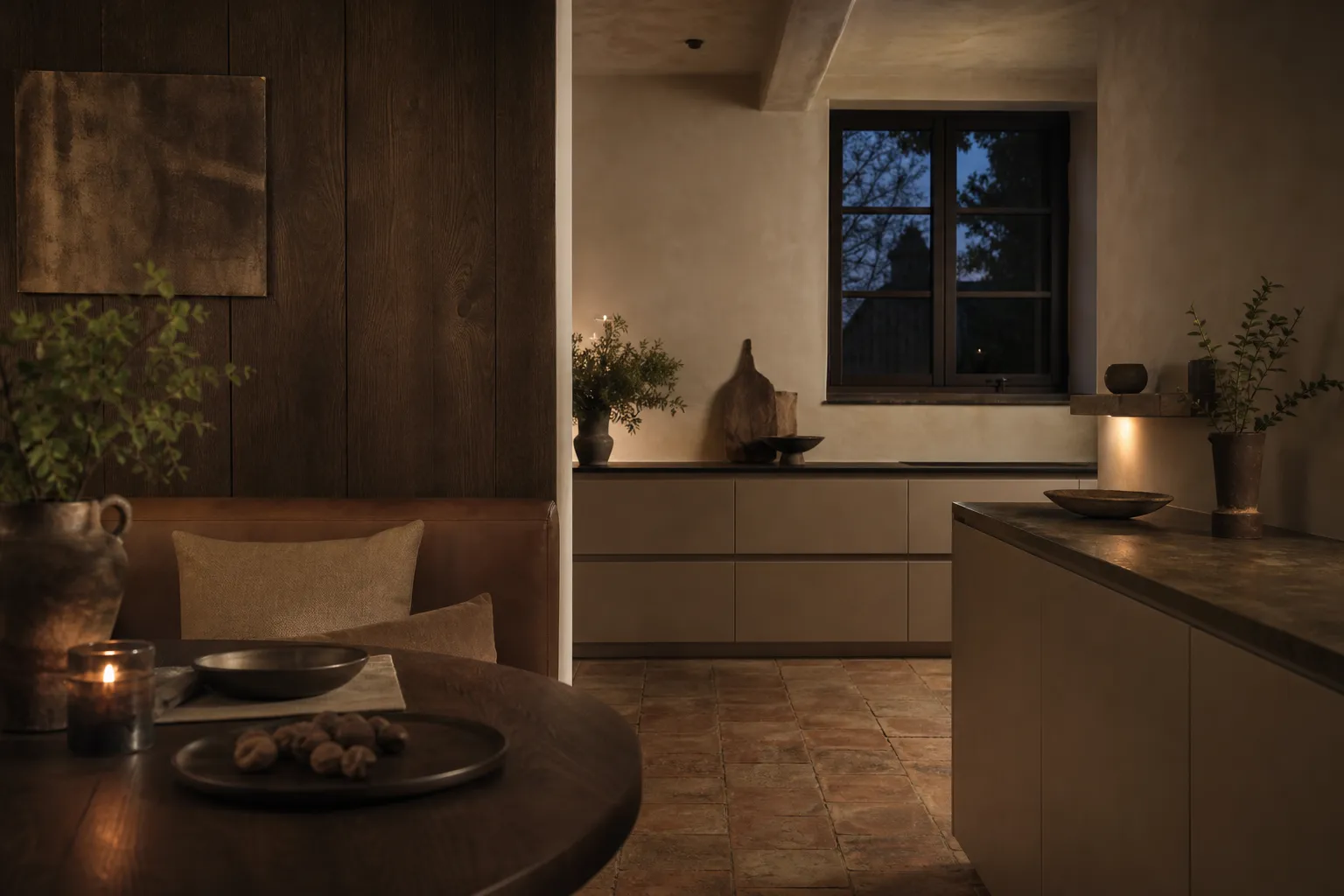
Yes, especially in GCC villas, coastal homes, and large apartments where a kitchen often joins dining and lounge space. The idea travels when it is translated through climate and maintenance. In humid or high-use homes, a 304 stainless steel base, non-porous counters, and planned ventilation matter more than copying a Milan booth palette exactly. In hot climates, the lighting plan also changes. Darker finishes need cooler task light near preparation zones and warmer accent light near dining, while reflective surfaces should be kept away from harsh afternoon glare. A villa can use the Belgian-monastic mood, the Milan material lesson, or a brighter regional palette, but the performance test remains the same: cleanability, storage, heat, humidity, and daily flow.
Where should serious buyers go next?
A buyer who likes the Milan signal should move from inspiration to proof. Review Fadior’s materials, product categories, manufacturing story, Journal archive, consultation route, kitchen collection, quality standard, and project examples before deciding which surface mood belongs in the home. The next step is not choosing a dramatic surface sample in isolation. It is matching that sample to product category, factory capability, installation route, and aftercare. A serious buyer should compare the kitchen with adjacent storage and vanity decisions too, because whole-home consistency is where Fadior’s system logic becomes more valuable than one decorative kitchen wall.
Which Milan kitchen design questions do buyers ask most?
The useful questions are not about which fair stand looked best. They ask what survives in a real kitchen: how the surface cleans, how the room stores daily tools, how many finishes are enough, and which structural choices make the design last.
Frequently Asked Questions
Questions this guide answers
- Is Milan kitchen design only about Italian brands?
- No. Milan kitchen design is useful as a signal system, not a shopping list. The fair shows how leading brands frame surfaces, modularity, light, and furniture-like kitchens. A Fadior buyer can use those signals without copying any single Italian product: choose the mood, then test it against cleaning, storage, humidity, and long-term material performance.
- Should buyers choose sintered stone everywhere?
- Not automatically. Sintered stone can be excellent for counters and large visual planes, but using it everywhere can make a kitchen heavy or cold. Start with the working zones, then decide where a stone-like surface earns its place. In many homes, a durable cabinet body plus one strong counter or wall plane feels more controlled than full-room cladding.
- Can dark Milan-style kitchens stay practical?
- Yes, if the dark surfaces are planned around light and cleaning. A dark kitchen needs at least 3 lighting scenarios: morning task light, afternoon ambient light, and evening dining light. It also needs finishes that resist fingerprints and moisture. Without that practical layer, the room may photograph well but feel demanding in daily use.
- Why does Fadior keep emphasizing 304 stainless steel?
- Fadior emphasizes 304 stainless steel because it protects the hidden performance layer of the kitchen. The visible room can be warm, dark, sculptural, or furniture-like, but the cabinet body still has to resist water, cleaning, and long-term use. A 304 base lets the design borrow Milan’s material drama without depending on fragile board construction.
- How many Milan-inspired ideas should one kitchen use?
- Most homes should use 1 major Milan-inspired idea and 2 supporting details. For example, choose a sculptural island as the main idea, then support it with warmer wall planes and controlled evening light. More than that can make the room feel like a showroom. The best result is edited, not crowded.
Related products
Specific products worth reviewing next.
References
Authoritative sources cited in this article
- Salone del Mobile Milan context
Primary Milan design fair context for the 2025 signal discussion.
Salone del Mobile.Milano
- Wallpaper design interiors coverage
Editorial design authority covering material-led interiors and Milan design culture.
Wallpaper*
- Dezeen kitchen interiors archive
Editorial authority for kitchen and interior design examples; 403 bot block treated as existing by validator.
Dezeen
- NSF food equipment standards
Authority for food-equipment material and hygiene thinking relevant to kitchen surfaces.
NSF
- ASTM stainless sheet specification
Reference point for chromium and chromium-nickel stainless sheet specification.
ASTM A240
- KCMA cabinet industry guidance
Cabinet-industry authority for cabinet performance and construction expectations.
KCMA
- GREENGUARD indoor air quality
Indoor air quality reference for low-emission material conversations.
GREENGUARD
Editorial transparency
Marco Rinaldi is a composite editorial persona maintained by Fadior Home's editorial team. Articles attributed to this byline are produced through an AI-assisted editorial workflow with human review, and represent the consolidated voice of multiple researchers and contributors.
Actually delivered
Real homes photographed after handover, not renders.
Ready to specify?