
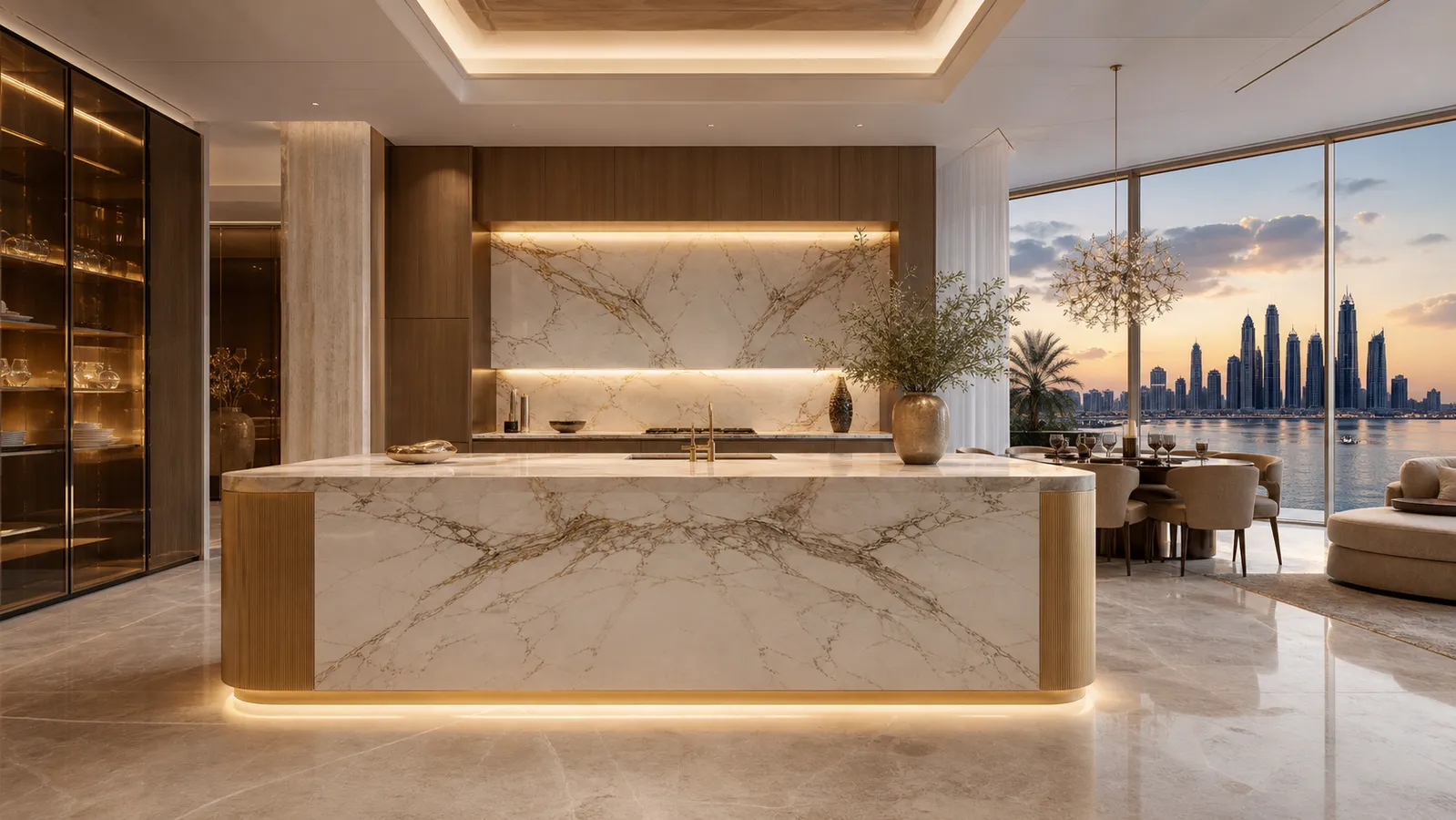
Italian Kitchen Design: How to Get the Look Without Weak Materials
A specification-first guide to Italian kitchen design for buyers who want warmth, proportion, hidden storage, and durable 304 cabinet bodies.
Direct answer
The Direct Answer
Italian kitchen design is best specified as a complete room system, not a decorative theme. Start with proportion, island workflow, concealed storage, warm surfaces, and a kitchen-living connection, then protect the design with durable 304 stainless steel cabinet bodies in wet and heavy-use zones. That approach keeps the soft Italian mood while avoiding weak cores, swelling risk, and short-lived showroom finishes.
- Italian kitchen design
- Italian kitchen design is a planning approach that uses proportion, integrated storage, warm material layering, and disciplined furniture-like cabinetry to make cooking areas feel architectural.
What makes Italian kitchen design feel expensive?
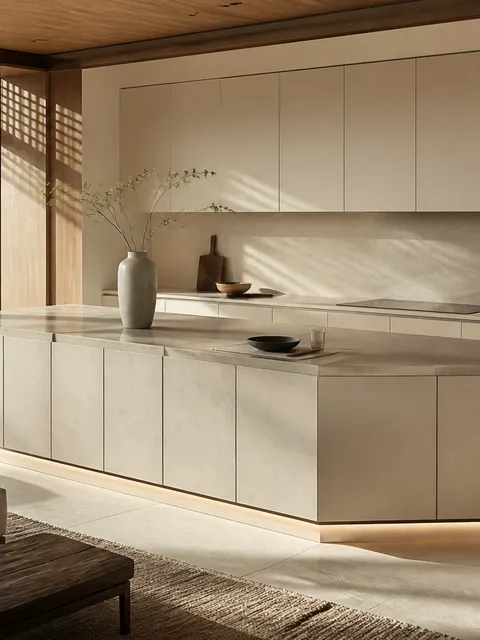
Italian kitchen design feels expensive when proportion, restraint, and function are planned before decoration. The strongest rooms do not rely on a single imported look. They use long horizontal lines, quiet appliance planning, generous work surfaces, and cabinetry that reads as part of the architecture. Boffi describes Italian luxury kitchens through design identity, function, and careful material choice, which is why a buyer should read the style as a system rather than a color palette. In a Gulf villa or high-rise apartment, that system has to handle larger hosting routines, brighter light, stronger cooling loads, and daily family cooking. The result should feel warm and composed, but it still has to survive wet hands, frequent cleaning, steam, and storage pressure. Fadior's point of view is simple: keep the Italian calm, but specify a 304 stainless steel cabinet body so the room is not dependent on fragile board construction.
Which Italian kitchen features are worth copying?
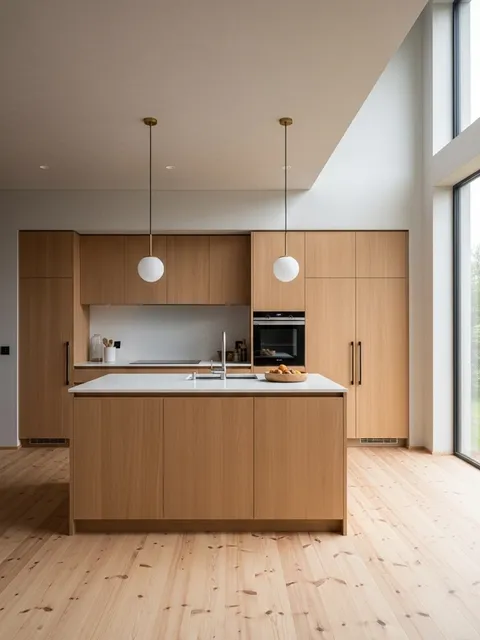
Copy the planning ideas, not the fragile shortcuts. The most useful Italian kitchen features are integrated storage walls, a disciplined island, a living-room relationship, concealed utility zones, thin visual lines, and warm surfaces that soften the room. Scavolini frames 2026 kitchen trends around fluidity between cooking and living areas, and that idea matters for luxury homes because the kitchen is now part of the social floor. A buyer should ask whether the island supports preparation, breakfast, serving, and conversation without turning every side into a display zone. Tall cabinetry should hide pantry goods, small appliances, cleaning items, and occasional serving pieces. Wall panels, doors, and open shelves should share a proportion system so the room looks planned from 10 meters away and still works at 1 meter during dinner preparation.
How should materials be specified for a warm Italian look?
A warm Italian look usually comes from layering matte surfaces, stone counters, wood tones, gentle reflectivity, and controlled lighting. Wallpaper's kitchen trend coverage points toward luminosity and unexpected materiality, while Italian brands show how cabinetry, furniture, and living areas can speak the same language. That does not mean every surface should be delicate. The cabinet body is the hidden performance layer, and it should be specified separately from the visible finish. Fadior uses 304 stainless steel as the structural cabinet material, then applies residential finishes such as powder coat, 3D wood-grain transfer, PVD tones, linen embossing, or anti-fingerprint textures. This lets the buyer keep warmth at the surface while retaining a washable, moisture-resistant, formaldehyde-free structure behind it. In humid coastal homes, basements, laundry-adjacent kitchens, or villas with heavy cooking, that distinction is not cosmetic. It is the difference between a showroom mood and a room that remains stable after years of use.
Why does the cabinet body matter more than the cabinet door?
Most buyers judge a kitchen from the door front, but long-term ownership is usually decided inside the cabinet. The cabinet body carries water exposure, sink-zone cleaning, shelf loads, screw retention, hinge stress, drawer movement, and daily wiping. A beautiful Italian-style door on a weak body can still swell, smell, delaminate, or lose alignment. A 304 stainless steel body changes the risk profile because the core is not wood-based board and does not depend on adhesive for structural identity. Fadior's glue-free frame process also supports the brand's zero-formaldehyde position: when the system avoids board glue, there is less hidden emission risk to manage. This is why the specification conversation should separate three layers: the visible design language, the surface finish, and the cabinet-body material. Italian design can supply the first layer; Fadior's 304 system supplies the second and third without asking the owner to accept a cold industrial room.
| Decision area | Decorative-only approach | Specification-led approach |
|---|---|---|
| Cabinet body | Chosen after the door color | Specified first for moisture, load, and cleaning |
| Island | Sized for visual impact | Sized for prep, serving, seating, and circulation |
| Storage | Added wherever space remains | Zoned by pantry, cooking, serving, cleaning, and display |
| Finish | Picked from a mood board | Matched to substrate, bonding method, light, and maintenance |
| Longevity | Assumed from brand image | Proved through material, process, and service access |
How can an Italian kitchen work in a Gulf villa?
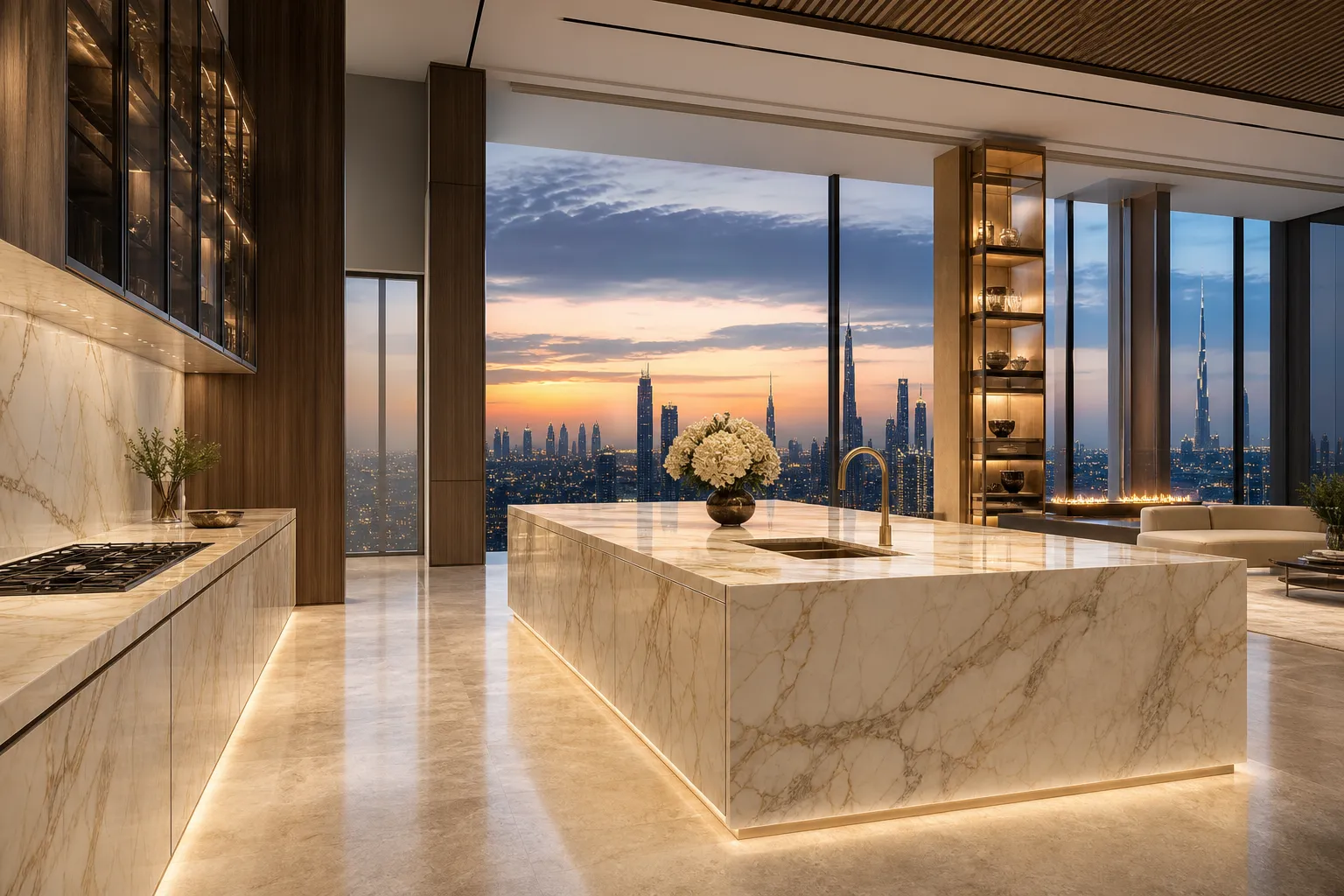
A Gulf villa needs the Italian design idea to become more generous. Circulation aisles should allow multiple people to cook, serve, and move during hospitality moments. The island should be wide enough for preparation and plating, but not so wide that cleaning the center becomes awkward. Pantry storage should be near the service route, while display shelves and wine storage can live closer to the dining side. Daylight is strong, so high-gloss planes should be used carefully and balanced with satin or textured finishes. Cooling and ventilation need equal attention because kitchens in Dubai, Riyadh, and Doha often carry stronger cooking aromas and longer family gatherings than a showroom vignette suggests. In this context, 304 stainless steel is not just a hygiene claim. It supports wet-zone stability, daily wipe-downs, and a durable base for warm finishes that still look residential.
What should buyers avoid when asking for an Italian kitchen?
Avoid treating Italian kitchen design as a shopping list of marble, beige lacquer, and a dramatic island. That approach produces a room that photographs well on day 1 but may not solve storage, workflow, ventilation, or maintenance. Also avoid copying a brand image without checking whether the cabinet construction suits the climate and family routine. A weak specification often hides behind words such as premium, European, bespoke, or luxury. Ask instead for measured drawings, cabinet-body material, finish method, hinge cycle rating, drawer load assumptions, countertop support, ventilation route, waterproofing plan, and service access. If the seller cannot explain those points, the design language is doing too much work. The strongest Italian-style kitchen is quiet because the technical decisions are already resolved.
Which layout works best for Italian kitchen design?
The best layout depends on how visible the kitchen is from the living area. In an open-plan home, the back wall should carry the architectural rhythm: tall storage, hidden appliances, pantry doors, and panel continuity. The island should become the working object and social edge, not a random display block. In a closed kitchen, the Italian logic can be more compact: tall storage at one end, a clear cooking wall, a prep sink or wet zone where useful, and dining connection through a door or serving counter. LAGO emphasizes continuity between kitchen and living furniture, which is a useful test for any plan. If the room changes language at every wall, it will feel decorated rather than designed. If the proportions repeat calmly, the kitchen can feel Italian even when built for a Gulf family routine.
How does 304 stainless steel support the look?
304 stainless steel supports the look by making the warm finish less vulnerable. Fadior does not need the kitchen to look like a commercial back-of-house space. The 304 layer sits in the cabinet body, wall panels, doors, and whole-home systems, while residential finishes create the visible mood. ASTM A240 is a useful standards reference for chromium and chromium-nickel sheet and strip, but homeowners do not need to read standards tables to make the decision. They need to ask whether the material under the finish is suitable for moisture, cleaning, load, and long service life. In a kitchen, those 4 conditions appear every day. A surface can be Italian, soft, and luminous; the structural layer can still be food-grade, recyclable, waterproof, and built for a 30-year ownership horizon.
- Confirm at least 1000 mm clear circulation where two people cook or serve together.
- Define 4 storage groups: daily food, cookware, serving ware, and cleaning supplies.
- Use 304 stainless steel cabinet bodies in sink, prep, laundry-adjacent, and humid zones.
- Require 1 written finish method for each visible surface, including cleaning limits.
- Confirm ventilation, task lighting, service access, and countertop support before signing.
What is the right specification checklist?
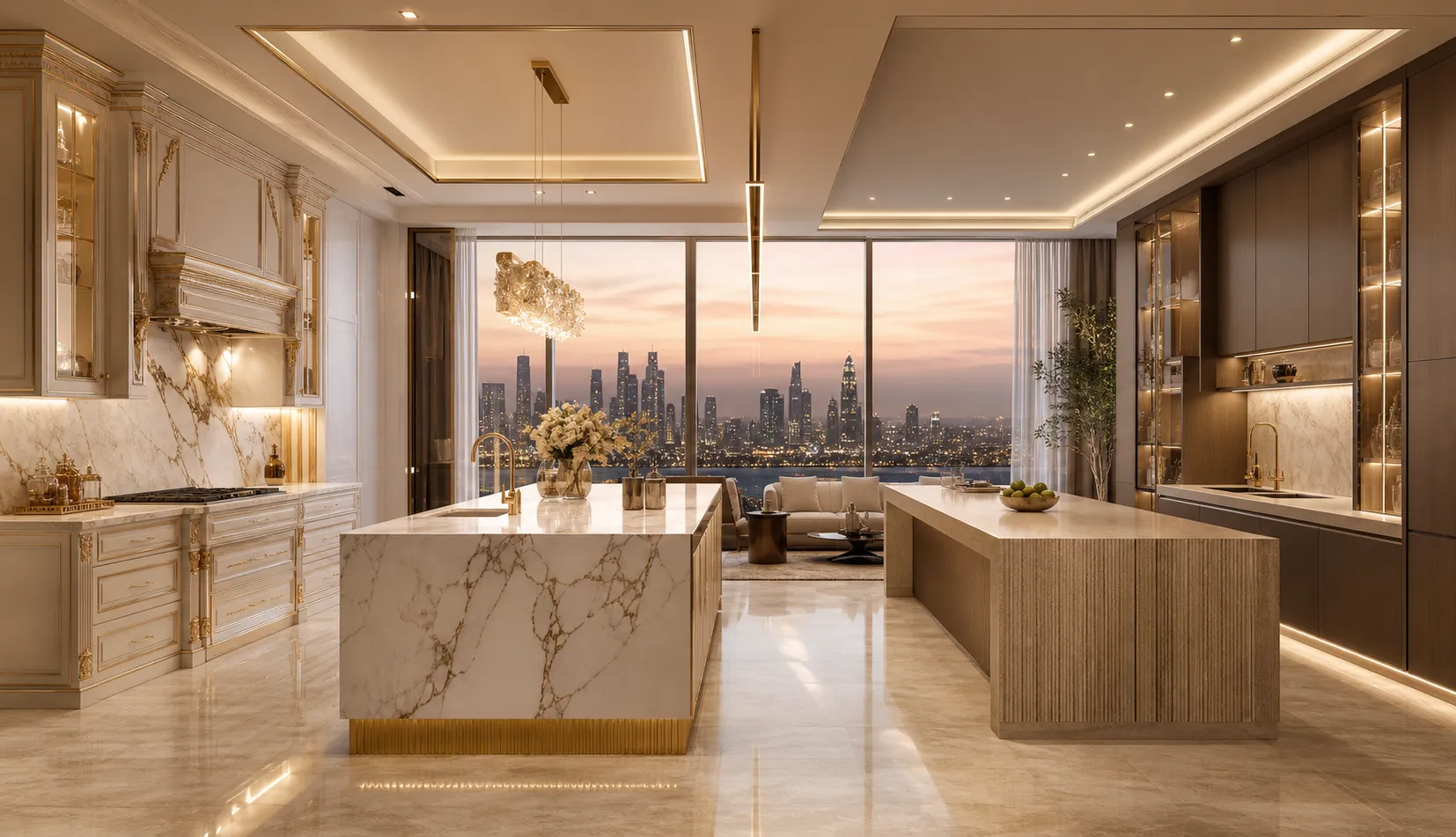
Start with the life of the room. Confirm how many people cook on weekdays, how often the family hosts, whether a helper kitchen or pantry exists, and which appliances must be hidden. Then move to cabinet construction, countertop support, finish method, lighting, ventilation, and cleaning. EPA indoor air guidance is a reminder that interior material decisions affect the air people breathe, especially when finishes, adhesives, solvents, and cleaning products accumulate indoors. A low-odor showroom sample is not enough. Ask what the cabinet body is made from, how the surface is bonded, which parts use adhesives, how edges are sealed, and whether wet-zone cabinets are built differently from display cabinets. A serious Italian kitchen design brief should include appearance, workflow, and health-related material discipline in the same document.
When should you choose Fadior over an imported Italian cabinet?
Choose Fadior when the buyer wants the Italian feeling but needs stronger material confidence, wider whole-home customization, or a kitchen that connects to wardrobes, vanities, wall panels, doors, and utility storage. Imported Italian cabinets can be beautiful, but many projects still require local adaptation, site measurement, climate consideration, service access, and budget control. Fadior's 304 stainless steel platform lets the owner pursue a warm European design direction without giving up waterproof cabinet bodies, glue-free construction, formaldehyde discipline, and a surface library that can imitate wood, fabric, matte lacquer, or PVD warmth. The decision is not Italy versus China. It is image versus specification. If the room must serve a family for decades, the specification has to win.
How should the final brief be written?
Write the final brief in plain language before selecting finishes. A strong brief might say: create a warm Italian-inspired kitchen with a long island, hidden pantry wall, integrated living-room storage, satin warm surfaces, 304 stainless steel cabinet bodies, sintered stone worktops, controlled accent lighting, and a direct path to service storage. It should name what must be visible and what must disappear. It should define the wet zones, heavy-use drawers, display moments, cleaning routine, and hosting route. It should also state what the design must avoid: fragile core materials in wet areas, decorative overload, fake heritage details, unresolved ventilation, single-purpose islands, and showy surfaces that cannot be maintained. Once the brief is this clear, the Italian look becomes a disciplined design system rather than a mood board.
What should the showroom review prove?
A showroom review should prove scale, not just finish. Walk 5 meters back and check whether the island, tall wall, ceiling line, dining table, and living-room opening read as one composition. Then stand at the sink and check reach, elbow room, lighting, splash exposure, and cleaning access. Open tall storage and ask what happens to cereal boxes, small appliances, cookware, trays, chargers, spare dishes, and cleaning products. Touch the surface with dry and wet hands. Ask how the finish is repaired, how doors are aligned after delivery, and how service teams access concealed utilities. A real Italian kitchen design has a quiet answer to each of these questions. If the answer is only a finish board, the project is not ready.
How should the sales conversation stay honest?
The honest sales conversation should admit that Italian kitchen design is attractive because it makes the kitchen feel architectural, social, and calm. It should also admit that style alone cannot protect the room. The buyer still needs a material system, a manufacturing standard, an installation plan, and a maintenance promise. Fadior can use this conversation without attacking Italian design. The stronger position is to respect the design language and then improve the hidden performance layer. For a homeowner, that is the useful distinction: keep the warmth, proportion, and hospitality of the Italian idea, but build it with cabinet bodies and finishes that match the climate, cooking habits, and cleaning reality of the home.
Which details make Italian design last beyond the trend cycle?
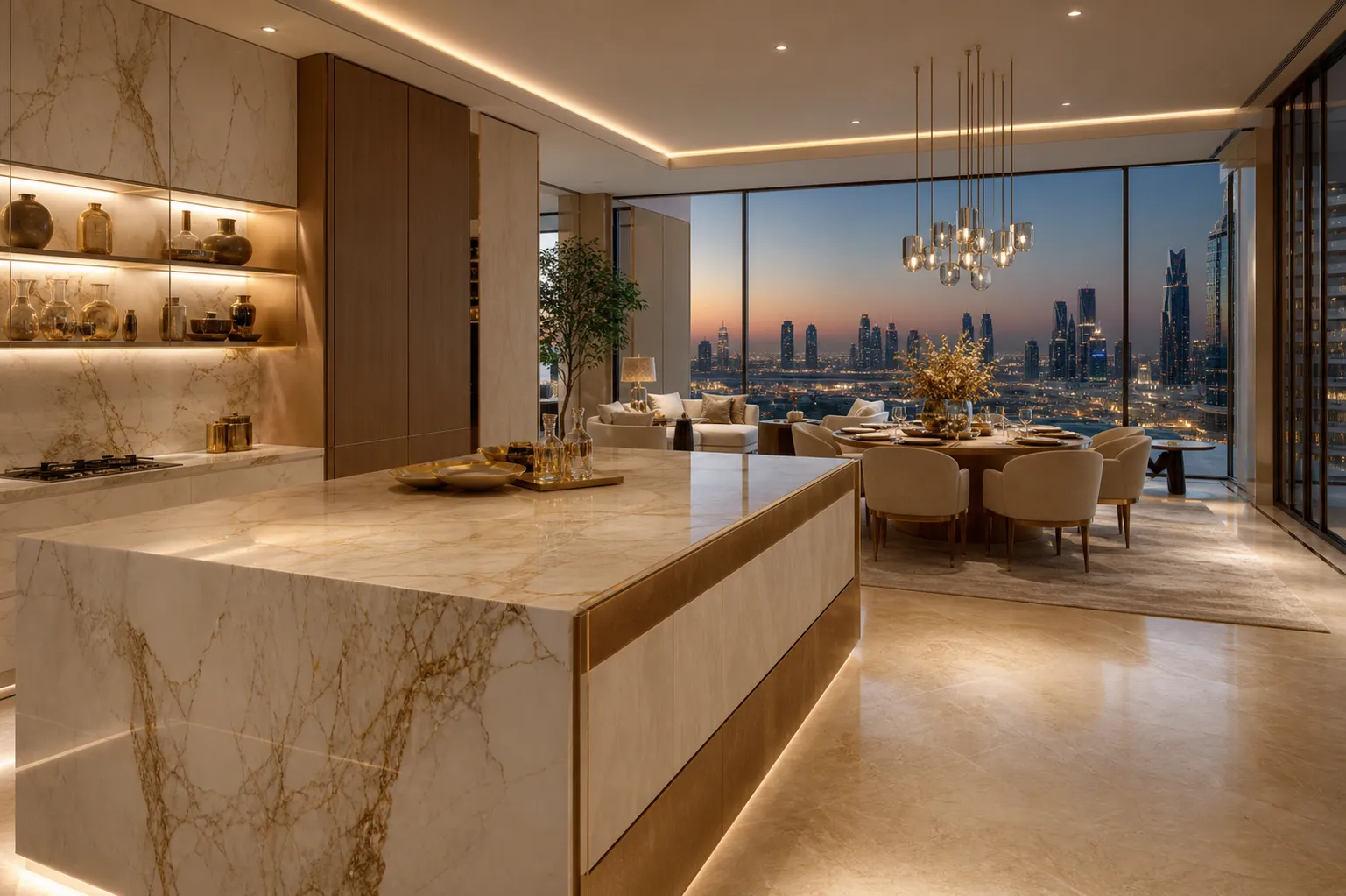
Lasting Italian design depends on editing. Keep the strongest gestures and remove the weak ones. A long stone island, a quiet storage wall, a disciplined cooking zone, and one warm display moment are usually stronger than many decorative surfaces competing for attention. The detail that matters most is repeatability: the same reveal line, the same vertical rhythm, the same cabinet depth logic, and the same material hierarchy should continue from the kitchen into adjacent dining or living storage. In a Fadior project, this is easier because the 304 stainless steel system is not limited to one cabinet category. It can support kitchens, wardrobes, vanities, wall panels, interior doors, sideboards, and utility storage, which means the whole home can use a related construction language. That matters in large villas where the kitchen is visible from several rooms. The goal is not to make every room identical. The goal is to make every room feel governed by the same design intelligence.
How should color be handled in an Italian kitchen?
Color should be handled as atmosphere first and accent second. Cream stone, warm grey, taupe, walnut, desert oak, champagne, olive, and muted bronze tones work because they sit comfortably with food, daylight, and evening hospitality. Sharp contrast can work, but only when the room has enough natural light and enough warm material nearby. For many Gulf homes, the safer premium route is tonal richness: 3 or 4 related surfaces that differ by texture, reflection, and depth rather than by loud color. Fadior can translate this into powder coat, PVD, wood-grain transfer, linen texture, anti-fingerprint treatment, and sintered stone pairings. The practical test is simple: look at the finish sample under morning daylight, afternoon sun, and warm evening lighting. If the color only works in one condition, it may not be stable enough for a room used across the whole day.
What should be documented before production starts?
Before production starts, the buyer should have a written schedule for cabinet bodies, visible finishes, countertops, wall panels, doors, appliances, hardware, lighting, and site conditions. The drawing package should show every tall cabinet, every appliance clearance, every service panel, every wet-zone cabinet, and every visible end panel. The finish schedule should name the color, surface method, cleaning expectation, and replacement path for each visible plane. The material schedule should separate structural cabinet body from decorative surface. That distinction prevents later confusion when a showroom sample looks warm but the hidden cabinet construction is not suitable for daily use. For Fadior, the production conversation should also confirm 304 stainless steel cabinet-body use, glue-free construction where applicable, surface treatment, countertop support, and delivery sequence. A beautiful Italian-style kitchen can fail if production documents are vague; a precise document makes the design buildable.
Why does this topic matter to a buyer now?
This topic matters because many homeowners are no longer satisfied with cold minimalism or disposable trend rooms. They want warmth, hospitality, and quiet luxury, but they also want kitchens that stand up to water, cleaning, children, staff use, and frequent entertaining. Italian kitchen design answers the emotional side of that demand: proportion, softness, furniture-like cabinetry, connected living, and a sense of ceremony around the island. Fadior answers the ownership side: 304 stainless steel cabinet bodies, waterproof construction logic, zero-formaldehyde positioning, and whole-home customization. The best project joins both sides. It gives the buyer a room that feels warm on the first evening and still feels reliable after years of daily use. That is the reason to move from inspiration photos to a specification-led brief before signing a kitchen contract.
How does Fadior make the decision simpler?
Fadior makes the decision simpler by letting the buyer separate mood from risk. The room can keep Italian warmth, clean proportions, and hosting elegance while the cabinet body, wet-zone structure, and whole-home storage system stay tied to 304 stainless steel. That gives the design team a clear language and gives the owner a practical ownership baseline.
Frequently Asked Questions
Questions this guide answers
- What is the first decision in Italian kitchen design?
- The first decision is the room plan, not the finish. Decide how the kitchen connects to dining, living, pantry, service storage, and outdoor or balcony areas. Once circulation and storage are clear, the Italian look can be built through proportion, warm surfaces, lighting, and cabinet-body specification.
- Can 304 stainless steel cabinets still look warm?
- Yes. 304 stainless steel is the cabinet-body material, not the only visible aesthetic. Fadior can finish the surface with powder coat, wood-grain transfer, PVD tones, embossed textures, or matte colors, so the kitchen reads as residential while keeping a durable waterproof structure underneath.
- Which materials suit an Italian-inspired Gulf kitchen?
- Use warm stone, smoked wood tones, satin or matte cabinet finishes, controlled reflectivity, and durable wet-zone construction. In a Gulf home, the brief should also account for strong daylight, family hosting, cleaning frequency, and ventilation so the kitchen does not become only a showroom image.
- How many internal storage zones should be planned?
- Plan at least 4 core zones: food storage, cookware, serving ware, and cleaning supplies. Larger villas often need 6 or more zones once pantry overflow, small appliances, beverage service, outdoor serving, and helper-kitchen routes are included in the layout.
- Is imported Italian cabinetry always the best option?
- Not always. Imported cabinetry can deliver refined proportions and a strong design language, but the project still needs local measurement, climate fit, service access, material durability, and budget control. A specification-led 304 system can keep the Italian mood while improving long-term ownership confidence.
Related products
Specific products worth reviewing next.
References
Authoritative sources cited in this article
- Boffi Italian luxury kitchens
Italian luxury kitchen systems combine design identity, function, and material choice.
Boffi
- Scavolini 2026 kitchen trends
Italian kitchen trend source for open-plan living and connected kitchen-living spaces.
Scavolini
- Wallpaper 2026 kitchen trends
Design publication reference for 2026 kitchen materiality and warm luminosity.
Wallpaper
- LAGO modern kitchen cabinets
Italian cabinet brand reference for continuity between kitchen, living furniture, materials, and proportions.
LAGO
- ASTM A240 stainless sheet standard
Standards reference for chromium and chromium-nickel stainless plate, sheet, and strip specification used to frame 304 material discipline.
ASTM International
- EPA VOC indoor air guidance
Indoor air quality reference for finish and adhesive decisions inside kitchens.
EPA
Editorial transparency
Jonas Weber is a composite editorial persona maintained by Fadior Home's editorial team. Articles attributed to this byline are produced through an AI-assisted editorial workflow with human review, and represent the consolidated voice of multiple researchers and contributors.
Actually delivered
Real homes photographed after handover, not renders.
Ready to specify?