Overseas Site-Prep, Installation & Lifetime Care · 2026

Stainless Steel Cabinet Overseas Installation & Lifetime Care Guide

Importing custom 304 stainless steel cabinetry from Foshan succeeds when every responsibility is clear before production begins. Review our exact export delivery boundary, the 6-step site-prep and local-installer sequence, anti-tip wall anchoring rules, and the 5 official cleaning and wet-zone care practices that protect your cabinets for decades.

6 Steps

Site survey to film removal & handover

≤ 330 mm

Mandatory anti-tip wall-anchor depth rule

5 Rules

Official chloride-free care & sealing habits

30-Year*

304 cabinet-body structural warranty per contract

Book a Pre-Order Technical Call

Reviewed by Fadior Export Delivery & Technical Support Team · Updated 2026-11-22 · *30-year cabinet-body structural warranty; specific terms are subject to the contract.

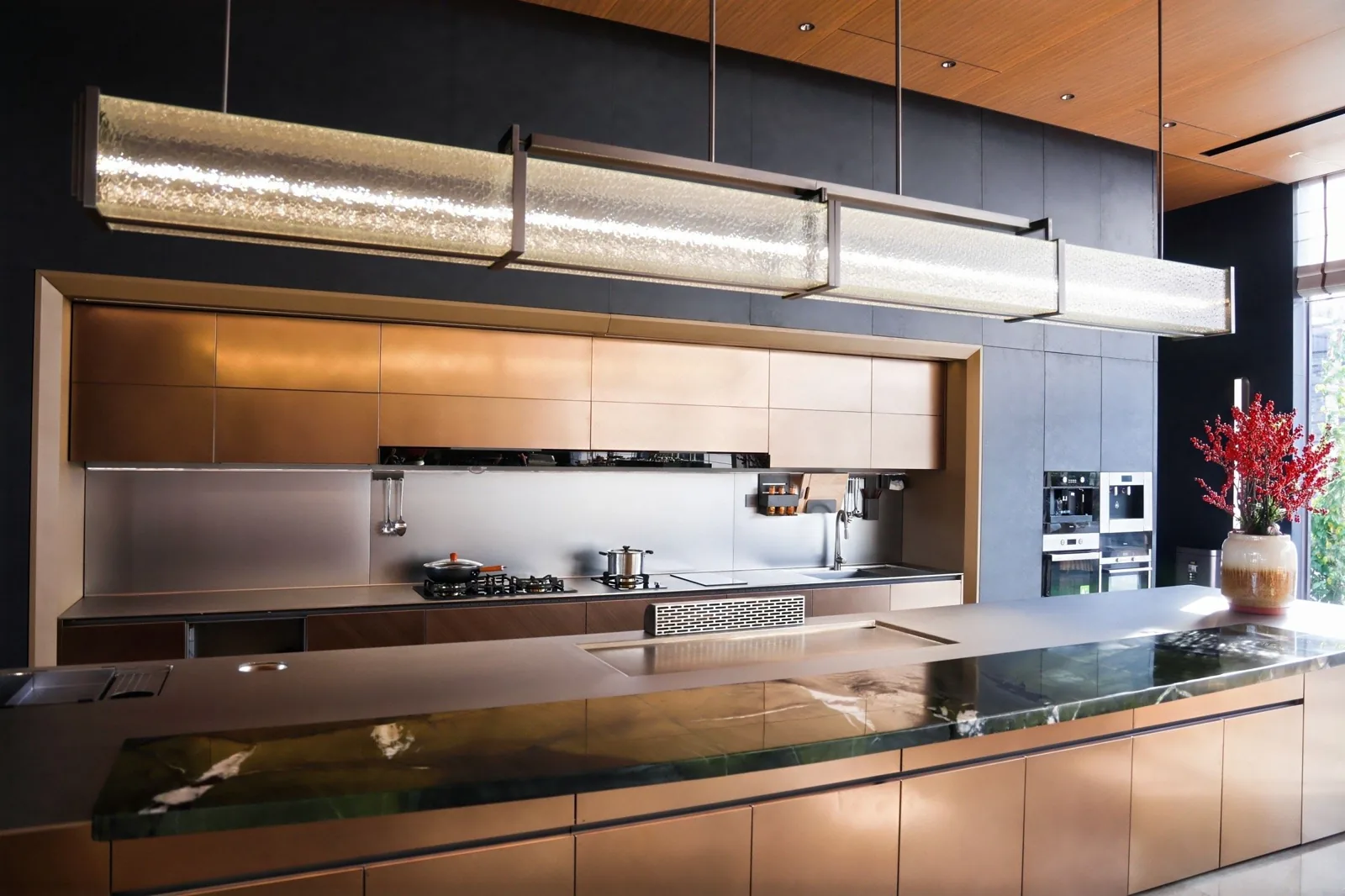
Installed architectural 304 stainless steel showroom kitchen displaying calibrated door alignment, plinth leveling, and integrated worktop junctions
Export Delivery & Care Standard · 2026
Fadior manufactures, pre-assembles, and QC-checks in Foshan; your local licensed installer executes final fitting and utility connections with numbered drawings and remote support.

01 · Overseas Delivery & Installation Responsibility Boundary

What Fadior delivers from Foshan — and what your local licensed trades handle on site

Transparency prevents costly surprises on site. Fadior is your Foshan factory manufacturer and remote technical engineering desk. We do not dispatch factory installation crews overseas or perform licensed local gas, plumbing, or electrical hookups.

Clear Scope Boundary Before You Order

Fadior manufactures, factory pre-assembles/QC-checks, exports in room-labeled crates via sea or air freight, and supplies numbered CAD installation drawings, step-by-step video guides, and remote technical support. Your buyer-appointed local licensed installer, general contractor, plumber, gas fitter, and electrician handle unloading, cabinet fitting, anchoring, sealing, and code-compliant utility connections.

Division of responsibilities between Fadior factory export supply and local licensed installation trades
Project StageFadior Factory & Remote Support ScopeBuyer's Local Licensed Installer & Trades Scope
1. Site Dimensions & MEP VerificationSupplies measurement checklist, CAD shop drawings, appliance cutout diagrams, and revision sign-off before bending.Performs laser site survey (±1 mm), verifies plumb walls and level slabs, and completes code-compliant plumbing, gas, and electrical rough-ins.
2. Manufacturing, Trial QC & Export CratingManufactures 304 stainless bodies in Foshan, runs factory pre-assembly/QC inspection, labels every module by room, and packs in export wooden crates for sea/air freight.Confirms destination port clearance, local drayage/unloading access, elevator clearances, and dry indoor staging space before crates arrive.
3. Cabinet Assembly, Leveling & AnchoringSupplies numbered installation drawings, assembly video guides, anchoring hardware specs, and remote technical support via video/messaging.Executes floor protection, laser plinth leveling, square box fastening (torque 8–10), wall-cabinet hanging, and mandatory anti-tip wall anchoring.
4. Countertop, Sink, Plumbing, Gas & ElectricalPre-cuts documented factory sink/cooktop openings per approved drawings and provides perimeter sealing guidance.Licensed local plumber, gas technician, and electrician complete water traps, gas manifolds, electrical wiring, appliance commissioning, and neutral-cure silicone sealing.
5. Film Removal, Calibration & HandoverProvides door-hinge adjustment guidance, official safe-load limits, cleaning rules, and written warranty documentation per contract.Peels all protective transit film immediately at installation, calibrates uniform 2–3 mm door reveals, and completes final owner punch-list walkthrough.

02 · 6-Step Overseas Site-Prep & Installation Sequence

From laser-measured site survey to protective-film removal and final handover

Because 304 stainless steel cabinetry is bent to millimetre tolerances in Foshan rather than saw-trimmed on site, following this six-step sequence keeps local installation predictable and crisp.

  1. 01 · Pre-ProductionPrimary owner: Buyer's architect / local contractor

    Measured Site Survey & Structural Wall Check

    Capture laser-measured room lengths, ceiling soffit heights, wall squareness, column projections, and slab floor slope before finalizing cabinet widths or tall tower heights.

    • Log floor-to-ceiling heights at three points along every cabinet wall
    • Identify structural masonry vs. stud-wall backing where tall units or wall cabinets will anchor
    • Confirm lift, stairwell, and doorway clearances for crated panels and long countertops

    Critical verification rule

    Record dimensions to ±1 mm; stainless steel carcasses are precision-formed in Foshan and cannot be saw-cut on site.

  2. 02 · Design FreezePrimary owner: Fadior engineering desk + buyer's licensed trades

    CAD Shop-Drawing & MEP Rough-In Sign-Off

    Review numbered wall elevations, module widths, door swing clearances, appliance ventilation cutouts, and sink/drain centerlines before locking production.

    • Lock exact built-in oven, cooktop, dishwasher, and refrigerator spec sheets and local voltage
    • Verify sink drain trap locations (φ50 / φ60 / φ80 mm grommets) and U-shaped drawer clearance
    • Sign final CAD shop drawings before Salvagnini CNC bending starts in Foshan

    Critical verification rule

    No rough-in pipe, gas valve, or electrical outlet may shift after final drawing sign-off.

  3. 03 · Site DeliveryPrimary owner: Buyer's receiving team / local installer

    Export Crate Inspection & Room-by-Room Staging

    Inspect exterior crate seals on carrier handover, document any transit marks on the delivery note with photos, and stage numbered cartons cleanly inside each target room.

    • Lay heavy floor protection across corridors and installation zones before moving crates
    • Match each crate and box label against the Fadior packing list and numbered room map
    • Keep cartons dry, flat, and clear of wet plastering, tile-cutting acid, or masonry dust

    Critical verification rule

    Finish wet tile grouting and acid floor washing completely before unpacking stainless cabinetry.

  4. 04 · Cabinet FittingPrimary owner: Buyer's local licensed installer (with Fadior video & remote guide)

    Laser Floor Leveling & Tall/Shallow Anti-Tip Wall Anchoring

    Level adjustable legs or 20 mm floor-standing plinths to one continuous laser datum, fasten carcasses square at torque setting 8–10, and anchor tall or shallow runs directly into structural walls.

    • Set cordless drill torque to 8–10 so mechanical fasteners lock tightly without stripping
    • Maintain 100 mm top clearance on wall-cabinet 3-way laser-leveled hangers
    • Install 20 × 50 × 50 mm steel L-brackets + φ10 × 80 mm wall expansion bolts + 304 M4.2 × 13 screws through the upper back panel / rear mounting rail

    Critical verification rule

    Mandatory anti-tip rule: anchor through the upper back panel / rear mounting rail into the structural wall with expansion bolts on all floor-standing runs with depth ≤ 330 mm, tall cabinets, or dense drawer banks.

  5. 05 · Trades IntegrationPrimary owner: Buyer's licensed plumber, gas fitter & electrician

    Countertop, Sink & Appliance Integration by Licensed Trades

    Seat stainless, quartz, or sintered-stone countertops flush on leveled carcasses, commission built-in appliances per local code, and apply neutral-cure silicone seals along wet perimeters.

    • Licensed local plumber connects supply shut-offs, P-traps, and dishwasher drains and leak-tests under pressure
    • Licensed local gas technician and electrician wire cooktops, ovens, hoods, and LED drivers to local code
    • Seal rear upstands, basin rims, and vanity wall junctions with clean neutral-cure wet-zone sealant

    Critical verification rule

    Fadior never performs licensed local gas, plumbing, or electrical connections; all utility work must be signed off by qualified local trades.

  6. 06 · HandoverPrimary owner: Local installer + homeowner

    Immediate Protective-Film Removal & Final Handover Check

    Peel all factory transit protective films immediately upon finishing installation, fine-tune soft-close hinges to uniform 2–3 mm reveals, and wipe down every surface with clean water.

    • Remove 100% of protective film from doors, carcasses, and upstands before sunlight or heat bakes adhesive onto steel
    • Check smooth soft-close operation across drawers and confirm no door is forced past its hinge stop
    • Wipe hinges, slides, and plated handles with a dry soft cloth and log signed warranty paperwork

    Critical verification rule

    Never leave factory protective film on cabinets after installation — prolonged light or kitchen warmth bonds film adhesive to cured finishes.

03 · Engineering Installation & Wet-Zone Diagrams

Visual specifications for anti-tip wall anchoring, plinth leveling, and wet-zone sealing

Share these two technical reference diagrams directly with your site contractor and plumber during pre-installation coordination.

TALL & SHALLOW (≤ 330 MM) ANTI-TIP WALL ANCHOR & LEVELING PLINTH

SIDE SECTION · MILLIMETRES · N.T.S.
STRUCTURAL WALLUpper Storage304 CarcassDrawer BankTALL TOWER / DRAWERSPlinth 80–200SHALLOW BASED ≤ 330 mmLaser Datum (±1 mm) · Plumb & Level Before AnchoringUPPER BACK-PANEL / REAR-RAIL ANCHOR DETAILWALL304 Rear Panelφ10 × 80 mm BoltInto structural masonry / stud20 × 50 × 50 L-BracketUpper back panel / rear rail304 M4.2 × 13 ScrewsDrill torque setting 8–10Laser-Leveled Plinth80–200 mm legs or 20 mm floor-standing foot

01 · Upper Back-Panel / Rear-Rail Anti-Tip Anchor

Required on tall towers, dense drawer banks, and all base runs with cabinet depth ≤ 330 mm; fix into solid wall backing.

02 · 20 × 50 × 50 mm Steel L-Bracket + φ10 × 80 mm Bolt

Anchored through the upper back panel / rear mounting rail using expansion bolts and 304 M4.2 × 13 screws (torque 8–10).

03 · Continuous Laser-Leveled Floor Datum

Level adjustable legs (80–200 mm) or 20 mm floor-standing leveling feet (±10 mm) before seating countertops or anchoring walls.

Local licensed installer verifies wall substrate (masonry vs. reinforced stud) and completes rear-rail anti-tip anchoring before loading drawers or hanging doors.

WET-ZONE PERIMETER SEALING, VENTILATION & CARE CLEARANCE

SINK & VANITY SECTION · N.T.S.
A · SEALED WET-ZONE SECTIONTILED WALLVENTILATION EXHAUST304 SINK BOWLU-DrawerNeutral Silicone SealUpstand 50–330 mmLicensed Local Plumberφ50–φ80 mm Trap & TestB · SURFACE & HARDWARE CARE ZONES01 · 304 PANELS & WORKTOPS — ALONG-GRAIN WIPESoft microfiber + mild chloride-free soap → rinse fresh water → dry02 · HINGES, SLIDES & HANDLES — DRY CLOTH ONLYKeep wet cleaners off plated runners or locks; respect hinge stopsSafe Loads: 50 kg Base · 30 kg Wall · 10 kg Glass Shelf03 · ZERO BLEACH / ACID / STEEL WOOL + RINSEKeep tile acid, chlorine bleach & abrasive pads off 304 steelLow-maintenance, not zero-maintenance — rinse salt & peel film

01 · Neutral-Cure Perimeter Silicone & Upstand

Seal countertop rear upstands (50 / 100 / 120 / 330 mm) and basin rims with clean neutral-cure silicone; inspect annually.

02 · Under-Sink Trap Access & U-Drawer Clearance

Licensed local plumber connects traps and shut-offs with φ50–φ80 mm grommets and leak-tests under full water pressure.

03 · Active Ventilation & Separate Hardware Care

Exhaust moisture via hood/fan; rinse 304 surfaces with fresh water along grain, and wipe plated hinges/slides dry only.

Combining a moisture-resistant 304 carcass with clean perimeter silicone, room ventilation, and chloride-free freshwater rinsing prevents hidden condensation and surface pitting.

04 · Official 5 Stainless Steel Care & Cleaning Rules

How to clean and maintain 304 stainless steel cabinets for decades of daily use

Austenitic 304 stainless steel forms a self-healing passive chromium-oxide layer that resists everyday kitchen steam and moisture — provided it is cleaned properly and kept free of harsh chlorides.

Honest Ownership Reality: Low-Maintenance, Not Zero-Maintenance

Stainless steel cabinetry removes wood swelling, board rot, and termite risk, but it is NOT zero-maintenance. Hard-water mineral spots, trapped coastal salt, chlorine bleach, and tile-cleaning acids can still mark 304 stainless or damage electroplated hardware if ignored. Five simple habits keep finishes crisp for decades.

01

Wipe with soft microfiber cloth & mild pH-neutral, chloride-free detergent

After peeling factory protective film during installation, clean daily cooking oil and fingerprints with warm water, a soft microfiber or semi-damp cotton cloth, and mild pH-neutral, chloride-free dish soap.

02

Rinse with clean fresh water and wipe dry along grain or finish

Never leave soap residue drying on metal or matte finishes. Rinse thoroughly with clean fresh water and wipe completely dry along the brushed grain or surface texture to prevent mineral water spots.

03

Avoid bleach, hydrochloric/tile acids, steel wool, and abrasive scouring pads

Chlorine bleach, drain cleaners, and acid tile washes attack the passive chromium layer on 304 steel; steel wool embeds carbon-iron particles that cause surface rust spots. Wipe electroplated hinges, drawer slides, and handles only with a dry soft cloth.

04

Rinse salt and chlorine residue promptly in coastal, outdoor, or humid zones

In beachfront villas, tropical rooftops, or poolside kitchens, airborne coastal sea salt and pool chlorine accelerate pitting if left to concentrate. Rinse exposed stainless exteriors with clean fresh water and dry regularly.

05

Maintain ventilation and seal wet-zone basin and wall junctions

Run range hoods and bathroom exhaust fans to limit trapped condensation, inspect neutral-cure silicone beads around sinks and vanity backsplashes annually, use heat trivets under scorching pans, and stay within rated shelf loads.

Official Safe Working Load Limits (Evenly Distributed)

Fadior rated cabinet bottom-panel and shelf load capacities to preserve hinges and geometry
Cabinet PositionMaximum Safe Load
Kitchen base cabinet bottom panel50 kg
Kitchen wall cabinet bottom panel30 kg
Kitchen base 304 stainless steel shelf30 kg
Kitchen wall 304 stainless steel shelf20 kg
Tempered glass shelf (base or wall)10 kg
Whole-home 304 stainless shelf (width ≤ 700 mm)40 kg
Whole-home 304 stainless shelf (700–1,200 mm)30 kg

Written Warranty Scope Reference

30-Year Cabinet-Body Structural Warranty

30-year cabinet-body structural warranty; specific terms are subject to the contract.

30-Year Microparticle Crystal Resin Surface Warranty

30-year surface warranty on the microparticle crystal resin finish; specific terms are subject to the contract.

Hardware, Doors, Countertops & Appliances

Other door finish families, stone or stainless countertops, hinges, drawer runners, faucets, and integrated partner appliances follow their documented specifications and contract terms.

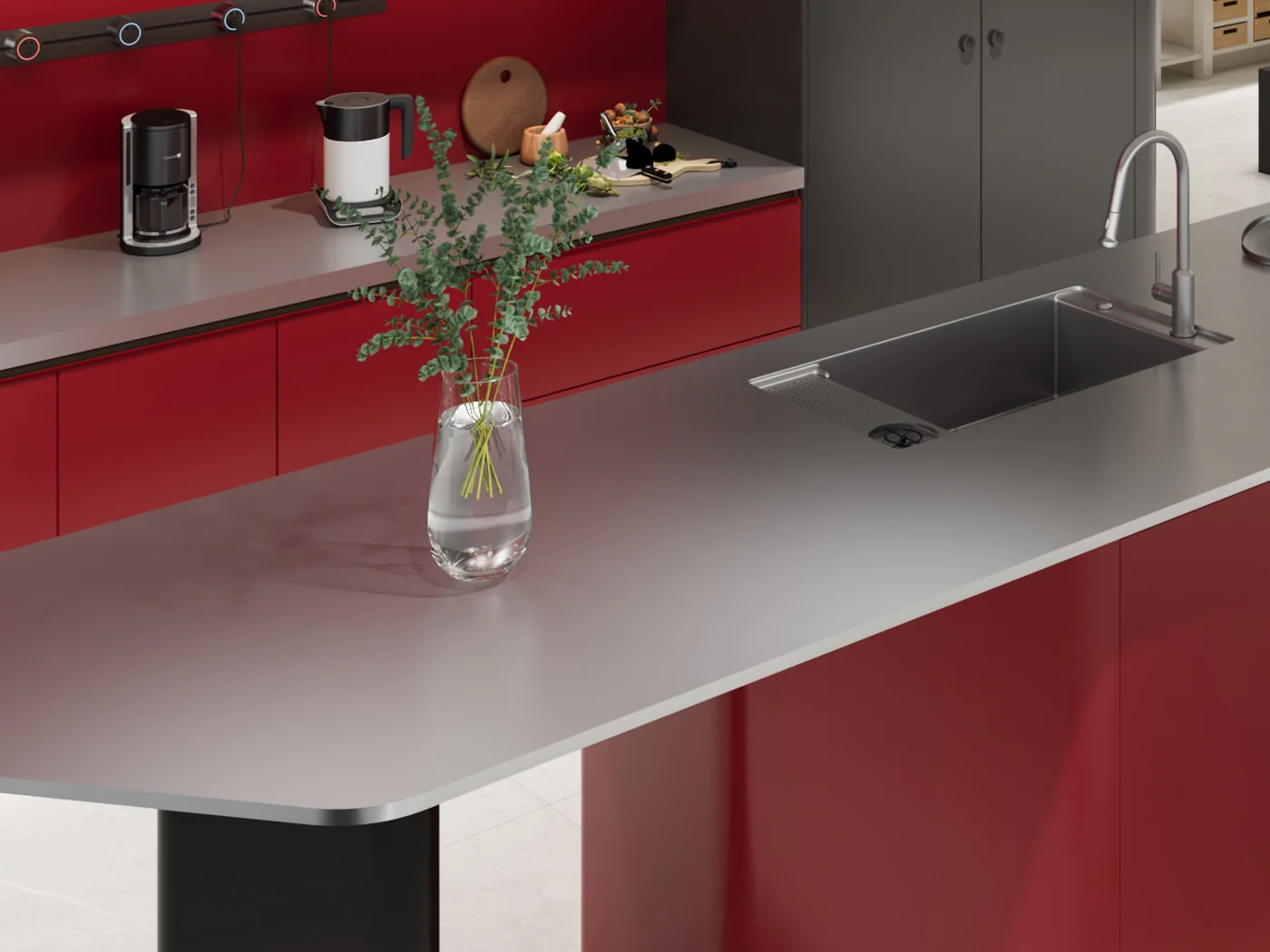
Integrated 304 stainless steel kitchen sink set flush into a brushed stainless worktop

Daily Wet-Zone Routine

Rinse & Wipe Dry Around Integrated 304 Sinks

Wiping along the brushed grain after salty or acidic food prep prevents mineral spotting and keeps seams bright.
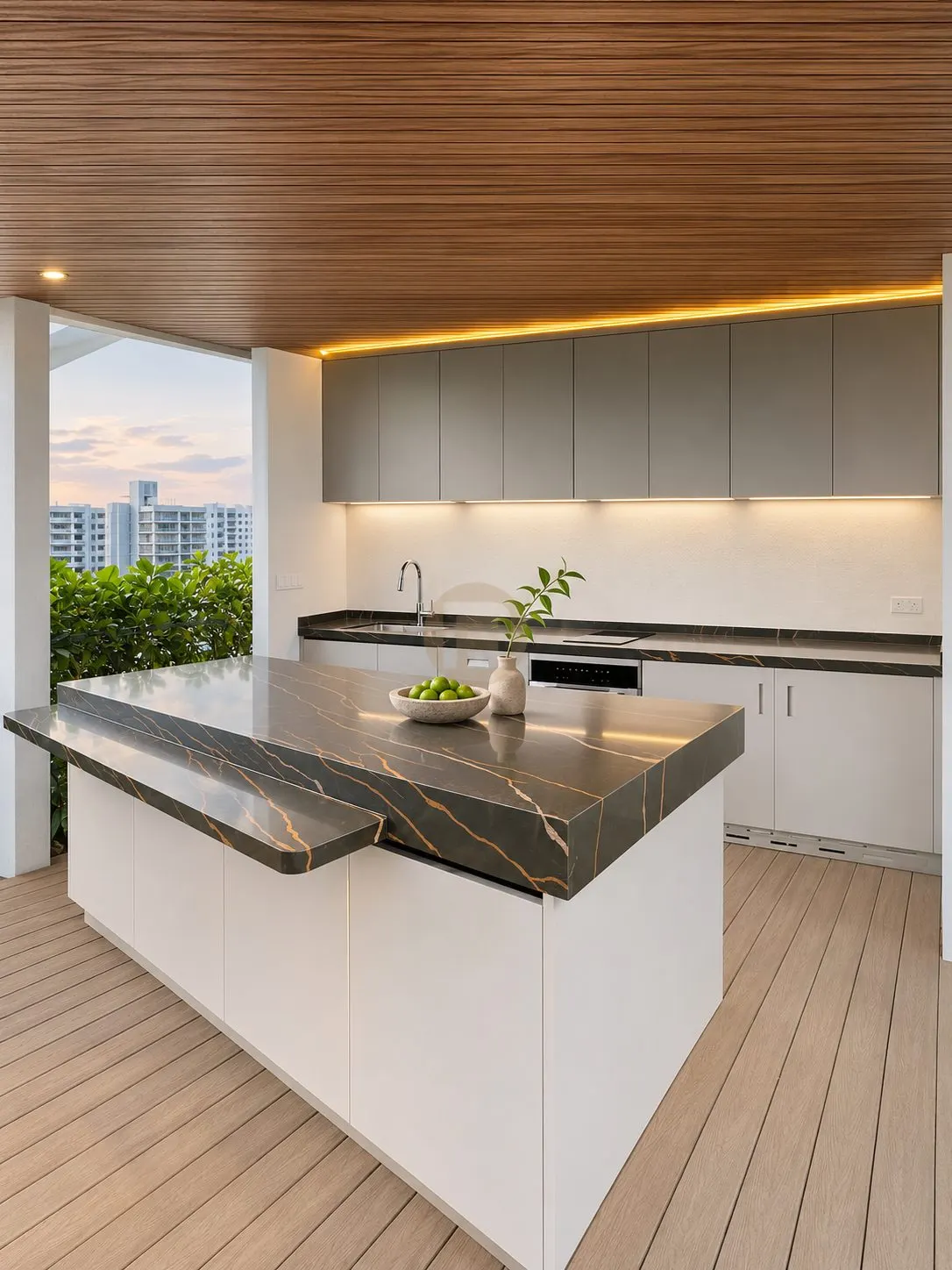
Delivered Singapore rooftop stainless steel outdoor kitchen island

Coastal & Outdoor Care

Freshwater Rinse for Tropical & Coastal Air

Outdoor and beachfront stainless islands thrive when airborne sea salt is rinsed away periodically with clean fresh water.
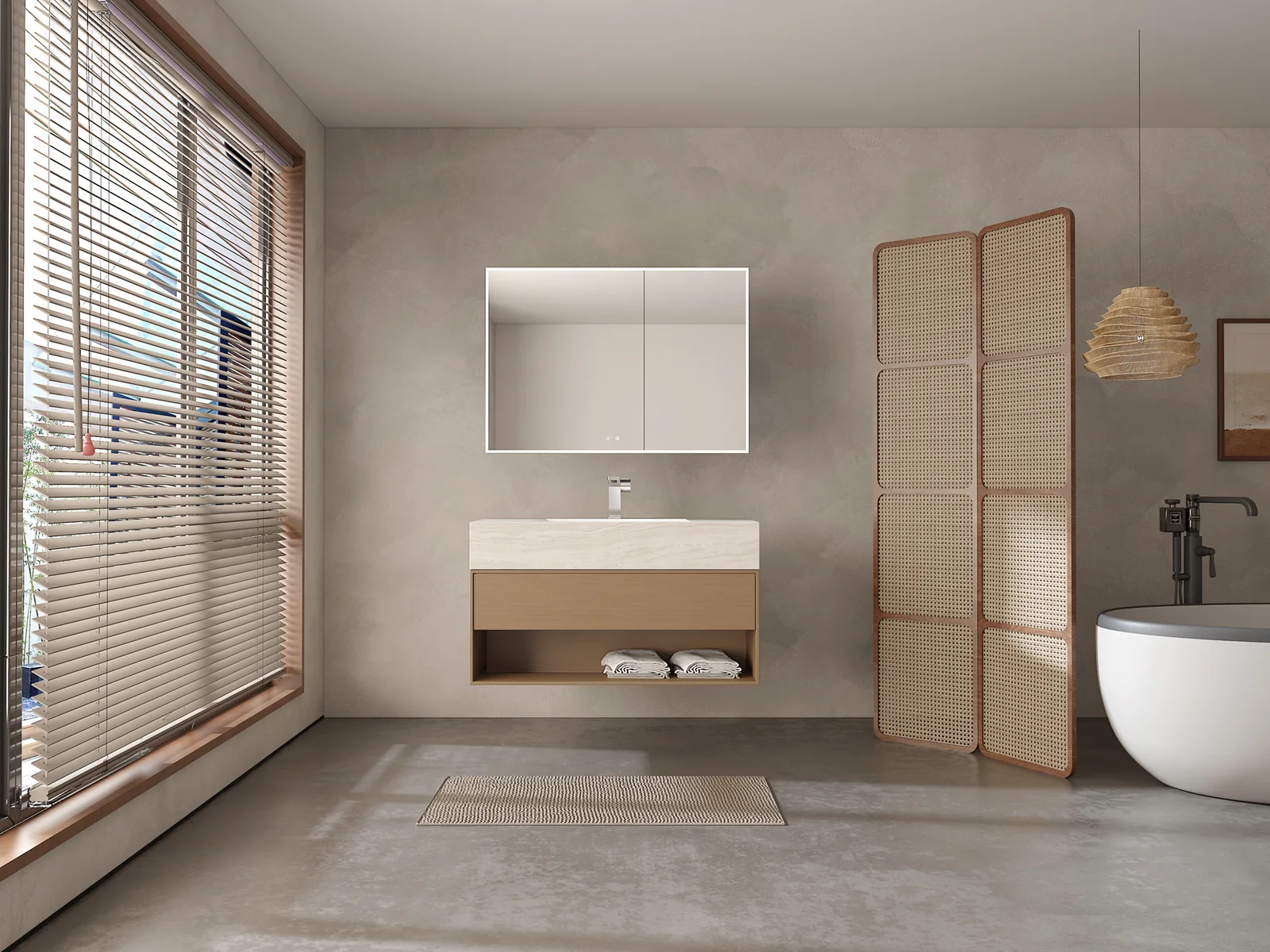
Finished 304 stainless steel bathroom vanity with sealed wall junction and matte fronts

Steam & Perimeter Sealing

Ventilation & Silicone Inspection in Bathrooms

Keep bathroom exhaust active and inspect basin-to-wall silicone seams so moisture never sits behind vanity panels.

05 · Overseas Installation & Care FAQ

Direct answers before crates leave Foshan

Practical answers for overseas homeowners, architects, and local general contractors planning delivery, installation, and long-term care.

Does Fadior send factory installers overseas to install my kitchen or connect plumbing and gas?

No — Fadior manufactures, factory pre-assembles/QC-inspects, and exports room-labeled crated cabinetry from Foshan, accompanied by numbered CAD installation drawings, video guides, and remote technical support. Your buyer-appointed local licensed installer or contractor handles on-site assembly, leveling, anchoring, and sealing, while local licensed plumbers, gas fitters, and electricians perform all utility hookups to local building code.

When is anti-tip wall anchoring mandatory on stainless steel cabinets?

Anti-tip wall anchoring is mandatory on any floor-standing base run with cabinet depth of 330 mm or less, on tall pantry or appliance towers, and on dense drawer or pull-out basket banks. Anchor through the upper back panel / rear mounting rail directly into the structural wall using 20 × 50 × 50 mm steel L-brackets, φ10 × 80 mm expansion bolts, and 304 M4.2 × 13 self-drilling screws.

Can an experienced local kitchen installer or general contractor assemble Fadior cabinets?

Yes. Because carcasses arrive precision-formed with pre-drilled mechanical fastening points, room-numbered labels, CAD elevation sheets, and step-by-step video guides, any experienced local cabinetry installer or general contractor can assemble and level the system accurately — setting drill torque to 8–10 and verifying plumb lines with a laser level while Fadior's remote engineering desk stays available for questions.

Why must factory protective film be removed immediately during installation?

Factory transit film protects brushed and cured surfaces during ocean freight and site handling, but prolonged exposure to sunlight, recessed LED warmth, or cooking heat can cure its adhesive tightly onto the finish. Peel 100% of protective films off panels, doors, and upstands as soon as dusty construction trades finish and installation wraps up.

Can 304 stainless steel stain or pit if exposed to bleach, tile acid, or coastal salt?

Yes — even verified 304 stainless steel (19.31% Cr, 8.02% Ni per GQI SJ2501763) can suffer surface pitting or spotting if chlorine bleach, hydrochloric tile-cleaning acid, or concentrated coastal salt sits unrinsed on the metal. Rinse accidental splashes immediately with clean fresh water, never use steel wool, and keep coastal or outdoor units rinsed periodically.

How should I clean soft-close hinges, drawer slides, and cabinet handles?

Wipe hinges, Blum or partner drawer slides, lever handles, and electroplated fittings exclusively with a dry soft cotton or microfiber cloth. Avoid spraying water, soap solution, or chemical cleaners onto mechanical hardware, never force cabinet doors past their maximum hinge opening angle, and stay within published shelf load limits.

Export Engineering Support

Planning an overseas kitchen or whole-home order? Share your floor plan and site schedule for CAD & installation coordination.