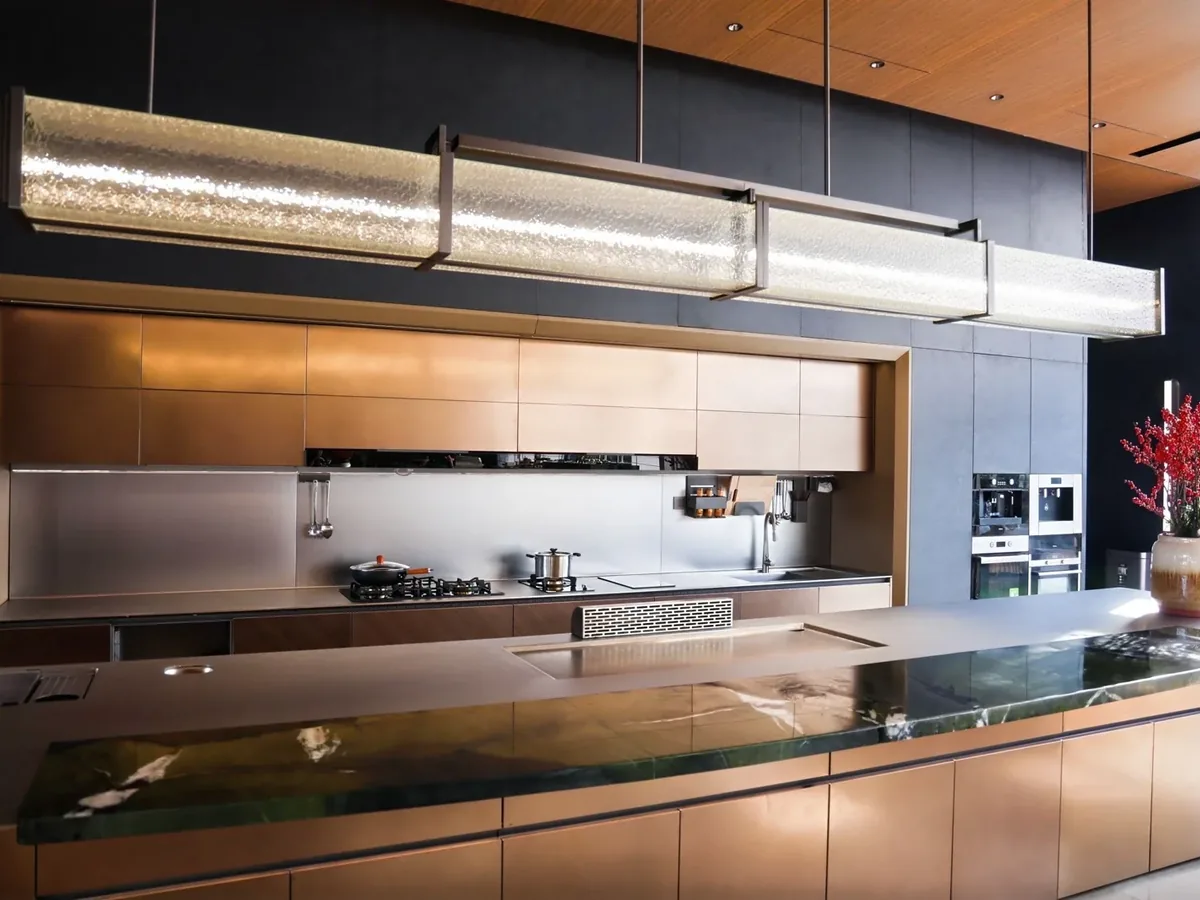
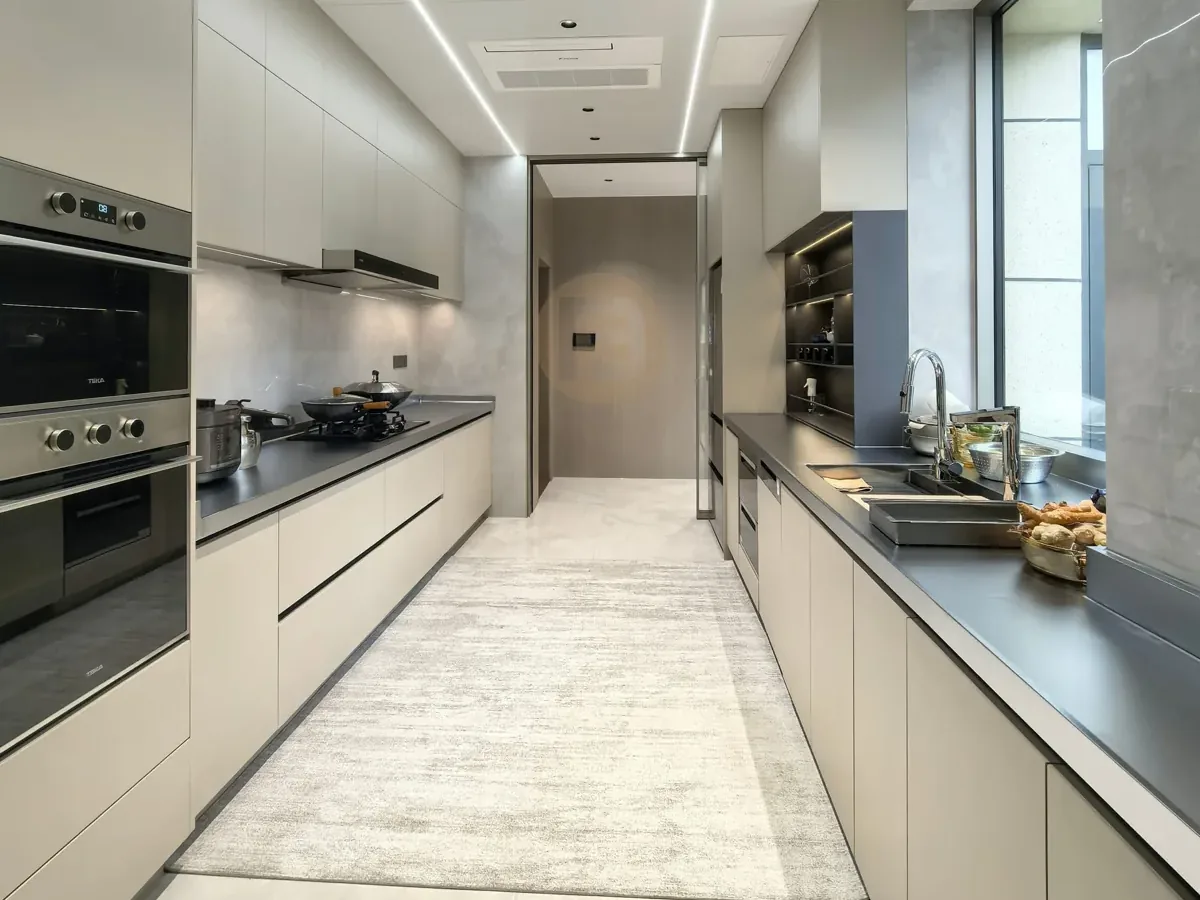
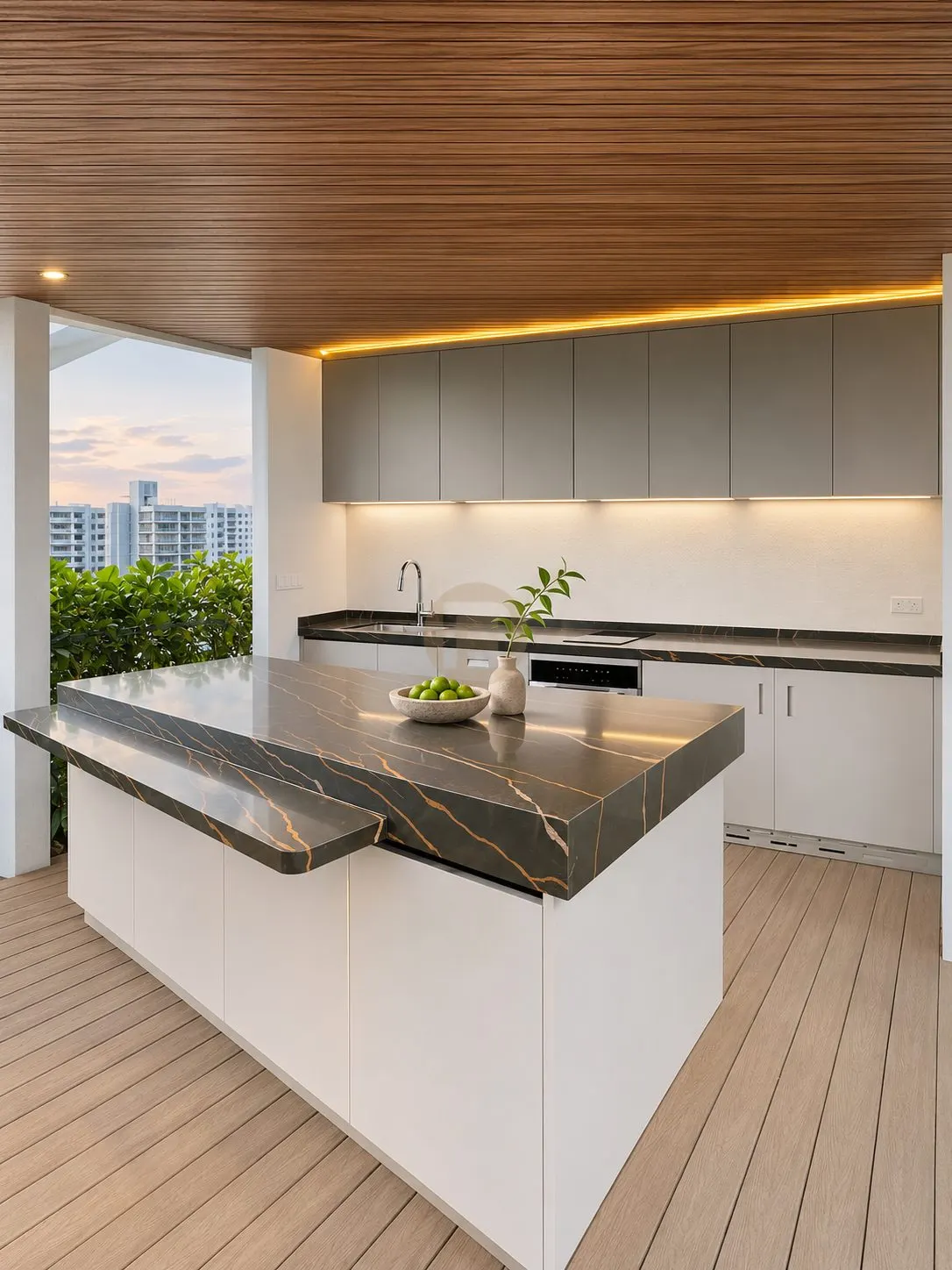
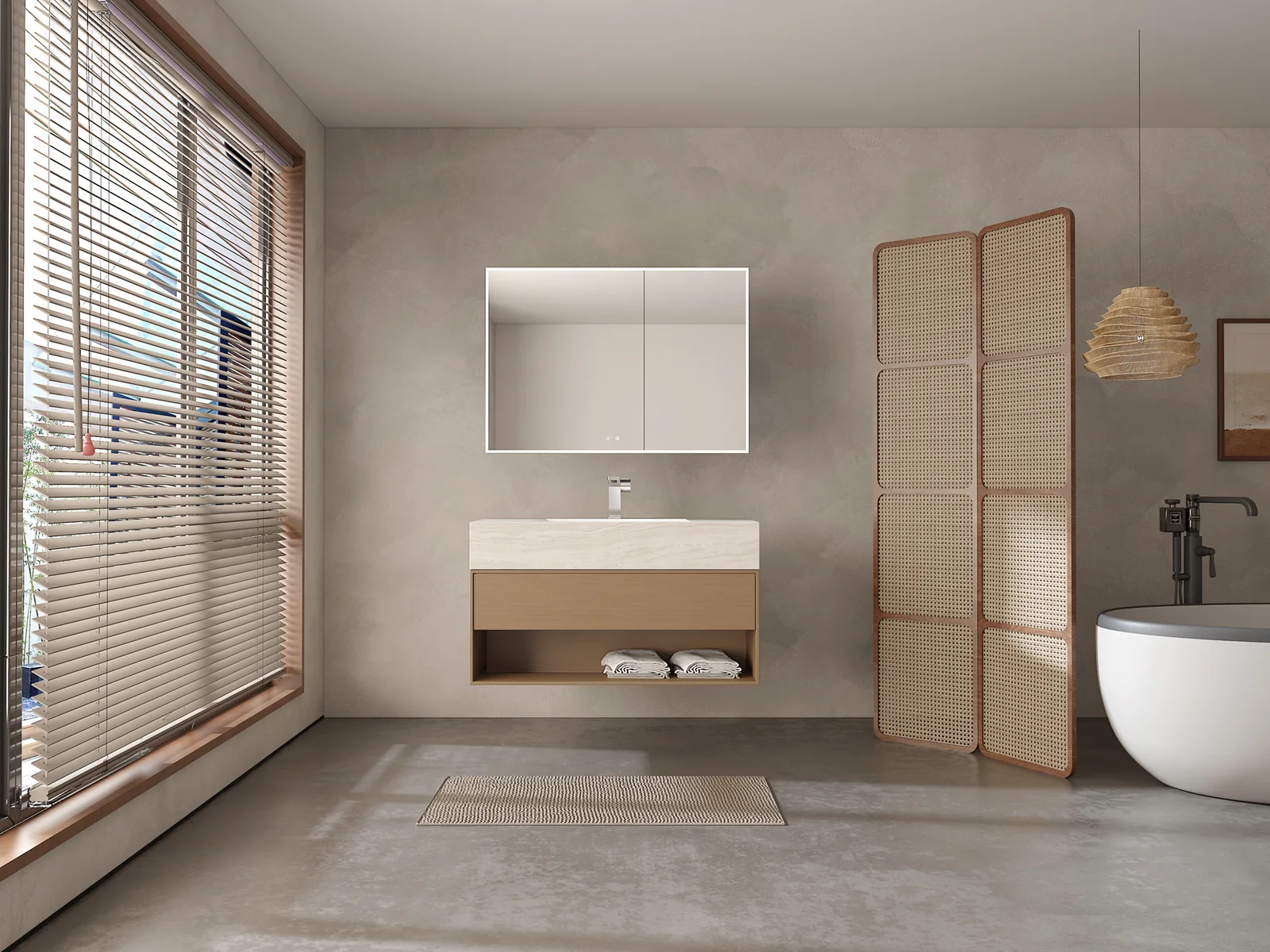
| Moisture, swelling & mould resistance | Non-porous austenitic 304 metal body does not absorb water, swell, delaminate, or feed mould or termites. Standing water and coastal salt should still be wiped dry. | Naturally expands and contracts with seasonal humidity swings; prolonged sink leaks or bathroom steam cause warping, finish checking, and rot. | Particleboard and MDF swell irreversibly once water enters unsealed seams, sink cutouts, or dishwasher steam edges; dark wet boxes foster mould. | Moisture-resistant metal extrusions do not rot or swell, though open hollow chambers and unsealed corner connectors can trap condensation or cooking grease. |
|---|
| Cabinet-body formaldehyde & indoor air | Glue-free folded 304 carcass uses zero wood-resin binder. Verified formaldehyde not detected in 2026 GQI lab tests (< 0.010 mg/m³ on base bodies; < 0.005 mg/m³ on 304 shelves/doors). | Solid timber contains trace natural aldehydes; total room emissions depend on panel-joining adhesives, stains, and clear topcoats. | Relies on resin adhesives to bond fibres or plies; even compliant boards emit measurable levels that rise sharply under kitchen heat and humidity. | Metal profiles emit zero wood-board formaldehyde; overall indoor air impact depends on internal corner adhesives, fillers, and door coatings. |
|---|
| Structural load & hinge screw retention | 0.6 mm folded 304 steel skins backed by a thickened aluminum-profile infill core or 20 mm welded frame; rated 50 kg base bottom and 30–40 kg steel shelves with solid fastener blocks. | Strong initial screw hold in dense hardwoods, though seasonal shrinking and swelling around hinge mortises can gradually shift door reveals. | Plywood holds screws better than MDF/particleboard, but moisture softens fibre cores and sustained cookware weight causes shelf creep over time. | Softer alloy walls dent more readily under heavy cast-iron impact; thin hollow extrusions can loosen hinge fasteners unless locally reinforced. |
|---|
| Thermal, oven-heat & steam stability | Non-combustible 304 stainless carcass (~1,400 °C melting range) stays dimensionally stable beside built-in ovens, cooktops, and boiling steam; exterior coatings follow their own thermal limits. | Combustible organic substrate; dry oven heat next to appliances can shrink stiles and split lacquer joints over years of cycling. | Combustible substrate; repeated steam from dishwashers, kettles, and ovens softens edge-band glues and causes veneer bubbling. | Non-combustible metal with lower melting point (~660 °C) and higher thermal expansion rate than stainless steel; requires clean expansion joints near heat. |
|---|
| Acoustic feel, tactile warmth & honest trade-offs | Engineered aluminum-profile infill dampens metallic echo so doors close with a solid thud; baked matte, wood-grain, and stone fronts remove coldness. Trade-off: higher upfront cost and zero on-site saw cutting. | Warm natural grain and acoustic softness straight from the timber, with easy on-site carpentry touch-ups. Trade-off: periodic refinishing and humidity movement. | Lowest entry cost and familiar field trimming for local carpenters. Trade-off: short wet-zone lifespan and irreversible damage after plumbing leaks. | Lightweight and fast to assemble on site. Trade-off: thin uninsulated extrusions often feel tinny or ring hollow when drawers and doors close. |
|---|
| Finish versatility & architectural design range | Catalogue offers 296 official surface finishes and 70 door profiles — from warm wood-grain transfers and satin Cloud-Touch matte to sintered stone, mirror, and tinted glass (confirmed per model & room). | Unmatched for traditional hand-carved mouldings and bespoke stained timber, but limited in crisp ultra-thin metal reveals and monolithic moisture-resistant spans. | Wide decorative laminate, veneer, and painted MDF variety for dry rooms, though painted doors chip and swell at exposed lower corners. | Typically wood-grain transfer or anodized coatings over narrow extruded frames; fewer seamless folded profiles and heavier visual join lines. |
|---|
| Structural lifespan & written warranty scope | Backed by Fadior's 30-year cabinet-body structural warranty and 30-year microparticle crystal resin surface warranty (specific terms subject to contract). | Long potential life in climate-controlled dry interiors when refinished regularly; standard joinery warranties are typically limited to 1–5 years. | Typical residential warranties span 2–5 years and commonly exclude moisture swelling, steam exposure, or plumbing leaks. | Corrosion-resistant base metal, but long-term warranty terms vary widely by extrusion wall gauge, corner joinery, and hardware brand. |
|---|